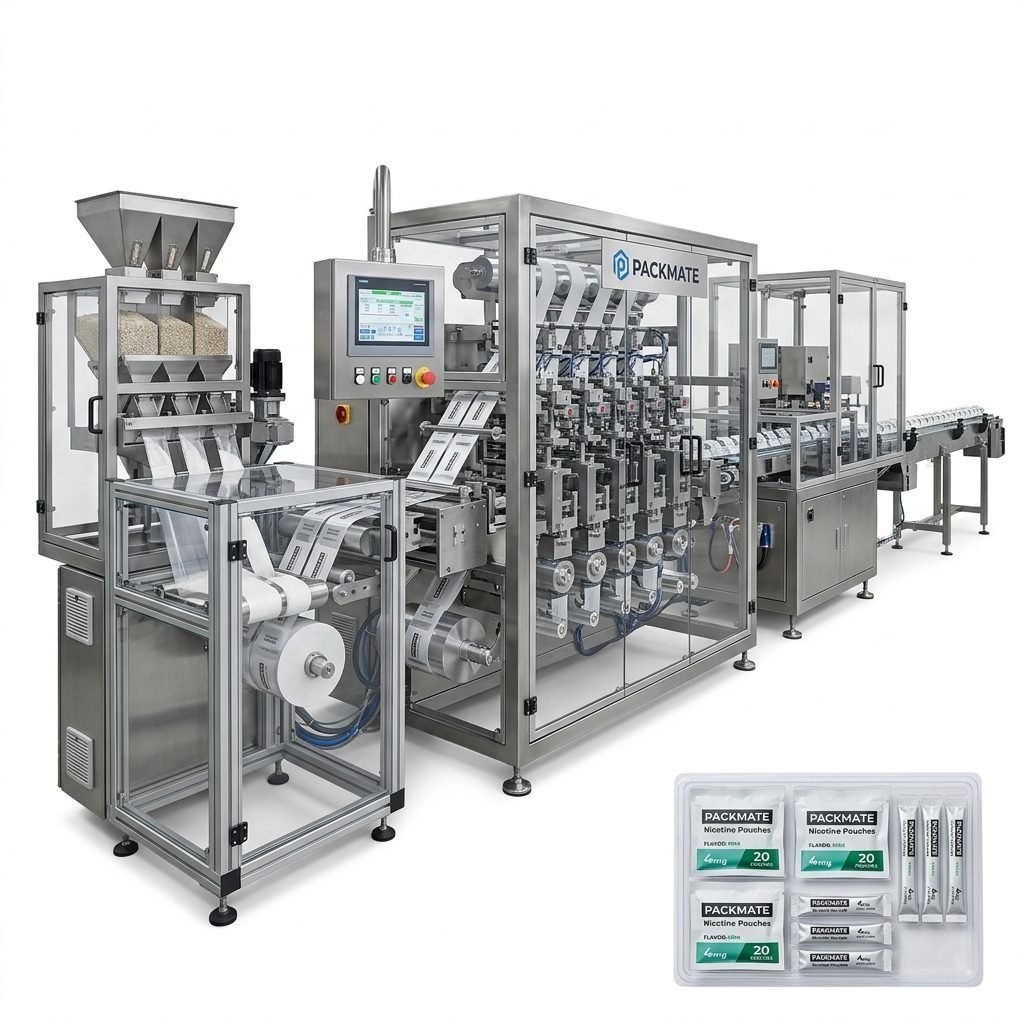
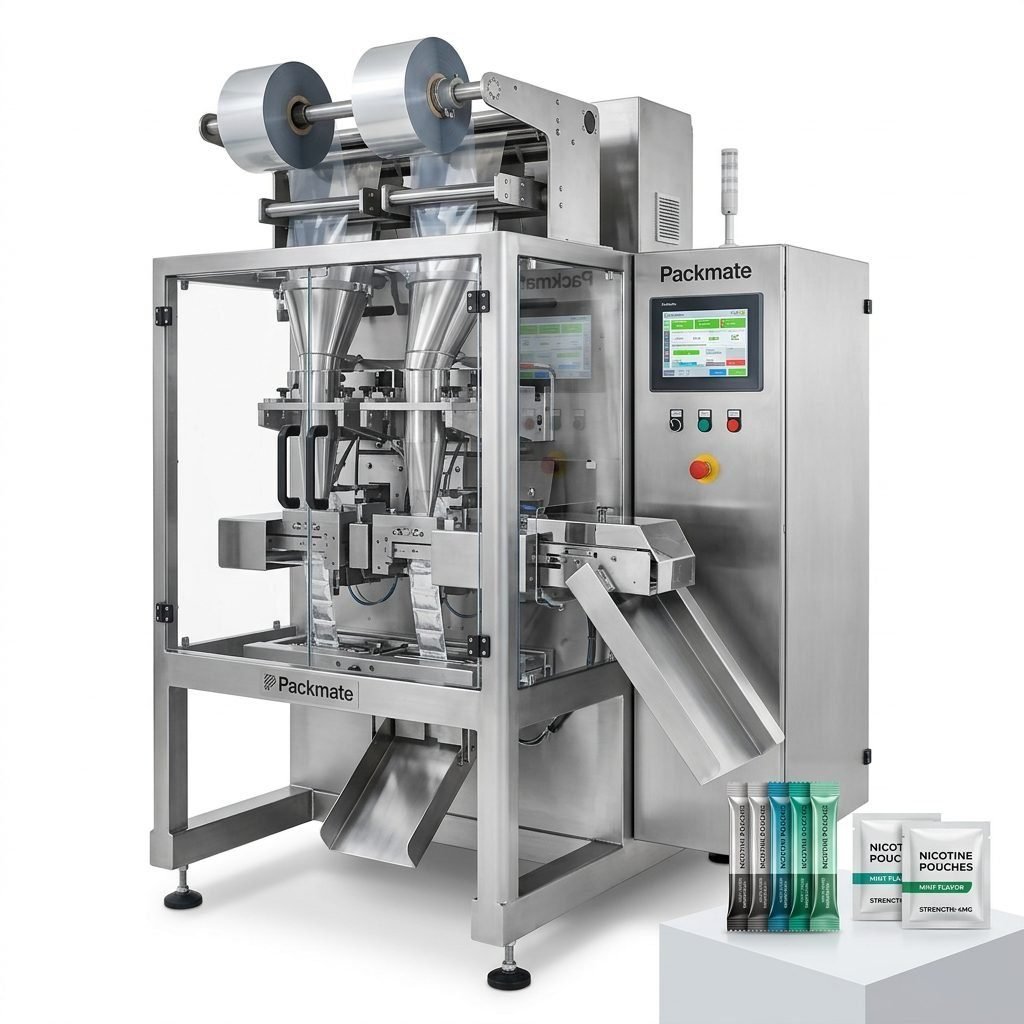
Choosing the right nicotine packaging machine for production in Spain requires balancing regulatory compliance, local market preferences, and efficient manufacturing capacity. This guide walks Spanish manufacturers and importers through practical selection steps, machine types, technical specifications, and after-sales considerations so you can make a confident investment for long-term productivity.
🔎 Understand the Spanish Market & Regulatory Context
Spain is part of the European Union, so nicotine pouch and snus packaging operations must align with EU directives and local Spanish regulations on tobacco and nicotine-containing products. Although traditional snus consumption is lower in Spain compared to Nordic countries, the nicotine pouch market is growing among younger urban consumers who value discreet, well-designed products and convenience. Manufacturers should be mindful of:
- EU-wide packaging standards (labelling, child-resistant options where required).
- Spanish market aesthetic preferences — compact packs, modern branding, and sustainability claims resonate strongly.
- Distribution channels in Spain: kiosks, convenience stores, online retailers, and duty-free travel retail in tourist hubs.
🇪🇸 Local Habits & Packaging Expectations
Spanish consumers often prefer low-profile, high-quality presentation. Packaging that is slim, easy to open, and preserves freshness will appeal more than bulky designs. Sustainability messaging and recyclable materials can be a competitive advantage in many Spanish and broader European channels.
✅ Key Selection Criteria at a Glance
- Production capacity: daily throughput (pouches/min × working hours).
- Packaging format: single pouches, multi-pouch trays, stick packs, sachets.
- Number of lanes: single-lane for niche production vs multi-lane for high-volume output.
- Filling accuracy: weight tolerance and dosing stability for small-dose nicotine pouches.
- Material compatibility: foil laminates, paper-based pouches, and recyclable films.
- Regulatory compliance: CE/ISO and traceability support for EU markets.
🔧 Main Machine Types and When to Choose Them
Different packaging styles suit different brands and market segments. Understand the machine archetypes so you can match your product format to your business goals.
1) Snus & Nicotine Pouch Packaging Machines
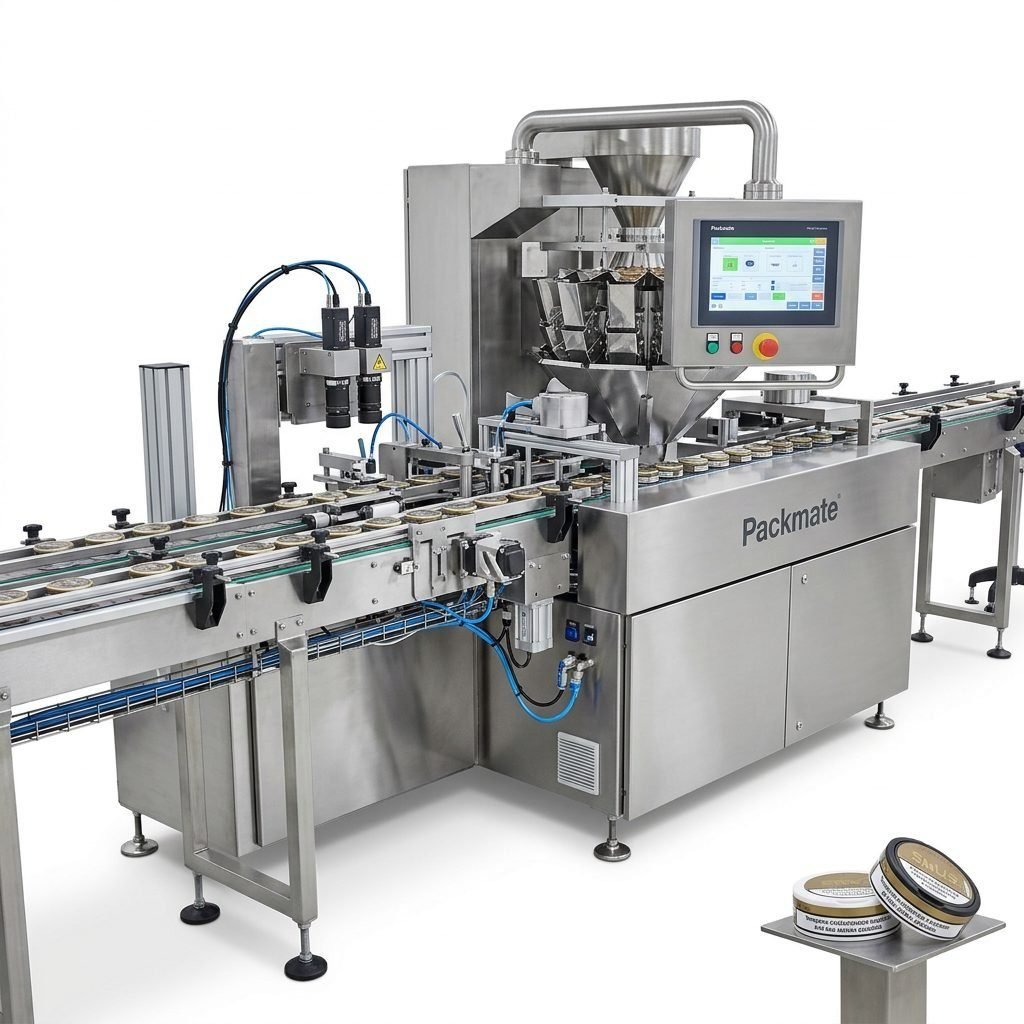
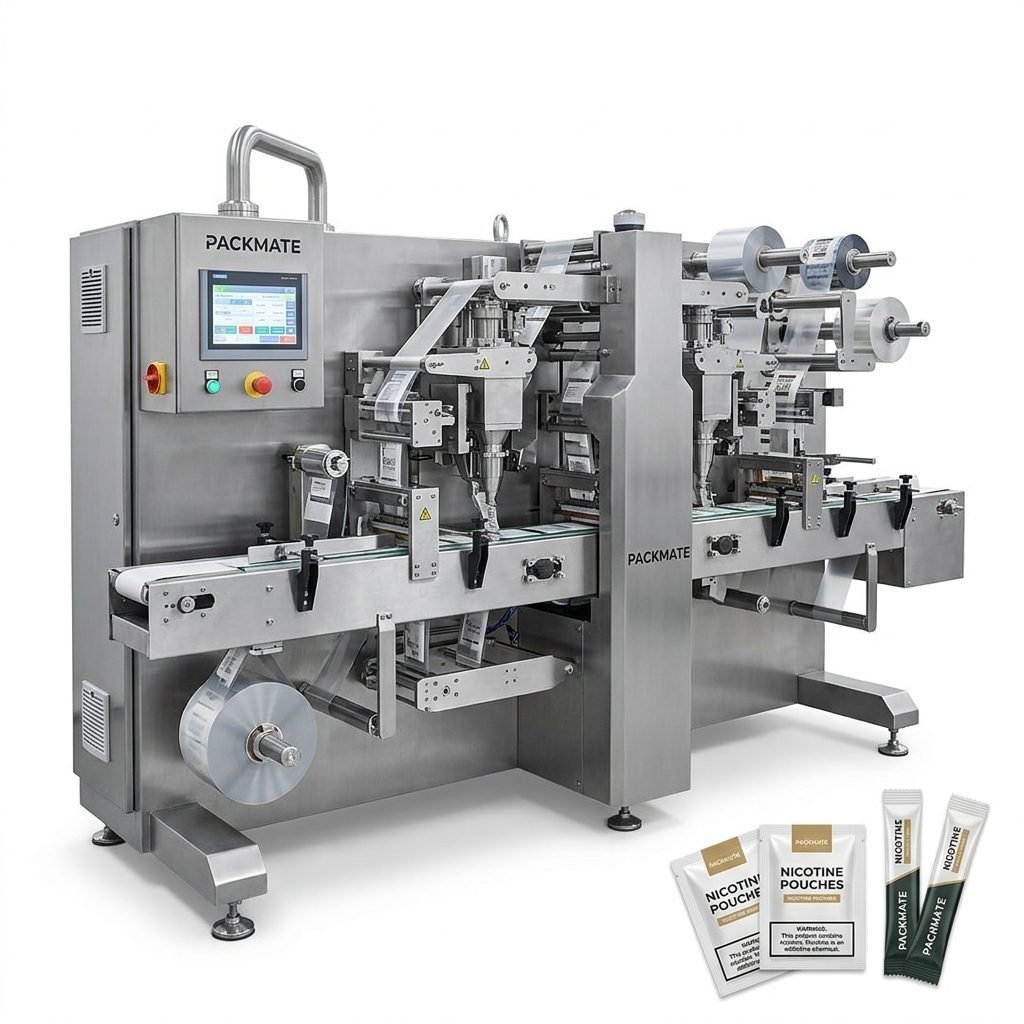
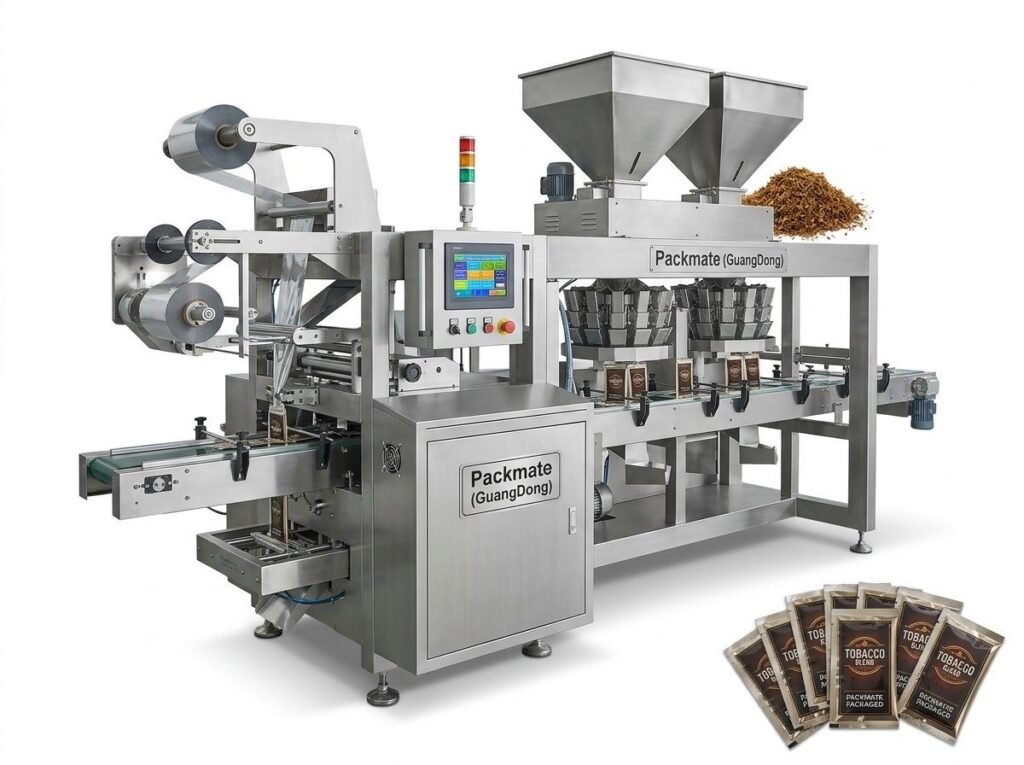
These specialized machines are designed for tiny-dose pouches, precise filling, and gentle handling. They often include multi-lane options for higher throughput while maintaining strict weight tolerance. If your focus is nicotine pouches, consider models specifically engineered for snus & nicotine packaging to reduce product breakage and ensure consistent pouch shape. See product examples: Snus & Nicotine Packaging Machines.
2) Sachet & Stick Pack Machines
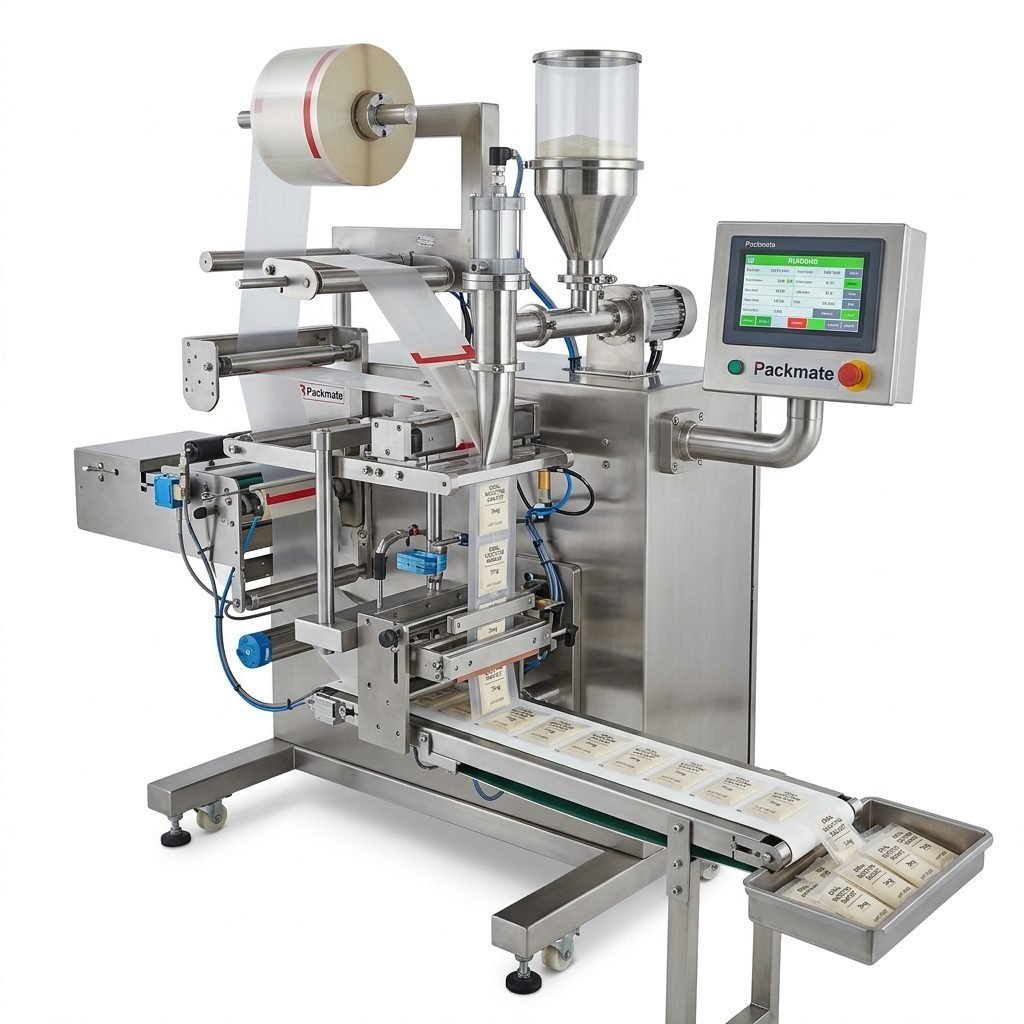
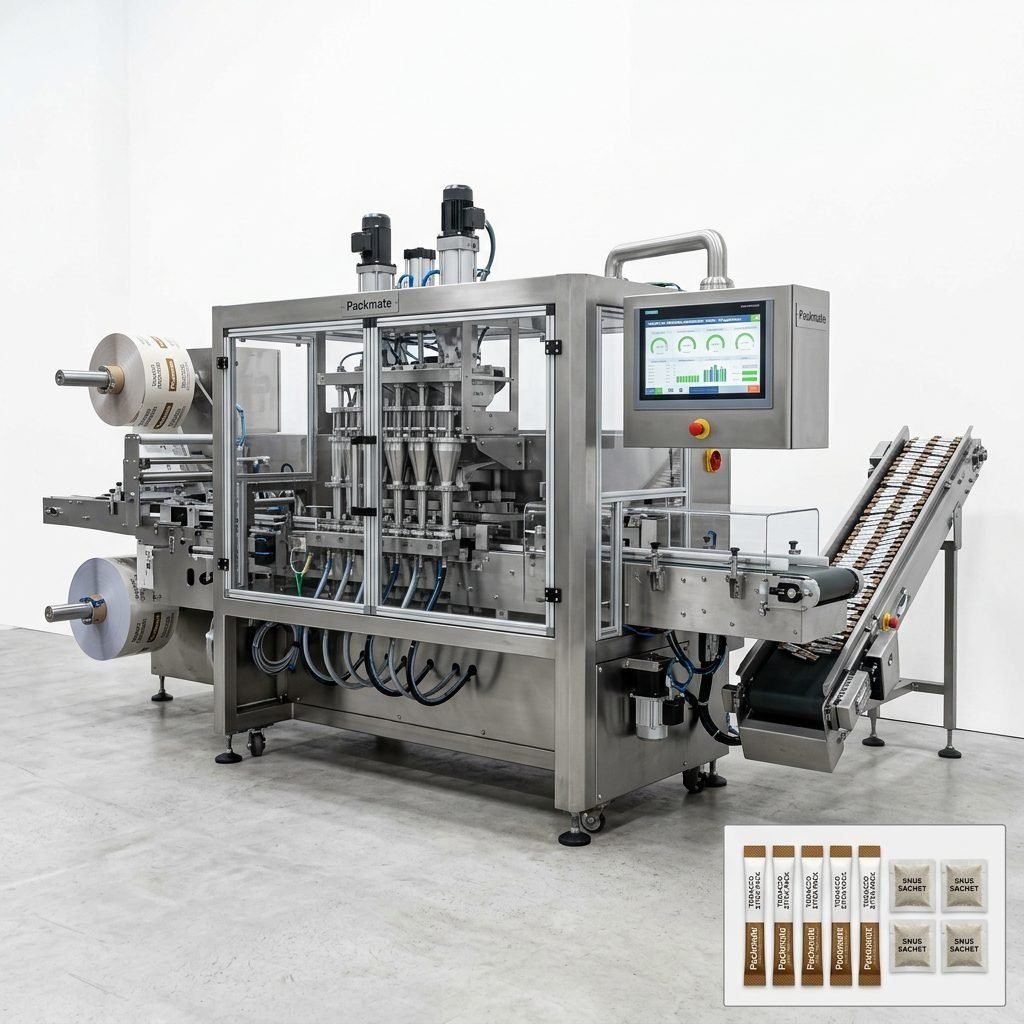
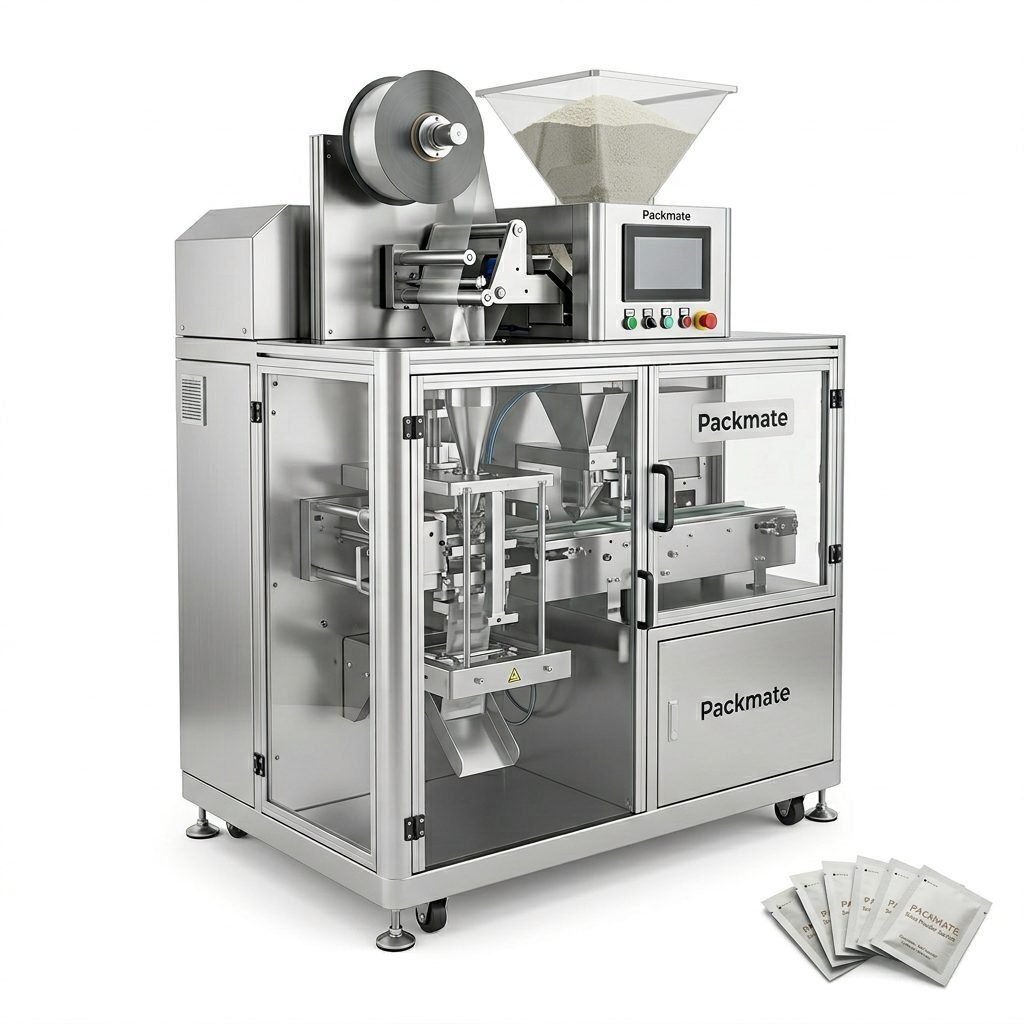
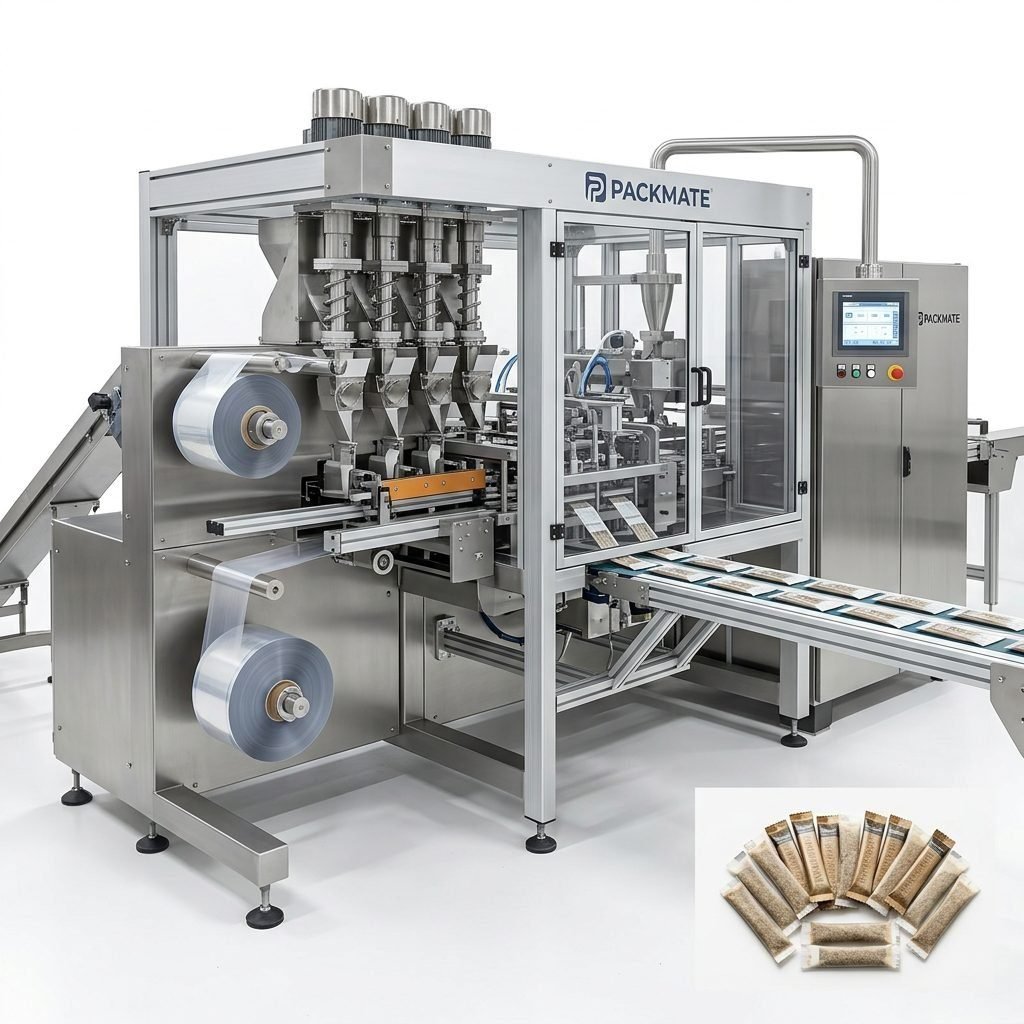
Sachet and stick pack formats are popular for single-dose nicotine formats or promotional sachets. These machines are versatile for powders, small granules, and low-viscosity pastes. For flexible production lines that can switch between snack, pharmaceutical, and nicotine pouches, check Sachet & Stick Pack Machines.
3) Multi-Lane Systems
Multi-lane machines multiply output without multiplying floor space proportionally. For Spanish facilities targeting national distribution and export to EU neighbors, multi-lane snus lines often deliver the best throughput-to-cost ratio.
⚙️ Technical Specifications to Compare
When evaluating vendors, inspect these technical details closely — they determine real-world efficiency and long-term reliability.
- Speed: pouches per minute (per lane) and effective line speed with auxiliary equipment.
- Dosing accuracy: minimal variance in mg/pouch for nicotine compliance.
- Sealing quality: heat-seal strength and hermeticity to keep product fresh.
- Control system: PLC + HMI, recipe management, and remote diagnostics.
- Material handling: hopper design, gentle dosing for powders and fibers, anti-static options.
- Cleaning & maintenance: quick-change parts and accessibility for GMP cleaning.
Connectivity & Automation
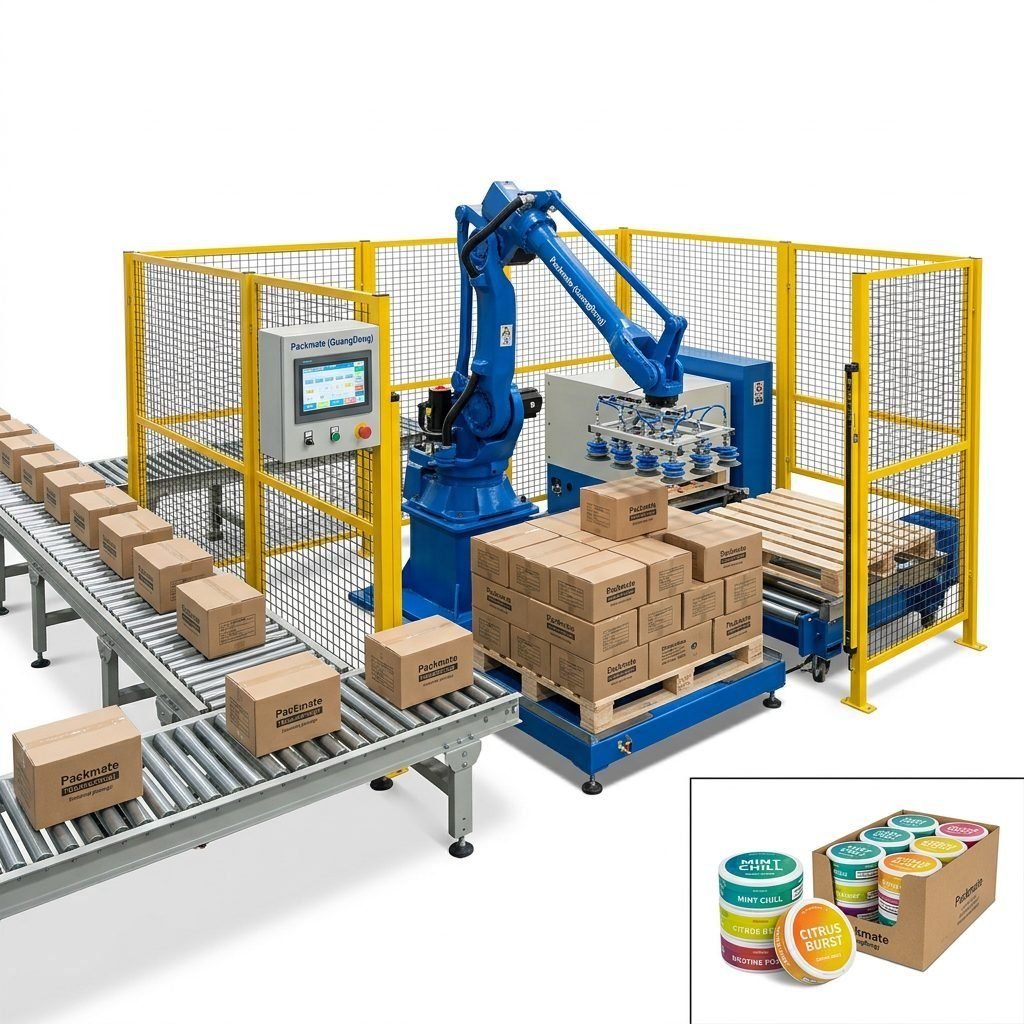
Look for models that support Industry 4.0 features: remote troubleshooting, production data logging, and easy integration with upstream weighing systems or downstream cartoning. Packmate offers integrated lines including weighing & packaging systems that simplify integration: Weighing & Packaging Systems.
🛠️ Material Choices & Sustainability
Spain and other EU markets increasingly favor recyclable and lower-carbon packaging. When selecting machines, confirm compatibility with:
- Multi-layer barrier films (for extended shelf life) and mono-material films (for recyclability).
- Paper-based pouches with barrier coatings — ensure machine sealing options adapt to different thicknesses.
- Biodegradable liners for secondary packaging where applicable.
Machines that allow quick changeover between film types and provide consistent sealing across material families reduce waste and improve adaptability.
🤝 After-sales Support, Spare Parts & Local Service in Spain
Reliable after-sales is critical for minimising downtime. For operators in Spain, consider:
- Availability of spare parts in the EU or quick international shipping from the manufacturer.
- Remote diagnosis features and training packages to upskill local maintenance teams.
- Exhibition presence in Europe — meet vendors at trade shows to validate machine performance. Learn about vendor exhibitions: Our Exhibition.
Packmate’s full-line solutions and CE / ISO certifications help ensure compliance — see more about credentials: Certificate.
💰 Cost Considerations & ROI Estimation
Calculate total cost of ownership (TCO) by combining machine price with expected production uptime, spare parts cost, labor, and utility consumption. Basic ROI steps:
- Estimate monthly production volume and target sales price per pack in your Spanish channels.
- Model expected yield losses, changeover downtime, and maintenance days.
- Compare single-lane vs multi-lane machines for throughput and floor space efficiency.
- Factor in regulatory compliance costs, labelling, and quality control equipment.
Machines that deliver consistent weight control and low giveaway reduce material waste and improve margins — a key point for small-dose nicotine pouches.
📦 Quick Buyer Checklist
- Match machine type to primary packaging format.
- Verify dosing accuracy and speed benchmarks with vendor reports.
- Check compatibility with recyclable or mono-material films.
- Confirm EU CE / ISO certification and spare part logistics.
- Request case studies or live demos — for reference see: Case.
📝 Step-by-step Selection Process
Follow these steps to make a structured decision:
Step 1: Define Product & Market Targets
Clarify pouch weight, dimensions, sealing type, and monthly volume. Decide whether you will export to other EU countries — this affects regulatory and labelling needs.
Step 2: Shortlist Machines & Request Demos
Ask vendors for machine demos, production videos, and test runs with your actual materials. Look for suppliers that provide turnkey solutions including auxiliary equipment: Filling & Packaging Lines.
Step 3: Compare Total Cost & Support
Evaluate warranty, spare parts policy, training, and on-site commissioning. Local service partners or vendor presence in Europe shorten recovery time in case of issues.
⚠️ Common Mistakes to Avoid
Avoid these pitfalls when acquiring nicotine packaging equipment:
- Choosing machines based on peak speed numbers without verifying sustained production metrics.
- Underestimating material compatibility and sealing performance for chosen films.
- Neglecting spare parts availability and remote diagnostic capabilities.
- Forgetting to validate labelling and traceability functions required by EU law.
📞 Vendor Due Diligence & Where to Learn More
When evaluating a manufacturer, request:
- Factory photos and manufacturing capability descriptions (CNC, assembly lines, QA).
- Certificates such as CE and ISO to verify compliance.
- Customer references in Europe and European case studies.
- Comprehensive after-sales programs including spare parts, training, and local contacts — for details on vendor services, see: Service and Contact Us.
About the Manufacturer
A strong partner combines decades of engineering experience with a broad product portfolio — from snus packaging machines to complete filling and weighing lines. Learn more about manufacturers’ background to ensure they can deliver customized turnkey solutions: About Packmate.
📌 Final Recommendations
For production in Spain, prioritize: CE/ISO compliance, machines tuned for small-dose pouch accuracy, multi-lane options if you plan scale-up, and vendors who provide clear EU spare-part logistics. Request local demos or videos, demand production data, and choose materials with recyclability options to match Spanish and EU sustainability trends.
Frequently Asked Questions
Q1: What machine speed do I need for a profitable line in Spain?
A: Calculate required monthly volume first. For small local brands, a single-lane 30–60 pouches/min can be sufficient. For cross-border distribution, consider multi-lane systems capable of 200–500 pouches/min total.
Q2: Are Packmate machines compliant with EU standards?
A: Reputable manufacturers provide CE and ISO certification; always request certificates and machine compliance documentation before purchase. See certifications: Certificate.
Q3: How to ensure consistent dosing for tiny nicotine pouches?
A: Choose machines with precision volumetric or auger dosing combined with in-line weighing checks. Multi-point sampling and quick-change dosing modules help maintain consistency and minimize giveaway.
Q4: Can I use recyclable films without major machine upgrades?
A: Many modern packaging lines are compatible with mono-material films, but confirm sealing temperature ranges and pressure settings. Request tests with your specific film supplier or run a pilot at the manufacturer.
Q5: Where can I see live demonstrations or talk to references?
A: Ask vendors for video demonstrations, EU client references, and exhibition schedules. Visiting an exhibition or a vendor’s factory (if possible) provides the best validation. Vendor exhibition info: Our Exhibition.