Choosing the right nicotine packaging machine in Eritrea means balancing regulatory compliance, production targets, and total cost of ownership. This guide walks you through the technical and commercial criteria that matter most—machine type and speed, filling and sealing precision, automation and controls, maintenance and spare parts, supplier credentials, and local service considerations—so you can make a decision that supports consistent quality and scalable growth.
Understand Your Production Requirements
Start by clearly defining your production needs. How many nicotine pouches do you plan to produce per minute, per hour and per shift? Are your products single-dose pouches, stick packs, sachets, or custom multi-layer pouches? Will you process powder, granules, or liquids? Production speed and pouch format are the primary drivers when selecting the correct machine family.
Key questions to answer before evaluating machines
– Target daily output (units/day) and peak capacity needs.
– Number of pouch lanes (single-lane, multi-lane 4/6/8/12 lanes).
– Product form: powder, granule, paste, or liquid.
– Required pouch dimensions and material compatibility.
– Regulatory and labeling requirements for the Eritrean market and export destinations.
Select the Right Machine Type
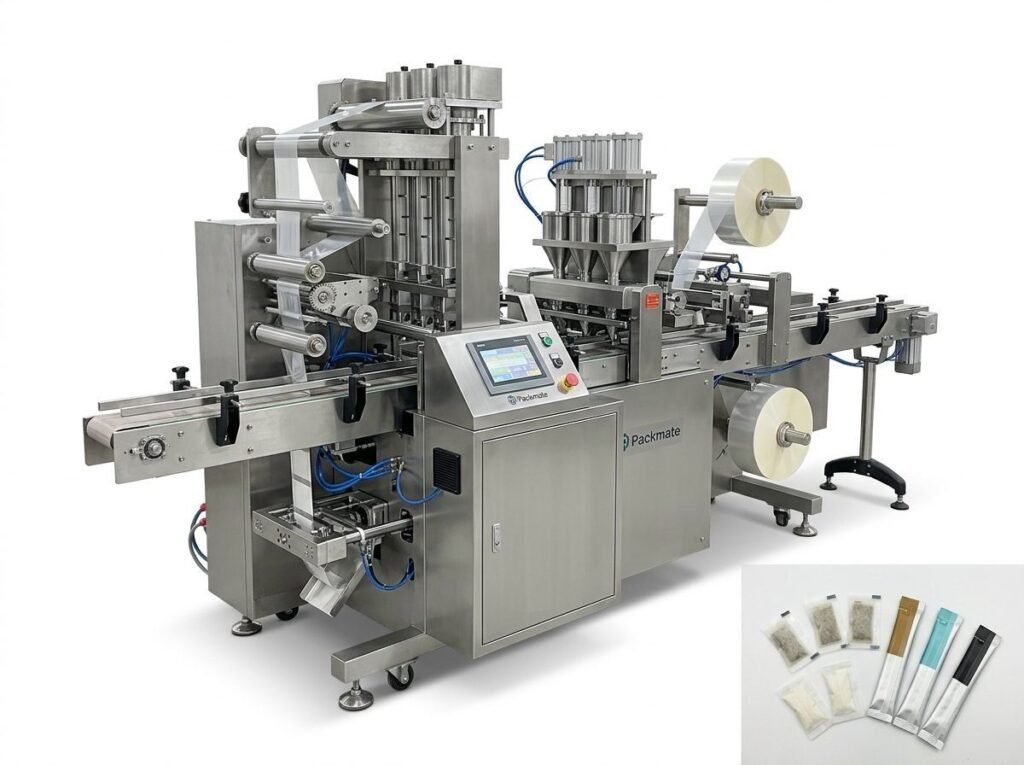
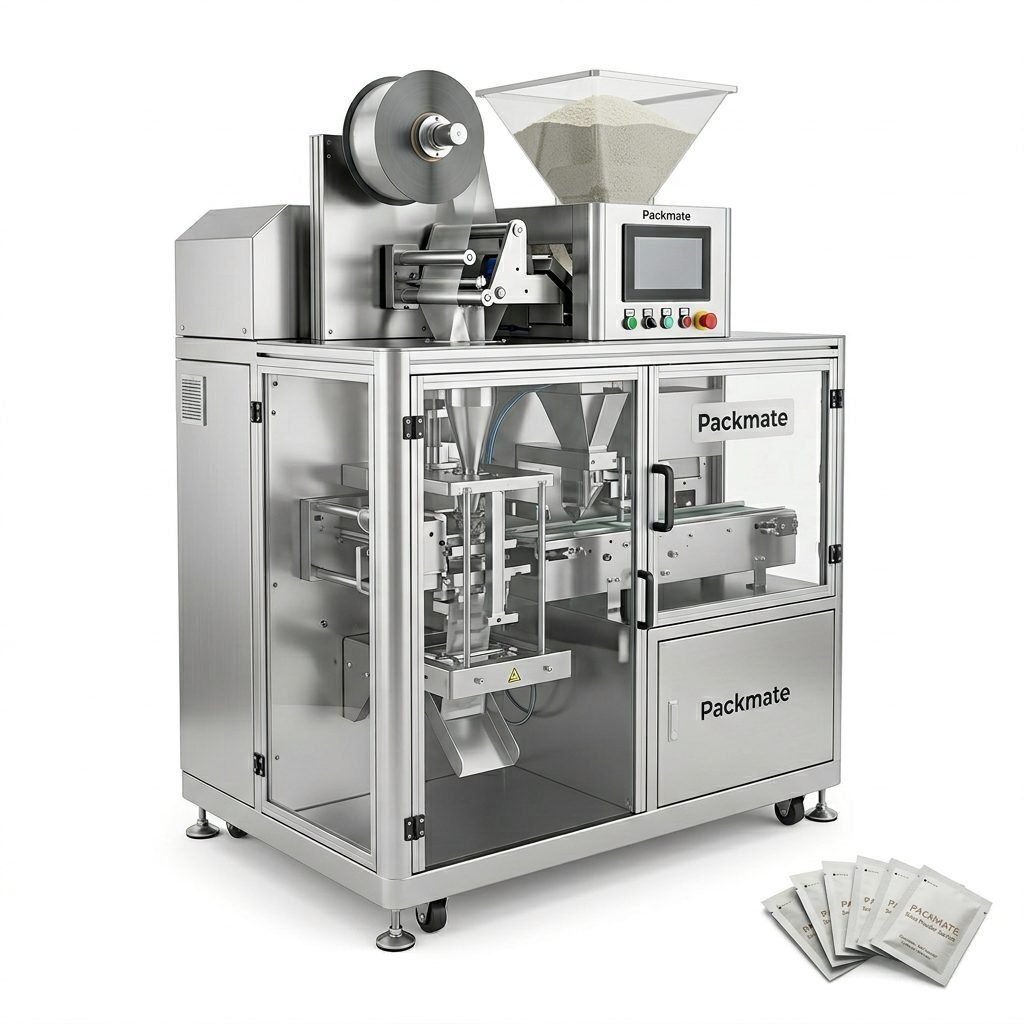
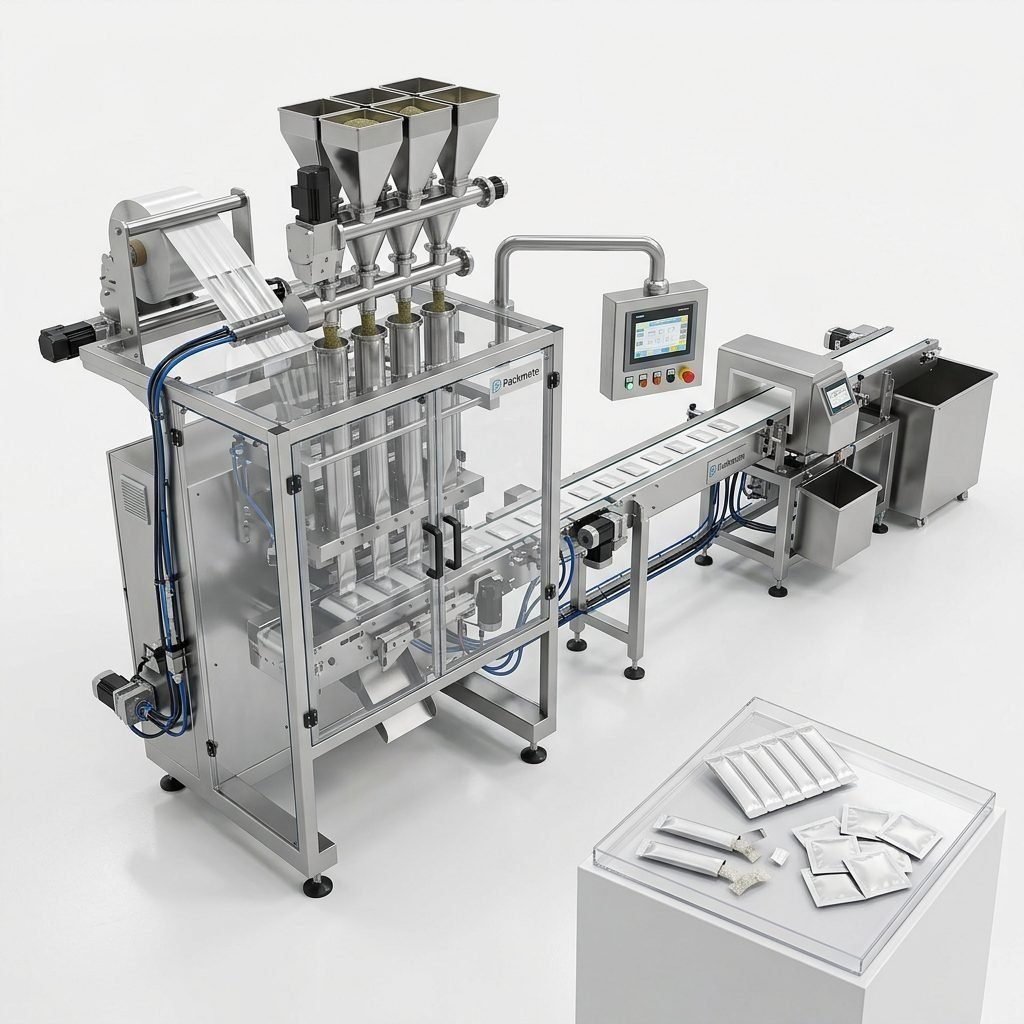
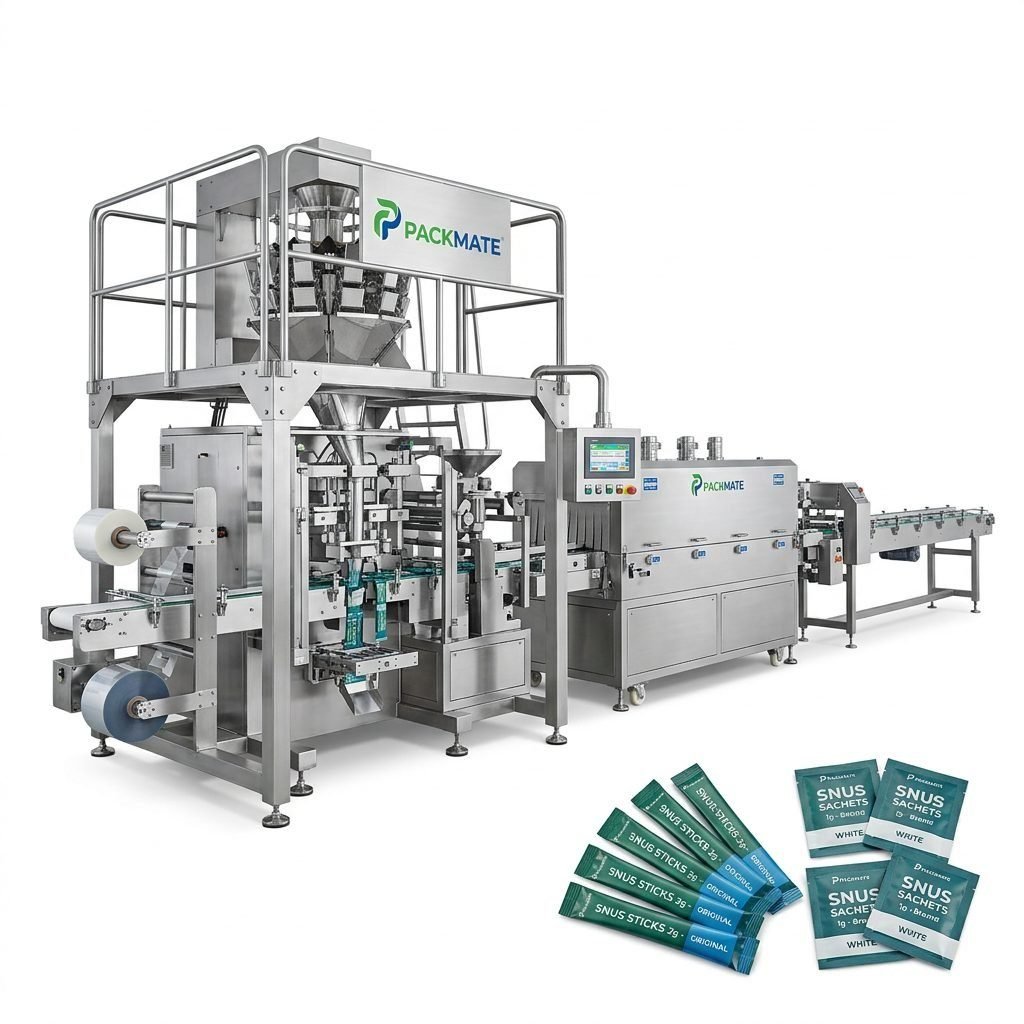
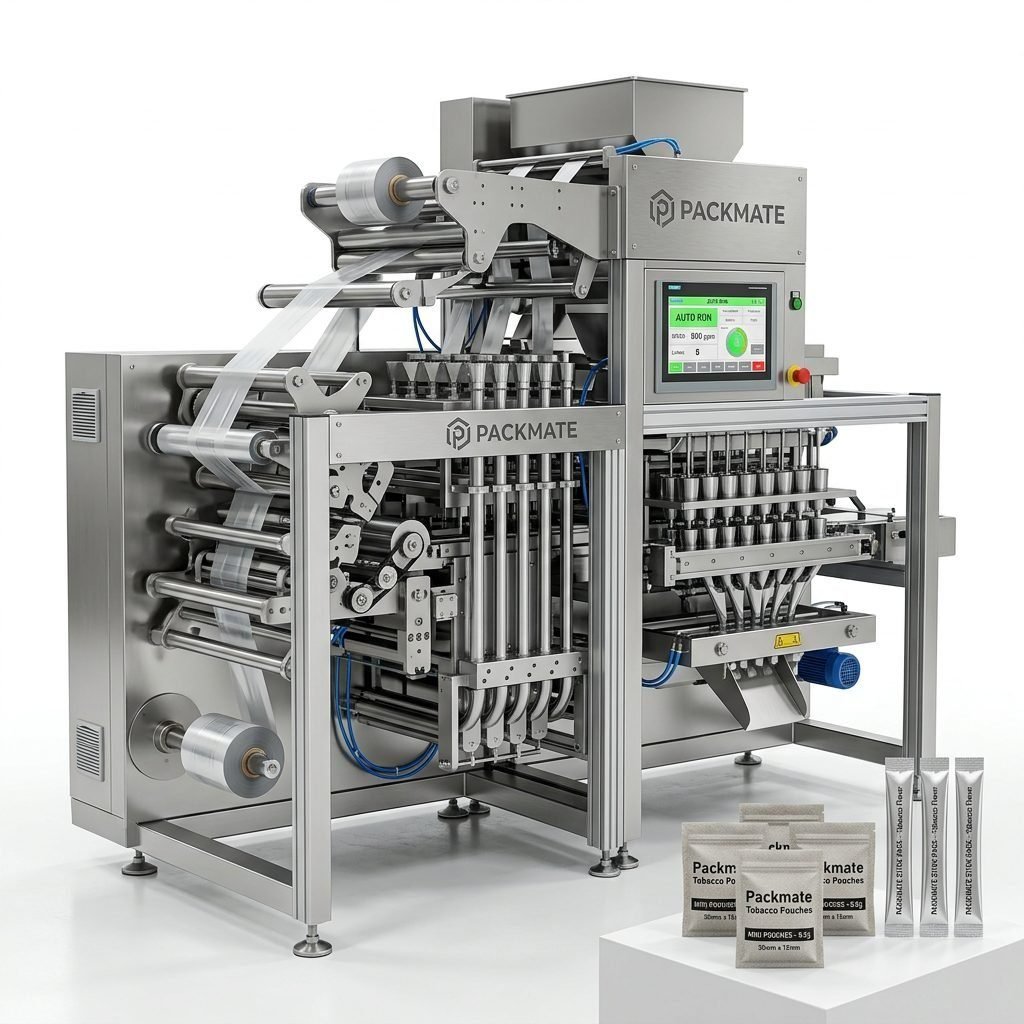
Machinery for nicotine pouch packaging generally falls into several categories: stick pack machines, sachet machines, and specialized snus / nicotine pouch systems. If you require high-speed, small-dose pouches, multi-lane snus machines often deliver the best throughput-to-footprint ratio. For flexible packaging formats, sachet and stick pack machines are versatile choices. Explore product families such as Snus & Nicotine Packaging Machines and Sachet & Stick Pack Machines to match format and speed.
When to choose multi-lane systems
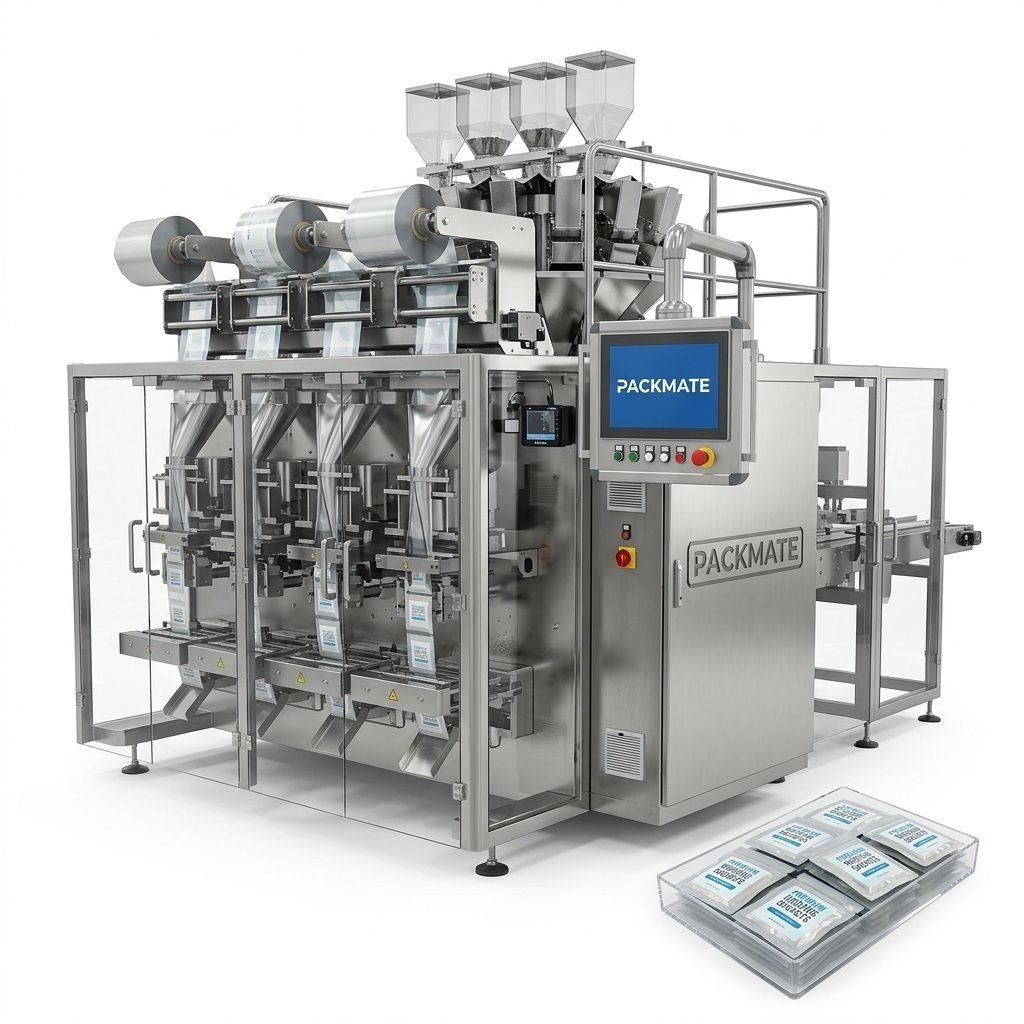
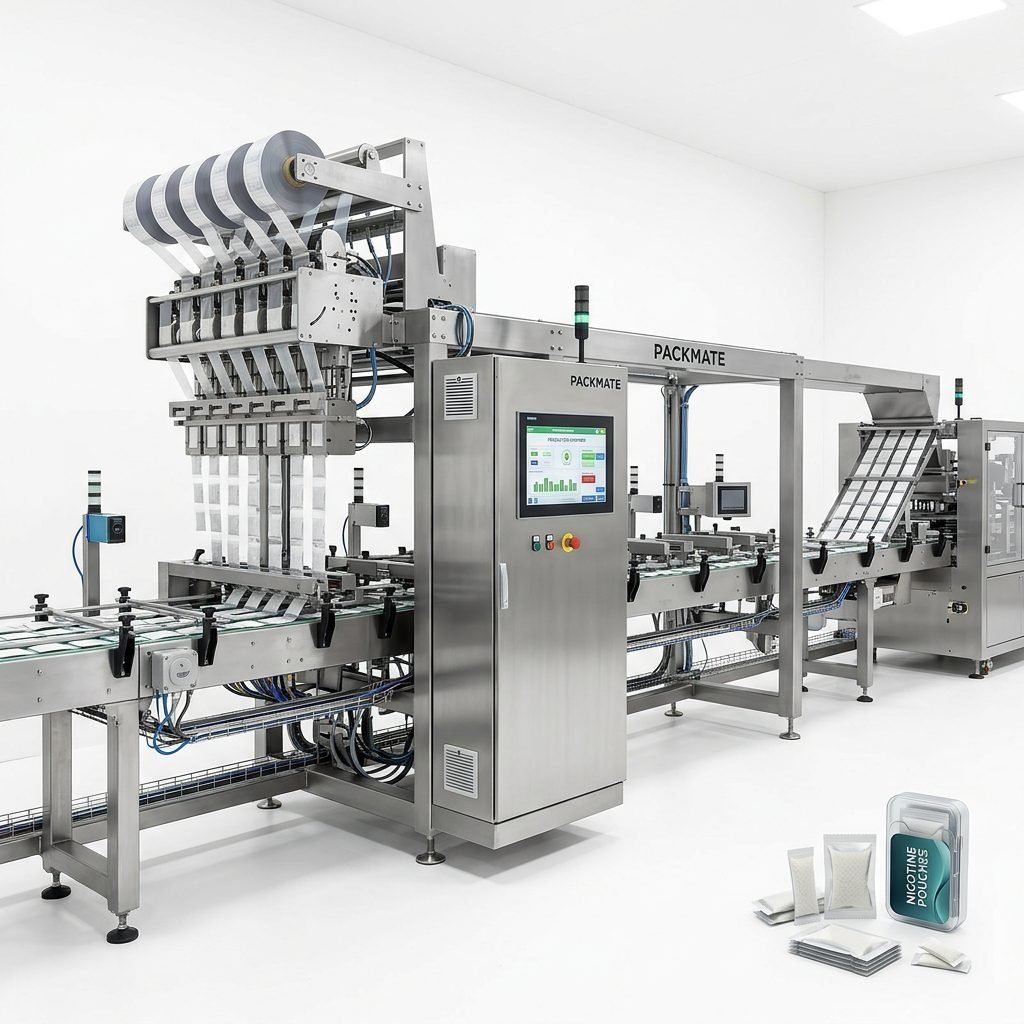
Multi-lane systems are ideal if you need to scale output without increasing footprint proportionally. They reduce per-unit labor and increase overall efficiency but require more sophisticated synchronization and control. For small or pilot runs, a single-lane machine may be more economical and flexible.
📌 Tip: If you plan to expand within 12–36 months, consider purchasing a modular multi-lane machine. The initial CAPEX is higher but the long-term cost per pouch will be lower.
Filling System and Product Handling
Filling accuracy is critical for nicotine products because dosing variations can impact both compliance and customer experience. Typical filling systems include volumetric dosers, weighing systems, auger fillers for powder, and piston/corona pumps for liquids. High-precision applications benefit from electronic weighing and multi-head weighers that ensure consistent dose weight.
For complex recipes or multi-ingredient pouch contents, an integrated weighing system reduces manual handling and improves traceability. Check offerings such as the Weighing & Packaging Systems if precise batch control is required.
Compatibility with Packaging Materials
Ensure the machine supports your chosen film or pouch material—flexible lamination, paper-laminates, or polymer films. Heat-seal profiles, sealing jaws and controlled cooling are vital for achieving consistent hermetic seals and avoiding contamination or moisture ingress.
Automation, Controls and Operator Interface
Modern nicotine packaging lines rely on PLC control, touchscreen HMIs, and servo-driven motion for accuracy and repeatability. Look for features such as recipe management, remote diagnostics, and automated changeover sequences. A machine with a robust HMI and recipe control will reduce setup times and operator errors.
🔧 Must-have control features: recipe storage, servo synchronization, fault logging, and remote service connectivity for quick troubleshooting.
Quality, Certification and Compliance
Verify that your supplier offers machines that meet international standards such as CE and ISO. Certifications demonstrate the manufacturer’s commitment to safety and consistent engineering practices. For nicotine and snus packaging, traceability and hygiene design (easy-to-clean components, sanitary materials) are essential.
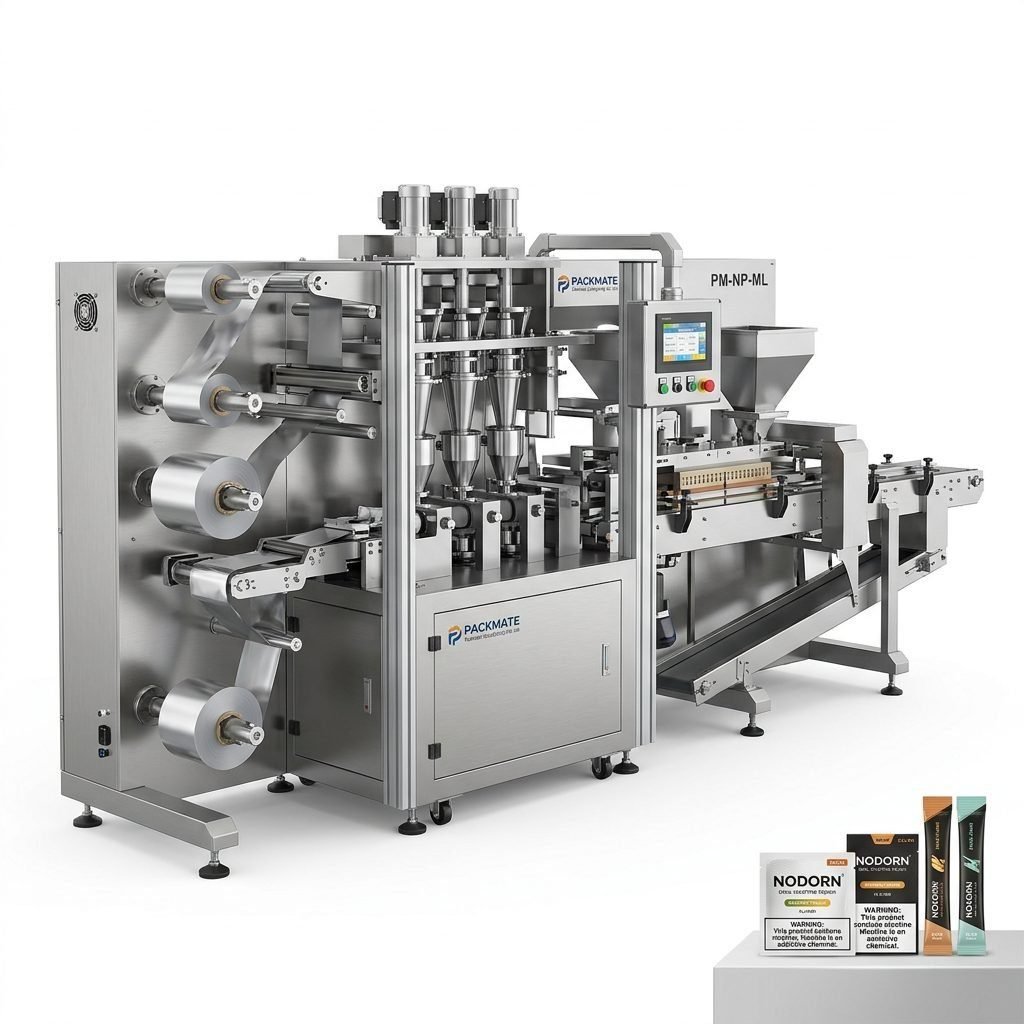
Packmate Snus Machine emphasizes global compliance and quality—its product lines comply with relevant certifications and are backed by a factory with 30+ years of experience and advanced CNC manufacturing capacity. Learn more about the company on the About Packmate page.
Maintenance, Spare Parts and Local Support in Eritrea
Sourcing spare parts and technical support locally or regionally reduces downtime. Discuss spare parts lead times, common wear items, and recommended maintenance schedules with your supplier. Ask whether the supplier provides on-site installation, operator training and commissioning services, or remote support options.
If a manufacturer offers global turnkey services and exhibition support, that often signals mature after-sales processes. You can view real-world deployments and case studies to validate performance—see relevant examples in the Case section.
Practical local considerations for Eritrea
– Ensure compatibility with local electrical supplies (voltage and frequency).
– Plan for customs, import duties and any nicotine-specific import restrictions.
– Establish a spare parts inventory for critical components (seals, belts, sensors).
– Negotiate remote support SLAs and on-site visits for installation and troubleshooting.
✅ Service Tip: Keep a basic toolkit and a 3-month spare parts kit on hand to minimize production interruptions in remote regions.
Economic Considerations: CAPEX, OPEX and ROI
Evaluate the total cost of ownership, not just the machine price. Consider energy consumption, operator labor, maintenance intervals, yield and scrap rates, and consumable costs. High-speed automated machines typically reduce OPEX by lowering labor and improving yield, which shortens payback periods even if initial CAPEX is larger.
Build a conservative ROI model:
Initial cost + installation + training + first-year spare parts = Weighted CAPEX
Annual labor + consumables + service contracts + energy = Annual OPEX
Divide expected incremental margin from automation by the weighted CAPEX to estimate payback months/years.
Factory and Manufacturer Capabilities Matter
A strong manufacturer provides consistent engineering quality, options for customization, and robust after-sales support. Packmate Snus Machine highlights several strengths that buyers should verify: a 20,000㎡ manufacturing facility, advanced CNC machining centers, 50+ machine models, and decades of engineering experience. These factors influence delivery reliability and the ability to supply tailored turnkey solutions.
What to request from suppliers during evaluation
– Detailed technical specifications and performance data.
– Reference installations in similar markets.
– Video demonstrations or remote machine trials.
– Clear warranty terms and spare parts policies.
– Training programs for operators and maintenance staff.
Integration with Upstream/Downstream Equipment
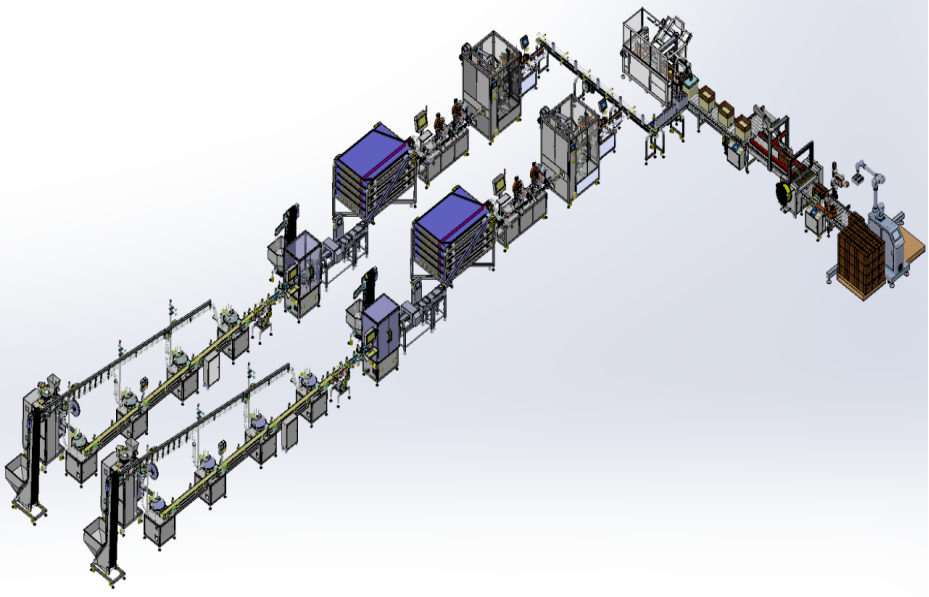
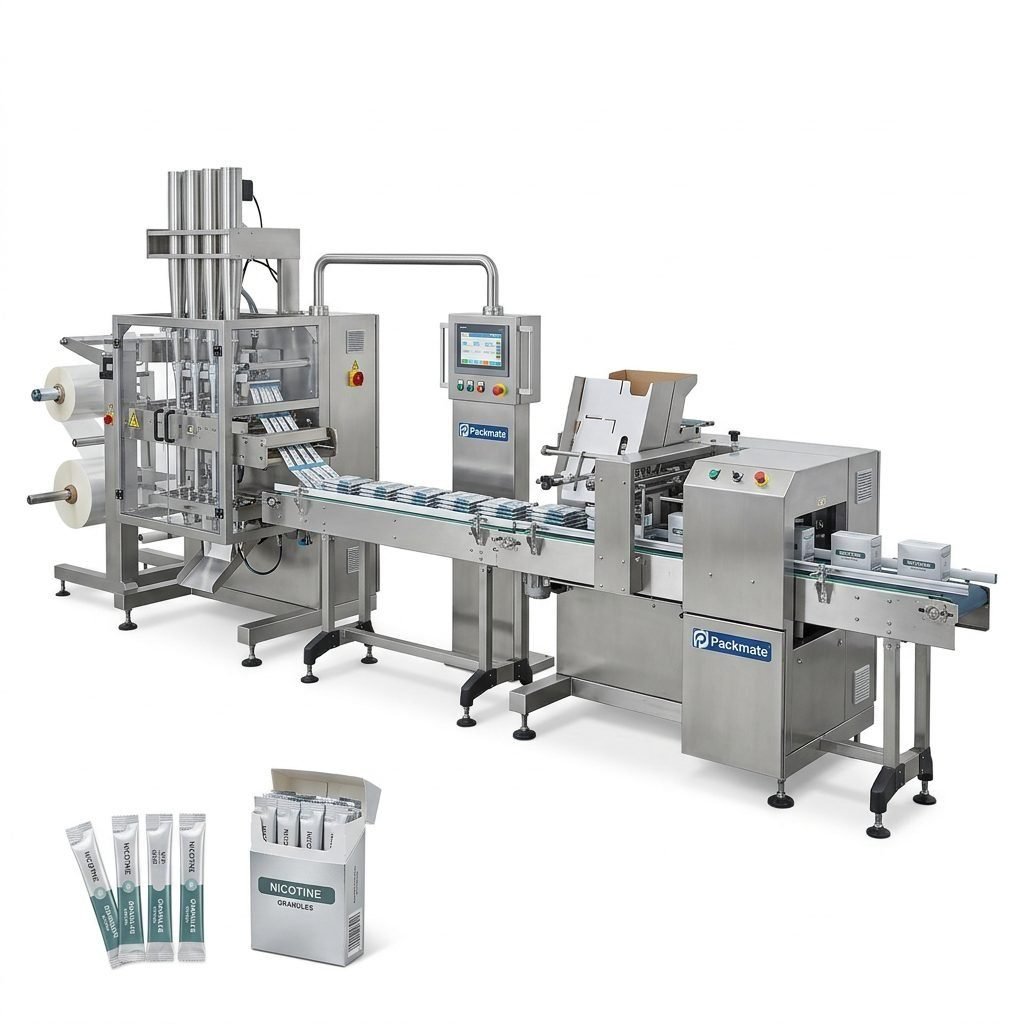
Packaging lines rarely operate in isolation. Consider how your chosen machine will integrate with upstream filling, dosing, or drying systems and downstream cartoning, case packing, and palletizing lines. Look for common communication standards (Ethernet/IP, Modbus) and options for synchronized indexing to reduce buffer time and ensure smooth product flow.
If you need full-line automation, check the vendor’s capability to supply Filling & Packaging Lines and auxiliary equipment so you can get an integrated solution rather than coordinating multiple suppliers.
Testing, Factory Acceptance and Commissioning
Insist on factory acceptance testing (FAT) and detailed acceptance criteria before shipment. FAT demonstrates that the machine achieves promised speeds and dosing accuracy using your or representative materials. After shipment, plan for on-site commissioning to adapt machine settings to local conditions and operator preferences.
📦 Checklist for FAT and Commissioning: performance tests at target speed, seal integrity tests, dosing accuracy reports, and training completion sign-off.
Logistics, Installation and Local Training
Shipping large machines to Eritrea requires careful coordination. Confirm packaging method, crate sizes, and handling requirements. Plan installation space with appropriate clearances, HVAC and cleanability considerations. Training local operators and technicians is crucial—both initial and ongoing training programs ensure consistent operation and reduce reliance on external technicians.
How to Shortlist Suppliers
Create a short list of suppliers based on capability, references, and compatibility with your needs. Ask for:
– Performance references in nicotine or similar industries.
– On-site or virtual demonstrations.
– Clear spare parts and service pricing.
– Lead times and manufacturing capacity.
– Warranty and service-level commitments.
Manufacturers that present clear documentation and offer turnkey solutions—covering packaging, filling systems, and auxiliary equipment—reduce integration risk and accelerate time to production. For a broad view of available equipment, consider the Bag & Pouch Packaging Machines and Auxiliary Packaging Equipment categories when planning a complete line.
Final Decision Checklist
Before you sign a purchase agreement, validate the following:
– Machine meets your speed and format requirements.
– Filling accuracy and sealing integrity validated on representative materials.
– Clear spare parts lead times and pricing established.
– Installation, commissioning, and training included or available.
– Warranty, certification and compliance documentation provided.
– Local or remote service and diagnostics options confirmed.
⚠️ Warning: Choosing the lowest initial price often increases long-term costs due to higher scrap, more downtime, and limited support. Prioritize reliable engineering, warranty and service.
Where to Get More Information and Demonstrations
Request machine videos, FAT reports, and references from countries with similar operating conditions. If feasible, visit exhibitions or the manufacturer’s factory to see the production processes and quality controls firsthand. You can contact manufacturers directly via their contact pages to arrange live demos or virtual tours—use the Contact Us link to request specific information.
Conclusion
Selecting the best nicotine packaging machine for Eritrea requires a clear assessment of capacity, pouch format, dosing precision, automation level, and after-sales support. Prioritize proven manufacturers with strong engineering capabilities, clear certification, and the ability to provide spare parts and service support. By following the decision checklist, validating performance through FAT, and ensuring local support arrangements, you can secure a packaging solution that delivers reliable output, regulatory compliance, and predictable long-term costs.
Frequently Asked Questions
Q: How do I determine the right machine speed for my operation?
A: Estimate your daily/weekly production targets, factor in shift patterns and desired growth, then choose a machine whose maximum sustainable speed exceeds your peak requirements by 15–25% to accommodate downtime and changeovers.
Q: What spare parts should I stock locally in Eritrea?
A: Keep critical consumables on hand: sealing jaws, belts, critical sensors, drive belts, and a set of spare seals/gaskets. Discuss a recommended spare parts kit with your supplier based on expected wear patterns.
Q: Can I get full-line integration from a single supplier?
A: Yes—many manufacturers offer turnkey filling and packaging lines including auxiliary equipment. Buying a complete line reduces integration risk and shortens deployment time, but ensure the vendor can demonstrate prior integrated installations.
Q: How important are certifications like CE and ISO?
A: Certifications indicate compliance with international safety and quality standards. They are important for export markets and provide assurance that manufacturing practices meet accepted benchmarks.
Q: Where can I see validated machine case studies?
A: Review the manufacturer’s case studies and references page to see real-world installations and performance results. Manufacturer-supplied case documentation helps validate claimed throughput and reliability.