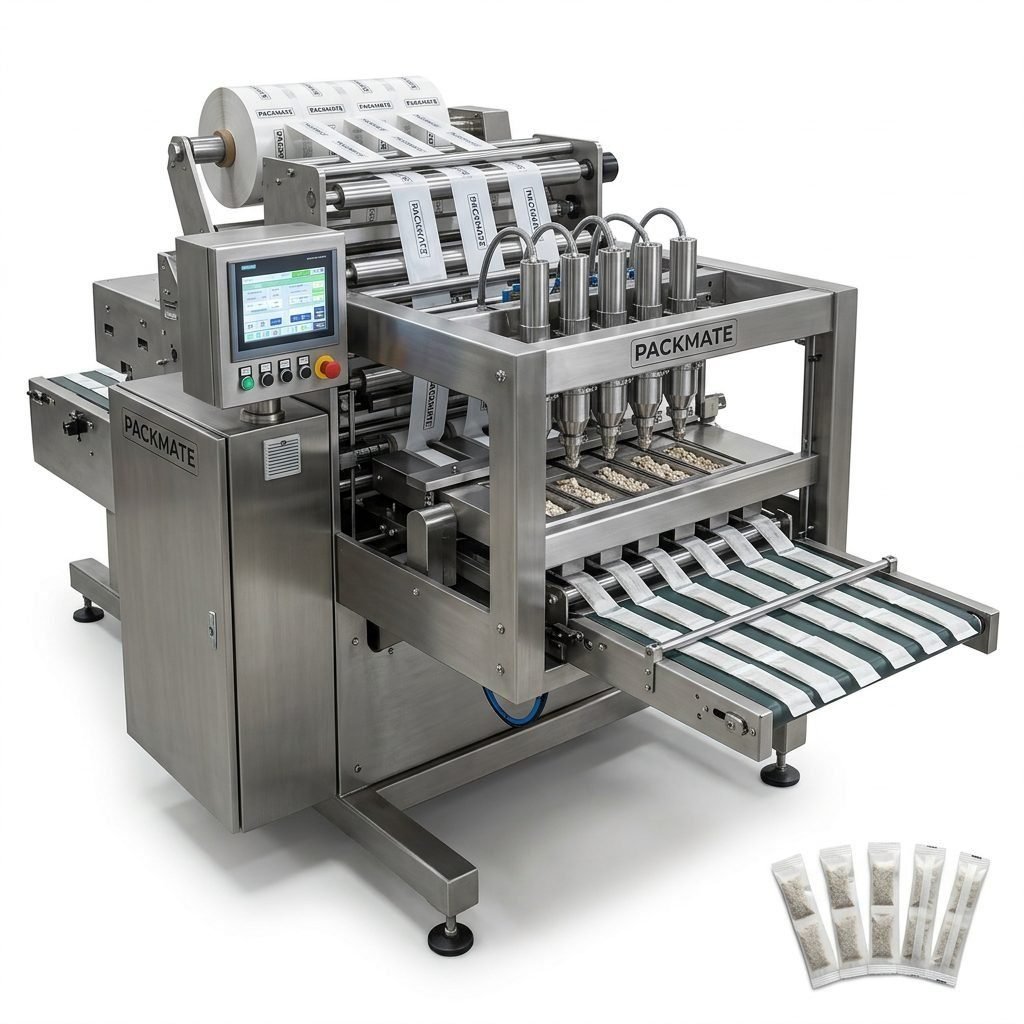
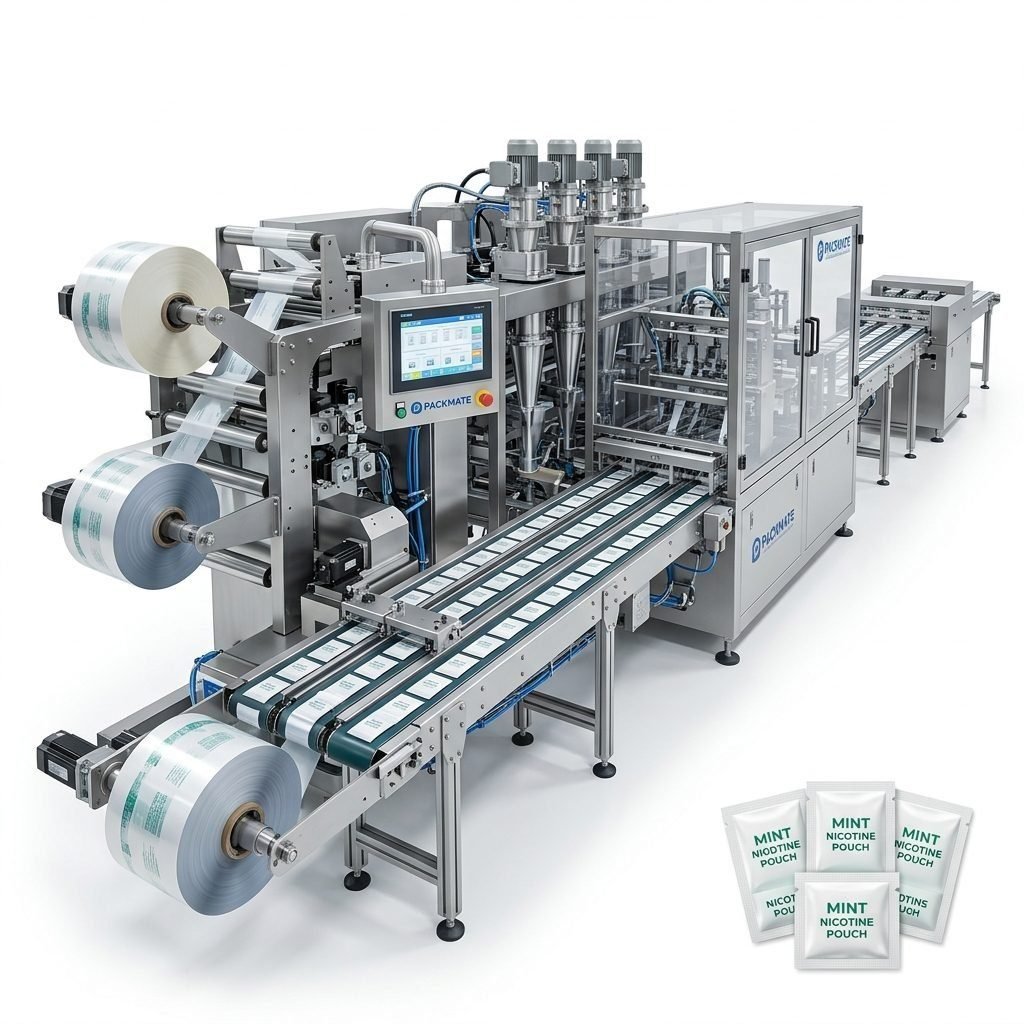
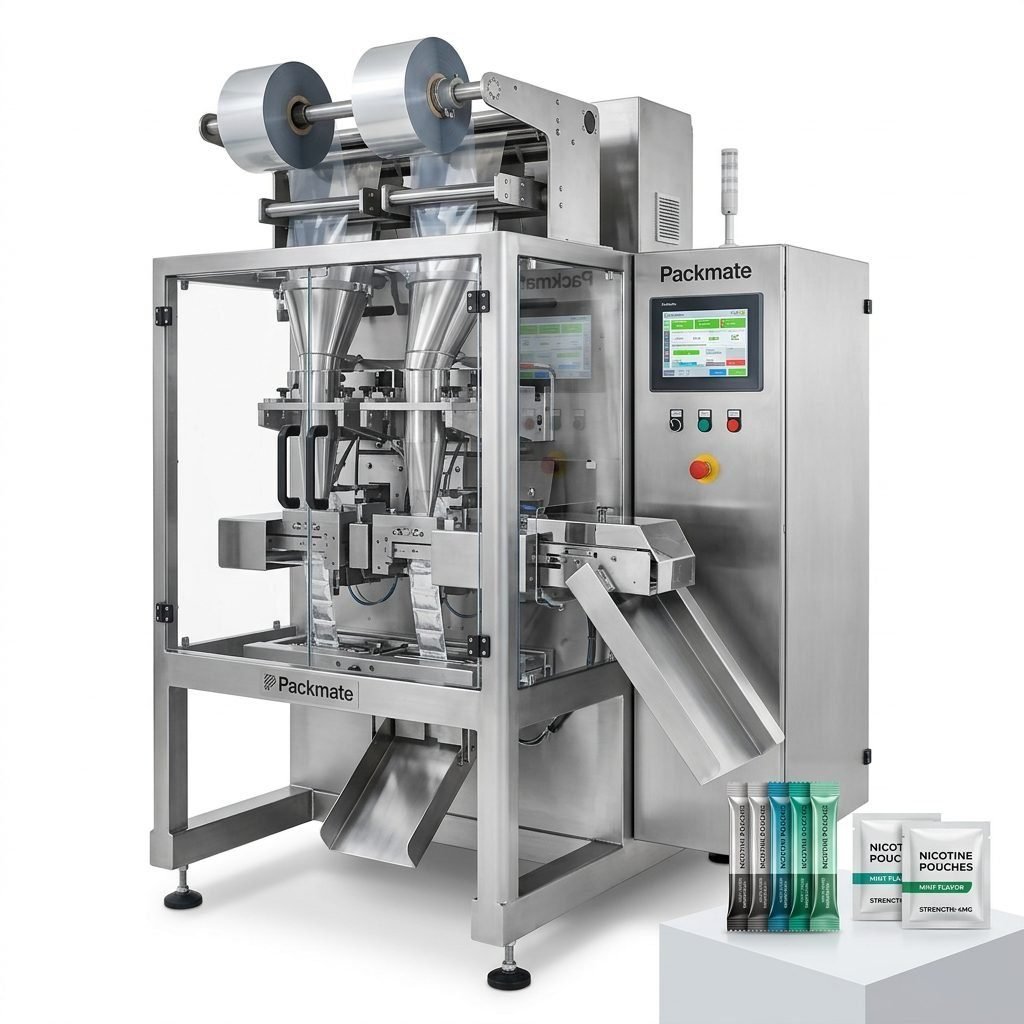
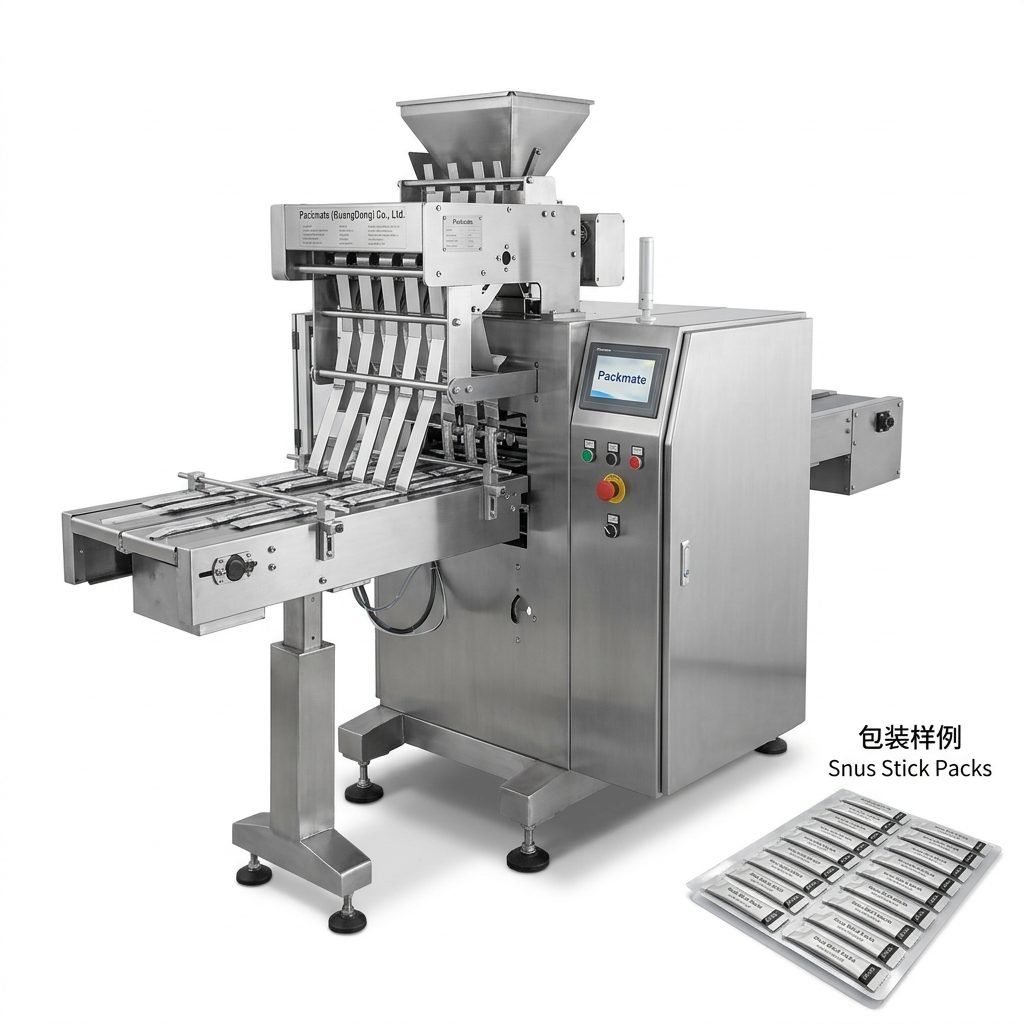
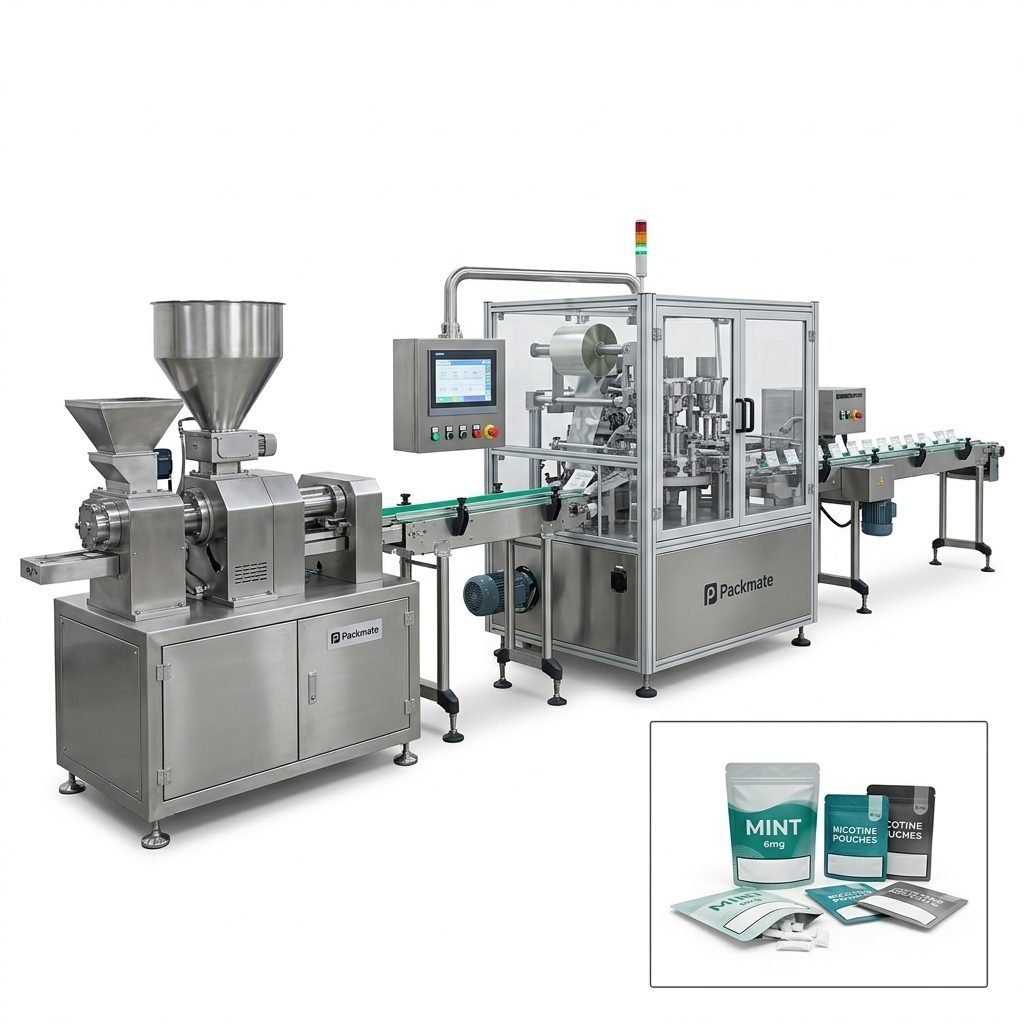
Understanding how to calculate and optimize a snus packaging line’s capacity is crucial for manufacturers who want to maximize output while maintaining quality and minimizing costs. This guide walks through clear, practical steps to measure capacity, identify bottlenecks, and implement optimizations that raise production efficiency across single-lane and multi-lane snus lines.
Key Concepts: Capacity, Throughput, and Yield
Capacity and throughput are often used interchangeably, but they focus on different realities of a production line:
Capacity = the theoretical maximum number of finished packs your line can produce per unit time under ideal continuous running conditions.
Throughput = the actual number of finished packs produced per unit time, after accounting for stops, changeovers, and quality rejections.
Yield = finished good count / total produced count, often expressed as a percentage and reflecting quality and rejects.
Basic Formulae for Line Capacity
Start with the simplest calculation and then layer on realistic factors:
Theoretical Capacity (packs/hour) = Machine Speed (packs/min) × 60 × Number of Lanes
Realistic Throughput (packs/hour) = Theoretical Capacity × (Availability × Performance × Quality)
Where Availability, Performance and Quality are components of OEE:
Availability = (Planned Production Time − Downtime) / Planned Production Time
Performance = Actual Speed / Ideal Speed
Quality = Good Units / Total Units
Worked Example: Calculating Line Capacity
Assume a snus packing machine runs at 40 packs/min per lane, configured as a 6-lane system, with planned production time of 8 hours and expected OEE of 78% (Availability 90% × Performance 95% × Quality 91%).
Theoretical Capacity = 40 packs/min × 60 × 6 lanes = 144,000 packs/hour (note: this is packs per hour calculation from minutes — verify units). For practical use we convert correctly:
Theoretical Capacity (packs/hour) = 40 × 60 × 6 = 14,400 packs/hour.
Realistic Throughput = 14,400 × 0.78 = 11,232 packs/hour. Over an 8-hour shift: 11,232 × 8 = 89,856 packs.
Key takeaway: Always convert speeds and units carefully and apply OEE modifiers to move from theoretical to realistic outputs.
Identifying and Solving Common Bottlenecks
Bottlenecks determine the line’s true capacity. Typical areas to examine:
- Feeding systems and hoppers — inconsistent feeding reduces lane speeds.
- Forming and sealing stations — misalignment or inconsistent film tension creates stoppages.
- In-line weighing and dosing — slow or inaccurate dosing increases rejects.
- Changeovers — long format changes dramatically decrease availability.
- Downstream conveyors and packaging accumulation — starved or blocked conveyors cause ripple downtime.
Optimization Strategies
Use targeted steps to improve Availability, Performance and Quality:
1) Increase Availability: Implement preventive maintenance schedules, quick-change tooling, and create a standardized rapid-change SOP to cut format changeover times. Track mean time to repair (MTTR) and mean time between failures (MTBF) to measure progress.
2) Improve Performance: Tune machine registers, balance lanes, and ensure servo systems and PLCs run at optimum cycles. Consider upgrading to higher-performance multi-lane snus systems when demand consistently approaches installed capacity.
3) Raise Quality: Improve in-line inspection, adjust dosing accuracy, and use better film or pouch materials to reduce seal faults. Inline weighers and vision systems catch defects earlier and prevent waste.
Multi-Lane Specific Considerations
When you scale by adding more lanes, capacity scales, but so do potential points of imbalance:
– Synchronize feeders so each lane receives consistent material volumes; imbalance produces lane starvation.
– Use central infeed hoppers with individual flow-control gates for each lane.
– Design the line with lane isolation features so that one lane fault does not stop the entire line; this increases effective availability.
Practical Example: Adding a New Production Shift
If your 6-lane line produces 11,232 packs/hour at current OEE and you add a second shift with similar OEE and no major additional capital expenditure, your daily output effectively doubles — but only if spare parts, labor, and materials are available. Plan spare parts inventory and operator rotations before committing to extra shifts.
Measuring and Improving OEE for Snus Lines
OEE ties together availability, performance and quality into a single actionable metric. Practical steps:
- Log all stops with reason codes — categorize by tool, operator, material, or electrical.
- Use simple timers or an MES to capture run-time vs. stop-time.
- Audit reject causes weekly and feed corrective actions into operator training.
Automation and Auxiliary Equipment to Increase Capacity
Integrating auxiliary systems often unlocks additional throughput:
Inline weighers reduce dosing variability and improve first-pass quality. See options in Weighing & Packaging Systems for different product types.
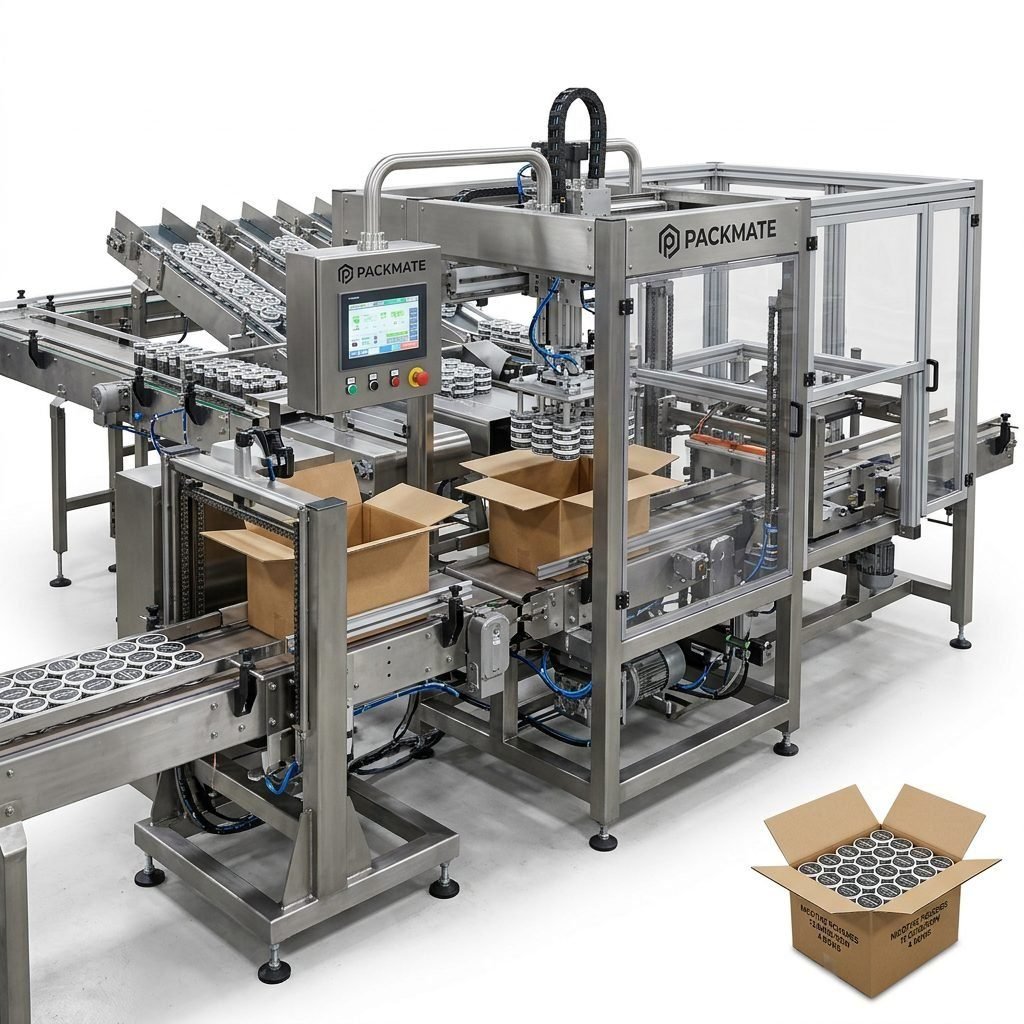
Robotic pick-and-place for secondary packaging eliminates manual handling limits at high speeds. Auxiliary packaging equipment can automate bundle or case packing to match primary packaging output.
Relevant resources:
• Snus & Nicotine Packaging Machines
• Weighing & Packaging Systems
• Auxiliary Packaging Equipment
Line Balancing and Layout Tips
A balanced line avoids chokepoints and minimizes WIP accumulation:
- Map takt time for demand-driven scheduling and align machine cycle times to takt.
- Place slower processes earlier or provide buffer conveyors where necessary.
- Design ergonomic operator stations to speed changeovers and reduce human error.
Checklist: Before You Increase Line Speed or Lanes
✔️ Verify raw material supply (film, pouches, ingredients) can match new output.
✔️ Confirm packaging material tensile and seal strength at higher speeds.
✔️ Ensure spare parts and maintenance plans are in place.
✔️ Validate in-line inspection capacity and downstream case packing match the increased rate.
How Packmate Supports Capacity Planning
Packmate (GuangDong) Co., Ltd. brings over 30 years of experience in packaging machine engineering and offers turnkey snus packaging lines tailored to production targets. With multiple multi-lane offerings and integrated weighing and auxiliary systems, Packmate can design a line that meets your target throughput and maintainability. Learn more about company capabilities and case studies:
• About Packmate
• Case Studies
Common Pitfalls and How to Avoid Them
– Overestimating capability by using theoretical rates without accounting for real-world stoppages. Use historical OEE data rather than vendor peak numbers.
– Ignoring material quality — inexpensive film or pouch stock may save money upfront but increases rejects and downtime.
– Under-investing in staff training — operator skill directly affects changeover time and first-pass quality.
Practical Next Steps to Boost Your Snus Line Capacity
1) Conduct a capacity audit: record machine speeds, downtime reasons, reject rates and changeover times for a representative week.
2) Calculate theoretical vs. actual throughput using the formulae above and identify the largest loss categories.
3) Prioritize actions that give the highest capacity ROI: preventive maintenance, quick-change kits, and inline weighing/vision upgrades.
4) Talk to a vendor or systems integrator (for example, see Filling & Packaging Lines) about targeted retrofits or fully new multi-lane solutions.
Final Notes
Optimizing snus line capacity is a combination of accurate measurement, focused process improvements, and the right equipment choices. It requires cross-functional coordination — from procurement and engineering to operators and quality teams.
Frequently Asked Questions (FAQs)
Q1: How do I quickly estimate whether my current snus line meets demand?
A: Multiply your current packs/min × 60 × number of lanes to get theoretical packs/hour, then apply a conservative OEE factor (0.6–0.85 depending on maturity) to estimate realistic throughput.
Q2: What is the most cost-effective upgrade to increase capacity?
A: Often the best initial investment is reducing changeover time with quick-change tooling and operator training. This increases availability with relatively low capital expense.
Q3: Should I add lanes or buy a faster single-lane machine?
A: Multi-lane systems often provide better space-to-output ratios and redundancy. If floor space is limited, a higher-speed single-lane could work, but multi-lane gives more flexible scaling.
Q4: How do I ensure quality when increasing speed?
A: Invest in inline inspection (vision), accurate dosing/weighing systems, and test runs with production materials. Monitor reject types and tune process parameters as speed increases.
Q5: Who can help design and commission a high-capacity snus line?
A: Look for experienced packaging machine manufacturers with turnkey capabilities and multi-lane expertise. For reference, review Packmate’s product pages and case studies to find solutions that match your output goals.