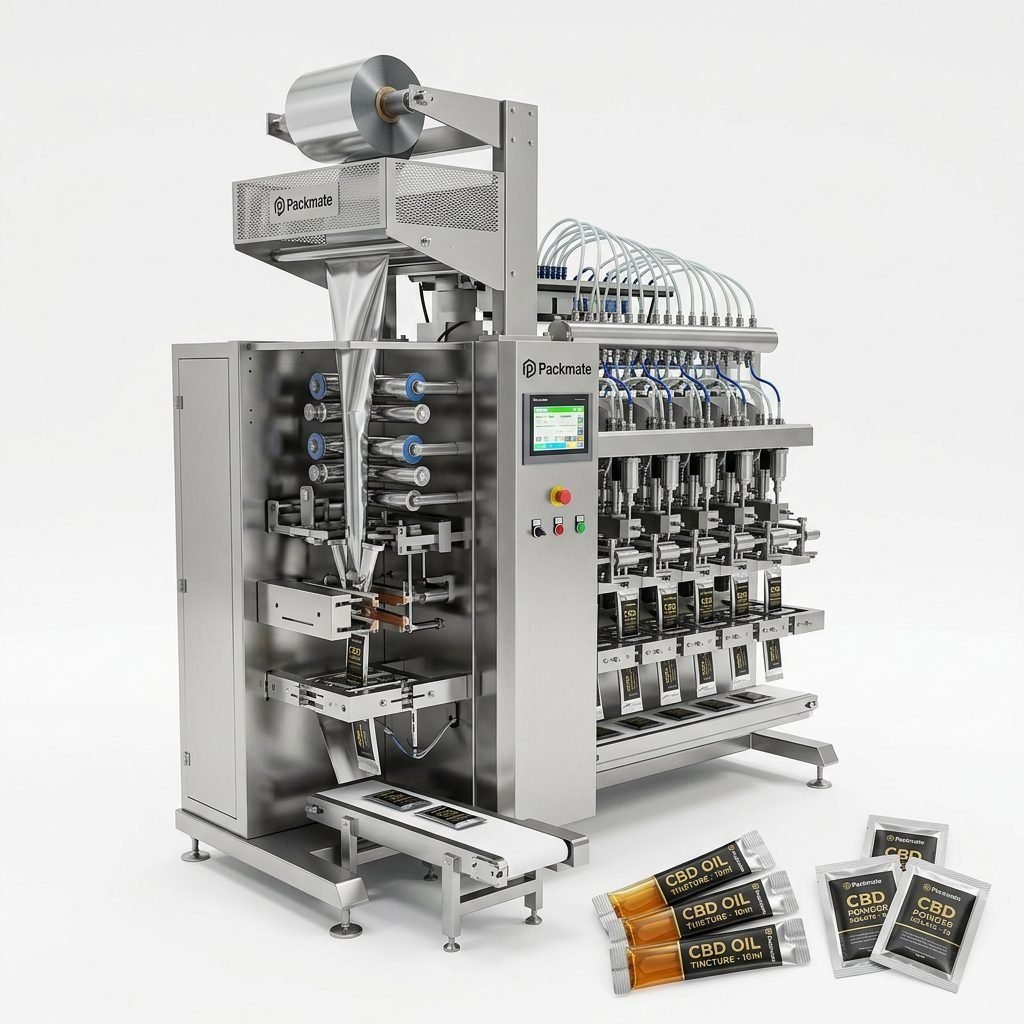
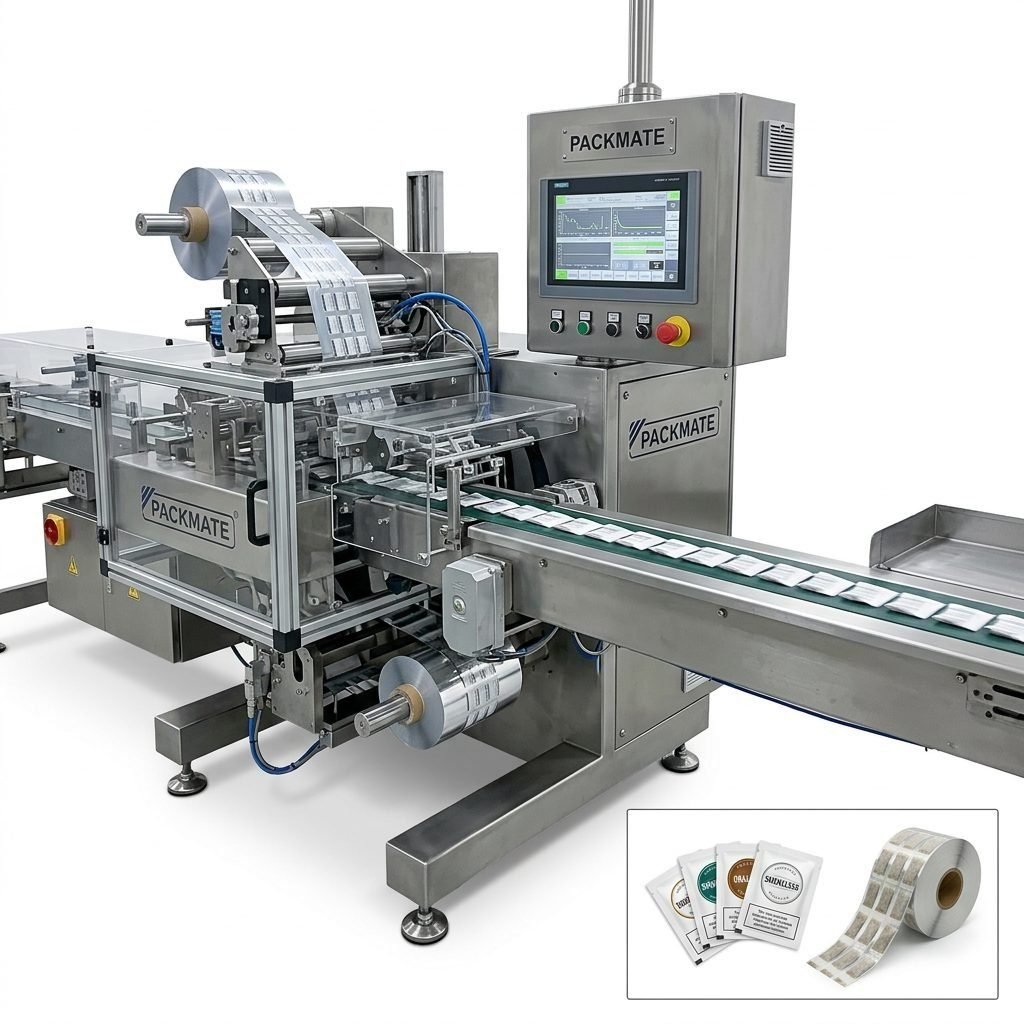
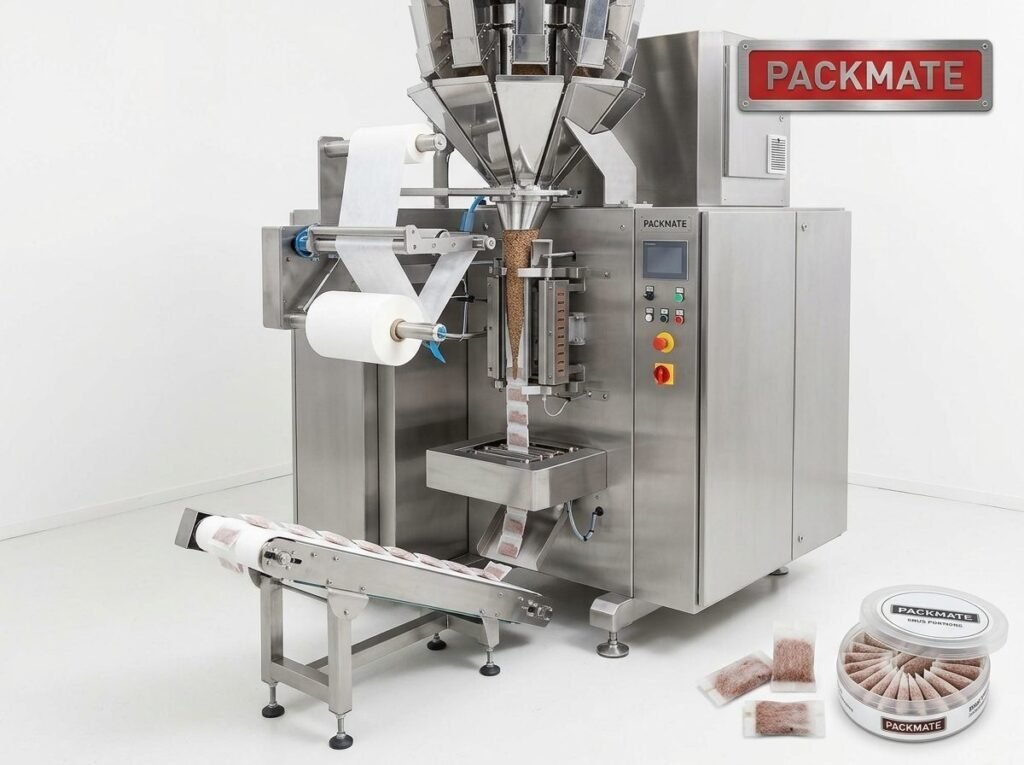
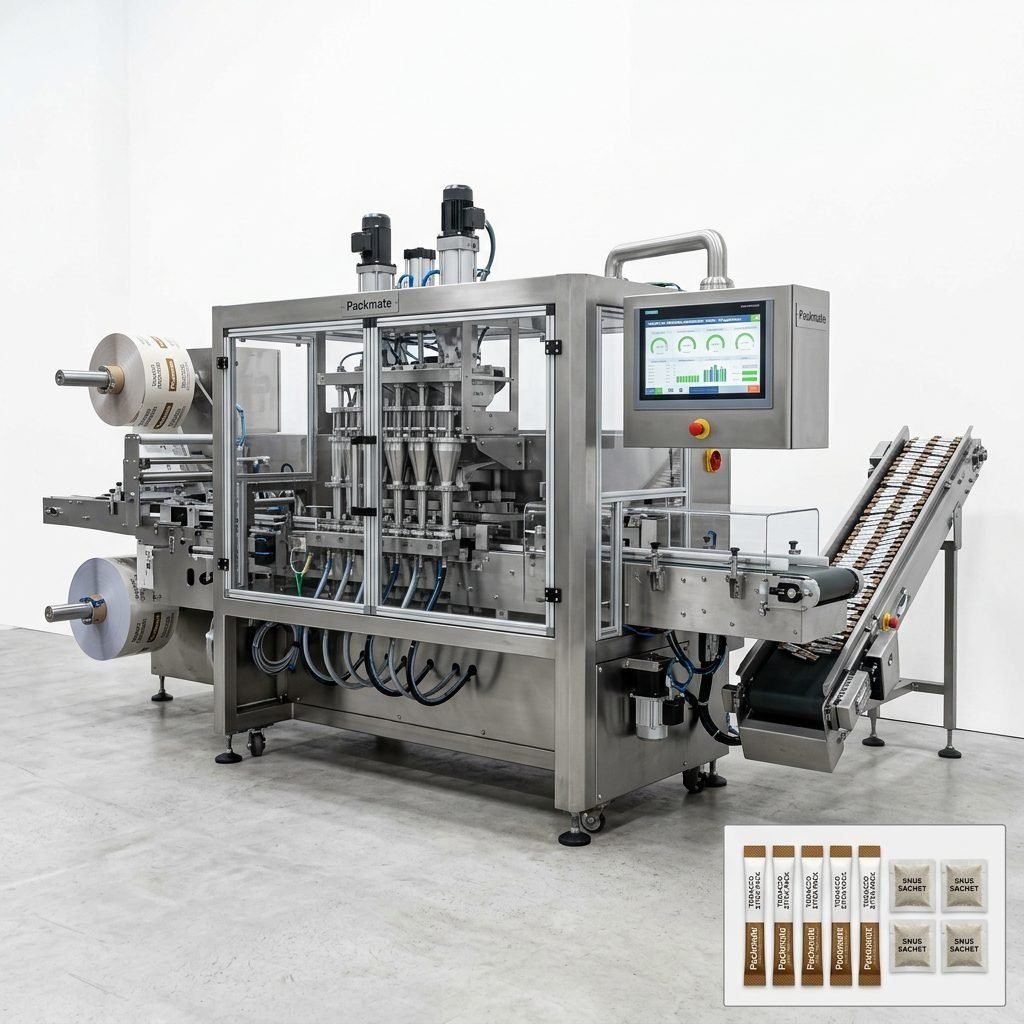
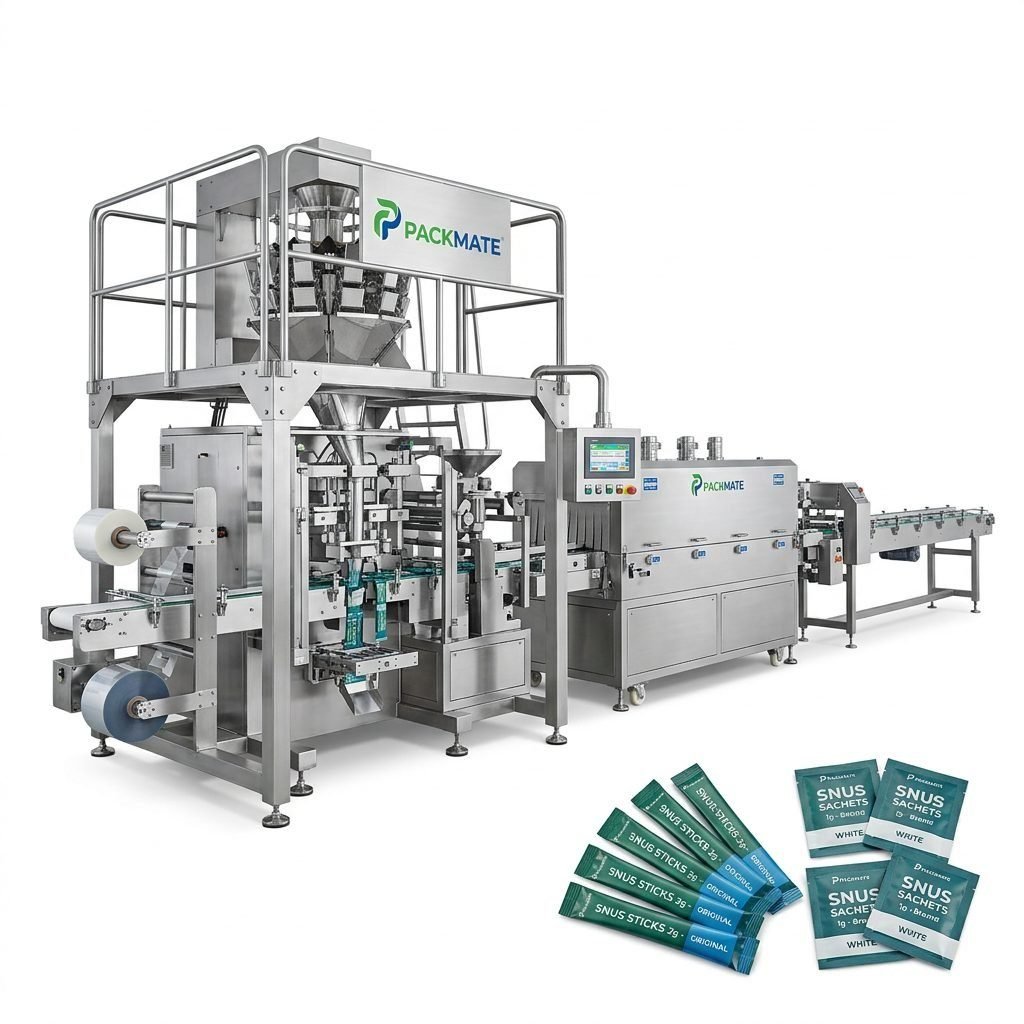
The modern snus and nicotine pouch market demands precision, speed, and repeatable quality. A High‑Efficiency Multi Lane Snus Production Line for Automated Pouch Filling and Packaging delivers all three, combining multi-lane forming, accurate dosing, synchronized sealing, and downstream packaging into a single, compact production solution. This article explores the technology, benefits, design considerations, integration challenges, and real-world applications of a multi-lane snus packaging line — helping packaging engineers, plant managers, and procurement teams choose the right system for scaling up production.
Why Multi Lane Matters: Throughput, Consistency, and Cost
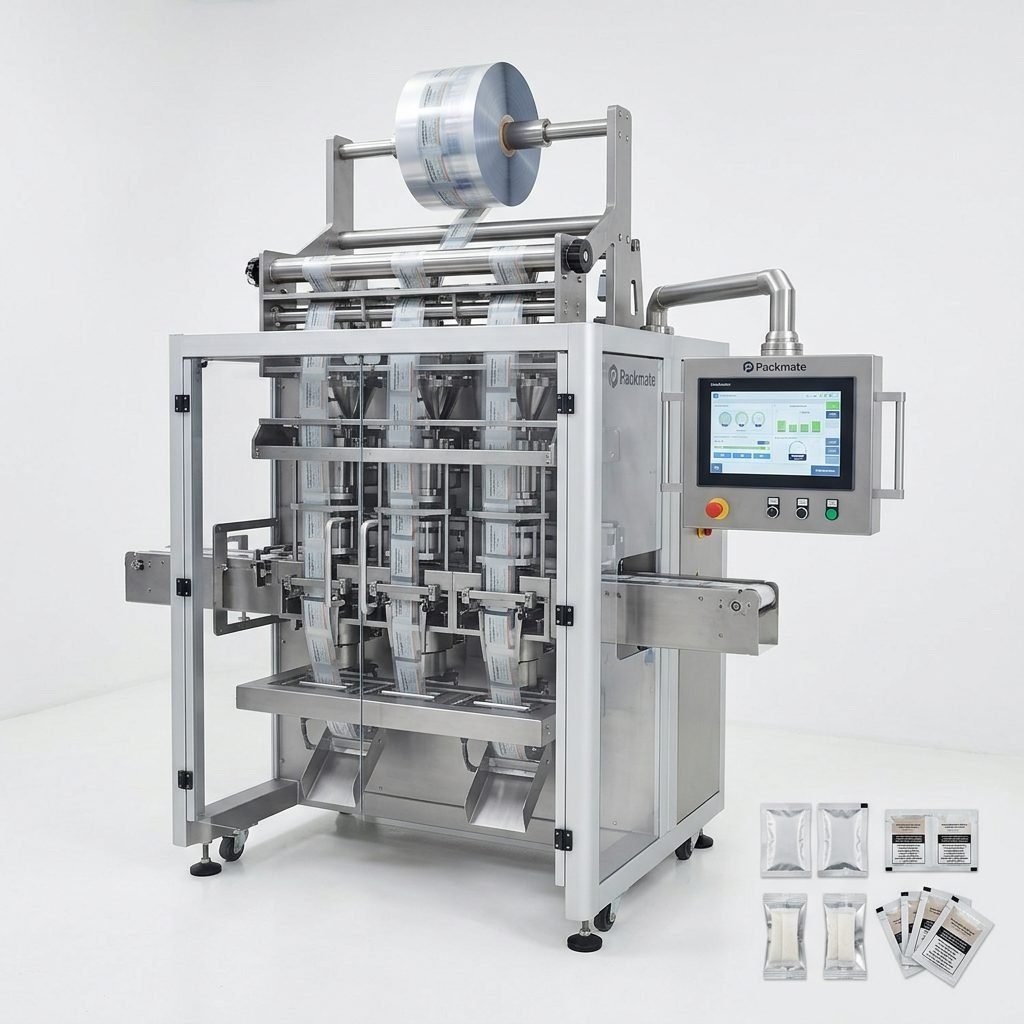
A multi lane production line multiplies output without a proportional increase in labor or floor space. By running several synchronized lanes that form, fill, and seal pouches simultaneously, manufacturers can reach higher throughput targets while maintaining strict product consistency. Key benefits include:
✅ Higher productivity: Multi-lane designs deliver many times the output of single-lane machines with minimal incremental footprint.
⚙️ Improved consistency: Centralized control and precision dosing ensure uniform pouch weight and sealing quality across all lanes.
📦 Lower unit cost: Reduced labor and faster cycles lower cost-per-pouch as production scales.
Core Components of a High‑Efficiency Multi Lane Snus Line
Understanding the modular components helps specify the right line for product characteristics (powder, granule, moisture, pouch material) and production targets. A complete line typically integrates:
• Feed & dosing systems: precision augers, vibratory metering, or multi-head weighers for powder and granule control.
• Multi-lane forming & pouch transport: synchronized lane modules for forming paper, film, or composite pouches.
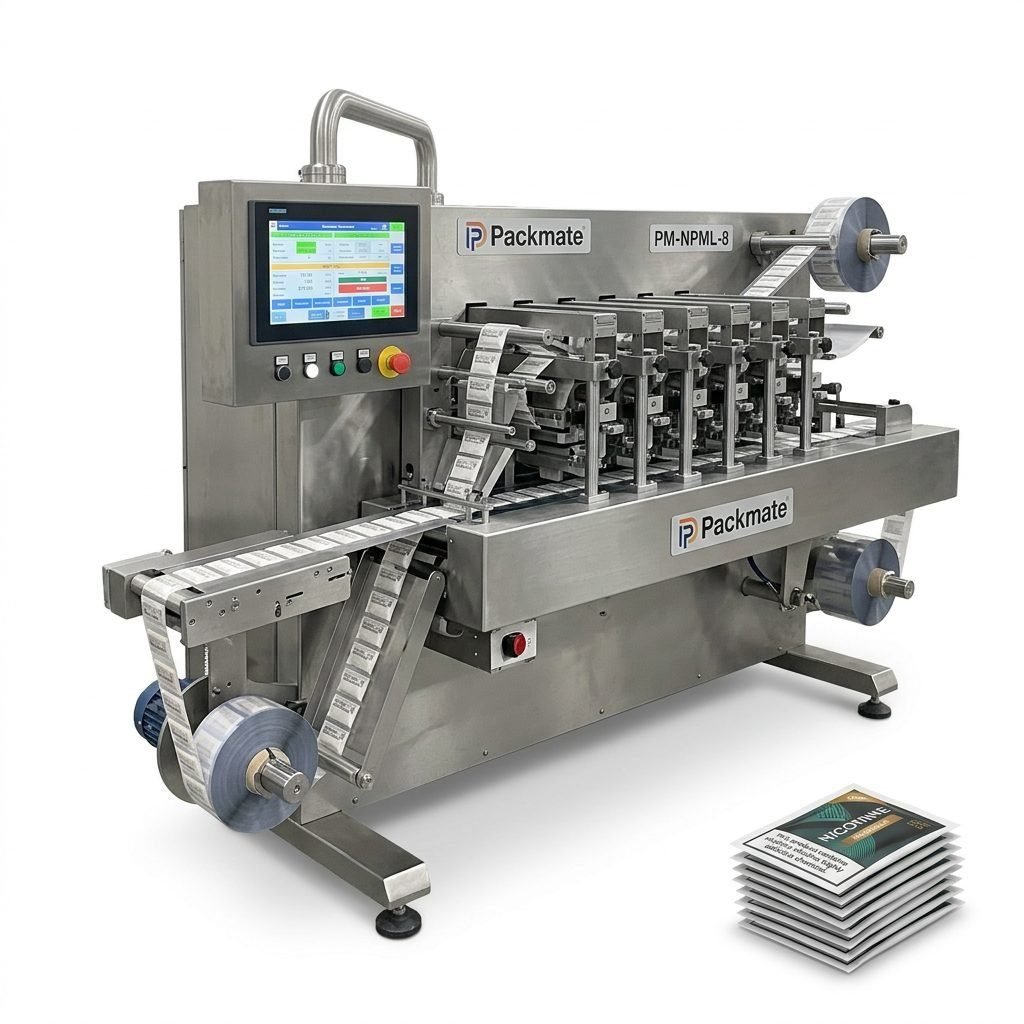
• Sealing & cutting units: heat-seal or impulse technologies tuned for pouch film and barrier layers.
• Quality inspection: vision systems, seal integrity detectors, and weight checkers that ensure every pouch meets spec.
• Downstream packing: cartoning, vertical form fill and seal, or secondary multipart packaging tailored to market requirements.
Precision Dosing: The Heart of Product Consistency
Accurate dosing is essential for nicotine pouches and small-dose products. High-efficiency lines employ a mix of technologies depending on product attributes:
• Multi-head weighers for ultra-precise portions when tolerance is tight.
• Auger fillers optimized for fine powders and hygroscopic mixes.
• Vibratory feeders for fragile or irregular granules.
Tip: Integrating real-time weight feedback across lanes reduces average variance and rejects, improving yield.
Synchronization & Control: Achieving Seamless Multi‑Lane Operation
Synchronization between lanes, dosing, sealing, and downstream packaging is crucial. Modern lines use PLC and servo-driven systems to coordinate motion and timing precisely. Benefits include:
• Reduced mechanical stress and wear due to smooth acceleration profiles.
• Faster changeovers with position memory and recipe-based controls.
• Lower downtime: automatic lane shut-off and bypass for fault isolation.
Design Considerations for Different Product Types
Not all snus and nicotine pouch formats are identical. Formulation, moisture sensitivity, and particle size drive specific equipment choices:
Powders: use closed hopper systems and controlled augers to avoid clumping and dusting.
Granules: implement gentle feed systems and anti-bridging devices to ensure continuous flow.
Moisture-sensitive blends: add dehumidifiers and inert-gas purging at critical stations to extend shelf stability.
Material Selection: Film, Paper, and Barrier Layers
Pouch materials must balance barrier properties, sealability, and machinability. Multi-lane lines are designed to work with a range of laminates and films. Key points:
• Choose films with predictable heat-seal windows to avoid variability between lanes.
• Consider pre-printed roll stock and inline registration systems to align graphics across lanes.
Note: Testing film mechanical properties on sample runs prevents costly production stoppages.
Maintenance & Accessibility: Keep OEE High
High equipment availability is essential for cost-effective production. Good machine design minimizes downtime through easy access, modular spares, and predictive maintenance features:
🛠️ Modular lane units that can be serviced or replaced without stopping the entire line.
🔧 Quick-release tooling for fast changeovers between pouch formats.
📈 Built-in diagnostics and remote support to reduce MTTR and improve OEE.
Automation & Industry 4.0: Data-Driven Production
Modern snus production lines collect process data across lanes: fill weights, seal temperatures, production speed, and reject rates. Leveraging this information enables:
• Predictive maintenance schedules.
• Batch traceability and electronic batch records for compliance.
• Continuous improvement: use trend analysis to fine-tune recipes and reduce waste.
Safety, Compliance, and Certifications
Equipment must comply with international standards to sell into regulated markets. Packmate Snus Machine aligns designs with CE and ISO norms, focusing on machine guarding, electrical safety, and hygienic design. When evaluating suppliers, verify:
• CE/ISO certifications and factory inspection reports.
• Traceability of components and materials used in construction.
• Support for validation protocols where required by local regulations.
Turnkey Integration: From Filling to Final Packaging
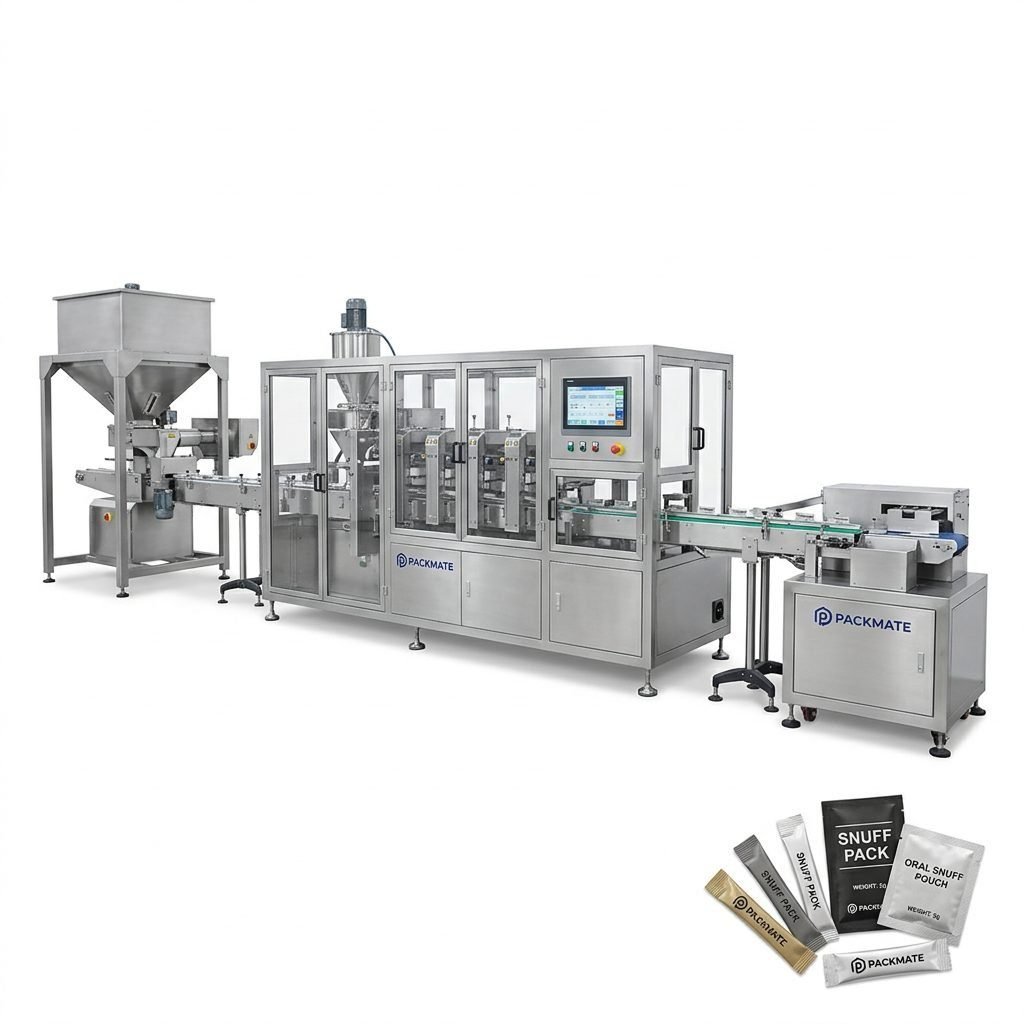
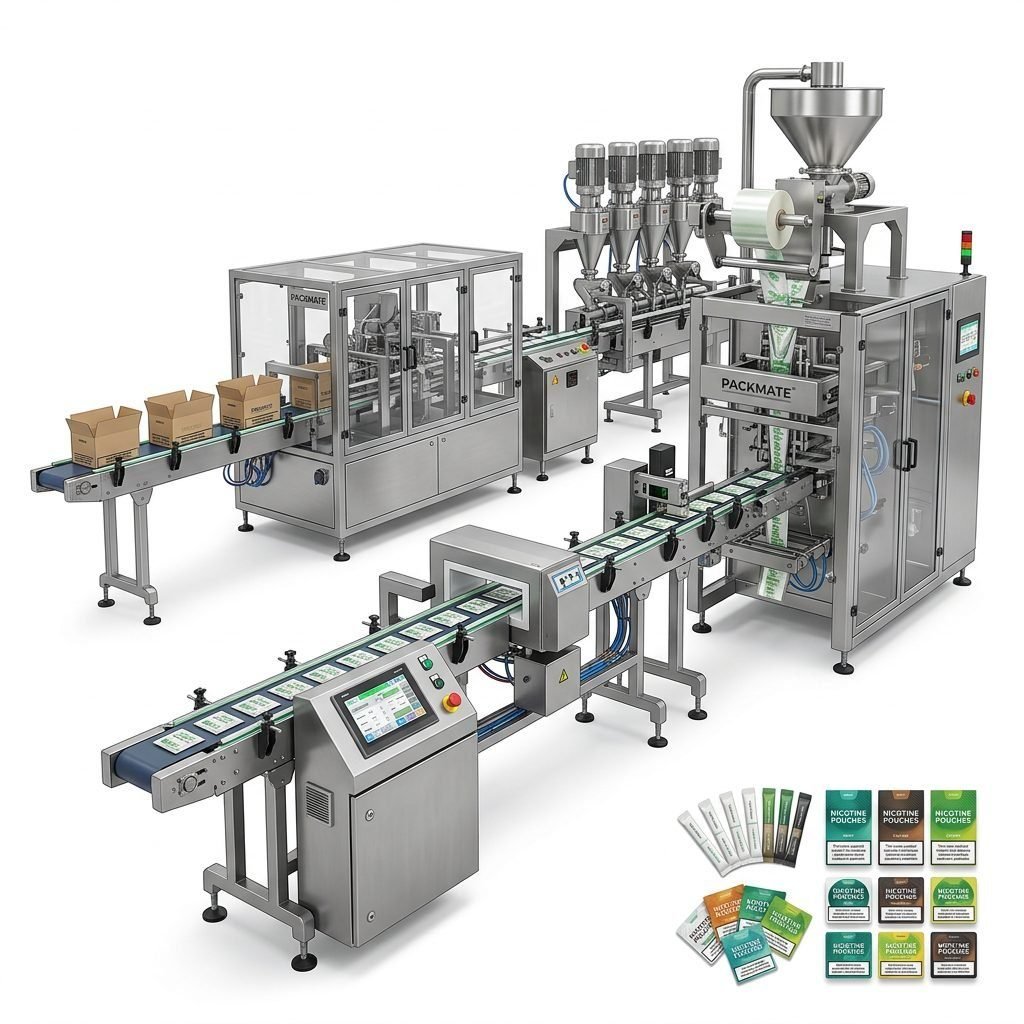
True high-efficiency production lines go beyond pouch forming and filling — they include downstream solutions such as cartoning, case packing, and palletizing. Packmate offers integrated turnkey lines that reduce integration risk and accelerate commissioning. Typical integrations include:
• Infeed conveyors and lane merges into secondary packaging.
• Automated quality rejection stations and record-keeping systems.
• Inline servo cartoners and case packers synchronized with multi-lane outputs.
Real-World Case Uses
Multi-lane snus lines are widely used across markets — nicotine pouches, herbal sachets, and single-dose powder pouches. Examples of impact:
• A European nicotine brand increased output fourfold by switching to a four-lane forming line with a multi-head weigher.
• An Asian contract manufacturer reduced rejects by 70% after adding inline vision inspection and lane-level weight feedback.
Selecting a Supplier: What to Ask
Choosing the right supplier ensures long-term success. Important evaluation points include engineering experience, factory capability, after-sales service, and turnkey expertise. Ask about:
• Reference installations and case studies for similar products.
• Factory acceptance testing (FAT) and on-site commissioning support.
• Spare parts availability and preventive maintenance programs.
Packmate Snus Machine: Industry Expertise and Global Support
With over 30 years of engineering experience and a 20,000㎡ manufacturing facility, Packmate Snus Machine provides reliable multi-lane snus packaging systems and turnkey lines tailored to nicotine pouch production needs. Their product portfolio spans snus & nicotine packaging machines, bag & pouch systems, sachet & stick pack machines, and complete filling & packaging lines. For technical specifications and product models, view the Snus & Nicotine Packaging Machines page or explore Filling & Packaging Lines for turnkey configurations.
For company details, factory capabilities, and global case studies, visit About Packmate and Contact Us to request a consultation or a factory visit. The company’s decades-long experience ensures tailored engineering and robust after-sales support for scaling production safely and efficiently.
Quick Checklist for Buyers
Before investing in a high-efficiency multi-lane snus production line, confirm the following:
• Target throughput per shift and lane count required.
• Product characteristics: powder vs granule, moisture sensitivity, pouch material.
• Integration needs for downstream packaging and logistics.
• Service agreements, spare parts, and remote support options.
Bottom line: choose a partner who can validate performance with FAT and support field commissioning.
Useful Resources
Learn more about related systems and product lines:
• Snus & Nicotine Packaging Machines
Conclusion: Scale Smart with Multi‑Lane Automation
A High‑Efficiency Multi Lane Snus Production Line is the strategic choice for manufacturers aiming to boost output, improve consistency, and lower unit costs. By combining precision dosing, lane synchronization, advanced sealing technology, and turnkey integration, these lines transform small-batch operations into reliable commercial production platforms. Effective supplier selection, thorough FAT, and a focus on maintainability and data-driven control ensure the investment delivers sustained returns.
Frequently Asked Questions
Q1: What throughput can I expect from a multi-lane snus line?
Answer: Throughput depends on lane count, dosing technology, and pouch format. Typical multi-lane systems increase output linearly with lanes; a four-lane system can often achieve 3–5x the rate of a comparable single-lane machine.
Q2: How do you manage variation between lanes?
Answer: Modern lines use centralized controls, individual lane dosing feedback, and vision inspection to detect and correct variations, and can automatically bypass or stop individual lanes to protect overall quality.
Q3: What validation and testing are provided before installation?
Answer: Reputable manufacturers conduct Factory Acceptance Testing (FAT) with customer samples, provide performance reports, and support on-site commissioning and validation to confirm output and compliance.
Q4: Are turnkey integrations available for cartoning and case packing?
Answer: Yes. Many suppliers offer turnkey filling & packaging lines that include downstream cartoning, case packing, and palletizing, fully synchronized with the multi-lane output.
Q5: How do I start selecting the right system?
Answer: Begin with a clear production target, product specification, and space constraints. Contact suppliers with similar case studies and request a site visit or FAT to evaluate real-world performance.