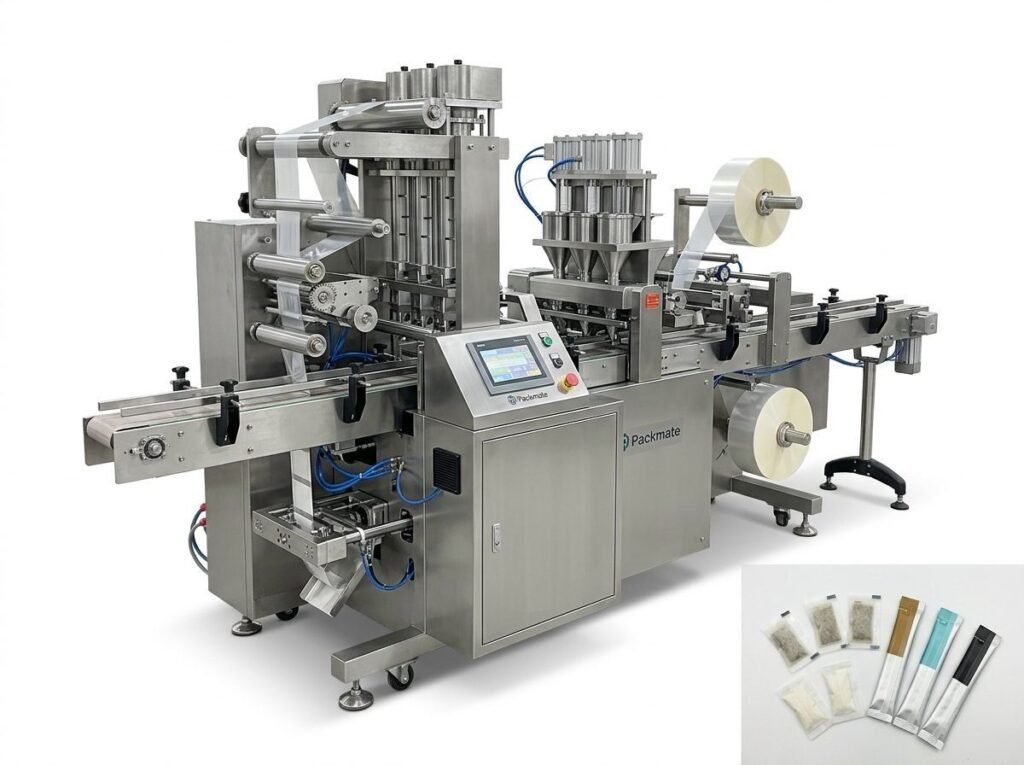
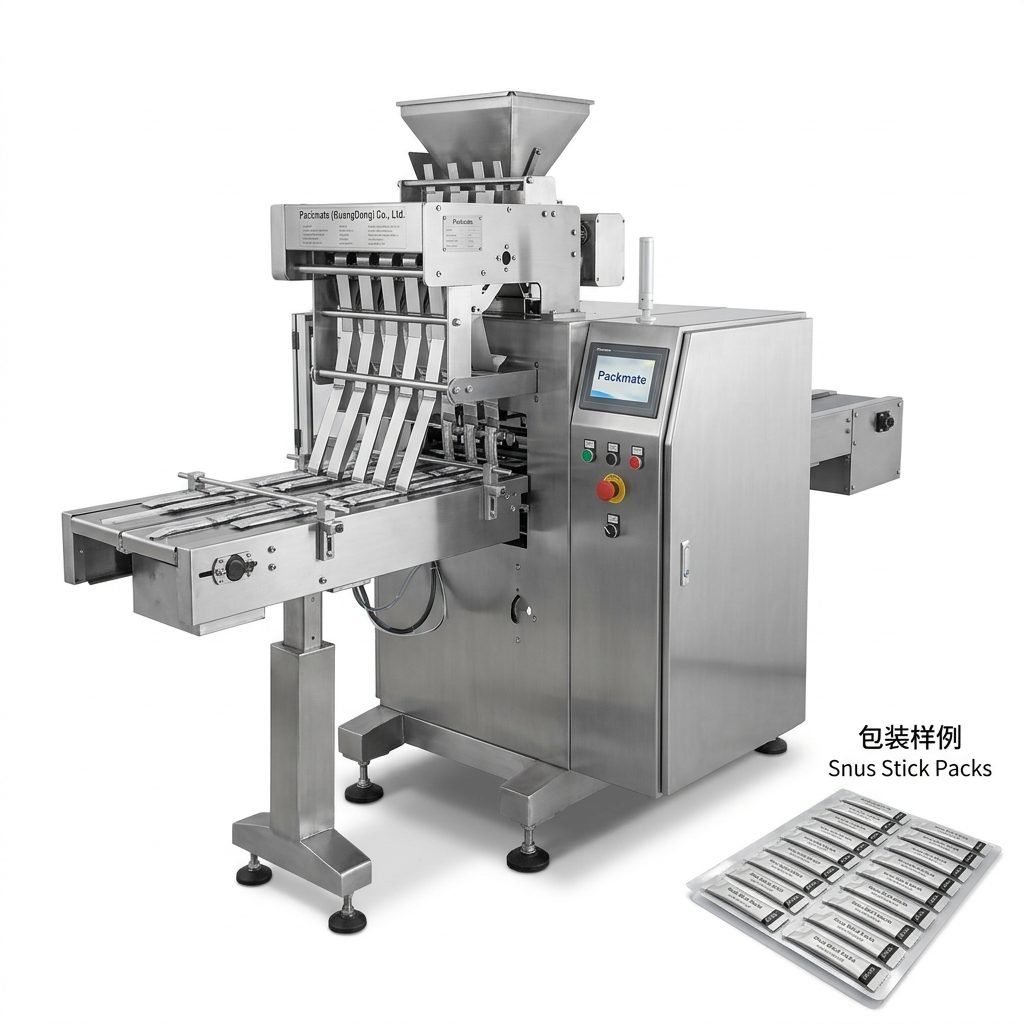
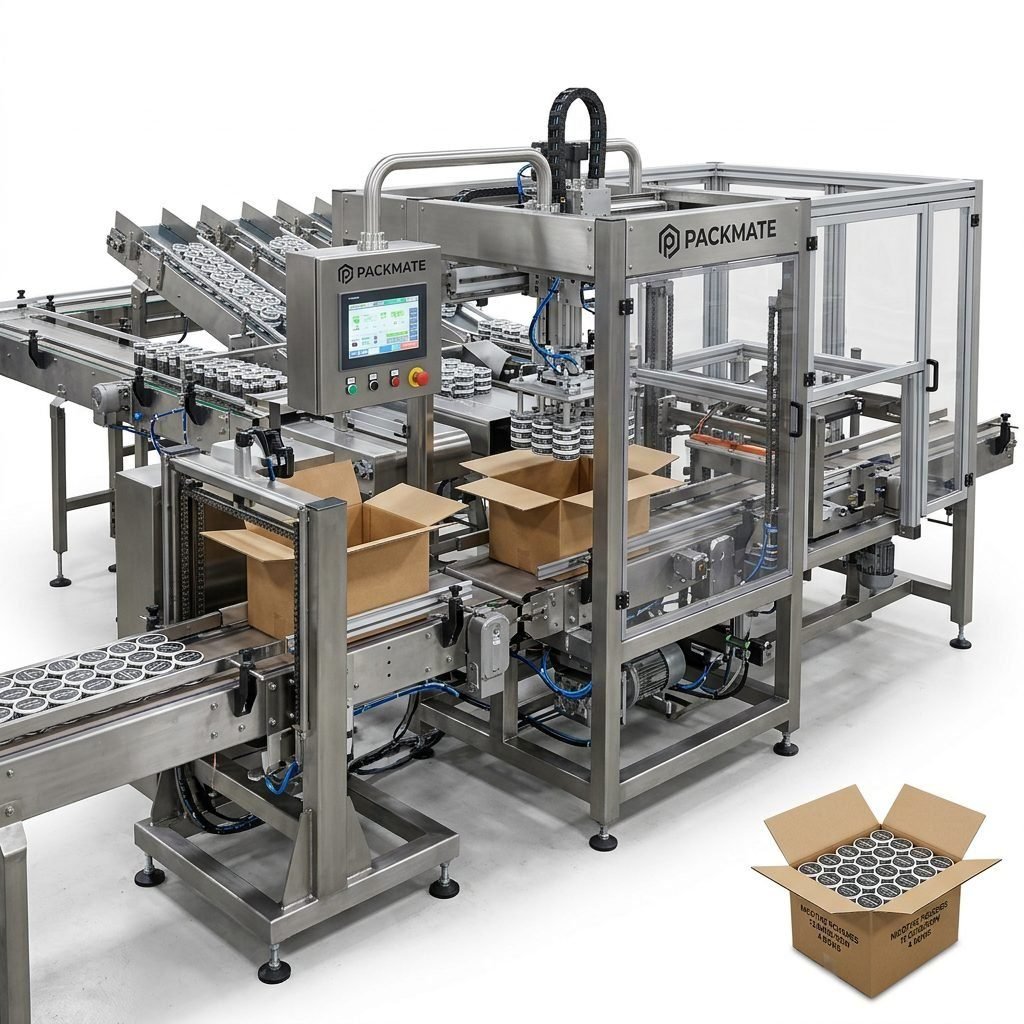
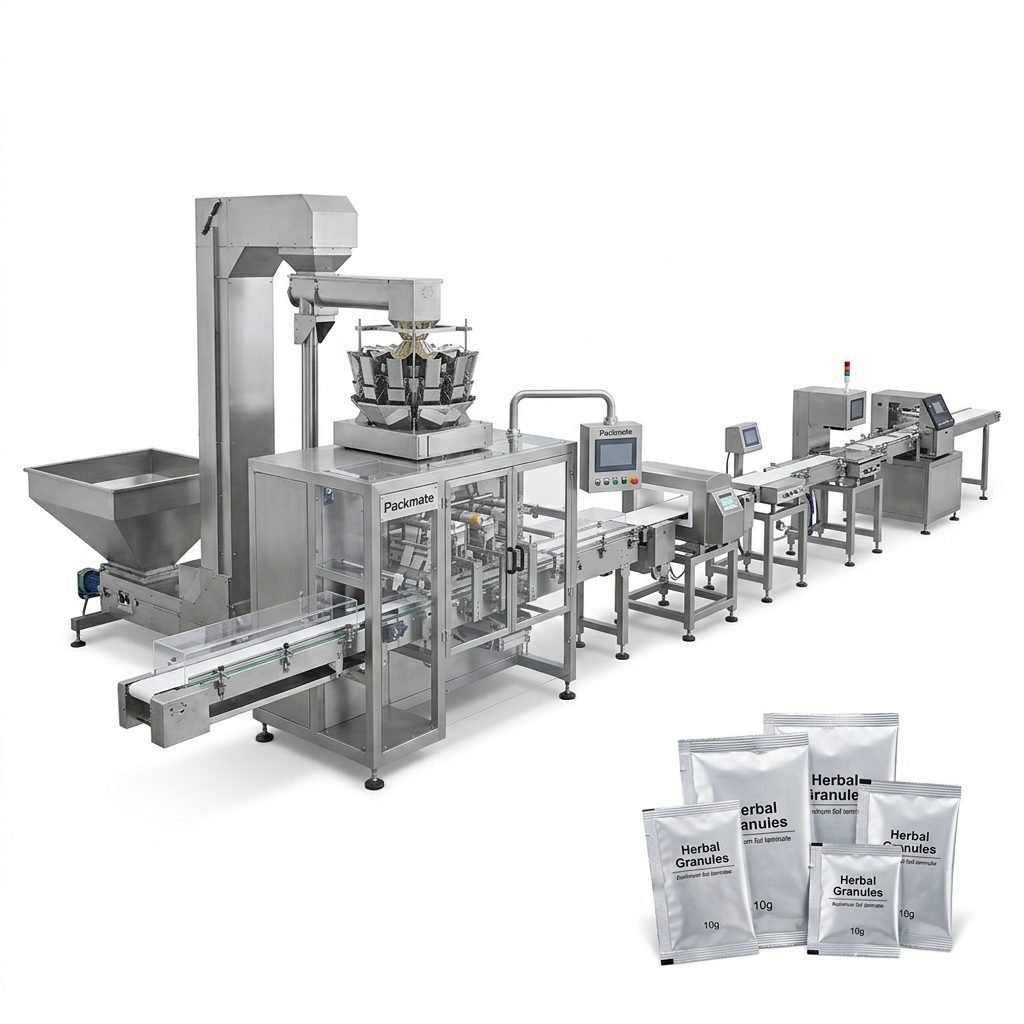
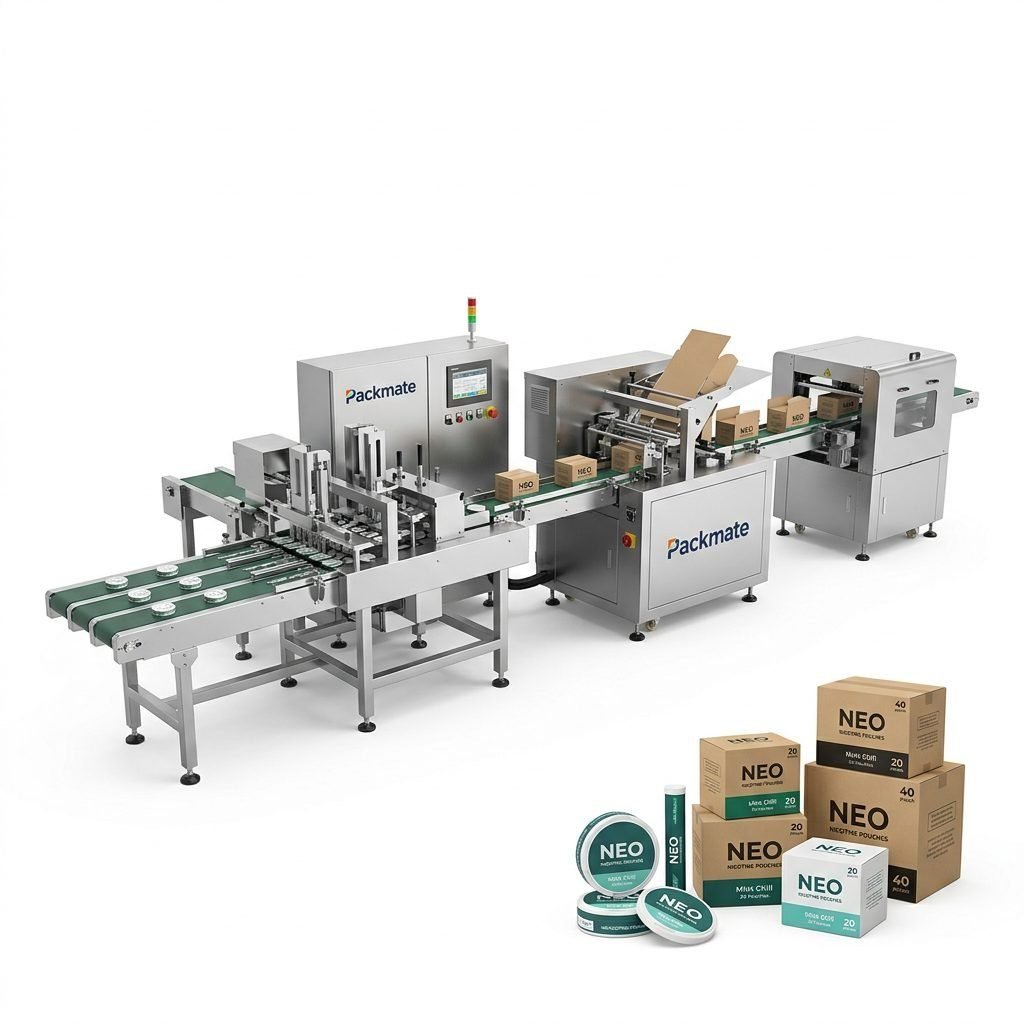
Snus and nicotine pouch manufacturers rely on high-precision packaging lines to keep production stable, compliant, and cost-effective. This troubleshooting guide focuses on the most common mechanical, electrical, and process issues encountered with snus packaging machines and provides practical, fast remedies you can apply on the factory floor. It also includes prevention strategies and links to relevant Packmate resources for machine models, accessories, and service support.
Common Machine Symptoms and First-Response Checks
🔧 Machine won’t start or intermittently stops — Check emergency stops, safety interlocks, main power, and the PLC alarm register. Verify that the rotary encoder and servo drives are powered and that none of the safety doors are open.
⚠️ Inconsistent pouch forming or sealing — Inspect the temperature control (PID), heater strips, and sealing jaws for contamination or wear. Confirm film tension and alignment.
Quick First-Aid Checklist (under 10 minutes)
- Verify mains voltage and MCC status; reset breakers if safe.
- Look for visible jams in infeed, dosing, or outfeed conveyors; clear by hand only after lockout.
- Check HMI/PLC for error codes and snapshot logs to identify the failing module.
- Confirm correct film roll installation and sensor alignment for web-tracking issues.
Detailed Troubleshooting: Mechanical Problems and Remedies
Mechanical faults often present as jams, inconsistent pouch sizes, weak seals, or excessive vibration noise. Addressing these requires a methodical approach: inspect, isolate, test, repair, and validate.
1. Web Tracking & Wrinkling
Cause: Misaligned film roll, worn dancer arm, inconsistent tension control, or dirty sensor targets.
Quick Fix: Re-center the film, clean optical sensors with isopropyl alcohol, check dancer spring/tension and PID tension controller parameters. Replace any cracked or warped rollers.
Tip: Use the machine’s web-tracking auto-tune feature (if available) after mechanical fixes to stabilize long runs.
2. Seal Failures or Short Seals
Cause: Incorrect jaw temperature, worn Teflon, contaminated sealing surfaces, or insufficient dwell time at high speed. Also check film compatibility; multilayer films require different temperature profiles.
Quick Fix: Inspect and clean sealing jaws, replace Teflon strip if scratched, verify PID setpoint and thermocouple reading. Reduce speed temporarily to confirm sealing profile, then re-calibrate with your production film.
Note: Always verify the actual thermocouple location — a sensor shifted away from the jaw surface gives misleading readings.
Electrical & Controls Issues
Many stoppages trace back to electrical faults or PLC/HMI configurations. Modern snus lines integrate servos, load cells, and vision systems—each with its own diagnostics.
1. PLC Alarms & Communication Errors
Cause: Faulty network cabling, interrupted I/O power, or corrupted parameter files after a power surge.
Quick Fix: Reboot the PLC and HMI, check Ethernet and fieldbus terminations, and reload backed-up configuration if required. Record the alarm codes and consult your service manual.
If recurring, log times and conditions for the fault and involve Packmate technical support for firmware checks or I/O replacement advice.
2. Servo/Drive Faults and Positioning Errors
Cause: Encoder signal loss, motor overcurrent, or mechanical binding. Symptoms include position drift, missed index, or sudden stops.
Quick Fix: Inspect connectors for corrosion, verify encoder continuity, check for mechanical resistance by hand with power off, and inspect coupling alignment. If drive faults persist, record fault codes and consult with the drive manufacturer or Packmate for recommended drive diagnostics.
Process & Product Issues (Dosage, Flow, and Product Behavior)
Snus material—moist powders, granules, or nicotine pouches—can behave unpredictably. Issues such as inconsistent weight, bridging, or clumping affect downstream sealing and quality.
1. Weighing & Filling Variability
Cause: Faulty load cell calibration, vibrations from nearby equipment, or inconsistent hopper feed. Environmental humidity and static also affect small-dose accuracy.
Quick Fix: Re-calibrate load cells per OEM procedure, secure the weighing frame, isolate the weigh station from vibratory conveyors, and check hopper agitator settings. For nicotine pouches, ensure consistent pouch pre-weigh and discharge timing to maintain fill accuracy.
2. Material Clumping & Bridging
Cause: Moisture, particle size distribution, or static. Granular snus mixes are especially susceptible in humid climates.
Quick Fix: Implement vibration on hopper walls, use gentle air agitation, and consider dehumidified feeding or anti-static measures. Regularly inspect and clean feed chutes to prevent build-up.
Quality Control & Vision Systems
Vision inspections catch label misprints, missing pouches, or seal defects. When vision rejects spike, examine lighting, lens focus, and algorithm thresholds.
Calibration and Lighting
Quick Fix: Clean lenses and cameras, verify consistent LED lighting, and perform software calibration against known good samples. If the vision unit misreads under certain product colors or finishes, adjust contrast thresholds and add diffuse lighting to reduce glare.
Maintenance Practices That Prevent Most Problems
A structured maintenance routine dramatically reduces downtime. Implement daily, weekly, and monthly checks that include mechanical, electrical, and software validations.
Daily Checks
- Visual inspection for loose fasteners, fluid leaks, and film alignment.
- Clean sealing jaws and critical sensors after each changeover.
- Log alarm events and runtime hours on vibration, heating, and servo axes.
Weekly & Monthly Tasks
- Lubricate specified bearings and chain drives per OEM intervals.
- Test emergency stops and safety circuits.
- Back up PLC/HMI programs and confirm spare parts inventory for wear items.
Proactive tip: Keep an on-site kit with spare Teflon strips, thermocouples, fuses, belts, and a service laptop with the machine’s diagnostic software. Quick swaps minimize lost production and help you identify recurring root causes.
Spare Parts, Upgrades and When to Call OEM Support
Some problems are best handled by trained OEM technicians, particularly when firmware, drive controllers, or custom mechanical assemblies are involved. For authorized spare parts, certified upgrades, and service, consult Packmate resources and certified distributors.
Useful links for model specs, parts, and service information:
- Snus & Nicotine Packaging Machines
- Sachet & Stick Pack Machines
- Service & Technical Support
- Contact Packmate
Region-Specific Considerations
If you operate in regions with high humidity (Southeast Asia) or very cold climates (Scandinavia), material handling and film behavior require local adaptation. In humid regions, focus on dehumidified feed systems and corrosion-resistant fasteners. In Nordic countries where snus use is traditional, producers often run extended seasonal campaigns and should plan preventive maintenance before peak seasons to avoid lost sales.
When a Problem Escalates: Root-Cause Analysis Steps
- Document the fault with photos (where safe) and runtime logs from PLC/HMI.
- Replicate failure at low speed to observe each stage: feeding, forming, filling, sealing, cutting, and discharge.
- Isolate sub-systems (mechanical vs electrical) by disconnecting non-essential modules, then reintroduce them one by one.
- Engage OEM technical service with recorded alarm codes and evidence to accelerate diagnosis and spare part identification.
🔁 Control loop issues such as a temperature PID cycling or a tension loop hunting can be mitigated by tuning gains and implementing feedforward compensation. If tuning is outside your team’s skills, schedule remote or onsite support from the machine OEM.
Upgrades That Reduce Downtime
Consider adding predictive maintenance sensors, spare parts kits, and interface upgrades to speed troubleshooting. Upgrading to advanced multi-lane control packages can improve throughput and reduce mechanical stress on individual lanes.
Recommended Upgrades
- Remote diagnostics module for real-time machine telemetry.
- Automatic web centering and tension control upgrades.
- Hardened seal tooling and quick-change jaw kits to reduce changeover time.
Final Checklist Before Restarting Production
✅ Confirm all guards and safety interlocks are correctly closed and functional.
✅ Run a dry cycle or run a short production test at reduced speed and verify film seals and fill weights.
✅ Reconcile reject rates and log machine parameters for future reference.
For detailed parts catalogues and machine specifications, view the Packmate catalog and product pages.
Helpful Resources
Summary: Fast Fixes vs. Long-Term Solutions
Fast fixes restore operation in the short term: clear jams, replace a thermocouple, re-tension film, or reboot the PLC. Long-term solutions require addressing root causes: improve environmental control, invest in predictive maintenance, and complete periodic training for operators. Combining both approaches maximizes uptime and maintains the consistent quality customers expect from snus and nicotine pouch products.
Common Questions
Q1: How often should sealing jaws be replaced?
A1: Replace sealing Teflon every few months on high-speed lines or when you see repeat seal defects; inspect jaws weekly.
Q2: What’s the quickest way to reduce weight variation?
A2: Re-calibrate load cells, secure the scale mounting, reduce machine vibration, and verify the hopper feed is stable.
Q3: When should I contact Packmate support?
A3: Contact OEM support for persistent drive faults, PLC firmware issues, vision system recalibration needs, or if spare parts are required that affect safety or compliance.
Q4: Are there training resources for operators and maintenance teams?
A4: Yes, Packmate provides on-site and remote training sessions—see the service and contact pages for scheduling.