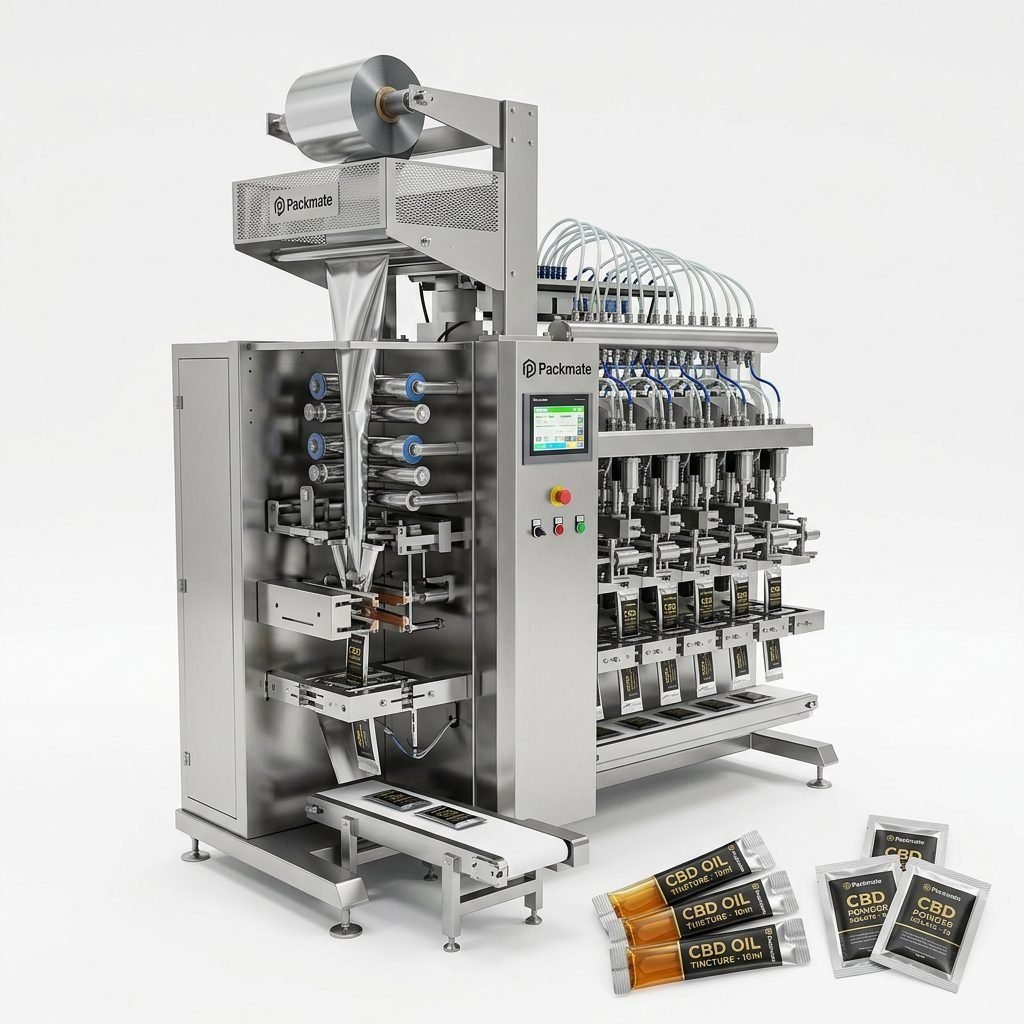
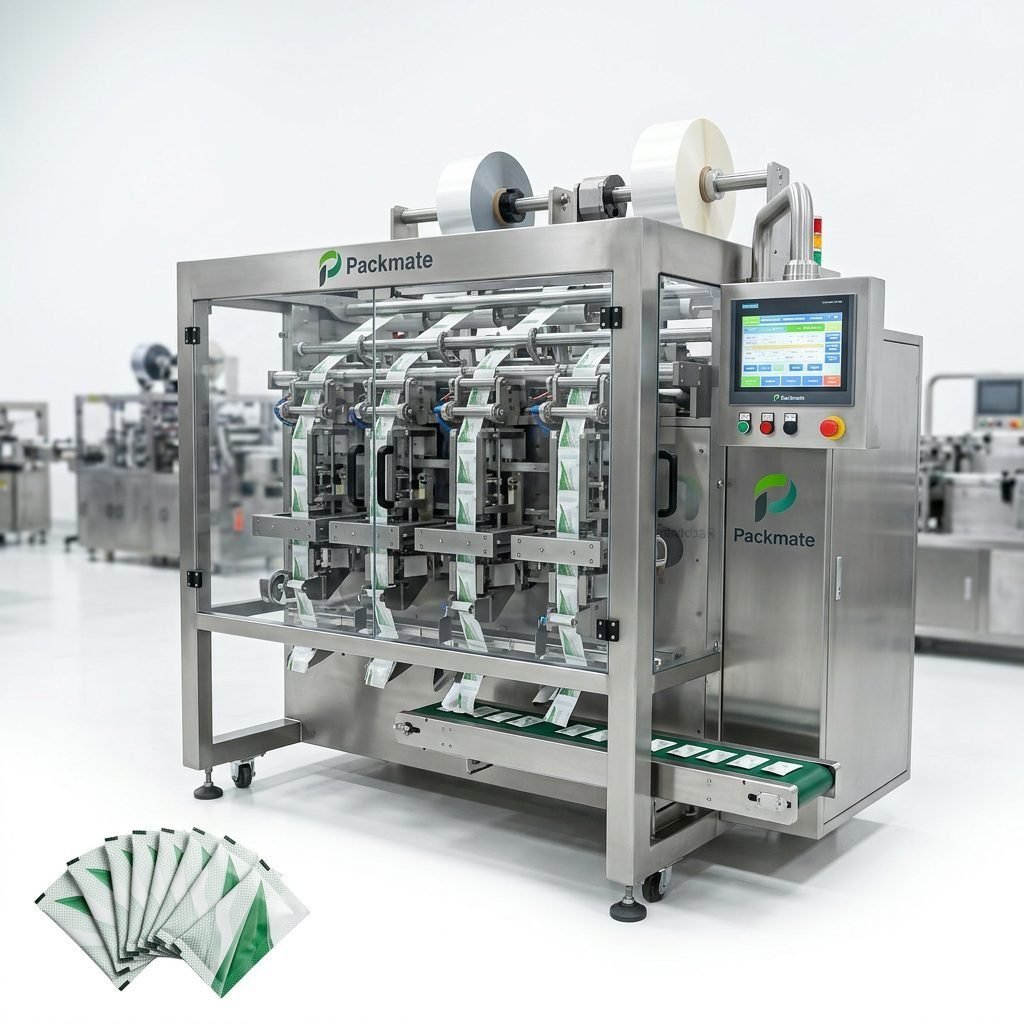
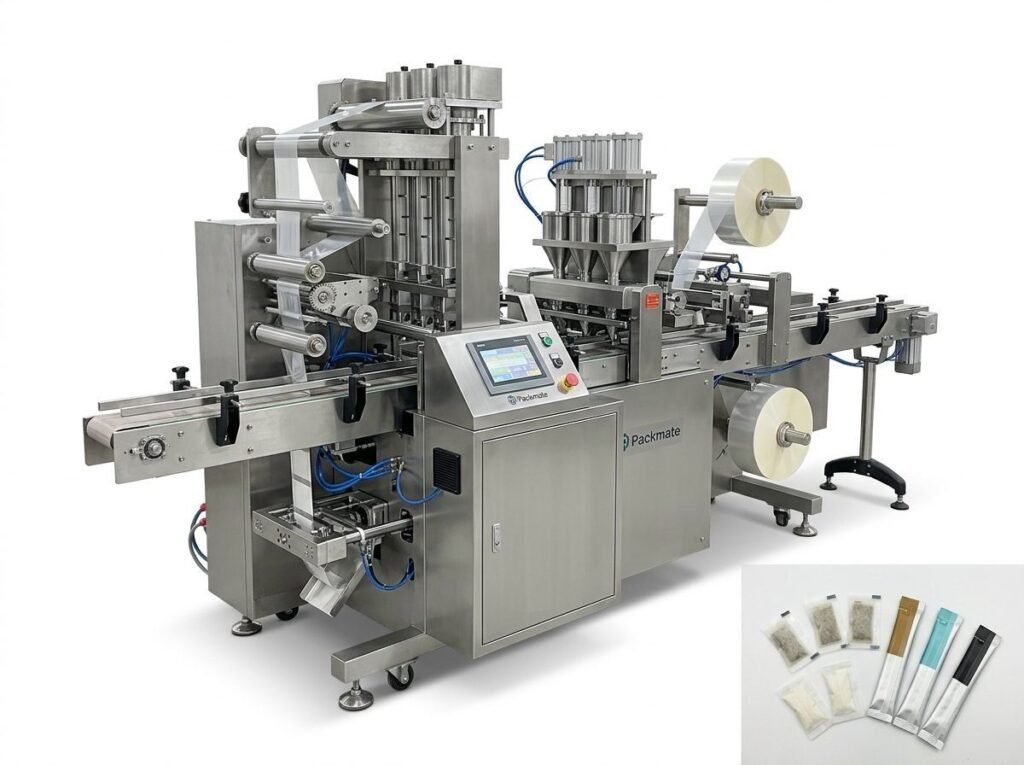
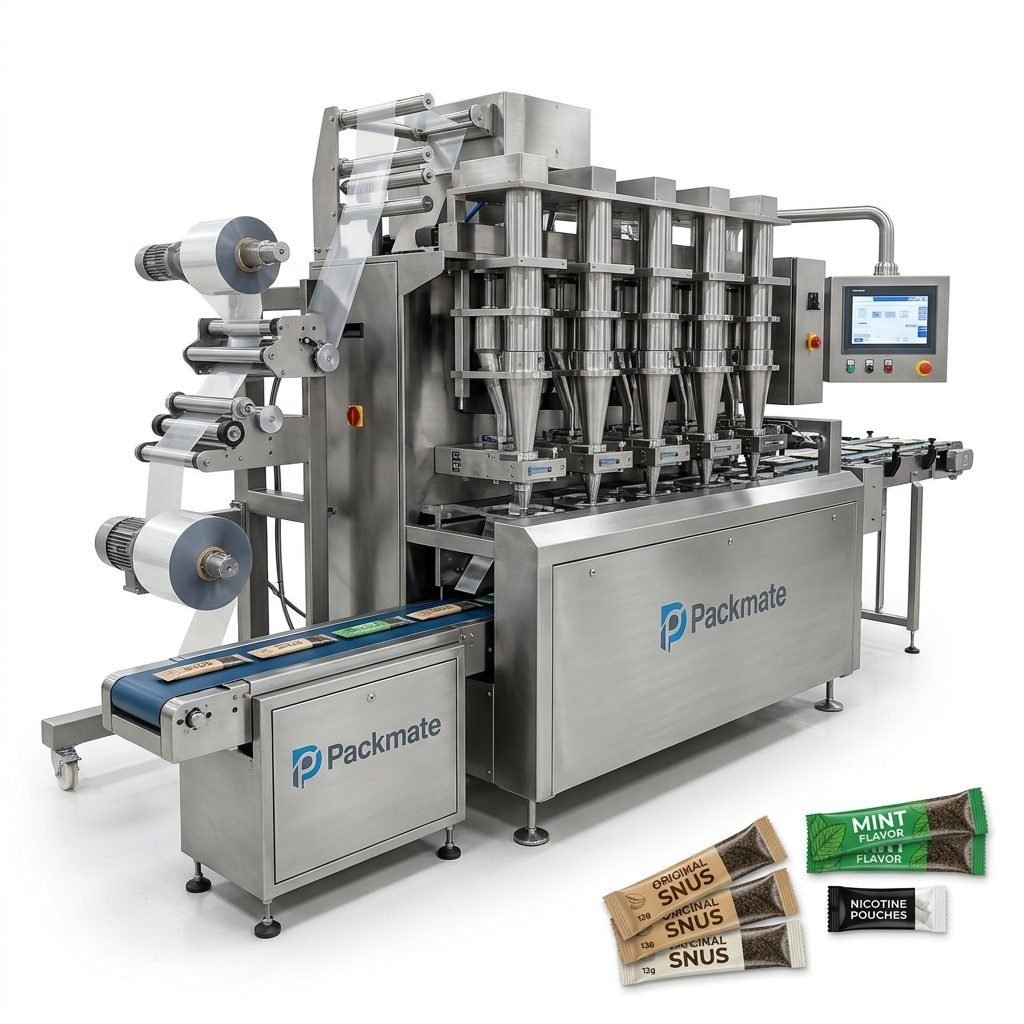
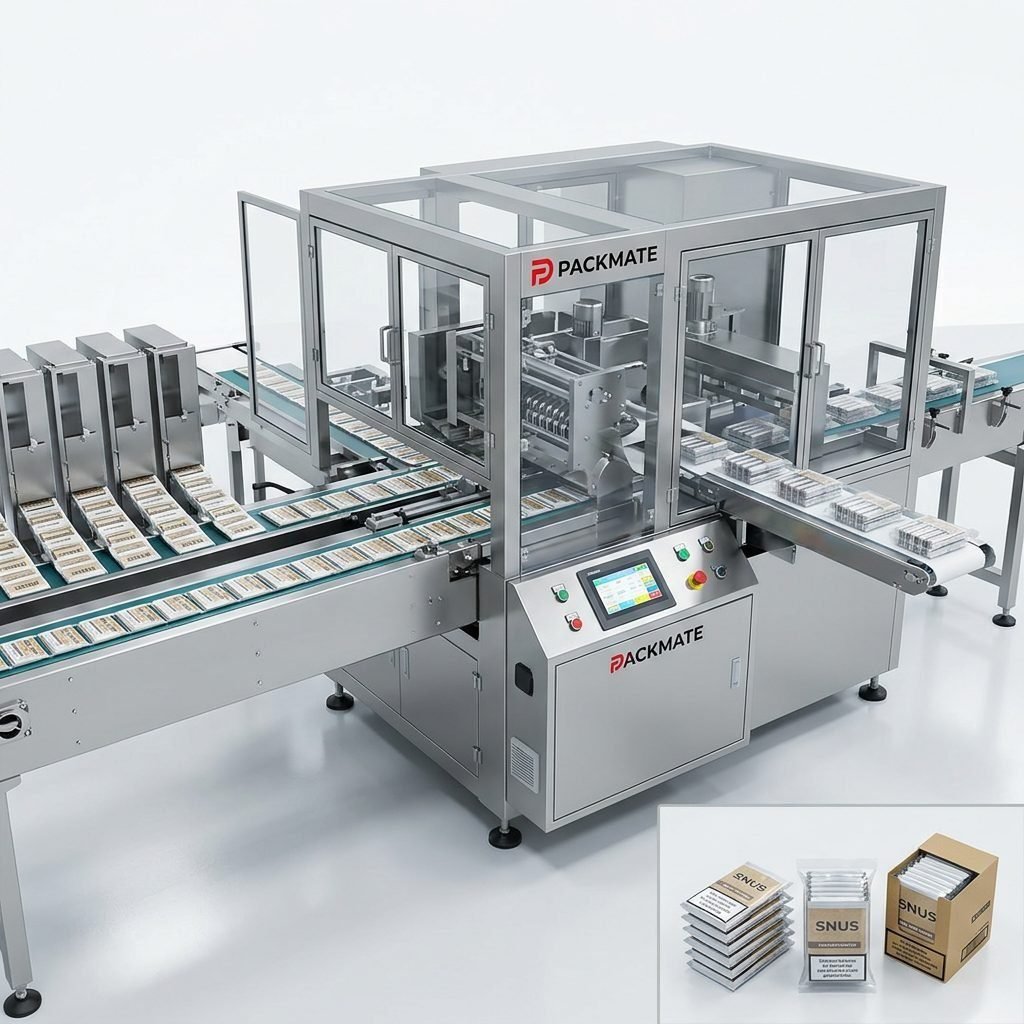
In an era where nicotine pouches are rapidly gaining market share, choosing the right packaging machine is pivotal to scaling production, ensuring product quality, and protecting brand reputation. This guide walks through everything a buyer needs to know about nicotine pouch packaging machines — from machine types and critical technical specifications to production line integration, cost factors, and supplier selection. Whether you are planning a compact single-lane line or a high-speed multi-lane production cell, this resource will help you make an informed investment for efficient, high-speed production.
Why Specialized Nicotine Pouch Packaging Machines Matter
Nicotine pouches require precise dosing, tamper-evident sealing, and packaging that preserves flavor and moisture. Generic packaging equipment often cannot meet these combined needs. A machine designed for snus and nicotine pouch applications delivers:
✔️ Consistent micro-dose filling with high accuracy to reduce product giveaway and regulatory risk.
✔️ Sealing technologies optimized for foil/paper laminates to ensure barrier performance.
✔️ Multi-lane capability for compact high-throughput layouts.
✔️ Gentle handling to avoid deforming delicate pouches or compromising integrity.
Key Machine Families
Packaging equipment for nicotine pouches falls into several distinct families. Choosing the proper family depends on product format, target throughput, and downstream processes.
🔧 Vertical form-fill-seal (VFFS) systems for high-speed sachet or pillow pouches.
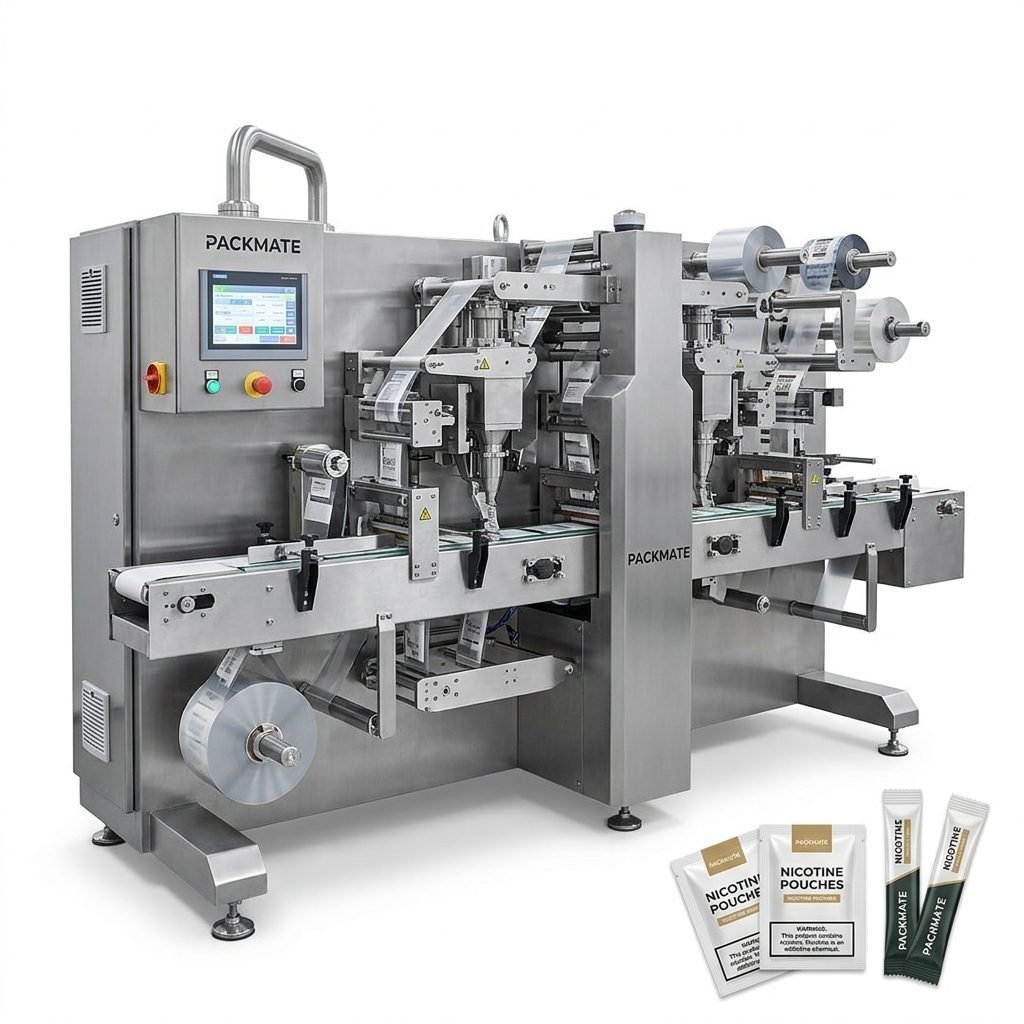
⚙️ Stick-pack and sachet machines for single-dose stick formats and tandem packaging options (Sachet & Stick Pack Machines).
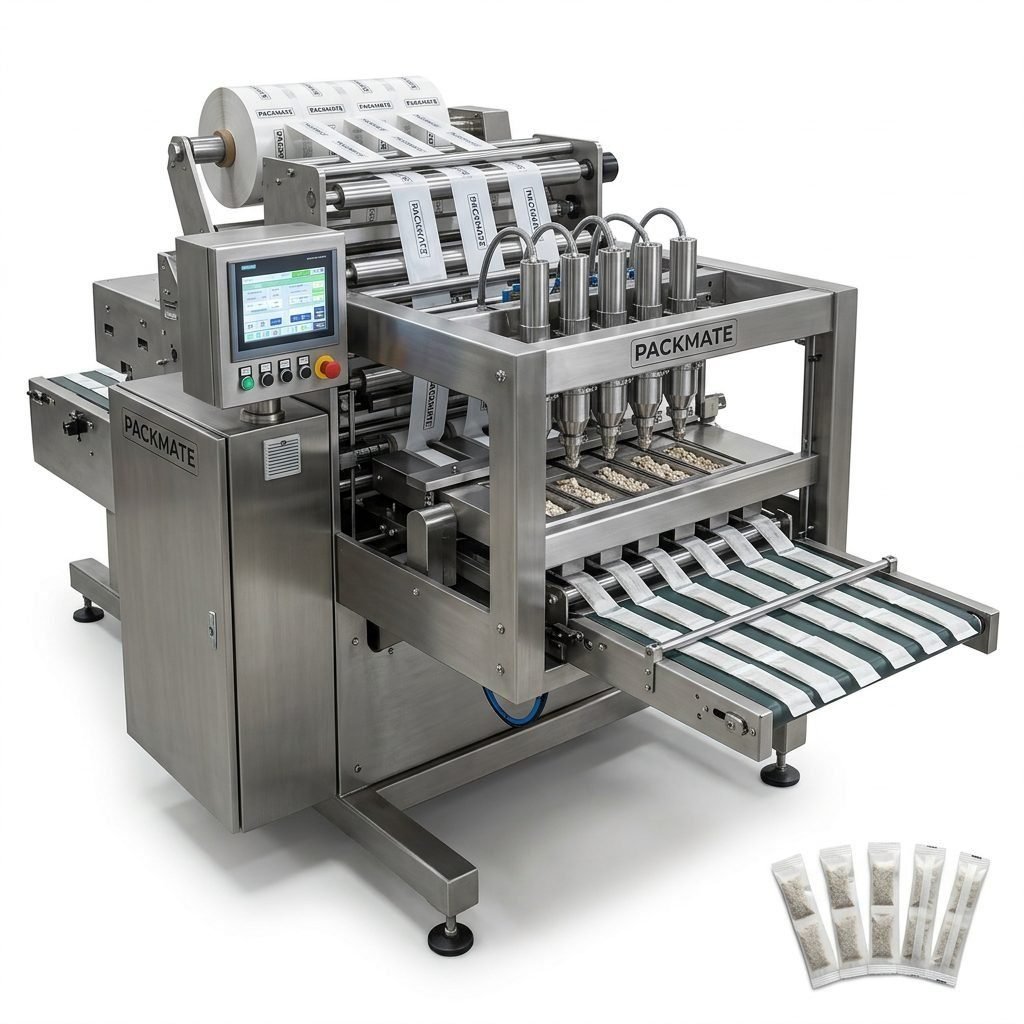
📦 Multi-lane horizontal pouch fillers for parallel production of small-dosed pouches to maximize throughput in a restricted footprint.
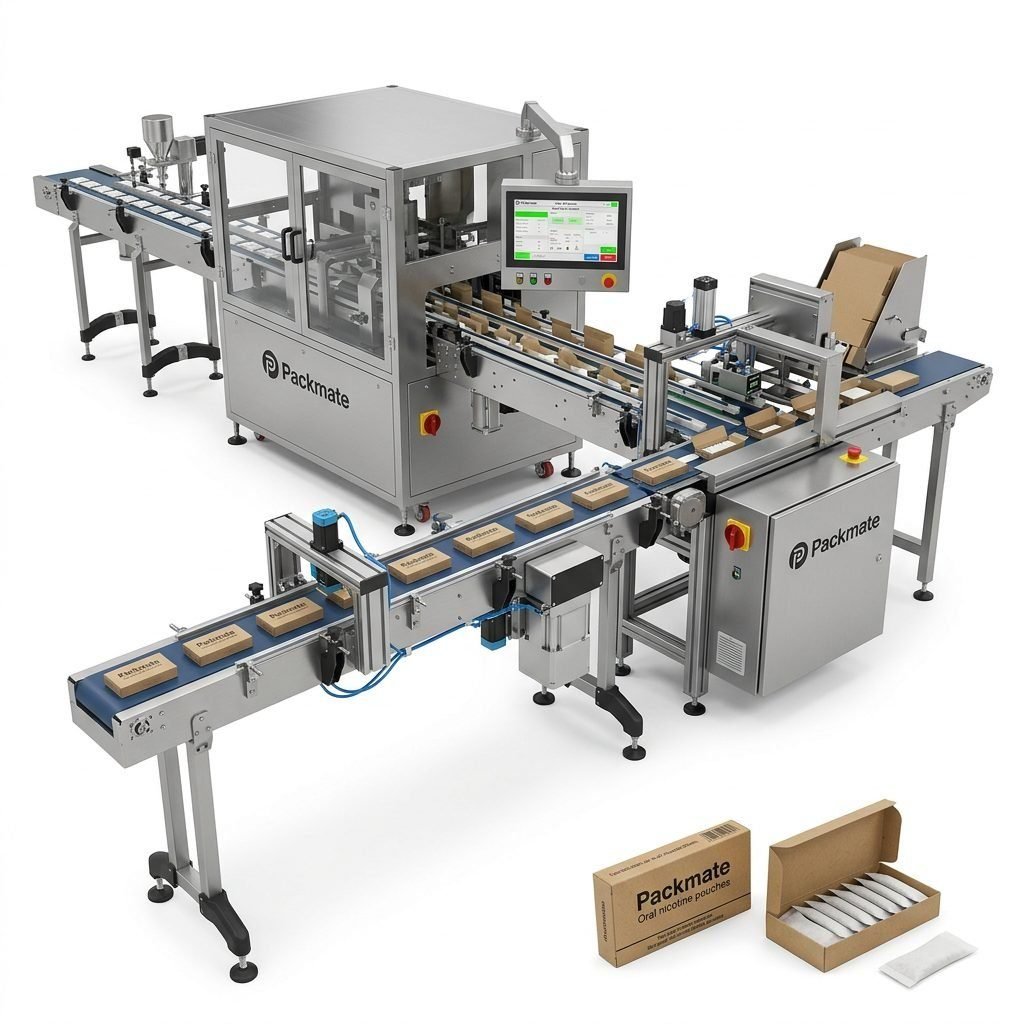
🧪 Integrated lines combining dosing, sealing, inspection, and cartoning modules.
Critical Features to Evaluate
When comparing models and suppliers, evaluate these technical and usability aspects carefully:
🔹 Filling accuracy — High-precision volumetric or auger dosing minimizes product giveaway. For nicotine pouches, tolerance windows are tight; choose systems with advanced feedback and calibration tools.
🔹 Lane count & scalability — Multi-lane machines (4/6/8 lanes) can multiply output without proportionally increasing floor space. Ensure mechanical symmetry and synchronized dosing across lanes.
🔹 Sealing performance — Heat-seal bars, ultrasonic sealing, or cold-seal options must match chosen laminate materials (foil, paper, PE). Look for precise temperature control and quick changeover seals.
🔹 Changeover speed — Quick tool-less or minimal-tool changeovers save downtime for flavor or format variants. Modular tooling and recipe memory in the HMI reduce operator error.
🔹 HMI & controls — Intuitive touchscreens, recipe management, and remote diagnostics accelerate operator onboarding and troubleshooting.
🔹 Cleaning & maintenance — Easy access for cleaning, CIP options where applicable, and hygienic design reduce contamination risk and maintenance time.
🔹 Integration readiness — Compatibility with checkweighers, metal detectors, vision systems, and cartoners simplifies building a turnkey line. Check available I/O protocols and PLC compatibility.
🔹 Energy efficiency & footprint — Compact multi-lane machines that use servo-driven motion lower energy consumption and increase uptime.
🔔 Pro tip: Prioritize machines that include data logging and Industry 4.0 connectivity. Traceability and performance metrics support quality, regulatory compliance, and continuous improvement.
Selecting the Right Production Capacity
Define your target output and flexibility needs before selecting equipment. Typical decision points include:
📈 Start-up or boutique brands: Consider single- or dual-lane systems with fast format changeovers and simple cleaning cycles.
🏭 Scaling manufacturers: Multi-lane high-speed systems with automated loading, in-line checkweighers, and robotic end-of-line for cartoning.
🌍 Contract packers & co-packers: Modular platforms that support many formats and materials to serve diverse customers.
Integrating the Full Packaging Line
A nicotine pouch packaging machine rarely operates alone. Key upstream and downstream equipment includes:
🔁 Feeders and dosing systems for powders or granules.
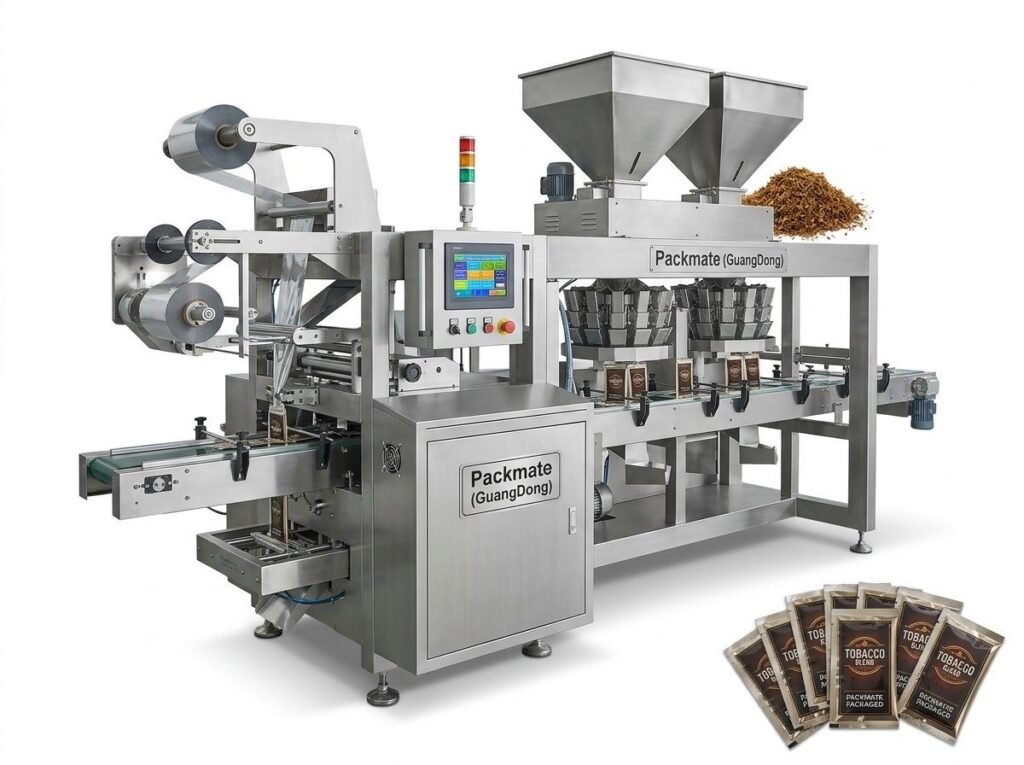
⚖️ Weighing & multi-head systems for blended fillings — check Weighing & Packaging Systems.
🔍 Vision inspection and metal detection to verify pouch integrity and safety.
🤖 Robotic pick-and-place for high-speed cartoning and case packing.
📦 End-of-line equipment such as cartoners, tray packers, and case sealers.
⚠️ Important: Check the supplier’s integration support. Some manufacturers provide turnkey lines while others require third-party integrators. For a complete solution see Filling & Packaging Lines.
Material Compatibility & Packaging Formats
Pouch material and laminate structure impact seal settings, barrier life, and product shelf life. Discuss your preferred film suppliers and barrier specifications with the machine vendor before purchase. Machines should allow parameter storage per film type and contain robust sealing control systems.
Controls, Automation & Safety
Modern nicotine pouch lines use servo drives, advanced PLCs, and HMIs for accuracy and repeatability. Safety guards, interlocks, and CE-compliant emergency stops are non-negotiable. Check that the manufacturer offers remote diagnostic access for faster support and upgrades.
Choosing a Reliable Supplier
Selecting the right supplier reduces risk and total cost of ownership. Evaluate potential partners on these criteria:
🔎 Factory capabilities — A supplier with a modern factory, CNC machining centers, and dedicated assembly lines is more likely to produce consistent machines. Packmate’s 20,000㎡ facility and 30+ years of experience are examples of what to look for; read more About Packmate.
🧾 Certifications — CE and ISO compliance indicate a baseline of international quality and safety standards.
🤝 Service & spare parts — Rapid access to spare parts and local service partners minimize downtime. Confirm the typical lead-time for critical spares.
🏷️ References & case studies — Request case studies or customer references in similar product categories; review demonstrated multi-lane installations in nicotine pouch production (Case).
Warranty, Training & After-Sales Support
A comprehensive warranty, on-site commissioning, operator training, and remote support are essential. Confirm training scope (mechanical, electrical, HMI), spare parts kits included, and annual service contracts.
Cost Considerations & Return on Investment
Buying a packaging machine involves upfront capital and ongoing operating costs. Key cost drivers include:
💰 Machine purchase price and optional modules.
⚙️ Utilities — electricity, compressed air, and any special vacuum or chilled water requirements.
🧰 Spare parts & wear items — sealing bars, belts, cutting knives, sensors.
👷 Labor — required operators per shift and technical maintenance staff.
🔄 Downtime & changeovers — measure expected uptime percentage and calculate lost production costs.
Calculate ROI by forecasting production volumes, average unit margin, and expected machine lifespan. High-efficiency multi-lane systems have a higher initial cost but usually deliver faster payback through lower labor and higher throughput.
Installation, Commissioning & Validation
Proper installation and commissioning ensure machines perform to specification. Ask your supplier for:
⚙️ Detailed installation guides and utility requirements.
📝 FAT (Factory Acceptance Test) and SAT (Site Acceptance Test) protocols.
🧪 IQ/OQ documentation if your product or region requires validation for compliance.
🧑🏫 On-site operator and maintenance training during commissioning.
Maintenance Best Practices
Preventive maintenance increases lifespan and reduces unexpected downtime. Create a maintenance plan including daily checks, weekly lubrication, monthly belt inspections, and quarterly electrical reviews. Keep a minimum inventory of wear parts and establish a relationship with the supplier for priority shipping.
Real-World Example: Building a Multi-Lane Nicotine Pouch Line
A practical configuration for a mid-sized manufacturer might include:
🔧 6-lane horizontal pouch filler with servo-driven dosing for synchronized output.
🧾 Upstream vacuum/turbine feeders to orient pouches.
⚖️ In-line checkweigher and vision system for weight and seal inspection.
🤖 Robotic pick-and-place to an intermittent cartoner.
📦 Case sealer and palletizing-ready conveyor interface.
This setup balances throughput, product protection, and flexibility for flavor and size variants. For turnkey multi-lane solutions, explore specialist suppliers like Packmate that offer integrated systems and global support.
📣 Note: If you are evaluating suppliers, request a demonstration at an exhibition or the factory to observe machine stability at speed. See exhibition activities and live demos here: Our Exhibition.
Regulatory & Safety Considerations
Nicotine products face regulatory scrutiny in many jurisdictions. Machines must support traceability, provide accurate dosing documentation, and meet hygiene standards to prevent cross-contamination. Confirm local regulatory requirements and ensure the supplier can deliver compliance documentation (CE, ISO, and any region-specific certificates).
How to Start the Procurement Process
Follow these steps to streamline procurement:
1) Specify your product formats, target output, and preferred materials.
2) Request specifications and reference installations from shortlisted vendors.
3) Arrange on-site or virtual demos and perform FATs.
4) Verify warranty terms, spare parts lead times, and service agreements.
5) Negotiate delivery & installation timeline, and define acceptance criteria in the contract.
Why Packmate as a Partner
Packmate (GuangDong) Co., Ltd. specializes in snus and nicotine pouch packaging equipment with more than 30 years of engineering experience. Their facility supports 50+ machine models and turnkey packaging solutions, backed by CE and ISO compliance. If you need a reliable partner for snus/nicotine pack lines, review Packmate’s product range and services:
– Explore snus & nicotine machines: Snus & Nicotine Packaging Machines.
– Learn about bag and pouch systems: Bag & Pouch Packaging Machines.
– Contact for quotes and support: Contact Us.
Final Considerations Before Purchase
Before finalizing a purchase, validate the machine’s performance under your specific product conditions. Request production samples, witness FAT results, and clarify long-term service commitments. Investing time in proper vendor evaluation protects production continuity and brand value.
Closing Thought
A well-chosen nicotine pouch packaging machine becomes the backbone of efficient production — providing consistent dosing, strong seals, and flexible throughput. By evaluating machine features, integration needs, supplier capability, and service offerings, you can select equipment that delivers reliable performance and supports your growth plans.
Frequently Asked Questions
Q1: What is the typical lead time for a custom multi-lane nicotine pouch machine?
A1: Lead times vary by complexity and factory schedule but typically range from 12 to 24 weeks for custom multi-lane solutions, plus additional time for FAT, shipping, and on-site commissioning.
Q2: Can one machine handle multiple pouch sizes and materials?
A2: Many modern machines are modular and support multiple formats via changeover kits and recipe memory. Discuss flexibility requirements with your vendor to ensure the chosen model meets your mix of SKUs.
Q3: What after-sales services should be included?
A3: Include on-site commissioning, operator and maintenance training, spare parts kits, remote diagnostic support, and options for annual maintenance contracts to maintain uptime.
Q4: Are multi-lane machines more cost-effective than multiple single-lane machines?
A4: Multi-lane machines usually offer a better footprint-to-throughput ratio and reduced labor per unit, which often leads to lower long-term operating costs despite a higher initial investment.
Q5: How important is factory acceptance testing (FAT)?
A5: FAT is critical — it verifies machine performance before shipping, saves time during installation, and provides documented evidence of agreed specifications and acceptance criteria.