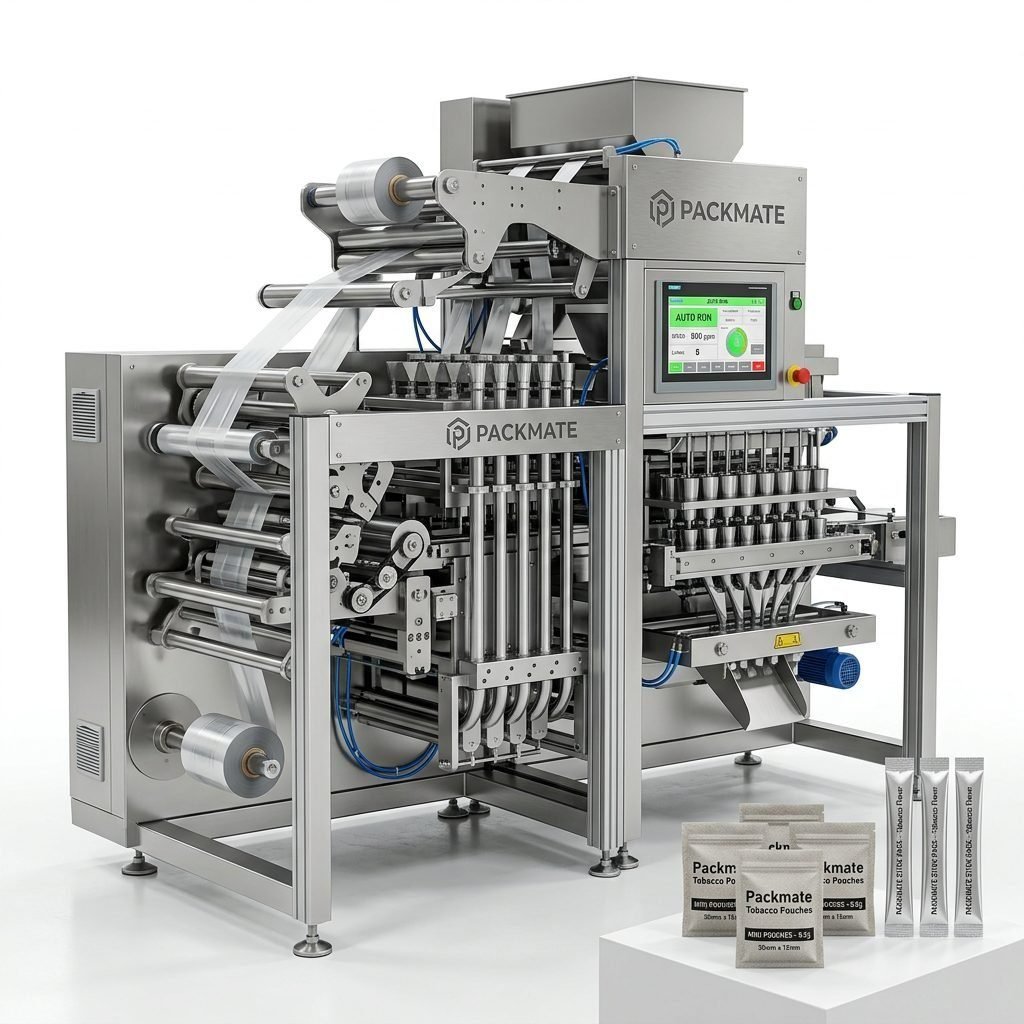
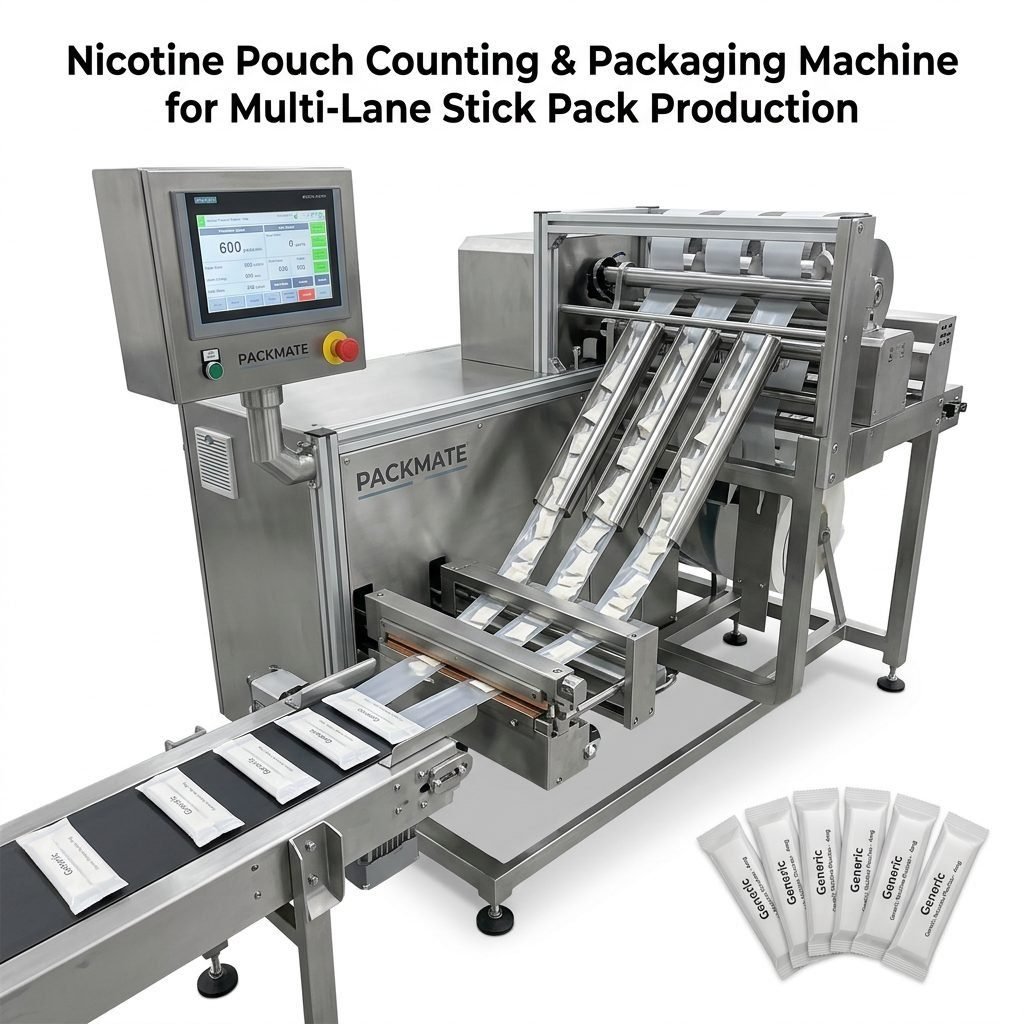
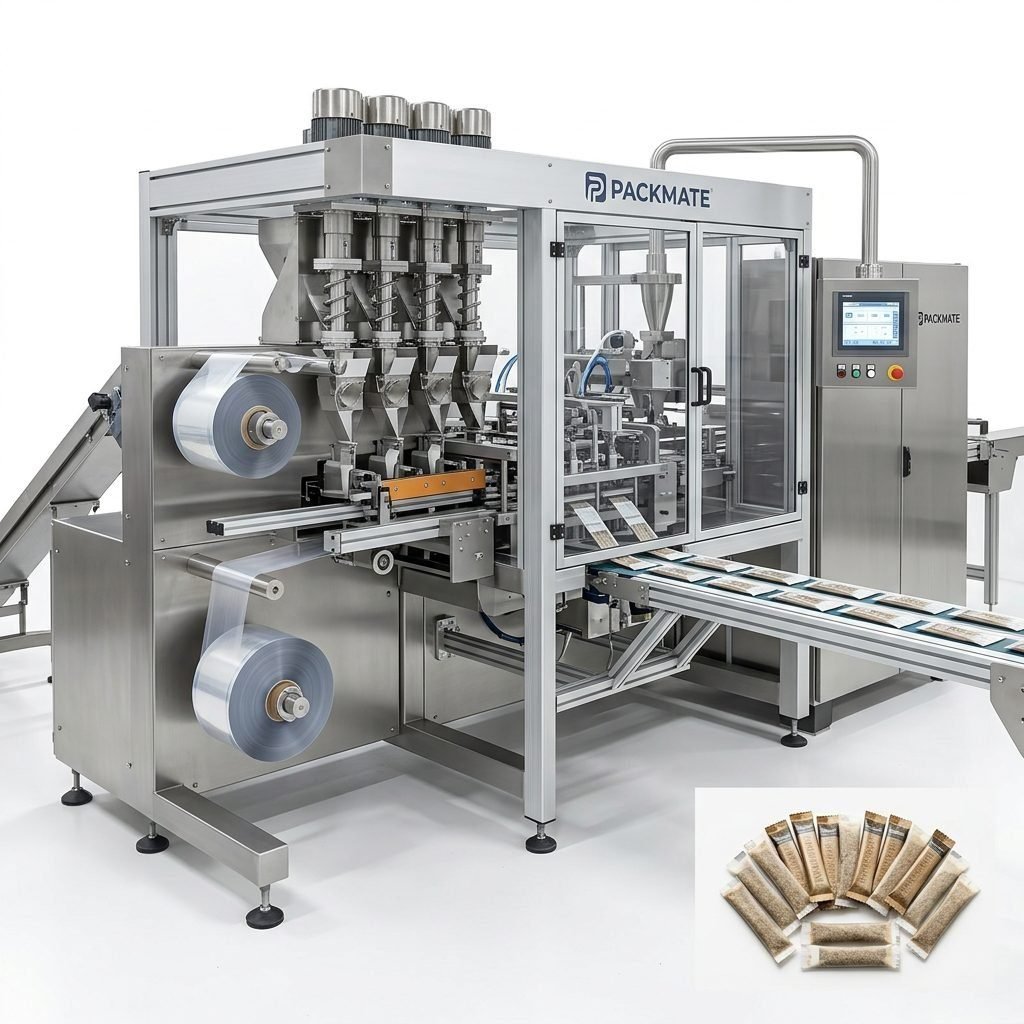
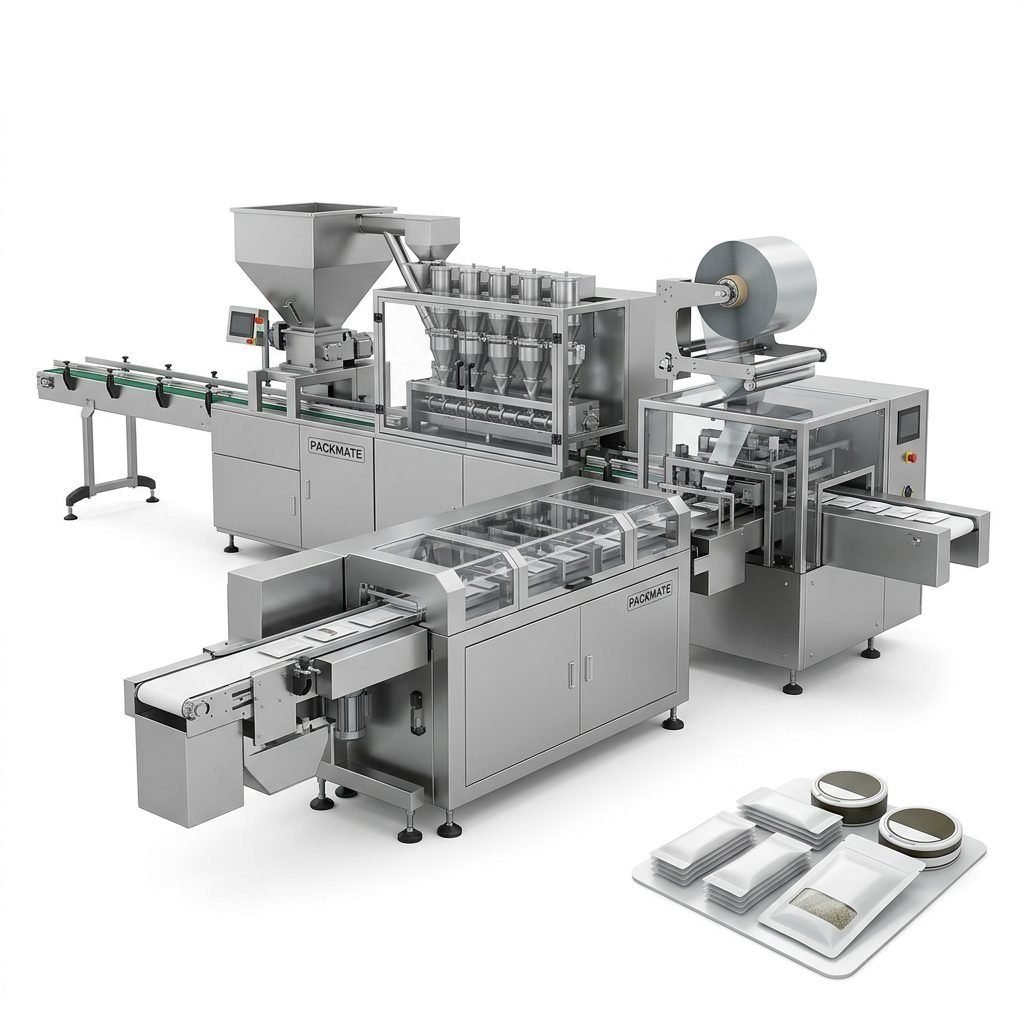
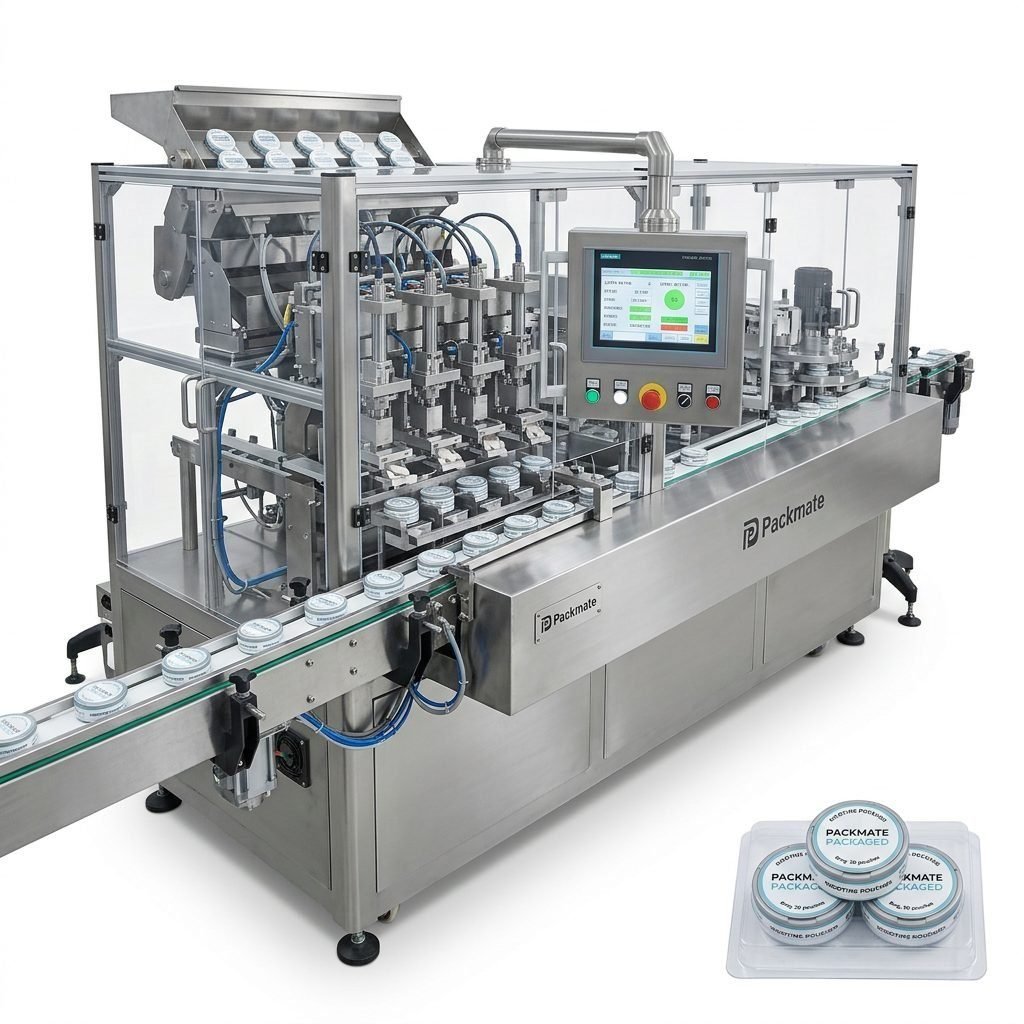
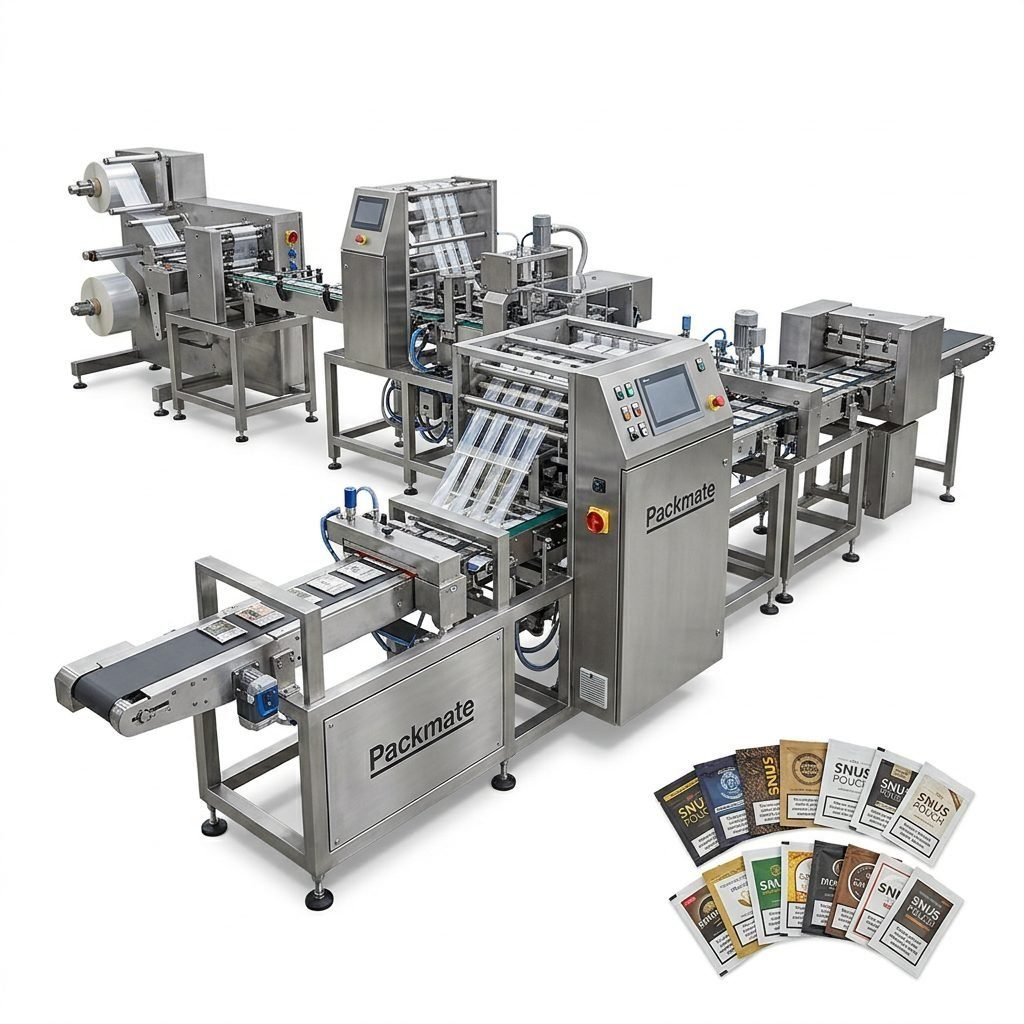
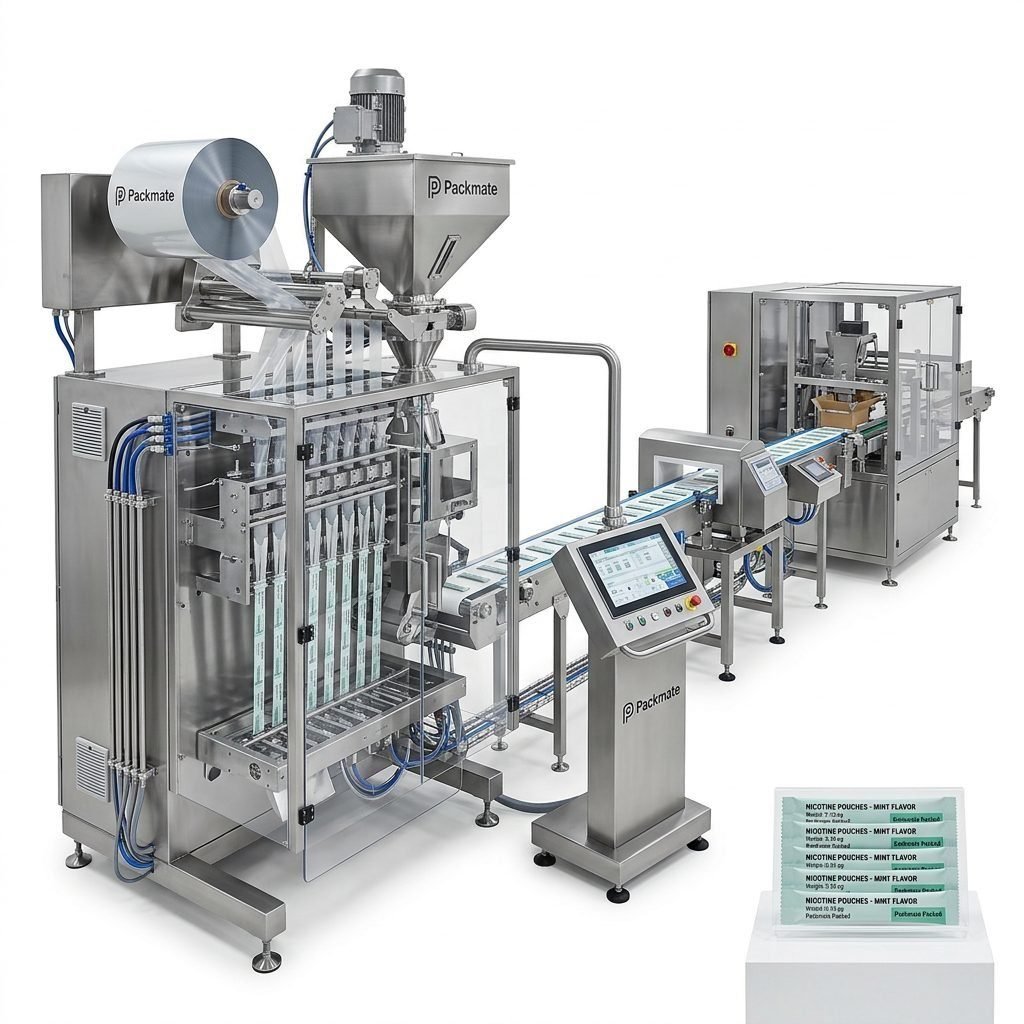
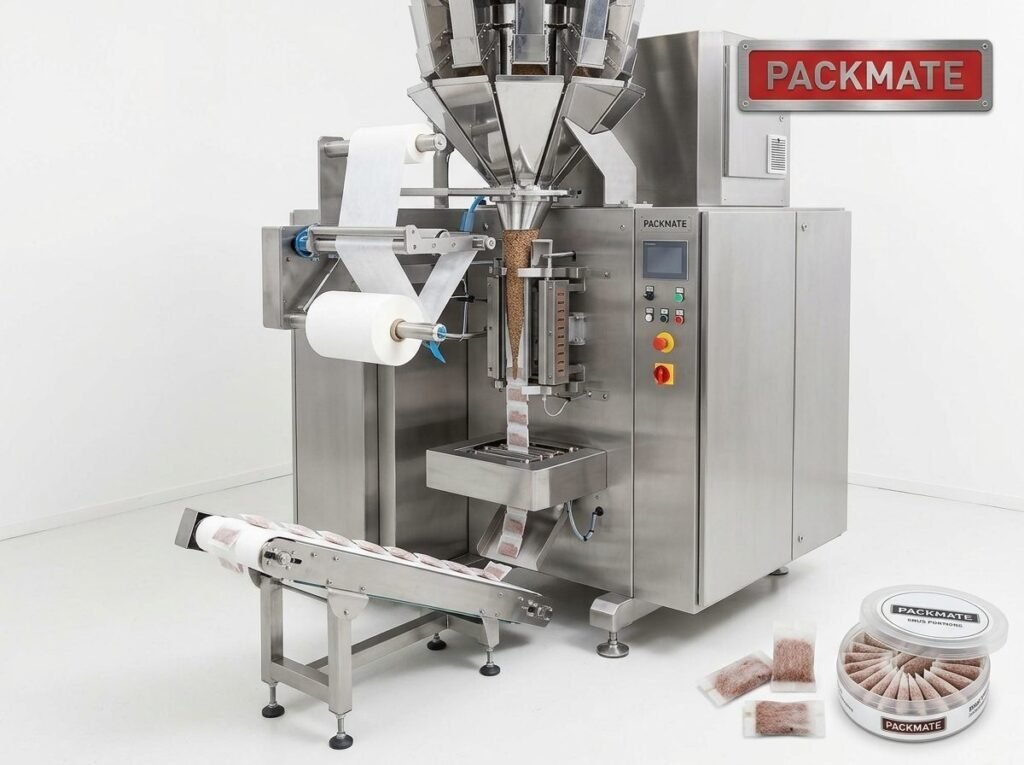
In the high-growth nicotine pouch market, production speed and packaging precision determine your competitive edge. This guide walks you through the most efficient nicotine pouch machine configurations, engineering features, and practical strategies to build a high-speed, precision packaging line that maximizes throughput while protecting product integrity and regulatory compliance.
Why Efficiency Matters in Nicotine Pouch Packaging
The nicotine pouch sector requires machines that deliver consistent dose control, reliable sealing, and flexible format changes. Efficiency translates directly into lower unit cost, faster market response, and reduced waste — all crucial when launching new SKUs or scaling production for regional demand.
Key Business Impacts
✓ Faster time-to-market: High-speed machines let you ramp up new SKUs quickly.
✓ Better margin control: Higher throughput reduces per-unit packaging cost.
✓ Regulatory consistency: Precise dosing helps meet stringent safety and labeling standards across markets.
Core Machine Technologies That Drive High Performance
Not all nicotine pouch machines are created equal. The most efficient systems combine advances across mechanical design, motion control, material handling, and quality inspection. Below are the technologies to prioritize.
1. Multi-lane Continuous Form-Fill-Seal (CFFS) Systems
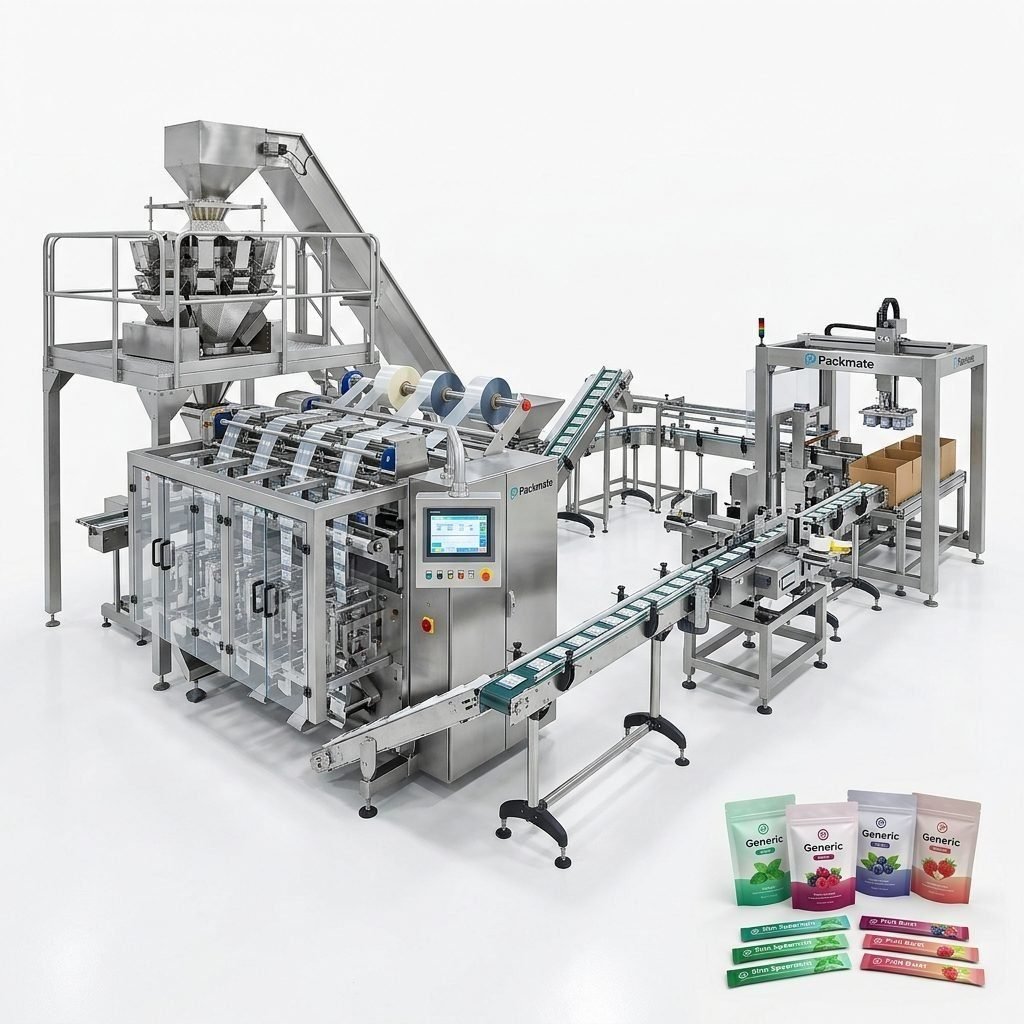
Multi-lane machines multiply output by producing several pouches in parallel. A well-engineered multi-lane CFFS reduces footprint per pouch and delivers exceptional throughput without sacrificing pouch integrity.
2. Servo-driven Motion Control
Servo actuators provide precise timing for cutting, dosing, and sealing operations. That means minimal product loss, consistent pouch weights, and quick format changeovers controlled through recipe-based touchscreens.
3. High-precision Dosing & Weighing
For nicotine pouches, dose accuracy is paramount. Look for integrated gravimetric or volumetric dosing modules with real-time feedback to keep variance within tight tolerances and reduce rejects.
4. Advanced Sealing & Laminates Compatibility
Seal quality affects shelf life and regulatory compliance. Machines that handle multi-layer laminates, heat-seal or ultrasonic sealing options, and precise pressure control protect the product and ensure leak-free packaging.
Machine Types: Choose According to Your Product & Market
Product format, dose size, and market preferences determine the right machine type. Below are common systems used across the nicotine pouch industry.
– Sachet & Stick Pack Machines
Sachet and stick pack lines are ideal for single-dose pouches. They are compact, adaptable for flavors and sizes, and suitable for high-speed output when paired with inline filling and vision inspection.
Explore Sachet & Stick Pack Machines for specifications and models.
– Multi-lane Pouch Packaging Machines
If your operation needs scale, multi-lane pouch machines deliver large volumes. These systems are engineered for synchronized feeding, cutting, and sealing across lanes, minimizing downtime while maximizing yield.
See Snus & Nicotine Packaging Machines for multi-lane options.
– Integrated Filling & Packaging Lines
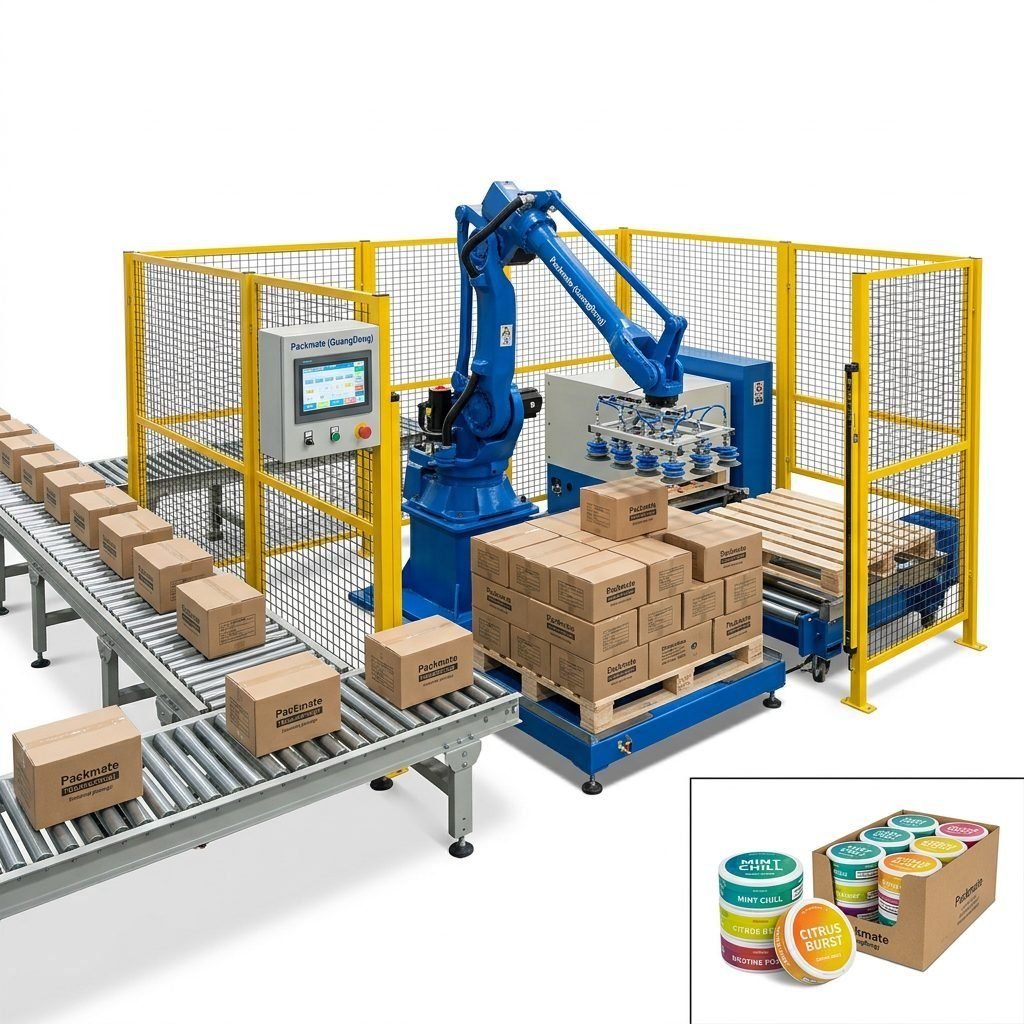
Turnkey lines that integrate bag forming, dosing, filling, and secondary packaging (cartoning or case packing) streamline material flow and reduce manual handling. Integrated solutions reduce contamination risk and simplify regulatory traceability.
Learn more about Filling & Packaging Lines.
Design for Precision: Engineering Elements to Inspect
🔧 Key engineering checkpoints:
• Servo repeatability and encoder resolution for accurate cut positions.
• Minimal fill head dead volume for dose consistency and product sanitation.
• Robust web tension control to prevent material wrinkles or misalignment.
• Quick-change tooling for fast SKU conversion and reduced downtime.
Automation & Industry 4.0: Smarter Production
Modern nicotine pouch machines offer PLC/SCADA connectivity, remote diagnostics, and data logging that support predictive maintenance and traceability. Networked systems help operations teams reduce unplanned stops and optimize shift performance.
Remote Support & Telemetry
Remote access enables vendor technicians to troubleshoot quickly, upload software updates, and fine-tune machine parameters. For companies expanding into multiple markets, centralized machine dashboards standardize performance monitoring.
Material Handling & Consumables
Machine efficiency is as much about consumables as it is about hardware. Choosing compatible films, sealant layers, and pouch substrates reduces sealing issues and machine wear. Work with suppliers to qualify materials under production conditions.
Sustainable Materials
Sustainability trends influence material selection. Some operators are testing recyclable laminates or reduced-film grammages to lower costs and environmental impact — but always validate barrier performance for nicotine stability.
Quality Control: Inline Inspection Systems
Inline vision systems, weight checks, and seal integrity detectors are essential for defect detection and sorting. An effective inspection strategy reduces recalls and preserves brand reputation.
⚠️ Inspection priorities:
• Verify pouch fill and dose weight for each cycle.
• Detect seal defects, pinholes, and foreign particles.
• Track production data for audit trails and batch recall capability.
Maintenance Strategies to Maximize Uptime
Preventive and predictive maintenance are key to sustaining high yields. Implement scheduled lubrication, component inspections, and vibration analysis for critical drives and bearings.
Spare Parts & Rapid Service
Maintain a stock of wear items such as cutting blades, seals, belts, and sensors. Partner with vendors that provide fast global spare delivery and remote troubleshooting. For example, Packmate’s global service network supports multi-region operations — learn more About Packmate.
Layout, Footprint & Plant Integration
Efficient line design minimizes product travel and operator interventions. Place upstream dosing and mixing systems close to the filling module, and design ergonomic access points for cleaning and tools. Multi-lane machines often reduce floor space per pouch compared to single-lane alternatives.
Total Cost of Ownership & Return on Investment
Evaluate machines not only by purchase price but by throughput, downtime, energy consumption, and consumables. Higher initial investment in precision equipment often pays back via reduced waste, fewer rejects, and faster production ramps.
ROI Calculation Tips
• Calculate cost per pouch under realistic yield and labor assumptions.
• Include service agreements, spare parts, and installation in TCO.
• Model scenarios with SKU expansion to show how modular machines enable growth.
Selecting the Right Supplier: What to Ask
A reliable supplier is as important as the machine itself. Look for proven industry experience, manufacturing capacity, and after-sales support.
Key supplier questions:
• How many similar lines have you supplied and where? (Check manufacturer case studies).
• What certifications do your machines and factory hold (CE, ISO)?
• What is your spare parts lead time and global service coverage?
Packmate Example: From Workshop to Global Supplier
With over 30 years of engineering experience and a 20,000㎡ manufacturing facility, Packmate designs high-performance snus and nicotine pouch packaging lines. Their product range includes multi-lane systems, stick pack and sachet machines, and turnkey solutions that integrate weighing and filling. Explore Snus & Nicotine Packaging Machines and Bag & Pouch Packaging Machines for model details and technical specs.
Implementation Checklist: From Purchase to Production
Use this checklist to ensure a smooth deployment:
✔ Factory acceptance test (FAT): Validate throughput, dose accuracy, and sealing under production-like materials.
✔ Installation & commissioning (SAT): Confirm line integration with upstream and downstream modules.
✔ Training: Provide operator and maintenance training with spare parts lists.
✔ Validation & documentation: Complete IQ/OQ/PQ if required and archive batch traceability.
Global Exhibitions & References
Meet vendors at industry exhibitions to see live demonstrations and discuss custom configurations. Packmate participates in major trade shows — check Our Exhibition and Case pages to view past projects and machine demonstrations.
Practical Tips for Operators
• Standardize film reels and tooling across SKUs where possible.
• Implement shift handover logs to track minor faults before they escalate.
• Use SPC (Statistical Process Control) to catch drift in fill weights early.
Sustainability & Regulatory Considerations
Regulatory frameworks vary by region; ensure material choices and labeling meet local requirements. In addition to CE and ISO standards, many regions expect clear traceability and child-resistant considerations for nicotine products.
Visit Certificate and FAQs for more compliance resources.
Further Reading & Resources
For full product portfolios and technical catalogs, explore the manufacturer’s product pages: Snus & Nicotine Packaging Machines, Sachet & Stick Pack Machines, and Weighing & Packaging Systems. Contact the vendor directly via Contact Us for tailored proposals.
Conclusion
Building a high-speed, precision nicotine pouch packaging line requires attention to machine architecture, dosing accuracy, inspection systems, and supplier support. Prioritize multi-lane options, servo control, and integrated inspection to achieve the best combination of speed and product integrity. Partner with experienced manufacturers that provide turnkey solutions and global after-sales service to accelerate installation and keep lines running at peak performance.
Frequently Asked Questions
Q1: How do I choose between a single-lane and a multi-lane machine?
A1: Choose multi-lane when you need high throughput with limited floor space and consistent pouch formats; single-lane may be better for low-volume or frequent SKU changes.
Q2: What accuracy can I expect from modern dosing systems?
A2: With precision gravimetric or well-calibrated volumetric systems, dose variation can often be maintained within +/- a few percent depending on product characteristics and calibration practices.
Q3: How important is vendor after-sales service?
A3: Critical — rapid spare parts delivery, remote diagnostics, and training shorten downtime and protect production continuity.
Q4: Can I integrate eco-friendly materials into high-speed lines?
A4: Yes, but you must validate barrier performance and seal behavior during FAT/SAT. Some recyclable films require specific sealing profiles or adhesives.
Q5: Where can I find real-world case studies and machine specs?
A5: Review manufacturer case pages and product catalogs for model specifications and deployment examples. For Packmate references, check the Case and Catalog sections.