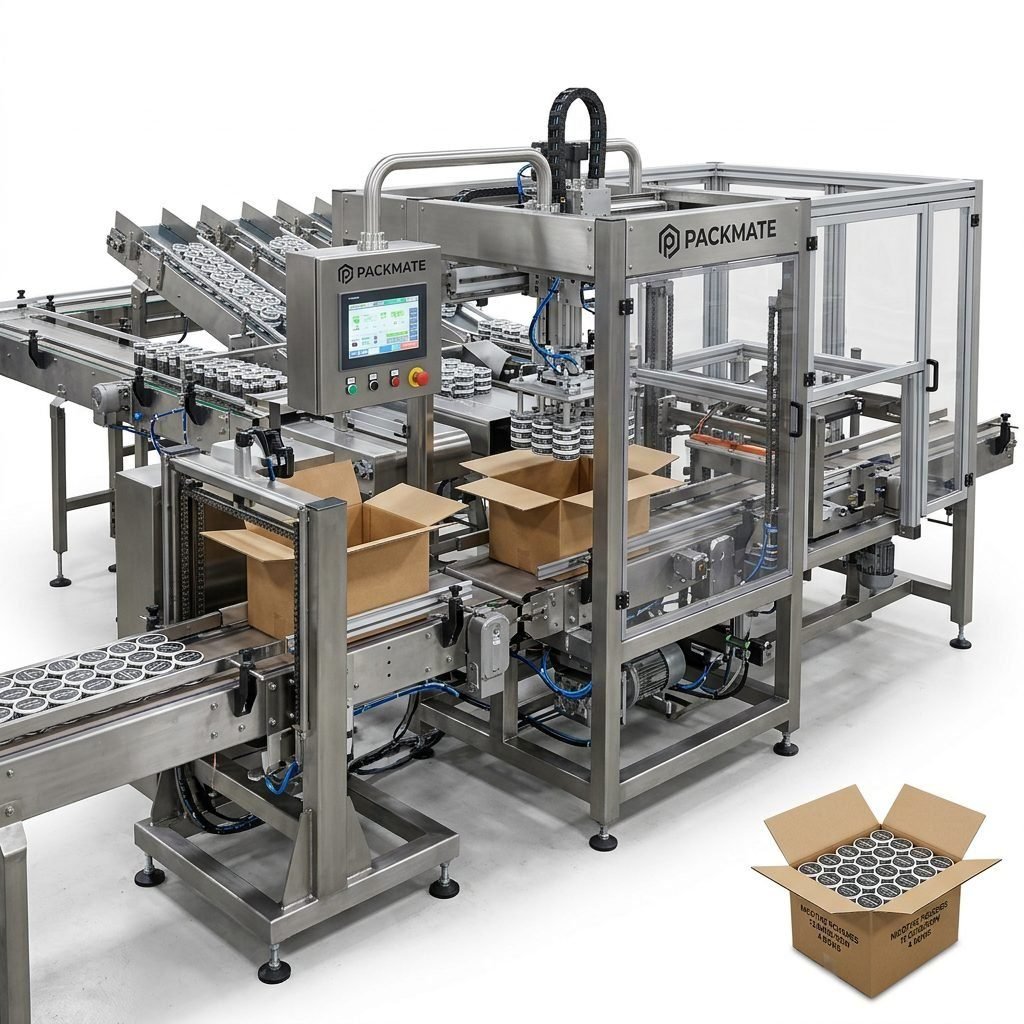
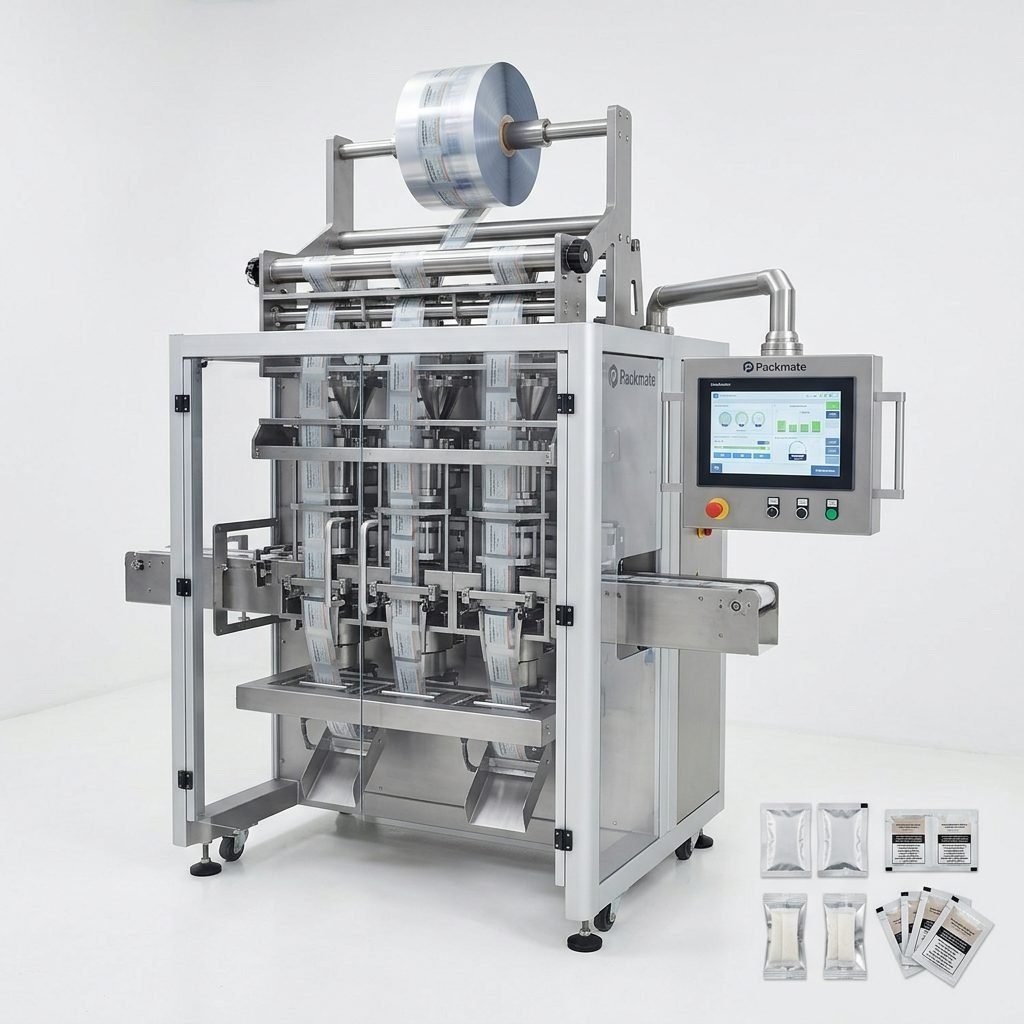
Choosing the right hygienic snus packaging machine is one of the most important decisions a manufacturer of nicotine pouches and snus can make. A well-designed machine ensures product safety, regulatory compliance, consistent portioning, and efficient production—while poor equipment can cost time, money, and reputation. This guide walks you through the essential factors to evaluate, the technologies to consider, and practical tips for selecting a solution that matches your volumes, product formats, and cleanliness standards.
Why Hygiene Matters in Snus & Nicotine Pouch Packaging
Snus and nicotine pouches are consumed orally, which means product hygiene is critical. Contamination risk must be minimized from raw material handling to final sealing. Hygienic packaging machines reduce microbial exposure, prevent cross-contamination between batches, and simplify cleaning procedures. Investing in the right machine helps you meet GMP, ISO, and CE requirements and protects brand trust.
Key hygienic priorities
✓ Cleanable design: Open frames, easy-to-remove covers, sloped surfaces and drain-friendly designs reduce areas where residue can collect.
✓ Food-grade materials: Stainless steel 304/316 contact surfaces, FDA-compliant seals and non-toxic coatings.
✓ Easy validation: Design that supports cleaning validation, documentation and traceability.
Core Machine Types for Snus & Nicotine Pouches
Different applications require different packaging formats. Choose a machine family that matches your product form, dosing needs and market expectations.
Stick pack and sachet machines
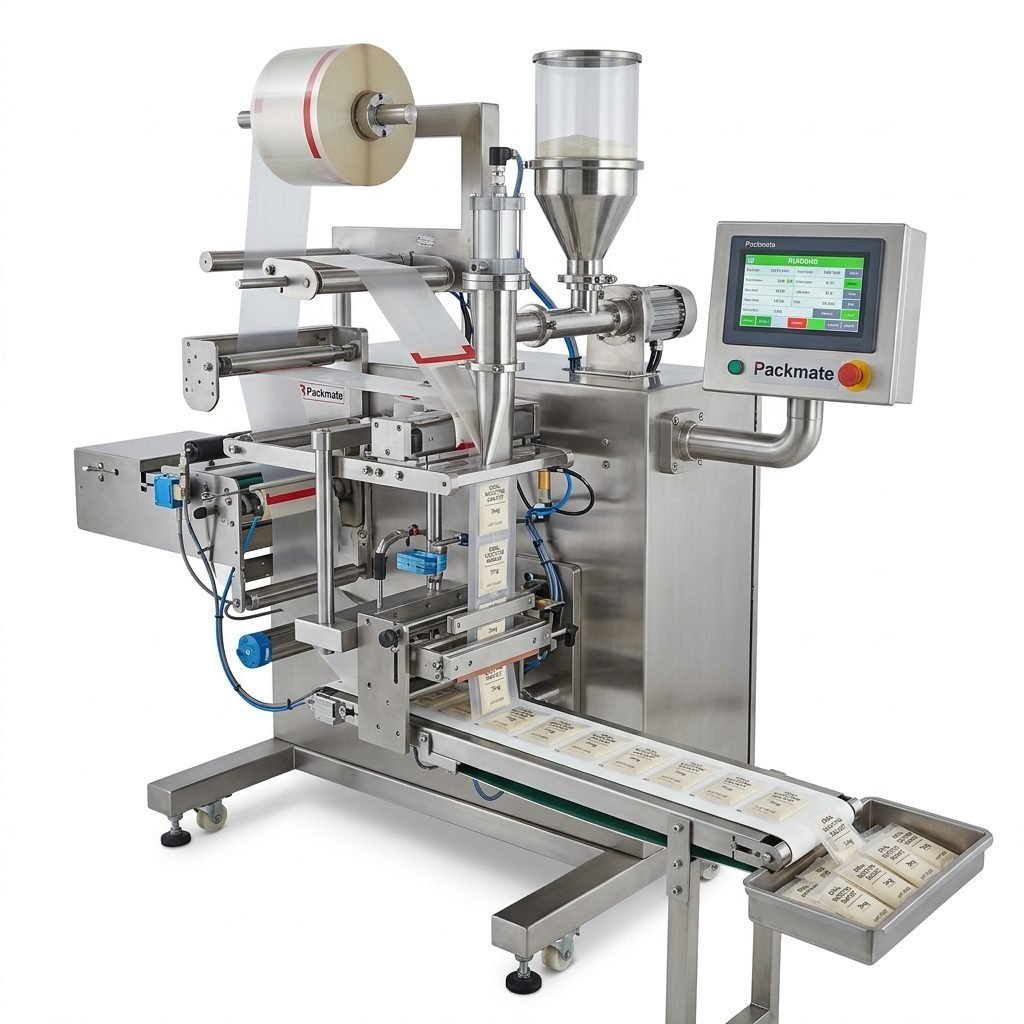
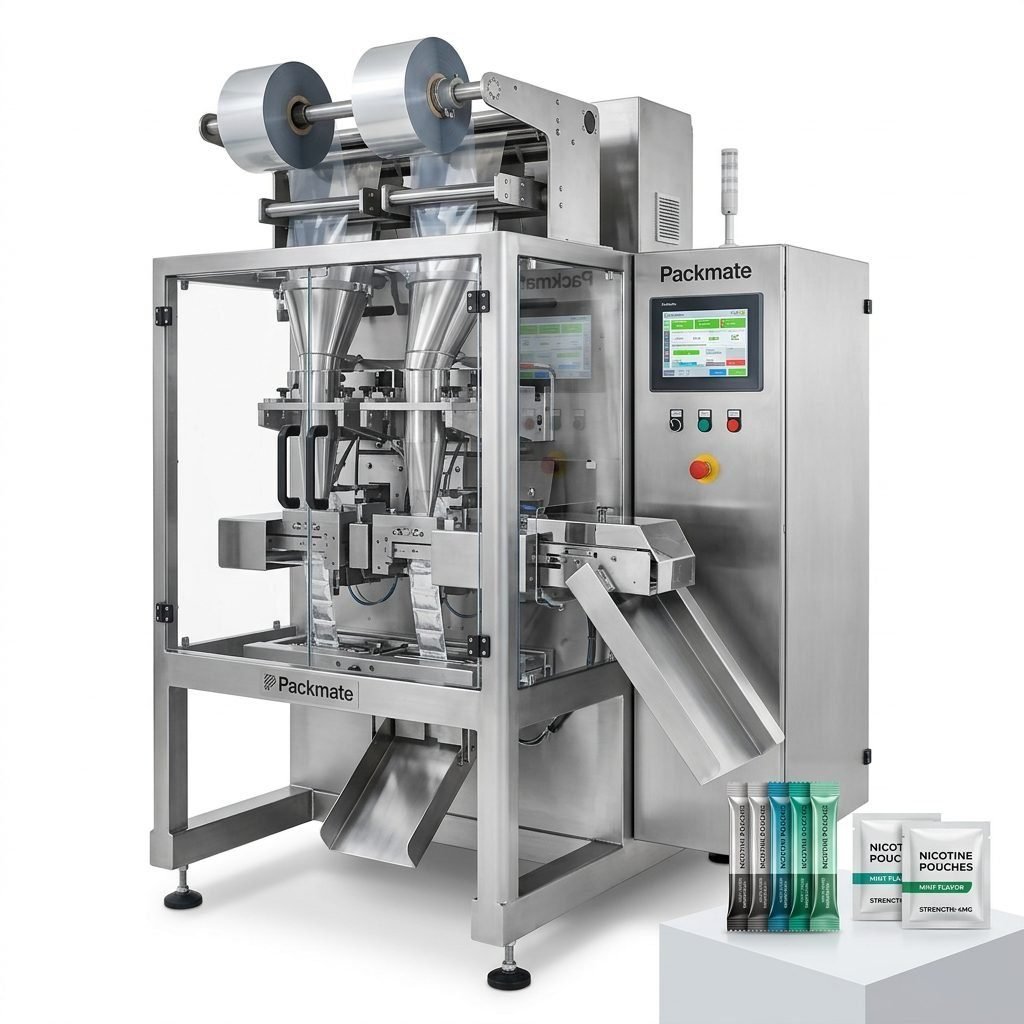
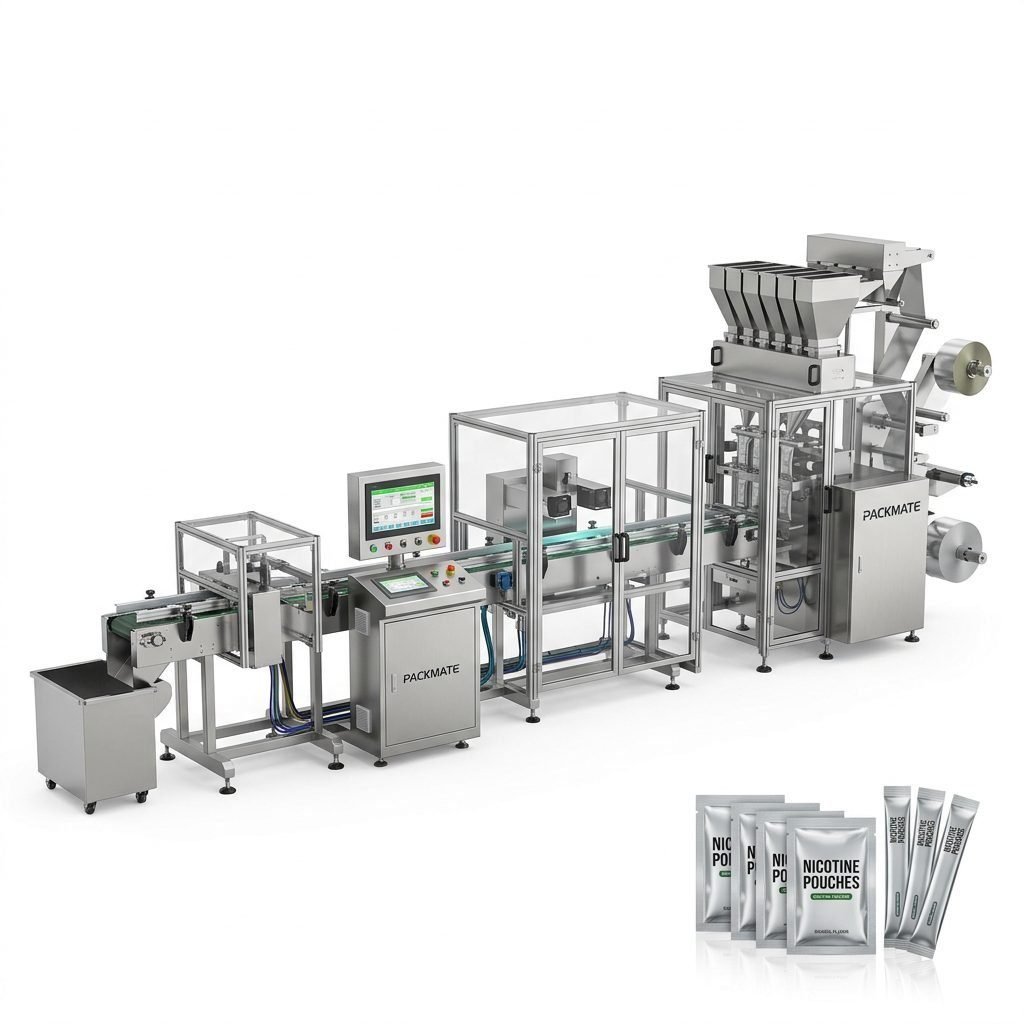
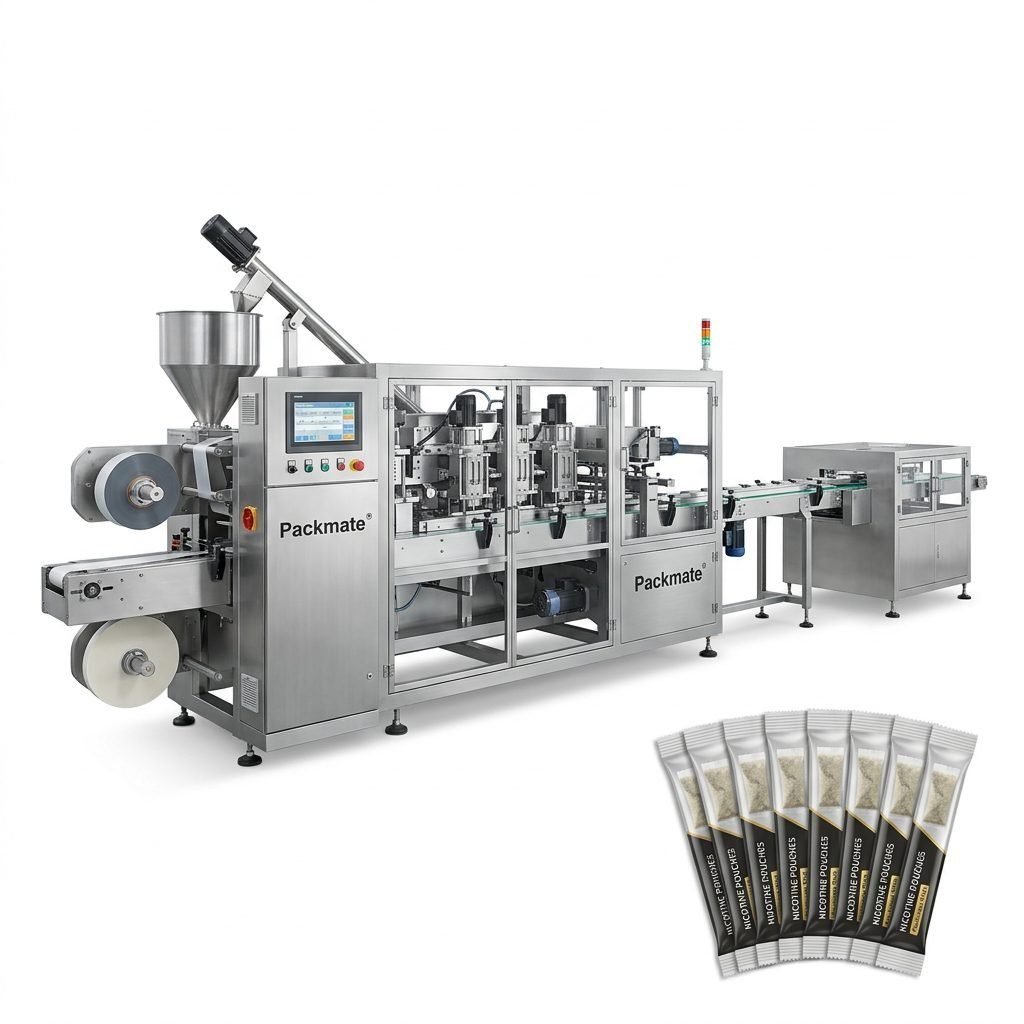
Stick packs and sachets are popular for single-dose pouches. High-speed stick pack machines provide consistent portioning and fast changeovers, making them suitable for high-volume snus markets.
Multi-lane pouch machines
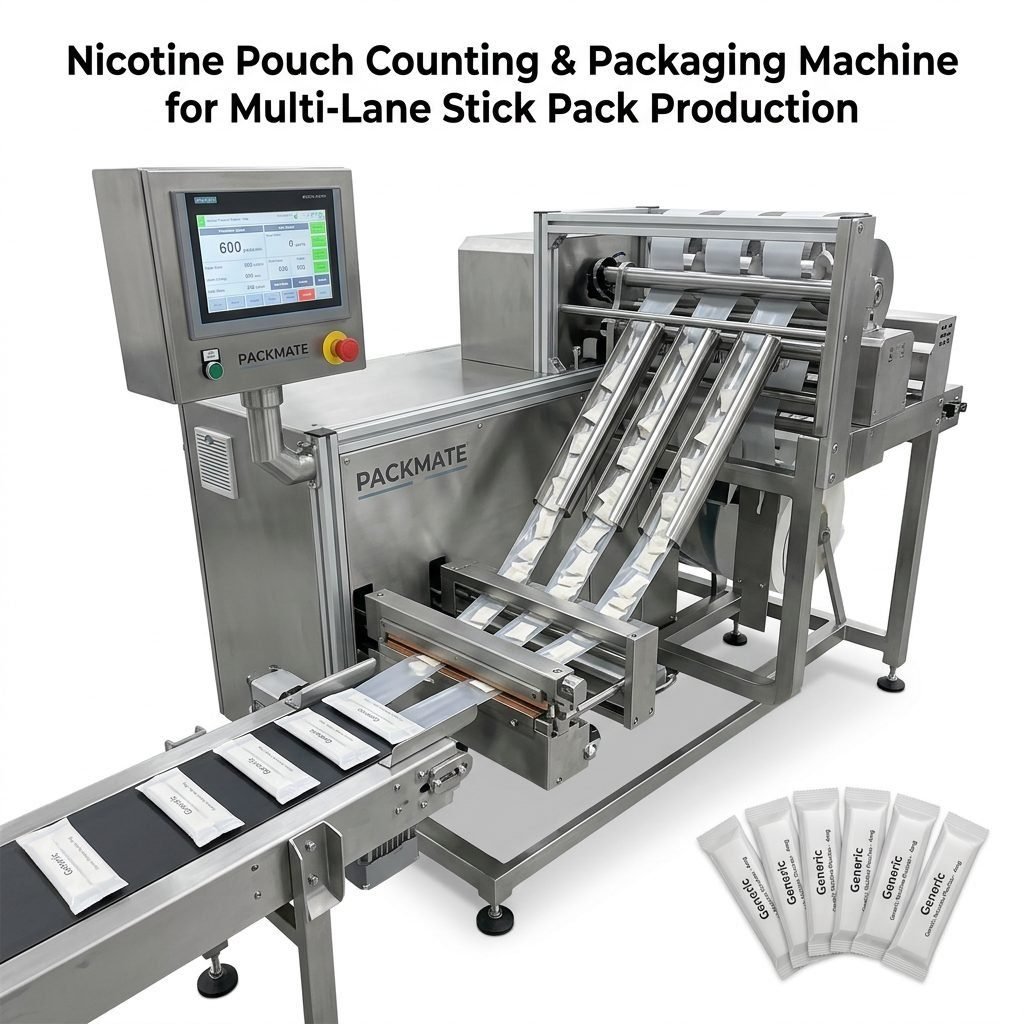
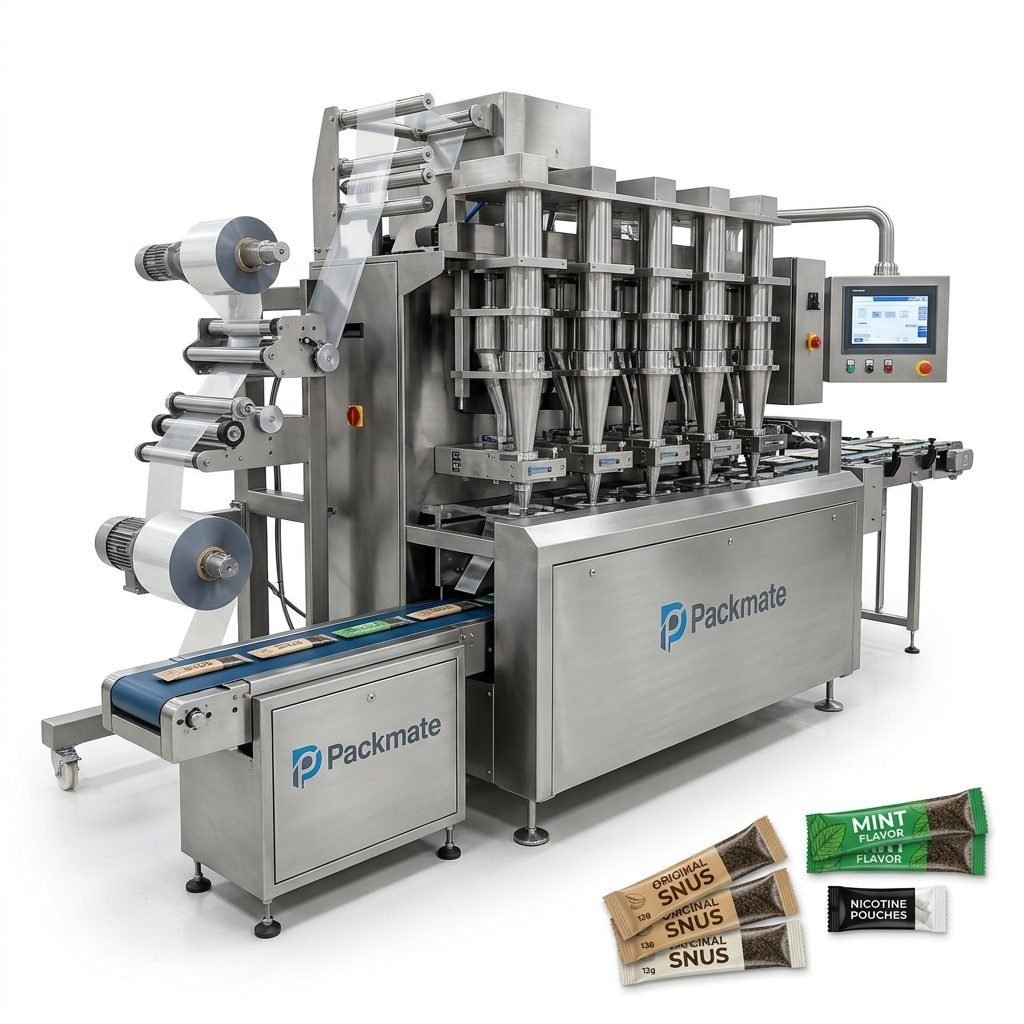
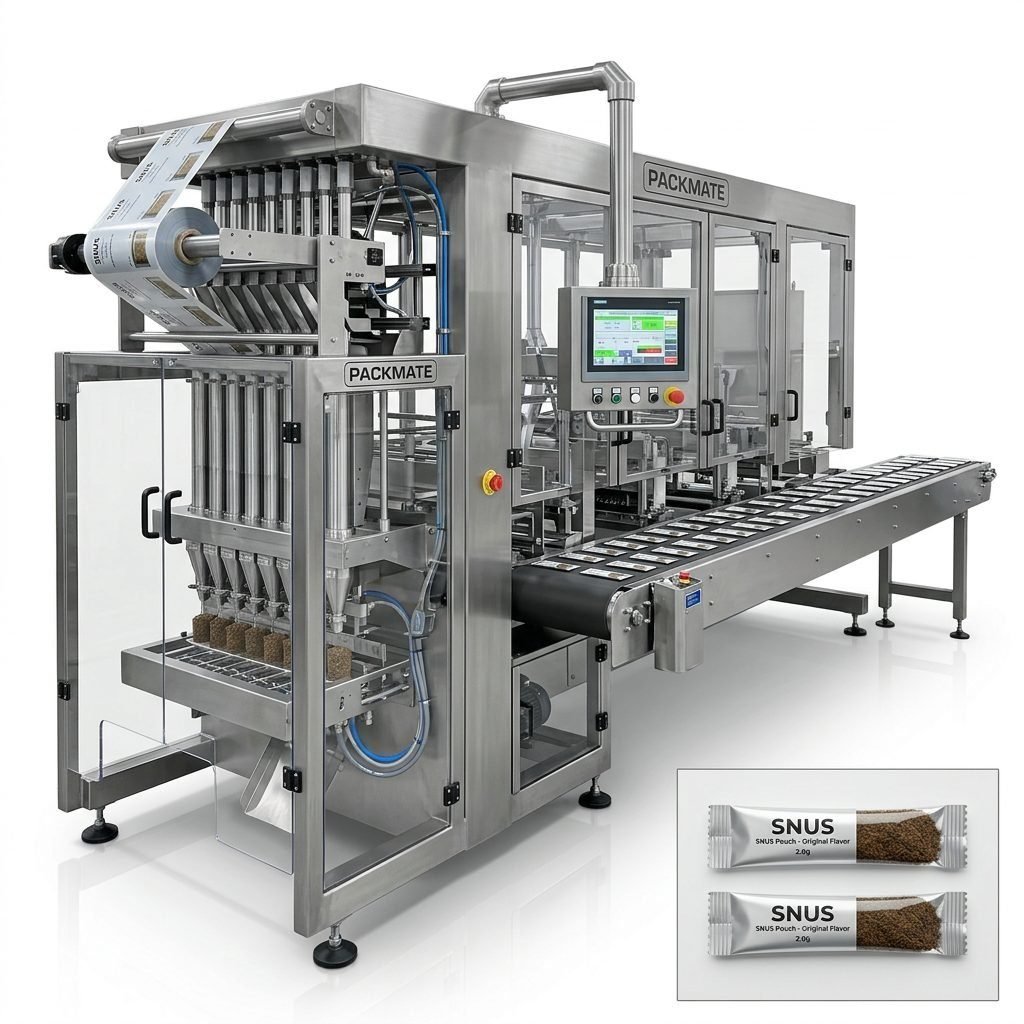
Multi-lane systems enable small-dose pouch manufacturing at high throughput. If your product is a small nicotine pouch produced in many lanes simultaneously, a precision-engineered multi-lane line dramatically increases output while maintaining portion accuracy.
Fillers and weighing integration
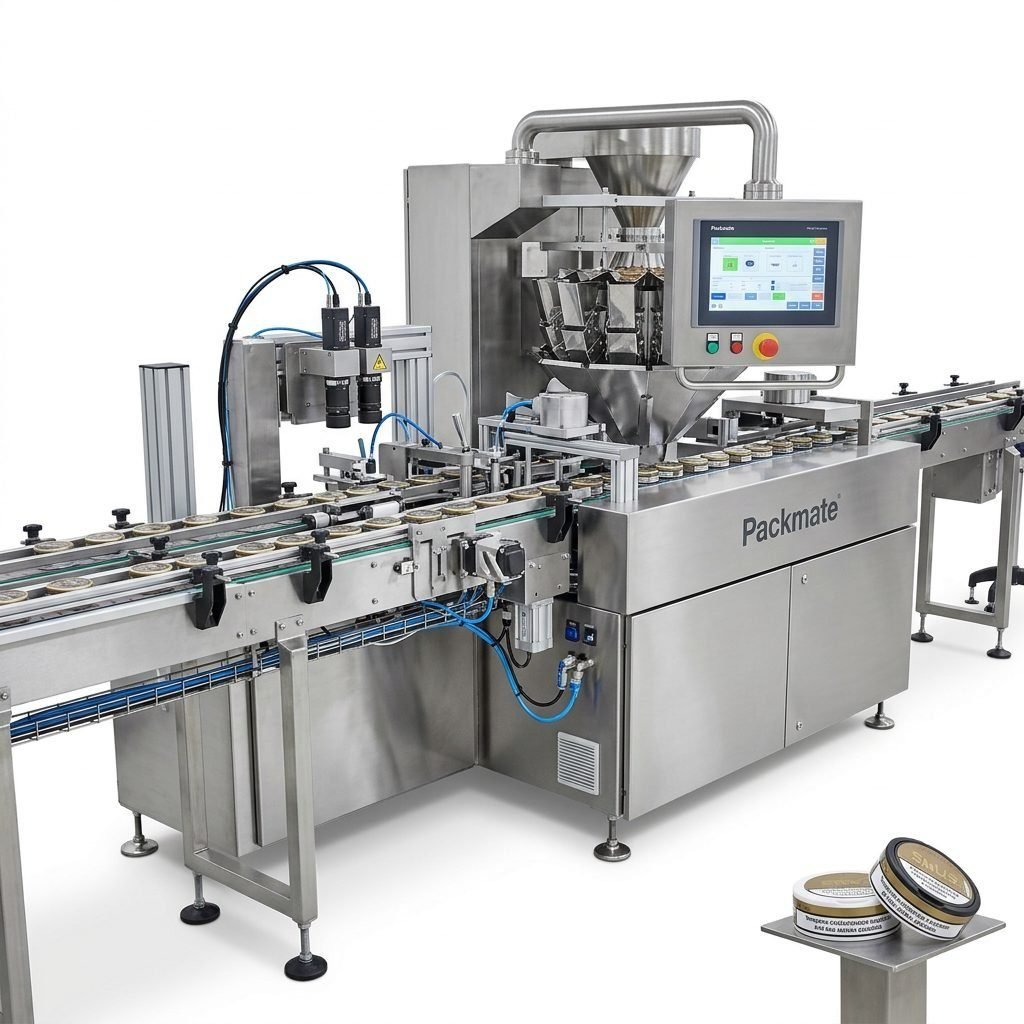
For powders, granules and fillers used in snus pouches, synchronized weighing and feeding systems reduce variation and waste. Look for systems that integrate with your packaging machine for seamless operation.
Essential Hygienic Design Features
When evaluating vendors, prioritize hygiene-driven engineering choices over price alone. These features directly impact cleaning frequency, downtime, and regulatory compliance.
ℹ️ Material selection: Use 316 stainless steel for contact parts in corrosive environments and 304 for non-critical areas.
ℹ️ Smooth surfaces: Minimize crevices and use welded joints rather than bolted assemblies where possible.
ℹ️ CIP & SIP readiness: If your process demands, support cleaning-in-place or sterilization-in-place protocols.
Automation, Controls and Traceability
Reliable automation ensures repeatable quality and easy operator interaction. Modern machines offer touch-screen HMI, recipe management, servo-driven motion and data logging to support traceability and remote monitoring.
What to expect in controls
Look for PLCs from reputable brands, intuitive HMIs with recipe locking, and interfaces for MES/ERP. Alarm systems and easy-to-access maintenance logs reduce unplanned downtime.
Performance Metrics: Speed, Accuracy and Uptime
Define the performance metrics you need: target pouches per minute, acceptable weight variation, and planned uptime. Compare vendors using consistent test products and validated measurement methods.
Typical KPIs
• Line speed (pouches/min)
• Filling accuracy (g or mg tolerance)
• Mean time to repair (MTTR) and Mean time between failures (MTBF)
Integration with Ancillary Equipment
Snus packaging rarely operates as a standalone machine. Consider upstream and downstream equipment: dosing systems, conveyors, metal detectors, checkweighers and pouch counters. Seamless integration reduces changeover time and simplifies cleaning.
Packmate offers a full portfolio including integrated weighing and packaging systems and auxiliary equipment to build turnkey lines. Explore product families like Snus & Nicotine Packaging Machines and Weighing & Packaging Systems for cohesive solutions.
Operational Considerations and Maintenance
Operational efficiency depends on straightforward maintenance and the availability of spare parts. Choose a supplier with global support and documented maintenance schedules. Preventive maintenance and quick-change components limit downtime during cleaning and format changeovers.
Spare parts & support
Verify spare parts availability and lead times. A machine vendor with local support or rapid global logistics will reduce the impact of failures. Packmate provides global turnkey solutions and technical support backed by 30+ years of engineering experience.
Compliance, Certification and Documentation
Ensure machines comply with regional regulations and international standards. CE and ISO certifications indicate adherence to safety and quality processes. Request documentation for material certificates, FAT reports, IQ/OQ templates and risk assessments.
For more details on company certifications and exhibition presence, see Packmate’s pages: Certificate and Our Exhibition.
Cost, ROI and Total Cost of Ownership
Initial purchase price is only the start. Evaluate the total cost of ownership (TCO): energy consumption, spare parts, labor for cleaning, downtime, and scrap rates. A higher upfront investment in hygienic design often yields lower operating costs and faster ROI.
Calculating ROI
Estimate productivity gains from reduced changeover time, lower waste, higher uptime, and fewer recalls. Use conservative scenarios to compare vendors and request references for real-world performance.
Choosing a Partner: Vendor Evaluation Checklist
✓ Experience & References: Look for suppliers with proven snus packaging lines and global cases.
✓ Factory capabilities: Advanced CNC and precision assembly indicate build quality.
✓ After-sales service: On-site support, spare parts and training are essential.
✓ Compliance & docs: Provide FAT, IQ/OQ, material certificates and validation support.
Packmate (GuangDong) Co., Ltd. brings over 30 years of engineering experience, a 20,000㎡ manufacturing facility and 50+ machine models designed for global snus and nicotine pouch producers. Learn more about the company and its mission on the About Packmate page.
Common Implementation Challenges and How to Avoid Them
Implementation challenges often stem from mismatched expectations, insufficient site preparation, or inadequate training. Plan for utilities, floor loading, cleanroom classification if needed, and operator training before machine arrival to shorten ramp-up time.
A few practical tips:
- Validate product-to-machine compatibility with a pre-shipment trial or sample run.
- Confirm site utilities (power, air, drainage) match machine requirements.
- Plan spare parts inventory for critical wear items in the first six months.
Real-World Case Example
A European snus producer moved from a legacy single-lane filler to a Packmate multi-lane snus pouch line. They achieved a 4x increase in output, improved portion accuracy to ±2%, and reduced cleaning downtime by 30% due to hygienic design and easier access for operators. Read more project examples on the Case page.
Next Steps: Specifying Your Ideal Machine
Start by documenting product characteristics (particle size, moisture, stickiness), desired formats, target throughput and packaging materials. Request a technical proposal with FAT criteria, project timeline and training scope. Engage cross-functional stakeholders (QA, production, maintenance) early in the process.
If you’re evaluating full production lines, explore Packmate’s complete offerings including Filling & Packaging Lines and Bag & Pouch Packaging Machines for comprehensive automation.
Decision Checklist (Quick)
• Hygiene features verified
• Performance KPIs met
• Integration & service support confirmed
Final thought
Selecting the best hygienic snus packaging machine is about balancing hygiene, productivity and long-term support. Prioritize hygienic construction, accurate dosing, seamless integration and robust after-sales service. With careful specification and the right partner, you secure product safety, regulatory compliance and a strong foundation for future growth.
Frequently Asked Questions
Q1: What hygiene standards should I demand from a snus packaging machine?
A1: Require stainless-steel contact parts, smooth welded surfaces, CIP/SIP readiness if applicable, and documentation for cleaning validation. Ask for material certificates and FAT reports to verify compliance.
Q2: How do multi-lane machines impact cleaning and hygiene?
A2: Multi-lane designs increase throughput but can complicate cleaning if not designed hygienically. Choose machines with easy-to-remove lanes or guards, sloped surfaces for drainage and accessible components to maintain hygiene without extended downtime.
Q3: Is a turnkey line better than buying individual machines?
A3: Turnkey lines from a single supplier reduce integration risk and often come with full validation support, streamlined commissioning and single-point responsibility—advantages for producers focused on speed-to-market and regulatory compliance.
Q4: How important is supplier experience in snus packaging?
A4: Very important. Suppliers with proven snus and nicotine pouch experience understand nuances like small-dose accuracy, dust control, and hygienic changeover—reducing the likelihood of costly redesigns later.
Q5: Where can I get more information or request a quote?
A5: Contact the manufacturer directly via their contact page: Contact Us. For catalogues, service and technical pages, see the Catalog and Service resources.