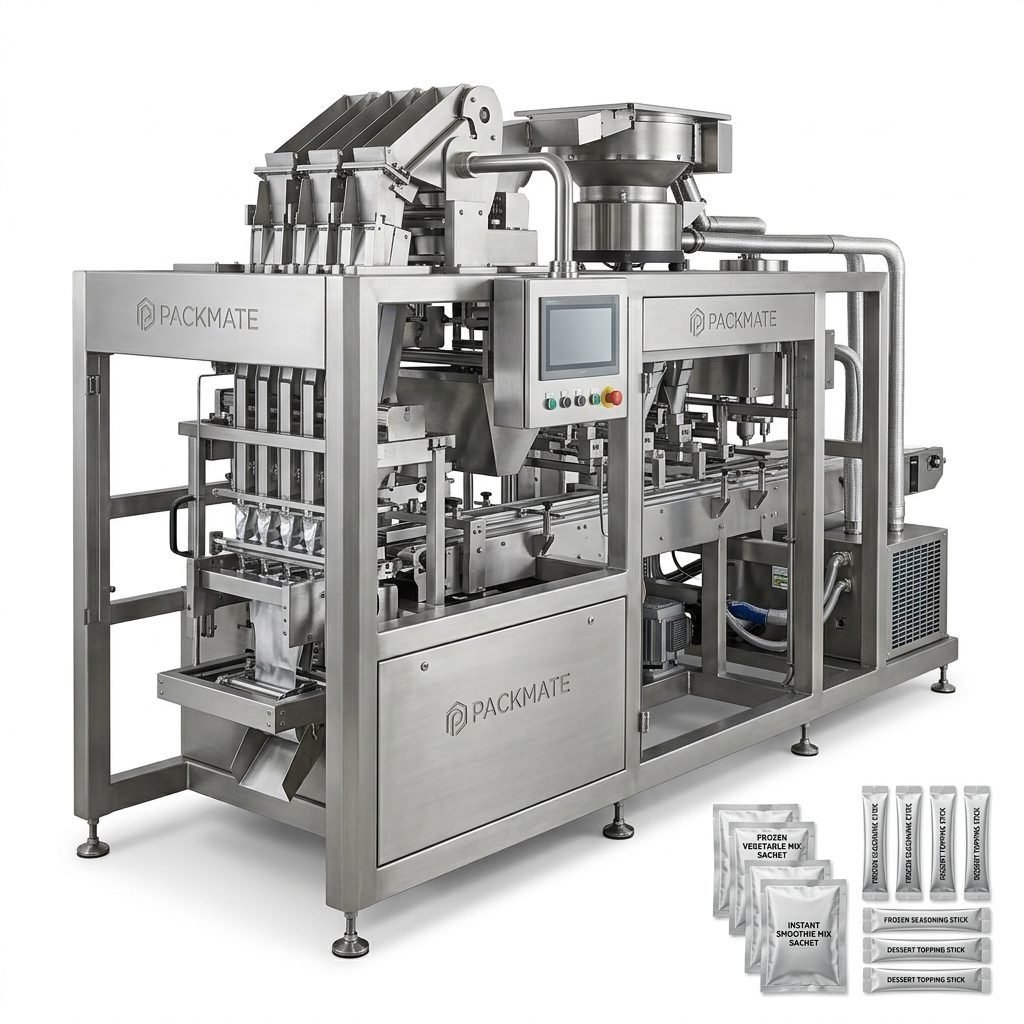
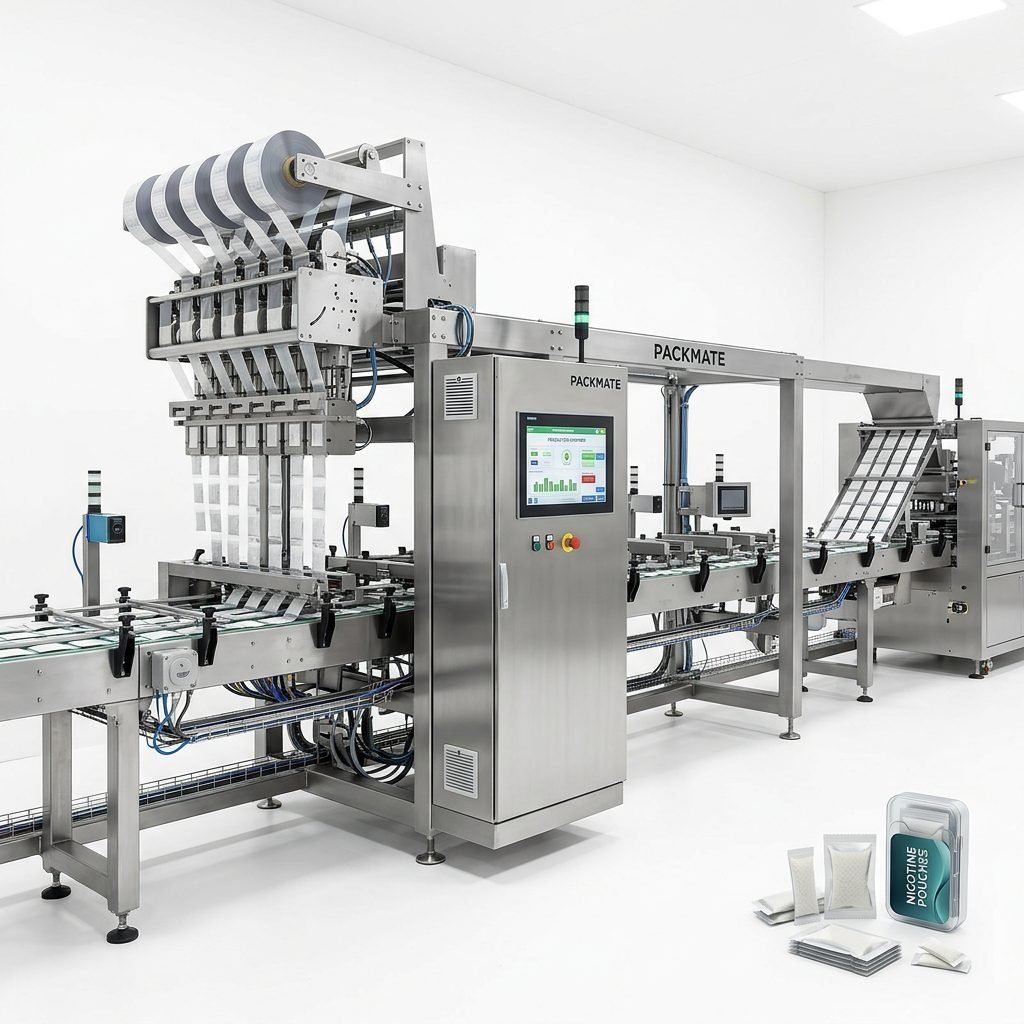
Choosing the right nicotine packaging machine supplier in Spain requires technical understanding, regulatory awareness, and an appreciation for local business culture. This guide walks Spanish manufacturers, contract packers, and importers through the practical steps to find a supplier who delivers reliable equipment, fast support, and regulatory-compliant solutions tailored to nicotine pouches, snus and related products.
Understand Your Production Needs First
Before contacting suppliers, define your production targets: daily throughput, pouch formats (multi-lane, stick pack, sachet), dosing accuracy, and product types (powdered nicotine pouches, granules, or liquids). Consider future growth — scalability is essential for avoiding repeated capital expenditure.
Key operational questions to answer
🔧 What is your target units/hour? Machines range from semi-automatic to high-speed multi-lane lines.
📦 Which pouch formats do you need? Stick, sachet, and multi-lane snus pouches require different forming and sealing systems.
⚖️ What dosing accuracy is critical? Nicotine dosing tolerance is tight — choose suppliers with precision metering and weighing systems.
Why Choose a Supplier with Industry-Specific Experience
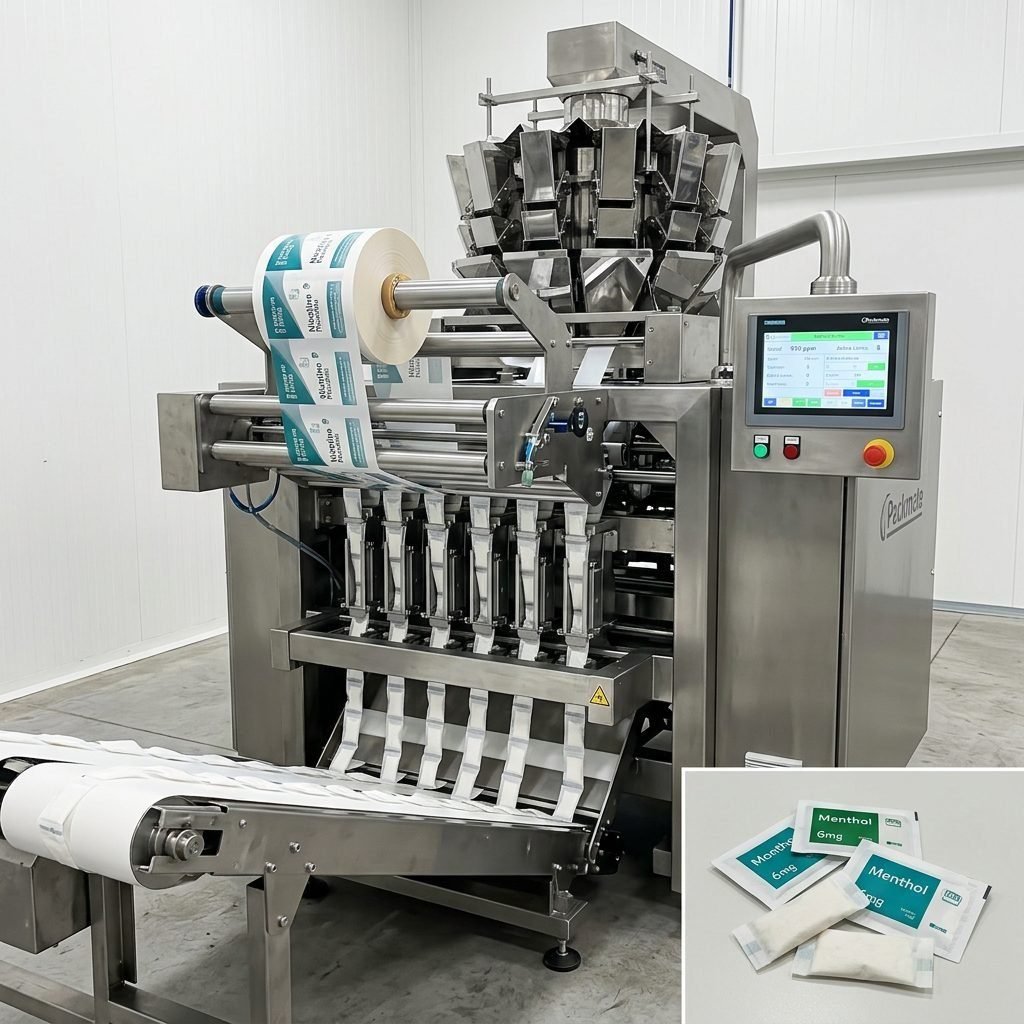
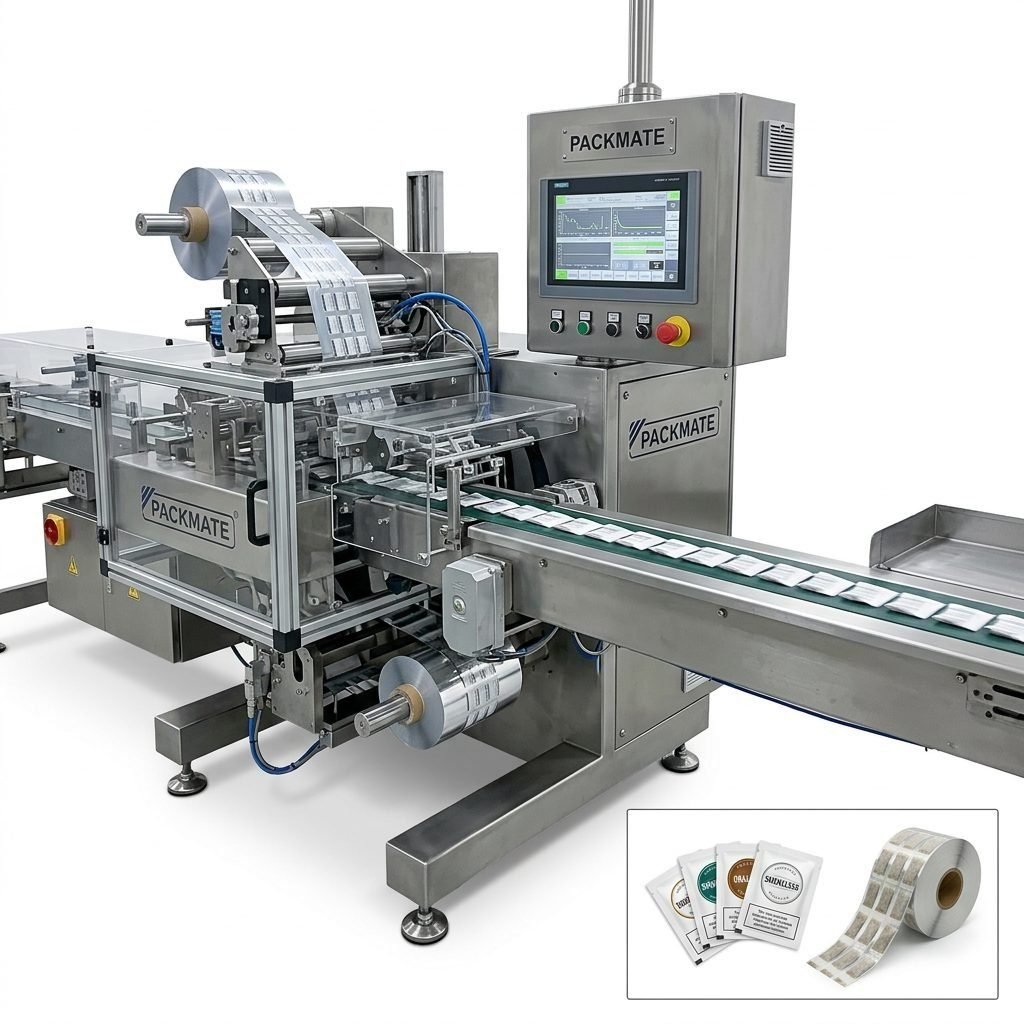
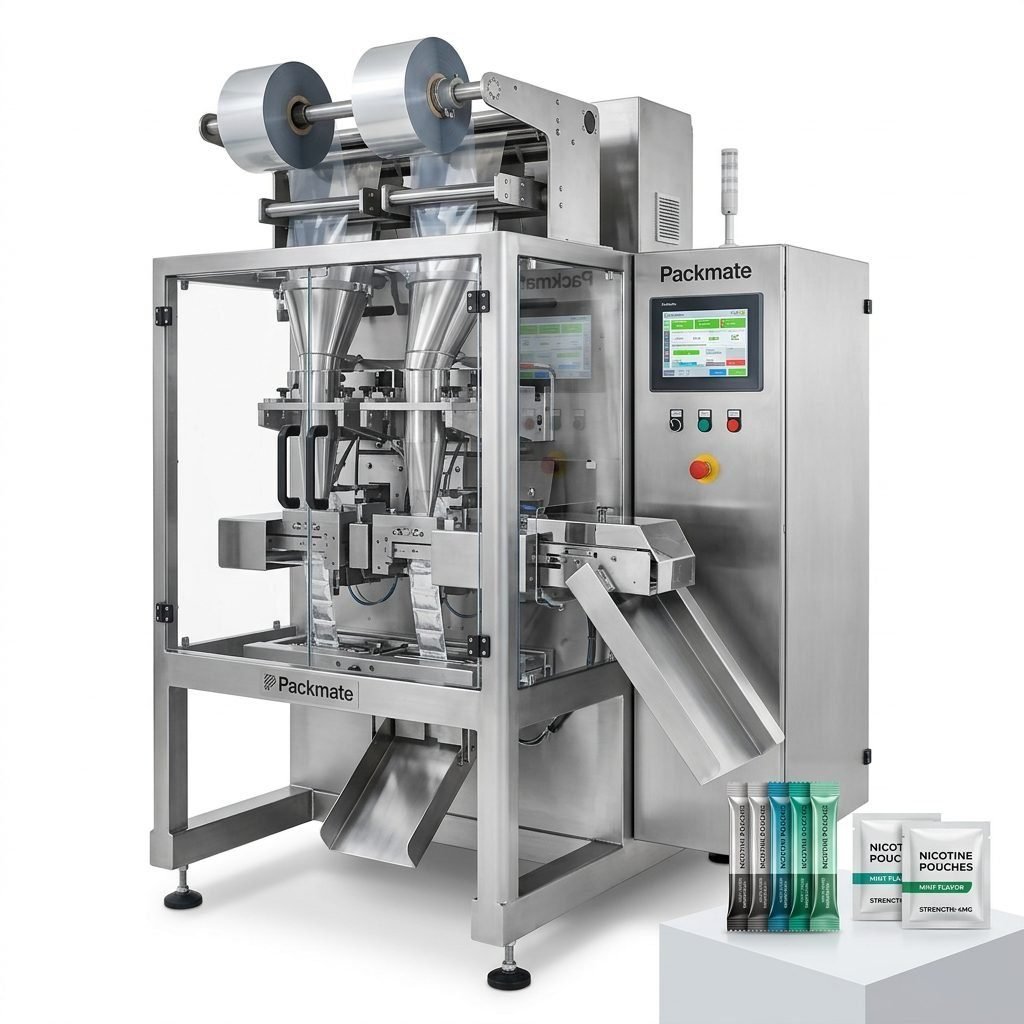
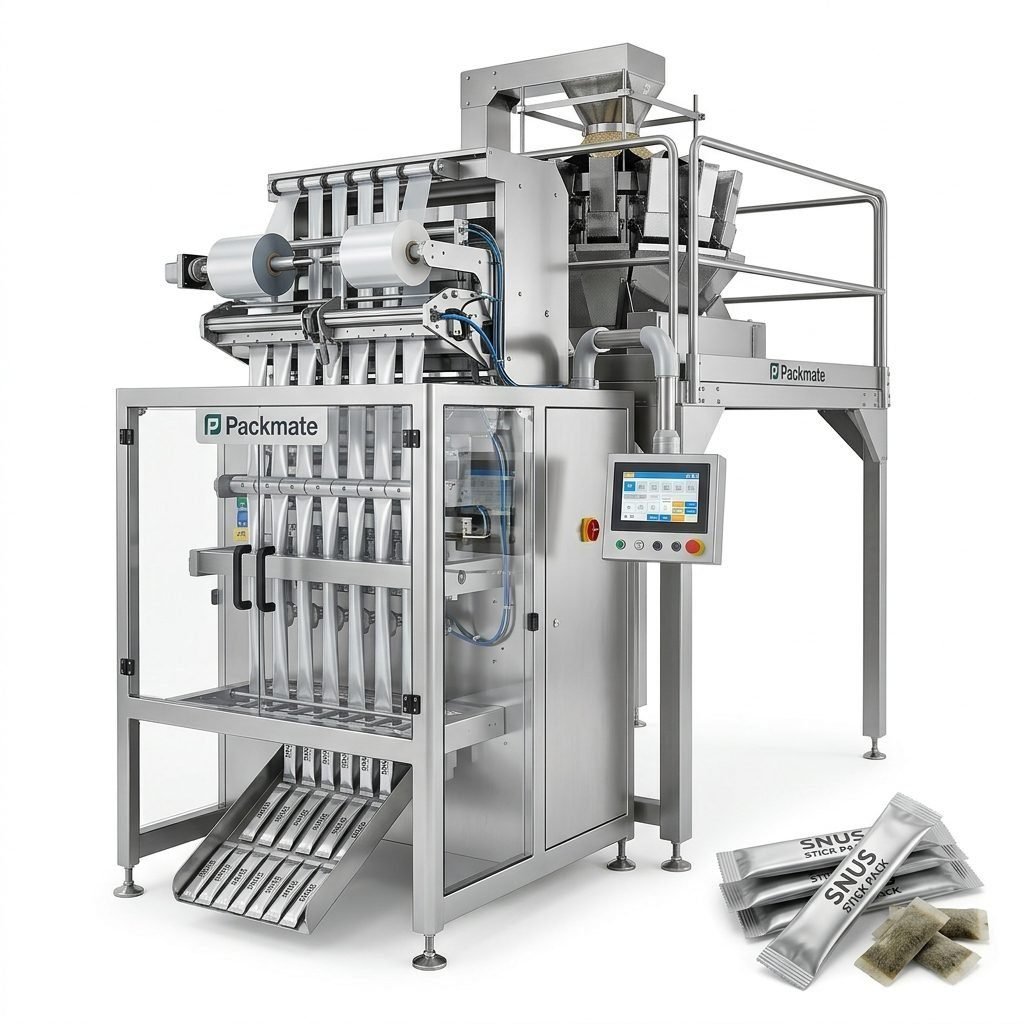
Nicotine pouch production has unique challenges: hygroscopic powders, small-dosed filling, and strict traceability. Suppliers experienced in snus and nicotine lines are more likely to have purpose-built solutions such as multi-lane pouchers, powder vibration feeders, and anti-static controls. Look for manufacturers that explicitly list snus or nicotine packaging equipment in their portfolio.
Supplier credibility indicators
✅ Proven product lines: Look for manufacturers offering purpose-built snus/nicotine machines and turnkey lines.
✅ Factory capability: A well-equipped facility (CNC, precision assembly, QA) signals consistent build quality.
✅ International certifications: CE and ISO help in meeting EU regulatory expectations.
Local Considerations in Spain and EU Market
Operating in Spain means working within EU product and workplace regulations. Your supplier should understand CE conformity, material safety for food-contact surfaces, and local documentation needs for Spanish authorities. Additionally, Spanish buyers often expect clear communication in Spanish and responsiveness that matches local business rhythms, including coordinated site visits or demos at trade fairs such as Hispack in Barcelona.
Cultural & commercial tips for dealing with suppliers
🤝 Build a relationship: Spanish partners appreciate trust and steady communication — arrange video calls, and if possible, Spanish-language materials.
🕒 Plan for lead times: Supply chains in Europe change quickly — confirm realistic delivery windows and spare-parts availability.
🌍 After-sales service: Local or regional technical support reduces downtime — prefer suppliers with European service partners or reachable remote support.
Technical Specifications to Inspect During Evaluation
When evaluating machines, request detailed specs: cycle speed, lane configuration, weight accuracy, sealing temperature control, changeover time, PLC and HMI capabilities, and material contact surfaces. Verify cleaning and maintenance access, sanitize-friendly designs, and spare-parts lists.
Ask for these test items
🔎 Factory acceptance tests (FAT): Request video or on-site FAT showing machine running your product.
🔁 Changeover demo: See how the line adapts between formats and how long it takes.
📊 Accuracy reports: Weighing and dosing consistency under real conditions.
Assessing After-Sales Support and Spare Parts
Downtime is costly. Confirm the supplier’s spare-parts lead times, warranty coverage, and remote support capabilities. Ideally, your supplier maintains European spare part stocks or partners with local technicians to shorten repairs. Check if training for local operators and maintenance staff is included.
Service expectations checklist
📞 24/7 remote diagnostics: Remote PLC/HMI access speeds issue resolution.
🧰 Comprehensive spare parts list: Identify long-lead consumables and critical items.
🎓 Operator & maintenance training: On-site or virtual training should be part of the package.
Quality, Compliance and Certification
EU compliance goes beyond CE marking — hygienic design, material traceability, and electrical safety are key. Ask for documentation: material certificates, machine CE declaration, and ISO production certificates. Suppliers who regularly export to Europe will be familiar with customs documentation and can help with type-approval queries.
Documentation to request
📑 CE declaration & user manual (EU languages): Essential for installation and audits.
🧾 Material certificates for product contact parts: Stainless grades and surface finish documentation.
🔐 Software and PLC licensing info: Confirm ownership and update policies.
Commercial Terms and Total Cost of Ownership (TCO)
Price is only part of the decision. Evaluate TCO: energy consumption, spare parts, consumables, maintenance, training, and potential production losses. Ask suppliers for lifecycle cost estimates and typical ROI scenarios based on your production plan.
Negotiation & procurement tips
💶 Clarify payment milestones: Factory acceptance, shipping, and commissioning stages.
🚚 Shipping & customs: Supplier support for EU customs paperwork reduces delays.
📆 Spare parts & service SLA: Put response times and parts delivery into the contract.
How to Validate the Supplier — Practical Steps
A structured validation process helps separate marketing promises from real capabilities. Shortlist 2–4 suppliers, then follow this practical approach: request datasheets, arrange FAT, visit a reference site, review contract terms, and verify spare parts availability in Europe.
Reference checks
📍 Factory & reference visits: See similar machines running real products.
🧾 Customer case studies: Ask for recent European installations and success metrics.
🗣️ Local references: Spanish or EU references are particularly valuable for logistics and compliance parallels.
Why Packmate-Type Suppliers Are Worth Considering
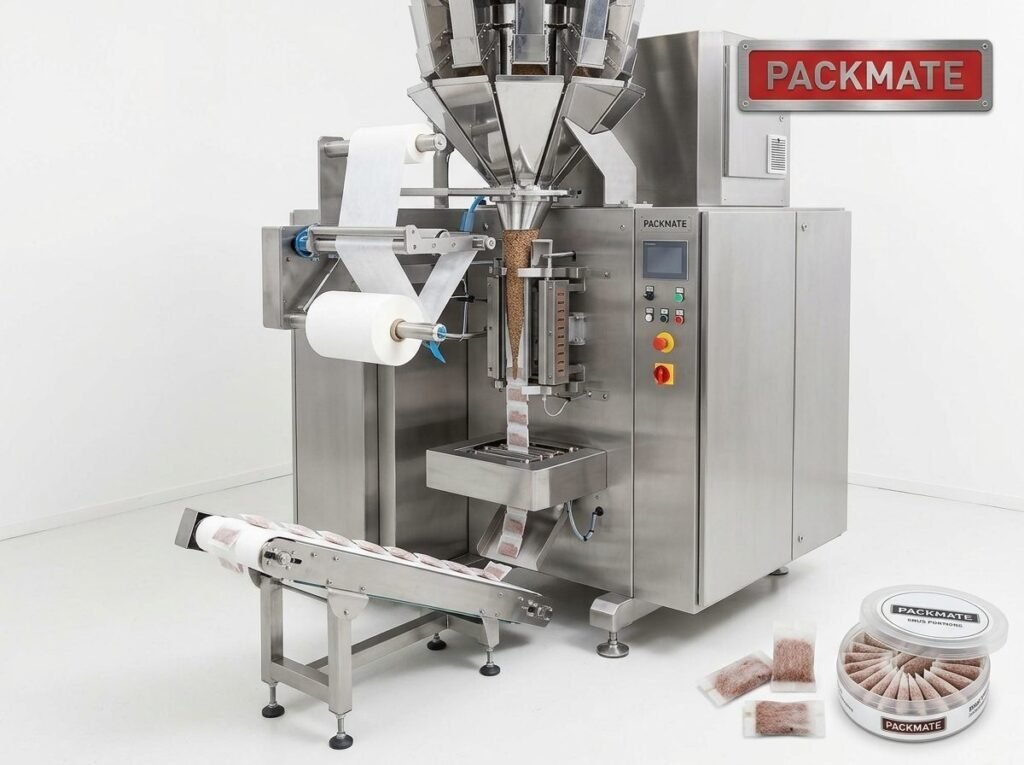
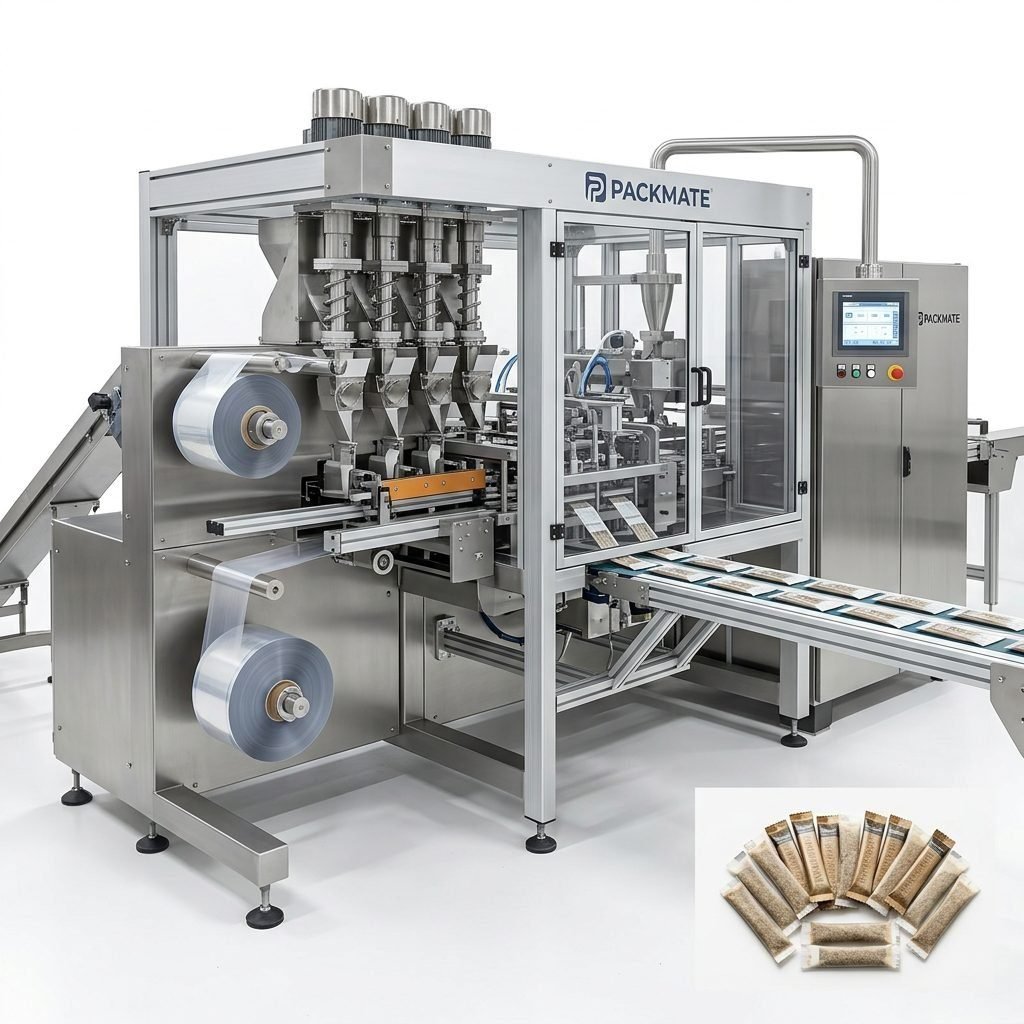
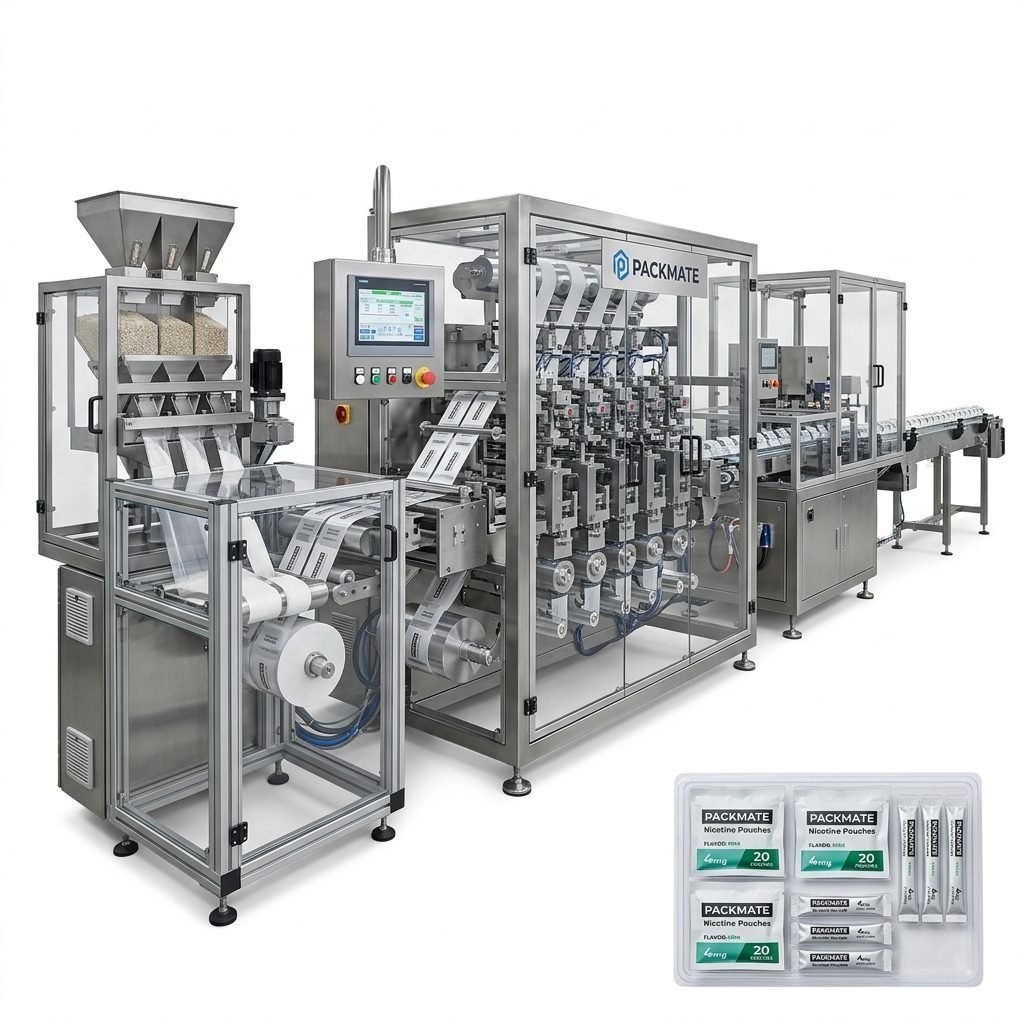
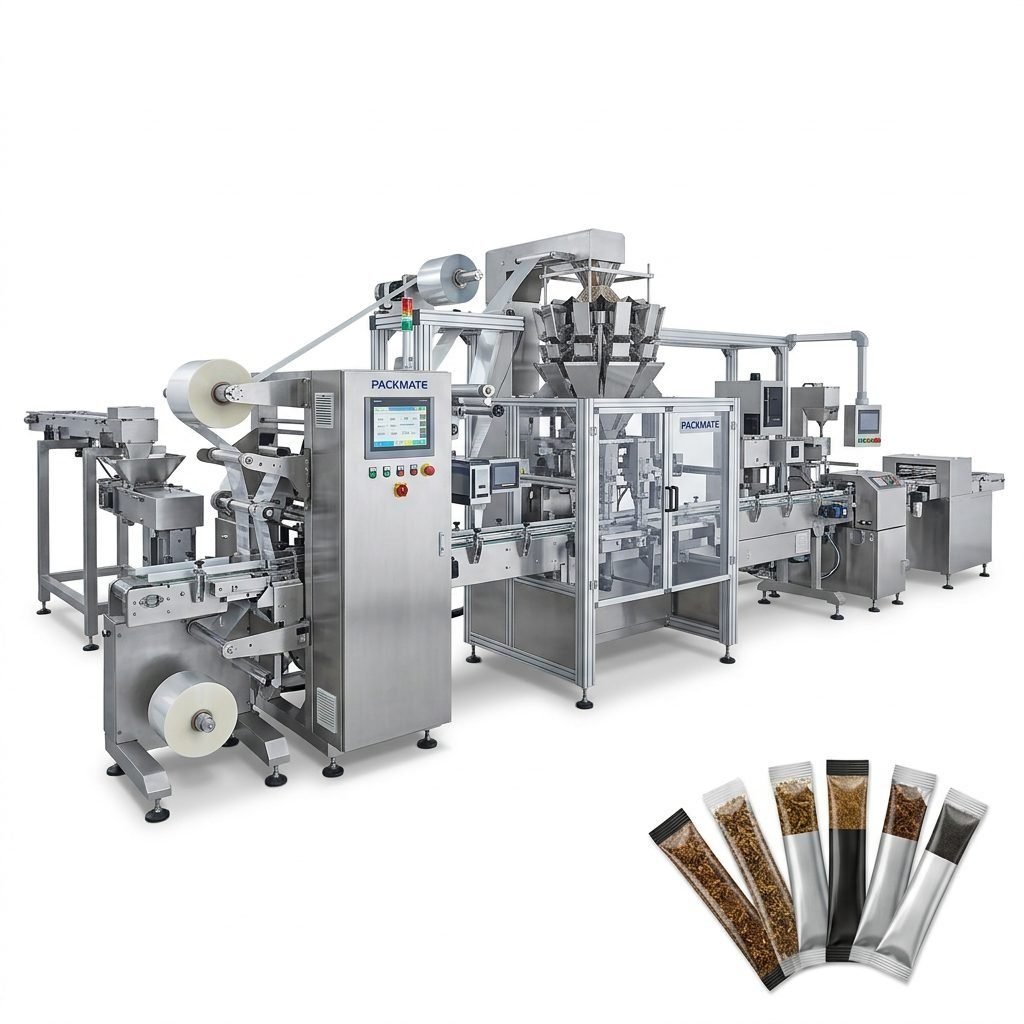
Suppliers with decades of engineering experience, multi-format machine ranges, and a global footprint often provide mature, customizable solutions. Look for companies that showcase snus and nicotine packaging lines, multi-lane systems, and integrated weighing and filling options — this saves integration time and ensures consistent performance.
For more details on machine families and capabilities, see manufacturers’ product pages such as Snus & Nicotine Packaging Machines and explore turnkey line examples in their case studies. You can also review company background and factory capabilities on the About Packmate page, and arrange demos or inquiries through Contact Us.
Final Checklist Before You Sign
✅ FAT & performance records verified
✅ Clear spare-part lead times and warranty
✅ EU compliance and documentation in place
✅ Local language support / training options
Closing thought
Selecting a nicotine packaging machine supplier in Spain is both a technical and relational process. Prioritize suppliers with proven snus/nicotine expertise, strong quality systems, and reliable European support to secure long-term production stability.
Frequently Asked Questions
Q1: How long does it take from order to commissioning in Spain?
A1: Typical lead times depend on customization, but allow 12–20 weeks for production plus shipping and EU customs time. Expedited options may be available.
Q2: What certifications should I verify for nicotine pouch lines?
A2: Verify CE conformity, material certificates for product-contact parts, and manufacturer ISO production documentation.
Q3: Is on-site training necessary?
A3: Yes — operator and maintenance training reduce downtime. Remote sessions are helpful, but initial on-site training is strongly recommended.
Q4: How do I ensure dosing accuracy for small nicotine pouches?
A4: Demand FAT with your product, inspect weighing systems, vibration feeders, or multi-head weighers, and request accuracy logs.
Q5: Can suppliers help with spare parts logistics in Europe?
A5: Many global suppliers partner with regional service agents or hold European spare stocks — confirm this before purchase.