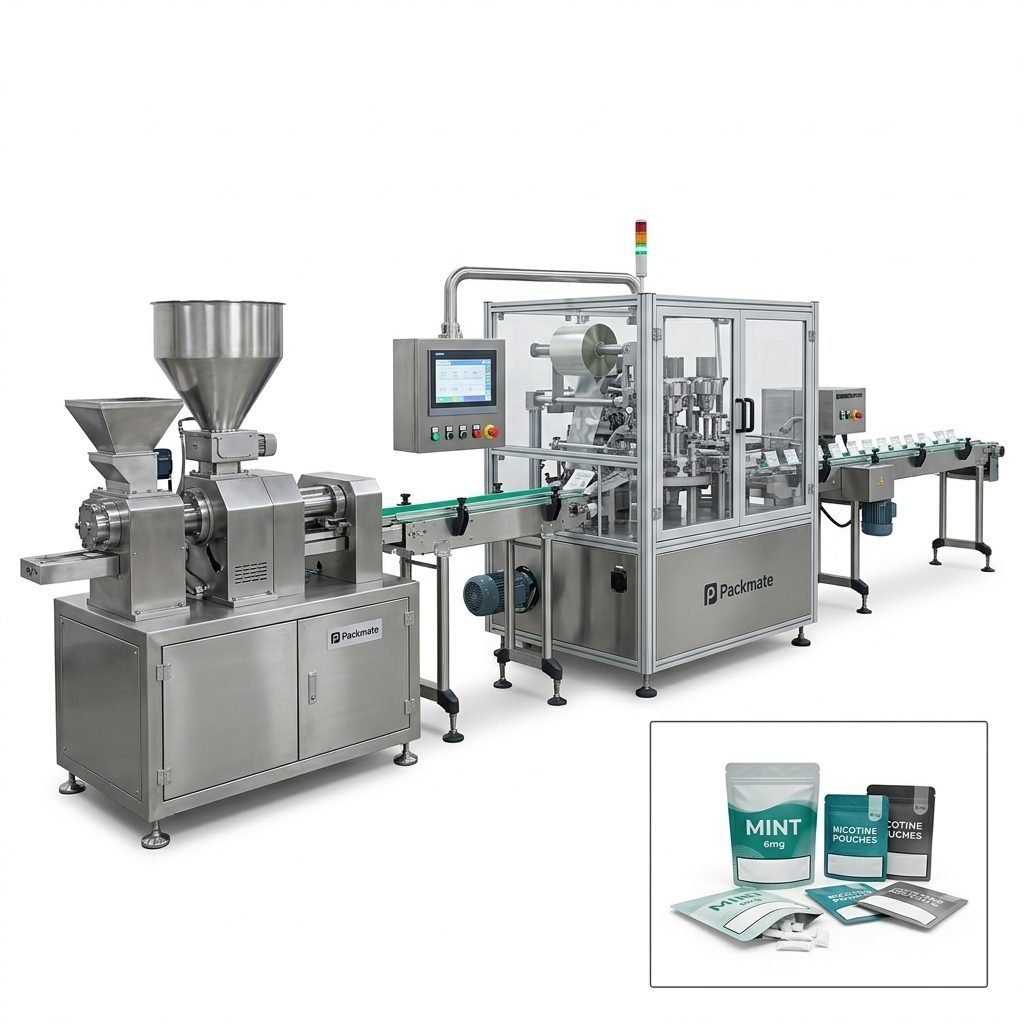
Planning to buy nicotine pouch or snus packaging machinery in Morocco? This guide walks you step-by-step through choosing the best supplier, from regulatory realities in Morocco to technical specifications, after-sales service and local business customs. Whether you plan to start a small production line in Casablanca or expand a large multi-lane operation for the North African market, these practical tips will help you make an informed, low-risk purchase.
1. Know the Moroccan market and local business practices
📌 Morocco combines Arabic and French business cultures: expect bilingual documentation and technical support preferences (French and Arabic are widely used alongside English). Suppliers who can provide manuals, labels and training in French will have an advantage when working with local teams.
⚠️ Regulatory climate: nicotine pouches and snus are subject to import and product regulations. Confirm local customs classification, required labeling languages, and any health warnings mandated by Moroccan authorities. A supplier familiar with international compliance (CE/ISO) and export documentation will streamline customs clearance.
✔️ Climate consideration: Morocco’s coastal ports and inland warehouses can be hot and occasionally humid. Ask about temperature-sensitive components, protective coatings, and recommended storage for electronic cabinets to ensure long-term reliability.
2. Verify supplier credentials and manufacturing strength
🔧 Factory scale and experience matter: look for suppliers with a proven footprint—large machining centers, precision assembly lines and an established factory area (for example, a 20,000㎡ factory with CNC capabilities indicates serious production capacity).
Check for long-term expertise in snus and nicotine pouch machinery: suppliers who have evolved from small R&D workshops into global suppliers over decades typically offer better engineering reliability and continuous improvements. For example, manufacturers with 20–30+ years in packaging machines bring refined multi-lane systems and process knowledge.
Visit the supplier’s website pages like About Packmate and their certifications to confirm ISO/CE compliance—critical for safety and export documentation.
3. Match machine type to your product and production goals
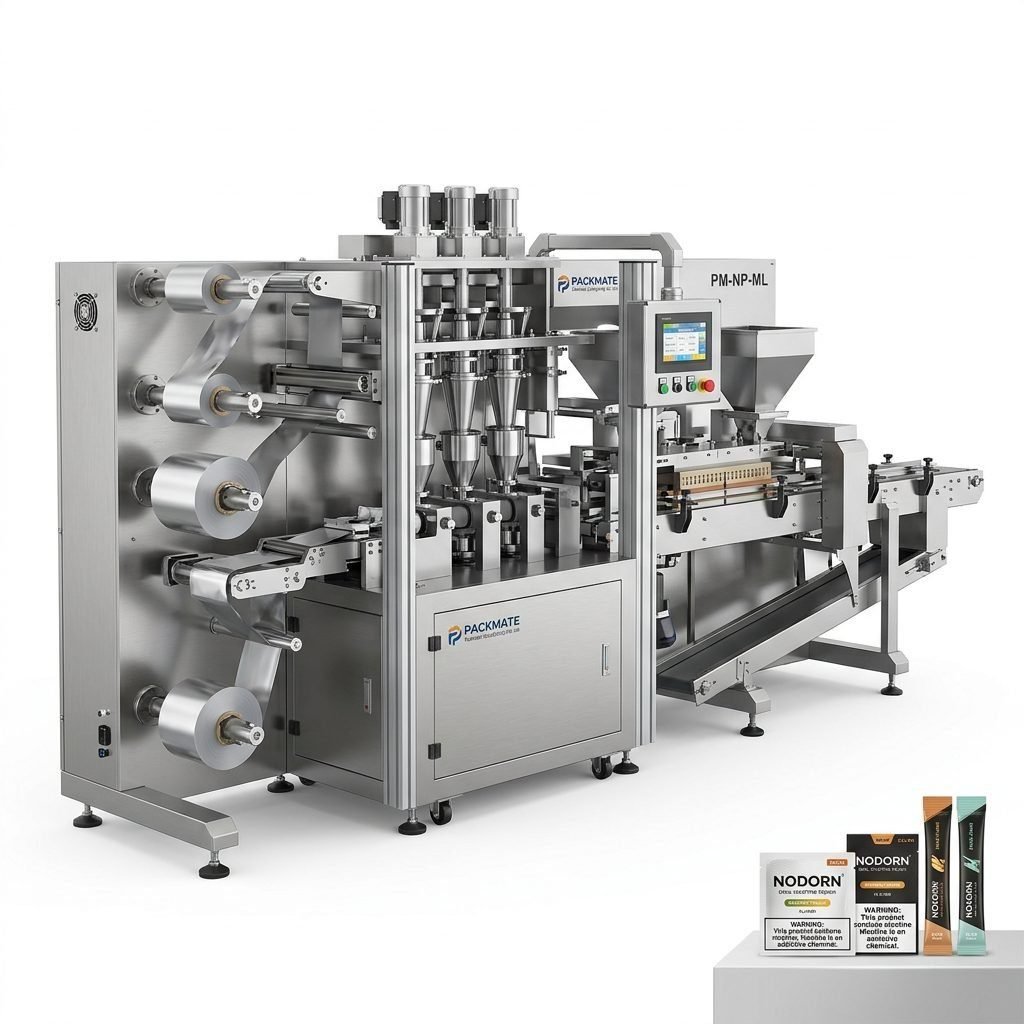
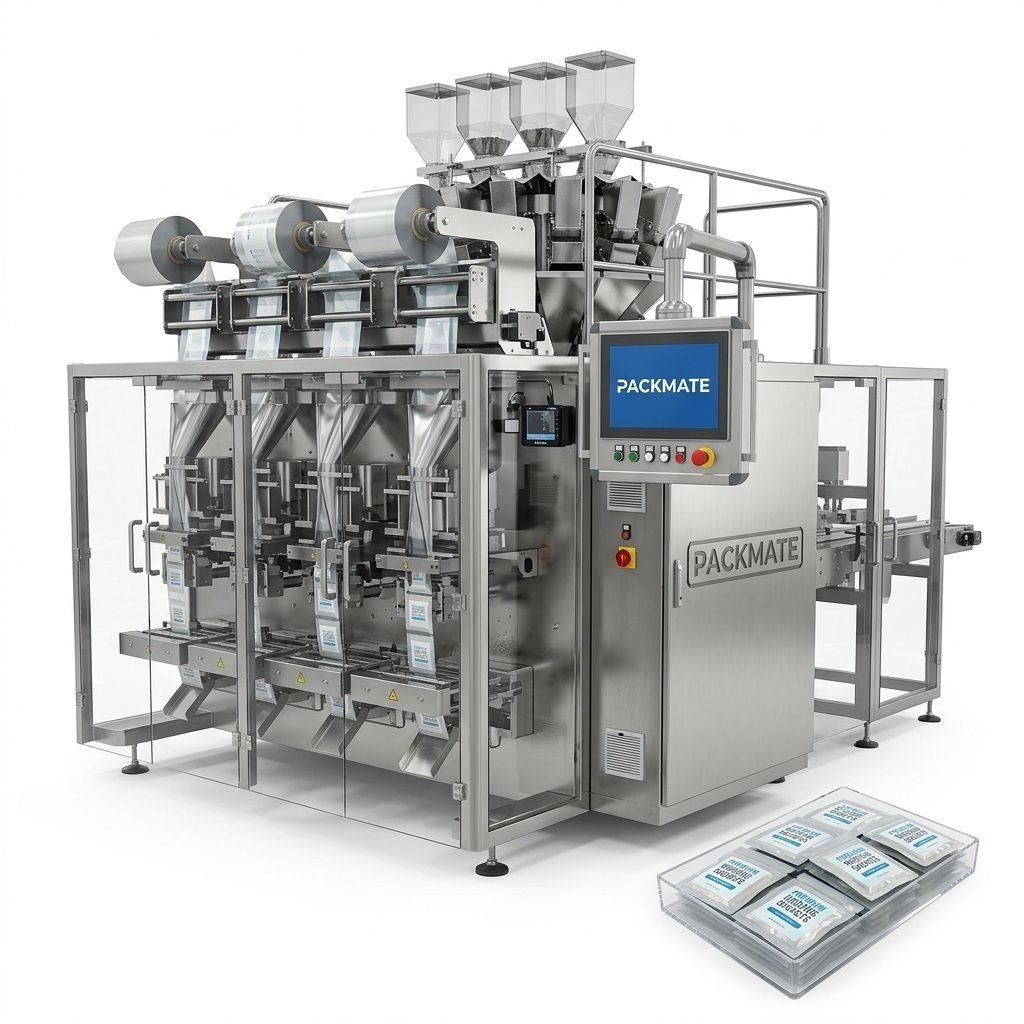
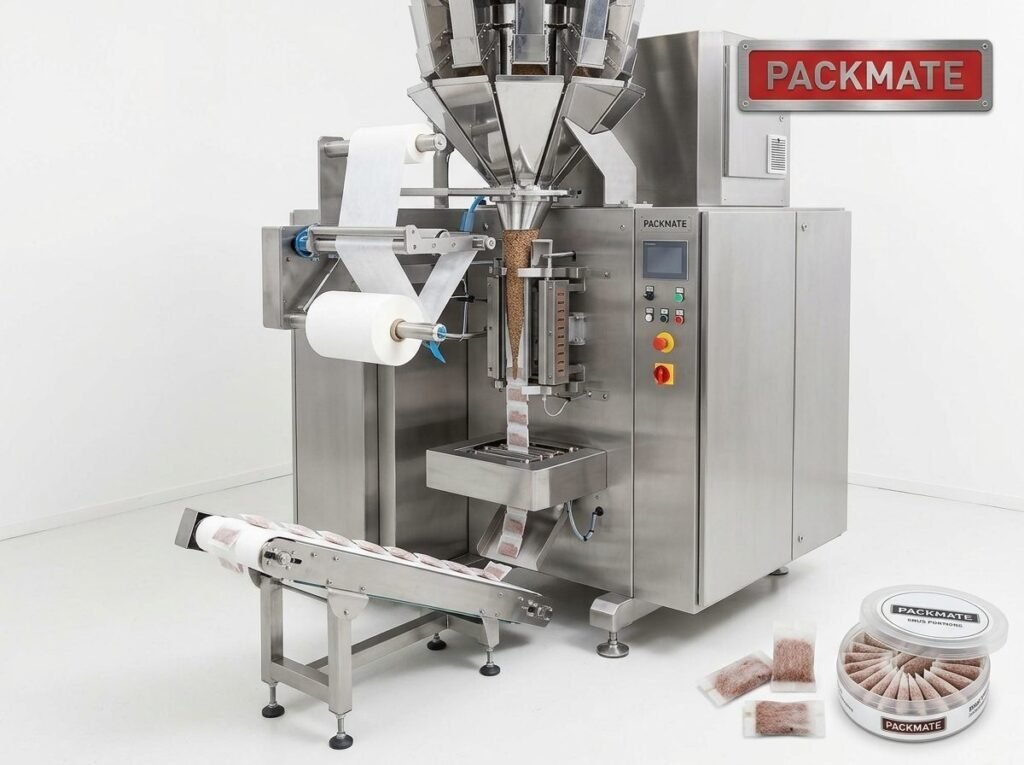
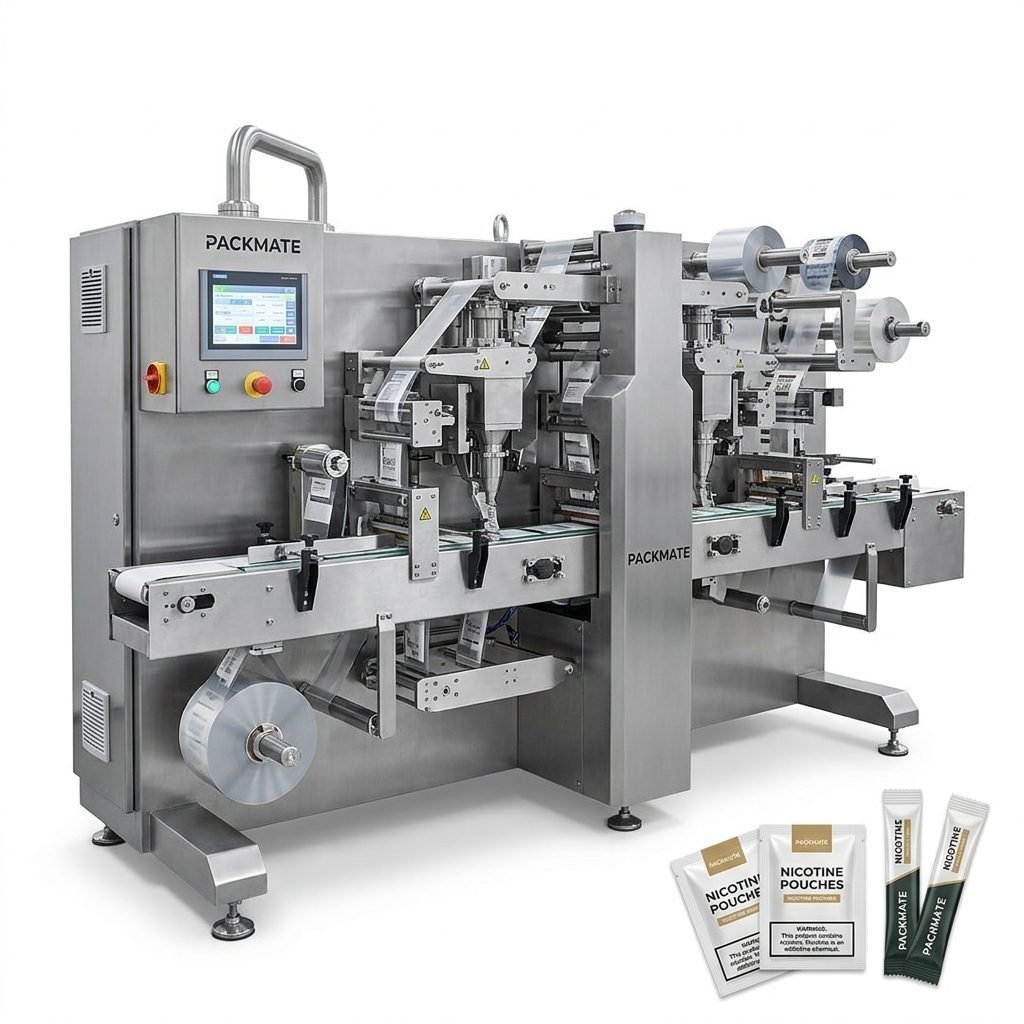
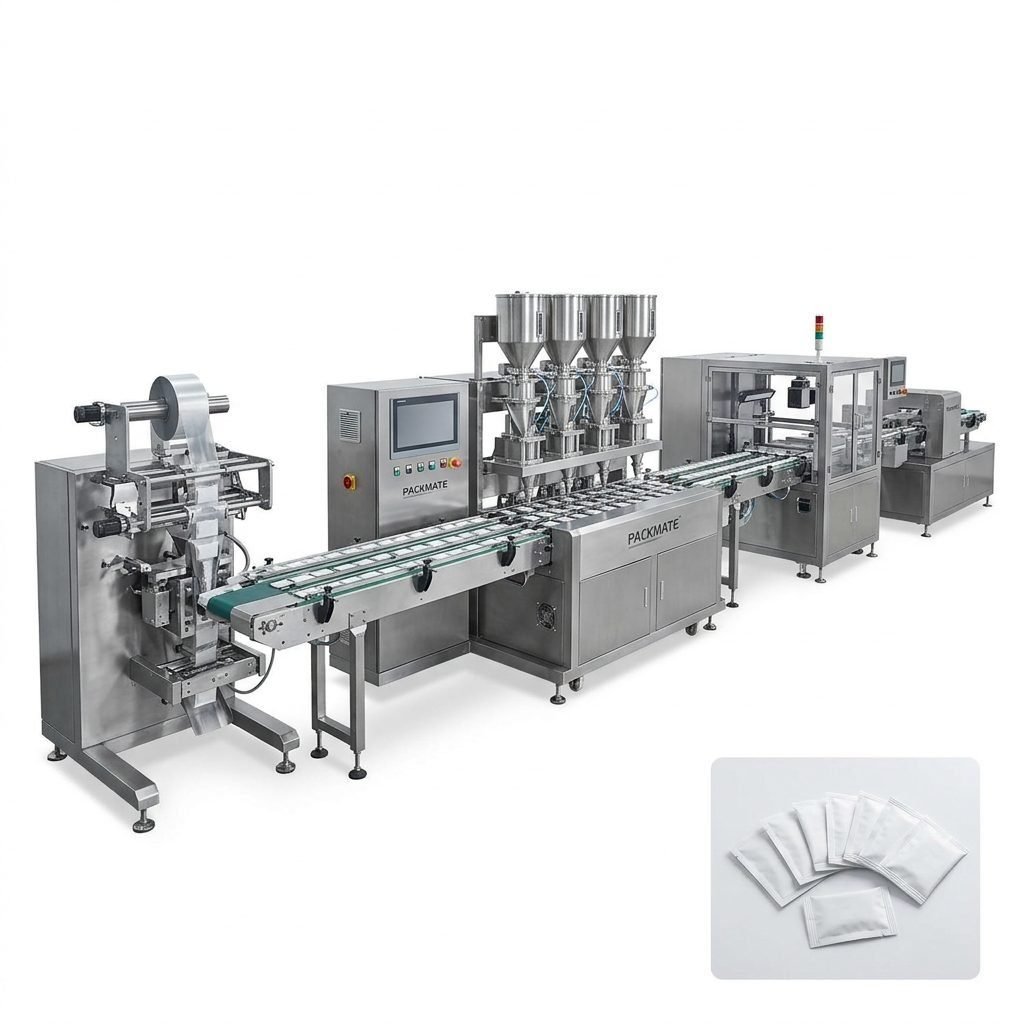
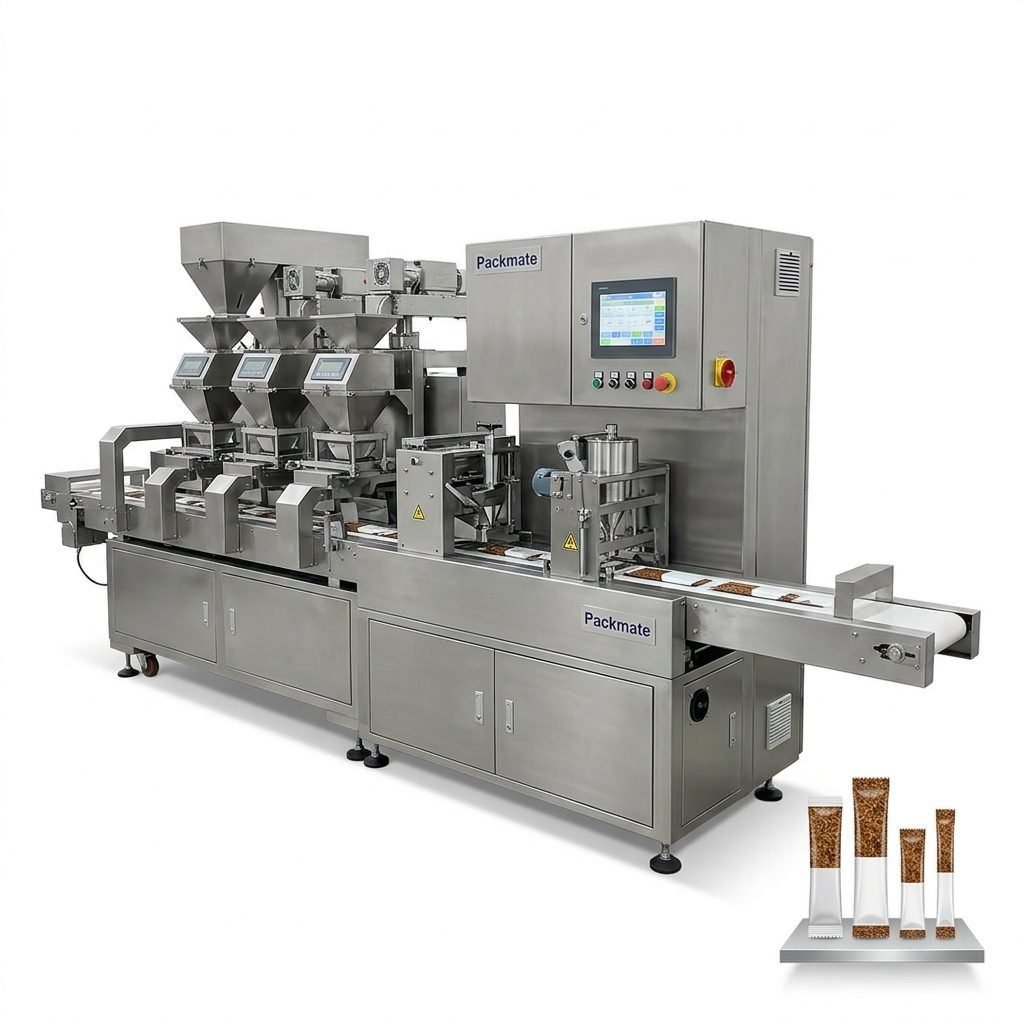
Decide the pouch format (single-lane sachet, multi-lane stick pack, or multi-lane nicotine pouches) and expected output per minute. Different machinery suits different dose sizes, pouch materials and fill types (powder, granule, moisture-containing formulas).
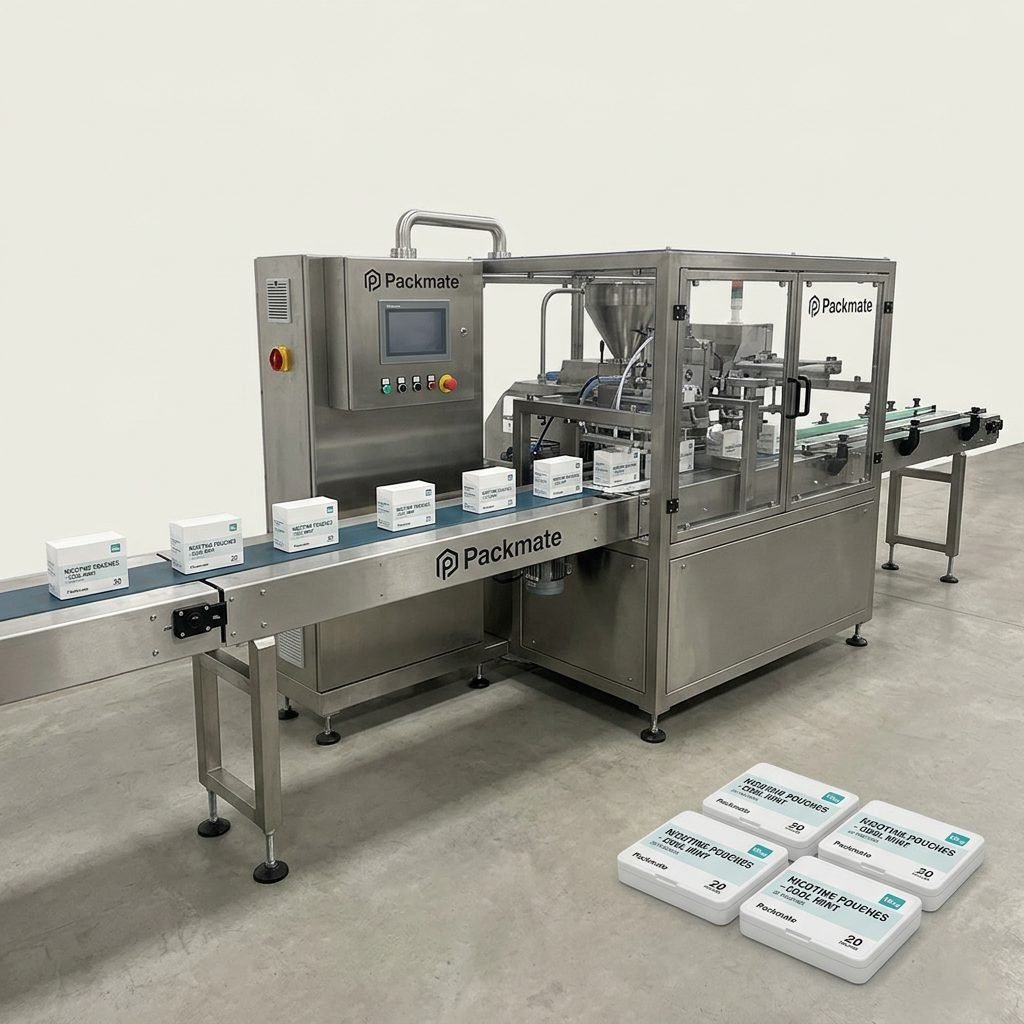
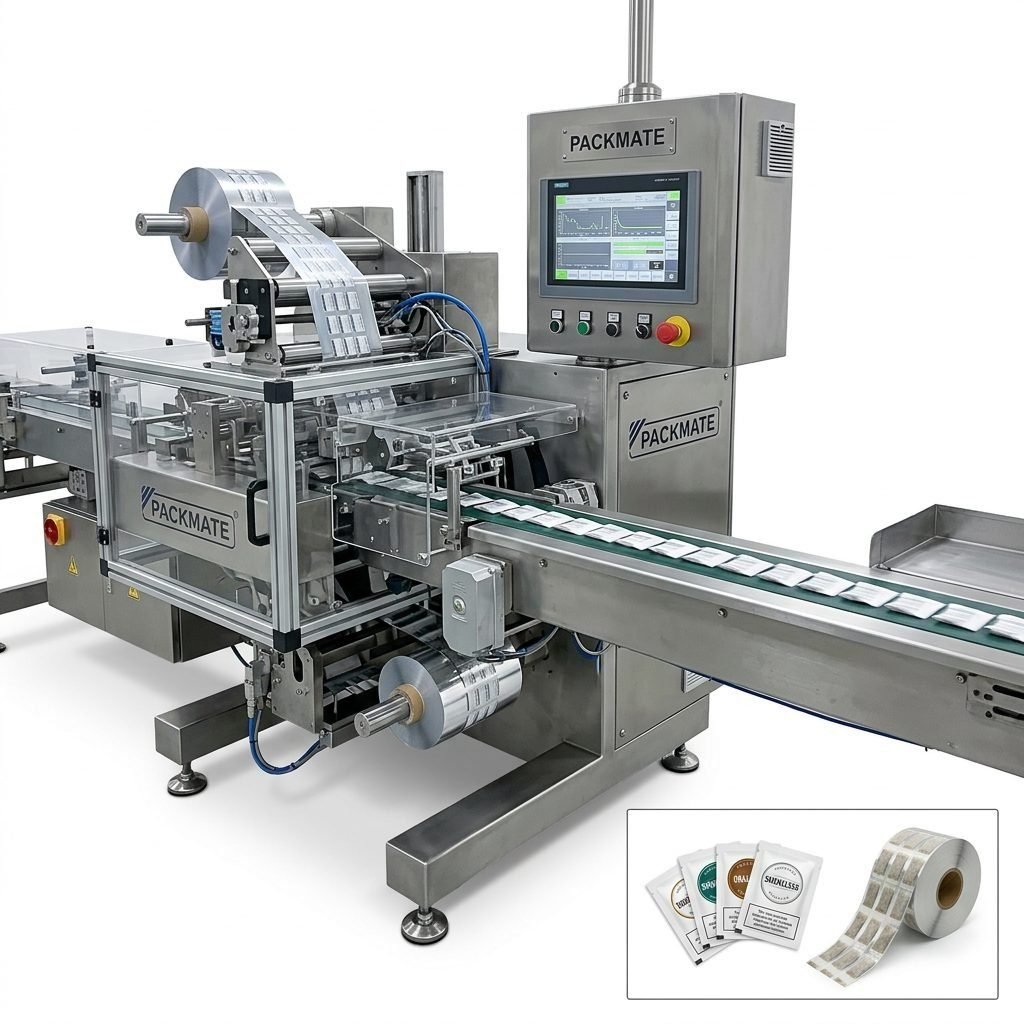
📌 For Moroccan markets where discreet and compact packaging is preferred, consider machines that deliver tight sealing and low-noise operation. Review product pages like Snus & Nicotine Packaging Machines and Sachet & Stick Pack Machines for format options.
Quick checklist
• Target throughput (pouches/min) • Pouch size range • Product type (powder/granule/liquid) • Desired automation level (manual feeding to full turnkey line) • Hygienic design and CIP/cleanability for product safety.
4. Technical specifications to compare
📌 Key machine specs: accuracy of filling (mg tolerance), sealing temperature control, film handling precision, changeover time between formats, PLC/servo systems brand, and spare parts availability. Prioritize machines with modular components for easier maintenance.
Ask for technical datasheets, performance validation reports, and case studies showing the machine running similar products. A real-production video or live demo is extremely valuable—if the supplier attends international fairs, consider scheduling a demonstration.
5. After-sales service, training and spare parts in Morocco
Strong after-sales is a top priority: local spare parts stock, remote diagnostics, and on-site commissioning dramatically reduce downtime. Ask whether the supplier has local partners or a regional service network in North Africa, or whether they can provide fast shipment to Moroccan ports (Casablanca, Tangier).
✔️ Training in French/Arabic: ensure operator and maintenance training is offered in languages comfortable for your staff. Also confirm availability of digital manuals and wiring diagrams for future technicians.
For a trusted reference, review supplier case histories and client testimonials on their Case page.
6. Quality assurance and acceptance testing
Demand FAT (Factory Acceptance Test) videos or in-person FAT before shipment. FAT should include performance under target speed, filling accuracy reports and sealing integrity tests. Insist on IQ/OQ documentation for installation and operational qualification upon delivery in Morocco.
🔍 Tip: Record a full production run with your own product formula whenever possible. This reduces acceptance disputes and proves the line meets your specifications.
7. Logistics, customs and installation in Morocco
Consider CIF (Cost, Insurance, Freight) to a Moroccan port or DDP if you want the supplier to handle customs clearance and inland delivery. Ensure the supplier provides complete packing lists, certificates of origin, CE/ISO certificates and electrical specifications compatible with Moroccan grid standards (220V/50Hz).
⚠️ Moroccan customs can request detailed technical documentation for specialized machinery—preparing a complete file speeds clearance. Discuss with your supplier whether they have prior shipping experience to Morocco to avoid delays.
8. Total cost of ownership and financing
Evaluate not only purchase price but installation, commissioning, training, spare parts, local modifications, and shipping/taxes. Energy efficiency, reliability and mean time between failures (MTBF) can significantly affect operating costs—investing a bit more in robust engineering often yields lower lifetime cost.
Many reputable manufacturers offer staged payment options and turnkey solutions; inquire about warranties, extended service contracts, and on-site support packages. If you participate in trade finance or local bank loans in Morocco, clarify payment terms and document requirements early.
Local cultural considerations when negotiating
• Building trust matters: Moroccan business partners value relationship-building—expect meetings, repeated follow-ups, and negotiation conducted politely and patiently. • Use bilingual contracts and clear responsibilities for customs and VAT. • Consider visiting Moroccan trade fairs or connecting via local agents to improve deal success.
9. Sustainability, energy and future-proofing
Long-term buyers should evaluate energy consumption, recyclable material handling, and upgrade paths (software and hardware). Machines designed for modular upgrades make it easier to add lanes or new filling heads as demand grows in Morocco and neighboring markets.
📌 Suppliers that publish energy data and modular expansion options help you plan CAPEX and OPEX across 5–10 years.
10. How to validate a final supplier shortlist
Create a weighted scorecard including: technical fit, local-service capability, references and case studies, cost of ownership, compliance documentation, and willingness to accept an FAT and provide local training. Give higher weight to after-sales support and spare parts logistics for Morocco.
If possible, visit the supplier’s factory or a client site—with a focus on machines running nicotine pouch products. Real-world performance and operator feedback are extremely revealing.
📞 Next steps: shortlist 3 suppliers, request FAT/demo, confirm spare parts lead times, and negotiate language-specific training. If you want a reliable supplier with proven snus & nicotine packaging lines and global turnkey experience, check the manufacturer’s product pages such as Filling & Packaging Lines and get direct contact via Contact Us.
Real-world example
A medium-sized Moroccan company wanted a multi-lane nicotine pouch line with 6 lanes and high filling precision. They prioritized a supplier with factory FAT videos, CE certification and French-language training. After a successful FAT, shipment to Casablanca and a 5-day on-site commissioning, they achieved target output with minimal downtime—highlighting the value of rigorous pre-shipment testing and bilingual support.
Takeaway
Selecting the right nicotine packaging machinery supplier in Morocco requires technical diligence, cultural understanding and logistical foresight. Prioritize suppliers with certified quality systems, strong factory capabilities, multilingual support and proven case studies for nicotine and snus products.
Frequently Asked Questions
Q1: How important is CE/ISO certification when importing to Morocco?
A1: Very important—CE/ISO indicate international safety and management standards that ease customs inspections and provide assurance on equipment reliability. Suppliers that provide these certificates typically have more robust quality control.
Q2: What languages should machine manuals and training be provided in for Moroccan teams?
A2: French is commonly used in business and technical contexts in Morocco; Arabic is also important for operator-facing labels. English is useful for international vendor communication. Ask for bilingual (French/English or Arabic) documentation and training.
Q3: Should I insist on FAT before shipment?
A3: Yes. FAT proves the line meets performance specs and avoids surprises at installation. Request video documentation, performance logs, and if possible, a live or recorded run using your product formula.
Q4: How fast can spare parts be delivered to Morocco?
A4: Lead times vary. Good suppliers will maintain common wear parts in regional warehouses or offer expedited shipping to Moroccan ports. Confirm typical lead times for critical components and consider stocking key spares locally.
Q5: Where can I find trusted suppliers and product references?
A5: Review supplier product pages and case histories for snus and nicotine pouch machines. For a comprehensive supplier profile and range of packaging options, visit pages like Bag & Pouch Packaging Machines and explore full turnkey solutions on the manufacturer’s site.