The North American nicotine pouch and snus market demands packaging machinery that balances speed, regulatory compliance, and consumer-facing quality. This practical buyer’s guide walks procurement teams, operations managers, and entrepreneurs through how to choose the right nicotine packaging machine in North America — covering machine types, capacity planning, regulatory considerations, supplier selection, and installation tips.
Understanding the North American Market & Local Customs
North America has a diverse market with regional preferences, strict regulatory oversight, and strong retail expectations. Buyers should consider:
- 📦 Regulatory scrutiny: US and Canadian regulators focus on labeling, child-resistant packaging in some jurisdictions, and product traceability.
- 🌎 Bilingual labeling: In Canada, English and French labeling is often required; Spanish language preferences are common in parts of the US.
- 🛒 Retail presentation: Shelf-ready, premium finishes and consistent pouch dimensions matter for retailers and consumers.
- ♻️ Sustainability expectations: Increasing demand for recyclable or lower-material packaging affects pouch and machine choices.
Which Machine Type Fits Your Product?
Nicotine pouch and snus products are packaged in multiple formats. Choosing the machine depends on pouch style, fill form, and desired output:
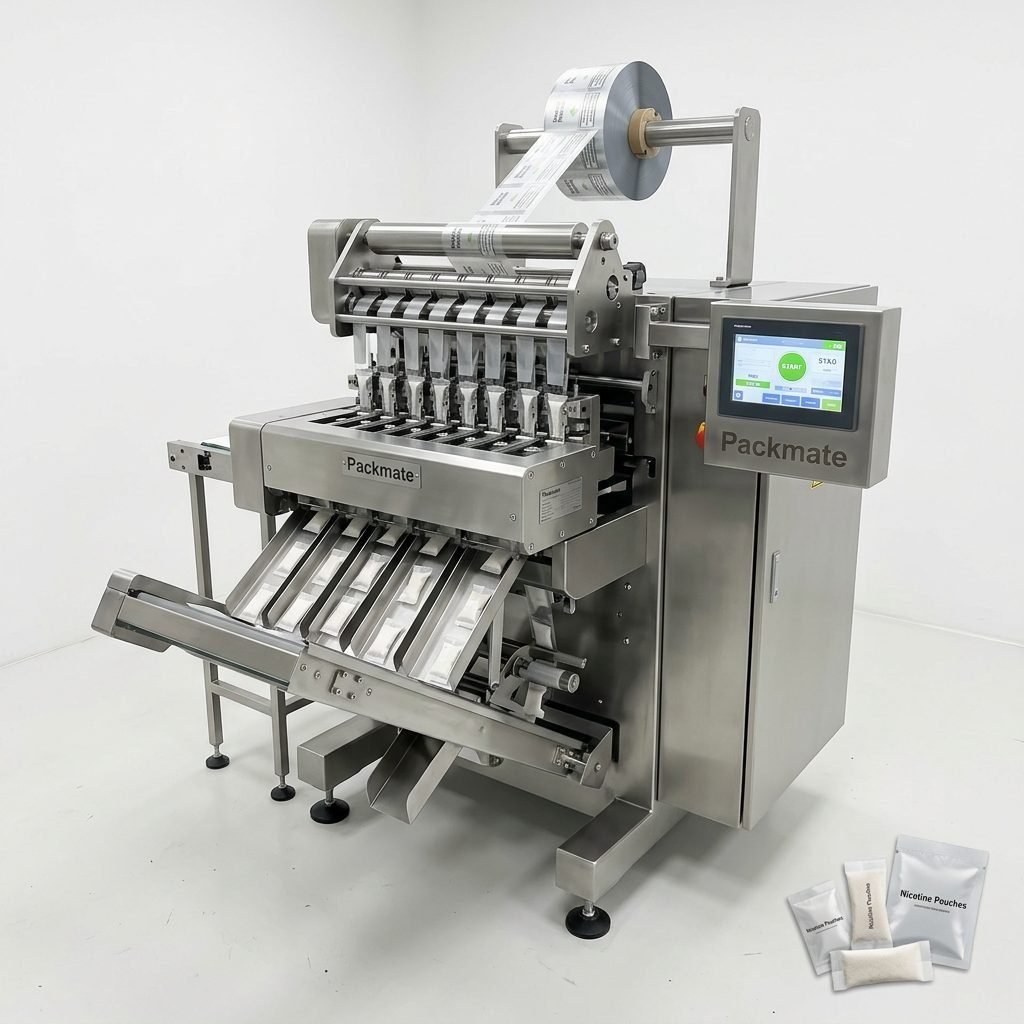
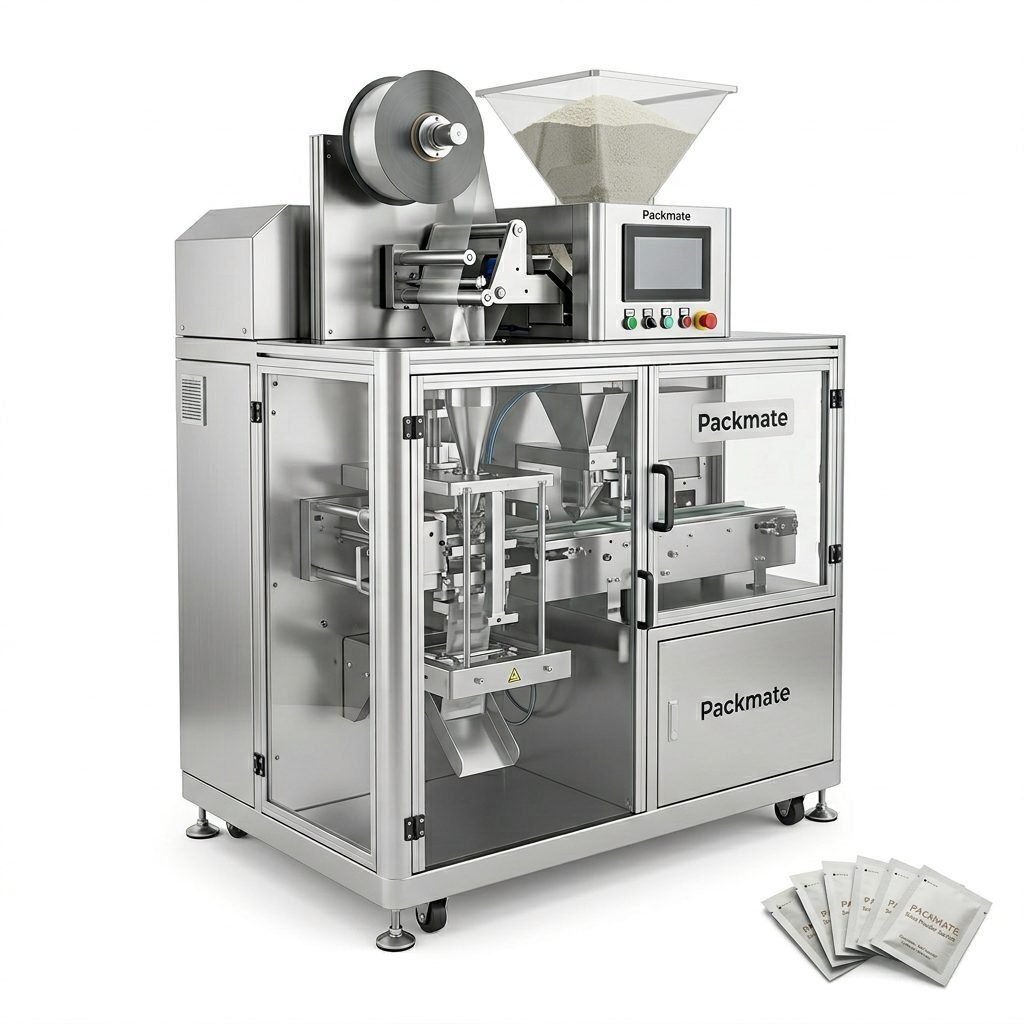
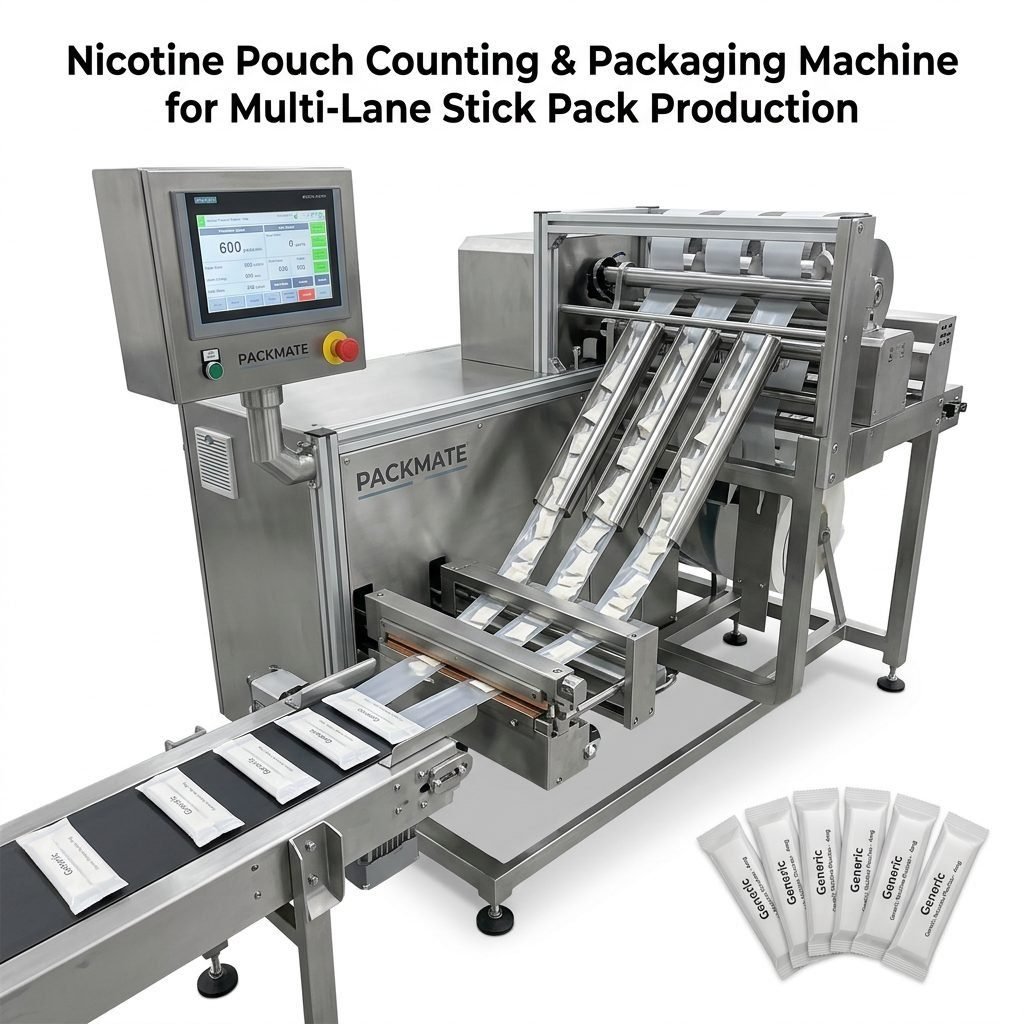
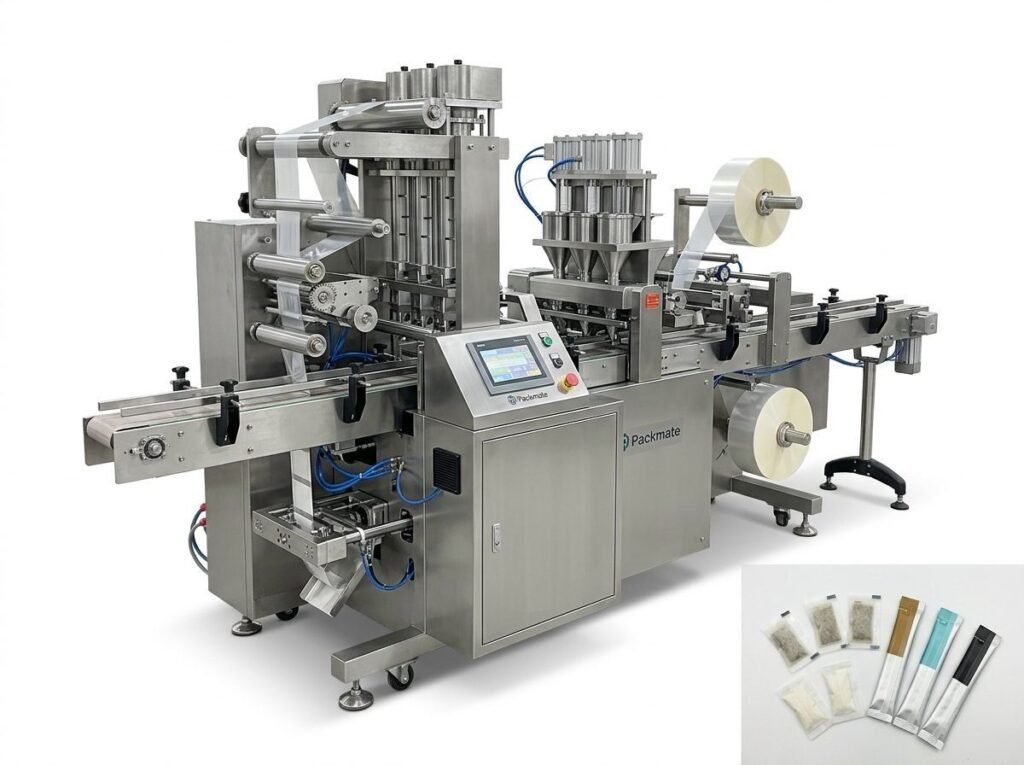
- 🧾 Stick pack and sachet machines — ideal for single-dose sachets and stick pouches; compact and cost-effective for small to medium runs. See examples of modern Sachet & Stick Pack Machines.
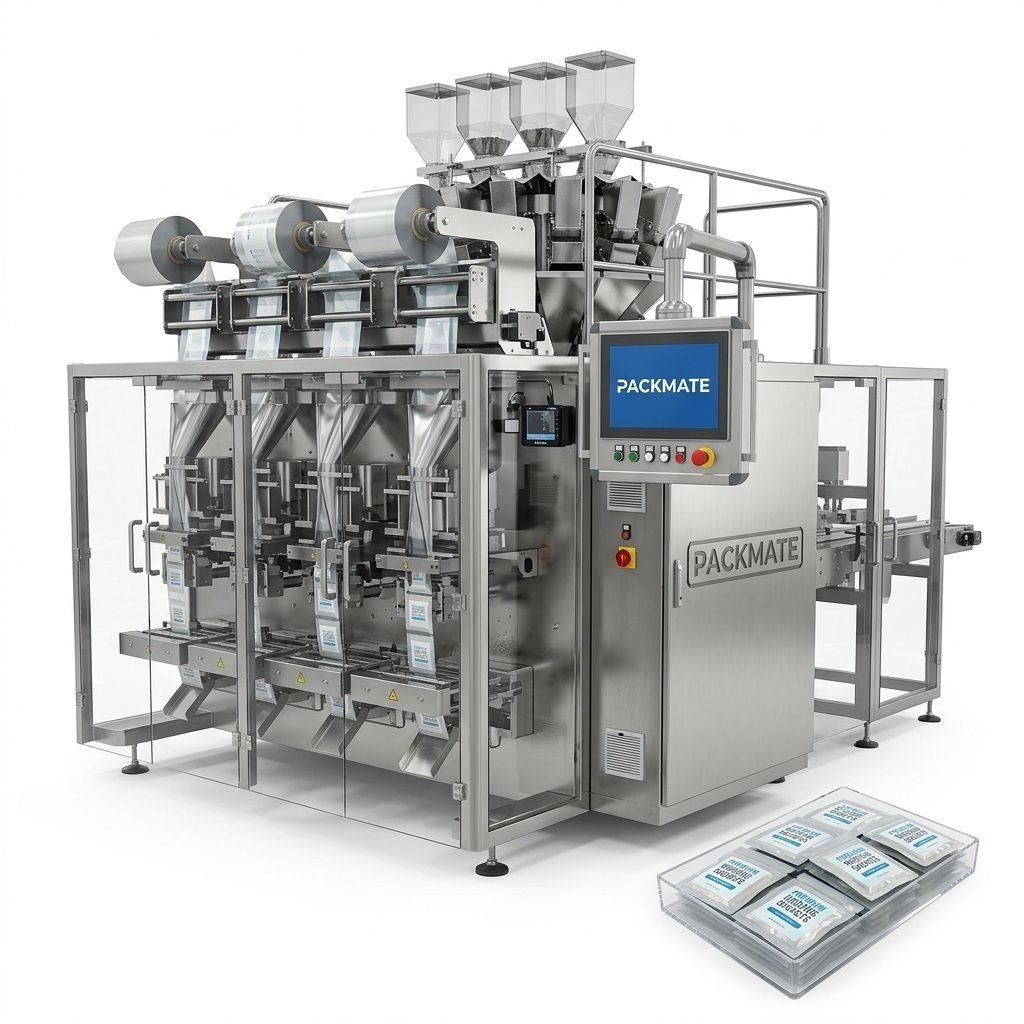
- 🧩 Multi-lane snus pouch machines — built for high throughput with synchronized lanes for small-dose pouches and snus tins.
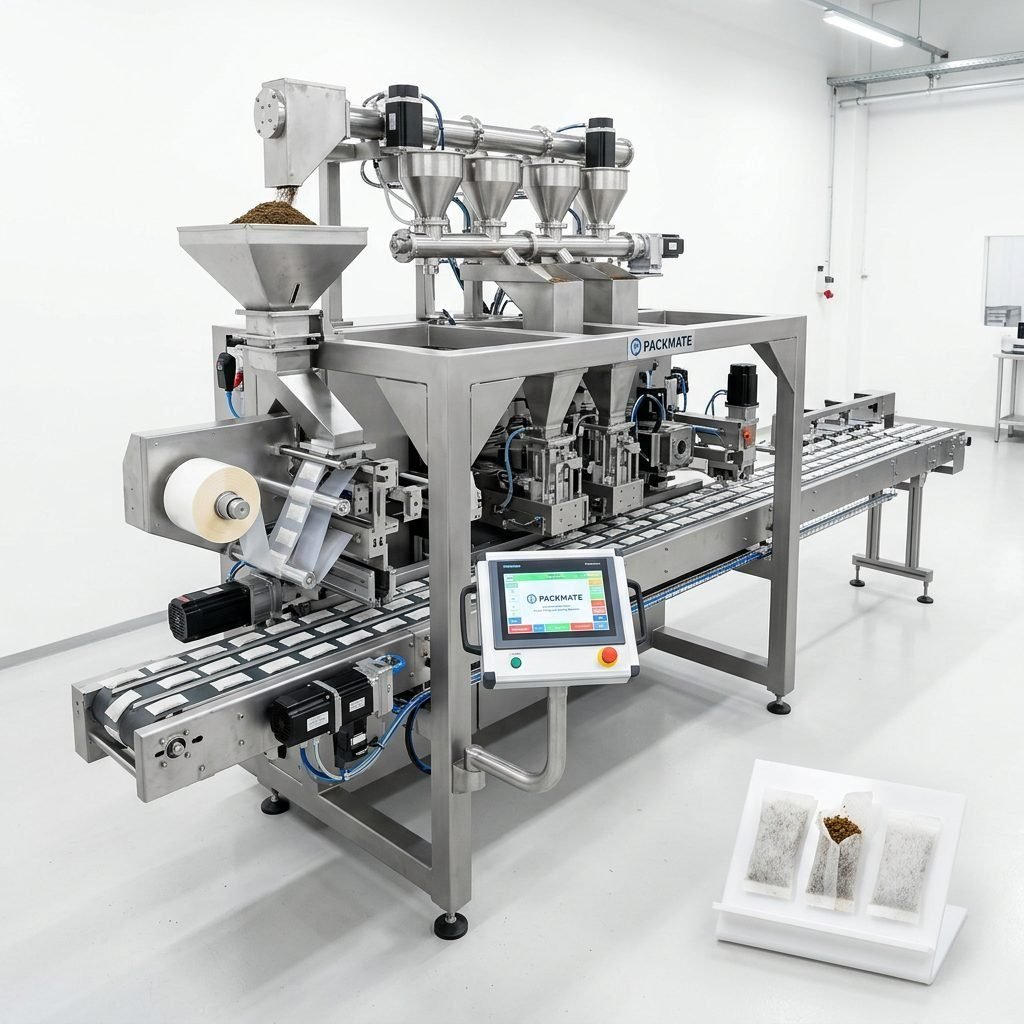
- ⚖️ Integrated weighing & dosing lines — necessary for powdered nicotine blends or when precise dosing is critical. Explore Weighing & Packaging Systems.
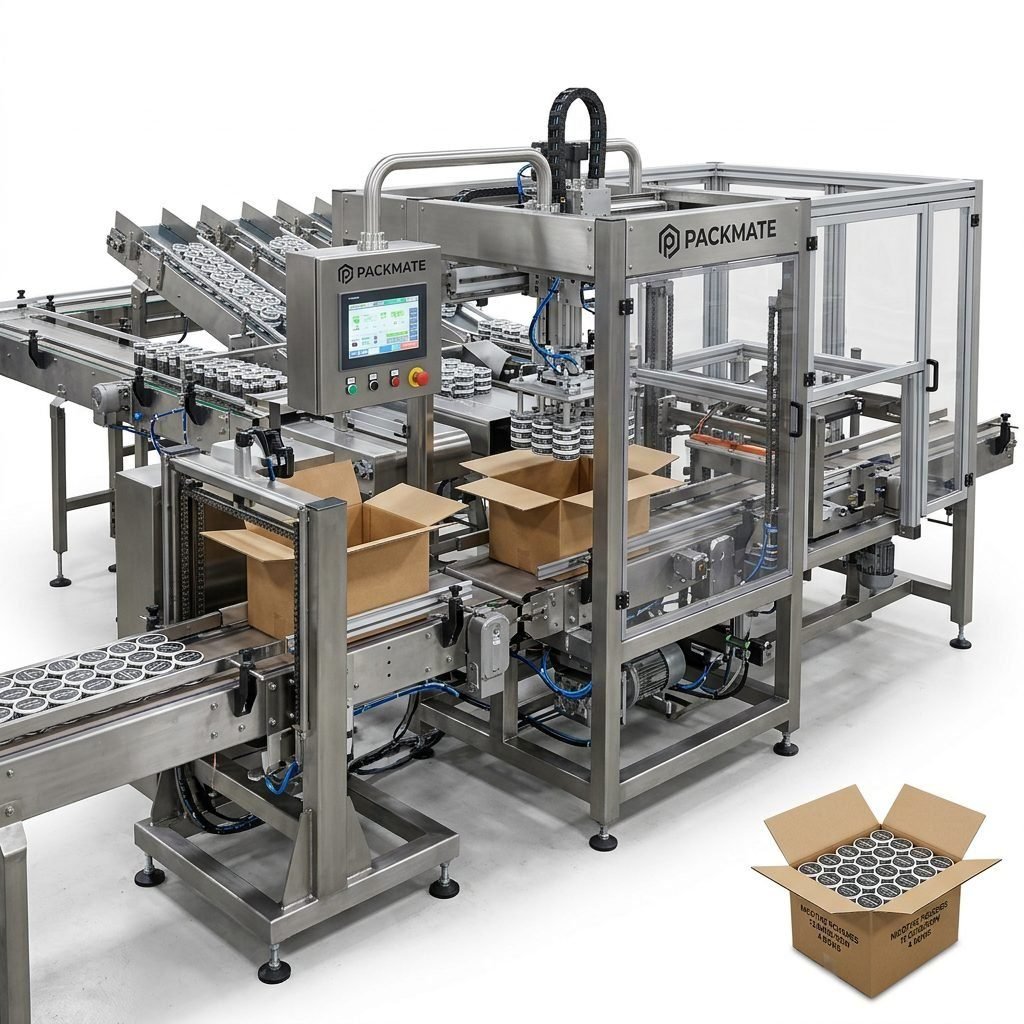
- 🔗 Fully integrated filling & packaging lines — best for turnkey solutions that include dosing, forming, sealing, and secondary packaging. See Filling & Packaging Lines.
Quick decision heuristic
If you need low-volume flexibility: choose modular stick/sachet machines. If you require high-volume, consistent pouch output: select high-speed multi-lane systems with automation and vision inspection.
Key Technical Specs to Evaluate
Evaluate machines by the following technical parameters. Each parameter directly impacts throughput, product quality, and long-term costs:
- ⚙️ Throughput (pcs/min or kg/hr): Match machine capacity to expected daily production and future growth.
- 🔁 Multi-lane capability: Multiple lanes increase output without expanding footprint.
- 🔍 Accuracy & dosing tolerance: Critical for nicotine dosing — look for precision dosing systems and in-line weighing options.
- 🧰 Changeover time: Fast tool-free changeovers reduce downtime when running multiple SKUs.
- 🤖 Automation & HMI: Intuitive touchscreens, recipe management, and remote diagnostics save operator time.
- 🧪 Material compatibility: Ensure seals, films, and pouches (bio-based or laminated) are supported.
Regulatory Compliance & Certifications
Compliance is a top priority in North America. Machines should support traceability, safe handling, and meet recognized standards:
- ✔️ CE and ISO certifications are indicators of design and manufacturing standards — Packmate manufactures to international standards and holds relevant certifications.
- ⚖️ Hygiene and cleanability — design features that enable easy cleaning and avoid product harborage.
- 🔒 Child-resistant packaging options — evaluate if local laws or retailer policies require additional safety mechanisms.
- 🧾 Traceability systems — support for batch number printing, serialization, and integration with ERP systems.
Automation, Integration & Industry 4.0
Modern packaging lines should integrate with upstream and downstream equipment for a seamless production flow:
- 🔗 PLC and OPC-UA compatibility for data exchange and remote monitoring.
- 📊 Recipe management and digital shift logs for consistent production runs and easier audits.
- 🛠️ Remote diagnostics and spare-parts telemetry reduce downtime and speed troubleshooting.
After-Sales Support, Spare Parts & Training
Reliable local support in North America shortens MTTR (mean time to repair). Ask vendors about:
- 🔧 Local service partners and certified technicians.
- 📦 Spare-part lead times and availability; consider vendors that maintain stock in-region.
- 🎓 Operator and maintenance training, including multilingual manuals (English/Spanish/French).
- 🌐 Remote support options and preventative maintenance contracts — reduce unplanned stops.
Total Cost of Ownership (TCO) & ROI
Purchase price is only one part of the calculation. Consider:
- 💲 Energy consumption, spare parts, and maintenance contracts.
- ⏱️ Downtime risk — quantify losses per hour and potential savings from redundancy or preventive maintenance.
- 📈 Scalability — machines that scale with modular add-ons delay further capital expense.
Site Preparation & Installation Considerations
Early planning prevents costly delays:
- 📐 Floor load, leveling, and anchoring requirements.
- 🔌 Power specifications (voltage, phases) and compressed air quality/flow.
- 🚪 Access dimensions — ensure machines fit through doors and into place.
- 🧯 Safety compliance — emergency stops, guarding, and local safety signage.
How to Choose the Right Supplier
A strong supplier relationship is as important as the machine itself. Key factors to assess:
- 🤝 Track record and references in nicotine/snuspouch packaging.
- 🏭 Manufacturing capability and capacity — production scale and CNC capabilities are good signs.
- 📜 Certifications and exports experience — look for vendors with CE/ISO and global delivery history.
- 🔁 Customization ability — whether the supplier can adapt tooling and software for unique pouch sizes and materials.
- 🗺️ Local presence or partners in North America to support commissioning and service.
A Practical Procurement Checklist
Use this checklist to structure vendor discussions and technical comparisons:
- ✅ Expected daily output and peak season throughput.
- ✅ Supported pouch formats, materials, and sealing types.
- ✅ Demonstrated dosing accuracy and in-line quality control options.
- ✅ Certifications, compliance support and documentation.
- ✅ Lead time, warranty terms, and spare parts availability.
- ✅ Installation plan, training program, and remote support options.
Real-World Example Scenarios
Scenario A: A startup in the US Southwest launching flavored nicotine pouches needs a flexible stick/sachet line with bilingual labeling capability and fast changeovers. Priorities: modular stick/sachet machine, on-site training, and fast spare parts.
Scenario B: An established supplier in Canada shifting to high-volume multi-lane snus pouch production needs robust multi-lane equipment, serialization and ERP integration, and French labeling capabilities. Priorities: high-speed multi-lane machine, integrated printing/serialization and long-term service contract.
Where to See Machines & Get More Information
View live demos at industry exhibitions or request factory videos. Packmate regularly participates in global exhibitions and offers factory tours; check their exhibition and product pages to schedule demonstrations of Snus & Nicotine Packaging Machines and complementary equipment.
Final Recommendations
Invest time in aligning machine selection with long-term business goals. Prioritize proven designs, strong after-sales service in North America, and machines that can adapt to evolving packaging materials and regulatory needs. A reliable supplier with turnkey solutions and local support reduces risk and improves time-to-market.
Frequently Asked Questions
Q1: How long does commissioning typically take?
A1: Commissioning varies by complexity. A single stick/sachet machine can be commissioned in days; multi-lane turnkey lines often require 2–6 weeks including qualification, training, and integration checks.
Q2: What certifications should I require?
A2: Ask for CE and ISO compliance documentation, electrical safety certificates, and any country-specific declarations. Confirm the vendor’s quality systems and request validation support documentation for audits.
Q3: How do I manage spare parts inventory?
A3: Start with a recommended spare-parts kit from the supplier, then track MTTR data to optimize inventory. Consider vendor-managed spare parts or regional stocking agreements to minimize lead times.
Q4: Can machines handle new eco-friendly pouch materials?
A4: Many modern machines are compatible with a range of films and laminates, but ask for material trials. Some sustainable films require adjusted sealing settings or tooling modifications.
Q5: Where can I see customer cases or machine demos?
A5: Request factory videos or live demos from vendors. Packmate provides case studies and exhibition appearances to showcase real installations — view their product and case pages for demos and references.