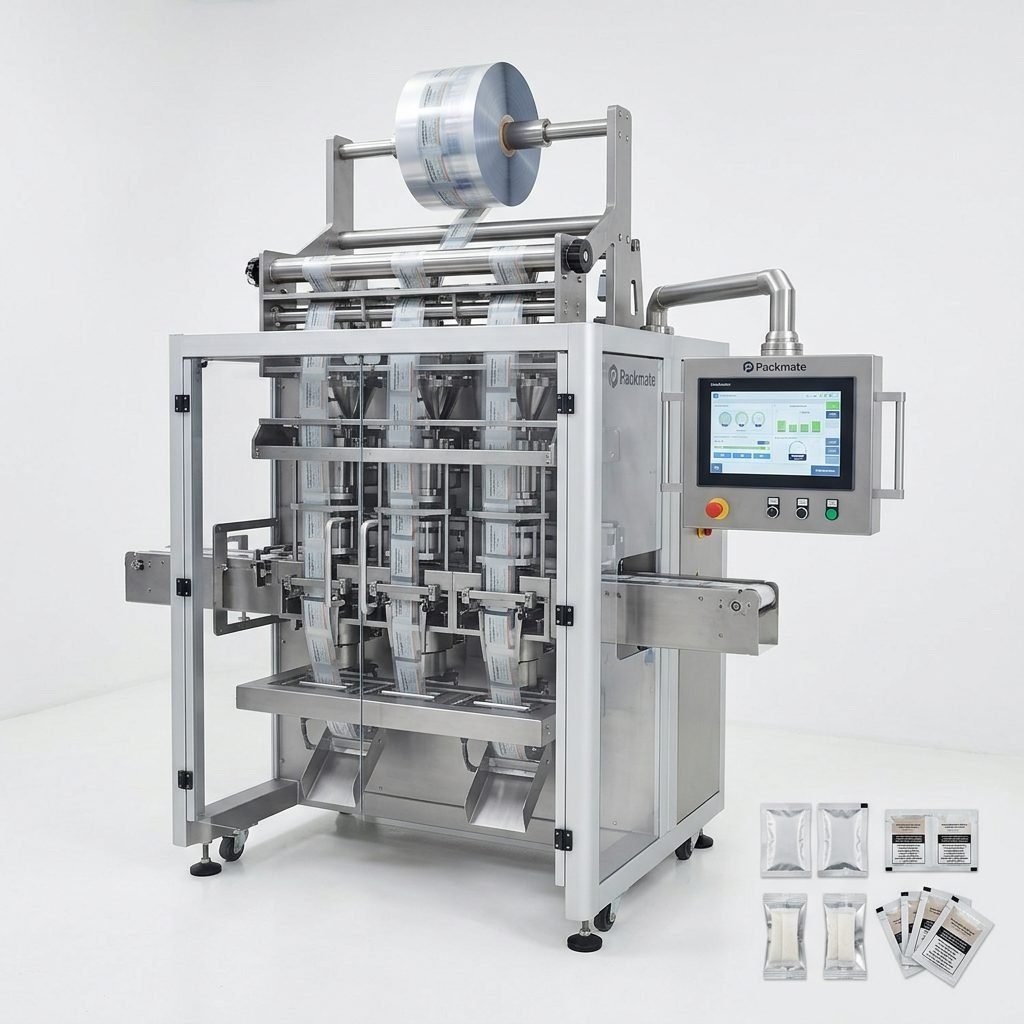
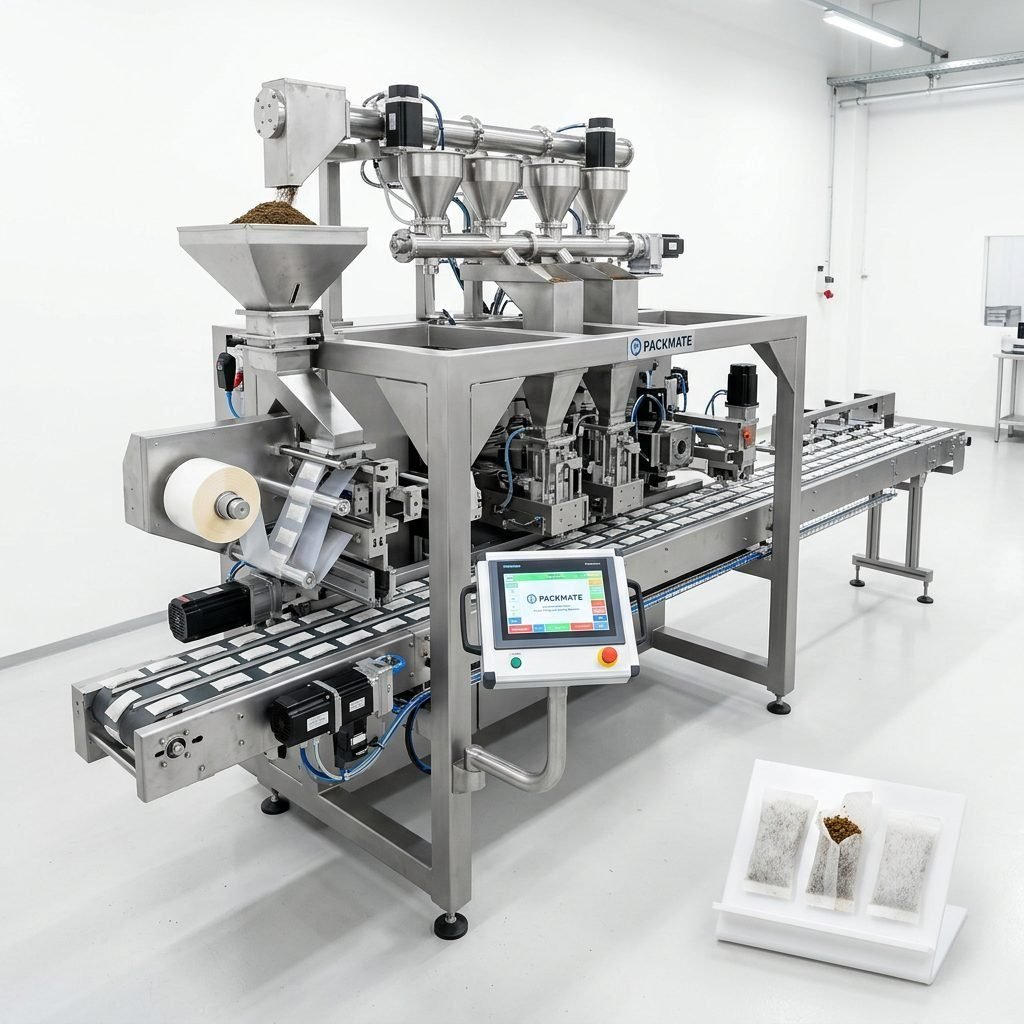
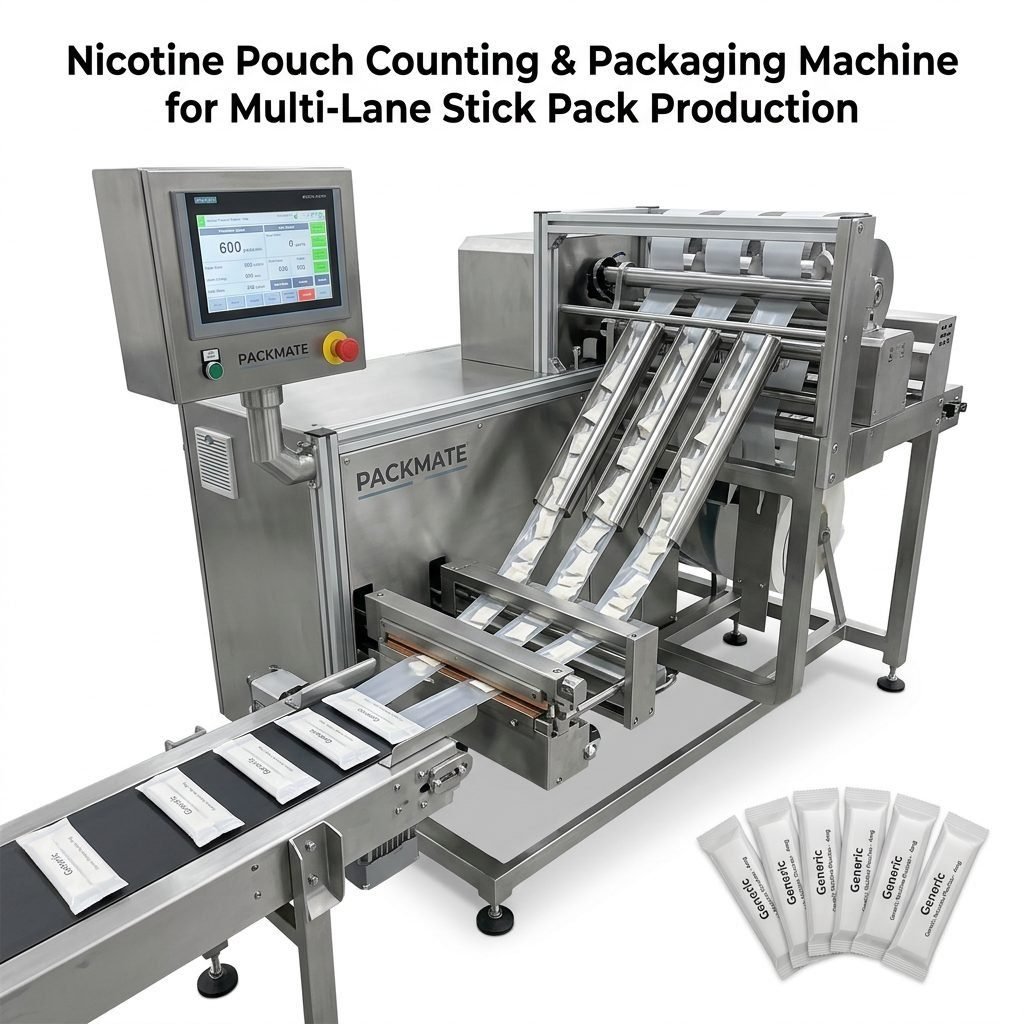
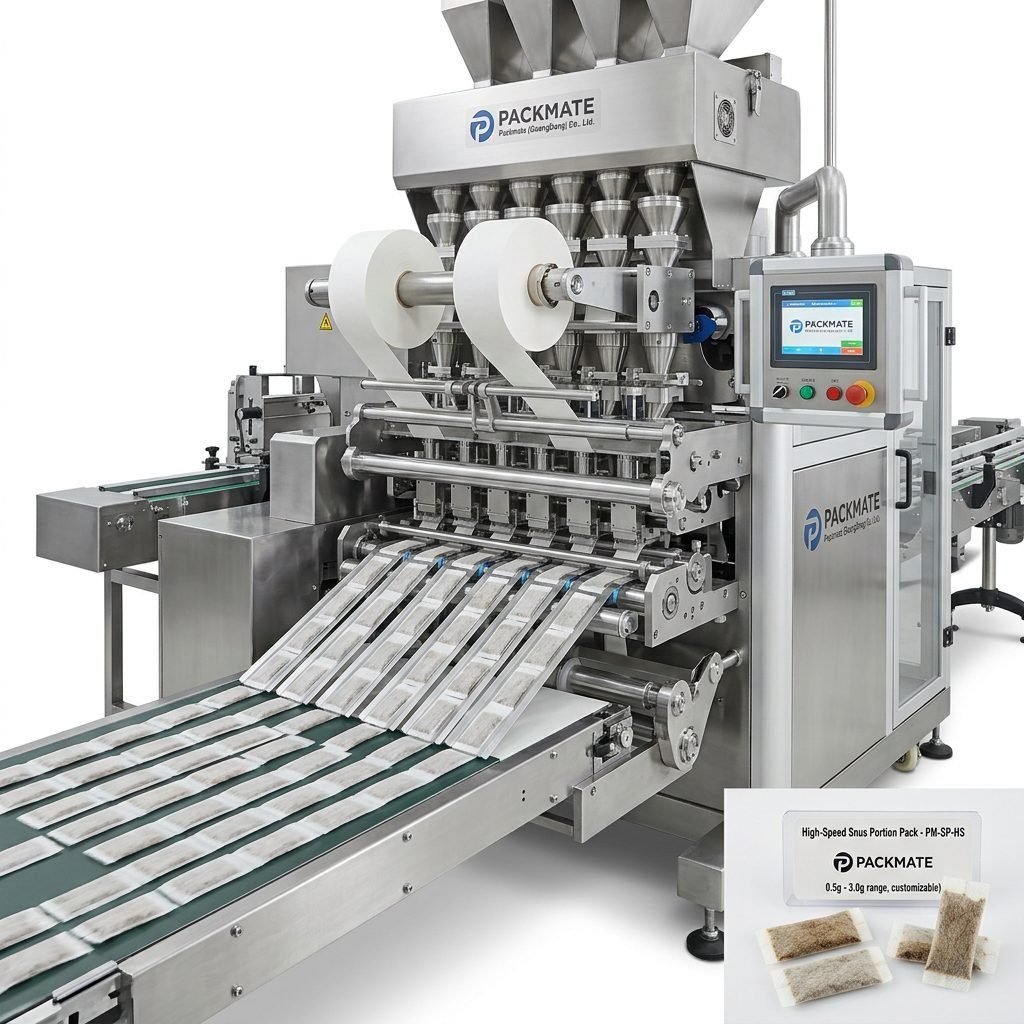
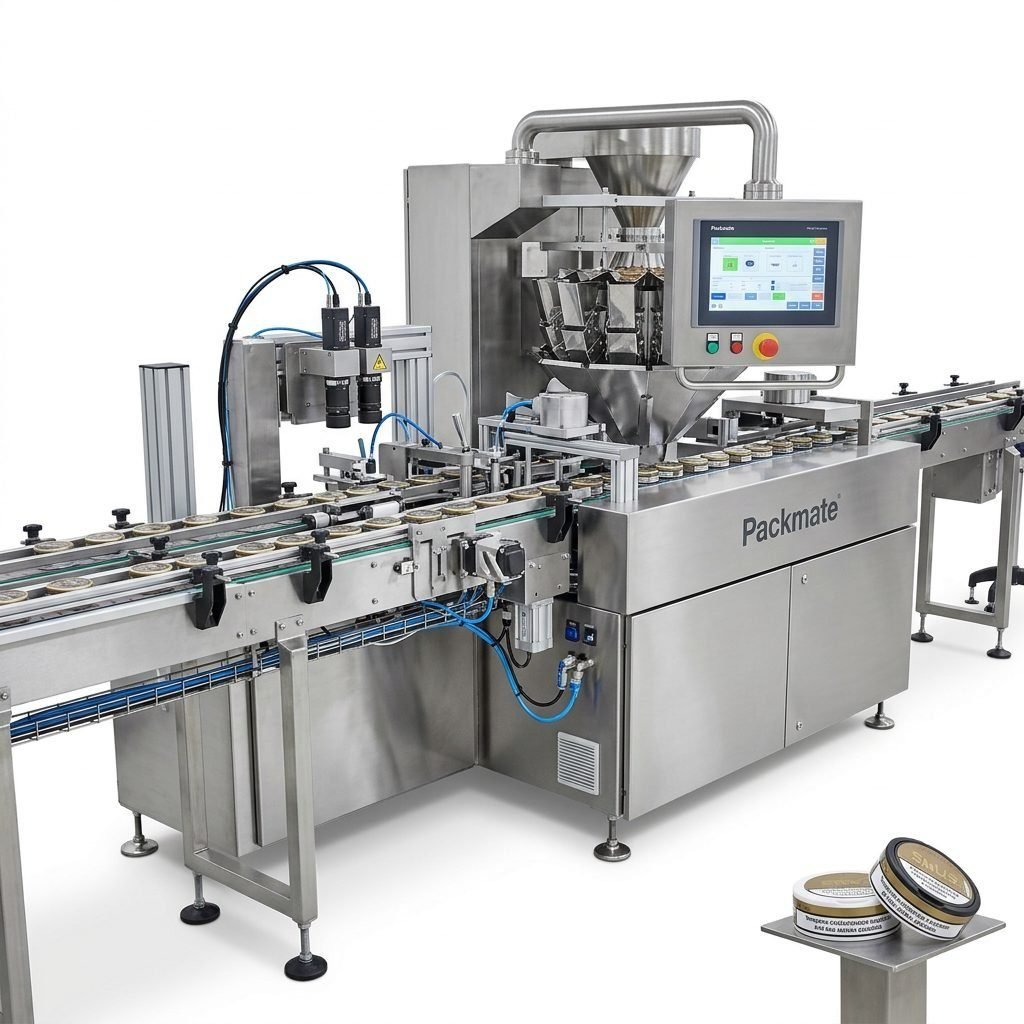
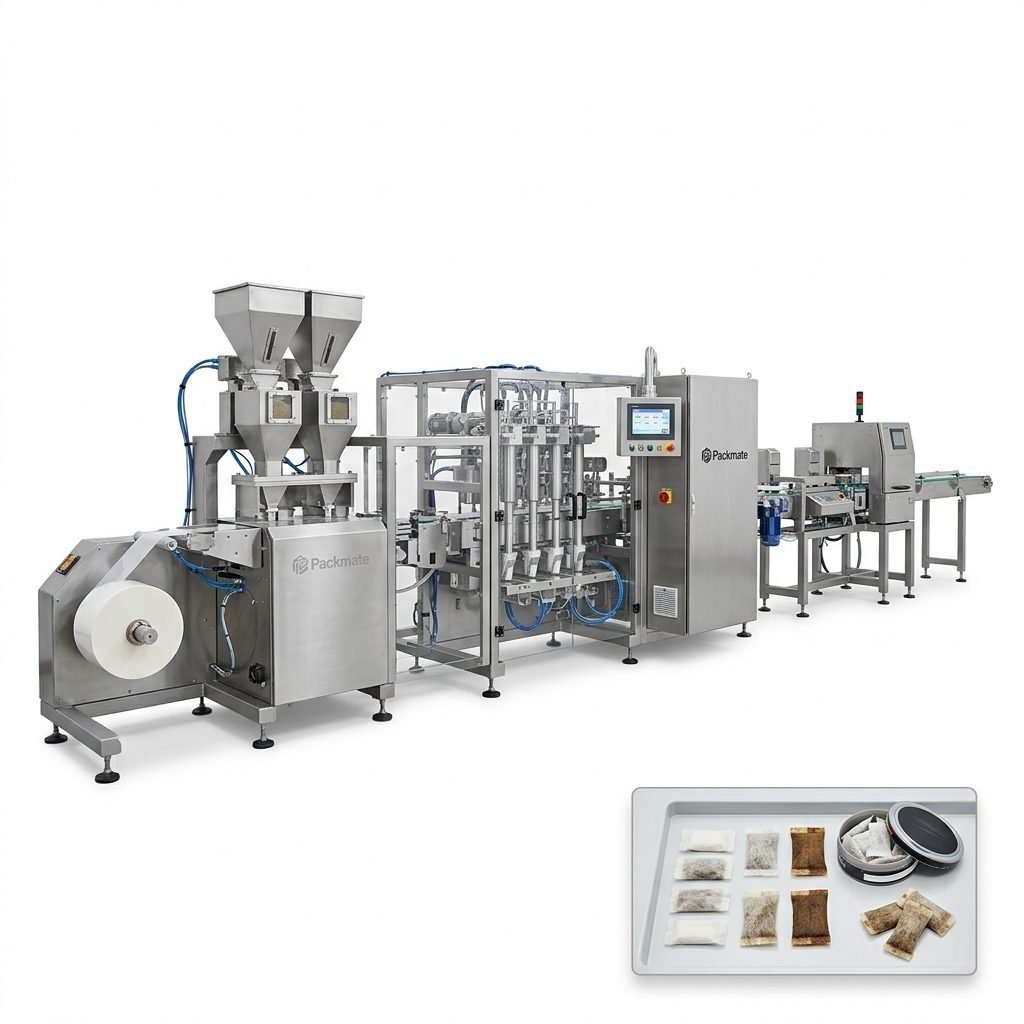
The snus and nicotine pouch market demands precision, speed, and regulatory compliance. Intelligent packing systems are transforming production lines with automation that improves throughput, reduces waste, and delivers consistent portion accuracy. This article explores smart snus packing systems — from core technologies and machine configurations to integration strategies and after-sales considerations — to help manufacturers select the optimal automated solution for reliable, high-efficiency tobacco portion packaging.
Why Choose an Intelligent Snus Packing System?
Smart snus packing systems combine mechanical precision with digital control to deliver measurable benefits on the production floor. Manufacturers experience substantial gains across four critical areas:
- ✅ Increased throughput through multi-lane synchronization and high-speed feeding.
- ⚙️ Improved accuracy with integrated weighing, dosing and inline quality checks.
- 📦 Reduced downtime via predictive maintenance and modular quick-change tooling.
- 🔧 Enhanced compliance because digital records and traceability simplify audits.
Core Components of a Smart Automated System
An end-to-end intelligent snus packing line typically includes several modular stations that work together under centralized control:
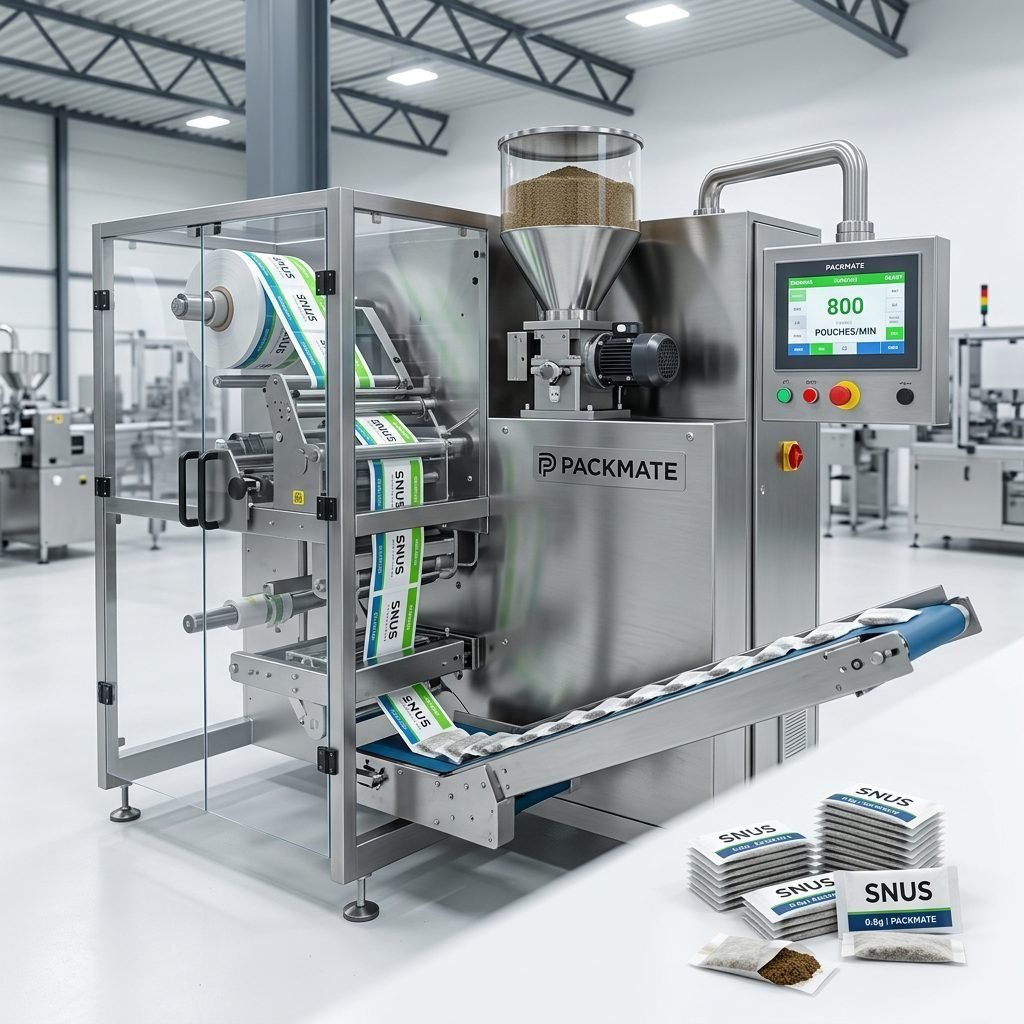
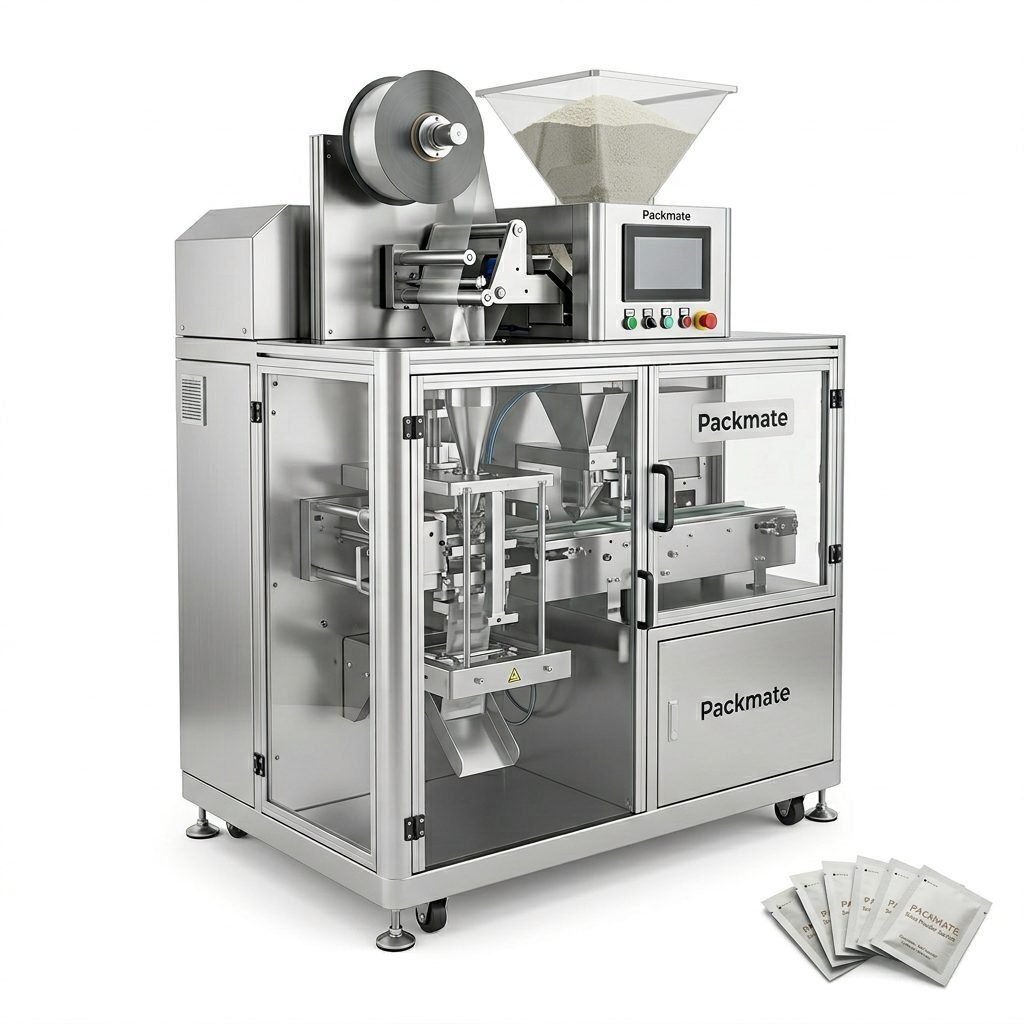
- Feeding & Dosing – precision augers, vibratory feeders or custom metering heads for consistent pouch fill.
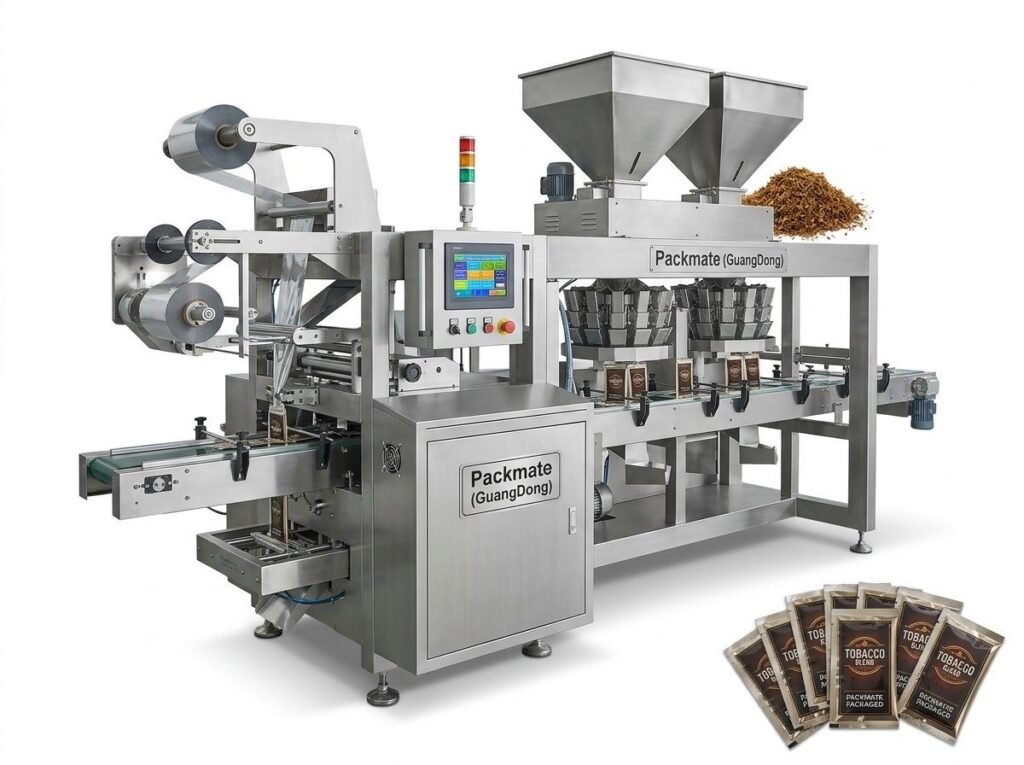
- Multi-Lane Forming & Sealing – simultaneous lanes for stick packs or sachets to boost output while maintaining seal integrity.
- Inline Weighing & Vision Inspection – rejects off-spec pouches and logs quality events automatically.
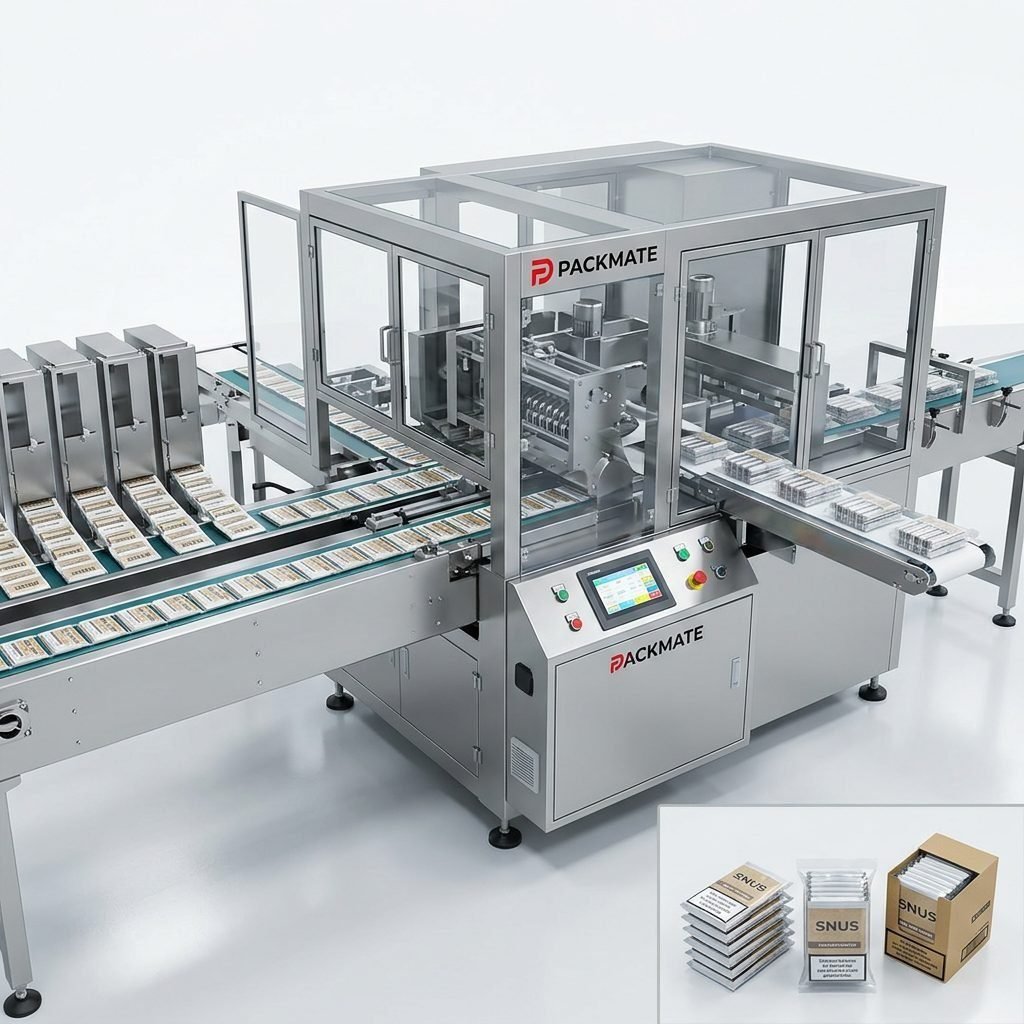
- Cartoning & Secondary Packaging – automated grouping, carton erecting, and case packing for a complete line.
Precision Technologies That Matter
Modern snus packing machines leverage a combination of mechanical design and intelligent controls to meet strict portion tolerances. Key technologies include:
- High-accuracy auger or piston fillers for small-dose nicotine pouches.
- Closed-loop servo systems ensuring synchronized multi-lane operations.
- Machine vision systems to detect fill level, pouch placement, and print quality.
- Real-time weight capture integrated with PLC/HMI for immediate correction and traceability.
Design Considerations for Tobacco Portion Packaging
Designing a snus packing line is a careful balance between product sensitivity, regulatory constraints, and production targets. The following considerations guide design choices:
Product handling: Nicotine pouches are small and often fragile; gentle conveying and vibration-minimizing feeders protect pouch integrity.
Hygiene & Cleanability: Stainless-steel contact parts, sanitary design, and accessible tooling reduce contamination risk and speed cleaning cycles.
Regulatory Traceability: Integrated data logging of batch numbers, timestamps, and weight records simplifies compliance and recalls if necessary.
Configuring Multi-Lane Lines for High Throughput
Multi-lane configurations are the most effective way to increase output without proportionally increasing equipment footprint. Smart control systems ensure lanes operate in perfect synchronization, reducing rejected packages and mechanical stress.
- Lane scalability: add or reduce lanes to match demand without full-line replacement.
- Synchronized indexing: servo-driven timing avoids product collisions during forming and sealing.
- Independent lane monitoring: individual lane sensors and rejects for maximum yield.
Integration with Upstream & Downstream Systems
A standalone machine can deliver gains, but a truly intelligent solution integrates with upstream filling and downstream packaging to form a fully automated production line. Examples include:
- Automated dosing systems that feed directly into multi-lane forming machines.
- Inline metal detection and X-ray for product safety between fill and final packaging.
- Robotic case packing and stretch-wrapping for pallet-ready outputs.
Selecting a Trusted Manufacturer
Choose a supplier with proven experience in snus and nicotine pouch machinery, strong manufacturing capabilities, and a global support network. Packmate Snus Machine, for example, offers deep expertise built on 30+ years of engineering and a 20,000㎡ manufacturing facility that supports custom turnkey solutions. Learn more about their product range and company background via About Packmate and their dedicated Snus & Nicotine Packaging Machines pages.
Useful links:
Snus & Nicotine Packaging Machines,
About Packmate,
Case.
Smart Features that Improve Uptime and ROI
Invest in features that reduce unplanned downtime and labor costs:
- Predictive maintenance via vibration and temperature sensors to plan service windows.
- Quick-change tooling for rapid format shifts and shorter changeover time.
- Remote diagnostics and support to accelerate troubleshooting across time zones.
Customization & Turnkey Lines
Every market and product variant requires slightly different handling. A turnkey provider should offer:
- Product-specific tooling and material handling design.
- Controls integration with factory MES/ERP systems for production visibility.
- Compliance engineering for CE/ISO certification and local regulations.
Sustainability and Waste Reduction
Sustainable practices are increasingly important. Intelligent packing systems help reduce material waste through optimized pouch sizes, accurate dosing, and minimized rejects. Additionally, efficient energy use and recyclable materials in machine components contribute to a lower environmental footprint.
Deployment & Commissioning Best Practices
A successful deployment follows a structured approach:
- Pre-installation review of utilities, floor loading, and material flow.
- On-site commissioning with product trials and operator training.
- Documentation handover, spare parts planning, and service agreements.
Common Production Challenges & Solutions
Manufacturers often face challenges such as variable raw material behavior, small-dose accuracy, and frequent format changes. Smart systems address these challenges by:
- Implementing closed-loop weighing to self-correct dosing deviations in real time.
- Using modular feeders and bag feeders adapted to hygroscopic or sticky materials.
- Designing tooling systems that support rapid format swaps with minimal adjustments.
After-Sales Support and Global Service Network
A global support network shortens downtime and ensures consistent performance. Key service offerings to look for:
- 24/7 remote diagnostics and spare parts fulfillment.
- On-site commissioning, training, and preventive maintenance contracts.
- Access to updated machine catalogs and certification documents — see the Catalog and Certificate pages for references.
Conclusion
Investing in an intelligent snus packing system delivers measurable improvements in speed, accuracy, and traceability. By selecting a manufacturer with proven experience, modular design capabilities, and global service support, tobacco portion producers can scale efficiently while maintaining product quality and regulatory compliance.
Frequently Asked Questions
Q1: How accurate are intelligent dosing systems for small nicotine pouches?
A1: Modern closed-loop dosing combined with inline weighing delivers high repeatability, often within a few milligrams for small-dose pouches, depending on product properties and calibration frequency.
Q2: Can multi-lane machines be adjusted for different pouch sizes quickly?
A2: Yes. Look for quick-change tooling and servo-controlled format adjustments that reduce changeover time to minutes rather than hours.
Q3: What certifications should a snus packing machine have?
A3: International standards such as CE and ISO are essential. Additionally, manufacturers should provide documentation for hygienic design and electrical safety relevant to your jurisdiction.
Q4: How do I ensure ongoing machine performance after purchase?
A4: Establish a preventive maintenance plan, secure a spare-parts package, and use remote monitoring for predictive alerts. Manufacturer training programs also enhance in-house competency.
Q5: Where can I see real-world examples of snus packing lines?
A5: Visit online case studies and exhibition galleries for live demonstrations and installed-line references; see the manufacturer’s Case and Exhibition pages for curated examples: Case, Our Exhibition.