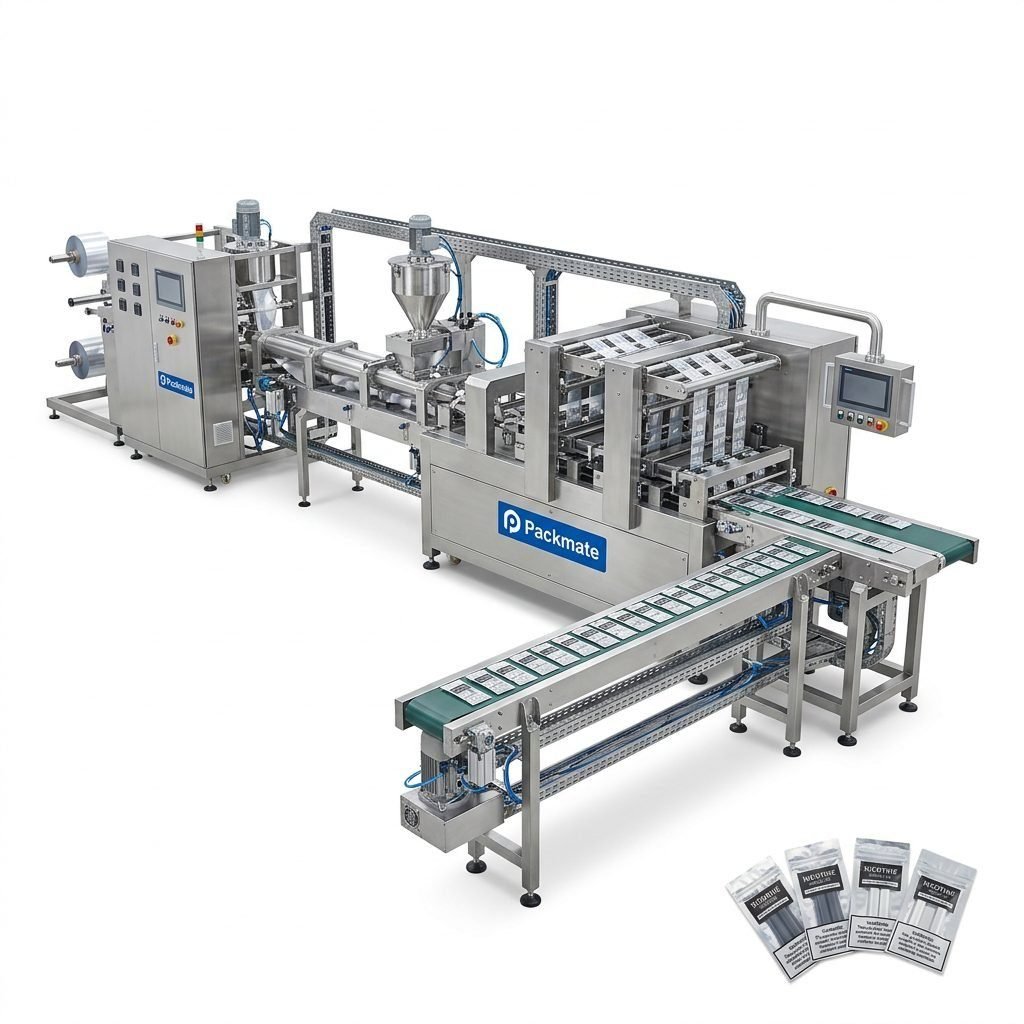
South Sudan’s growing retail and informal markets present unique opportunities for manufacturers and distributors of nicotine pouches and snus products. Choosing the right nicotine packaging machine requires balancing production capacity, local infrastructure, regulatory compliance, and consumer preferences. This guide walks you through the key technical, operational, and commercial considerations you must evaluate before buying a nicotine packaging machine in South Sudan, with practical tips and trusted supplier references to fast-track your decision.
🔍 Understand the South Sudan Market Context
South Sudan has a mixture of urban centers and remote regions, where power reliability, import logistics, and cultural sensitivities affect production choices. English and Arabic are commonly used in business; local distribution channels often rely on smaller pack sizes suited to cash-sensitive consumers. When planning your packaging line, consider that:
– Production runs may start small and scale gradually.
– Frequent power outages or voltage instability require machines with robust electrical protection or the ability to work with generators and UPS systems.
– Discreet, small-dose pouch formats tend to be popular for retail and informal channels.
✅ Legal & Cultural Notes
Always verify local regulations and import requirements for tobacco and nicotine products in South Sudan before importing machinery or starting production. Engagement with local partners and counsel will help you navigate labeling requirements, certification needs, and community sensitivities about nicotine products. Consider community-focused marketing and responsible-use messaging in packaging design.
🏷️ Key Machine Types and What They Offer
Nicotine packaging machines come in different configurations. Choose the type that best fits product format, output goals, and budget:
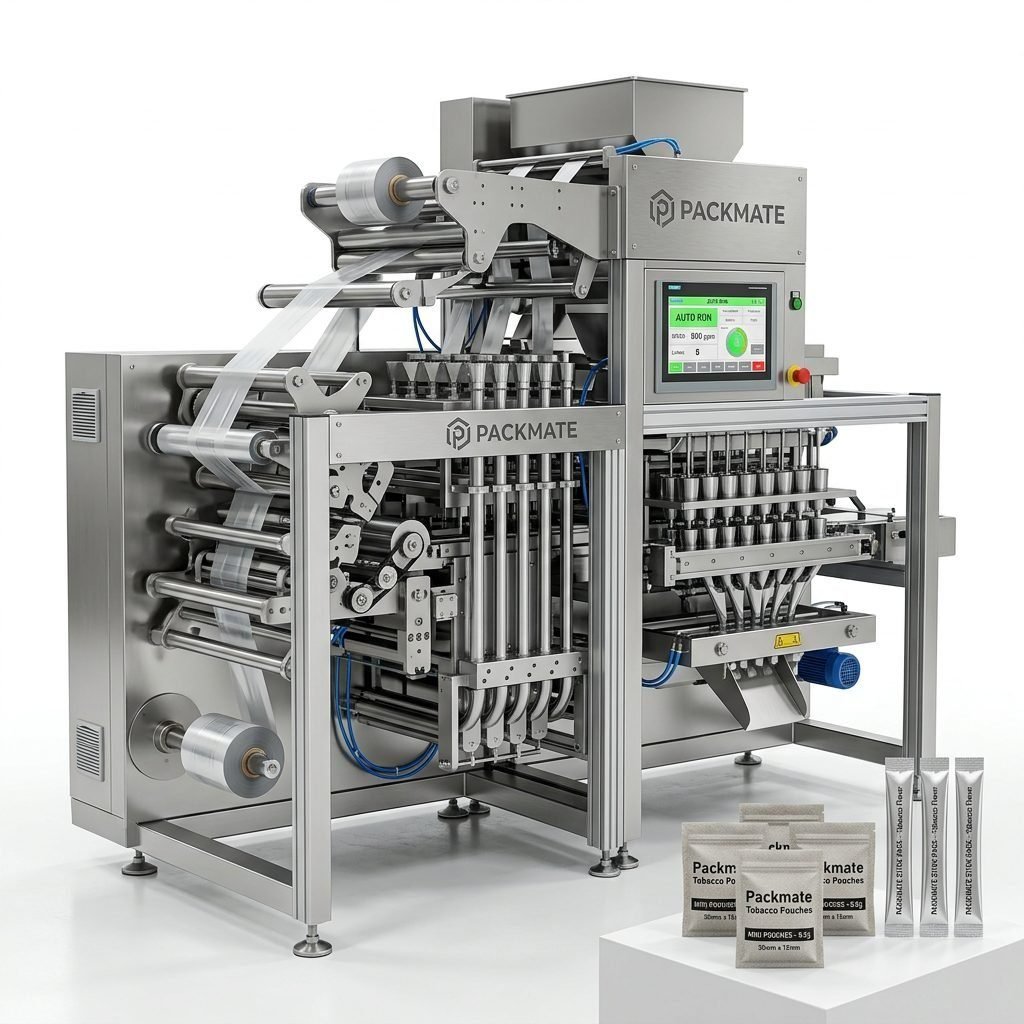
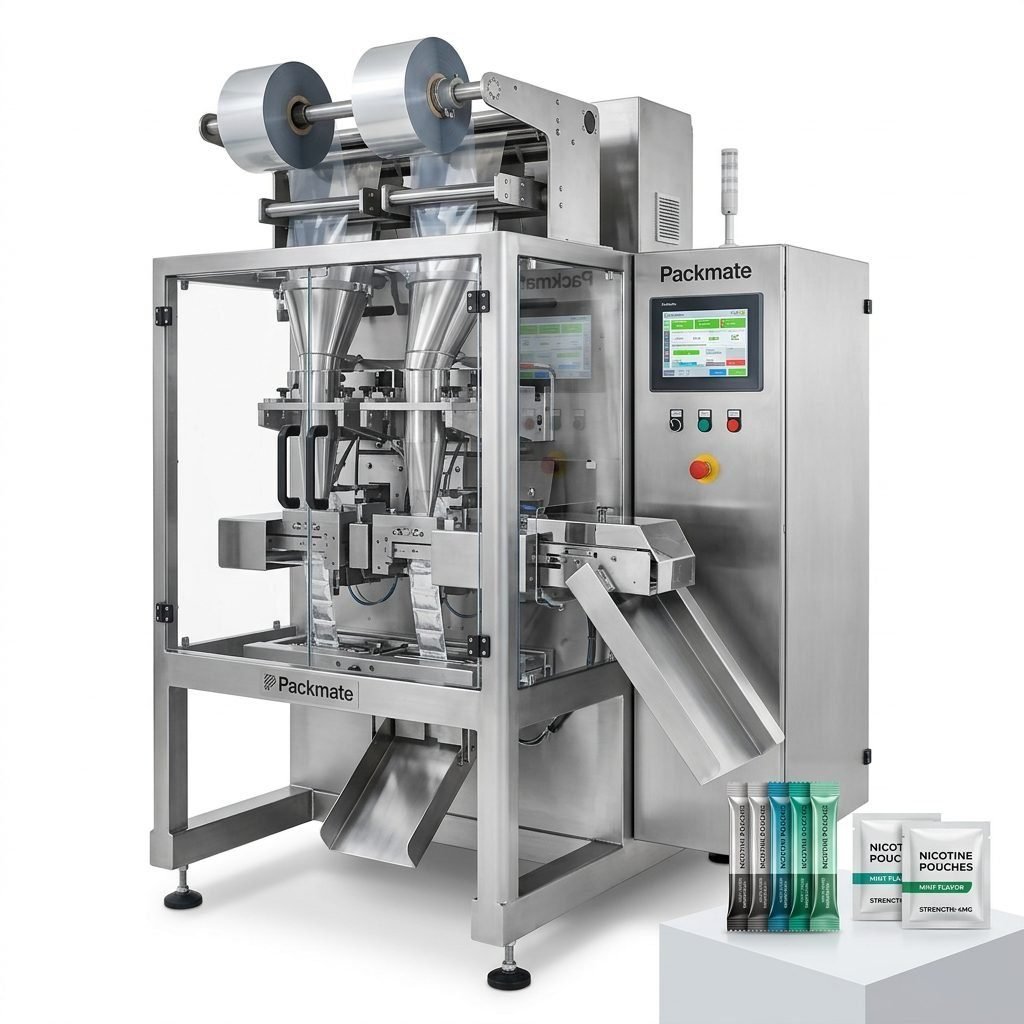
– Stick pack machines: ideal for single-dose sticks or sachet-like presentations; great for flexible volumes and low maintenance.
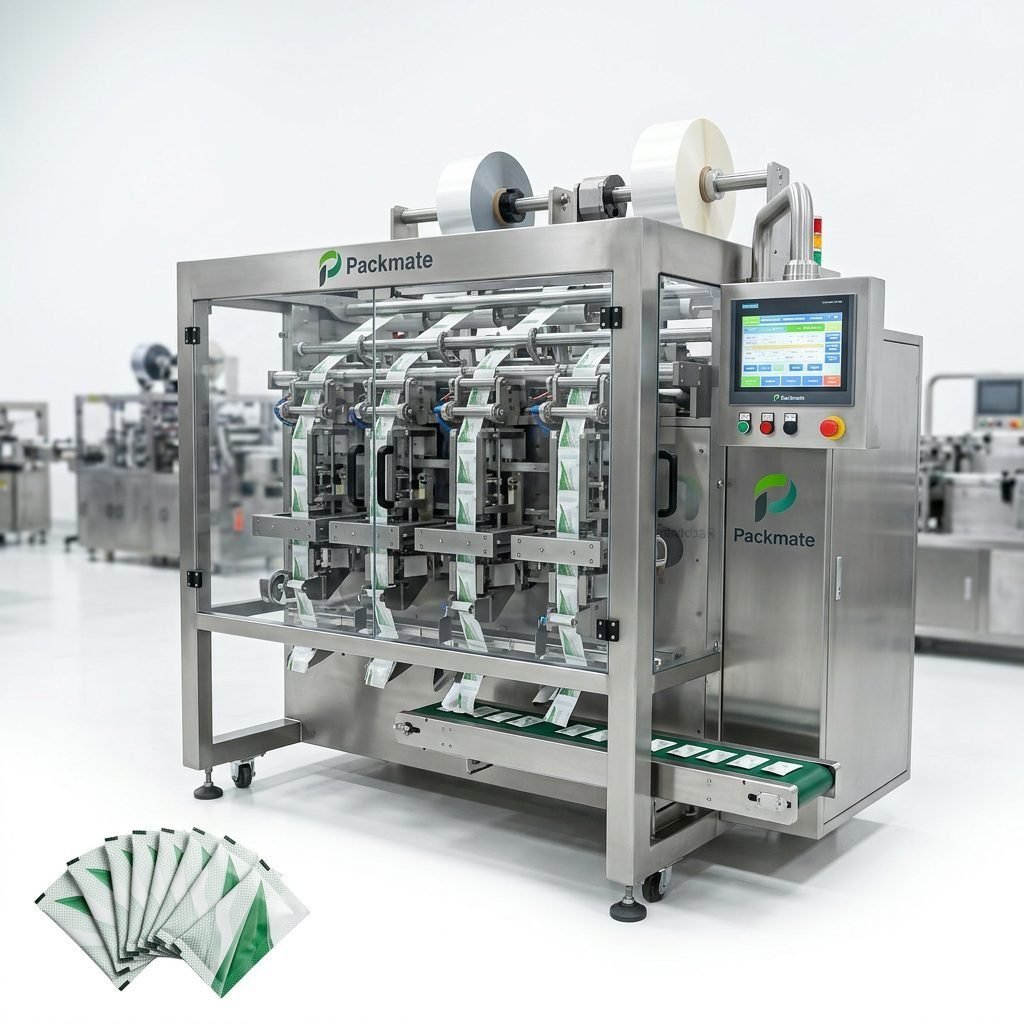
– Sachet & pouch machines: suited for single or multi-lane small pouches (common for snus/nicotine pouches). See options for Sachet & Stick Pack Machines.
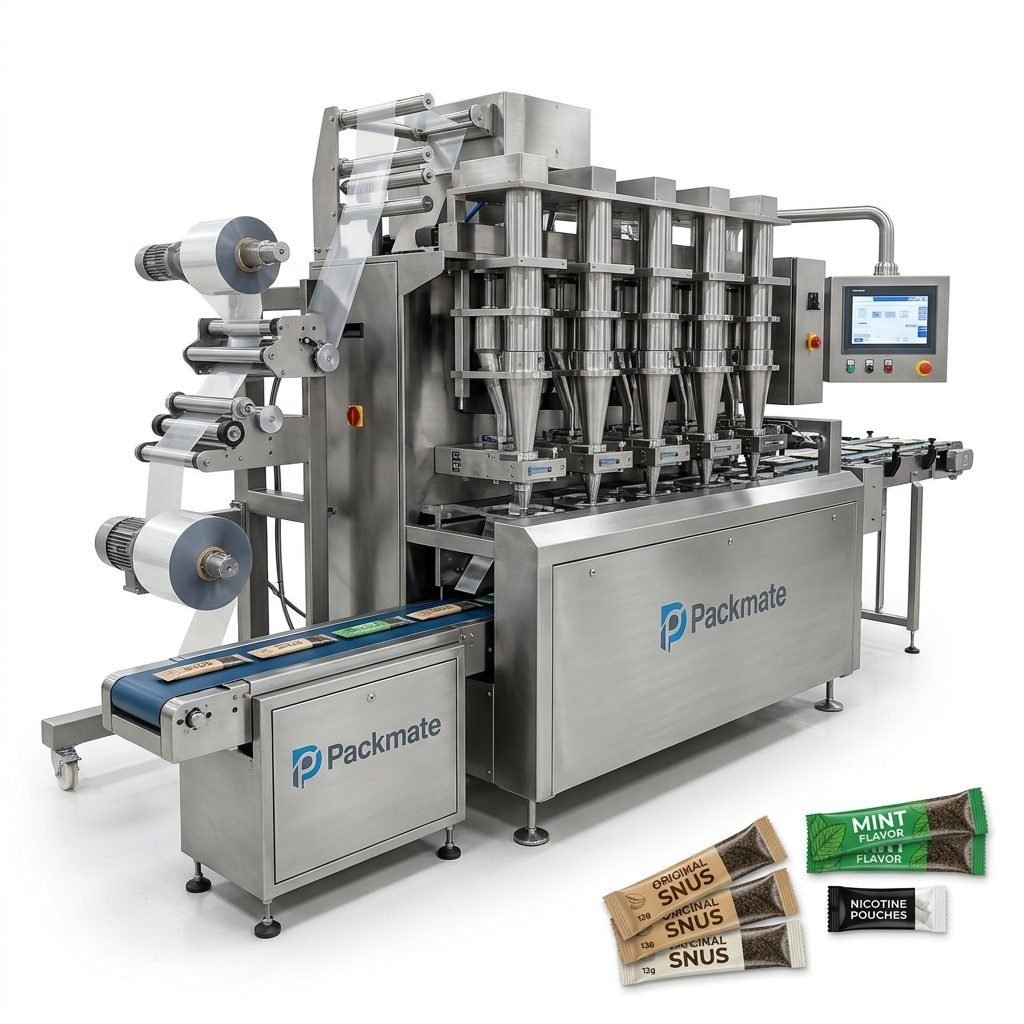
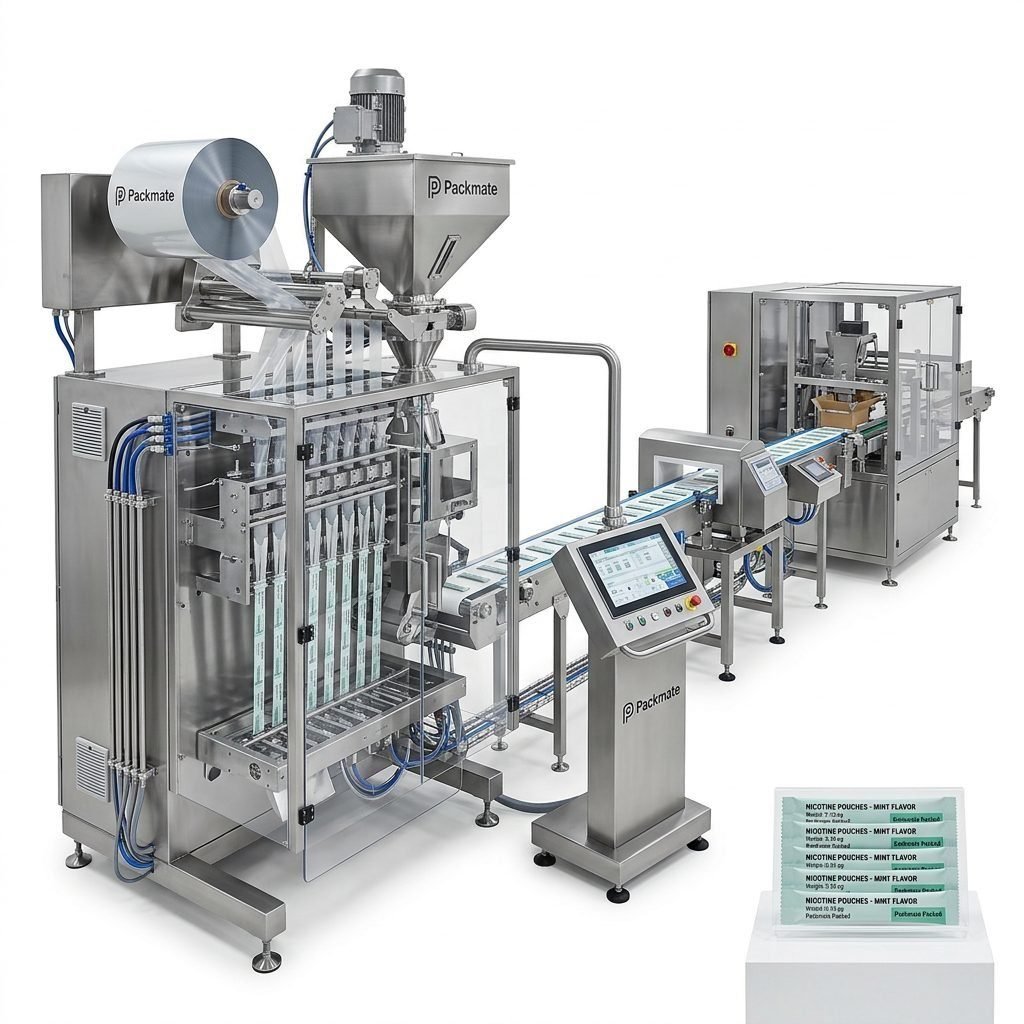
– Multi-lane snus/nicotine pouch systems: designed for high-speed, small-dose pouch production with consistent dosing—optimal if you plan to scale quickly. Explore Snus & Nicotine Packaging Machines.
Tip: For South Sudan’s mixed market, a versatile sachet-to-pouch line or modular solution that allows adding lanes or functions later often gives the best balance between cost and future growth.
⚙️ Production Capacity & Throughput
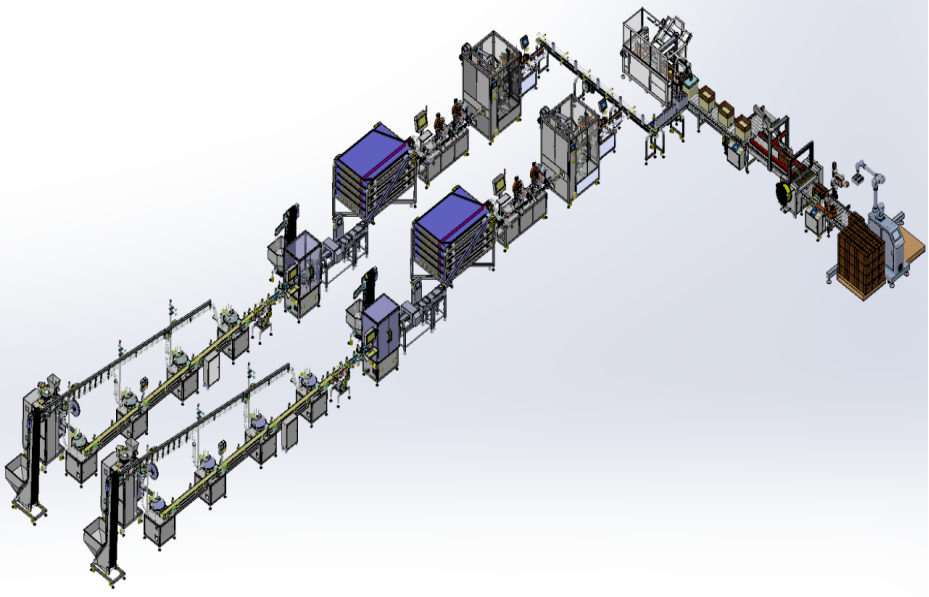
Match machine throughput to your demand forecast. If you expect to supply local retailers and small-scale wholesalers, a medium-speed multi-lane machine that supports 4–8 lanes may be ideal. For export-focused businesses or large distributors, higher-capacity lines with integrated weighing and filling systems can help meet bulk orders. Check integrated solutions under Weighing & Packaging Systems and Filling & Packaging Lines.
🛠️ Reliability, Service & Spare Parts
In regions with limited local service networks, choose manufacturers with proven international support and spare parts availability. Ask suppliers about:
– On-site commissioning and training.
– Remote diagnostic capabilities and software support.
– Lead times and stock for critical spare parts like pumps, motors, and PLC components.
Important: Request a documented spare-parts plan and recommended stocking list from your supplier—this minimizes downtime in supply-constrained environments.
💡 Technical Criteria: What to Ask Suppliers
When evaluating machines, ask detailed technical questions. Below are essential items to cover during vendor selection and quoting:
– Packaging formats supported (pouch size range, material compatibility, closure types).
– Dosing accuracy and filling range for nicotine weight control.
– Changeover time between sizes and formats.
– Control system (PLC/HMI) language options and training availability.
– Power and air consumption; ability to operate with voltage fluctuations.
– Safety certifications (CE, ISO) and compliance documentation.
🔧 Customization & Expandability
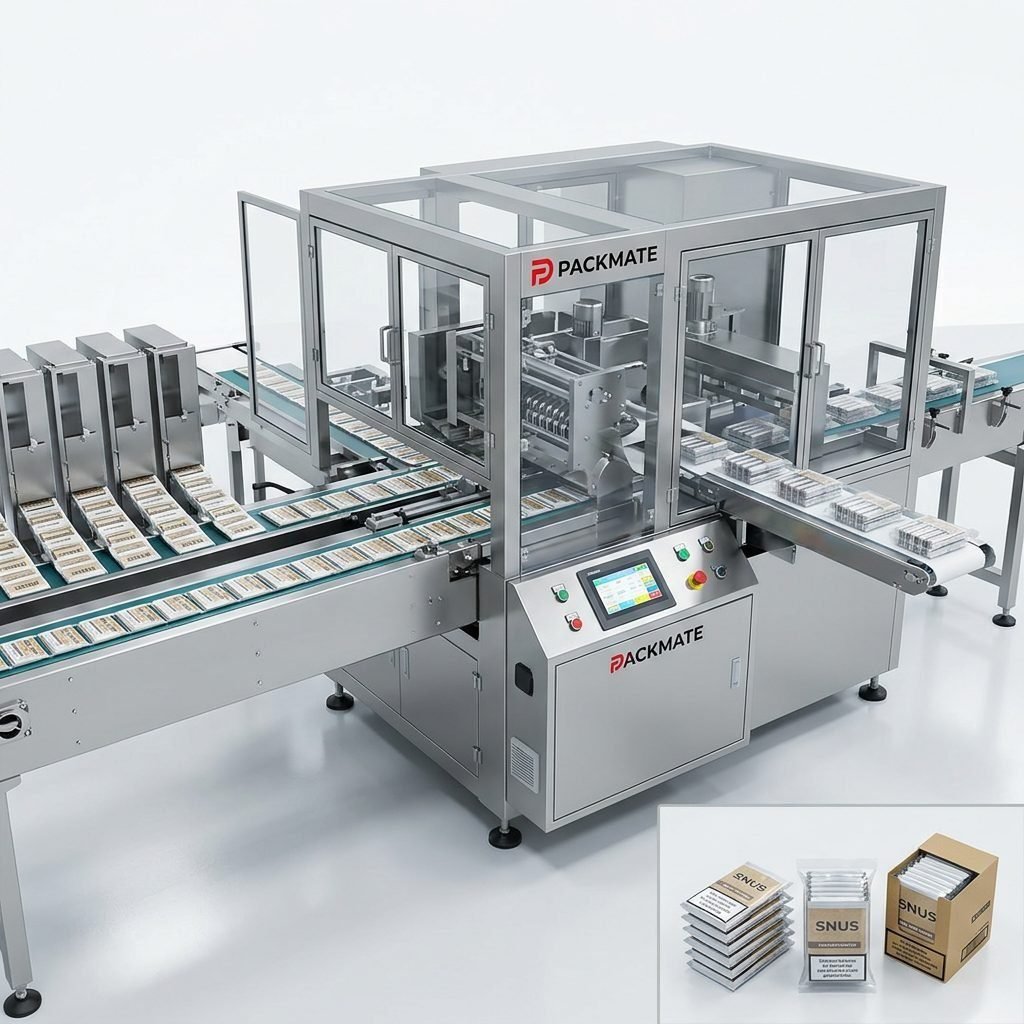
Choose suppliers who can offer modular upgrades—like adding lanes, rotary fillers, or automatic cartoners—so your line can evolve as demand grows. Packmate’s range and customization capabilities are an example of what to look for; read more on their About Packmate page.
📦 Packaging Materials & Sustainability
Material choice affects shelf life, costs, and local acceptance. Common choices include laminated films, paper-based pouches, and heat-seal foils. In South Sudan, consider:
– Shelf stability in high heat and humidity—barrier films or foil layers can protect product integrity.
– Consumer preference for discreet, easy-to-open packs.
– Environmental considerations—opt for recyclable or lower-plastic solutions where possible to align with CSR goals and retailer preferences.
Note: Ask your supplier for sample packs and accelerated aging test results under high-temperature conditions typical of the region.
💵 Total Cost of Ownership (TCO)
Purchase price is only the start. Consider long-term costs: installation, training, spare parts, energy, and consumables. A lower-priced machine with poor reliability can cost more over time. Evaluate:
– Warranty terms and service packages.
– Energy efficiency (important where generator use is common).
– Cost and availability of tooling and replacement parts.
🏭 Supplier Credentials & Factory Capability
Verify the supplier’s manufacturing capacity and track record. Packmate, for example, advertises 30+ years of experience, a 20,000㎡ facility, and multiple machine models—attributes that indicate robust manufacturing and QC processes. Explore their product categories like Bag & Pouch Packaging Machines and Auxiliary Packaging Equipment for complementary needs.
🚚 Import, Installation & Logistics in South Sudan
Importing large machinery into South Sudan requires planning. Confirm: port of entry capabilities, inland transport, customs clearance, and local agent support. Some tips:
– Work with a supplier experienced in West/East African logistics or a freight forwarder familiar with Juba and regional ports.
– Ask for crating and handling specifications, and check if the supplier offers FOB, CIF, or DDP terms.
– Prepare a pre-shipment inspection checklist and arrange for training during installation to ensure rapid start-up.
🧰 Installation, Training & After-Sales Support
A professional installation and operator training program shortens ramp-up time and protects your investment. Prioritize suppliers who include:
– On-site commissioning and operator training.
– Clear manuals and spare parts lists.
– Remote support and troubleshooting options for when on-site visits are delayed.
Pro Tip: Negotiate a service-level agreement (SLA) with response times and remote support expectations in writing.
📈 Scalability & Future-Proofing Your Line
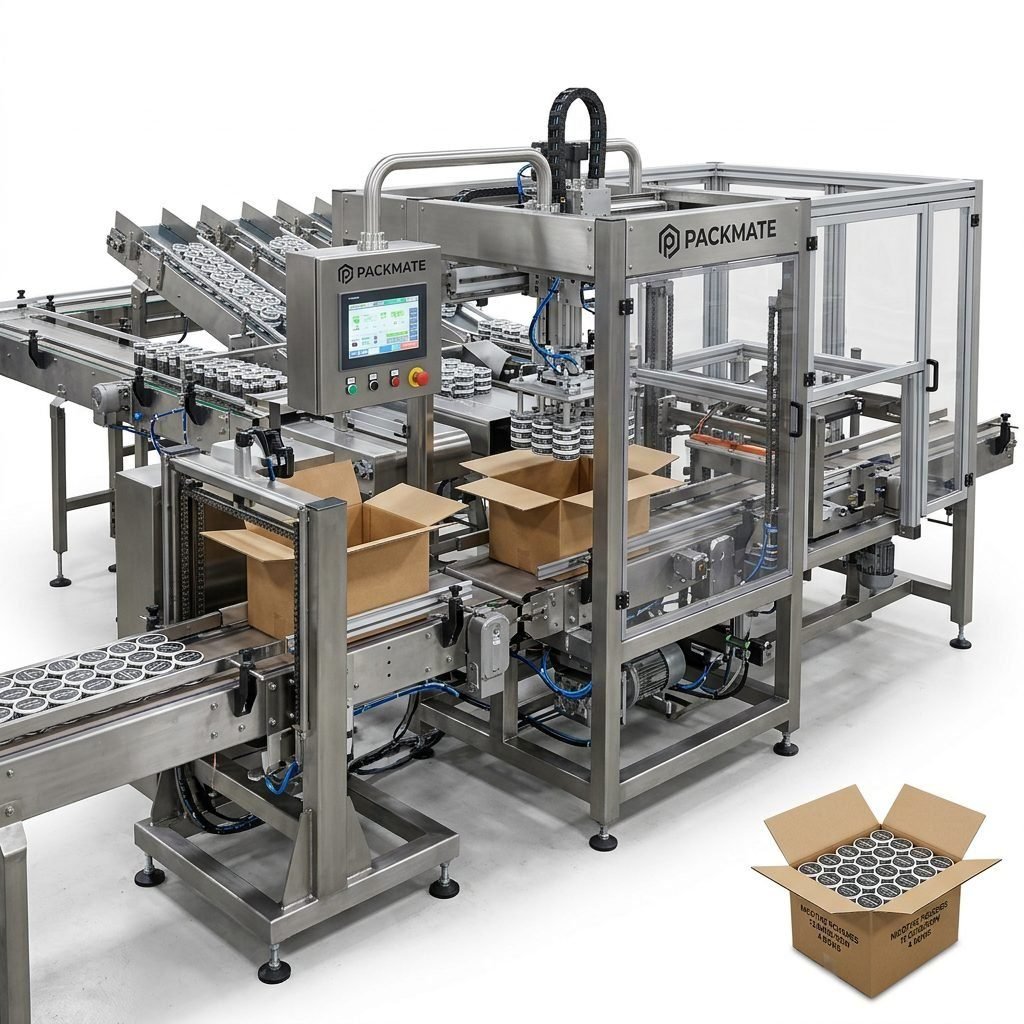
If you expect demand to grow, consider lines that can be upgraded—adding lanes, integrating automatic carton erectors, or upgrading dosing modules. An expandable approach reduces the need to replace equipment as volumes climb.
🔗 Useful Supplier Resources
For further product exploration and specification sheets, visit the supplier resource pages: Case, Catalog, and Service. These pages help compare models, view factory credentials, and arrange exhibitor meetings if you want to inspect machines in person.
✅ Final Checklist Before Purchase
Run through this checklist with suppliers before committing:
– Confirm electrical, pneumatic, and environmental requirements.
– Verify dosing accuracy specifications and sample test results.
– Obtain lead times for the machine and spare parts.
– Ensure clear warranty and after-sales support terms.
– Request references or case studies from similar markets.
Remember: A well-supported machine with clear service pathways is more valuable than a lower initial purchase price in environments where downtime is costly.
📞 Where to Get Started
If you are ready to evaluate suppliers, start by collecting detailed requirements: desired daily output, product formats, and local site constraints. Reach out to manufacturers with strong track records in snus and nicotine packaging, and request a tailored proposal. For product lines and technical specs from an experienced manufacturer, see the Packmate product pages.
Explore these pages for deeper technical details and contact options: Snus & Nicotine Packaging Machines, Sachet & Stick Pack Machines, and Contact Us.
📝 Closing Thoughts
Selecting the right nicotine packaging machine for South Sudan requires aligning technical specs with local realities—power, logistics, consumer preferences, and regulations. Prioritize reliability, serviceability, and supplier transparency to ensure a smooth launch and scalable operation.
Frequently Asked Questions
Q: What machine type is best for small-batch production in South Sudan?
A: A medium-speed sachet or small multi-lane pouch machine with flexible format capabilities is typically best for small-batch and mixed SKU production.
Q: How important is service support when buying from overseas suppliers?
A: Extremely important—ensure the supplier provides spare-parts lists, remote diagnostics, and on-site commissioning options to reduce downtime risk.
Q: Are there special packaging materials needed for South Sudan’s climate?
A: Yes—choose barrier films or foil-laminates to protect products from heat and humidity; conduct accelerated aging tests before finalizing materials.
Q: How can I check a supplier’s credibility?
A: Request factory information, certifications (CE/ISO), case studies, and references. Visiting a trade show or the supplier’s exhibition page can also help: Our Exhibition.
Q: What initial spares should I stock locally?
A: Stock electrical fuses, sensors, drive belts, sealing elements, and critical fast-moving parts. Your supplier should provide a recommended spare-parts kit on order.