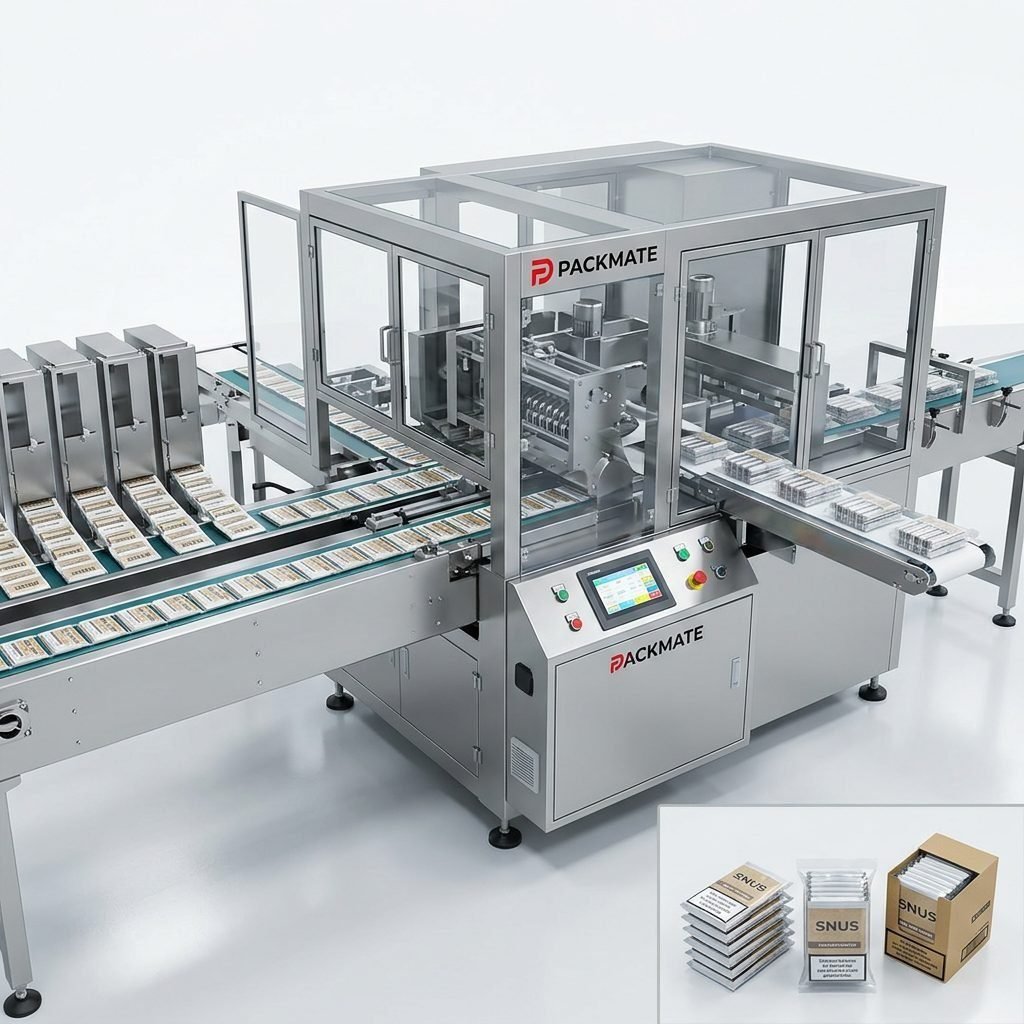
Choosing the right nicotine packaging machinery in Mexico means balancing production goals, local regulations, consumer preferences, and long-term serviceability. Whether you are launching a new nicotine pouch brand for adult consumers in Mexico City or upgrading an existing line for cross-border export, this guide walks you through practical steps to select machines that match your production needs and local market realities. 🇲🇽 ⚙️
Understand the Mexican market and regulatory environment
Mexico’s regulatory landscape for nicotine products is evolving. Local rules may restrict sales to adults, require specific labeling in Spanish, and regulate flavors and advertising. It is important to work with legal advisors and local partners to ensure your packaging lines produce compliant products. Additionally, Latin American distribution channels, retail formats (convenience stores, tobacconists, online), and consumer preferences (discreet single-dose formats, portable sachets) should influence your packaging format decisions.
Cultural preferences in Mexico favor clear Spanish-language labeling and strong brand visibility at point of sale. For cross-border export to the U.S., Canada, or EU, ensure your machine and packaging materials can accommodate multilingual labels and tamper-evident seals.
Define production goals and product formats first
Start by answering core operational questions: What daily output do you need (units/day)? How many SKUs and pack sizes will you produce? Do you require single-dose pouches, stick packs, sachets, or multi-pouch boxes? Your answers determine the machine family and automation level you should consider.
If you plan a flexible production schedule with several SKUs, prioritize machines that allow quick changeovers and recipe storage. For very high-volume runs, multi-lane systems and continuous film-feed equipment improve throughput and reduce labor costs.
Machine types to consider
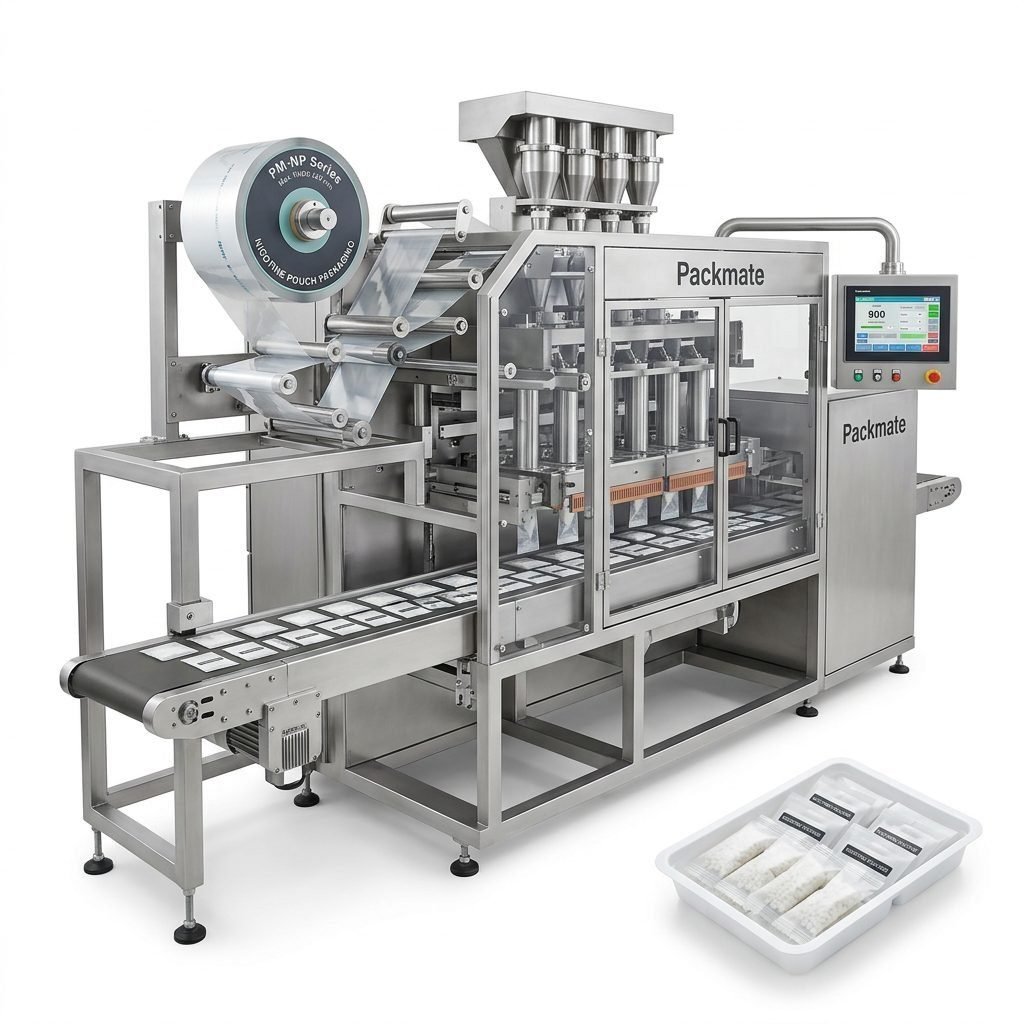
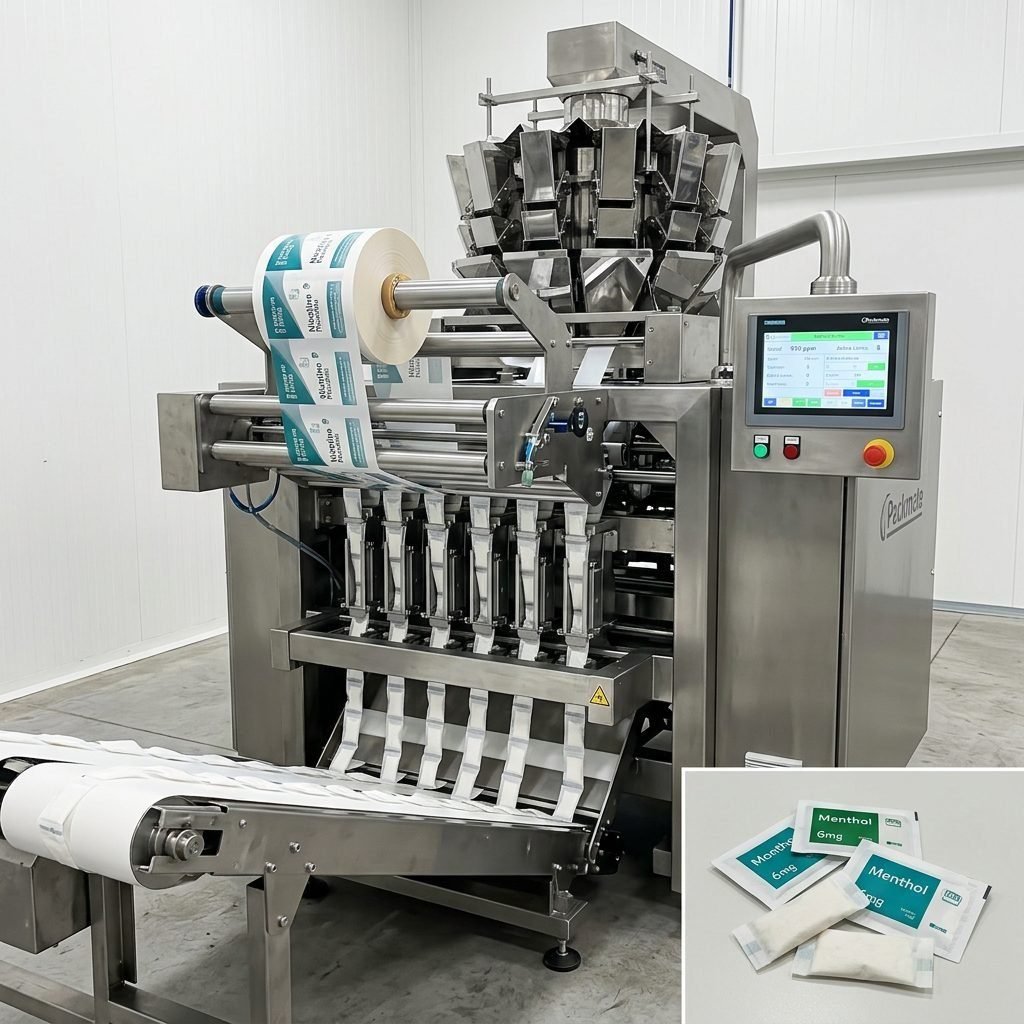
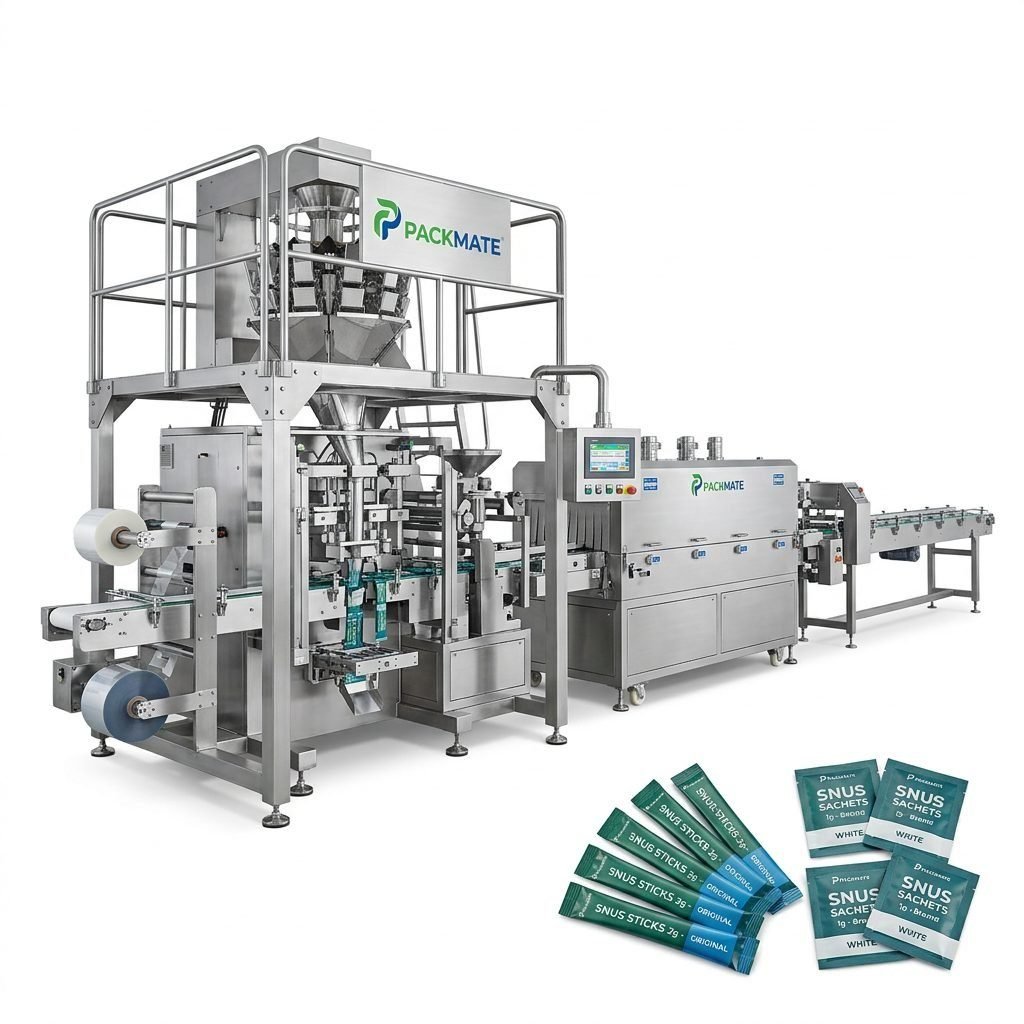
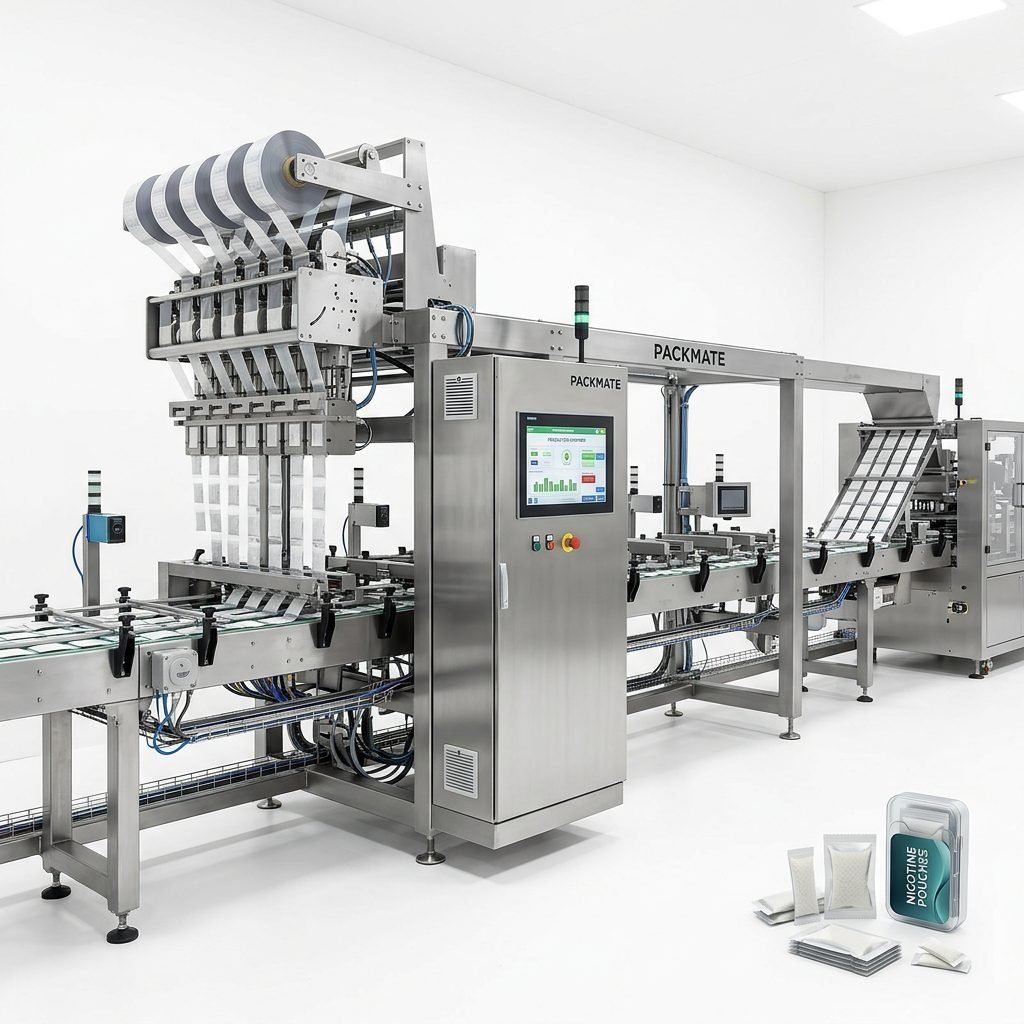
⚙️ Snus / Nicotine pouch packing machines (single pouch, multi-lane) are tailored for powder or fiber-filled pouches and offer precise dosing, ultrasonic sealing or heat sealing, and pouch shaping. Explore product options here: Snus & Nicotine Packaging Machines.
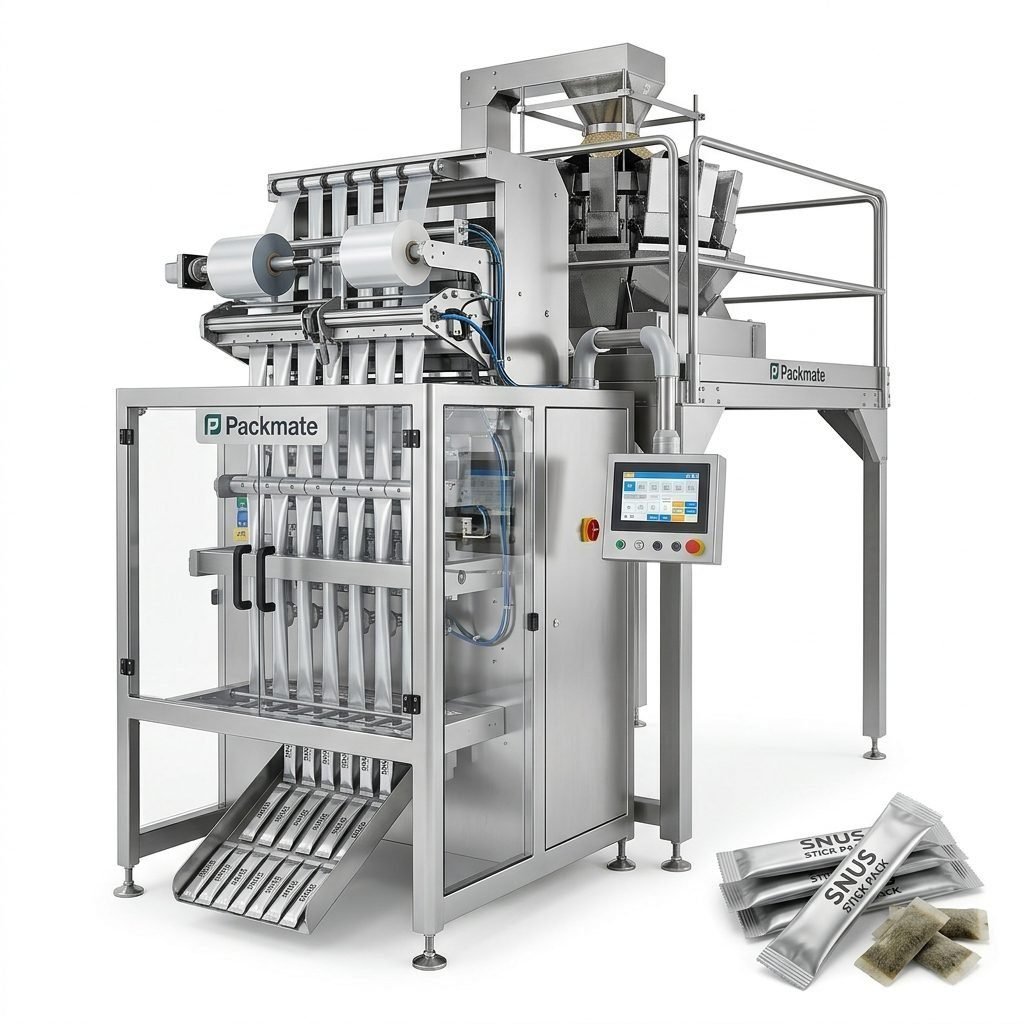
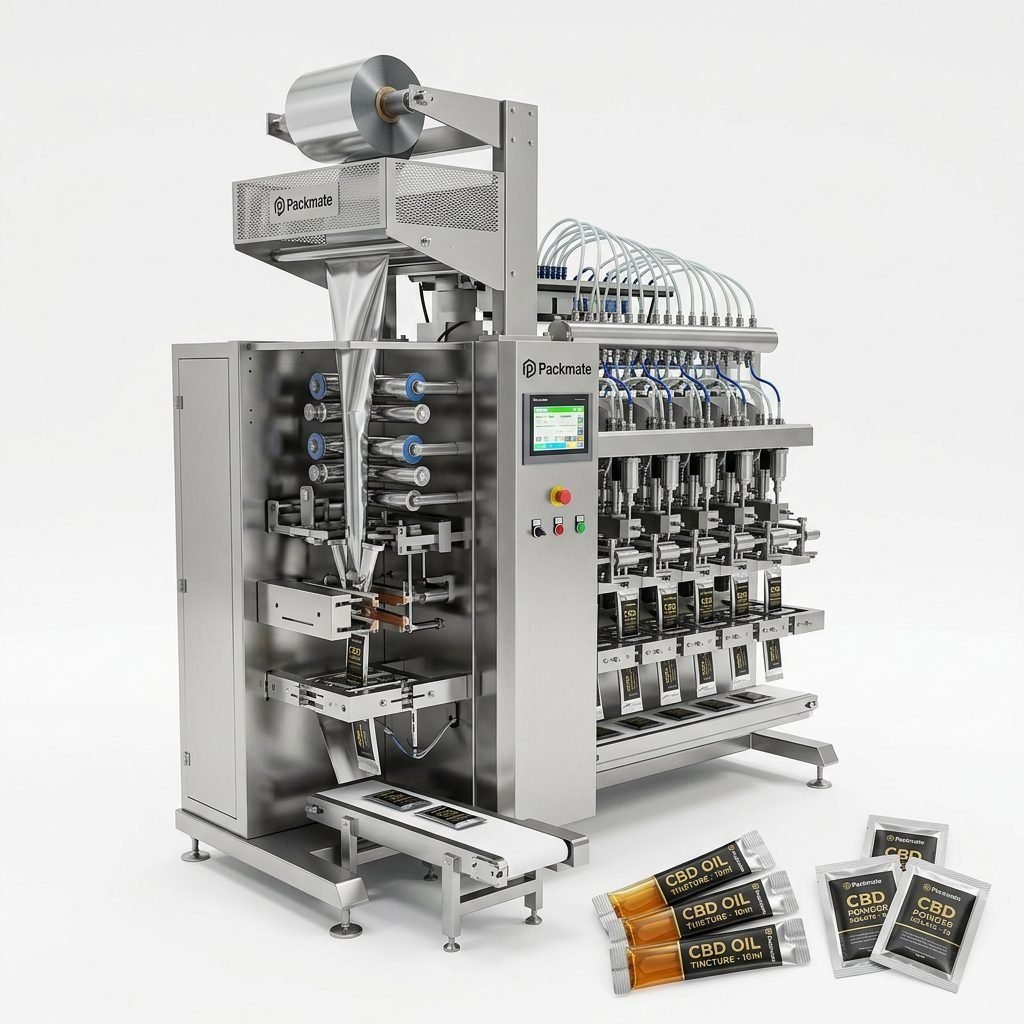
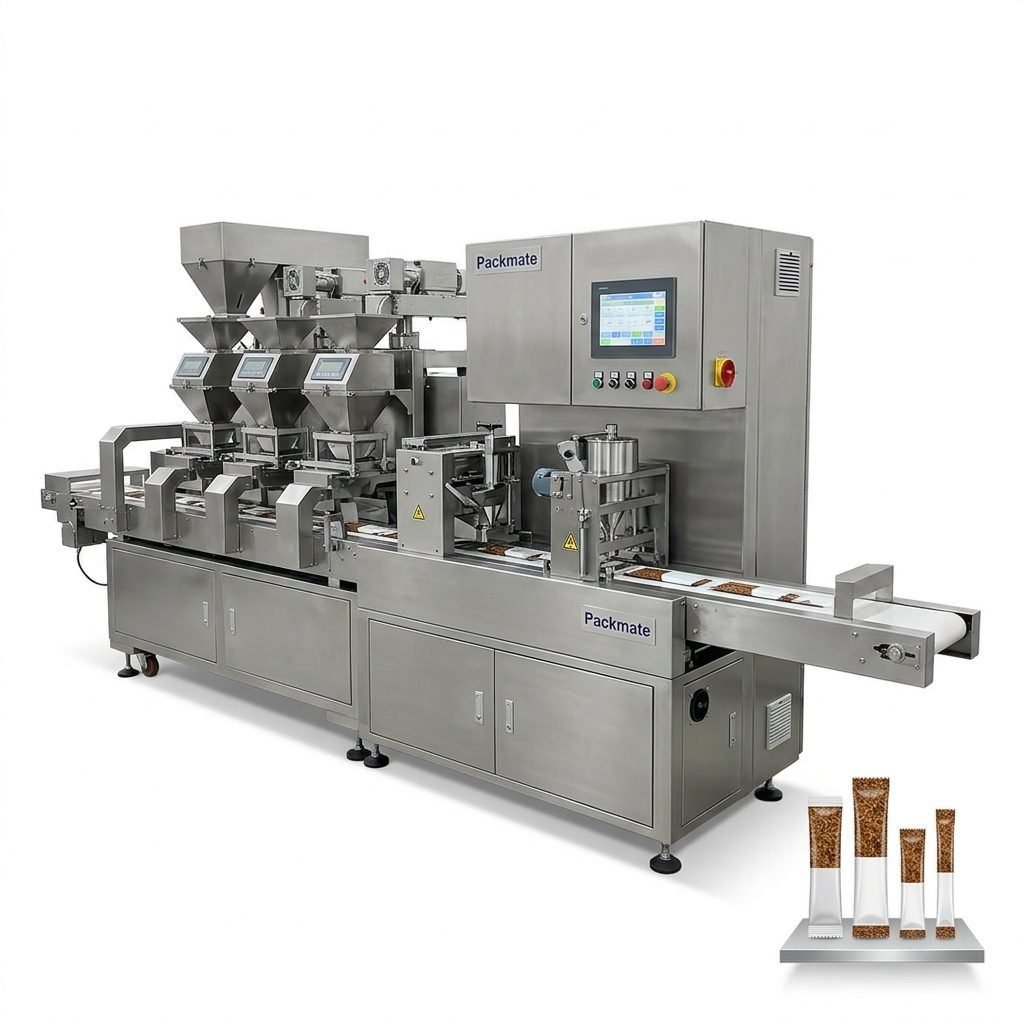
📦 Sachet and stick pack machines produce compact servings ideal for portability and discreet use. These machines are often faster per lane and suit flavored single-dose products: Sachet & Stick Pack Machines.
🔁 Bag and pouch packaging systems are useful for multi-unit retail packs or display-ready pouches. If you plan to pack multiple pouches into consumer bags, investigate end-of-line pouch inserters and cartoners: Bag & Pouch Packaging Machines.
Key technical parameters to specify
When comparing manufacturers, require detailed specifications and test data for: nominal speed (packs/min per lane), number of lanes, dosing accuracy (±g), average downtime, film width compatibility, sealing technology, and supported film materials. Machines with servo-controlled dosing and motion systems typically deliver better accuracy and reproducibility.
Important machine specifications:
– Production speed and multi-lane scaling. A four-lane machine at moderate speed might equal a single-lane high-speed line in output while improving flexibility.
– Filling accuracy and material handling for powders, granules, or moisture-sensitive filler. Consider vibratory feeders, loss-in-weight feeders, or auger systems depending on product characteristics.
– Sealing method (heat vs. ultrasonic) and laminate compatibility for long shelf life and moisture barrier performance.
Quality, certification and compliance matters
Machine certifications such as CE and ISO show a manufacturer’s commitment to international safety and quality standards. For producers in Mexico intending to export, CE/ISO-certified equipment helps meet regulatory scrutiny abroad. Ask for documentation and factory inspection reports.
Good manufacturers will offer material traceability, process validation support, and cleaning protocols. If your product requires sterile handling or special hygiene standards, prioritize stainless steel contact parts, wash-down designs, and clean-room compatible options.
Operational and plant-floor considerations
Energy supply, air quality, and humidity control in Mexico’s diverse climates can affect both product stability and machine performance. Coastal facilities need corrosion-resistant materials and higher maintenance frequency; central highland regions benefit from drier air but may require humidity control for powders.
Consider utilities and site preparation:
– Electrical requirements and clean, stable power. Many high-precision machines need three-phase supply and voltage stabilizers.
– Compressed air quality (dry and oil-free) for pneumatics and actuation.
– Climate control to protect hygroscopic fillers and sensitive adhesives in laminates.
Maintenance, spare parts and training
Select a supplier who offers local or regional spare parts stock, remote support, and training programs in Spanish. Quick access to replacement belts, sensors, and sealing tools reduces downtime and protects your margin. Check the supplier’s global service network and ask about recommended spare parts lists and preventive maintenance schedules.
Integration and turnkey solutions
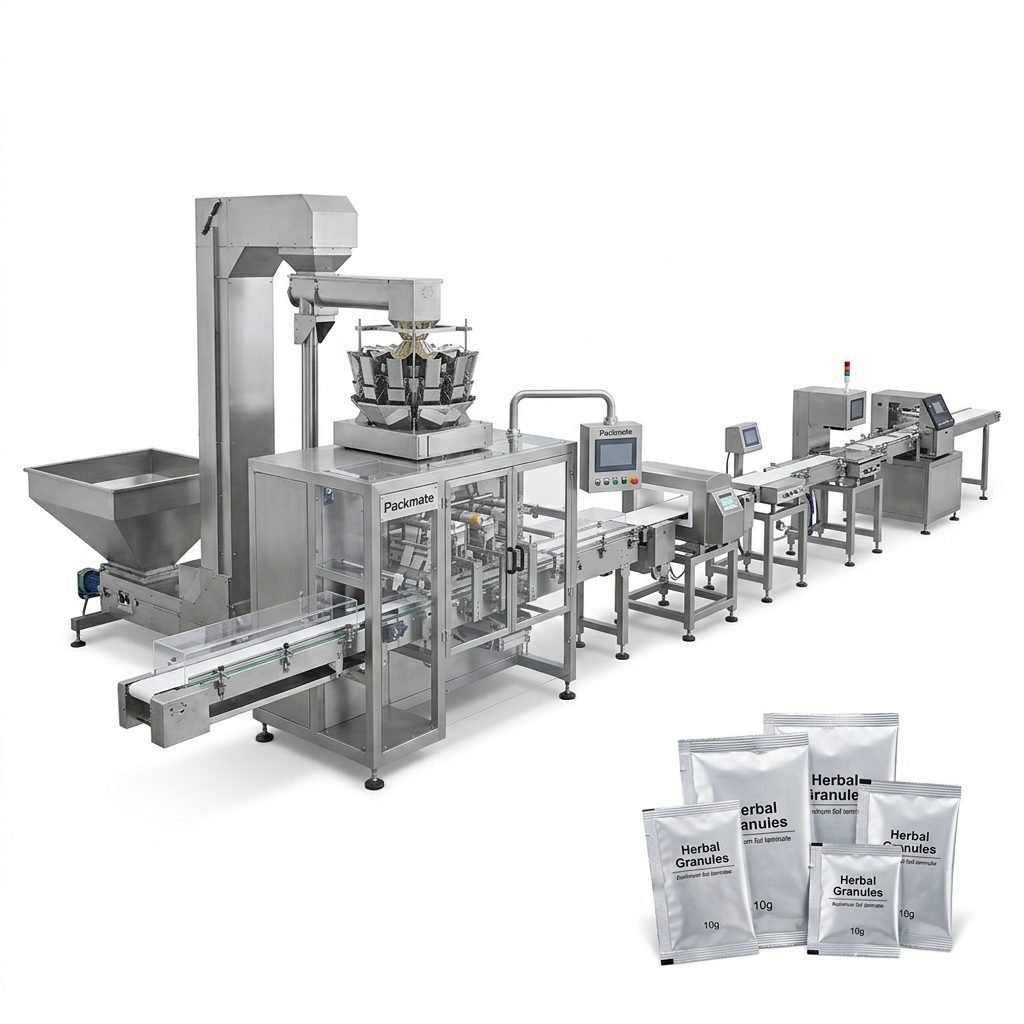
For faster time-to-market, turnkey lines that include dosing, filling, pouch forming, and final packaging are advantageous. Integration reduces the number of vendors, simplifies responsibility for line performance, and can improve overall equipment effectiveness (OEE). Manufacturers often supply complete systems including weighing & packaging modules—view integration options here: Weighing & Packaging Systems and Filling & Packaging Lines.
✅ Quick checklist: What to confirm before purchasing
– Required daily and hourly throughput targets.
– Product form (powder, granule, fiber) and target pouch style.
– Required dosing accuracy and acceptable waste.
– Local power, air, and environmental constraints.
– Availability of local support and Spanish-language documentation.
Total cost of ownership and ROI
Purchase price is only one component. Evaluate total cost of ownership (TCO) including energy consumption, spare parts, expected lifetime, downtime risk, operator training, and material waste. A more expensive machine with better sealing reliability and higher uptime may deliver superior ROI, especially for export-focused production where consistent quality is essential.
Perform a simple ROI analysis: calculate required daily output, expected price per unit, and estimated uptime. Compare machines by output per invested peso over a realistic depreciation period.
Choosing the right supplier: what to ask
When evaluating suppliers, ask for:
– References and case studies in similar products or markets. See examples: Case.
– Factory visits, acceptance testing (FAT) protocols, and on-site commissioning support.
– Spare-parts lead times and remote diagnostics capabilities.
– Warranty terms, training, and local language manuals. Check about the company and mission if you need background: About Packmate.
Why factory capability matters
A manufacturer with deep engineering experience, a sizable facility, and strong quality systems will usually deliver more reliable equipment and better follow-up support. Look for evidence of CNC machining centers, assembly lines, and testing protocols. Packmate, for example, highlights decades of experience and a large manufacturing footprint—factors that reduce supply risk and support custom development.
🔧 Practical tips for installation and ramp-up in Mexico
– Translate HMI and manuals to Spanish; ensure training is available in Spanish.
– Pre-qualify local contractors for electrical and compressed air work.
– Reserve spare parts commonly consumed in your first 12 months.
– Schedule FAT with product samples to validate dosing and sealing before shipment.
Final selection and contract tips
When you receive proposals, compare like-for-like: confirm warranty coverage, delivery time, installation services, and acceptance criteria. Include penalty clauses for late delivery if time-to-market is critical. Agree on performance acceptance tests using your actual product to prevent surprises at commissioning.
If you need turnkey solutions or additional modules—like auxiliary equipment, weighers, or end-of-line packers—discuss integration early to avoid compatibility issues (see Auxiliary Packaging Equipment).
Post-purchase: operational excellence
Invest in operator training, implement preventive maintenance, and track OEE. Small process improvements—optimizing film settings, maintaining seals, and ensuring accurate dosing—often yield immediate quality gains and waste reduction.
Key takeaway
The right nicotine packaging machinery for Mexico aligns machine type and configuration with local regulations, consumer preferences, and plant constraints. Prioritize dosing accuracy, sealing reliability, supplier support in Spanish, and total cost of ownership rather than just purchase price.
Need help evaluating options?
Talk with manufacturers who provide full documentation, on-site commissioning, and references. For more details on packaging lines and service offerings, contact the manufacturer or local distributor early in your decision process: Contact Us.
Frequently Asked Questions
Q: What machine type is best for a new nicotine pouch brand targeting convenience stores in Mexico?
A: Start with a flexible snus/nicotine pouch packing machine that supports multiple pouch sizes and quick changeovers. Multi-lane options boost output for scaling, and sachet/stick pack equipment can add SKU variety for single-serve convenience.
Q: How important are local language manuals and support?
A: Very important. Spanish-language manuals, on-site training, and local spare parts significantly reduce commissioning time and operator errors—especially during the first production months.
Q: What certifications should I request from the manufacturer?
A: Ask for CE and ISO documentation, FAT reports, and material certificates. If you plan to export, ensure compliance with the destination market’s requirements as well.
Q: Can one supplier deliver a turnkey solution including dosing and final packaging?
A: Yes. Many experienced suppliers provide integrated lines—including weighing, filling, pouch forming, and end-of-line solutions—reducing integration risk and simplifying accountability.
Q: Where can I see real-world examples and product ranges?
A: Review manufacturer case studies and product catalogs for similar installations and performance data: Catalog and Case.