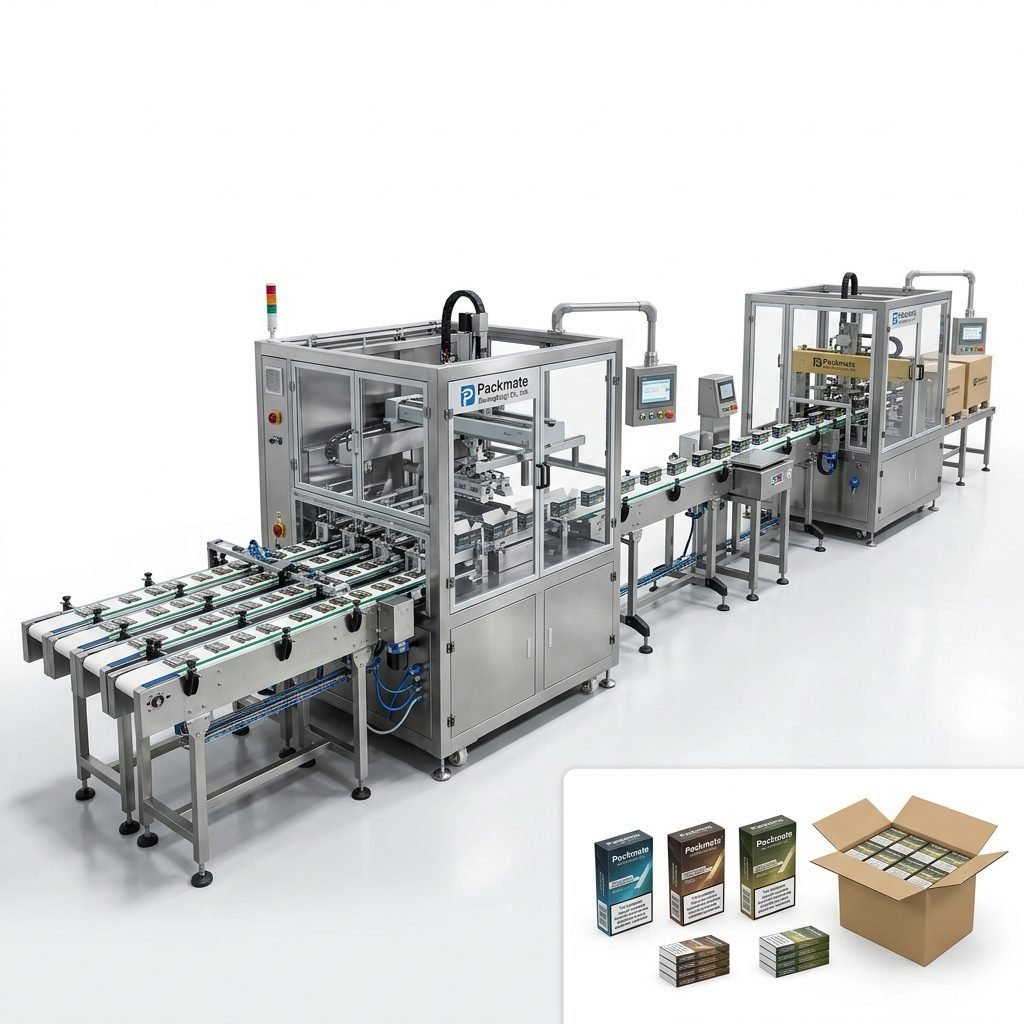
In today’s fast-moving nicotine pouch market, manufacturers must balance speed, accuracy, and cost to stay competitive. Automated snus and nicotine pouch production lines deliver consistent portion control, high throughput, and reduced labor costs while meeting global safety and quality standards. This guide walks production managers, engineers, and purchasing teams through proven strategies for designing and operating a high-speed, precise, and cost-effective nicotine pouch manufacturing operation. ⚙️
Production Overview: Key Steps in an Automated Nicotine Pouch Line
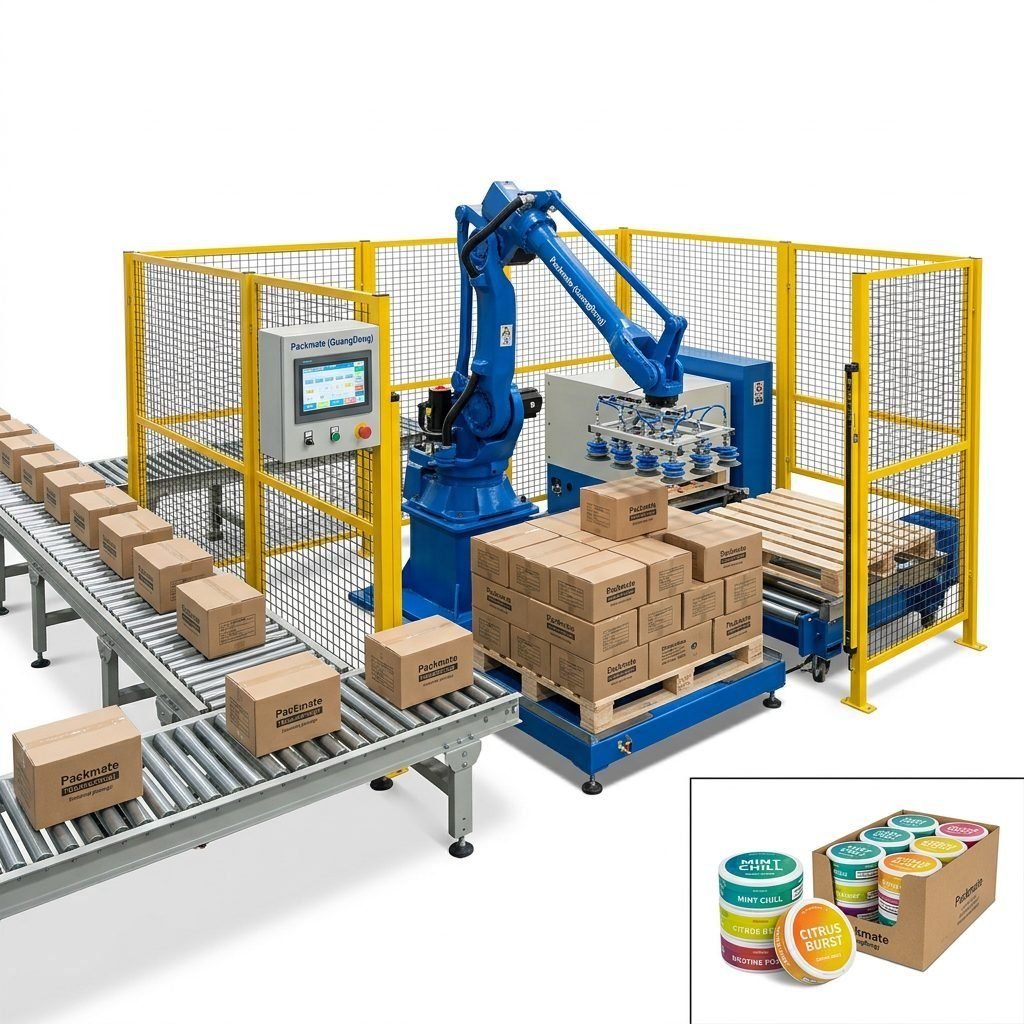
A modern nicotine pouch line typically integrates multiple subsystems: raw material handling, dosing & weighing, pouch forming, filling, sealing, coding, inspection, and secondary packaging. Each stage must be synchronized to maintain speed and accuracy. Typical flows include:
🔧 Feeding → 🧪 Dosing/Weighing → 📦 Pouch Forming → ✋ Filling → 🔒 Sealing → 🧾 Coding → 🧐 Inspection → 📦 Cartoning/Bagging
Why Automation Matters
Automation reduces variation and improves throughput. Compared with manual lines, automated systems provide:
Higher consistency in portion weight and pouch formation, lower labor costs, minimized contamination risks, and simplified traceability through integrated coding and data capture. For companies scaling production or entering regulated markets, these benefits are essential.
✅ Top goal: deliver uniform pouches at target weight with minimal giveaway and maximum uptime. Focus on precision dosing, robust sealing, and stable film handling.
Core Equipment Options
Choosing the right machine family depends on product format and capacity. Popular options include:
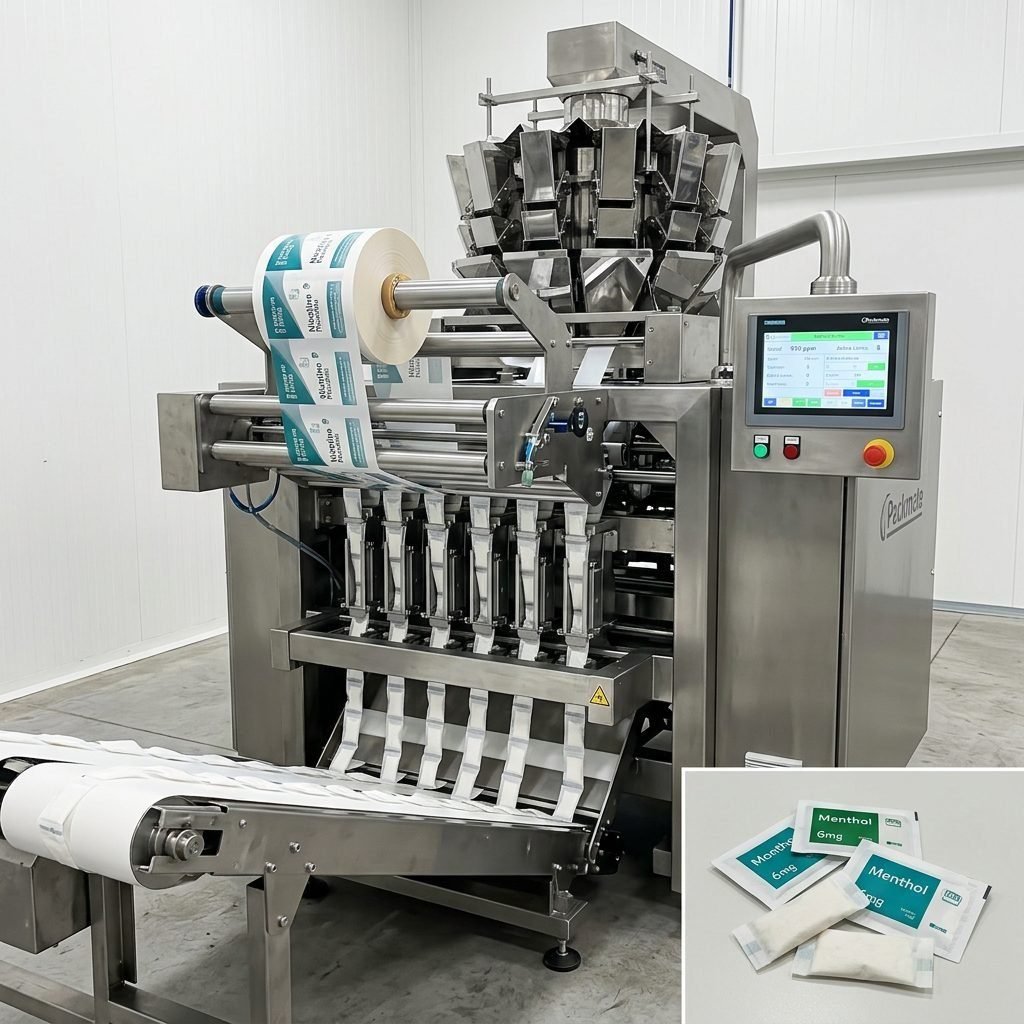
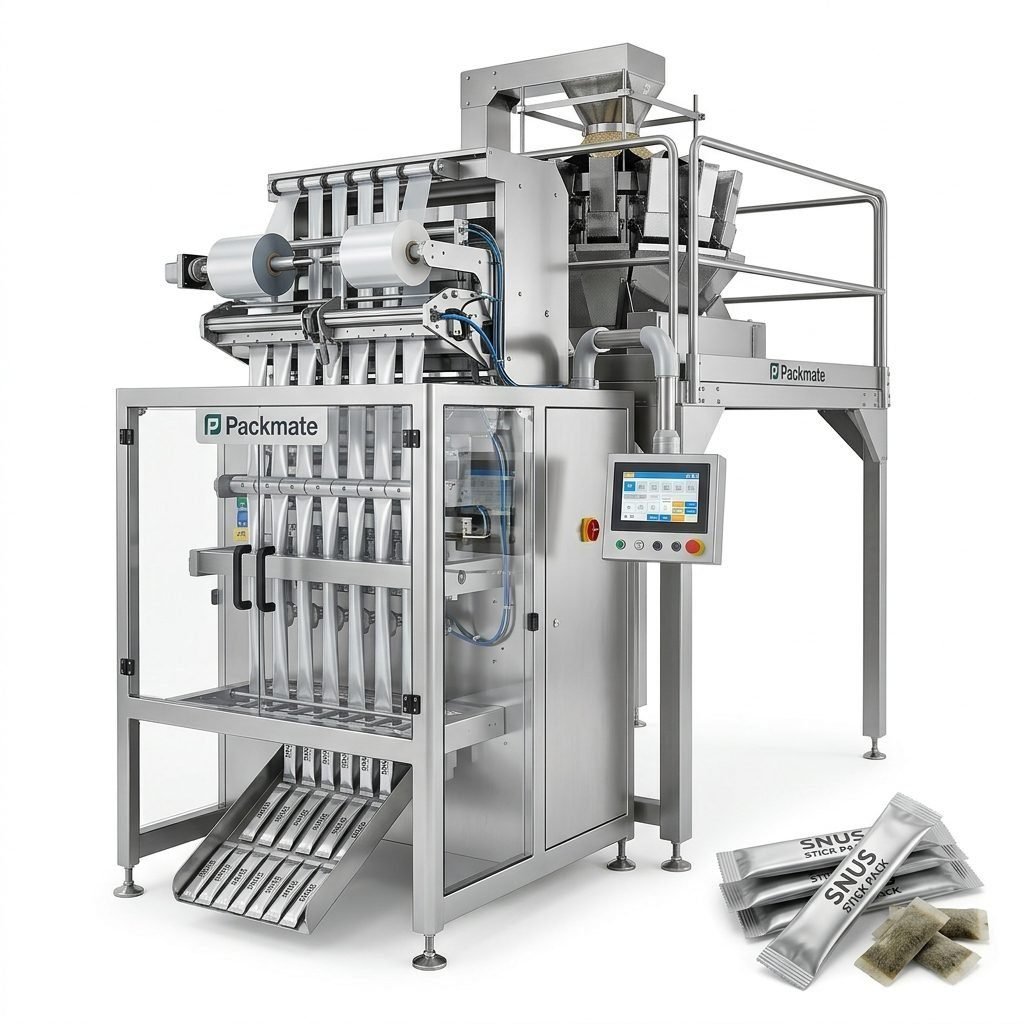
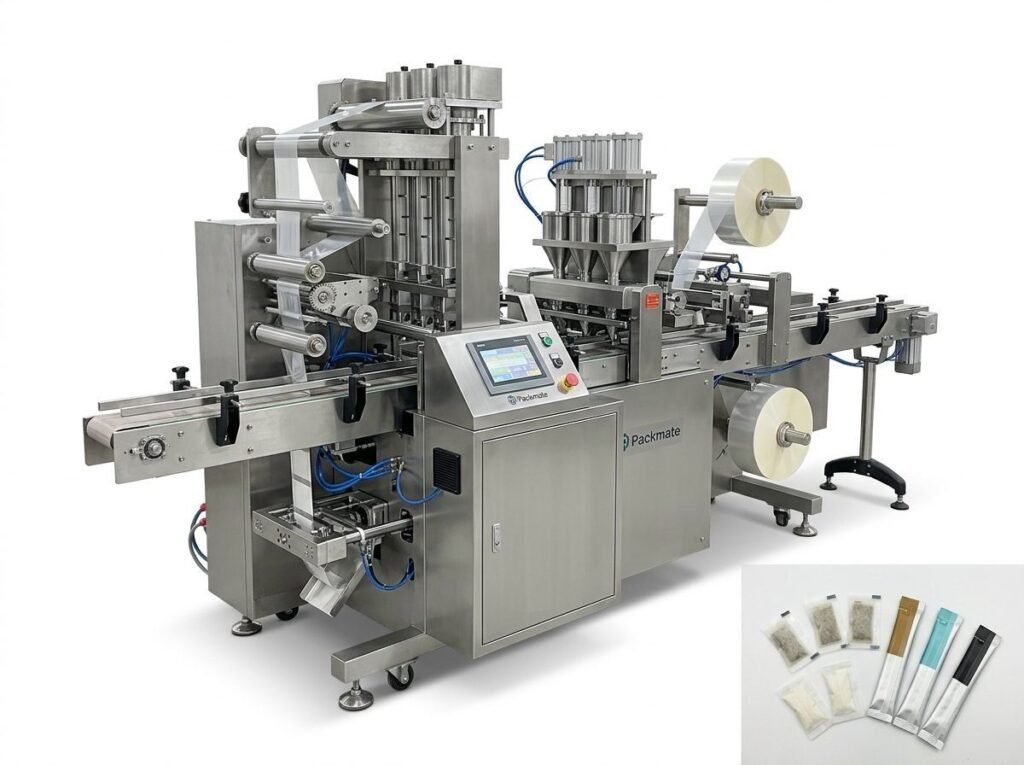
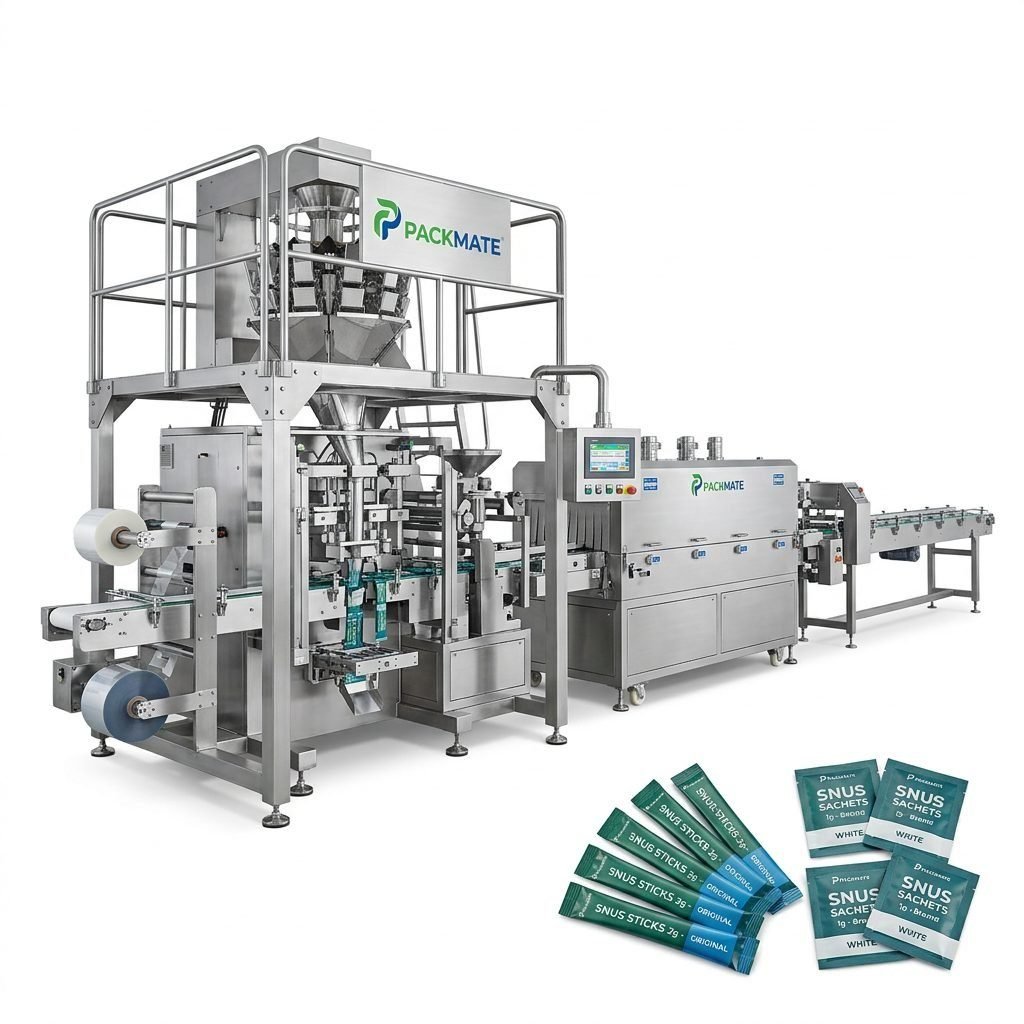
⚙️ Stick pack & Sachet machines — flexible for single-portion pouches, ideal if you need different pouch sizes. See models and specs at the Sachet & Stick Pack Machines page.
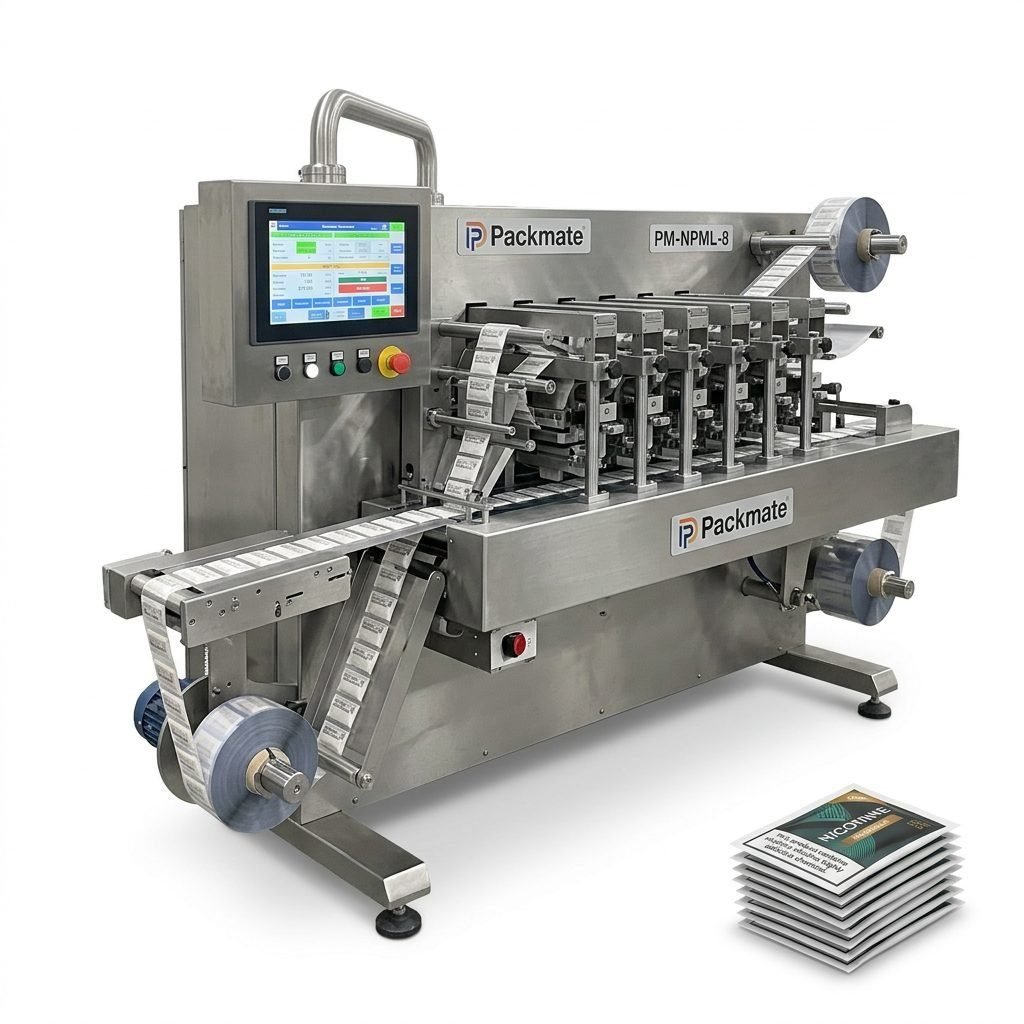
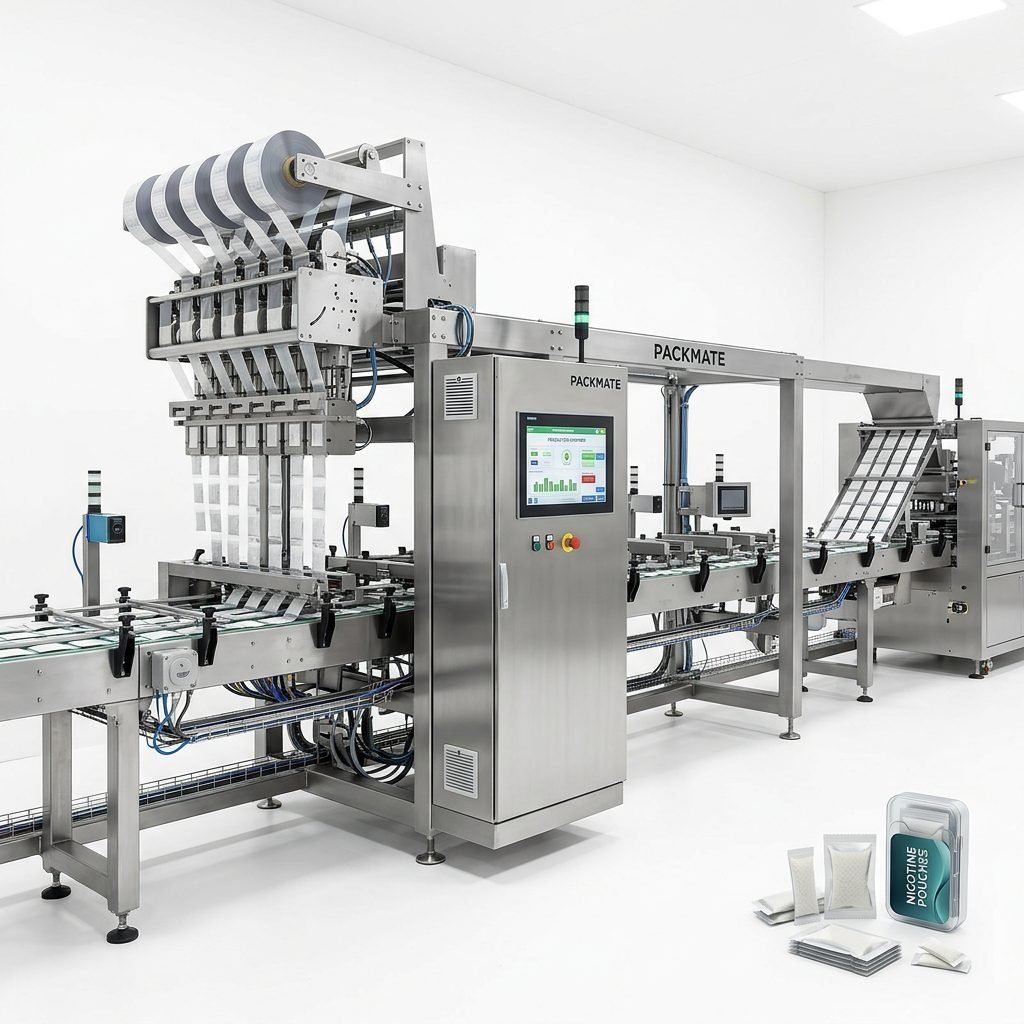
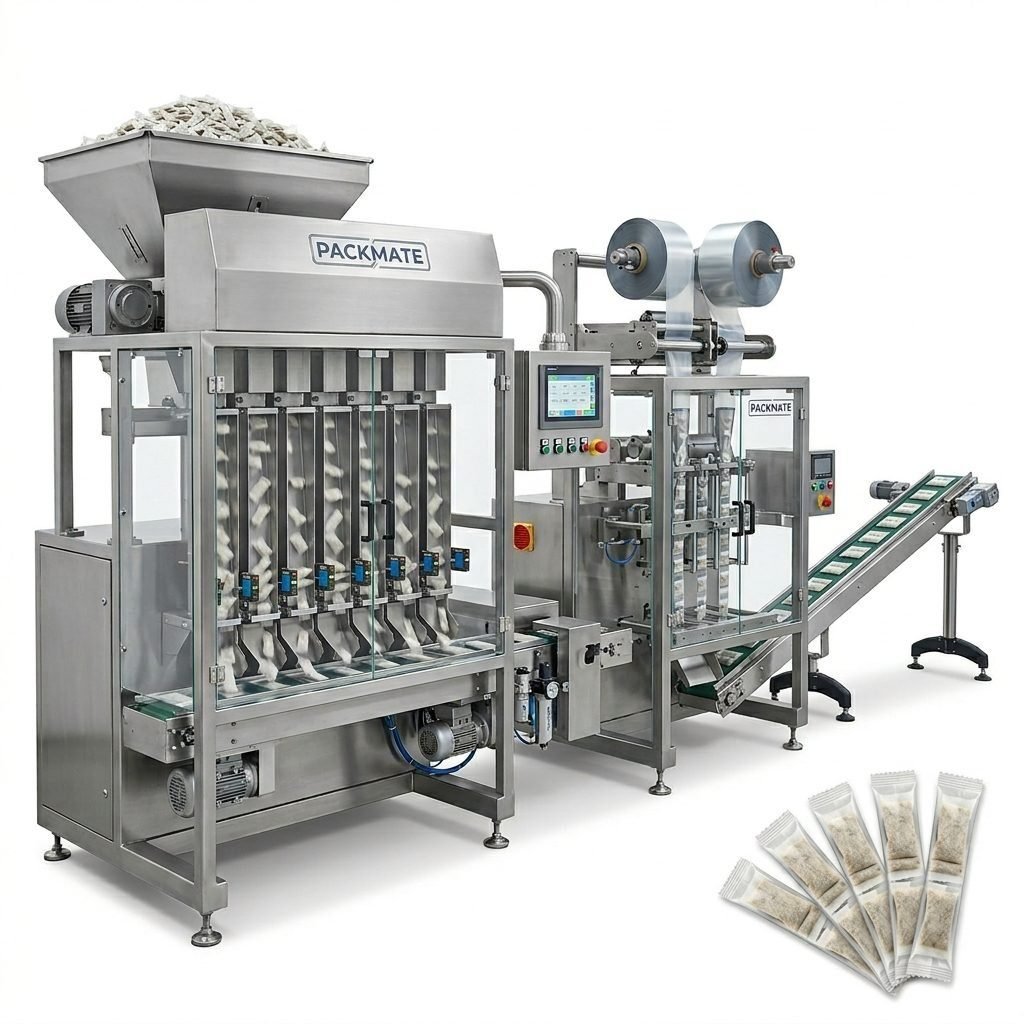
⚙️ Multi-lane snus pouch systems — designed for very high throughput of small-dose pouches, often used by established brands.
⚙️ Form-fill-seal (FFS) solutions — integrated systems for film-based pouch forming, filling, and sealing. Combine with automated feeders for powders or granules.
Precision Dosing and Weighing
Precise dosing is the heart of a cost-effective process. Overfilling increases material costs, while underfilling leads to non-compliant products. Solutions include volumetric feeders for stable blends, loss-in-weight systems for continuous control, and high-speed multi-head weighers for granular blends. Integrating closed-loop feedback between the weigh system and the filling module ensures minimal giveaway and repeatable accuracy.
⚠️ Pay attention to material flow characteristics — moisture, particle size, and electrostatic behavior affect dosing. Test samples on prototype systems before committing to high-speed lines.
Pouch Forming, Film Handling and Sealing
Film tension, web alignment, and temperature-controlled sealing are critical for durable pouches. Modern machines use servo-driven film transport, automatic web tracking, and PID-controlled sealing stations to maintain consistent seals at high speeds. For nicotine pouches, seal integrity is vital to preserve product moisture and prevent leakage.
Integrated Quality Control
Automated inspection systems reduce rejects and help meet regulatory needs. Typical QC modules include:
🧾 Vision inspection for print and code legibility
🔍 Weight checks and reject stations
🧲 Metal detection and X-ray (where required) for foreign object control
Designing for Cost-Effectiveness
A cost-effective line balances capital expense (CAPEX) with operating expense (OPEX). Key strategies:
– Select modular machines that can be upgraded instead of replaced.
– Use energy-efficient drives and servo motors to reduce power draw.
– Optimize material yield with accurate dosing and consistent web handling.
– Reduce downtime through predictive maintenance and quick-change parts.
📈 Focus on OEE (Overall Equipment Effectiveness) improvements — small gains in uptime and quality compound into significant cost savings over time.
Customization & Turnkey Solutions
Many producers need specialized formats or high flexibility. Partnering with manufacturers who offer turnkey solutions simplifies project delivery. These suppliers can provide complete lines: feeders, dosing, pouch forming machines, conveyors, and end-of-line packing. Packmate Snus Machine provides tailored lines and a wide model range; see more on their Snus & Nicotine Packaging Machines page.
Factory Capabilities & Certifications
Choose manufacturers with strong engineering, machining capability, and quality systems. Facilities with advanced CNC centers, precision assembly lines, and ISO/CE certifications provide better consistency and long-term support. Packmate’s 20,000㎡ factory and 30+ years of experience reflect these strengths — explore their company background on the About Packmate page.
Installation, Validation and After-Sales
Proper installation and validation ensure the line meets production and regulatory requirements. Reputable suppliers provide site supervision, commissioning, staff training, and spare parts kits. Consider ongoing service contracts to maintain uptime and access expert troubleshooting. For real-world examples of successful deployments, review the supplier’s Case studies.
Scaling Production: From Pilot to Full Line
Start with pilot runs to validate formulations, pouch film compatibility, and dosing stability. When scaling, plan for:
– Spare capacity in upstream feeders and supply systems
– Space and utilities for additional lanes or higher-speed machines
– Inventory of critical spare parts and consumables
– Traceability systems for batch and lot tracking
Regional Considerations
Markets vary in consumer preferences and regulations. For example, Nordic markets historically favor moist snus formats, while newer nicotine pouch markets in Europe and North America focus on dry pouches in varied flavors. Local labeling, tax rules, and product restrictions also change production planning. Ensure your packaging lines can adapt to multiple label formats and coding requirements for different regions.
Return on Investment: What to Expect
ROI depends on throughput, material savings, labor reduction, and product value. High-speed multi-lane machines deliver rapid payback if demand supports continuous operation. Run a three-year projection comparing manual or semi-automated alternatives to a fully automated line — include reduced rejects and improved yield in your calculations.
🔎 Tip: Factor in regulatory costs for compliance (labeling, documentation, product testing) — automation that simplifies traceability can reduce those overheads.
Choosing a Supplier
When selecting a supplier, evaluate:
– Manufacturing experience and industry focus
– Engineering capability and customization options
– Factory equipment and QC systems
– Spare parts availability and service network
– References and case histories — review projects on the supplier’s Our Exhibition and Service pages.
Maintenance & Lifespan
Regular preventive maintenance extends equipment life. Maintain records of critical adjustments, use OEM spare parts for high-wear items, and train technicians online-specific procedures. Well-maintained machines can deliver >10 years of service with proper upgrades.
Final Practical Checklist Before Purchase
– Run pilot tests with your exact formulation and film.
– Confirm line speed targets and realistic OEE assumptions.
– Verify spare parts and local service availability.
– Ensure compliance with regional regulations and labeling.
– Validate utilities, space, and operator training requirements.
For detailed product portfolios covering snus, nicotine pouch, and modular packaging equipment, explore the supplier’s full catalog of Bag & Pouch Packaging Machines, Weighing & Packaging Systems, and Auxiliary Packaging Equipment.
Next Steps
If you are planning a new line or upgrade, contact the supplier to schedule technical consultations, factory visits, or machine demonstrations. Tailored proposals typically include layout drawings, utility requirements, and a phased timeline for delivery and commissioning. Use the Contact Us page to request a quote or arrange a meeting.
Common Questions
Q1: How fast can a multi-lane nicotine pouch line produce portions?
A1: Depending on lanes and portion size, mature multi-lane systems can reach hundreds of thousands of pouches per hour across all lanes. Actual speed depends on product characteristics and packing format.
Q2: What is the accuracy of dosing systems for nicotine pouches?
A2: High-performance dosing systems typically achieve accuracy within a few percent of target weight; closed-loop weigh systems and well-controlled feeders minimize variation and giveaway.
Q3: How should I plan for regulatory compliance in different markets?
A3: Plan label formats, coding, and batch traceability features early. Work with suppliers familiar with export markets and local regulations; include quality and documentation support in the purchase scope.
Q4: Can machines be retrofitted to new pouch sizes or formulations?
A4: Many machines are modular and support changeover kits. Discuss expected product range and changeover time with your supplier to ensure flexibility.
Q5: What service and spare parts support should I expect after purchase?
A5: Look for suppliers with global support networks, documented spare parts lists, recommended spare kits, remote diagnostics, and training programs to reduce downtime.