Choosing the right nicotine packaging machine in Finland requires more than comparing specs on paper. Manufacturers, line managers, and entrepreneurs must weigh regulatory compliance, production volume, product format, and local consumer habits to secure an efficient, compliant, and cost‑effective solution. This guide walks you through key factors, practical tips, and how to evaluate suppliers so you can make a confident purchase decision for your Finnish operation.
Why Finland’s Market and Culture Matter
Finland has a mature nicotine market with distinct consumer preferences and strict product and advertising rules. Scandinavian users often value minimalistic, high‑quality packaging and sustainable materials. At the same time, regulators in the EU and Finland focus on product safety, labeling, and traceability. When selecting a machine, prioritize systems that can handle recyclable pouches or reduced-material formats and that support accurate, multi-language labeling and batch traceability.
Local considerations to keep in mind
• Northern European consumers prefer discreet, compact packaging formats and consistent portioning.
• Environmental certifications and material efficiency can influence procurement and retailer acceptance.
• Seasonal demand variations (e.g., travel season, winter months) should be planned for in production scheduling.
🔎 Key takeaway: Choose machines that offer flexibility in pouch size and materials, precise weight control, and modules for labeling and serialization to comply with Finnish and EU rules.
Types of Nicotine Packaging Machines and Where They Fit
Packaging technologies for nicotine pouches and snus generally fall into several categories. Matching the right type to your product format and output goals is the first practical step.
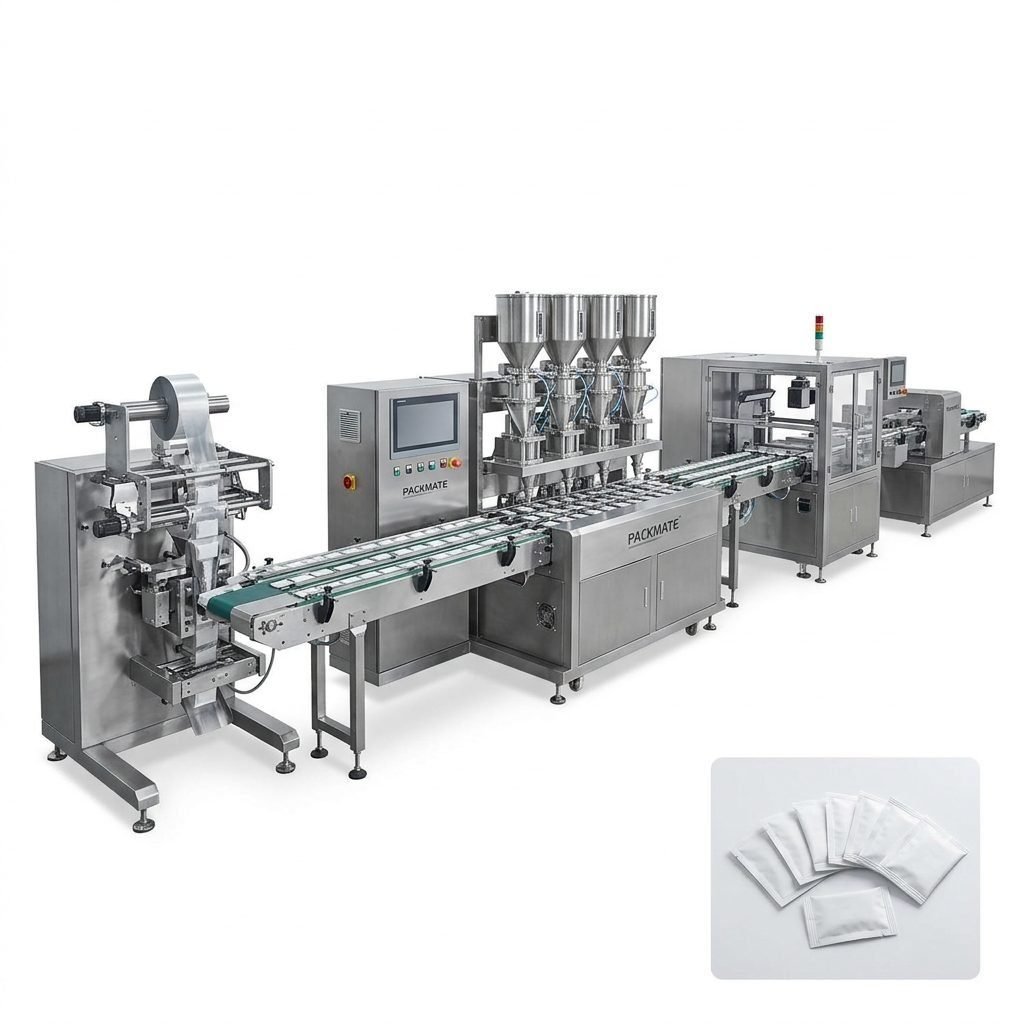
Sachet & Stick Pack Machines
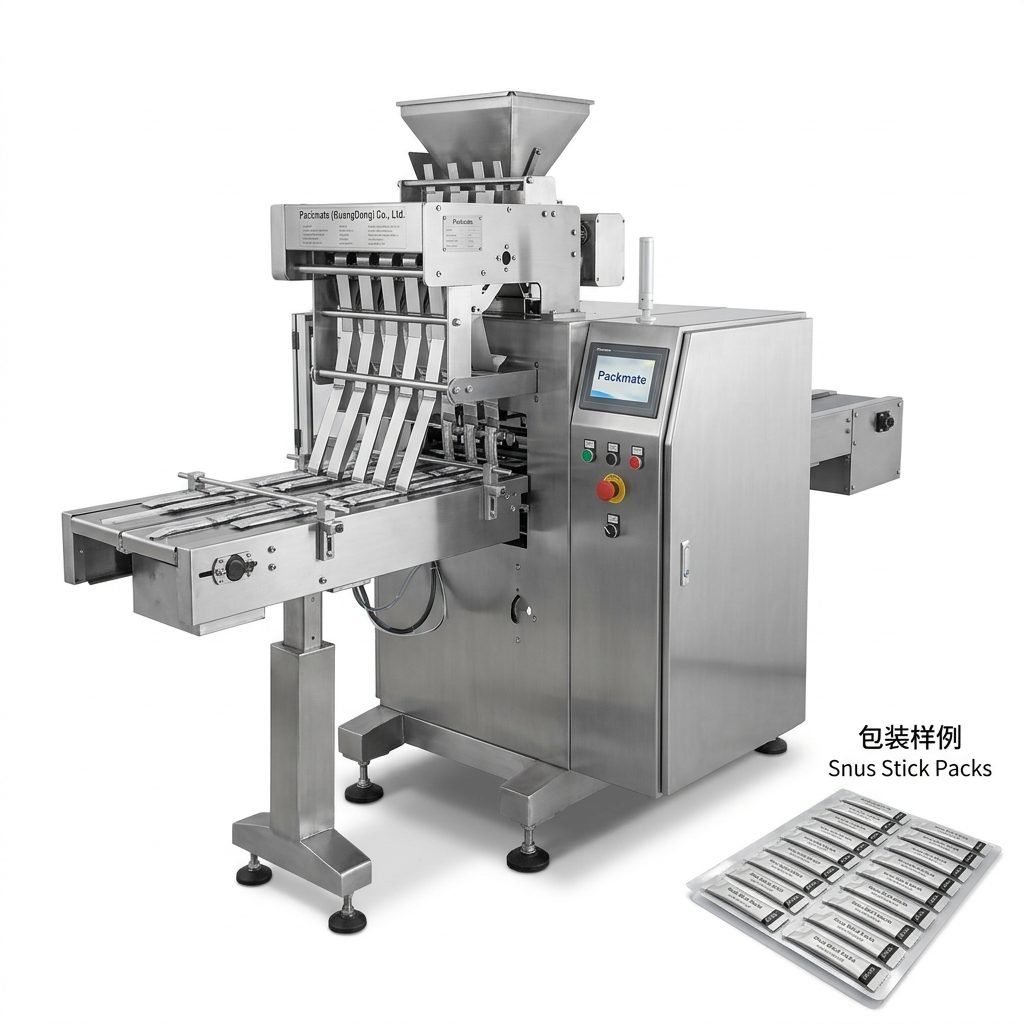
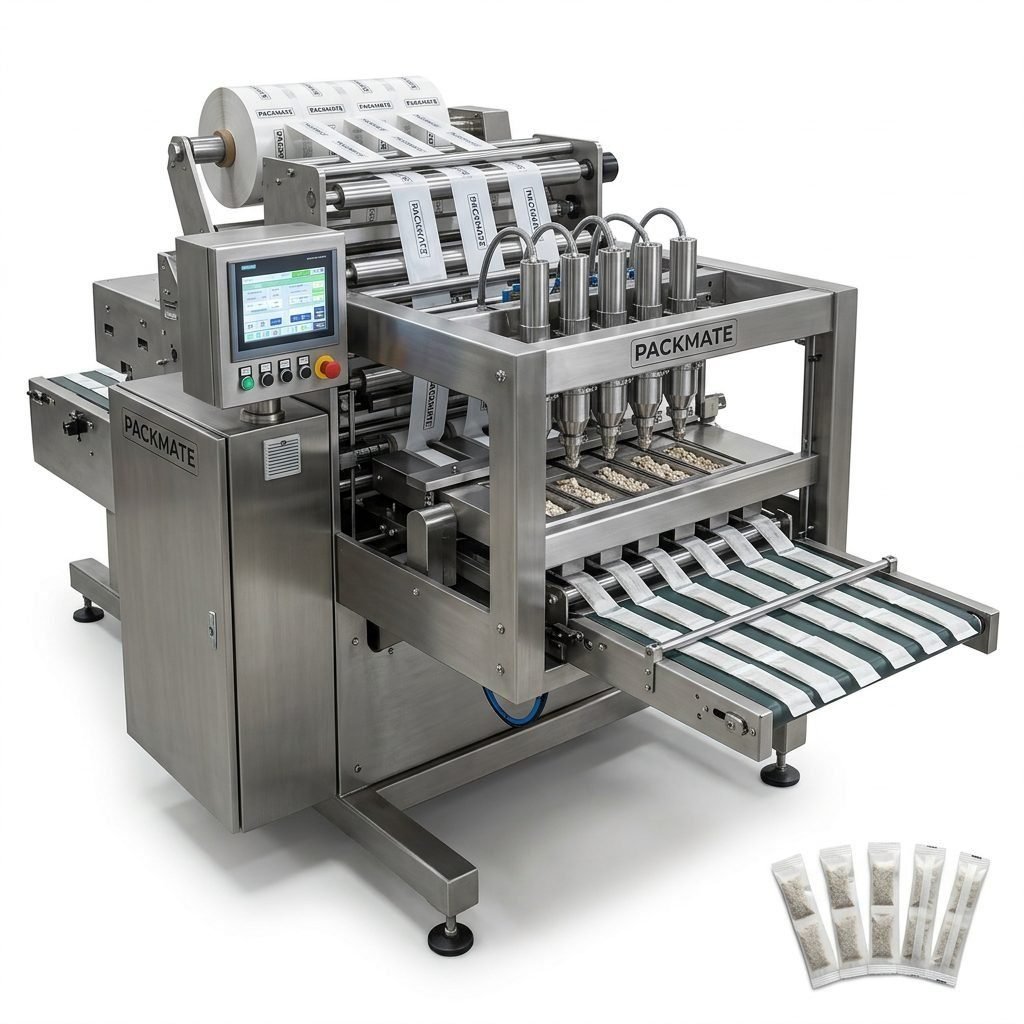
Sachet and stick pack machines are ideal for single-portion formats and are common for nicotine pouches that require compact, user-friendly dosing. These machines excel at high-speed single-dose packaging with tight weight control.
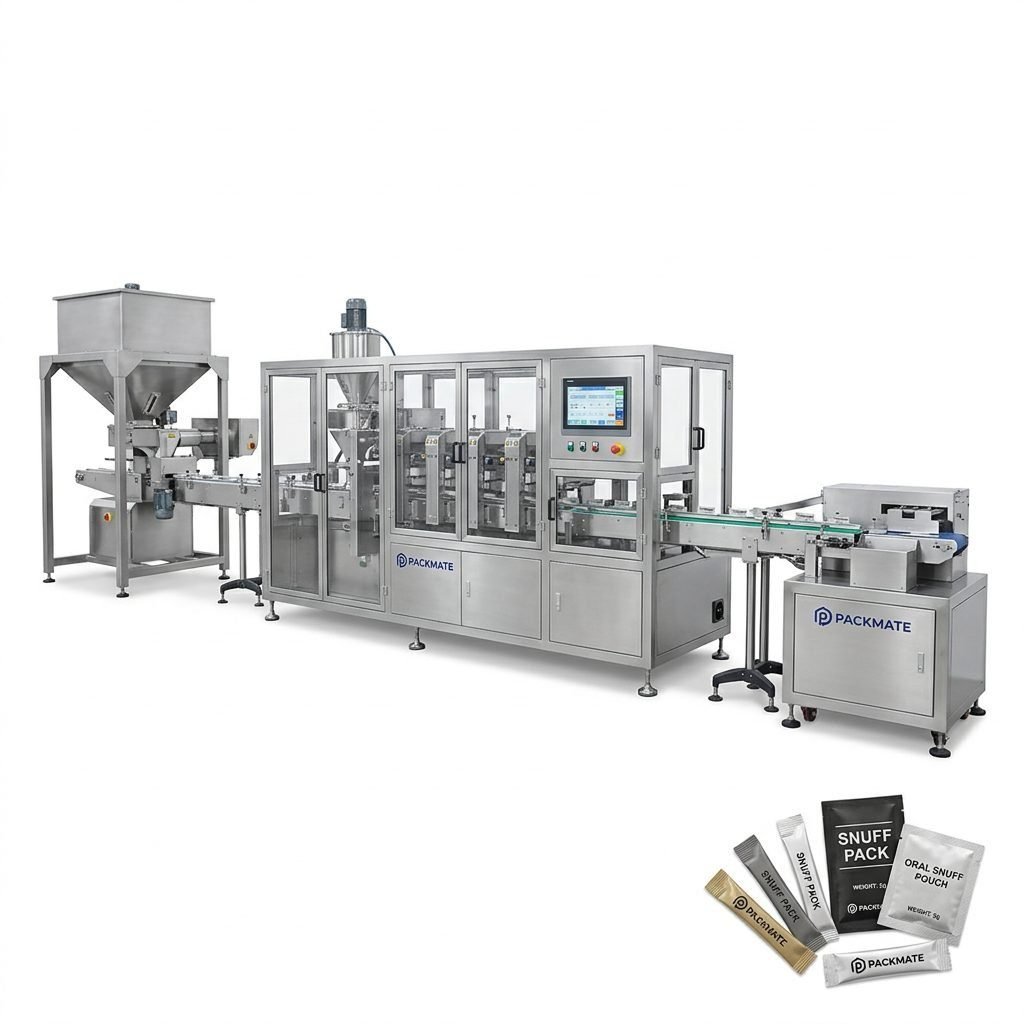
Snus & Nicotine Packaging Machines (Multi‑lane)
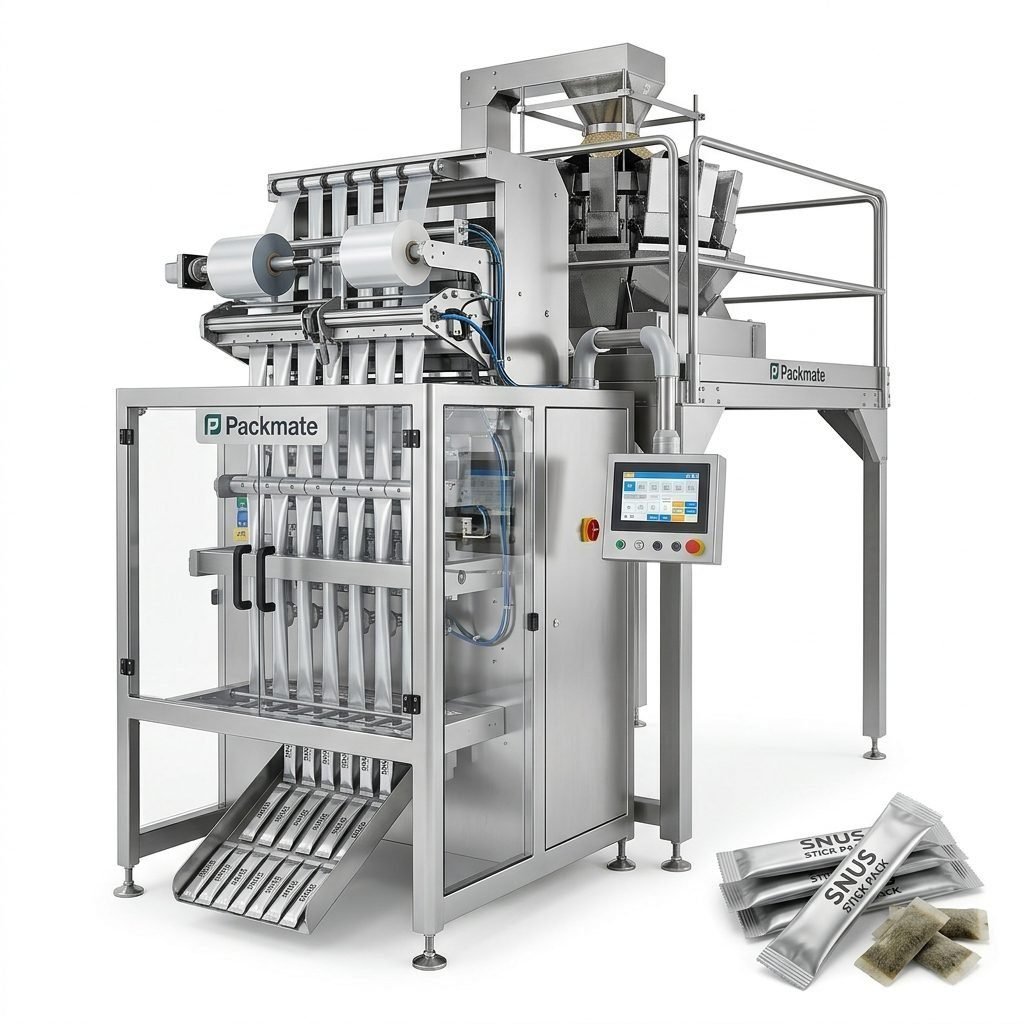
Multi-lane snus machines support small-dose pouches at high throughput and are often used by producers scaling up operations. Look for equipment that can be retooled easily between pouch sizes and materials.
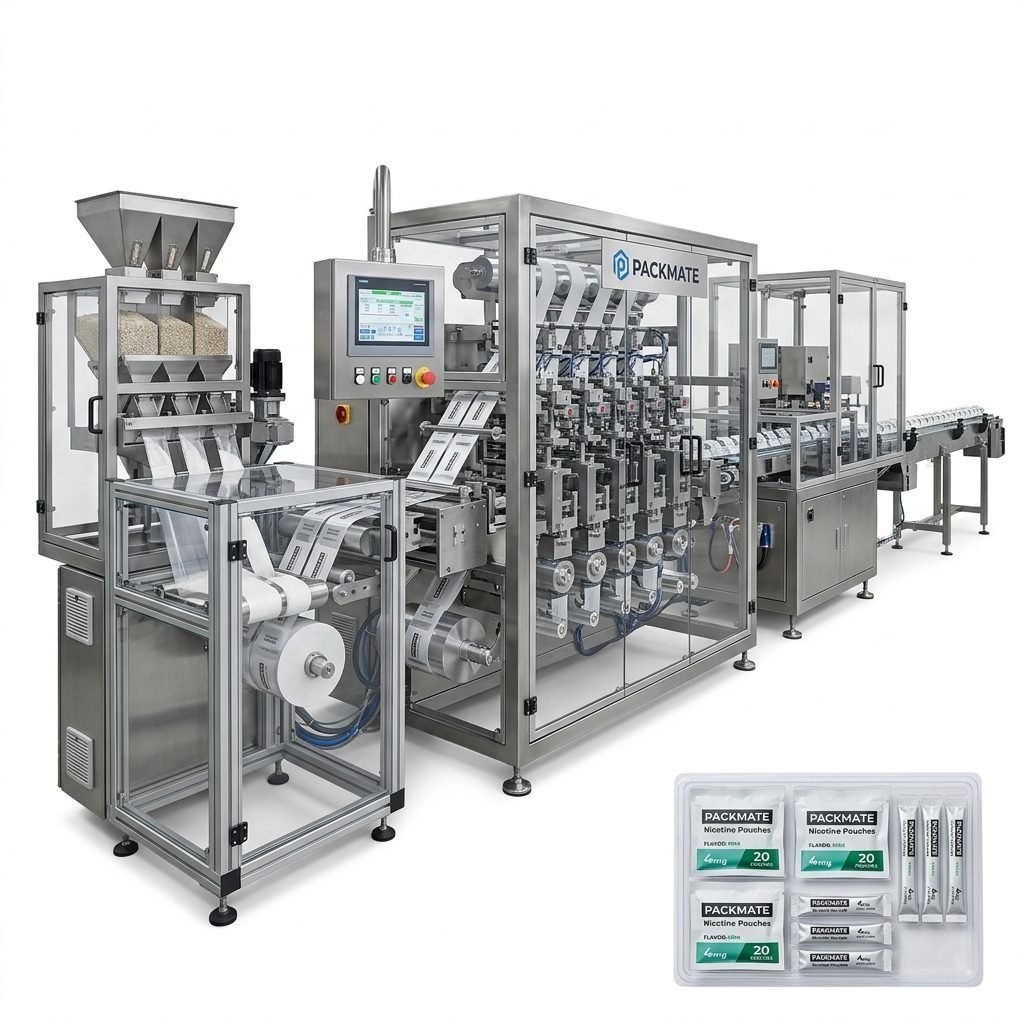
Bag & Pouch Packaging Machines
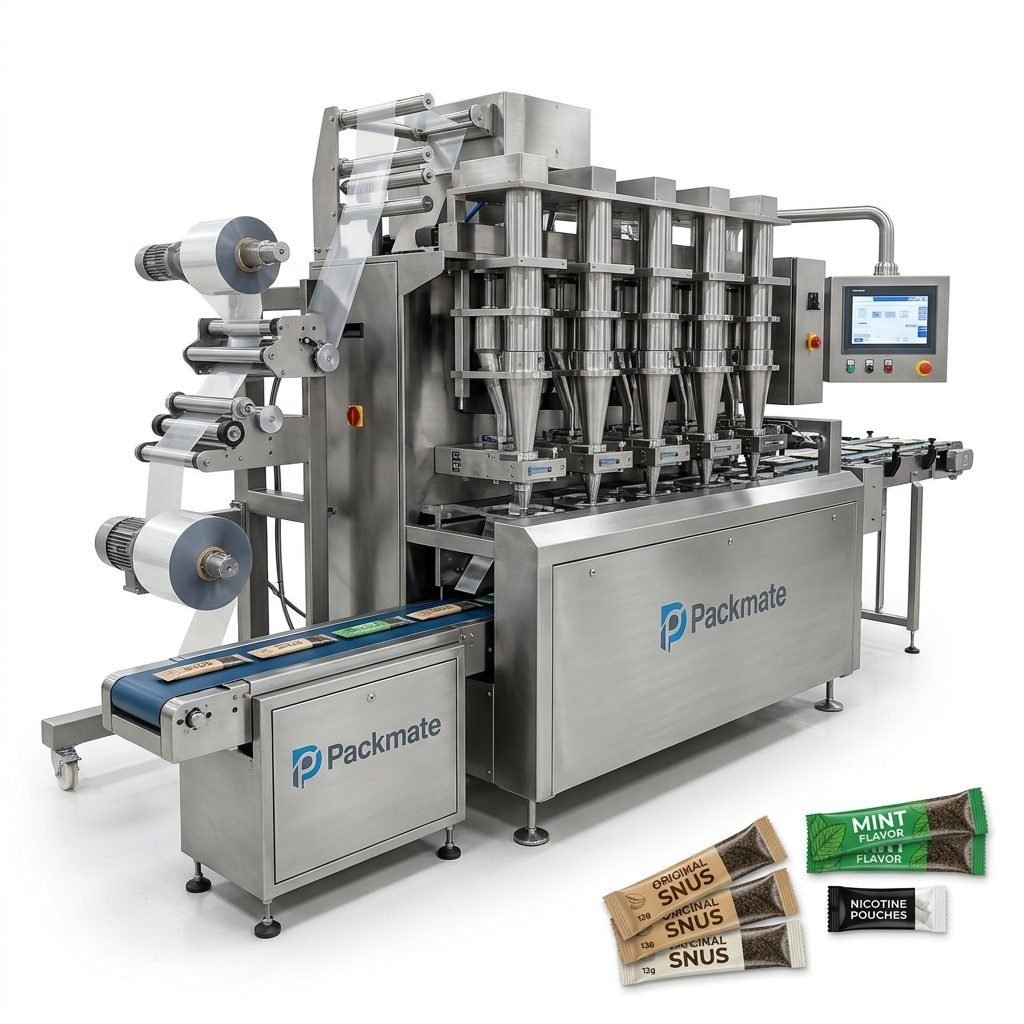
If your product is sold in multi‑pouch bags or display packs, pouch or bag packaging lines that include secondary packaging modules (cartoners, case packers) offer a complete solution for retail-ready products.
For reference to modular solutions and models you may want to consider reviewing product categories from established suppliers like Snus & Nicotine Packaging Machines, Sachet & Stick Pack Machines, and Bag & Pouch Packaging Machines.
Technical Factors to Evaluate
Evaluate machines on more than maximum speed. Consider precision, uptime, material compatibility, and modularity.
Throughput & Accuracy
• Throughput (pouches/min) should match your peak demand plus headroom for growth.
• Accuracy and weight control directly affect material costs and compliance; choose systems with integrated weighing or controlled filling systems.
Material Compatibility
Machines must support the film types you plan to use (laminated, recyclable mono‑film, biodegradable options). Verify sealing temperatures, film tension control, and compatibility with barrier films for shelf life.
Changeover & Flexibility
Quick changeover reduces downtime when switching sizes or pouch formats. Look for tool-less adjustments, recipe memory on HMI, and modular add-ons for labeling and serialization.
⚙️ Important: Prioritize machines with advanced control systems, servo drives, and diagnostics — they reduce waste and improve reproducibility across shifts.
Regulatory & Compliance Checklist for Finland
Compliance is non-negotiable. Make sure your packaging line supports:
• Accurate labeling in required languages and formats.
• Batch traceability (lot/batch printing and integration with ERP/WMS).
• Tamper-evident options and child-resistant packaging modules if required by product classification.
Integration, Automation & Line Layout
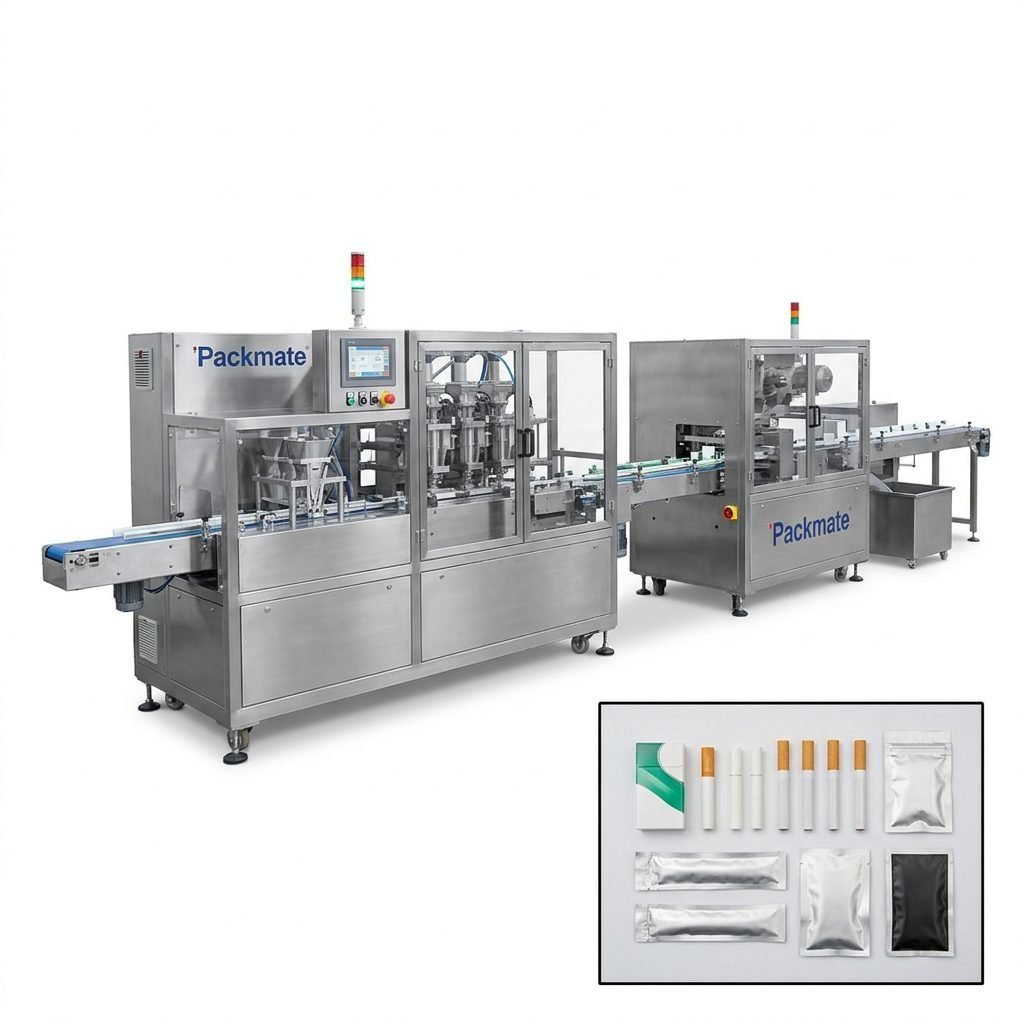
A packaging machine rarely works alone. Plan for upstream feeding, weighing systems, and downstream secondary packaging. Confirm the supplier offers coherent solutions or integration support.
If you need turnkey or semi-automated integration, consider vendors that provide complete lines such as weighing & packaging systems and auxiliary equipment. Explore offerings like Weighing & Packaging Systems and Auxiliary Packaging Equipment to ensure compatibility.
Supplier Selection: Questions to Ask
Choosing the right manufacturer is as important as the machine specs. Use the following checklist when evaluating vendors:
Production & Factory Strength
• Do they own a modern factory with CNC machining and precision assembly?
• Can they produce spare parts and custom components locally or with short lead times?
Experience & Track Record
• How many years of industry experience do they have? • Ask for case studies and references. Vendors with decades of development typically deliver more reliable solutions.
Certifications & Global Compliance
Ensure machines are CE/ISO certified and the supplier understands EU regulatory requirements. Check their certificates and ask about audit support during installation.
📌 Pro tip: Request a live demonstration or a video of the exact machine model in production to evaluate reliability and final product appearance.
Service, Spare Parts & After‑Sales Support
Rapid support and local parts availability are essential to minimize downtime. Confirm the supplier’s service model:
• Remote diagnostics and PLC/HMI remote access options.
• Training programs for operators and maintenance teams.
• Spare parts lead times and expendable parts kits for critical wear components.
Cost, ROI & Total Cost of Ownership
The cheapest quote rarely wins. Evaluate lifetime costs: energy consumption, spare parts, waste rate, uptime, and labor. Machines with higher accuracy and better automation often deliver a faster ROI via material savings and reduced rework.
How to calculate a realistic ROI
1) Estimate annual production volume.
2) Calculate material savings from improved accuracy (ppm reduction).
3) Factor in reduced downtime from predictive maintenance features.
4) Compare net cashflow vs. machine cost over expected life (typically 7–10 years).
Installation, Validation & Training in Finland
Installation in Finland should consider local electrical standards, safety inspections, and staff training. Plan a timeline that includes FAT (Factory Acceptance Test), SAT (Site Acceptance Test), and validation runs. A thorough handover with SOPs and spare parts lists will help your team achieve stable output quickly.
Why Consider Packmate (Example Supplier Profile)
Packmate Snus Machine has decades of experience developing snus and nicotine pouch packaging lines, with a 20,000㎡ facility and CNC machining capability. Their portfolio includes multi-lane systems, sachet & stick pack machines, weighing systems, and full packaging lines. For more detailed company information and certifications refer to their About Packmate and Certificate pages.
✅ Short checklist before placing an order: validate material compatibility, request cycle‑time tests, confirm CE/ISO certification, ensure spare parts kit, and agree on service SLA.
Common Installation Pitfalls and How to Avoid Them
• Underestimating layout space and maintenance access — plan for service aisles.
• Ignoring waste handling — integrate waste conveyors and collection points.
• Not validating line speed with your exact film and filler — request on-line testing with your materials before purchase.
Final Decision Matrix
Score candidate machines across these dimensions: regulatory readiness, throughput, accuracy, flexibility, energy use, total cost of ownership, supplier reliability, and service network. Weight criteria according to your priorities (e.g., compliance and accuracy might score higher for Finnish operations).
Next Steps
• Shortlist 2–3 suppliers and request FAT video or an on-site demonstration.
• Negotiate clear acceptance criteria and warranty terms.
• Plan training, spare parts stock, and a phased startup ramp to reduce risk.
If you want to explore turnkey options or supplier cases, you can view Filling & Packaging Lines and real Case studies to help guide selection.
Common Questions (FAQs)
Q1: What machine speed do I really need for the Finnish market?
A1: Start with peak production estimates and allow 20–30% headroom. Consider seasonal peaks and future expansion.
Q2: How important is film compatibility and recyclability?
A2: Very important — Finnish retailers and consumers value sustainability. Validate sealing, barrier properties, and material suppliers before committing.
Q3: Can I get support and spare parts in Finland?
A3: Confirm the supplier’s European service network or regional partners. Request spare parts lead times and consider stocking critical wear items locally.
Q4: Do I need special labeling or serialization features for compliance?
A4: In many cases yes — ensure the machine supports variable data printing, batch/lot codes, and connects to traceability systems.
Q5: How do I arrange a demonstration or request a quote?
A5: Contact the supplier’s sales team with product specs and target throughput. For suppliers like Packmate you can use their Contact Us page to request demos, technical documents, and FAT scheduling.