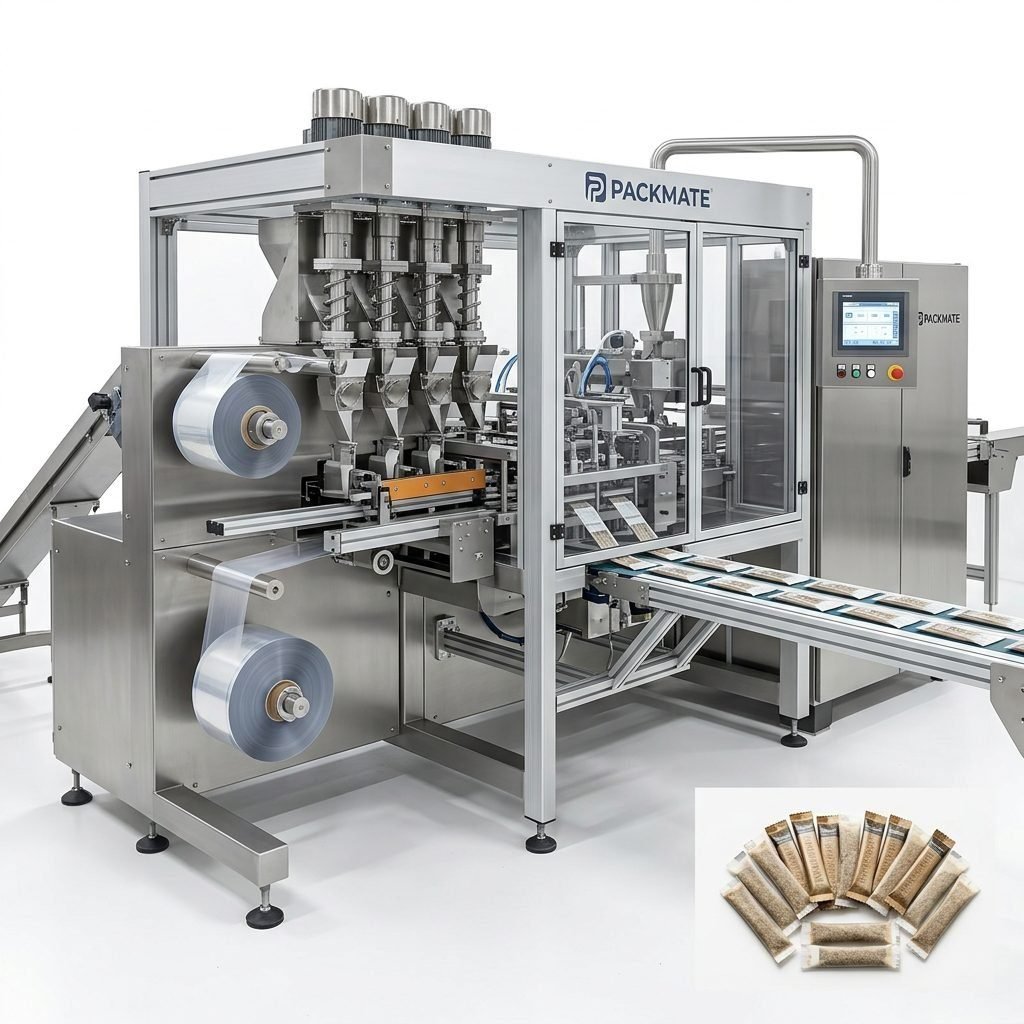
Choosing the right snus packaging machinery in Ecuador requires more than comparing horsepower or price tags. You need to consider local consumer preferences, climate, regulatory obligations, and the long-term support you will receive from your supplier. This practical buyer’s guide walks you through the critical decisions—technical, commercial, and operational—so you can select a machine that delivers consistent quality, regulatory compliance, and reliable throughput for your Ecuador market.
⚖️ Understand Ecuador’s Market, Culture & Regulations
Ecuadorian consumers often prefer clear, well-labeled packaging with Spanish language instructions and ingredient lists. Local labeling requirements and public health rules may affect how nicotine pouches and snus are marketed and sold. Before finalizing equipment, confirm whether your product falls under nicotine/tobacco regulations in Ecuador and ensure your packaging lines can print variable data in Spanish (batch codes, expiration, health warnings).
Quick tip: work with legal counsel or a local distributor to verify labeling and import requirements for nicotine products in Ecuador to avoid customs or retail delays.
📦 Packaging Formats & Machine Types
Different business models need different equipment. In Ecuador, small-batch premium pouches and high-volume retail SKUs both exist—so match format to market demand:
Sachet & Stick Pack Machines
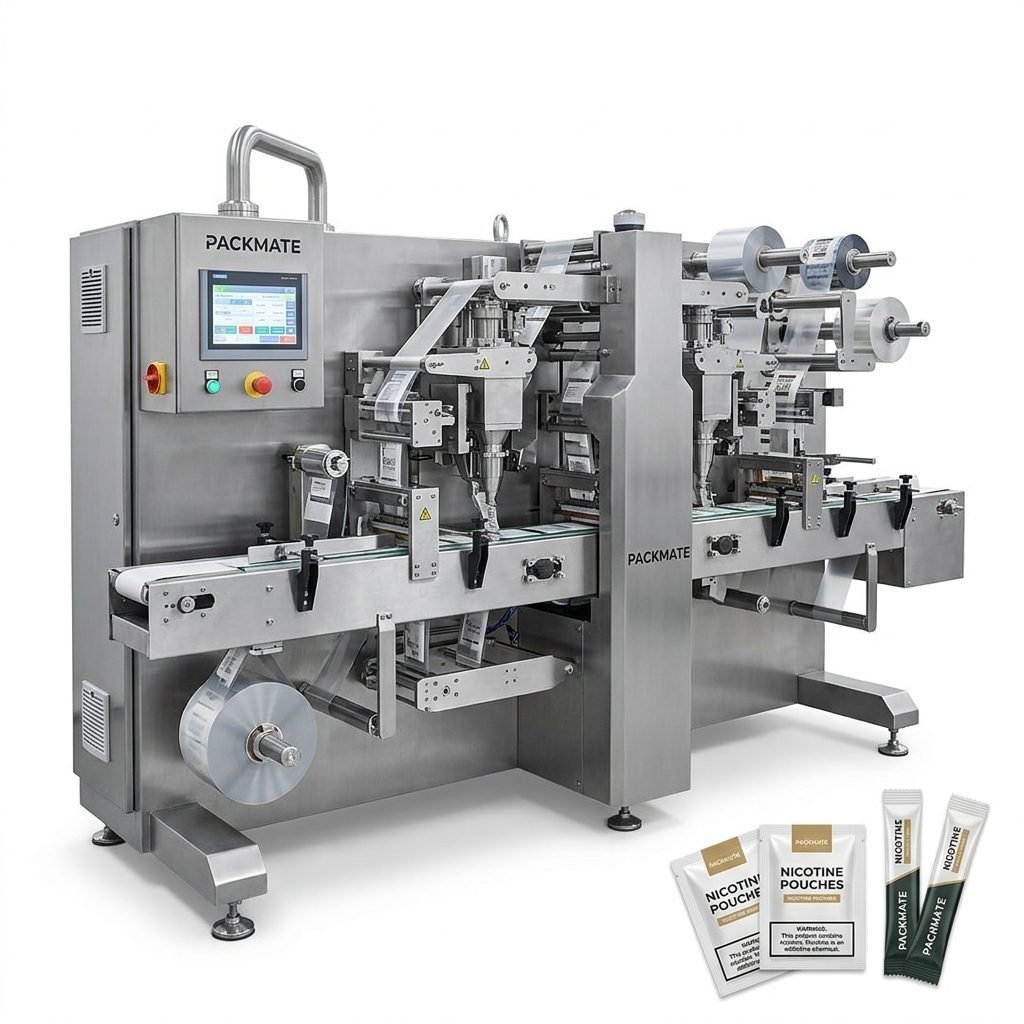
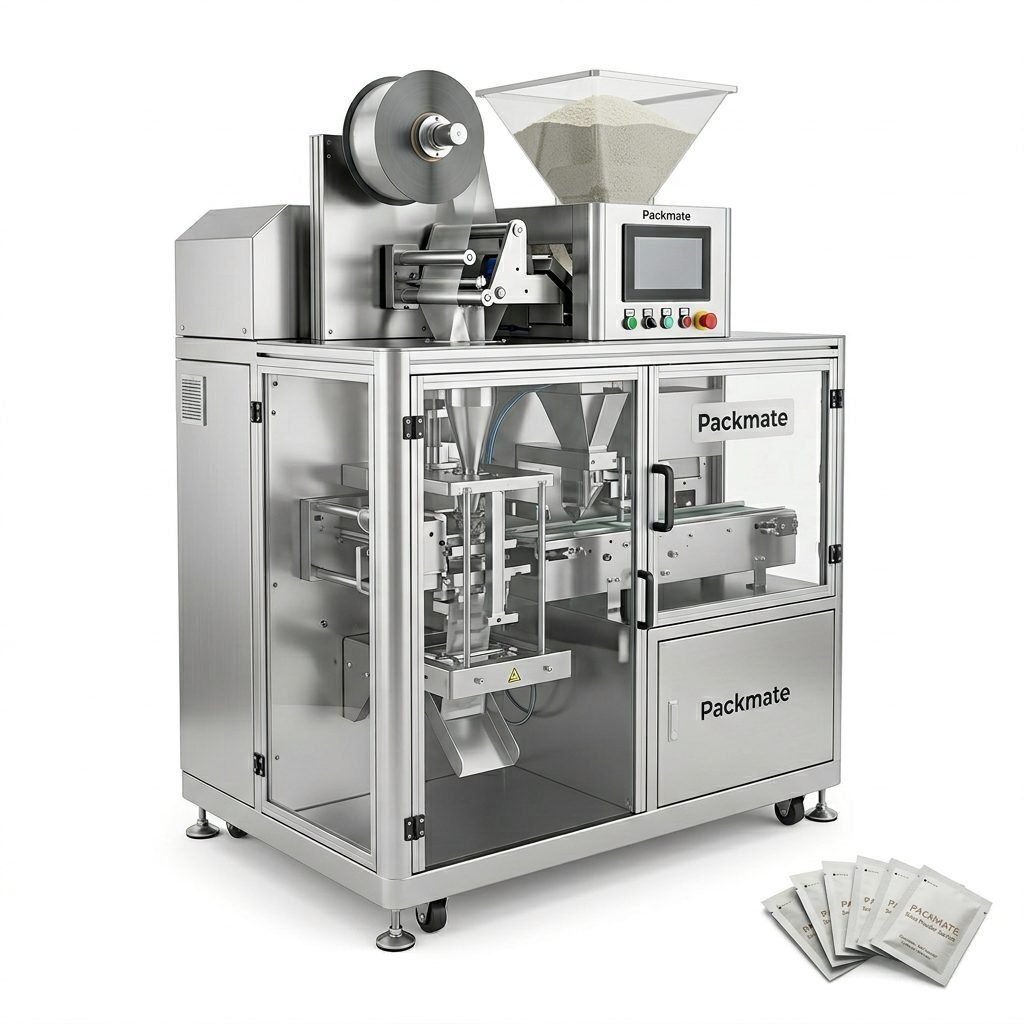
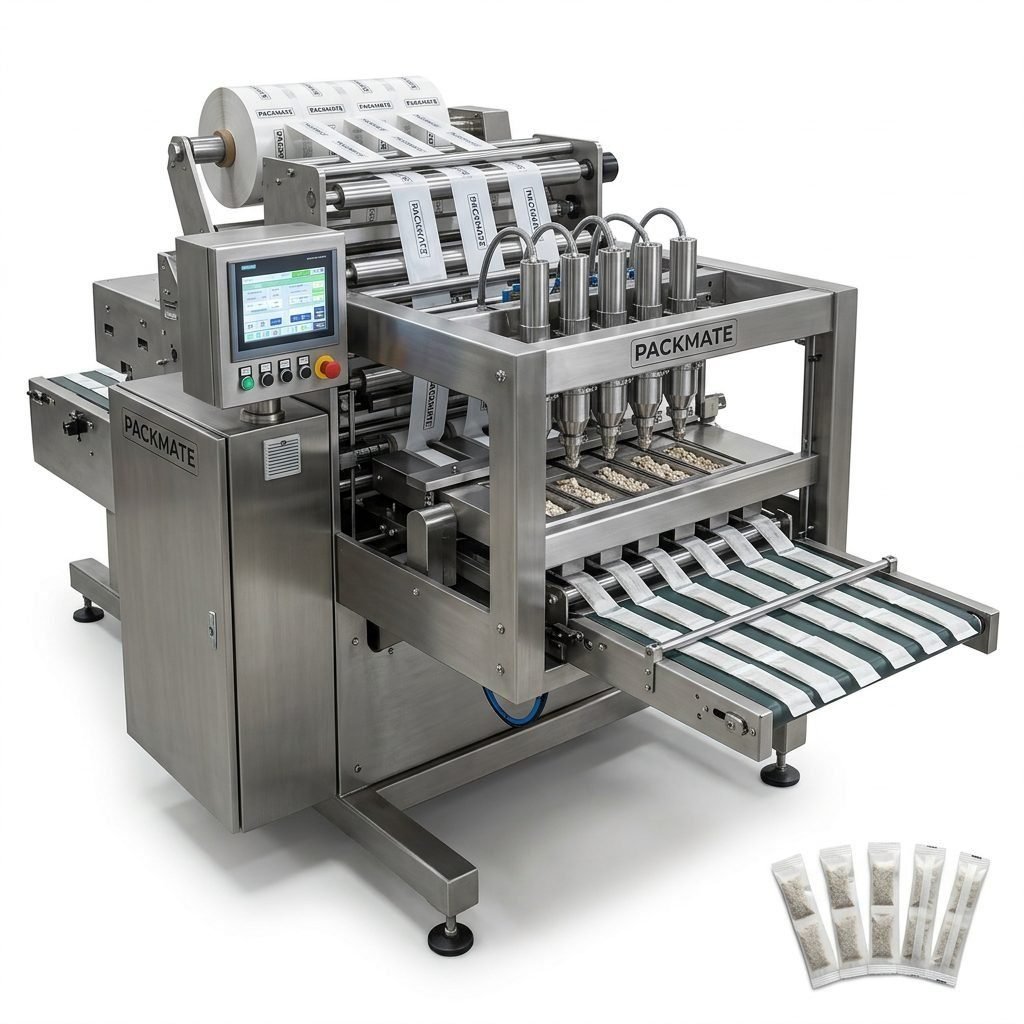
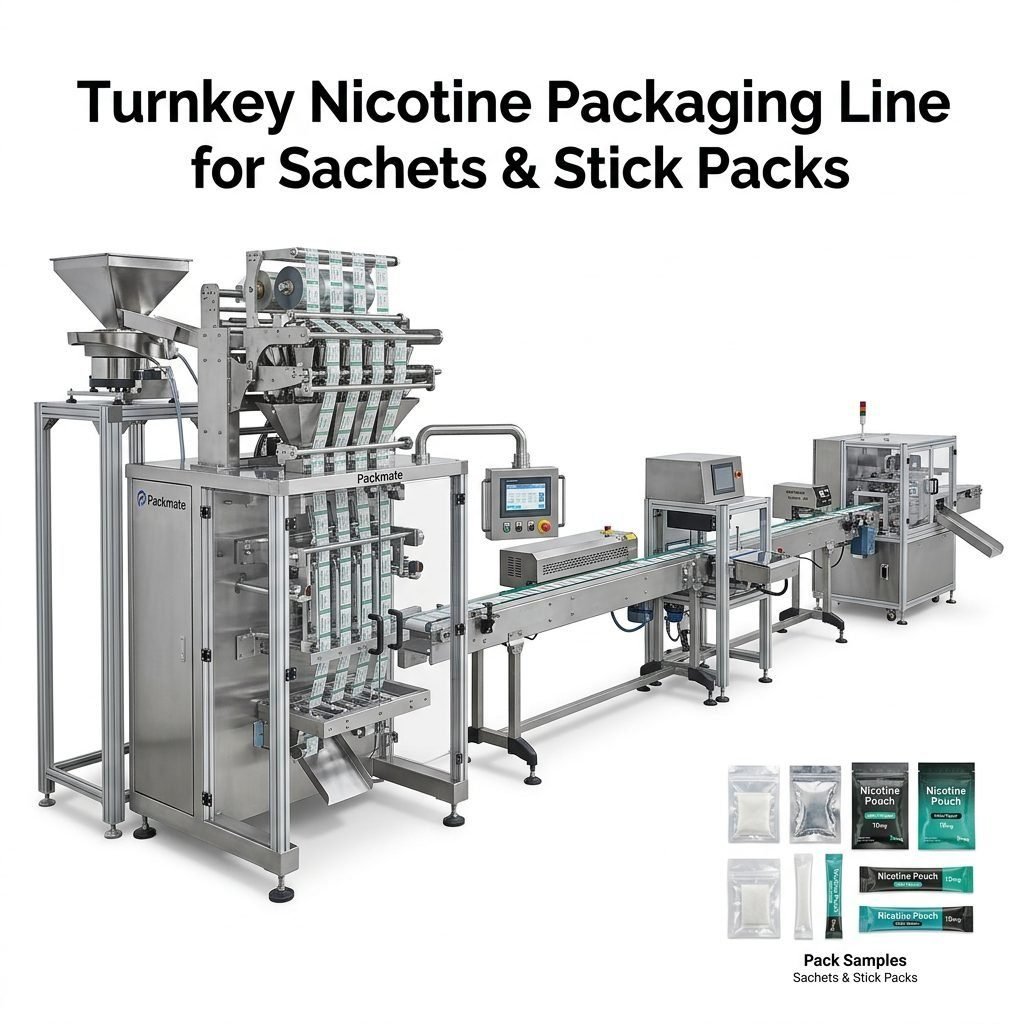
Best for single-serve portion formats and stick-like pouches. These machines are cost-effective for lower speeds and flexible trials. See product options: Sachet & Stick Pack Machines.
Multi-lane Snus / Nicotine Pouch Systems
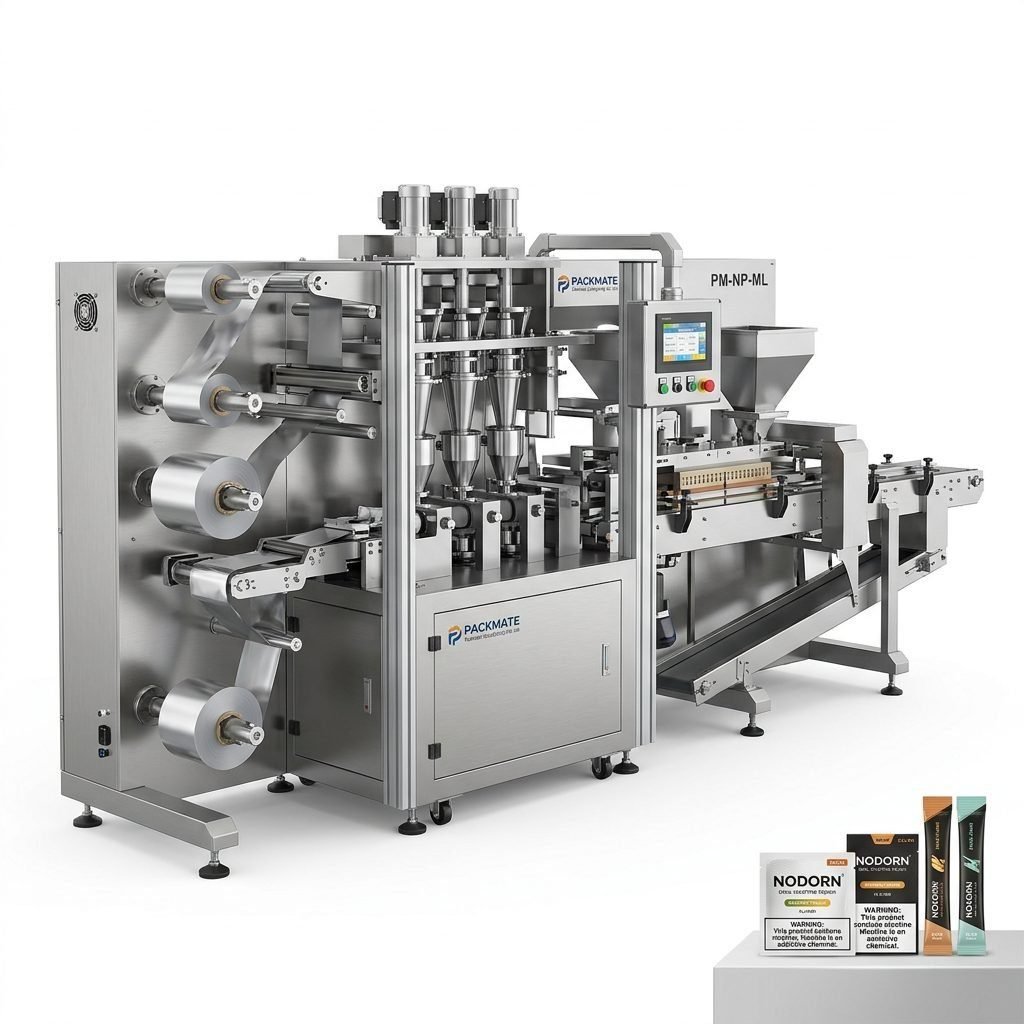
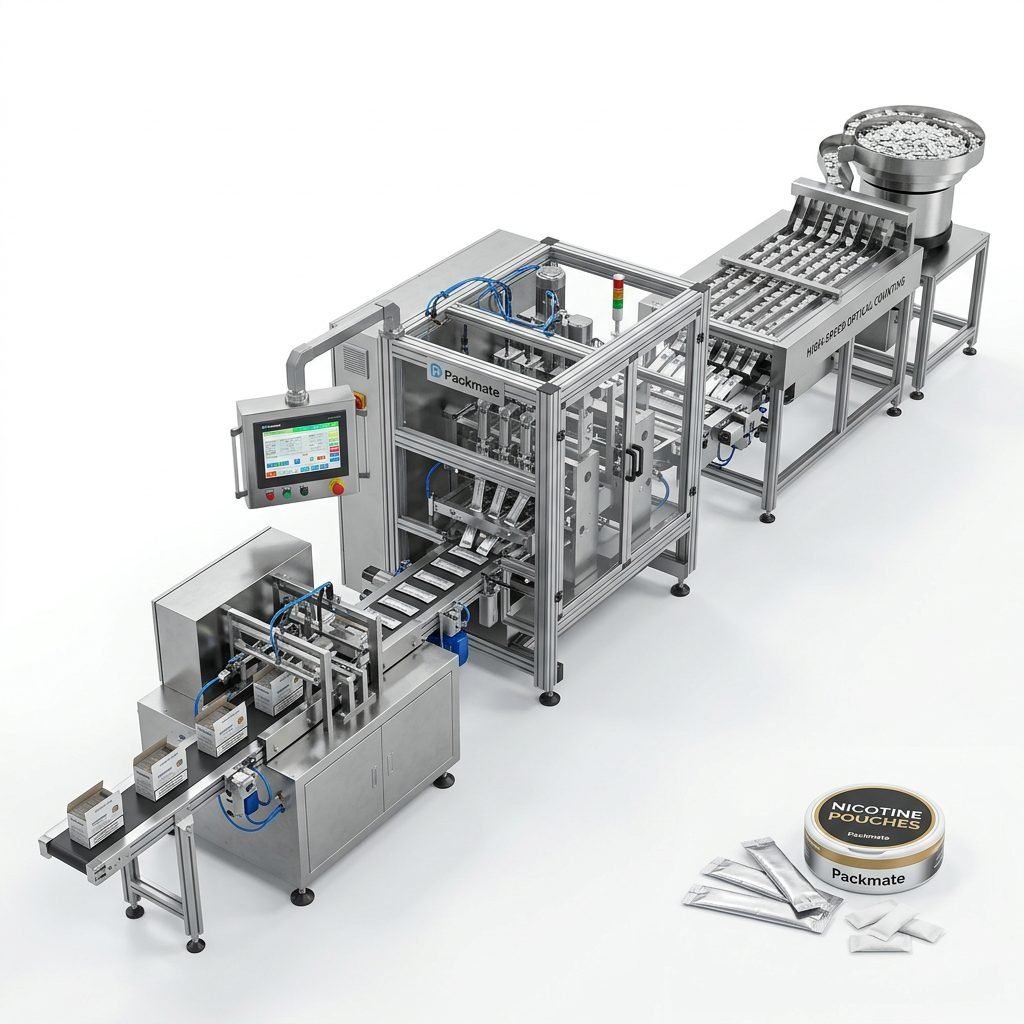
For high-output brands supplying mass retailers in Quito or Guayaquil, multi-lane systems provide high throughput with consistent dosing. Look for proven systems with multi-lane synchronization and gentle product handling to maintain pouch integrity. Explore: Snus & Nicotine Packaging Machines.
⚙️ Key Technical Criteria When Evaluating Machines
When you compare machines, check these technical specifications closely—each affects product quality, yield, and compliance:
- Throughput (pieces/min and lanes) — ensure the machine meets peak seasonal demand.
- Filling accuracy and dosing technology — essential for nicotine dosage control.
- Material compatibility — pouch films, foil-laminates, and eco-films common in Ecuadorian retail.
- Printing & coding capability — on-demand batch, lot number, and Spanish warnings.
- Changeover time — fast tool-less changeovers reduce downtime for multiple SKUs.
Must-have: servo drives, easy-to-access control panels, and modular design that allow future upgrades—these protect your investment in Ecuador’s variable market.
🌡 Environment & Material Considerations (Ecuador-specific)
Ecuador’s climate ranges from coastal humidity to Andean dryness. Machines installed near coastal ports or plant sites in Guayas province must handle higher humidity—moisture can affect powder stickiness and pouch seal quality. Ask about:
- Dehumidified product feeding systems.
- Sealing temperature stability under varying ambient temps.
- Protection of sensitive electronics against corrosion in coastal plants.
🔍 Quality Standards, Certifications & Compliance
Prioritize manufacturers with international credentials. Machines certified to CE and ISO standards demonstrate safety and manufacturing consistency. Packmate’s production adheres to CE/ISO, which helps when sourcing equipment for regulated products. Learn more about the company: About Packmate.
💡 Operational Factors: OEE, Maintenance & Spare Parts
Operating expense and uptime matter more than the purchase price. Evaluate these items before you buy:
- Mean Time Between Failures (MTBF) and ease of replacing wear parts.
- Availability of local support or regional technicians—spare parts shipping from overseas increases downtime.
- Training offerings: on-site commissioning and operator training in Spanish helps faster ramp-up in Ecuador.
- Remote diagnostics and IoT options to monitor performance from your central office.
Important: Request spare parts lead times and a local service plan—especially for high-speed multi-lane lines.
💰 Cost, ROI & Financing Options
Budgeting the machine cost is just the start. Factor in installation, tooling, validation, spare parts inventory, and training. Estimate ROI by calculating:
- Net throughput × yield improvement vs manual operations.
- Reduced labor costs and product waste.
- Speed to market with new SKUs (how fast you can changeover).
🧭 Supplier Checklist: What to Ask Before You Buy
Vet suppliers carefully. Use this checklist during RFQs and factory visits:
- Can you see a live demo of the exact machine model? (preferably running snus or similar products)
- Are CE/ISO certificates, electrical schematics, and user manuals available in Spanish?
- What is the warranty coverage and response time for critical failures?
- Do they provide installation, commissioning, and operator training in Ecuador or nearby countries?
- Can the line integrate upstream/downstream (weighing, cartoning, case packing)? See related lines: Weighing & Packaging Systems and Filling & Packaging Lines.
🧪 Factory Acceptance & On-Site Testing
Insist on a Factory Acceptance Test (FAT) with your actual materials. FAT should validate dosing accuracy, sealing integrity, and printing readability in Spanish. After shipment, perform a Site Acceptance Test (SAT) to confirm performance in your production environment and to validate humidity control, power conditions, and ergonomics for local operators.
🔧 After-sales Support, Spare Parts & Training
Reliable after-sales is a decisive factor. Packmate emphasizes long-term support and global turnkey solutions—verify local distributor contacts, spare parts kits included at purchase, and remote troubleshooting options. For reference and client cases, review: Case and Service.
🚚 Logistics, Installation & Local Integration
Consider port handling, customs, and inland transport in Ecuador. Machines should arrive packaged for local offloading and moved to plant areas with proper crane or fork-lift support. Plan for electrical compatibility (voltage and phase) and compressed air quality—coastal plants often require air dryers to avoid condensate issues.
Local note: Spanish-language manuals and in-country training dramatically reduce startup time for Ecuadorian teams.
🔎 How to Evaluate a Final Quote
When quotes arrive, compare apples to apples. Confirm scope includes PLC and HMI specifications, servo vs. VFD drives, transport and installation, FAT/SAT, warranty, and spare parts. A transparent spare parts list and service contract will save costs over the machine life.
📞 Next Steps: Finding the Right Partner
If you’re sourcing a dependable supplier with a track record in snus and pouch packaging, consider contacting the manufacturer for a tailored solution and a live demo. Review catalogs, certifications, and exhibition presence to confirm reliability: Catalog, Our Exhibition, and Contact Us.
✅ Final checklist before purchase
– Confirm local compliance and Spanish labeling capability.
– Validate environmental controls for humidity and temperature.
– Ask for FAT with your materials and SAT at installation.
– Verify warranty terms, spare parts lead times, and training in Spanish.
– Ensure the supplier has experience with snus/nicotine pouch lines and multi-lane systems.
Frequently Asked Questions
Q1: Are nicotine pouch machines legal to import into Ecuador?
A1: Regulations can vary. Confirm current Ecuadorian regulatory status for nicotine-containing products and labeling requirements before importing. Work with local counsel or a distributor to ensure compliance.
Q2: How do I handle high humidity at a coastal plant in Ecuador?
A2: Specify dehumidified product feeding, sealed electrical enclosures, and air-dried compressed air to maintain sealing integrity and avoid corrosion.
Q3: What after-sales support should I expect from a manufacturer?
A3: Expect commissioning, operator training in Spanish, spare parts kits, remote diagnostics, and clear warranty terms. Confirm response time and regional support options.
Q4: Can machines be customized for different pouch sizes and designs?
A4: Yes. Choose modular machines with quick changeover tooling. Request examples of previous customizations and see product demos where possible.
Q5: Where can I see real-world examples and client references?
A5: Review manufacturer case studies and exhibition demonstrations. For example, Packmate shares cases and exhibition records to showcase real production lines: Case.