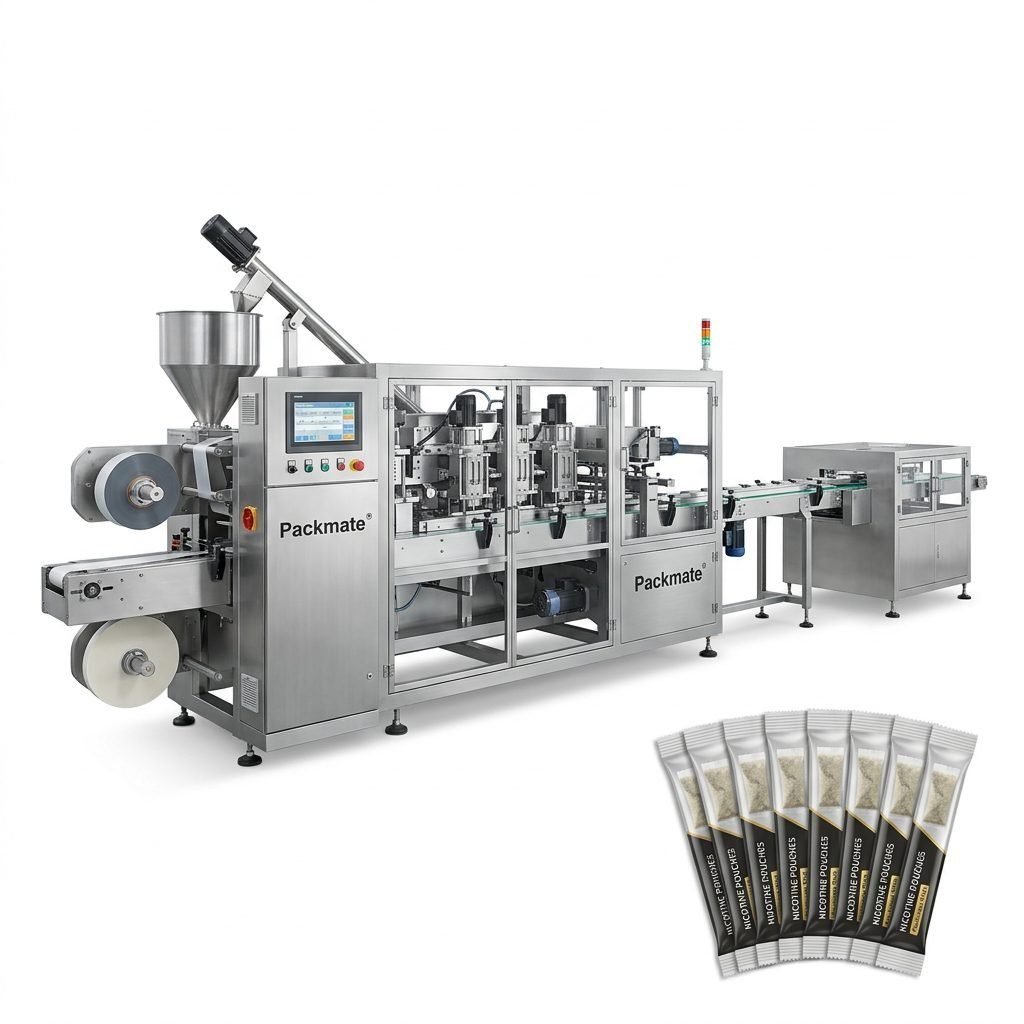
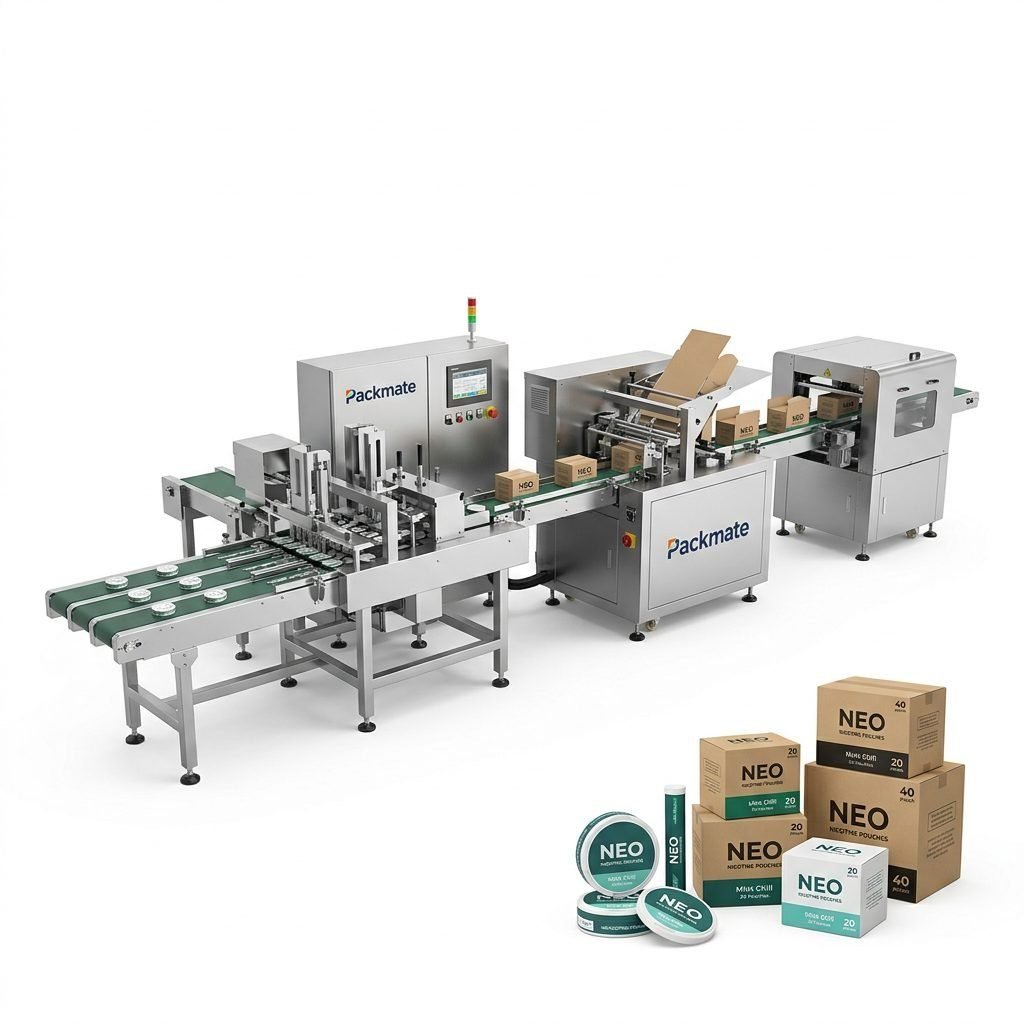
Choosing a reliable nicotine packaging machine manufacturer in Asia can make or break your production plans. From local regulations and cultural packaging preferences to manufacturing capacity and after-sales support, the right partner must balance technical excellence with regional know-how. This guide walks you through practical evaluation criteria, red flags to watch, and actionable steps to select a partner that reduces risk and accelerates your market entry across Asian markets.
Why the Manufacturer Choice Matters in Asia
Asia is a diverse region with different regulatory regimes, consumer tastes, and logistical realities. A machine that works well in Europe may need adjustments for humidity levels, local power standards, or smaller package sizes preferred by some Asian consumers. Choosing a manufacturer who understands these nuances can deliver:
faster validation, fewer technical issues on-site, and optimized packaging formats tailored for local markets such as Japan, South Korea, Southeast Asia, India, and greater China.
Key Asian market considerations
📌 Regulatory diversity: nicotine and tobacco-adjacent products face varying restrictions across Asian countries — from strict controls to emerging regulatory frameworks.
📌 Packaging preferences: consumers in some markets prefer compact, single-use formats; others value premium tactile finishes or multi-lingual labeling.
📌 Operational environment: humidity, dust, and power supply consistency should influence machine selection and sealing technologies.
Top Technical Criteria to Evaluate
When vetting manufacturers, focus on measurable machine capabilities and engineering depth:
1. Machine types & flexibility
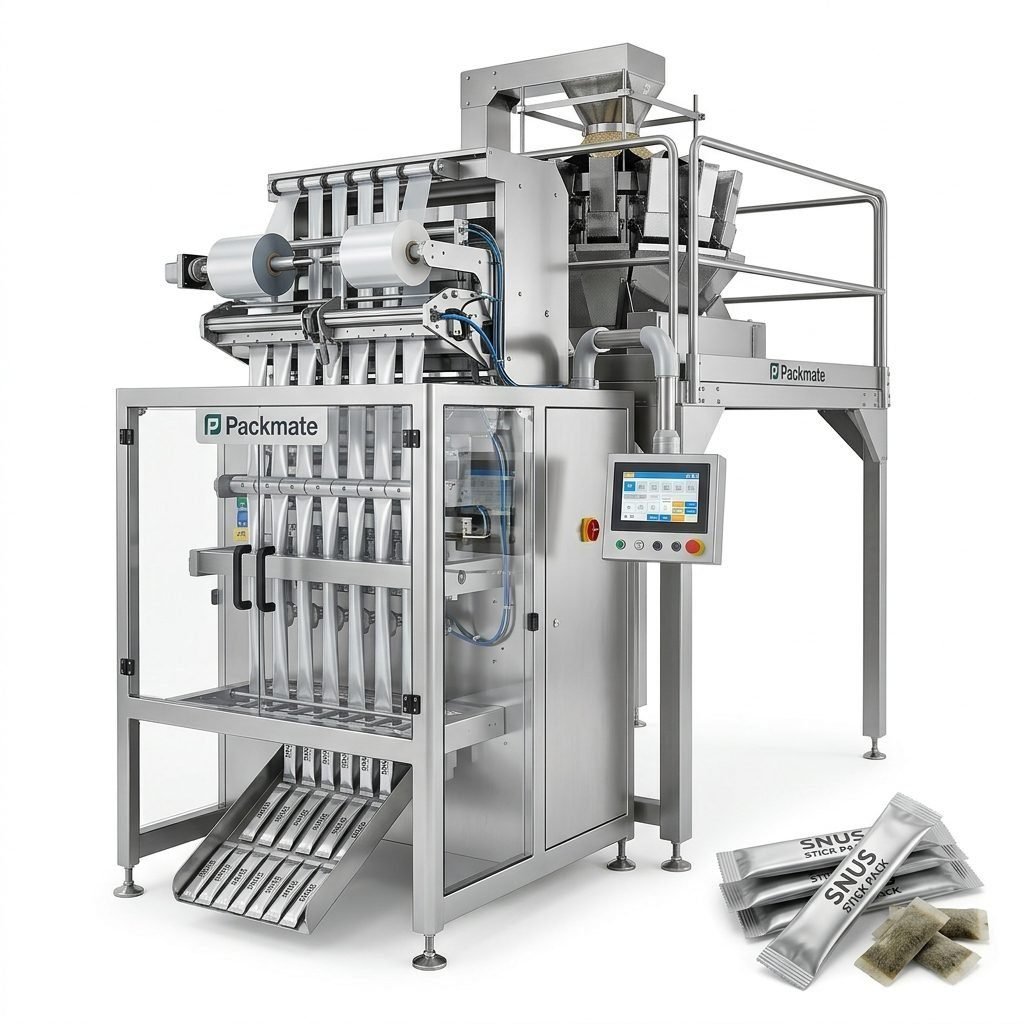
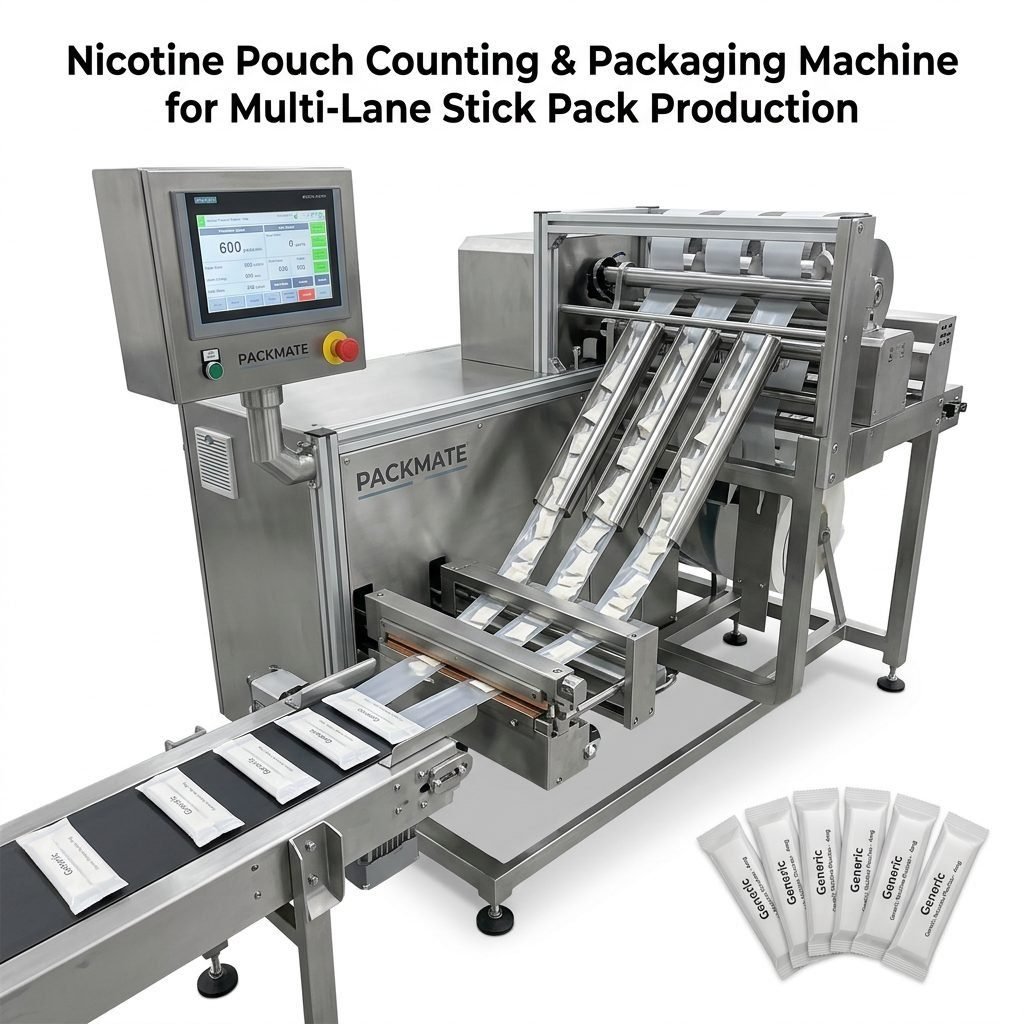
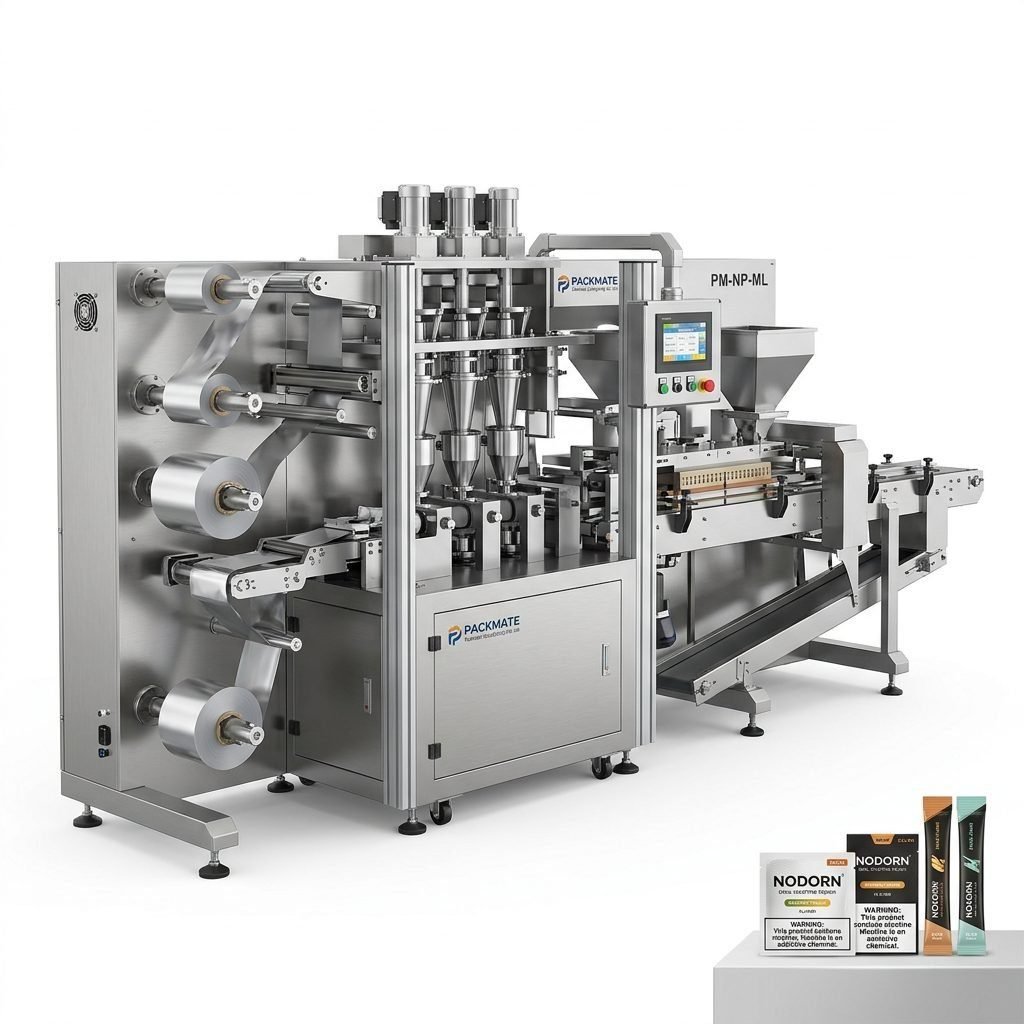
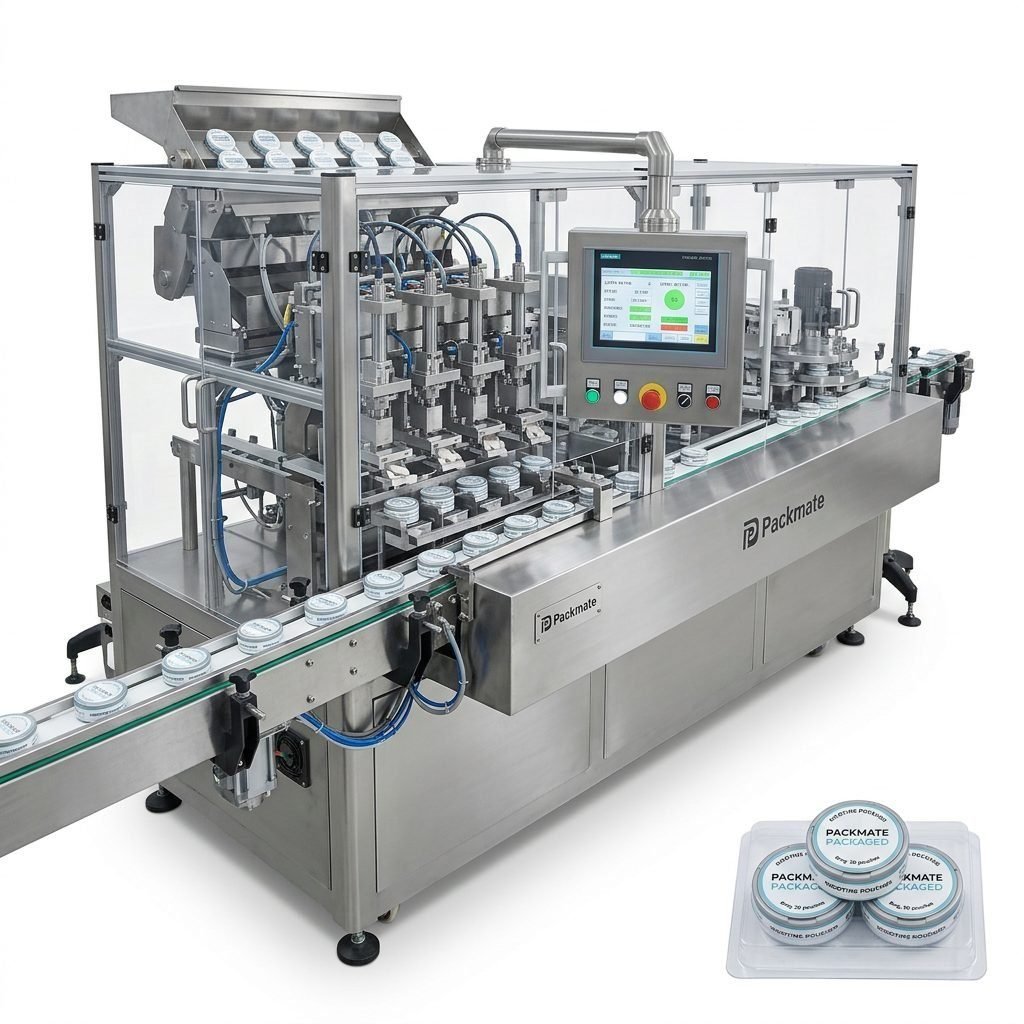
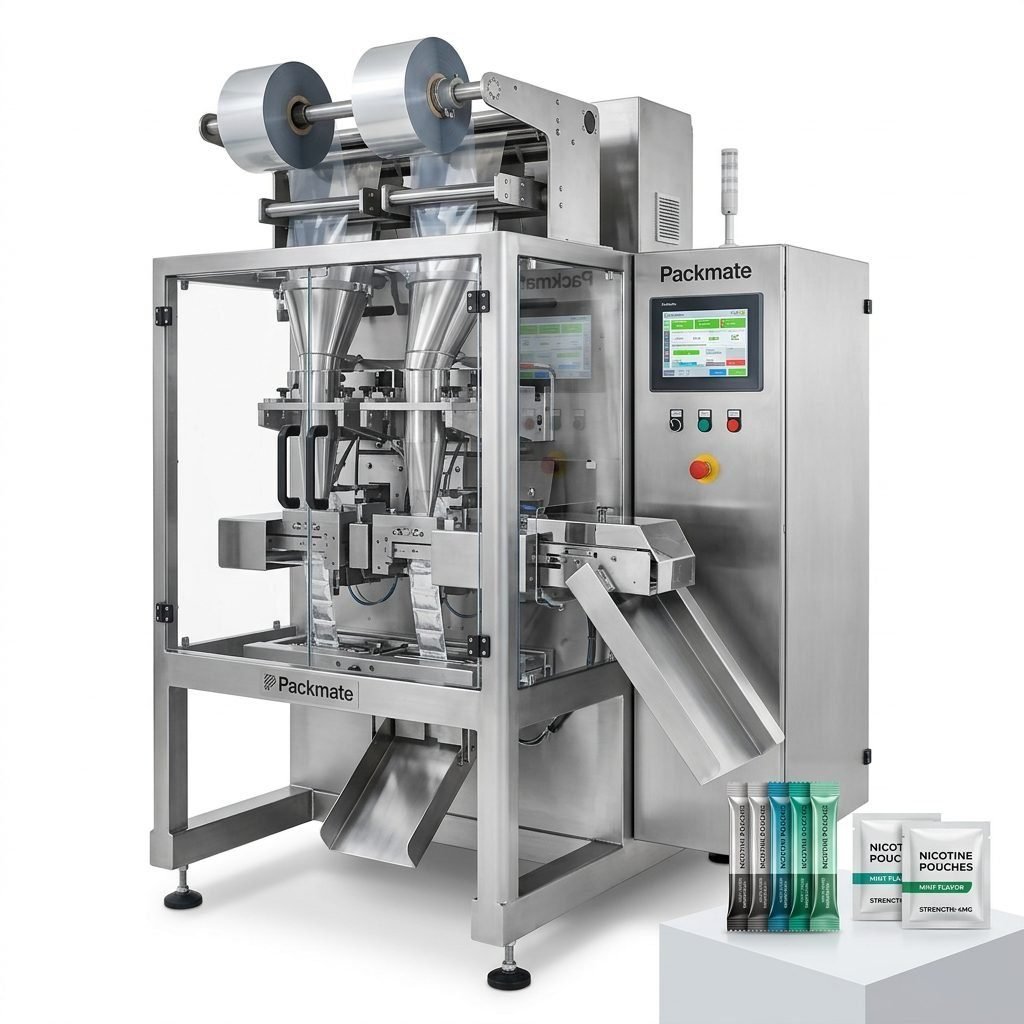
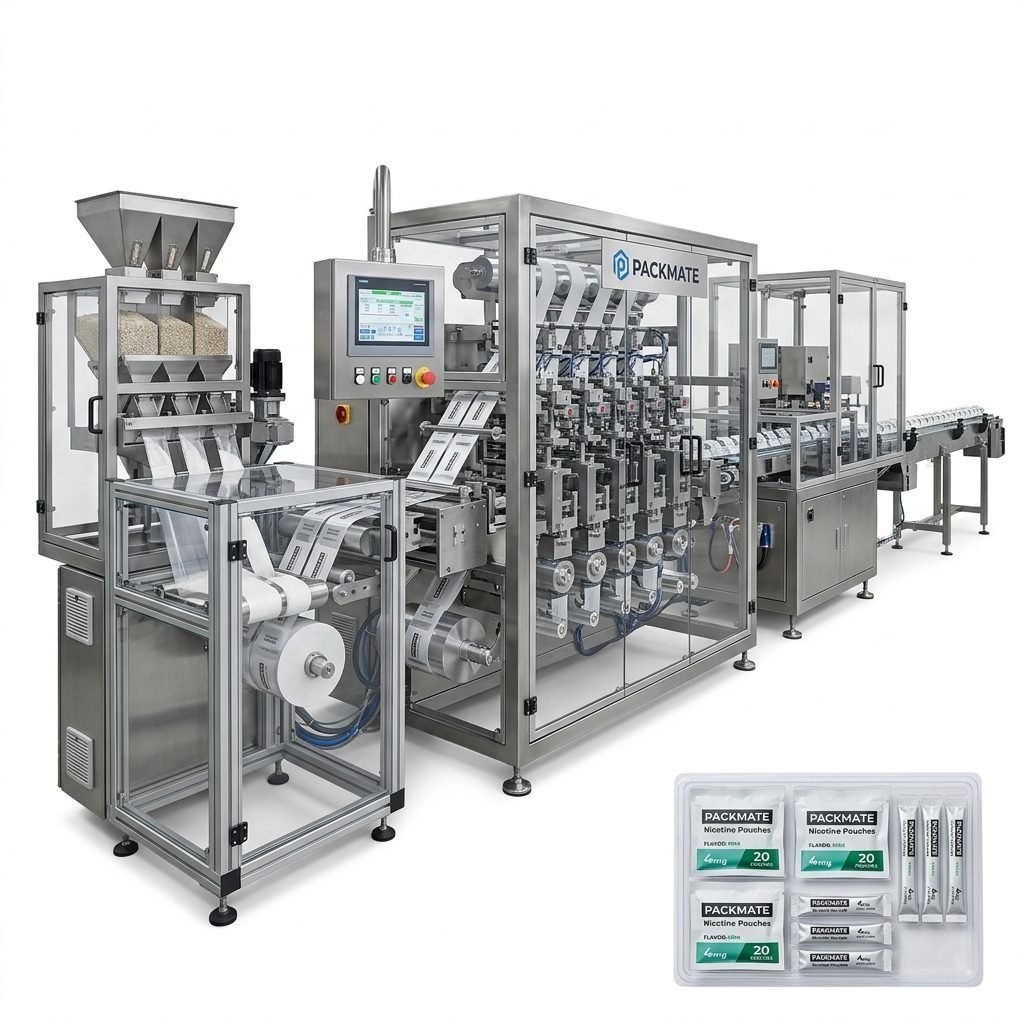
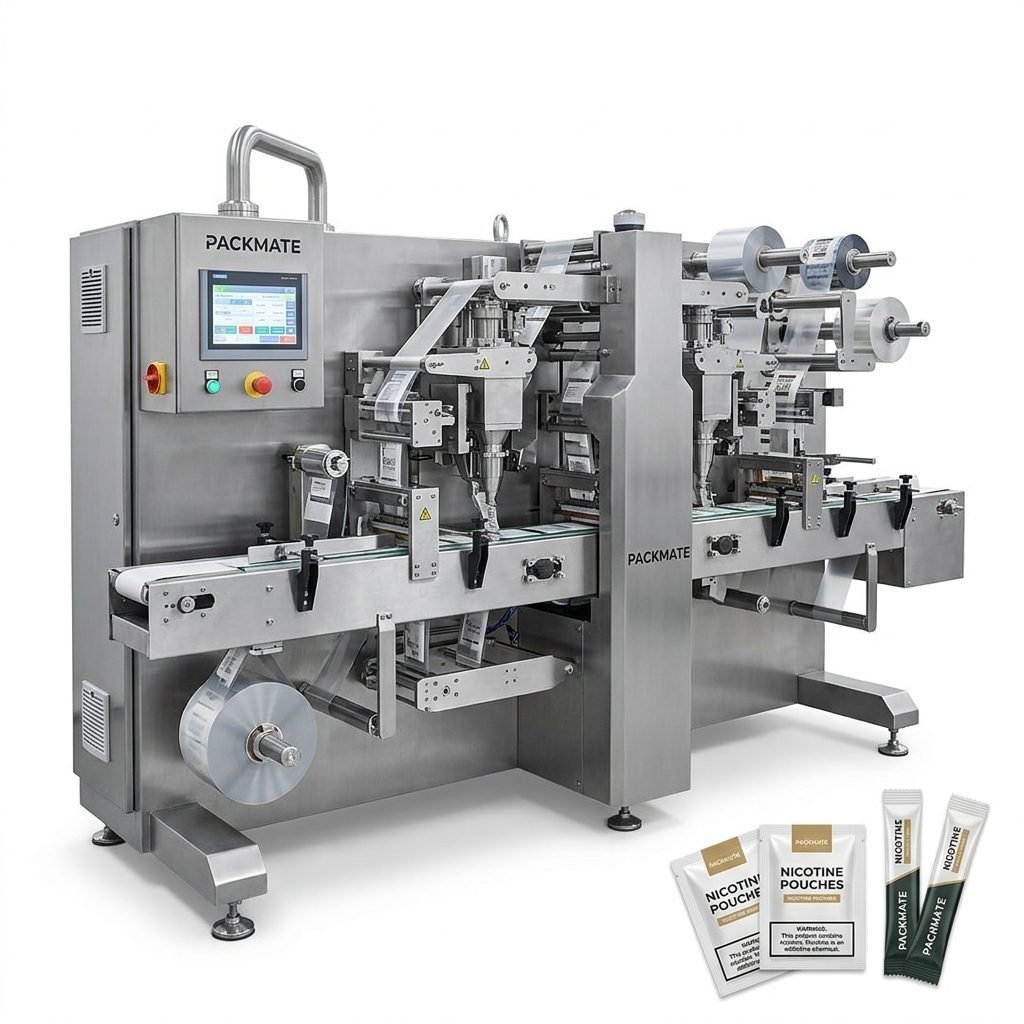
Look for a supplier offering multiple formats: stick pack, sachet, multi-lane snus/nicotine pouch systems, and integrated filling lines. Flexible systems allow you to test formats and scale without full equipment replacement. See examples of equipment lines such as
Snus & Nicotine Packaging Machines and
Sachet & Stick Pack Machines.
2. Throughput, accuracy and multi-lane capability
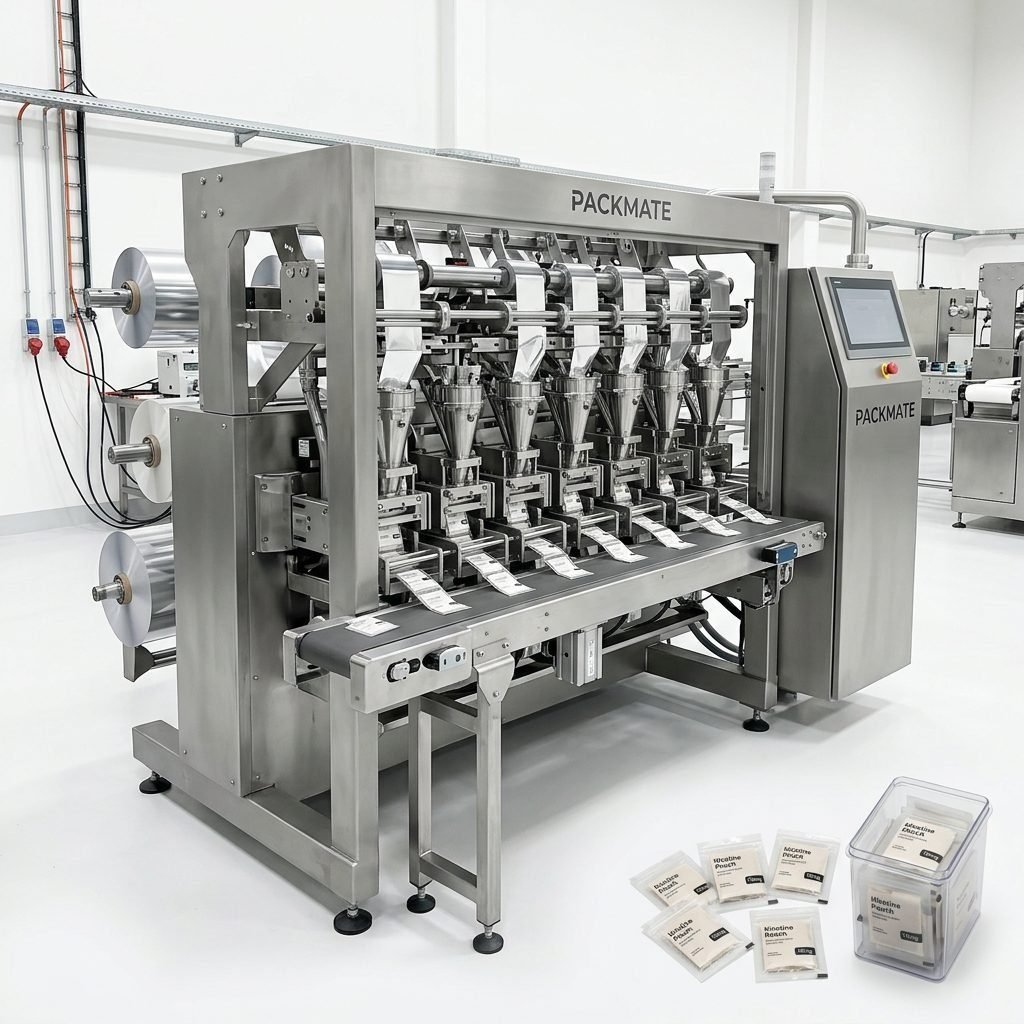
Capacity matters, but so does dosing accuracy. Multi-lane systems increase output for small-dose pouches but require precise synchronization. Verify manufacturer specs for cycle time, pouch weight tolerance, and lane count options.
3. Hygiene, cleanability and materials
For nicotine pouches or products intended for oral use, stainless steel contact parts, easy-to-clean conveyors, and sanitary design are non-negotiable. Check for washdown-capable components and smooth surfaces that reduce contamination risk.
Certifications, Compliance & Local Regulations
Certifications such as CE and ISO demonstrate baseline quality and safety. However, you must also ensure compliance with local import rules, labelling laws and nicotine-specific regulations in target countries. Manufacturers with export experience across Europe and Asia can help with documentation and pre-shipment testing.
✅ Ask for documented CE/ISO certificates and recent test reports.
✅ Confirm support for local regulatory paperwork and guidance for customs clearance in specific Asian markets.
Manufacturing Capacity & Quality Control
A large, well-equipped facility with CNC machining centers and precision assembly lines signals consistent build quality. Manufacturers that publish facts like factory area, number of models, and quality systems are often more transparent. For example, Packmate highlights a 20,000㎡ facility, advanced CNC capability, and 50+ machine models — indicators of scale and experience.
What to verify during factory visits or virtual tours
🔧 Assembly line layout and workflow
🔧 Spare parts inventory and availability
🔧 Final testing procedures and sample run records
🔧 Staff training and technical documentation availability
After-sales Service, Spare Parts & Training
Operational uptime depends heavily on support. Confirm lead times for spare parts, availability of local service partners or remote diagnostics, and training packages. A reliable supplier offers installation, commissioning, operator training, and long-term service agreements.
📌 Request a sample service contract and spare parts list with pricing.
📌 Check if on-site commissioning for your region is included or available at reasonable cost.
Customization, R&D & Continuous Improvement
Packaging innovations and evolving regulations mean you’ll need a partner who can iterate designs and adapt machines. Look for manufacturers with in-house R&D, a history of custom projects, and a record of participating in exhibitions and industry shows. These attributes show proactive development and customer-driven engineering.
You can learn more about a manufacturer’s profile and service offerings through pages like
About Packmate and their
Service descriptions.
Cost, ROI & Total Cost of Ownership
Purchase price is just one element. Calculate total cost of ownership including spare parts, energy consumption, downtime cost, maintenance, and packaging material compatibility. A slightly higher upfront investment in a robust, energy-efficient machine often yields a faster ROI and lower lifetime cost.
Logistics, Lead Time & Export Experience
Asia-based manufacturers with global export experience simplify customs, shipping and on-time delivery. Verify typical lead times, packaging for export, and whether the manufacturer has experience handling shipments to your target ports. Check customer references or
case studies to confirm delivery and installation records.
Cultural & Market Fit: Packaging Aesthetics and Language
In Asia, pack design and labeling differ by market. For example:
🔸 Japan & Korea: high-quality tactile finishes and premium minimalism; strict local labeling norms.
🔸 Southeast Asia: affordable single-serve and small-count packages are popular; multilingual packs are common.
🔸 India & South Asia: market sensitivity to price; machines that provide fast format changes for promotional SKUs are helpful.
Red Flags When Selecting a Manufacturer
Be cautious if you encounter:
- Vague technical specs or inability to provide sample run videos.
- No factory tour or independent references.
- Long, undefined lead times without a clear explanation.
- Limited spare parts availability or no service contract options.
- Refusal to provide compliance documentation or test certificates.
Quick Selection Checklist
🔧 Factory capability: CNC machines, assembly lines, and QC procedures.
🔧 Certifications: CE, ISO and export compliance records.
🔧 After-sales: spare parts, training, and remote support policy.
🔧 References: sample videos, case studies and exhibition participation (see Our Exhibition).
🔧 Customization: R&D capability and willingness to perform pilot runs.
How to Validate a Final Shortlist
Once you have a shortlist, validate with these steps: request on-site or virtual factory tours, demand sample production runs with your materials, obtain full spare-part lists and support SLAs, and ask for client references in similar markets. Negotiate trial terms that include performance benchmarks and acceptance criteria.
Why Packmate Can Be a Strong Candidate for Asian Partnerships
Packmate Snus Machine combines 30+ years of engineering with a large manufacturing footprint, CE/ISO compliance, and a focus on snus and nicotine pouch solutions. Their multi-lane systems and full turnkey lines are designed for markets requiring high precision and stable throughput. Explore their portfolio of solutions like
Snus & Nicotine Packaging Machines and
Filling & Packaging Lines.
Client support & transparency
Manufacturers who publish factory facts, development timelines and case studies make due diligence easier. Packmate’s background — starting from R&D in 1993, establishing in Guangdong in 2003, and expanding into multi-lane systems — illustrates a growth path aligned with industry needs.
Practical Implementation Tips for Asian Markets
– Run pilot launches with limited SKUs to validate packaging format and consumer acceptance.
– Localize labeling and user instructions for language and regulatory compliance.
– Plan spare parts inventory near key markets to reduce downtime.
– Consider local partners for distribution and technical support to speed response times.
📦 Pro tip: Ask the manufacturer for simulated environmental testing for humidity and dust to ensure seals and adhesives hold up under local conditions.
⚠️ Compliance tip: Align labeling and warnings with the strictest market you plan to enter; it streamlines multi-country roll-out.
Final Checklist Before Purchase
– Verified performance through pilot runs and references.
– Clear service agreements and spare parts lead times.
– Certifications and export documents for your target countries.
– Training and documentation in your working language.
– Transparent warranty and acceptance criteria.
For a deeper view of available equipment and technical product specs, consult the manufacturer’s catalogs and product pages like Catalog and the detailed listings under Bag & Pouch Packaging Machines.
Conclusion
Selecting a reliable nicotine packaging machine manufacturer in Asia requires a balance of technical evaluation, regulatory awareness, and logistical planning. Prioritize manufacturers with proven factory strength, documented certifications, strong after-sales service, and demonstrated experience in regional markets. A partner who provides clear pilot testing, spare-part plans and local-market insights will reduce risk and accelerate your path to production.
Frequently Asked Questions
Q1: How important are CE and ISO certificates when buying from an Asian manufacturer?
CE and ISO provide baseline assurance on safety and quality management. They also simplify export to markets that expect such certifications. However, local regulatory approvals for nicotine products are equally essential and must be checked separately for each target country.
Q2: What lead time should I expect for a customized multi-lane snus packaging line?
Typical lead times vary by complexity. Standard machines may ship in weeks, while customized multi-lane turnkey lines often require several months for design, build, testing and export packing. Confirm milestones and penalties for delays in the purchase agreement.
Q3: Can a manufacturer help with regulatory documentation for Asian markets?
Many experienced exporters assist with packing lists, test reports and certificate copies for customs clearance. For market-specific approvals (health, labeling), seek a supplier who has supported other clients in the same country or can recommend local compliance partners.
Q4: How do I ensure spare parts availability after purchase?
Request a spare parts list, recommended spare inventory levels, and lead times during negotiations. Consider stocking critical wear parts locally or adding priority shipping options in your service contract.
Q5: Where can I view product details and company history?
Manufacturer websites often contain product pages, company profiles and case studies. For example, explore Packmate’s product lines and corporate info at their About page, review machine categories, and read client cases to verify real-world performance.