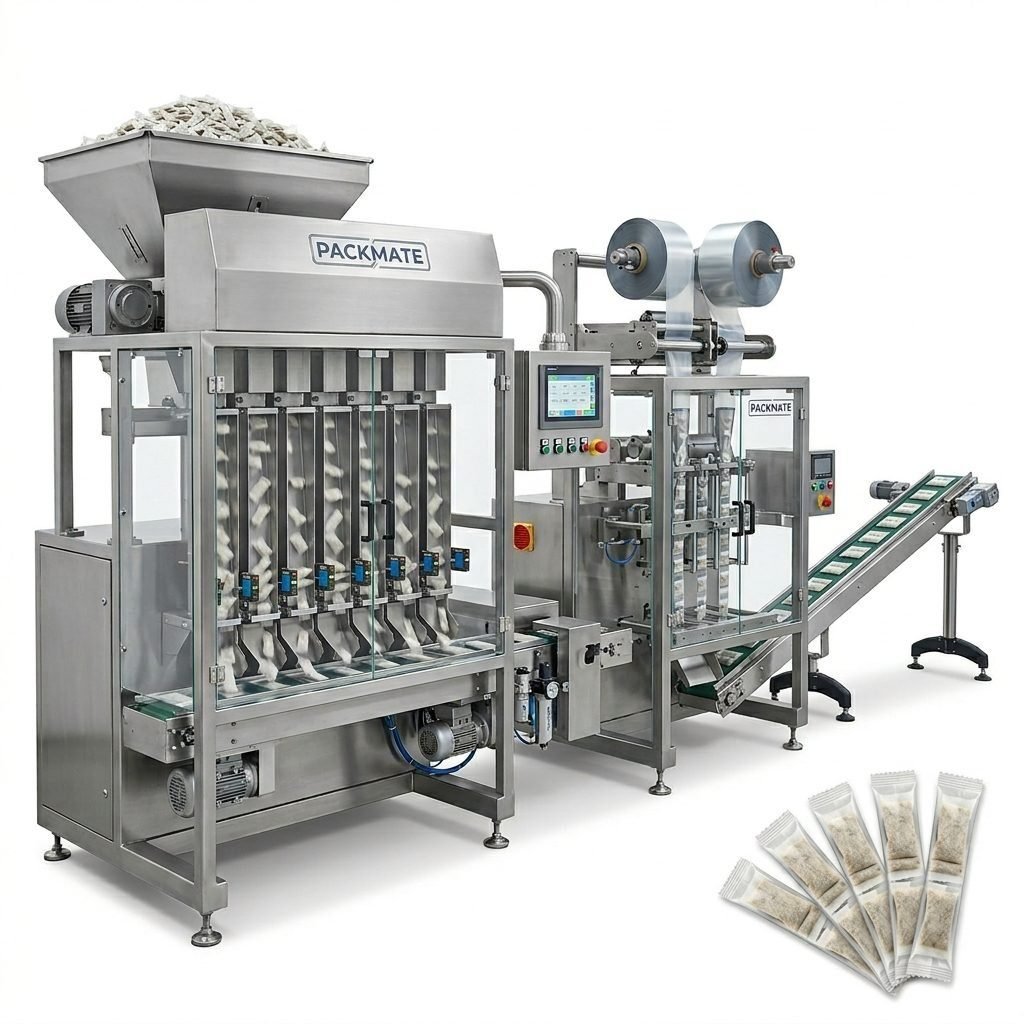
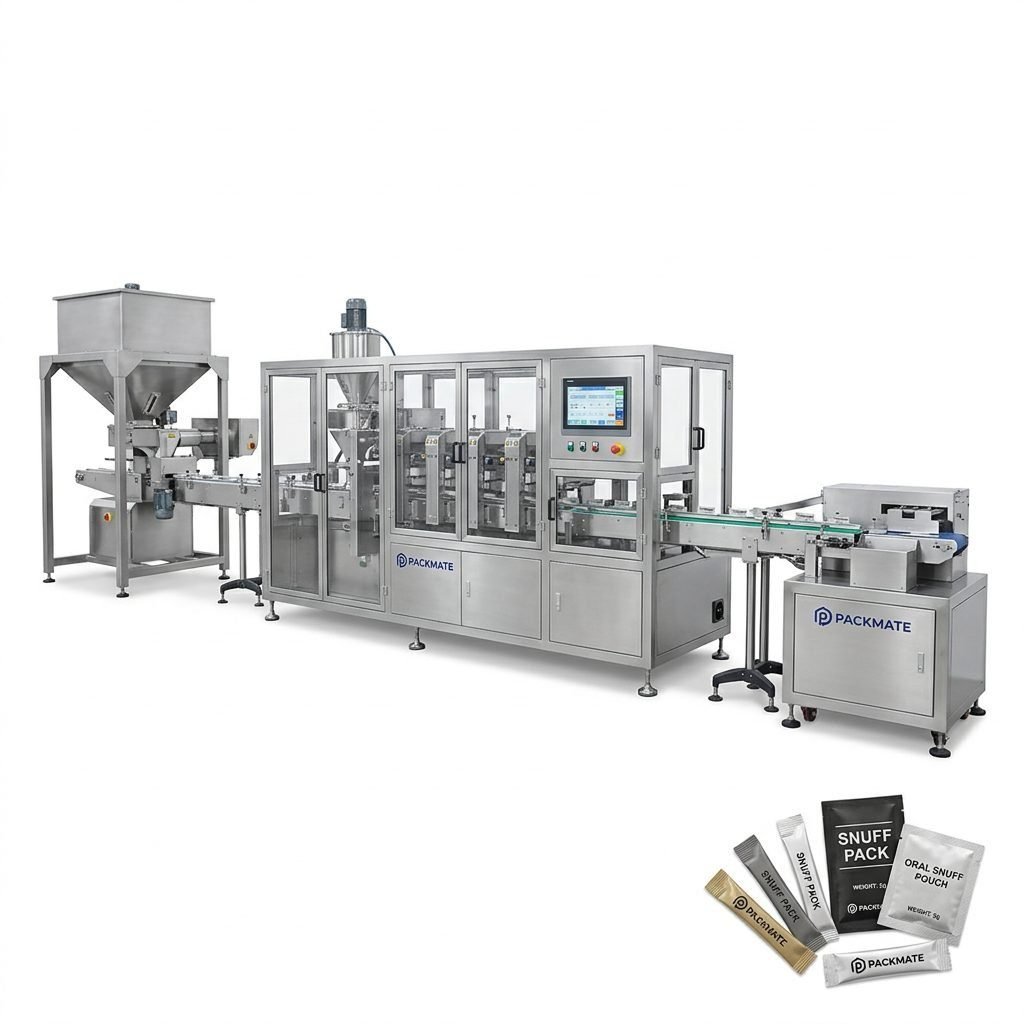
Entering the snus and nicotine pouch market in Argentina requires the right packaging machinery to ensure product quality, regulatory compliance, and cost-efficient production. This guide helps buyers choose the best snus packaging machine tailored for Argentina’s market — taking into account local habits, production scales, machine features, and long-term service needs.
Understanding Argentina’s Market and Consumer Habits 🇦🇷
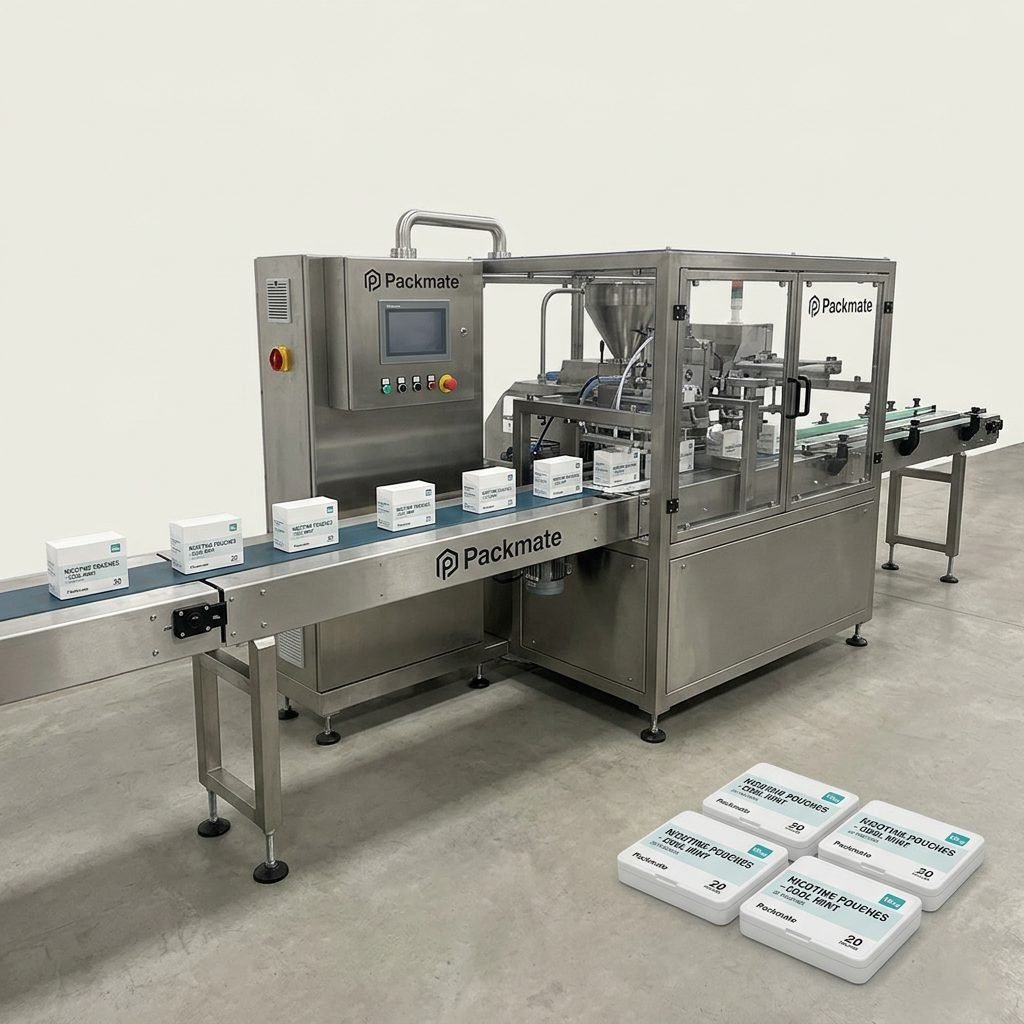
Argentina has a rich tradition around flavors and social consumption — most famously yerba mate — which influences how local consumers appreciate taste variety, premium packaging, and clear product information in Spanish. For nicotine pouches and snus, Argentine buyers often prefer compact, discreet packaging formats, resealable tins or sachets, and clear labeling in Spanish. Consider packaging that communicates flavor cues (e.g., mint, citrus, mate-inspired notes) and product strength in an easy-to-read format.
Local regulatory notes
Nicotine-containing products may be subject to tobacco and pharmaceutical regulations in Argentina. Buyers should consult local regulatory bodies (e.g., ANMAT and customs authorities) to ensure label compliance, ingredient declarations, and importation rules. Always verify legal requirements prior to production and distribution.
Step-by-step: How to Select the Right Snus Packaging Machine
1. Define your product format and pouch type
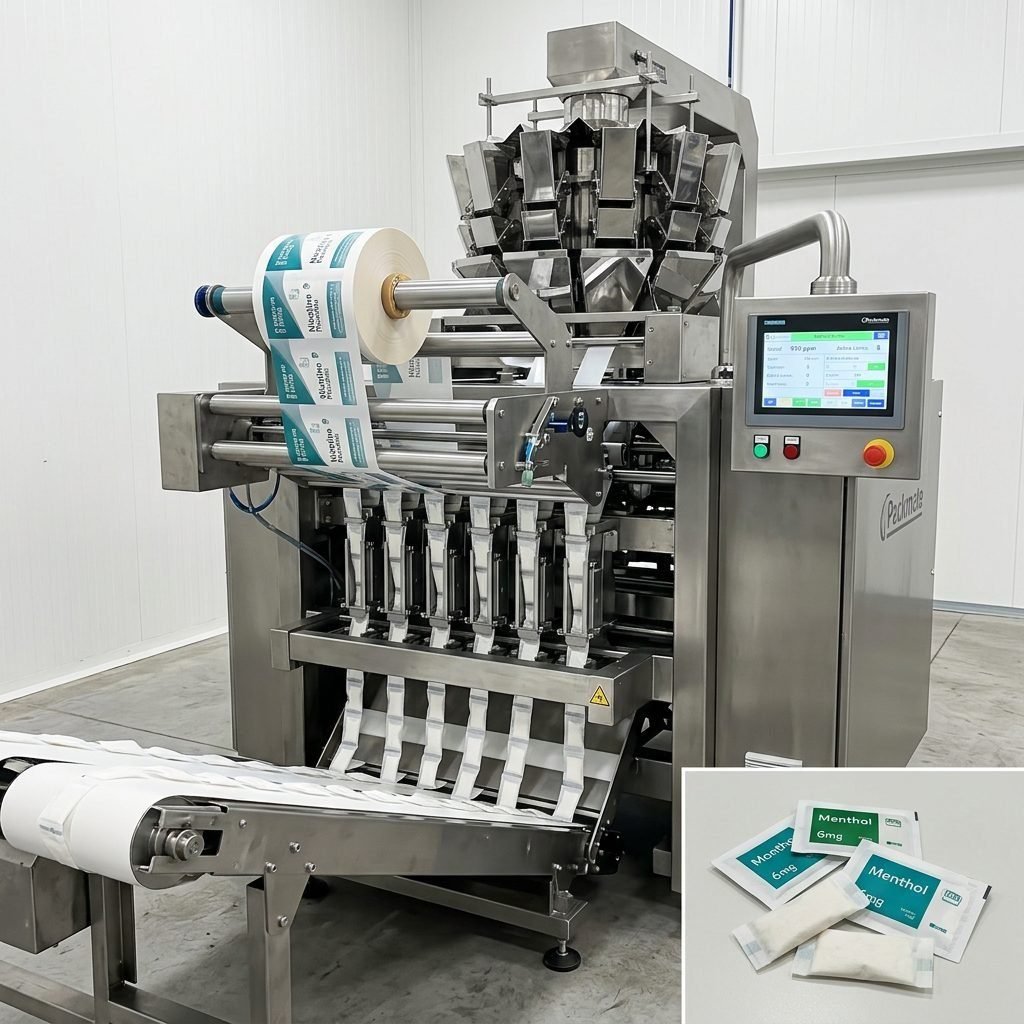
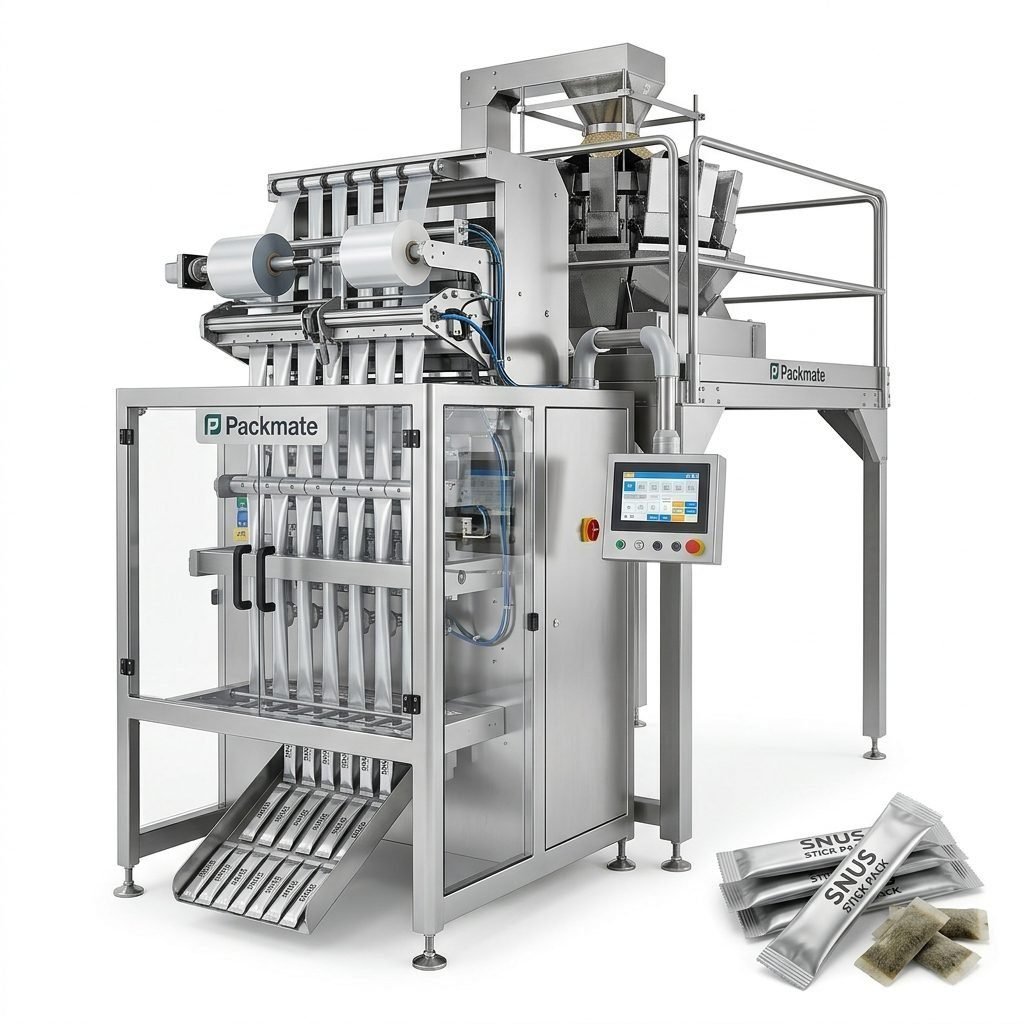
Decide whether you’ll produce loose snus, portioned pouches, nicotine sachets, or stick packs. Each format demands different filling, sealing, and cutting technologies. For example:
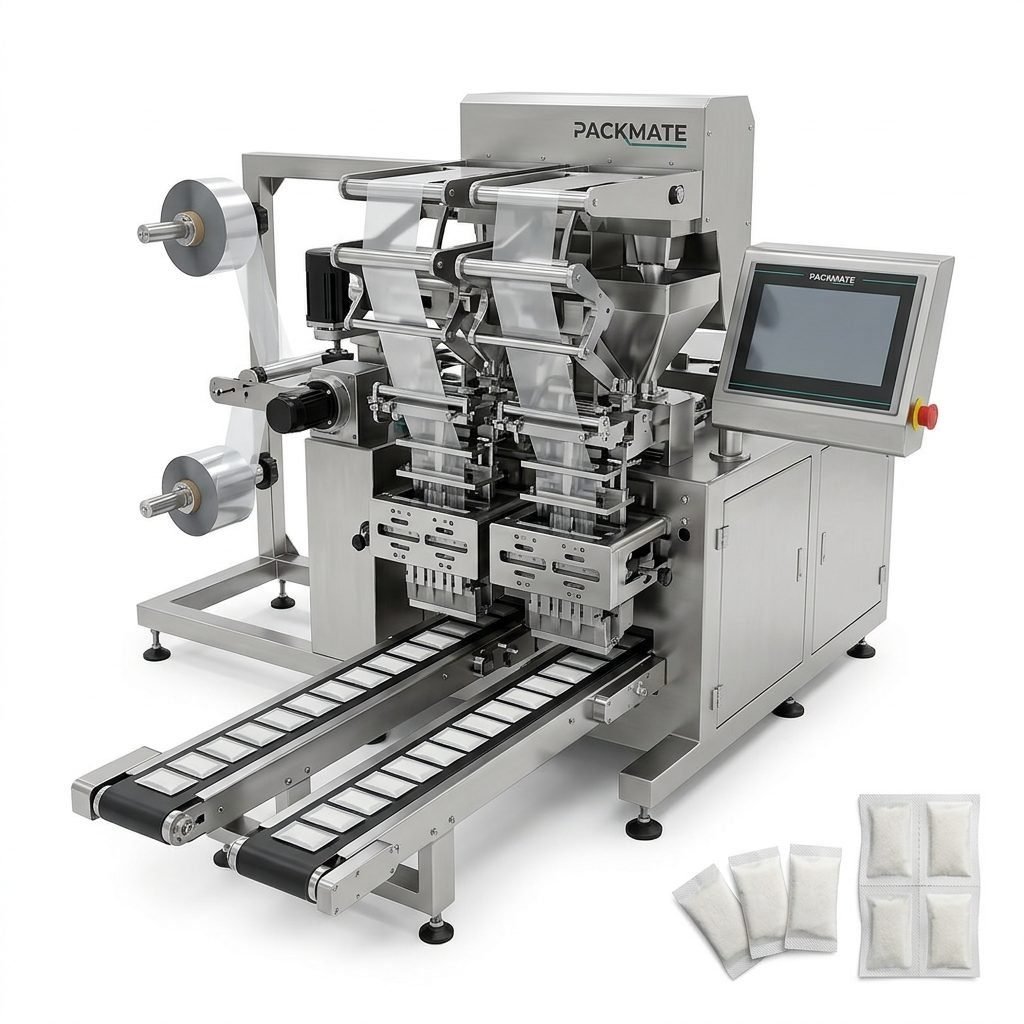
- Portioned pouches: need precise dosing and gentle handling to maintain pouch integrity.
- Sachets & stick packs: require heat-sealing accuracy and precise longitudinal/transverse sealing.
- Multi-lane pouches: suitable for high-volume production of small-dose packets.
Tip: If you plan to offer several flavors and strengths, choose modular machines that can be quickly adjusted between runs to reduce changeover time.
2. Determine required production capacity
Estimate your daily and weekly volumes. Machines vary from single-lane pilot lines to high-speed multi-lane systems producing tens of thousands of pouches per hour. Consider:
- Startup production: lower-capacity machines with simple controls.
- Scaling plans: multi-lane or modular lines that grow with demand.
- Peak-season needs: ensure the chosen equipment can handle occasional surges.
3. Check filling accuracy and material compatibility ⚙️
Snus and nicotine pouches require accurate dosing to meet product claims and regulatory limits. Confirm the machine’s dosing technology (volumetric, auger, weighing) is suitable for your product’s bulk density, moisture level, and particle size. Also check compatibility with packaging films (barrier laminates, heat-sealable foils) commonly used in Argentina.
Key point: Weighing and multi-head systems provide the highest dosing accuracy for granular mixes and powders.
4. Automation level, controls and local power compatibility
Choose between semi-automatic lines or fully automated turnkey systems. Fully automated lines reduce labor costs and improve consistency, but require greater upfront investment. Make sure the machine’s electrical system supports Argentina’s common supply (220V, 50Hz) or request transformers/adapters from the supplier.
5. Hygienic design and maintainability
Hygienic design is essential even for tobacco-related pouches to prevent contamination and facilitate cleaning. Look for stainless steel construction (304/316 where required), easy-access guards, and minimal crevices. Spare parts accessibility and a local or fast international service channel will reduce downtime.
Technical Features to Prioritize
Sealing and packaging film compatibility
Ensure the machine supports multi-layer barrier films to maintain product shelf-life in Argentina’s varied climates. Heat-seal quality, crimping options, and tamper-evident features matter for consumer trust.
PLC and touchscreen HMI
A modern PLC and multilingual HMI (include Spanish) facilitate local operation. Look for recipe-saving, remote diagnostics, and user-level access control to reduce operator errors.
Changeover speed and format flexibility
Quick-change tooling reduces downtime when switching flavors or pouch sizes. Machines with modular tooling kits and simple mechanical adjustments are ideal for businesses offering many SKUs.
Quality inspection and traceability
Integrated metal detectors, vision systems for seal/print verification, and batch coding systems support quality control and regulatory traceability requirements in Argentina.
Must-have: vision inspection and batch coding for recall readiness and local compliance.
Why Choose an Experienced Manufacturer like Packmate
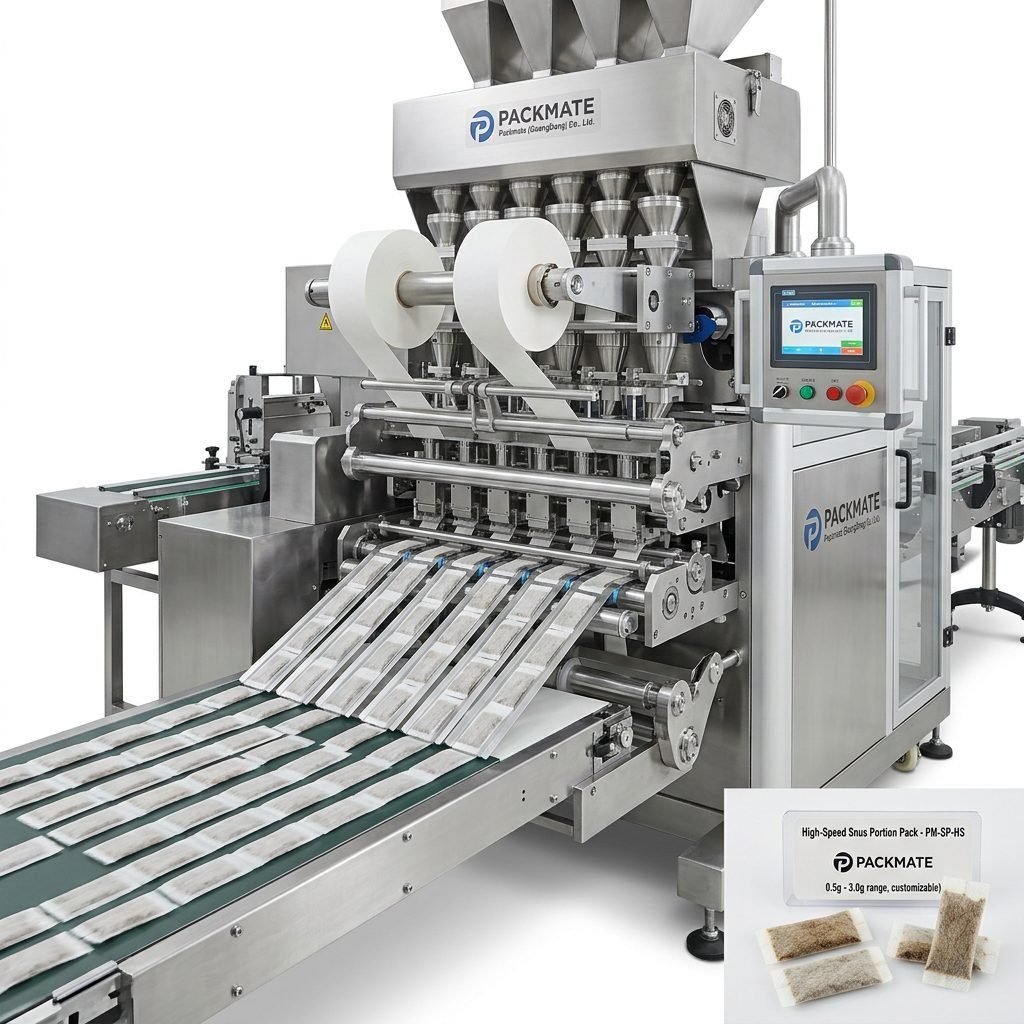
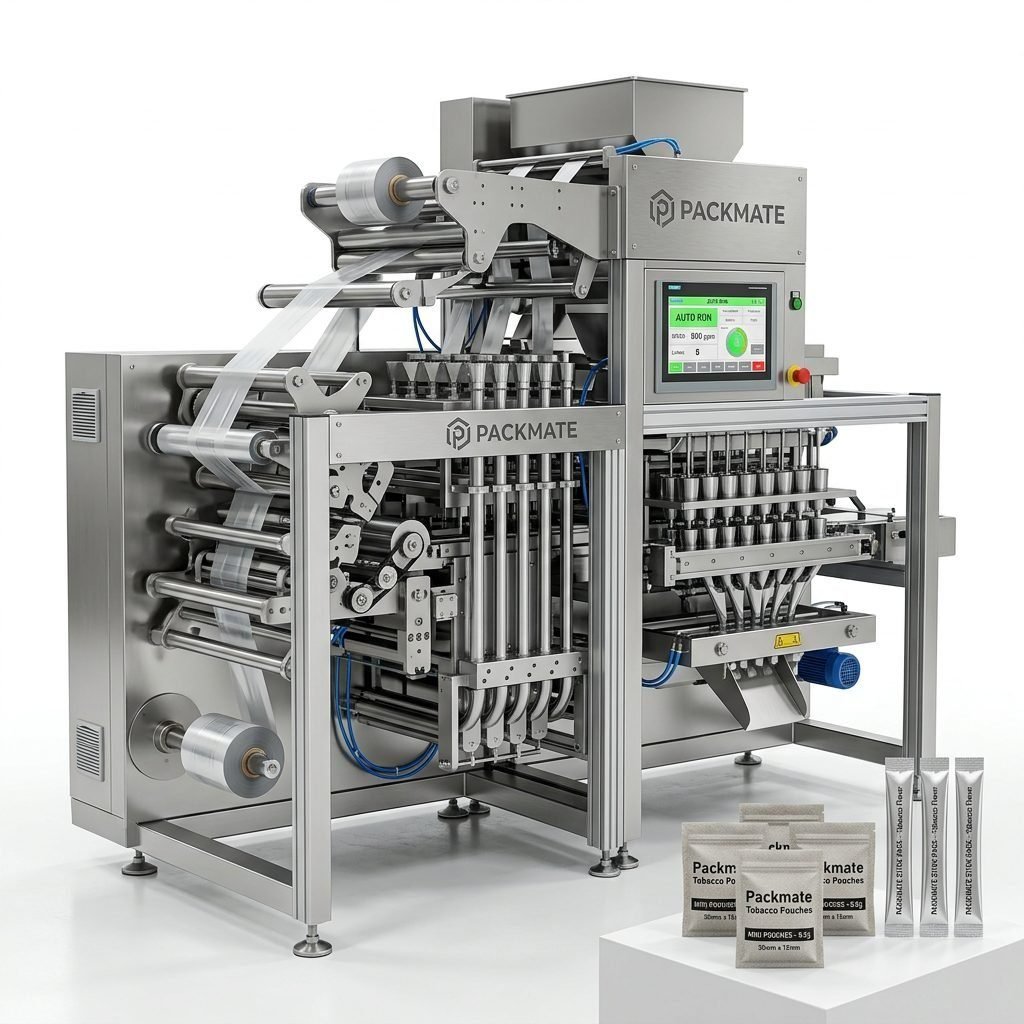
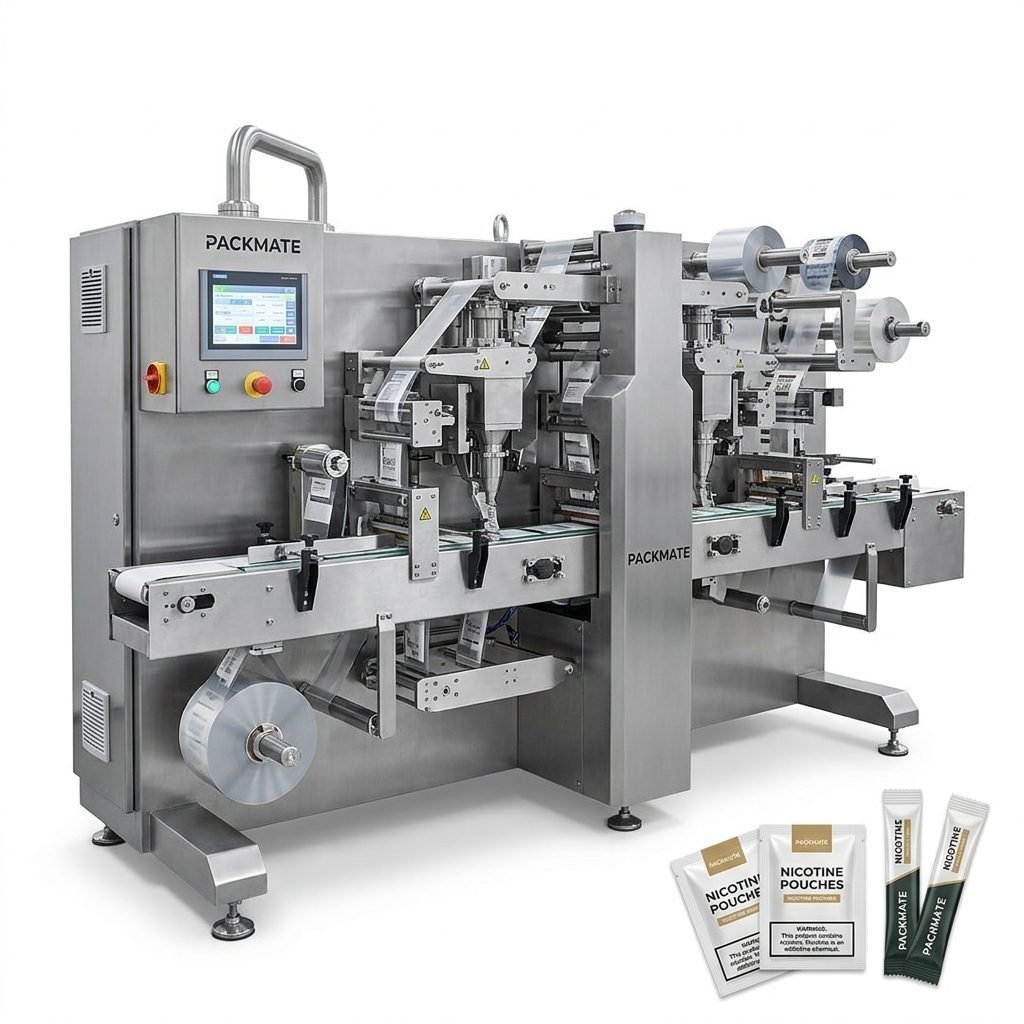
Established manufacturers with decades of experience provide reliability and better support. Packmate Snus Machine brings over 30 years of engineering experience and specializes in snus and nicotine pouch packaging solutions. Their factory capabilities include advanced CNC machining, precision assembly, and quality testing, ensuring machines meet CE and ISO standards.
Explore Packmate’s product lines and case studies to evaluate fit:
Snus & Nicotine Packaging Machines,
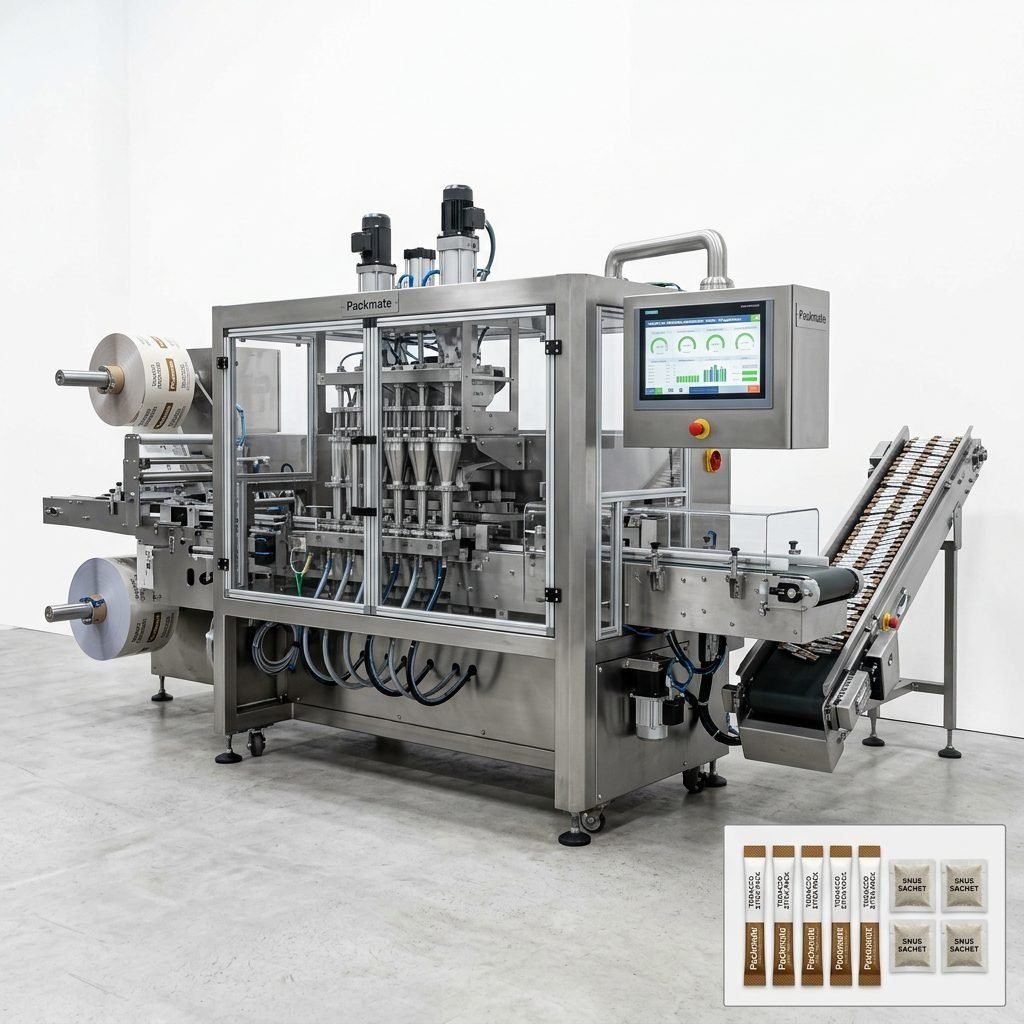
Sachet & Stick Pack Machines,
About Packmate.
Factory support and certifications
Select manufacturers that provide CE/ISO certification, commissioning, operator training, spare parts availability, and remote troubleshooting. Packmate’s 20,000㎡ facility, 50+ models, and global turnkey solutions are strengths when selecting a long-term partner.
Cost Considerations and Total Cost of Ownership (TCO)
Purchase price is only one part of the equation. Evaluate energy consumption, maintenance intervals, spare parts cost, training expenses, expected uptime, and warranty. A slightly higher initial investment in a robust multi-lane line may pay off with lower labor costs and higher throughput.
Shipping, installation and customs for Argentina
Factor in shipping time, customs duties, and local installation. Work with a supplier experienced in Latin American logistics or one that coordinates shipping, customs documentation, and on-site installation. Ask for an itemized quote that includes commissioning and staff training.
Financial tip: Request ROI projections from suppliers based on your target production volumes to compare real costs across options.
Installation, Training and After-sales Service
After-sales service is crucial for continuous production. Prioritize suppliers who offer:
- On-site commissioning and operator training in Spanish.
- Fast spare parts delivery and remote diagnostics.
- Preventive maintenance contracts and upgrade paths.
For more examples and customer successes, review supplier case studies:
Packmate Cases.
Checklist: Questions to Ask Your Supplier
Use this checklist when evaluating quotes:
- What is the actual production speed for my product format?
- Do you provide Spanish documentation and training?
- What are spare-part lead times to Argentina?
- Can the machine handle our selected packaging materials?
- Is remote support and PLC access available for troubleshooting?
- What warranty and preventive maintenance options are included?
Real-world Example: From Prototype to Full Production
A small Argentine startup may begin with a single-lane sachet machine to test flavors and market response. After establishing demand, they can upgrade to a multi-lane system for higher throughput. During transition ensure recipes and sealing parameters are reproducible and label translations meet local regulations. Manufacturers like Packmate offer modular options that ease this scaling process.
Where to Learn More and Get Quotes
Visit manufacturer product pages and request tailored quotations. Relevant resources include:
- Snus & Nicotine Packaging Machines
- Sachet & Stick Pack Machines
- Contact Us for custom line inquiries and site-specific quotes.
Fast action: Request a site survey and a line layout drawing before final purchase to confirm footprint, utilities, and workflow.
Final Recommendations
Select a machine that balances immediate needs with your growth ambitions. Prioritize dosing accuracy, sealed-film compatibility, and after-sales support in Spanish. For Argentine operations, consider local climate impacts on shelf-life and packaging barrier requirements, and ensure all electronics match local voltage standards.
If you want an experienced supplier with a focus on snus solutions, consider reviewing Packmate’s offerings across product lines such as their Weighing & Packaging Systems and consult their FAQs for common pre-sales questions.
Quick Decision Flow
Start by defining product format and volumes → evaluate dosing and sealing technologies → request Spanish-language demos and references → confirm installation, training and spare parts plans → finalize based on TCO and scalability.
Frequently Asked Questions (FAQ)
Q1: What is the ideal machine for small-batch testing in Argentina?
A1: A single-lane sachet or stick pack machine with adjustable dosing and Spanish HMI is ideal for small-batch testing and flavor validation.
Q2: Are Packmate machines compliant with international certifications?
A2: Yes, Packmate machines comply with CE and ISO standards; always request certificates and compliance documents for specific models.
Q3: How do I handle spare parts and service when importing to Argentina?
A3: Choose suppliers with global logistics experience and ask for spare-parts kits, local agent contacts, and remote support options to minimize downtime.
Q4: Can machines be delivered with Spanish documentation and operator training?
A4: Reputable suppliers provide Spanish manuals and on-site training; confirm language options in your purchase agreement.
Q5: How do I ensure my packaging protects product quality in Argentina’s climate?
A5: Use high-barrier films, control sealing parameters, and validate shelf-life under local temperature/humidity conditions. Consider modified atmosphere options for sensitive formulations.