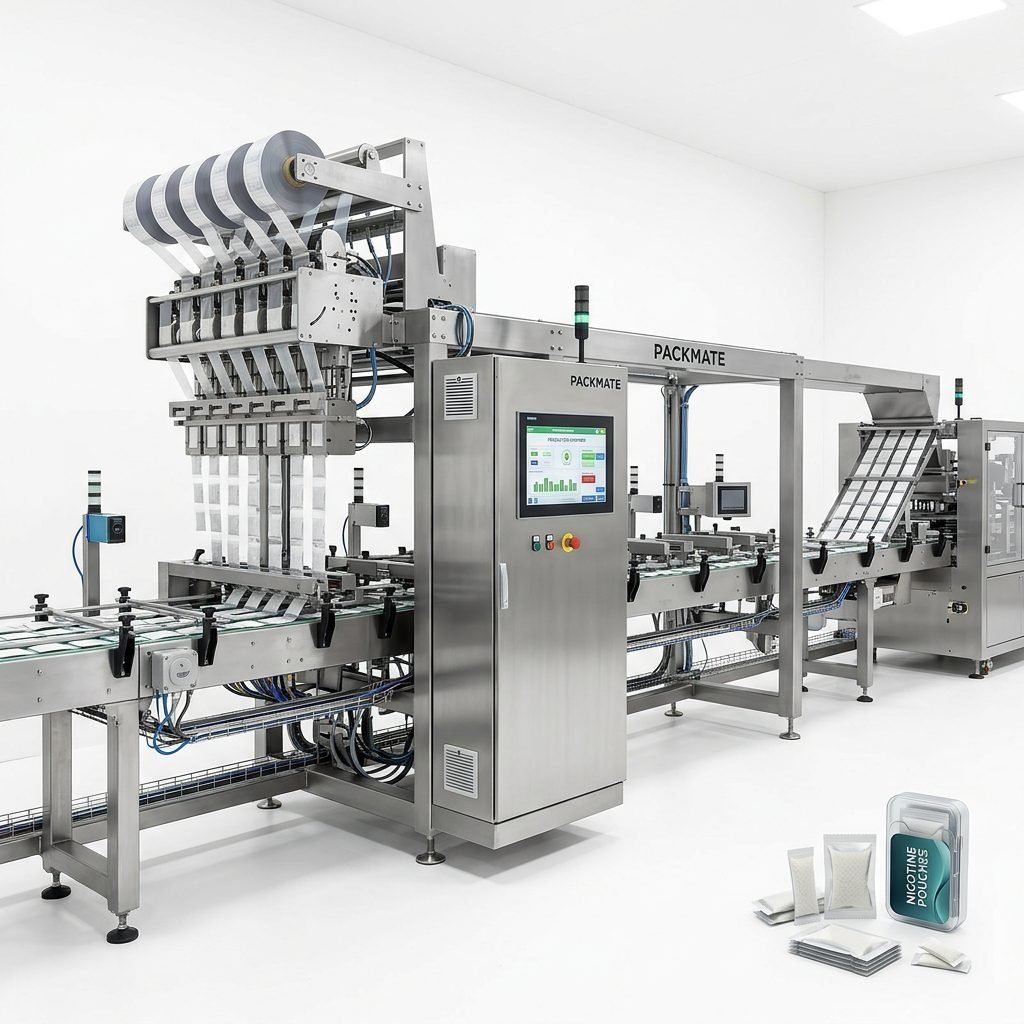
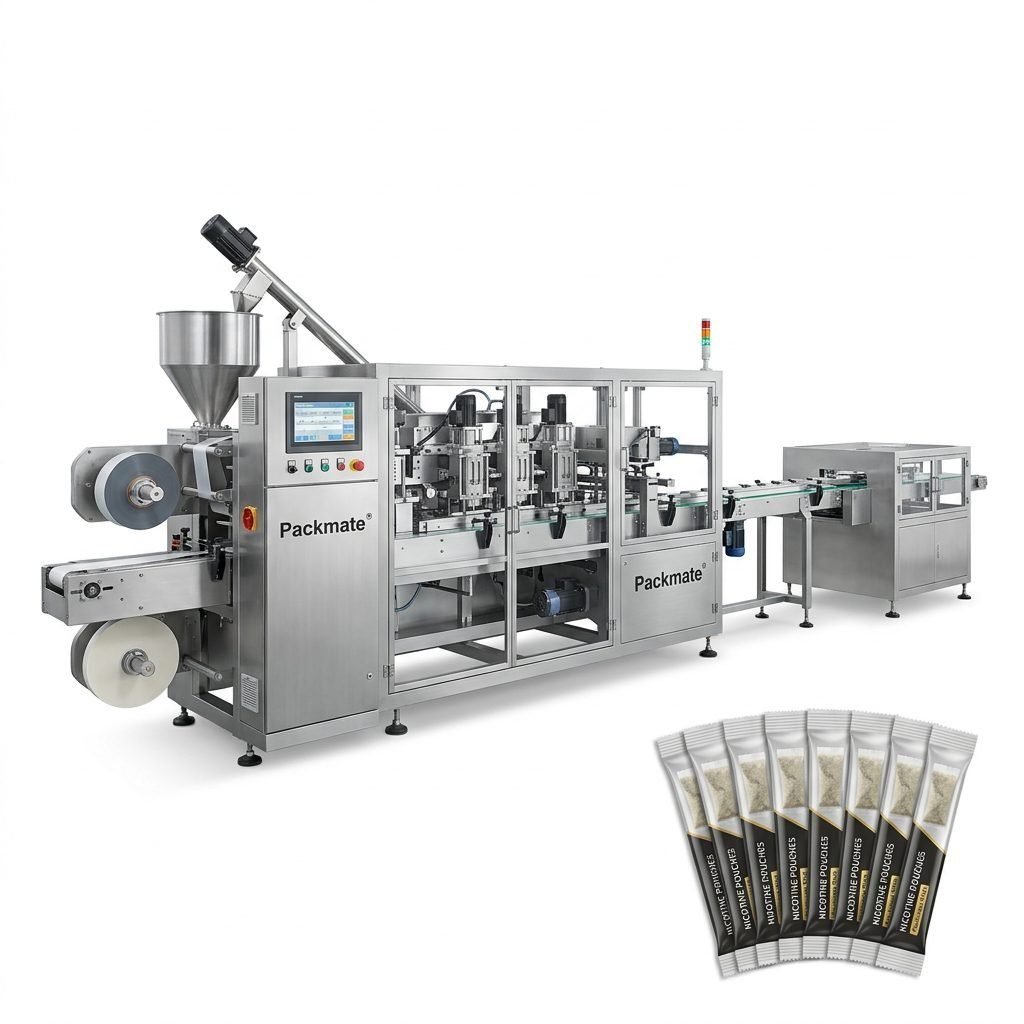
Choosing the right nicotine packaging machinery in a unique market like North Korea requires a practical balance of production needs, legal considerations, supply-chain reliability, and long-term serviceability. This guide walks you through the essential technical, commercial, and operational factors to evaluate when selecting snus and nicotine pouch packaging equipment, and outlines a step-by-step buyer’s checklist to help you make an informed purchase decision.
Market context and why machine choice matters
North Korea’s import and distribution environment creates special constraints for buyers. Lead times, spare parts access, and service arrangements can be more challenging than in open markets. A machine that is robust, easy to maintain, and supported by a reliable international supplier reduces downtime and total ownership cost. For producers, packaging reliability directly affects product consistency, compliance with export expectations, and overall profitability.
Key types of nicotine packaging machines
Understanding machine types helps match equipment to your product format and capacity goals. Main categories include:
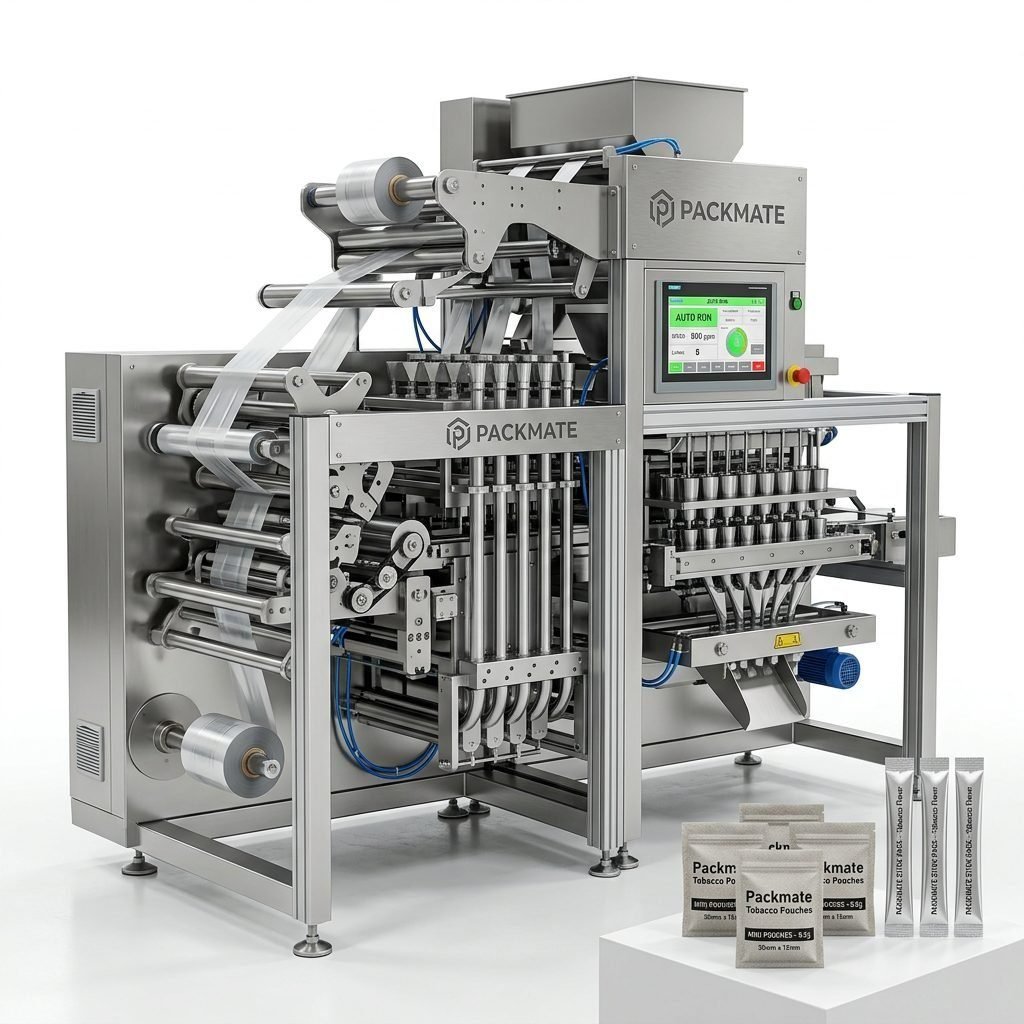
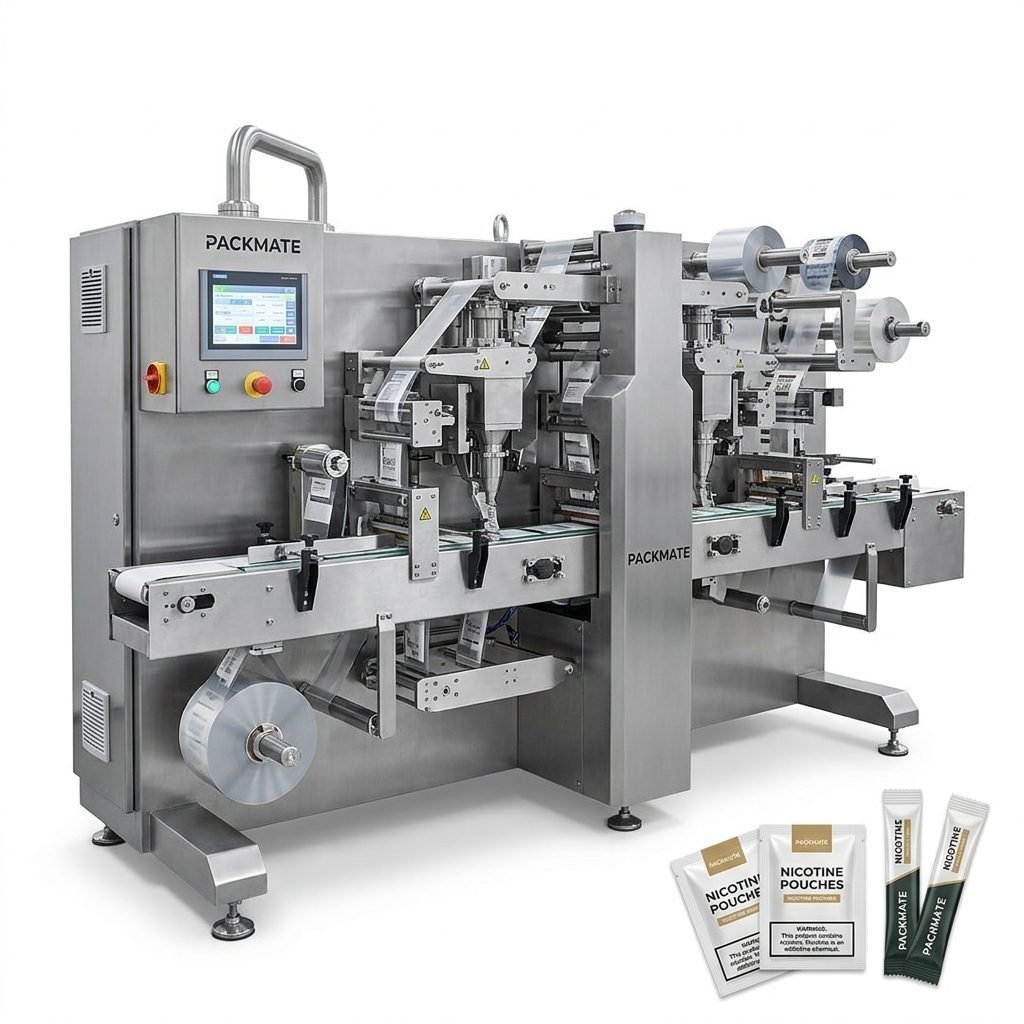
- Snus / Nicotine Pouch Packaging Machines — Designed for small-dose pouches with precision filling and sealing, often multi-lane for higher throughput. (See Snus & Nicotine Packaging Machines.)
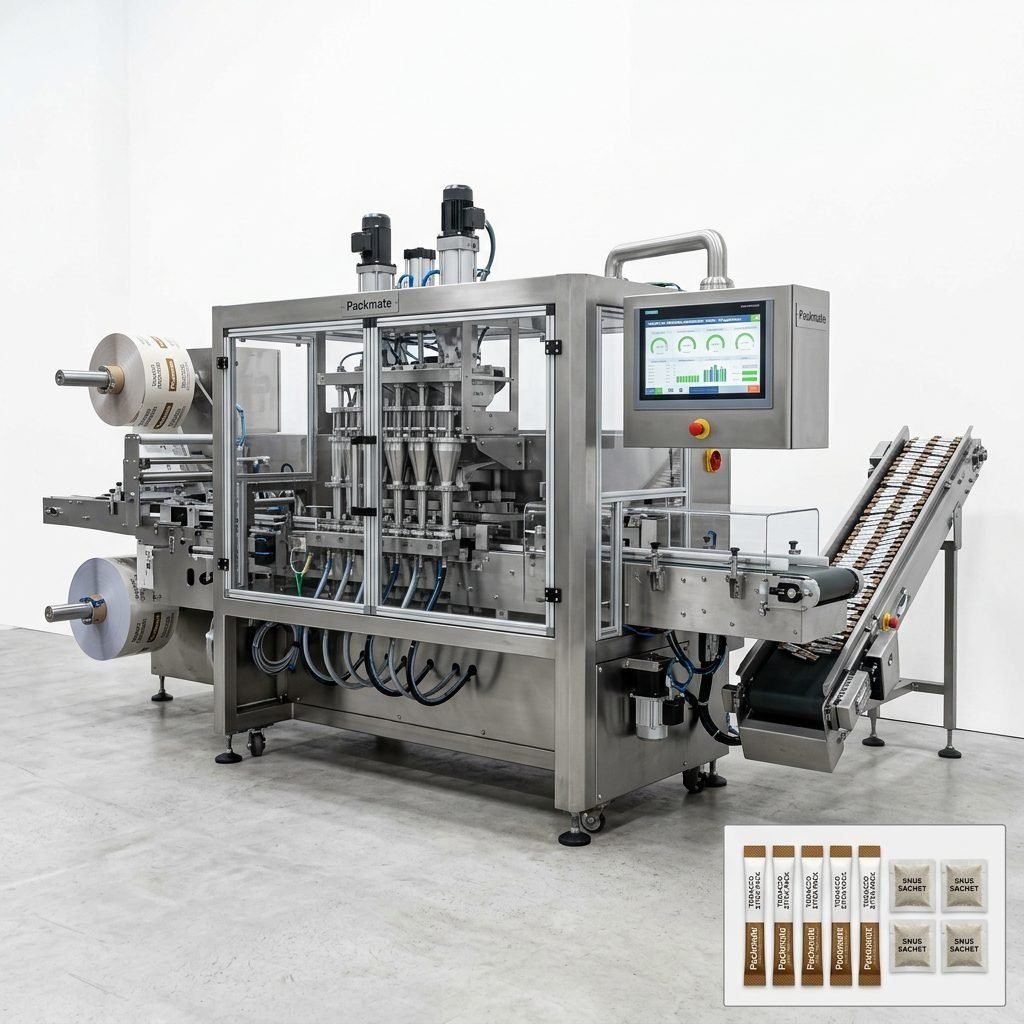
- Sachet & Stick Pack Machines — Ideal for single-dose stick packs or small sachets, useful if your product is sold in single-serve formats. (See Sachet & Stick Pack Machines.)
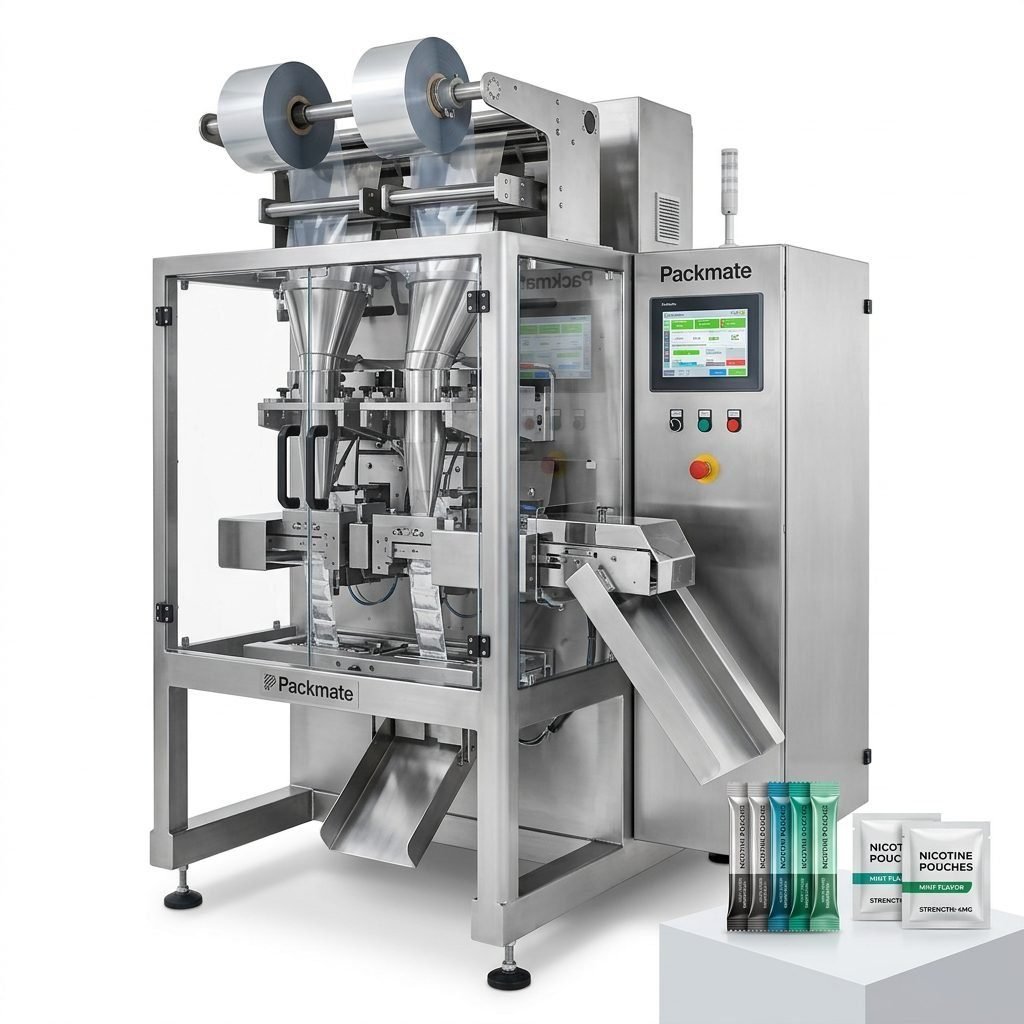
- Filling & Packaging Lines — Integrated lines combining feeding, weighing, and packaging for a complete solution. (See Filling & Packaging Lines.)
- Auxiliary equipment — Conveyors, checkweighers, metal detectors, and cartoners that complete the production line.
Quick tip: If high uptime is critical, prioritize machines with modular design and widely available electrical/mechanical components to simplify spare part sourcing.
How to evaluate technical specifications
Technical specifications determine whether a machine meets your product and capacity needs. Focus on:
- Capacity and speed — Expressed in pouches per minute (ppm) or pieces per minute. Calculate daily throughput targets and select machines with a comfortable margin above current demand.
- Lane count and scalability — Multi-lane systems increase yield in a compact footprint. Choose lanes that match your dose dosing and lane-synchronization needs.
- Filling accuracy — Especially crucial for nicotine dosing; check weighing accuracy (e.g., ±0.01 g) and the type of dosing system (augur, volumetric, multi-head weighers).
- Material compatibility — Confirm compatibility with pouch substrates: laminated films, foils, or biodegradable materials; ensure sealing temperature ranges suit your films.
- HMI & controls — Modern touch-screen HMIs, recipe storage, and remote diagnostics reduce setup time and help troubleshoot remotely.
Operational and site considerations
Operational conditions at your production site affect machine selection and integration:
- Footprint & layout — Review machine dimensions and plan for service access around the equipment.
- Utility requirements — Power voltage, compressed air consumption, and water usage (if applicable). Verify site capabilities before purchase.
- Hygiene & cleaning — Choose designs with easy-to-clean surfaces, minimal crevices, and quick-change components to meet GMP practices.
- Environmental controls — Dust and humidity control can impact machine performance and product quality.
Note: For nicotine products, safety measures (operator PPE, sealed dosing areas) and precise dosing systems are essential for compliance and worker protection.
Supplier selection: what to look for beyond price
Price is important, but long-term support, quality, certifications, and proven installations are often more valuable. Key supplier factors:
- Track record & references — Ask for case studies and references in similar products/markets. Packmate’s production history and global projects are examples of relevant credentials (see Case).
- Certifications — CE and ISO certifications indicate compliance with international safety and quality standards (see Certificate).
- After-sales service — Local or regional service partners, spare part availability, remote support, and training options reduce downtime.
- Customization & engineering — Machine adaptability to unique product specifications, packaging materials, and labeling requirements.
Important supplier questions (ask before you buy)
Before placing an order, clarify these points:
- What is the guaranteed machine uptime and mean time between failures (MTBF)?
- Which spare parts should be stocked locally and what is typical lead time?
- Do you offer FAT (Factory Acceptance Test) and will you demonstrate using our product samples?
- What training, installation, and commissioning support is included?
- What warranty terms and extended service packages are available?
Pro tip: Request a video or live demo with your actual nicotine pouch mix and film to verify sealing integrity and dosing accuracy before purchase.
Logistics, import and local service in North Korea
Logistics for industrial machinery to North Korea can be complex. Plan for import permits, customs clearance, and transport to the site. Work with suppliers experienced in international shipping and with local agents who can coordinate in-country requirements. Consider supplier options that include installation supervision, remote commissioning, and long-term spare parts agreements.
Budgeting and total cost of ownership (TCO)
Look beyond the machine price. TCO includes installation, training, shipping, customs duties, spare parts, consumables (seals, belts, film), energy, and downtime costs. A slightly higher initial investment in higher-quality equipment often yields lower TCO through reduced maintenance and higher throughput.
Sample budget breakdown
– Machine cost (unit) — base price including standard components.
– Shipping & freight — ocean/air freight and inland transport.
– Customs & duties — local taxes and import fees.
– Installation & commissioning — supplier engineer travel and on-site support.
– Spare parts kit — recommended spares for 6–12 months.
– Training — operator and maintenance training packages.
– Consumables — film, spare seals, and wear parts inventory.
Procurement checklist: step-by-step
Follow this streamlined buying process to minimize risk:
- Define product specs, desired capacity, and format (pouch/ stick/ sachet).
- Shortlist reputable suppliers and request machine specifications and references.
- Request sample testing (FAT) using your product and packaging materials.
- Negotiate commercial terms: price, lead time, payment schedule, warranty.
- Arrange shipping, import documentation, and local handling logistics.
- Plan site preparation: utilities, foundation, access routes.
- Accept shipment, carry out installation, commissioning, and operator training.
- Perform SAT (Site Acceptance Test) and document performance to agreed KPIs.
Checklist highlight: Always include a FAT clause in your contract to verify performance before final payment.
Maintenance and spare parts strategy
Establish a preventive maintenance schedule and stock essential wear parts locally. Common spares include belts, sealing jaws, bearings, sensors, and electrical components. Remote diagnostics and spare-part kits supplied at handover can significantly reduce MTTR (mean time to repair).
Why choose an experienced manufacturer
Established manufacturers with decades of engineering experience deliver more reliable machines and better lifecycle support. For example, companies with 30+ years of industry expertise and advanced manufacturing (CNC, precision assembly) typically offer robust multi-lane systems and global turnkey solutions. Learn more about a proven manufacturer in this field at About Packmate.
Final selection matrix (quick reference)
Use this simple matrix to score shortlisted machines:
- Production capacity vs requirement (score 1–5)
- Dosing accuracy and product quality (1–5)
- Footprint and site fit (1–5)
- After-sales support and spare part access (1–5)
- Certifications and compliance (1–5)
- Total cost of ownership (1–5)
Sum the scores to help make an objective comparison and prioritize suppliers who consistently score well across operational and service criteria.
Decision trigger: If a supplier offers FAT with your product samples and strong references, they move to the top of the shortlist.
Next steps and resources
To proceed, request detailed machine specs, sample testing, and a full quotation including delivery and commissioning. For integrated solutions (weighing + filling + packaging), explore specialized systems to ensure seamless integration (see Weighing & Packaging Systems).
If you need turn-key line options or auxiliary equipment, consult the supplier’s product catalog and service offerings to build a complete production line that matches your throughput and quality goals. (Explore more in the Catalog and Service pages.)
Closing note
Selecting nicotine packaging machinery for North Korea requires attention to durability, supplier reliability, and logistics planning. Prioritize machines that offer precise dosing, easy maintenance, and strong supplier support to ensure sustainable production and minimized downtime.
Frequently Asked Questions
1) How do I verify machine performance before buying? — Request a Factory Acceptance Test (FAT) using your actual product and pouch material, and get video proof or attend the FAT in person where possible.
2) What spare parts should I stock locally? — Keep belts, seals, bearings, sensors, and common electrical modules; ask the supplier for a recommended spare-parts kit for 6–12 months.
3) How important are certifications? — Certifications like CE and ISO indicate safety and quality standards that help ensure long-term reliability and easier international compliance.
4) Can I get integrated lines for scaling up production? — Yes. Look for turnkey solutions that combine weighing, filling, and packaging; consult suppliers who provide line integration services.
5) Where can I see proven snus packaging solutions? — Review supplier case studies and exhibition demos to validate real-world performance (see Our Exhibition and Case).