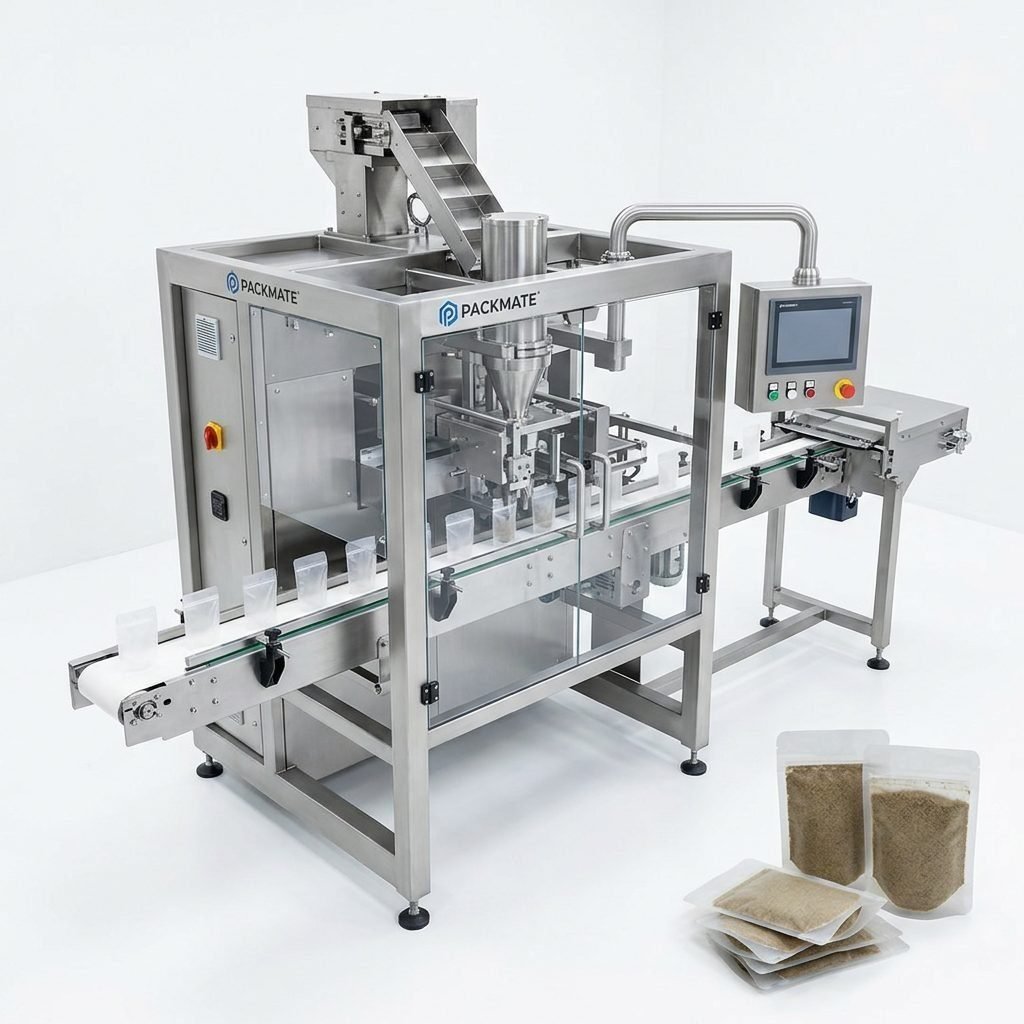
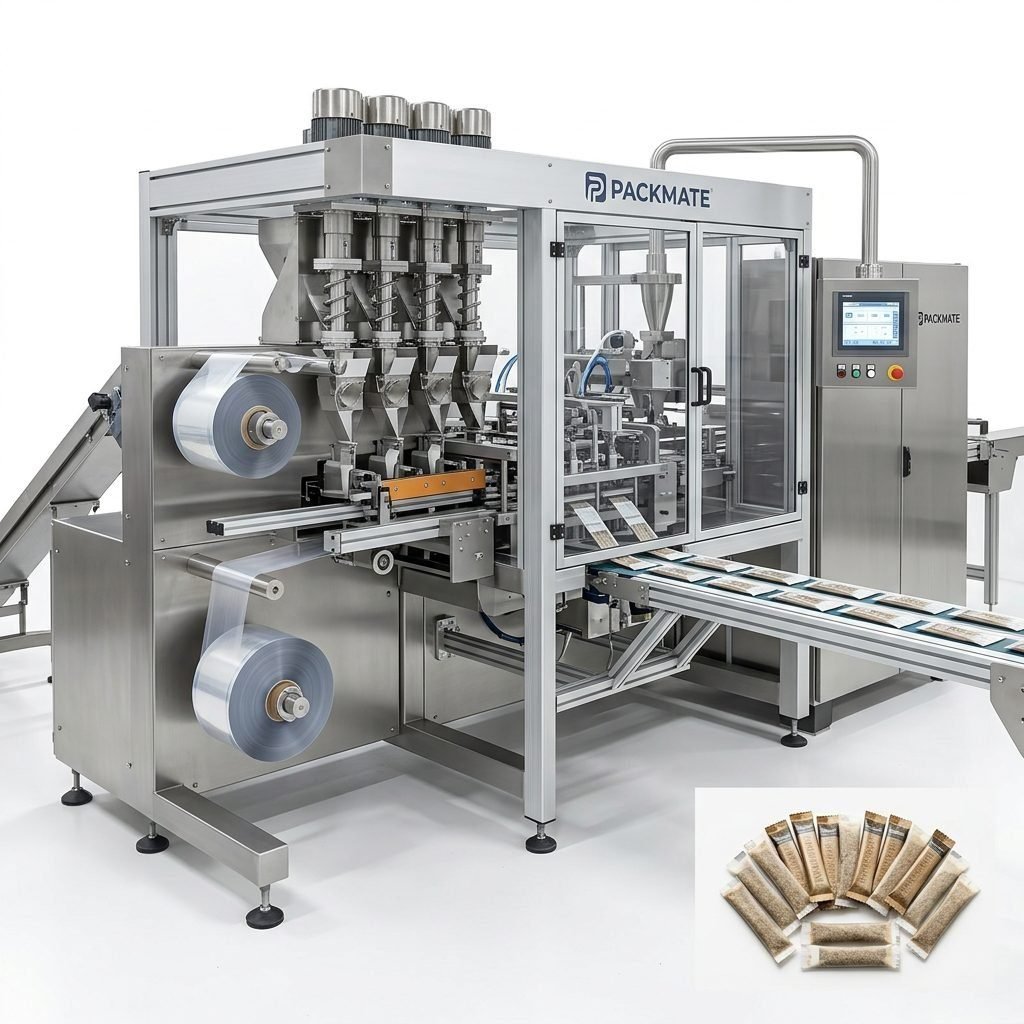
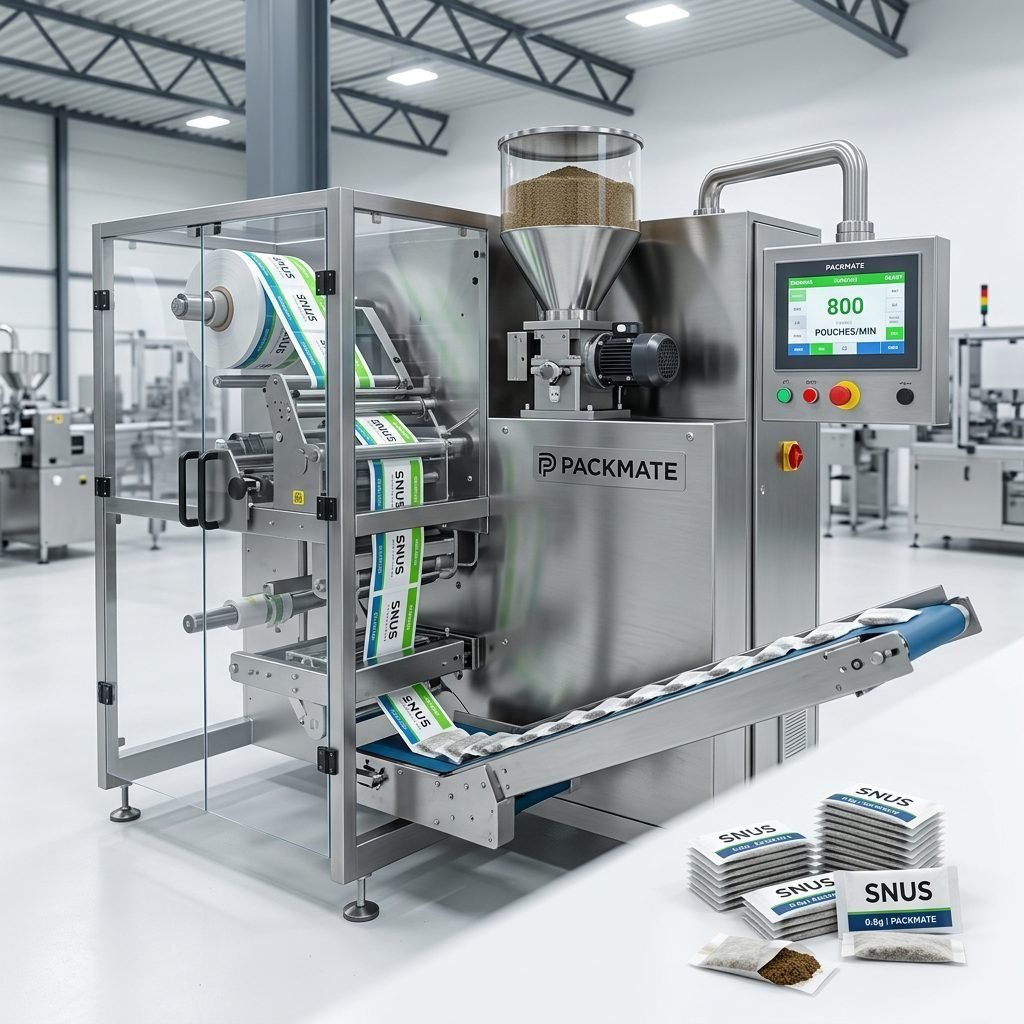
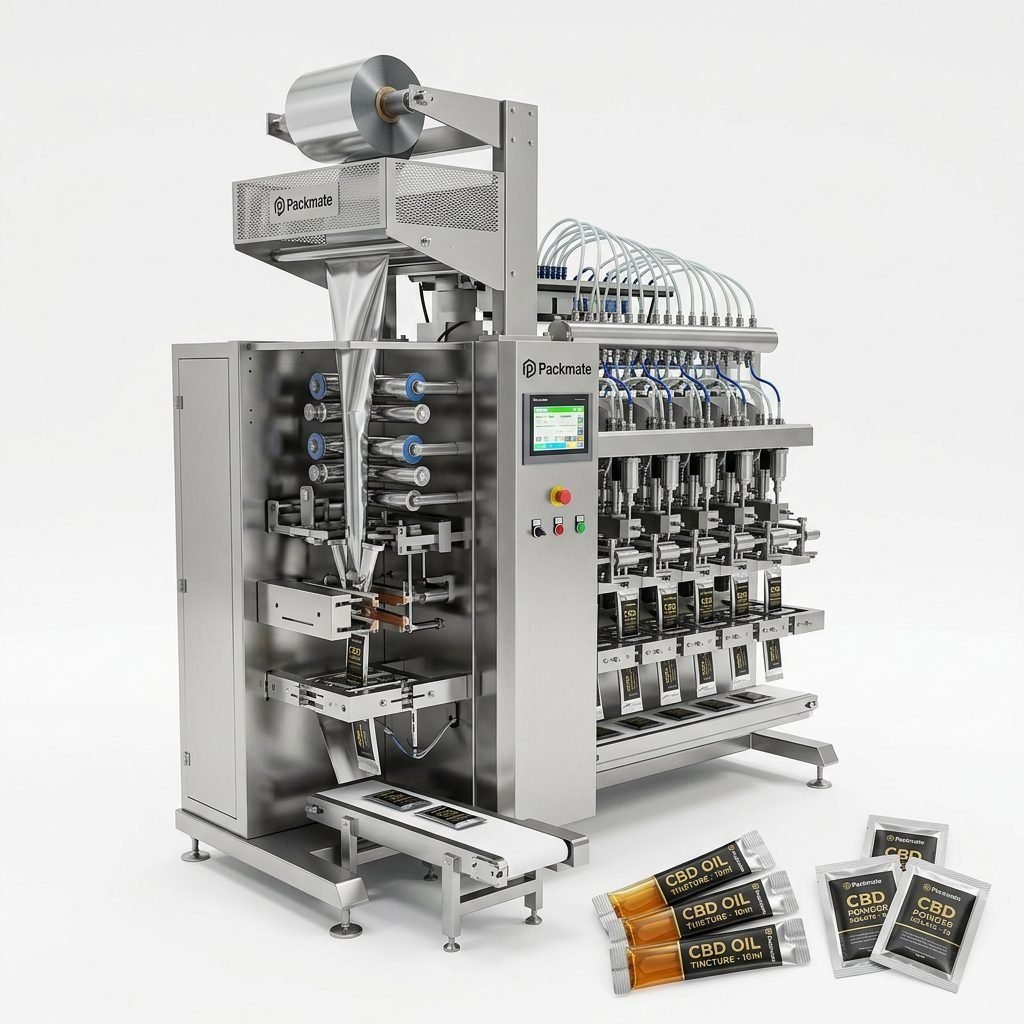
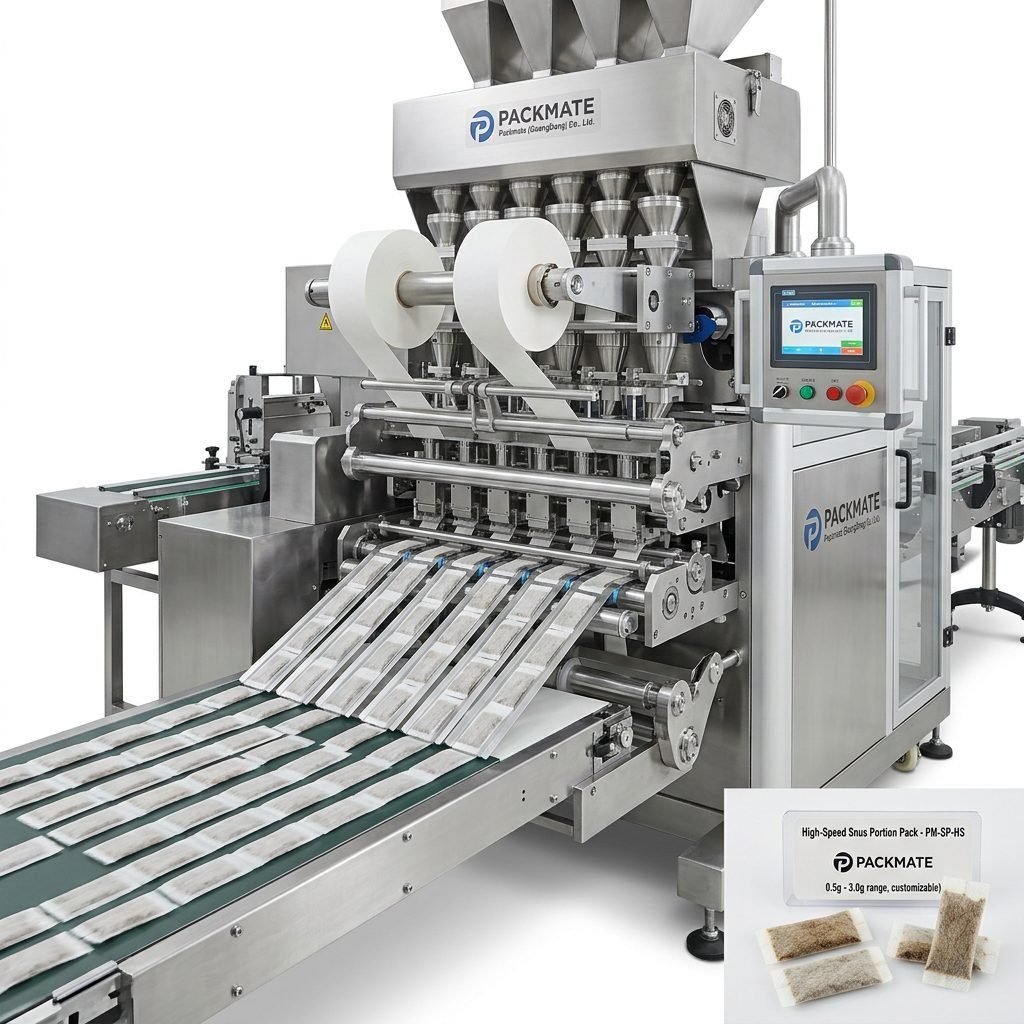
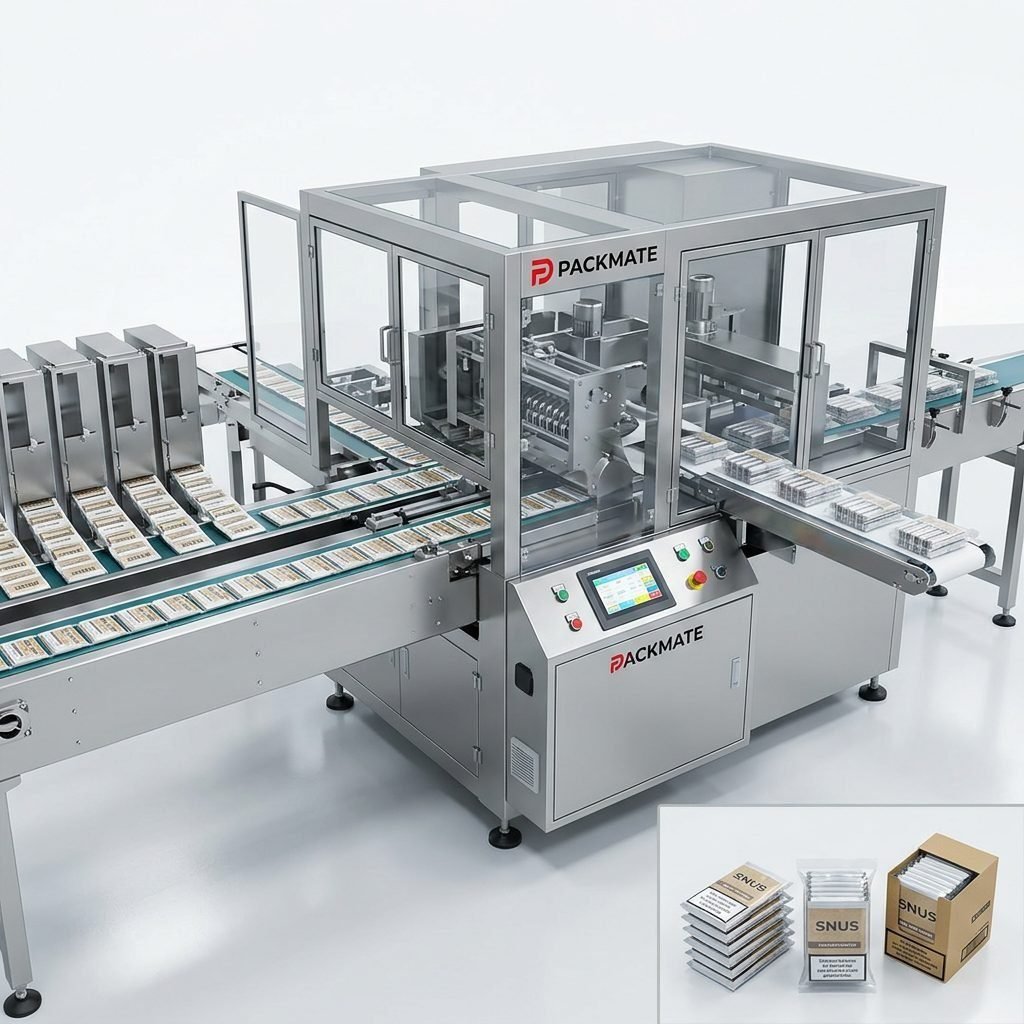
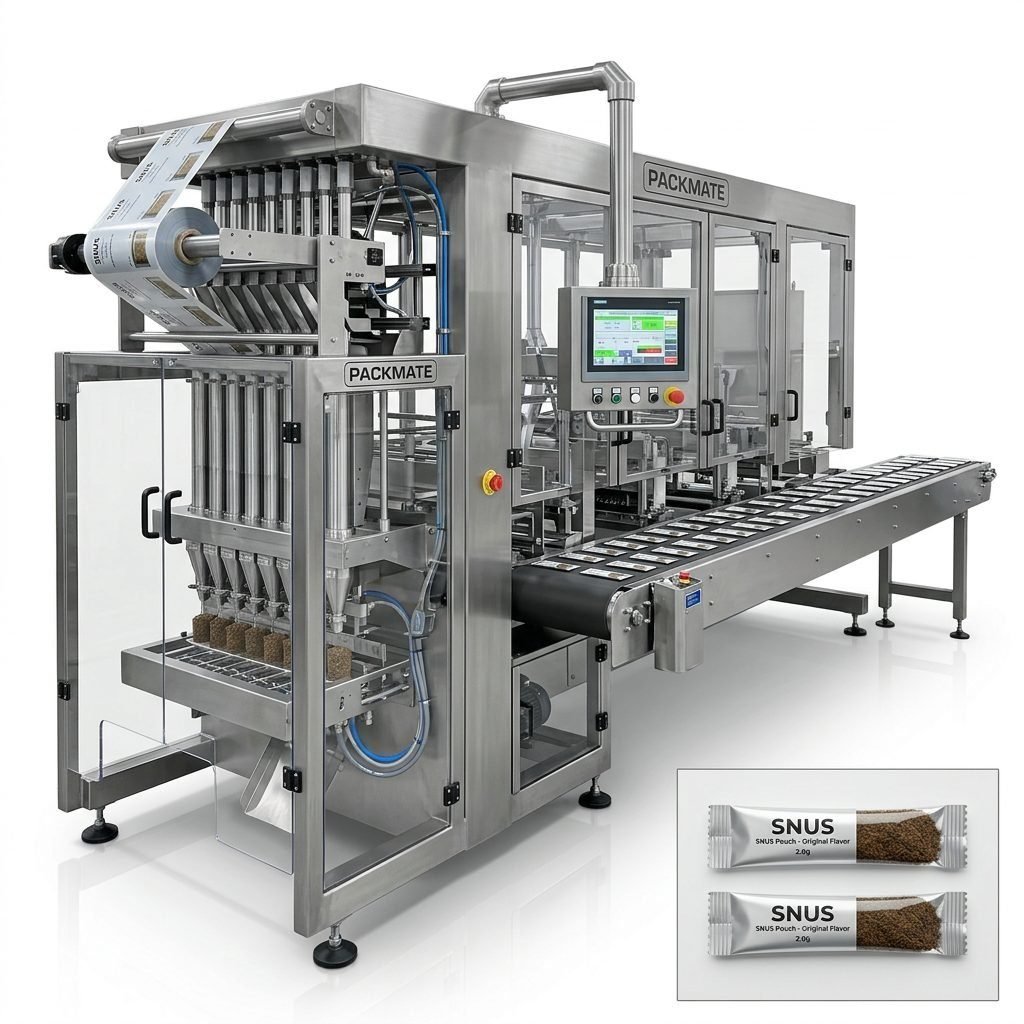
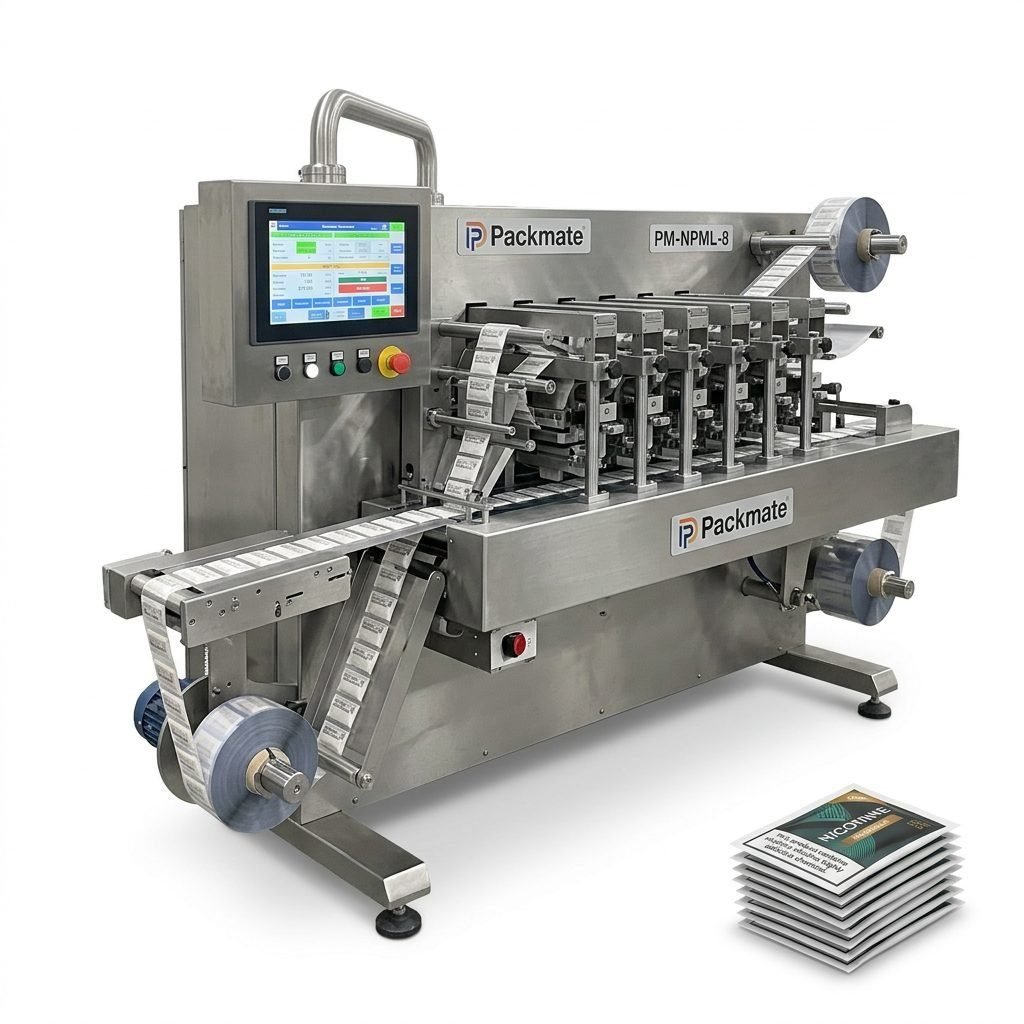
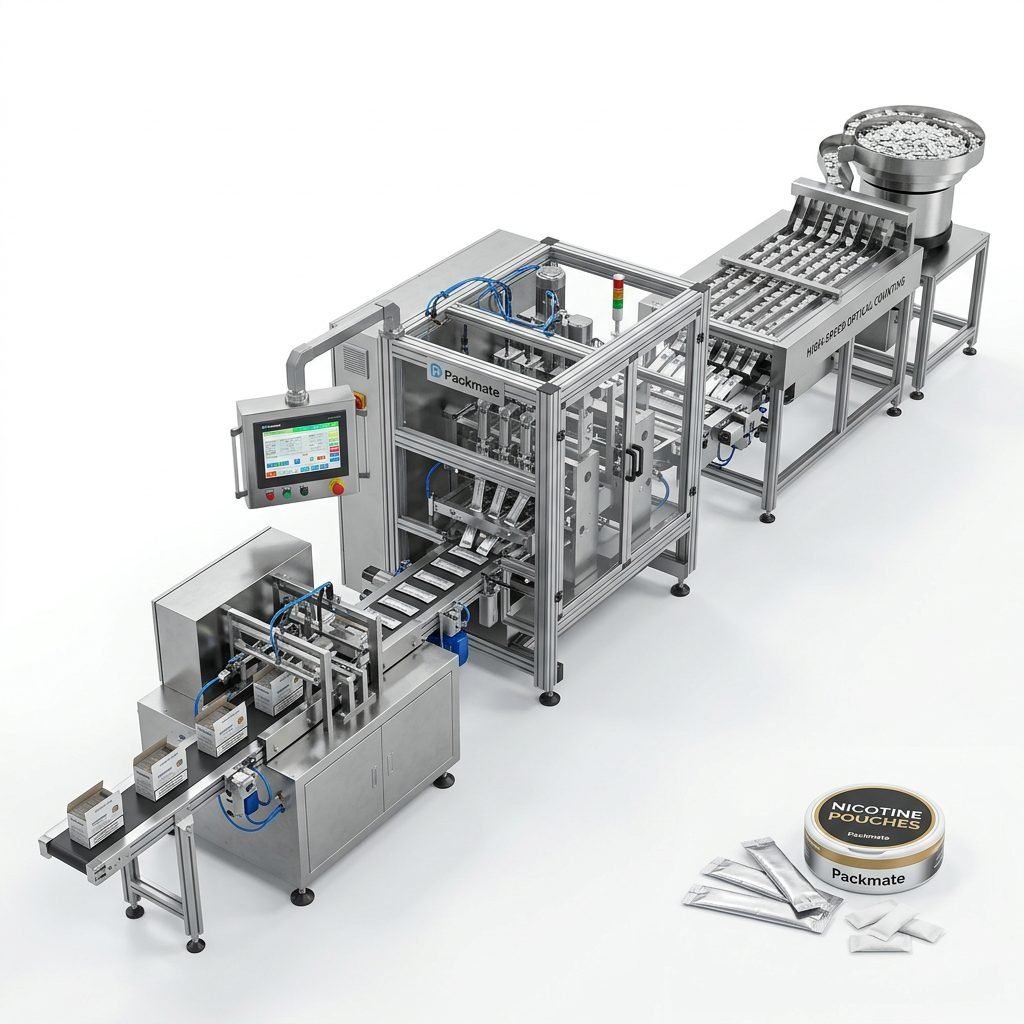
Entering the nicotine pouch market in the Solomon Islands requires careful selection of a packaging machinery partner. Choosing the right manufacturer affects not only production uptime and product consistency but also regulatory compliance, speed to market, and long-term operational costs. This guide walks you through practical criteria, inspection tips, and negotiation strategies to select the best nicotine packaging machine manufacturer for your needs.
🔎 Understand Local Market Needs and Production Goals
Before contacting manufacturers, clearly define your expected daily output, pouch formats, material types (film, foil, paper), and any multi-lane production requirements. For example, small-dose nicotine pouches often need multi-lane lines for cost-efficient high-volume output. Knowing these details helps you avoid generic proposals and ensures manufacturers like Packmate can recommend the right model from their range of over 50 machine types.
Key production questions to answer
• What is your target output (pouches per minute and daily/monthly volume)?
• Which pouch styles are required (stick pack, sachet, multi-lane pockets)?
• Are you planning additional filling types (powder, granule, liquid)?
• Do you require turnkey line design, including weighing, filling, and packaging integration?
Tip: If you need examples of machine types and configurations, review manufacturers’ product pages such as
Snus & Nicotine Packaging Machines
and
Sachet & Stick Pack Machines.
🏭 Evaluate Manufacturer Experience and Manufacturing Strength
Experience matters. Prioritize manufacturers with a proven track record in snus and nicotine pouch packaging. A manufacturer with decades of engineering experience and a dedicated facility demonstrates stability and the ability to handle custom requirements. Check for:
Experience indicators
• Years in R&D and production (look for 20+ years for complex packaging lines).
• Factory scale (a 20,000㎡ facility signals serious production capacity).
• Availability of advanced CNC machining and precision assembly lines.
• Range of models and the ability to customize turnkey solutions.
Red flag: Manufacturers unwilling to provide details on their factory size, production capacity, or model range may lack the infrastructure to support you long-term.
✅ Verify Certifications, Standards and Compliance
International certifications like CE and ISO are essential for safety and quality assurance. For nicotine products, adherence to sanitary design and material-contact standards is crucial. Confirm:
Checklist for certifications
• CE and ISO certificates for machinery design and quality management.
• Documentation proving compliance with electrical and safety standards.
• Traceability for components and materials used in filling and contact surfaces.
• Willingness to support regulatory audits and provide testing records.
🔧 Inspect Machine Performance, Options and Customization
Machine specs should match your product and business roadmap. Focus on reliability, changeover time, maintenance access, and available options such as multi-lane feeding, integrated weighing systems, and automated quality inspection.
Important technical aspects
• Stability: consistent pouch weight and sealing quality at target speed.
• Flexibility: ability to switch pouch sizes or lane counts without long downtimes.
• Integration: compatibility with auxiliary equipment (weighers, metal detectors, conveyors). See examples on the Weighing & Packaging Systems page.
• Spare parts availability and standardized components to reduce lead times and costs.
Must-have: A clear parts and maintenance plan. Manufacturers should give spare parts lists, MTBF (mean time between failures) estimates, and local support options.
🤝 After-Sales Service, Training and Local Support
Long-term success depends on timely service. Confirm service SLA, response times for remote support, and availability of on-site technicians for the Solomon Islands. Ask whether the manufacturer offers:
Service elements to negotiate
• Remote diagnostics and PLC/HMI support (24/7 if possible).
• Commissioning and operator training at your site or at the factory.
• Spare parts kits shipped with the machine and local stocking options.
• Preventive maintenance contracts and software updates.
💰 Cost vs Value: Total Cost of Ownership (TCO)
Purchase price is only the beginning. Calculate TCO across installation, parts, energy, downtime, and lifecycle upgrades. A lower-cost machine can become expensive if it lacks durability or spare-part availability.
TCO factors
• Installation and commissioning expenses (freight, customs, setup).
• Training time and productivity ramp-up.
• Routine parts and consumables cost.
• Energy efficiency and waste rates (material scrap, rework).
• Resale value and upgrade paths.
Financial tip: Request a sample TCO calculation from suppliers to compare true lifecycle costs rather than headline prices.
📋 Evaluate References, Case Studies and Live Demonstrations
Suppliers who provide client references, site visit opportunities, and recorded machine demonstrations show transparency. Review documented case studies and ask for references with similar product types or production volumes. For example, explore manufacturer case examples on their Case page to validate claims.
Trusted manufacturers often exhibit at trade shows—attending an exhibition or reviewing their showcase can reveal real-world performance. See details under Our Exhibition.
🧭 Factory Visits, FAT and Acceptance Tests
Factory Acceptance Test (FAT) and site visits are crucial. A comprehensive FAT should include performance validation at the agreed speed, sealing integrity tests, and demonstration of changeover procedures. If a visit is not possible, request detailed FAT videos and live remote demonstrations.
FAT checklist
• Run at target speed with your materials and sampled pouches.
• Demonstrate cleaning and maintenance access.
• Validate safety interlocks and emergency stop functions.
• Confirm packaging line integration points and control interfaces.
⚖️ Negotiating Contracts and Warranty Terms
Make warranties explicit: define warranty period, coverage for electronic and mechanical parts, exclusions, and response times. Include clauses for spare parts supply and software support. If possible, negotiate performance guarantees tied to output rates and uptime percentages.
Contract highlight: Include a clear acceptance test procedure in your contract that must be passed before final payment.
📑 Procurement Checklist — Quick Reference
✔️ Production capability and model match
✔️ CE/ISO certifications and sanitary design compliance
✔️ FAT, on-site commissioning and training included
✔️ Spare parts availability and local stocking options
✔️ Clear warranty, service SLA and performance guarantees
📞 Where to Find and Contact Reputable Suppliers
Look for manufacturers who present transparent company profiles, factory details, and global project cases. If you are considering Packmate or similar suppliers, review their About page, case studies, and contact options to request detailed proposals and FAT arrangements:
• About Packmate
• Case studies and global projects
• Contact Us for quotes and technical discussions.
📌 Final Decision Factors: Balance Risk, Capability and Growth
Choose a partner who not only meets today’s specifications but can scale with your business as demand grows. Evaluate technological roadmap, customization flexibility, and global support footprint. A manufacturer with longstanding R&D, diverse machine offerings (stick pack, sachet, multi-lane systems) and real-world references offers reduced procurement risk and faster ramp-up.
Quick summary: Prioritize experience, certifications, proven FAT results, spare-parts strategy, and strong after-sales service. Consider total cost of ownership over sticker price.
❓ Frequently Asked Questions
Q1: What is the typical lead time for a snus/nicotine pouch packaging line?
A: Lead times vary by customization, but standard lines often range from 8–20 weeks. Complex multi-lane turnkey projects may take longer.
Q2: Can I see a factory demonstration or get samples before purchase?
A: Reputable manufacturers provide FAT demonstrations, sample runs, and remote or in-person visits to validate performance.
Q3: What after-sales support should I expect for machines shipped to the Solomon Islands?
A: Ensure the supplier offers remote diagnostics, commissioning support, parts kits, and clearly defined response times for on-site visits.
Q4: How do I evaluate total cost of ownership (TCO)?
A: Include purchase price, installation, spare parts, energy consumption, downtime risks, and expected maintenance intervals when calculating TCO.
Q5: Where can I find reliable product and service details?
A: Manufacturer product pages, case studies and official contact channels are primary sources. For product categories, review Bag & Pouch Packaging Machines and Filling & Packaging Lines.