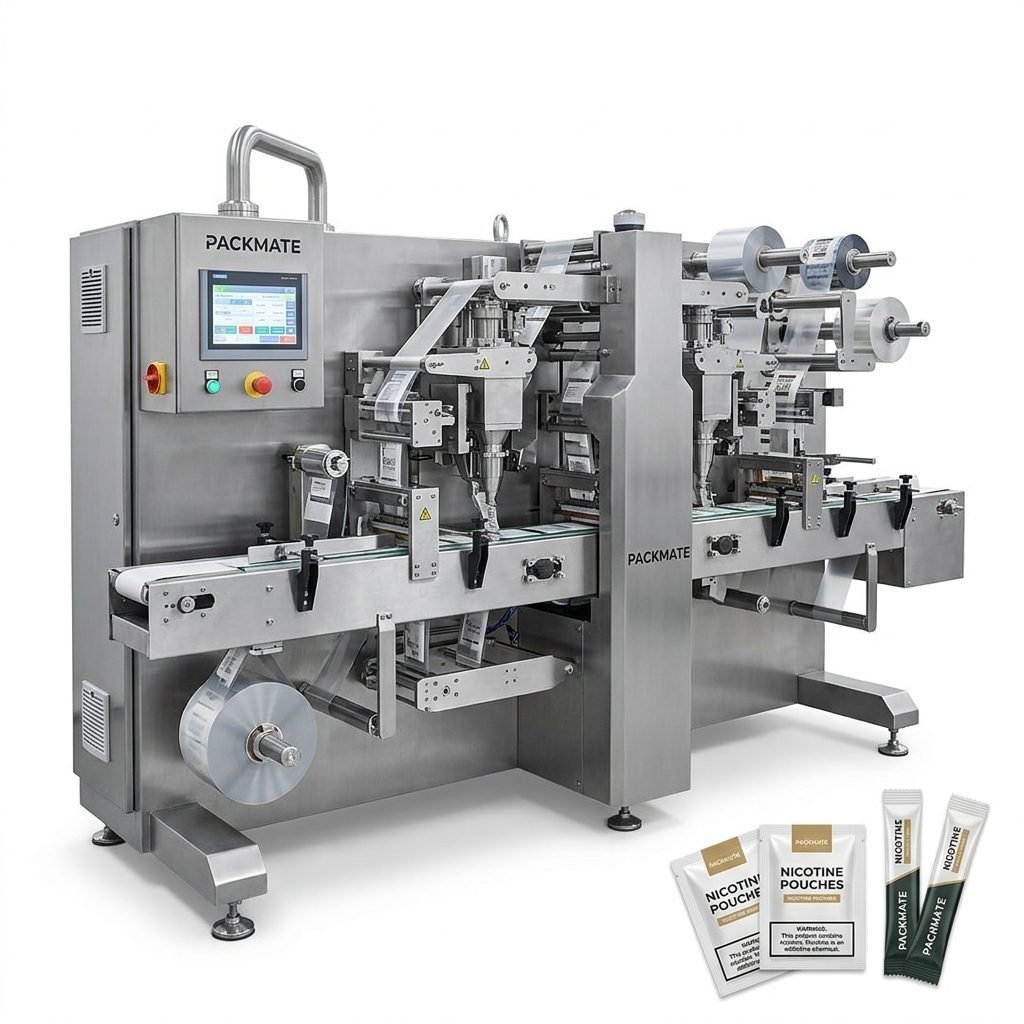
Choosing the right snus packaging machine in Germany requires a careful balance of regulatory awareness, production goals, and long-term costs. This guide helps purchasing managers, plant engineers, and business owners evaluate machines and suppliers so they can make an informed decision that supports consistent quality, regulatory compliance, and profitable growth.
Understand the German & EU regulatory environment
Germany follows EU product and machinery regulations that affect nicotine pouch and snus production lines. Before selecting equipment, confirm that machines and their electronic controls comply with CE marking and that production can meet labelling and traceability requirements. Key regulatory considerations include hygiene standards for food-contact parts, electrical safety, and CE/ISO certification. Choosing a supplier with experience exporting to Europe reduces the risk of delays or additional retrofit costs.
Tip: look for machines with documented CE/ISO compliance and hygiene-friendly designs to speed up EU acceptance and inspection.
Match machine type to your product format
Snus and nicotine pouches are packaged in several formats: sachets, stick packs, multi-lane pouches, or small-dose pouches. Each format favors different equipment:
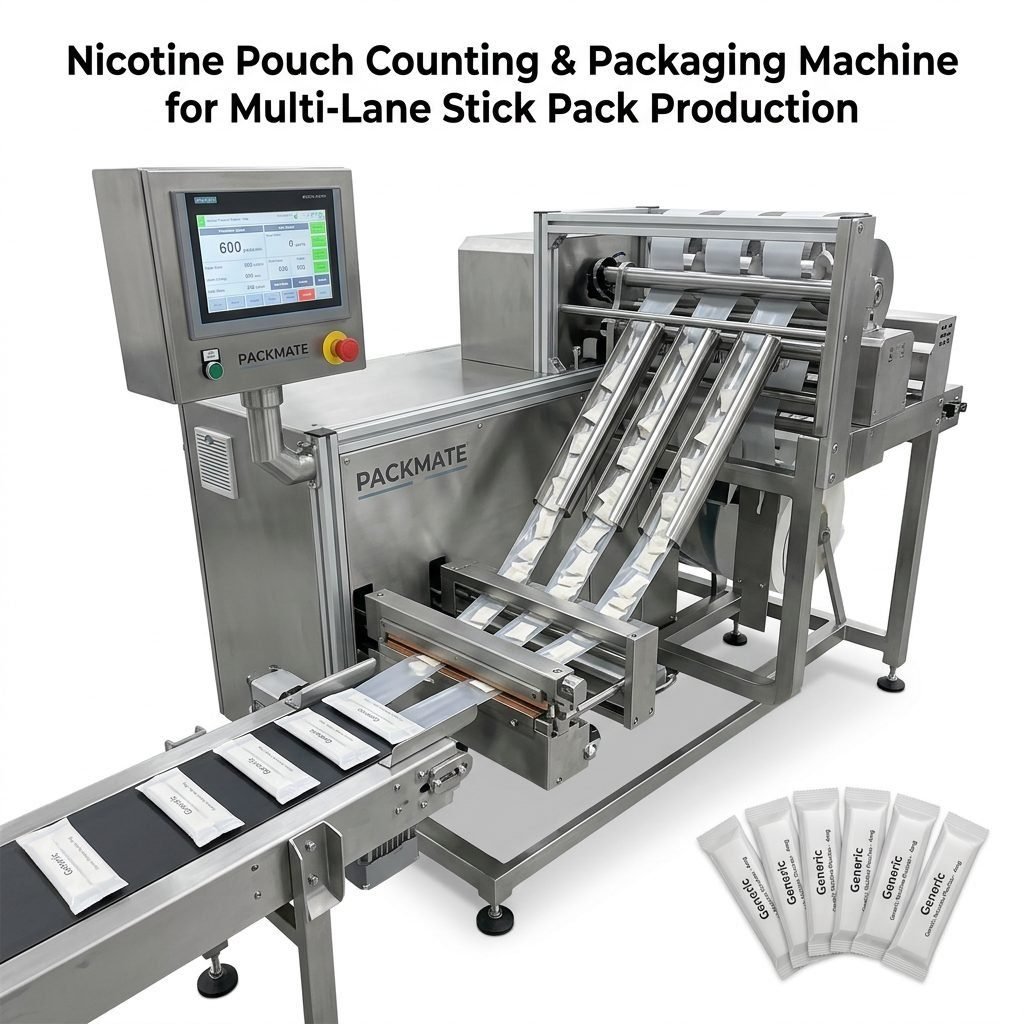
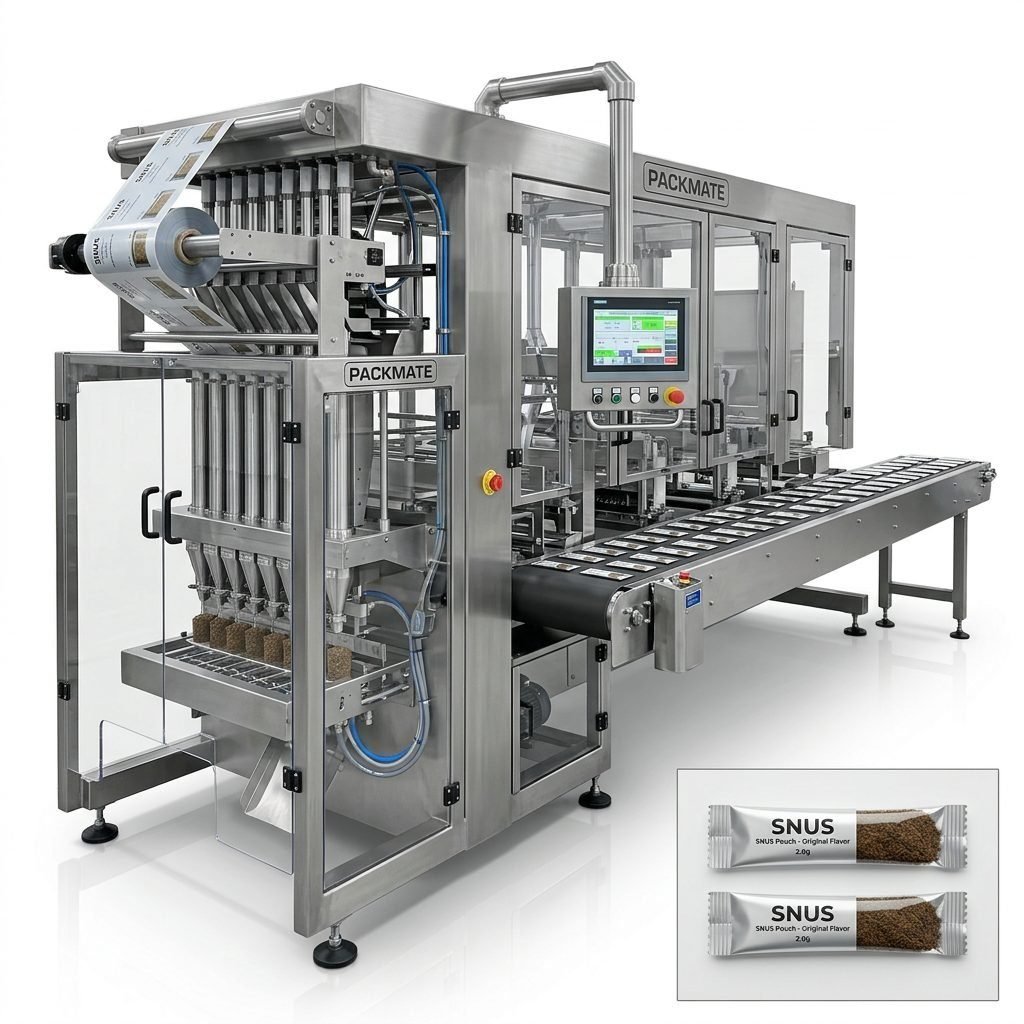
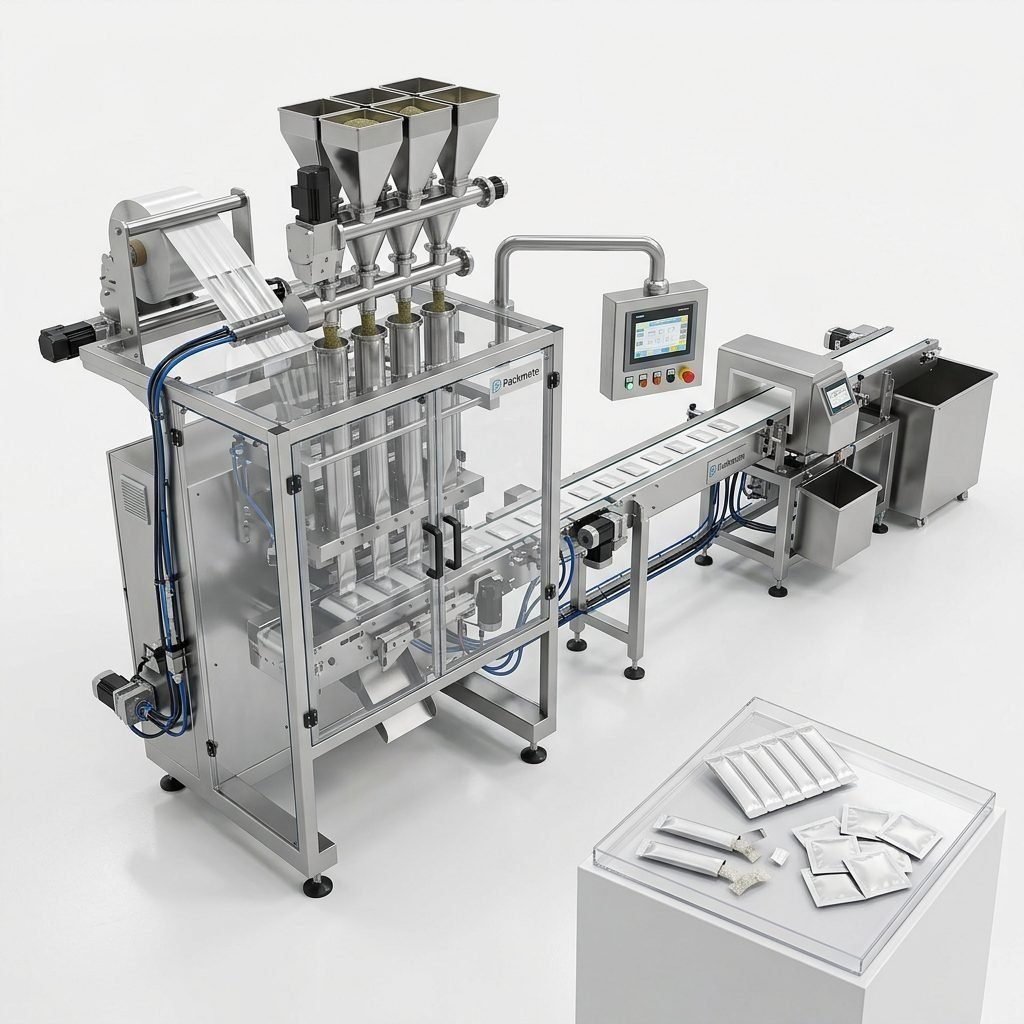
– Sachet & stick pack machines excel for single-dose portioned formats and often offer higher speeds per lane. Explore specialised solutions for tight portioning and neat sealing, especially if you need a variety of stick or sachet shapes.
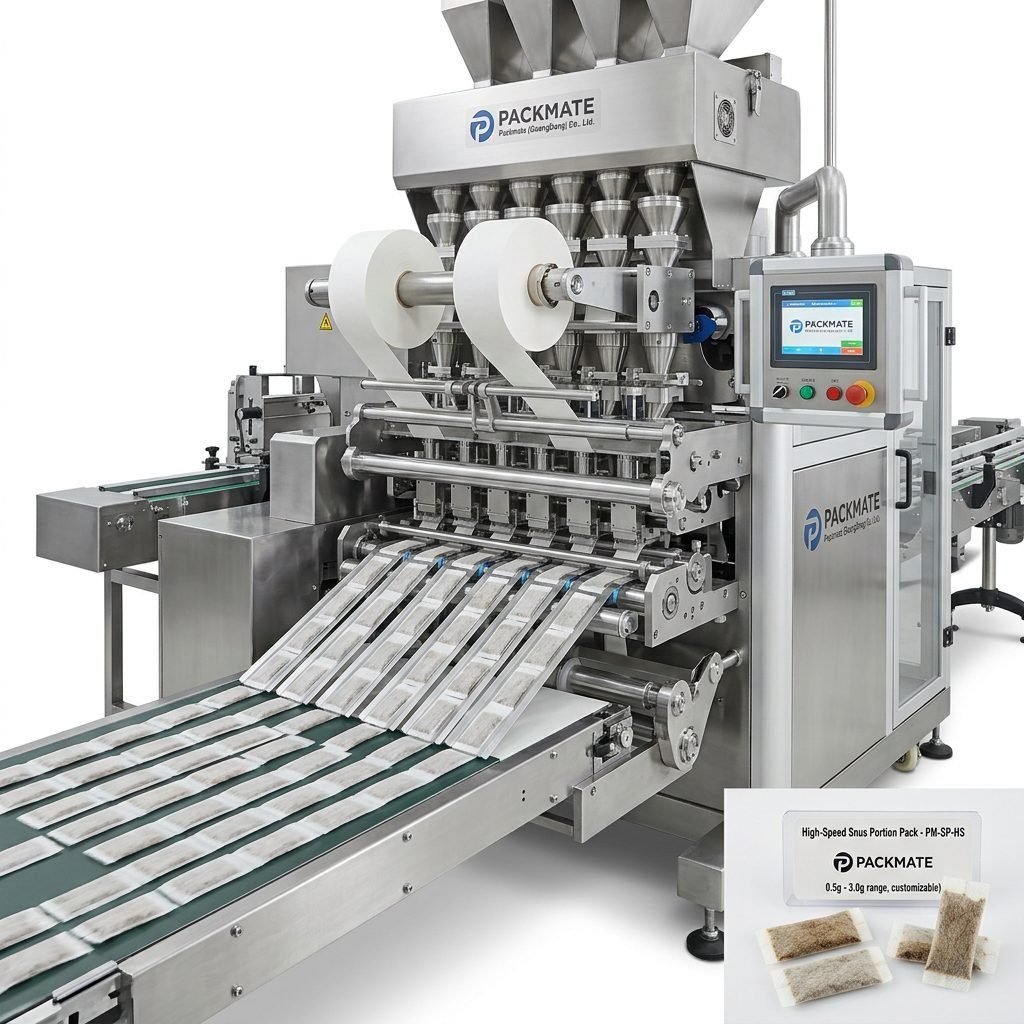
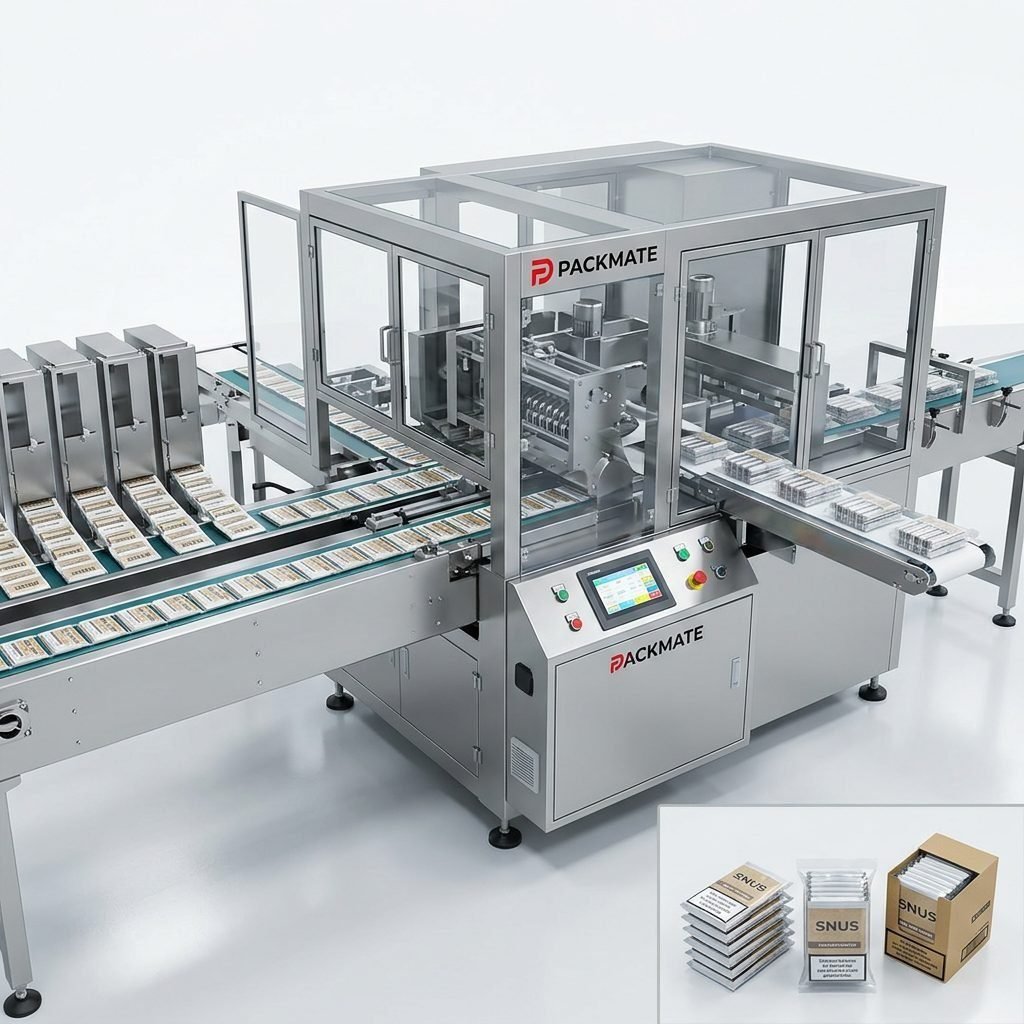
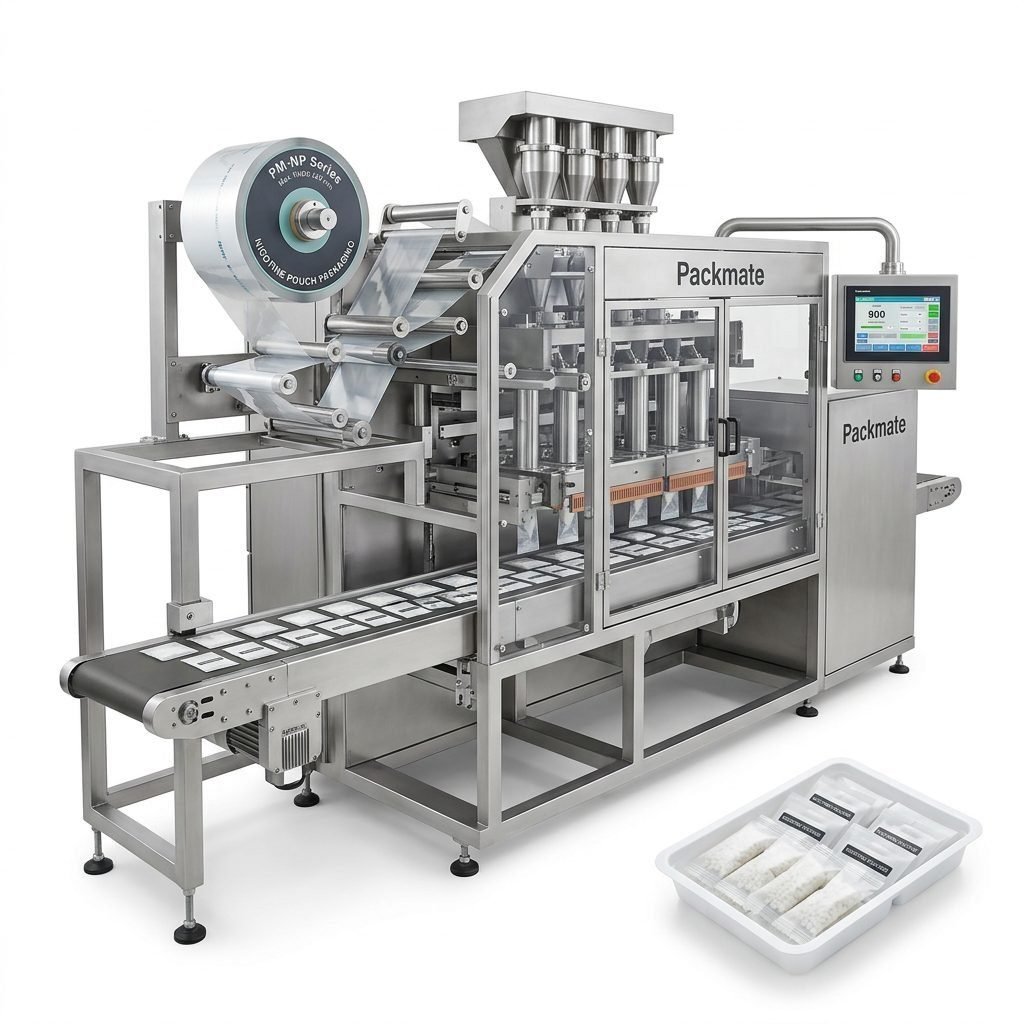
– Multi-lane snus pouch lines are ideal for high-volume production of small-dose nicotine pouches and snus. Multi-lane systems increase throughput without requiring a larger floor footprint.
Evaluate machine families such as sachet & stick pack machines and multi-lane snus systems, and confirm the vendor can demonstrate comparable installations or provide product samples from similar setups. Useful references: Sachet & Stick Pack Machines and Snus & Nicotine Packaging Machines.
Capacity, lanes and scalability
Production capacity is where many buyers miss the mark. A machine rated at X pouches per minute may deliver that only under ideal conditions. Account for:
– The number of lanes (single vs 4/6/8 lanes) and whether the line is easily extended later.
– Typical uptime in your environment and changeover frequency between SKUs, which affects effective throughput.
Note: a modular multi-lane design often provides better ROI than purchasing more single-lane machines when you anticipate volume growth.
Key machine features to prioritise
When comparing models and manufacturers, inspect these core features:
– Filling accuracy and dosing consistency (critical for nicotine product compliance and customer satisfaction).
– Sealing quality and seam integrity to prevent moisture ingress and ensure shelf life.
– Changeover speed and tool-less adjustments reduce downtime when switching between flavour profiles or pack sizes.
– User-friendly HMI with recipe management, remote diagnostics, and PLC control to allow your operators to reproduce setups reliably.
Hygiene, materials and serviceability
For snus and nicotine pouch applications, choose machines with stainless steel contact parts, quick-disassembly components, and smooth surfaces that minimise product retention. Ensure spare parts and service support are available in Europe — fast lead times for wear parts are essential to avoid extended stoppages.
Supplier evaluation checklist
Select a supplier that offers not only equipment but also engineering support, installation, and training. Use this checklist during vendor assessment:
– Proven references in nicotine/snus packaging and evidence of installations in regulated markets.
– On-site or remote commissioning, training for operators and maintenance staff, and a clear spare parts policy.
– After-sales service network in Europe or a committed regional partner that can handle urgent repairs and routine maintenance.
Companies that publish case studies and detailed product categories give better transparency — see examples of product groups and case references here: Case and Filling & Packaging Lines.
Total cost of ownership (TCO) considerations
Purchase price is only one part of the equation. TCO should include:
– Energy consumption and utility requirements.
– Spare parts usage rates and local inventory policies.
– The learning curve for operators — more intuitive machines reduce hidden labour costs.
Important: when comparing quotes, ask vendors to provide a TCO breakdown covering a 3–5 year horizon and typical uptime assumptions.
Factory layout, installation and utilities
Plan the factory layout carefully: multi-lane systems may require specific material feeding arrangements and walkways for maintenance. Confirm the electrical and compressed air specifications, as well as any HVAC or dust control requirements. A clear installation scope from the supplier reduces surprises and speeds up ramp-up.
Logistics, delivery and warranty
Delivery terms, shipping method, and warranty scope should be explicit in the contract. European buyers often prefer CIF or DDP terms to manage customs and local transport smoothly. Verify warranty exclusions and the availability of extended maintenance contracts for critical lines.
Customization and turnkey solutions
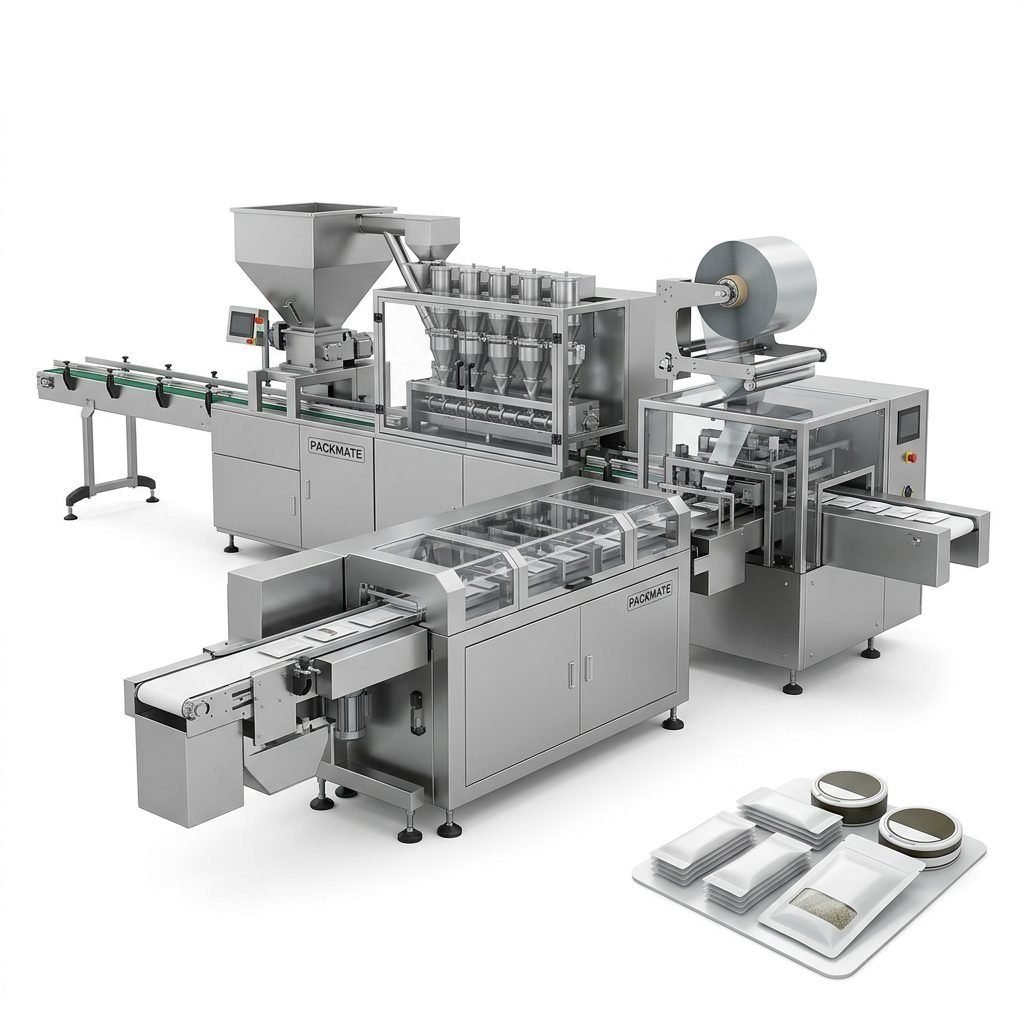
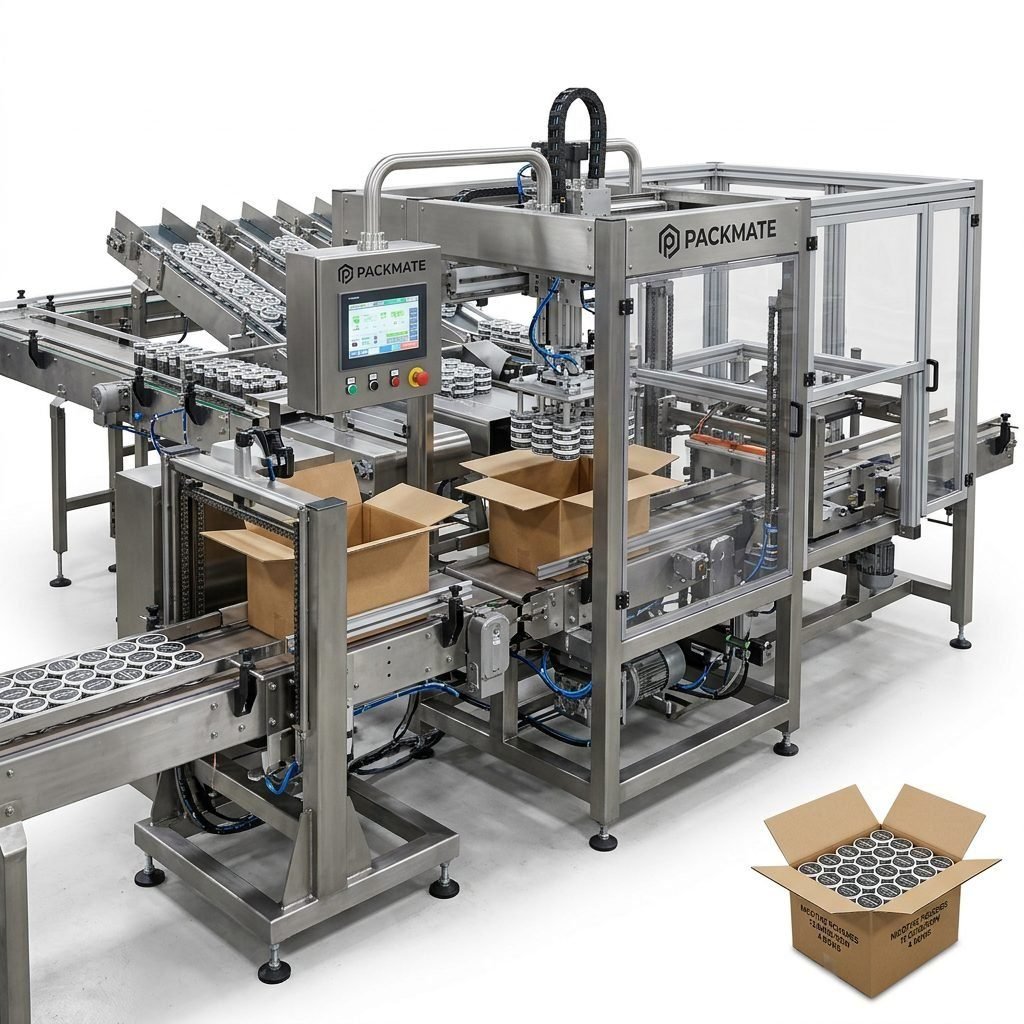
If your production needs special dosing, packaging materials, or secondary packaging (cartoning, case packing), choose a supplier that can deliver a turnkey line and integrate auxiliary equipment like weighing systems, case packers, and conveyors. Packmate’s broad portfolio demonstrates how integrated solutions reduce integration risk and procurement overhead. For more machine categories and auxiliaries, see: Auxiliary Packaging Equipment and Weighing & Packaging Systems.
Factory acceptance tests (FAT) and site acceptance tests (SAT)
Require FATs where possible: these tests validate functionality, speeds, and product quality before shipment. A thorough FAT reduces on-site commissioning time. SAT should verify that the line performs in your environment, using your materials and operators. Clearly define acceptance criteria and penalties for non-conformance in the purchase contract.
Checklist item: FAT protocols should include speed test runs, sealing checks, dose accuracy, and operator training sign-off.
Spare parts, training and long-term support
Prioritise suppliers that provide clear spare parts lists, recommended local spares, and training for both operators and maintenance teams. Remote diagnostics and an online parts portal shorten downtime. Ask about guaranteed response times and the availability of service technicians within the EU.
Real-world performance indicators
When evaluating vendors, request:
– Reference installations in Germany or neighbouring markets.
– Video demonstrations or remote live demos showing machine running your product or a close analogue.
– Customer testimonials and uptime statistics. Suppliers that publish case studies or customer success stories (for example, details on their About page or exhibition presence) often have mature service capabilities: About Packmate and Our Exhibition.
Negotiating the purchase
Key negotiation points:
– Include a performance acceptance clause tied to FAT/SAT results.
– Define delivery responsibilities, spare parts lead times, and warranty coverage.
– Request training hours and remote support packages as part of the deal rather than optional extras.
Installation, ramp-up and continuous improvement
Once the line is installed, establish a ramp-up plan with performance targets and a dedicated improvement loop. Measure first-run yields, changeover times, and operator competence. Use the vendor service agreement to optimise performance and implement incremental upgrades.
Final reminder: select a partner, not just a machine. Long-term cooperation on spare parts, upgrades, and compliance updates creates the best outcomes.
Where to begin and useful resources
Start by mapping product formats, target volumes, and regulatory needs. Then shortlist vendors with relevant experience and European support. To explore machine categories and technical specifications, see Packmate’s product pages for snus and related lines: Snus & Nicotine Packaging Machines, Bag & Pouch Packaging Machines, and request a factory acceptance (FAT) before shipment.
Conclusion
Selecting the right snus packaging machine in Germany is a strategic decision that affects product quality, regulatory compliance, and operational cost for years. Focus on proven machine types for your format, reliable suppliers with EU experience, robust after-sales support, and a clear TCO comparison. A strong partner can deliver not only the hardware but also FAT/SAT validation, spare parts readiness, and training — all crucial for rapid and reliable production ramp-up.
Common Questions
Q: How important is CE certification when purchasing a snus packaging machine for Germany?
A: CE certification is essential. It indicates compliance with EU Machinery Directives and is typically required for customs clearance and installation in regulated production environments.
Q: Should I choose multi-lane or multiple single-lane machines?
A: Multi-lane machines typically offer a smaller footprint and better scalability for high-volume small-dose production, while single-lane units can be more flexible for many SKUs. Base the decision on volume forecasts and SKU mix.
Q: What spare parts should I stock locally?
A: Keep critical wear parts, sealing jaws, belts, sensors, and key electronic components on hand. Your supplier can recommend a local spare parts kit tailored to your line and uptime targets.
Q: How can I validate a supplier’s European service capability?
A: Ask for references of installations in Europe, average response times for service calls, and whether they have local partners or technicians who can provide fast on-site assistance.
Q: Where can I get more information or request a quote?
A: Contact the manufacturer directly for quotes, FAT scheduling, and technical details: Contact Us.