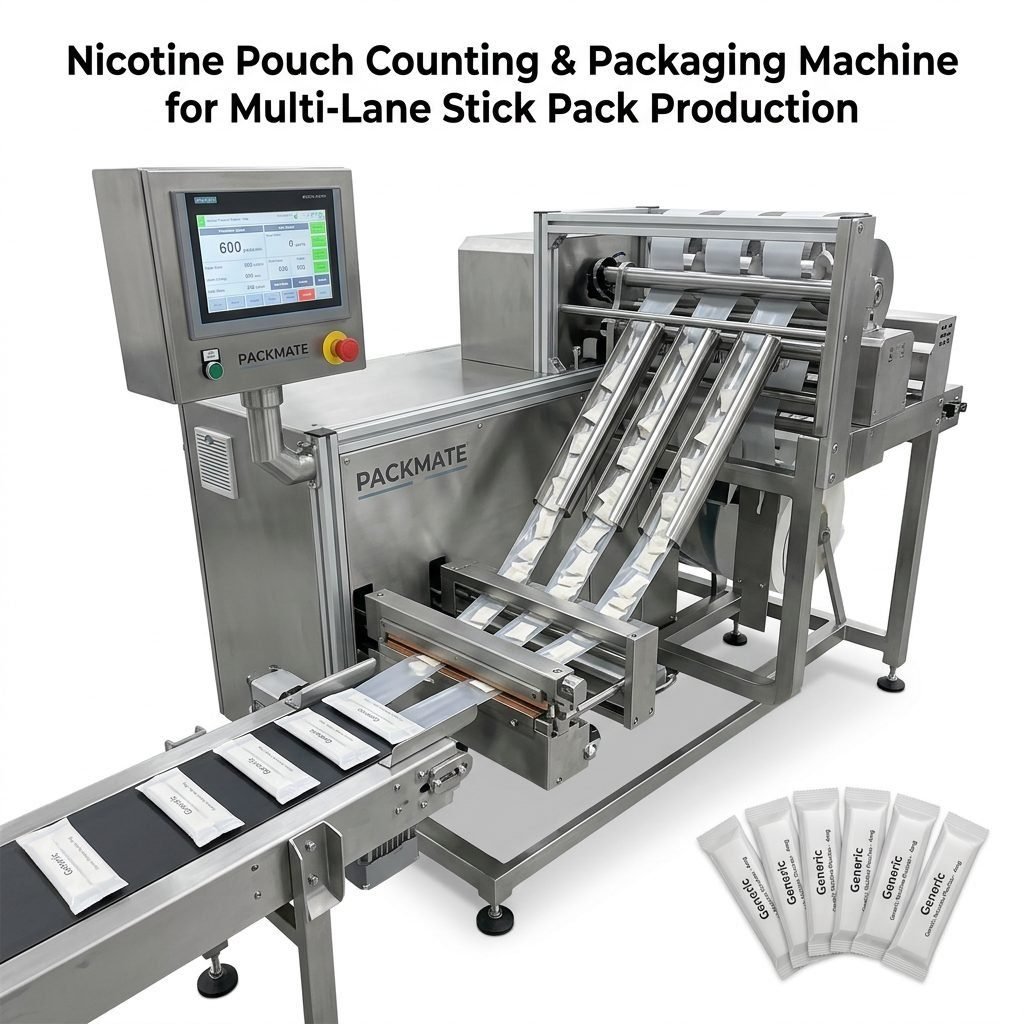
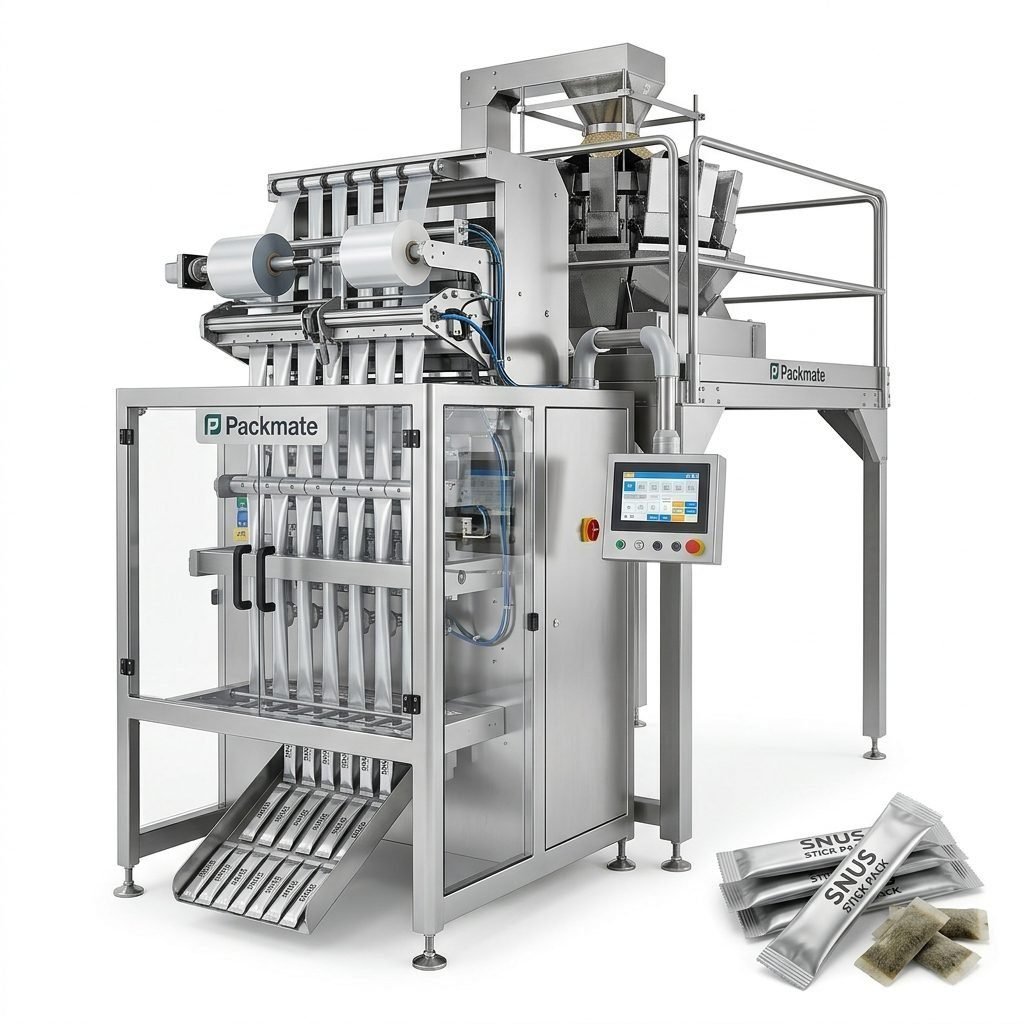
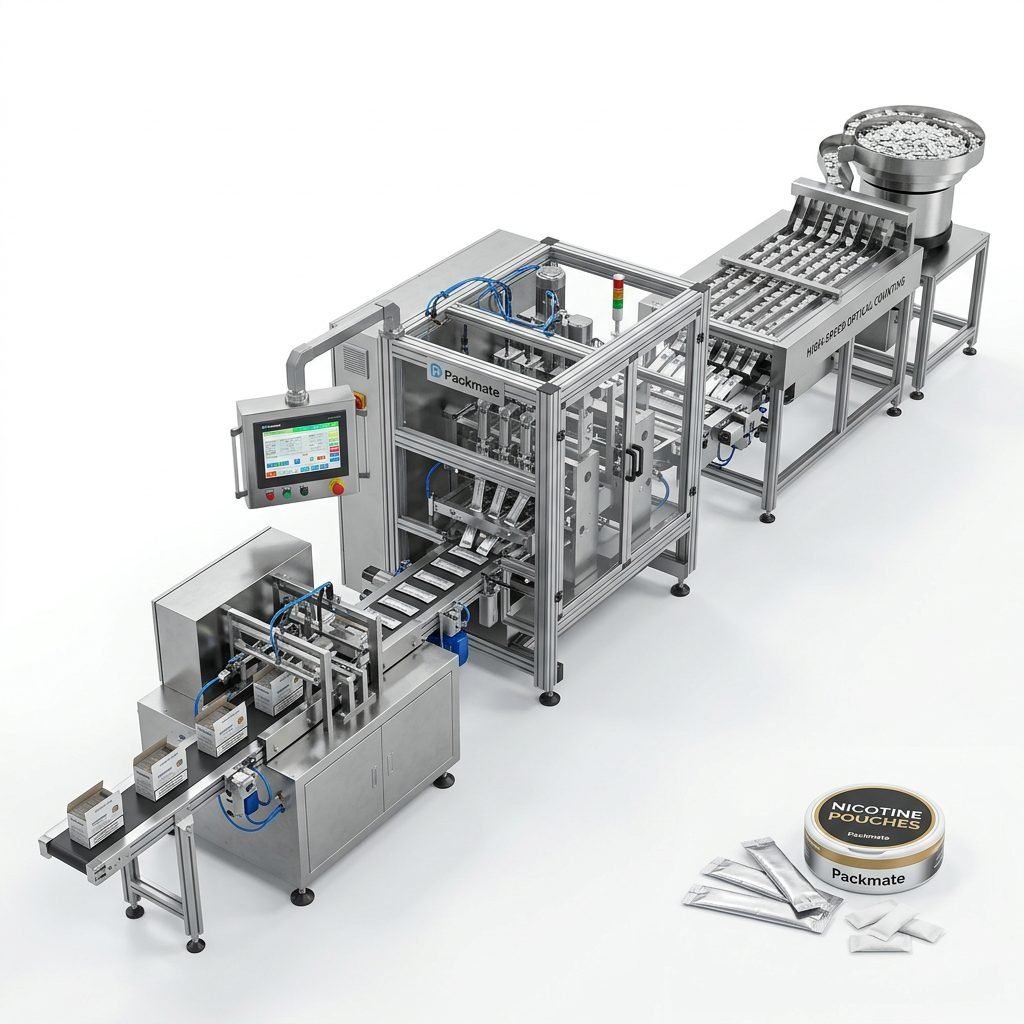
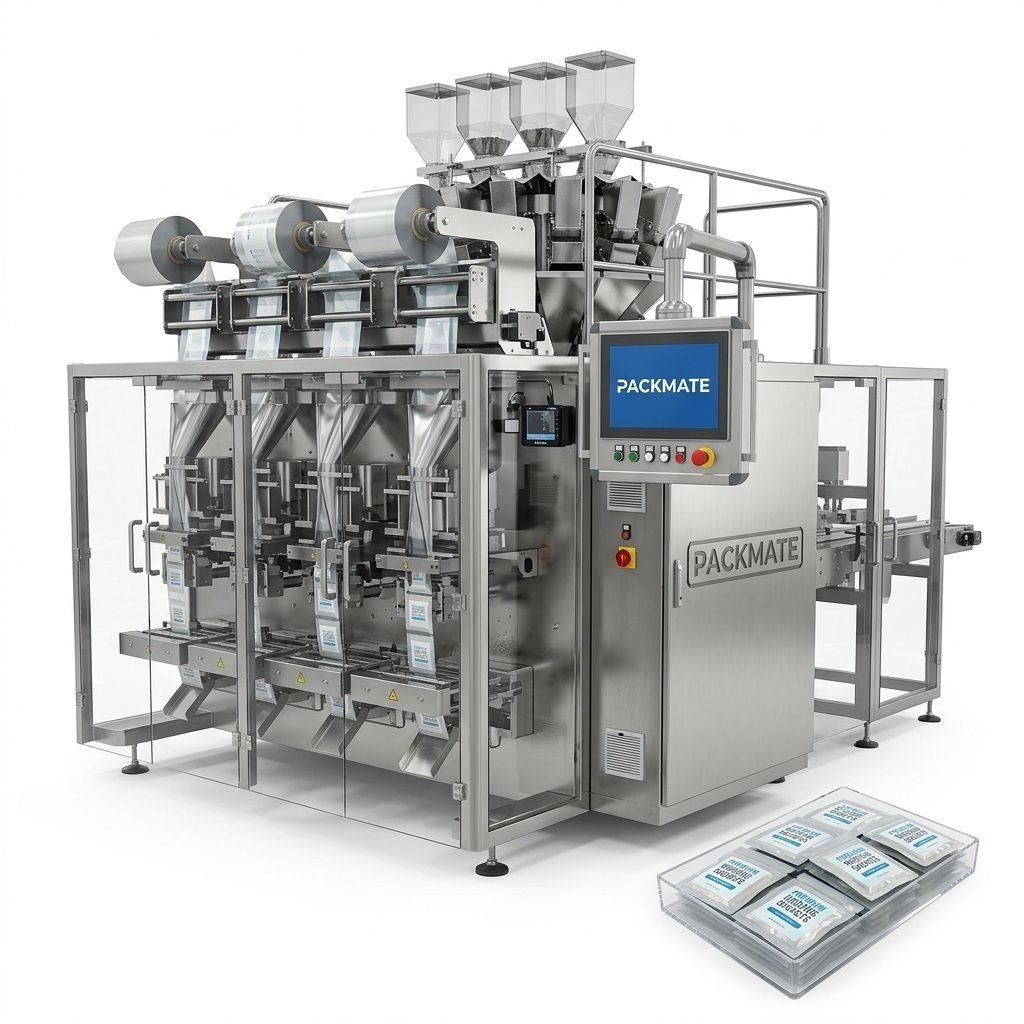
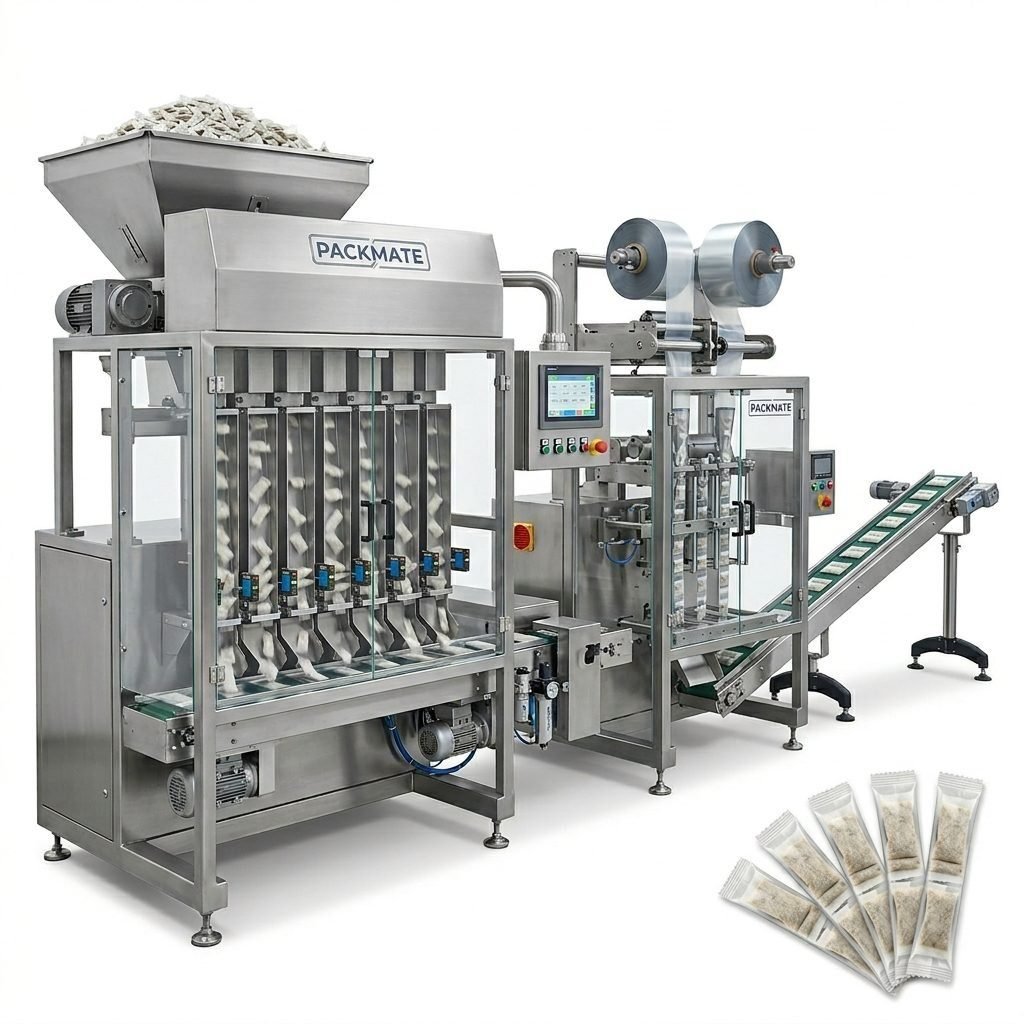
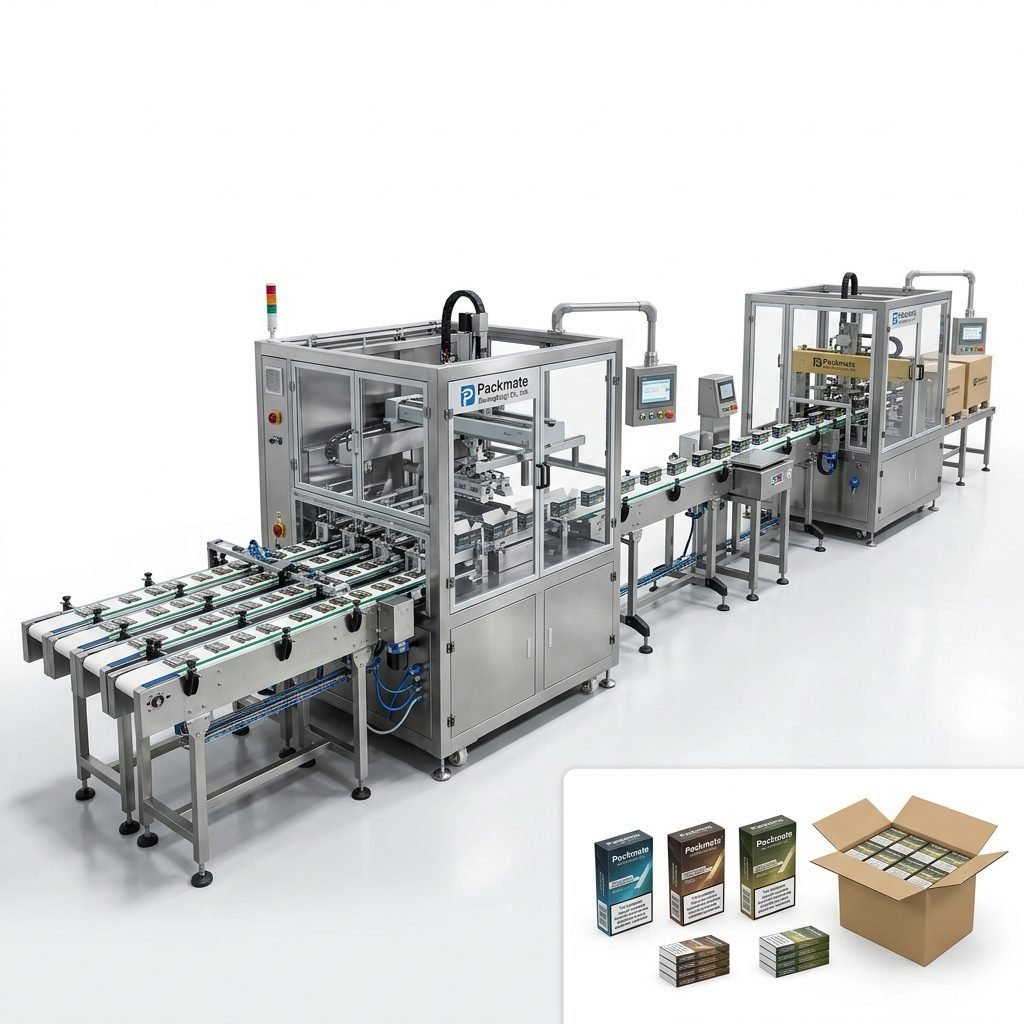
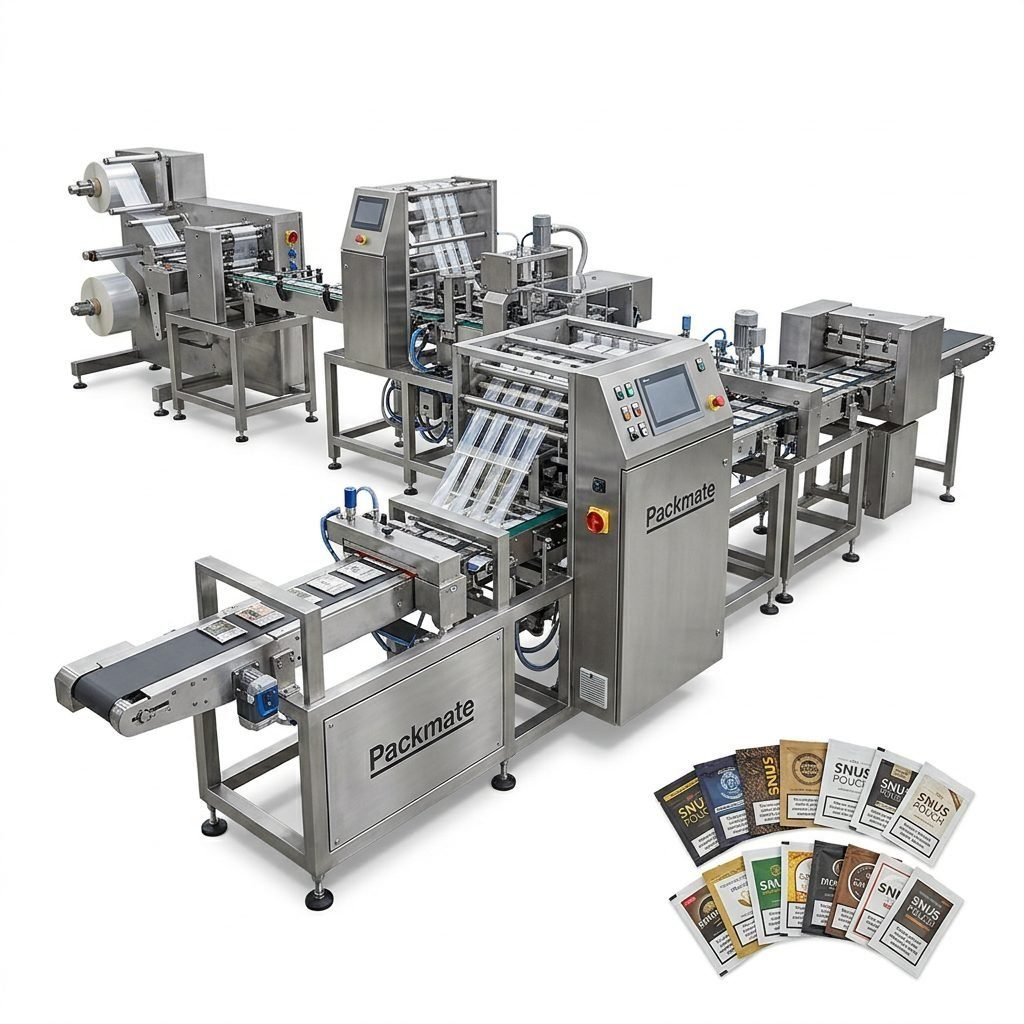
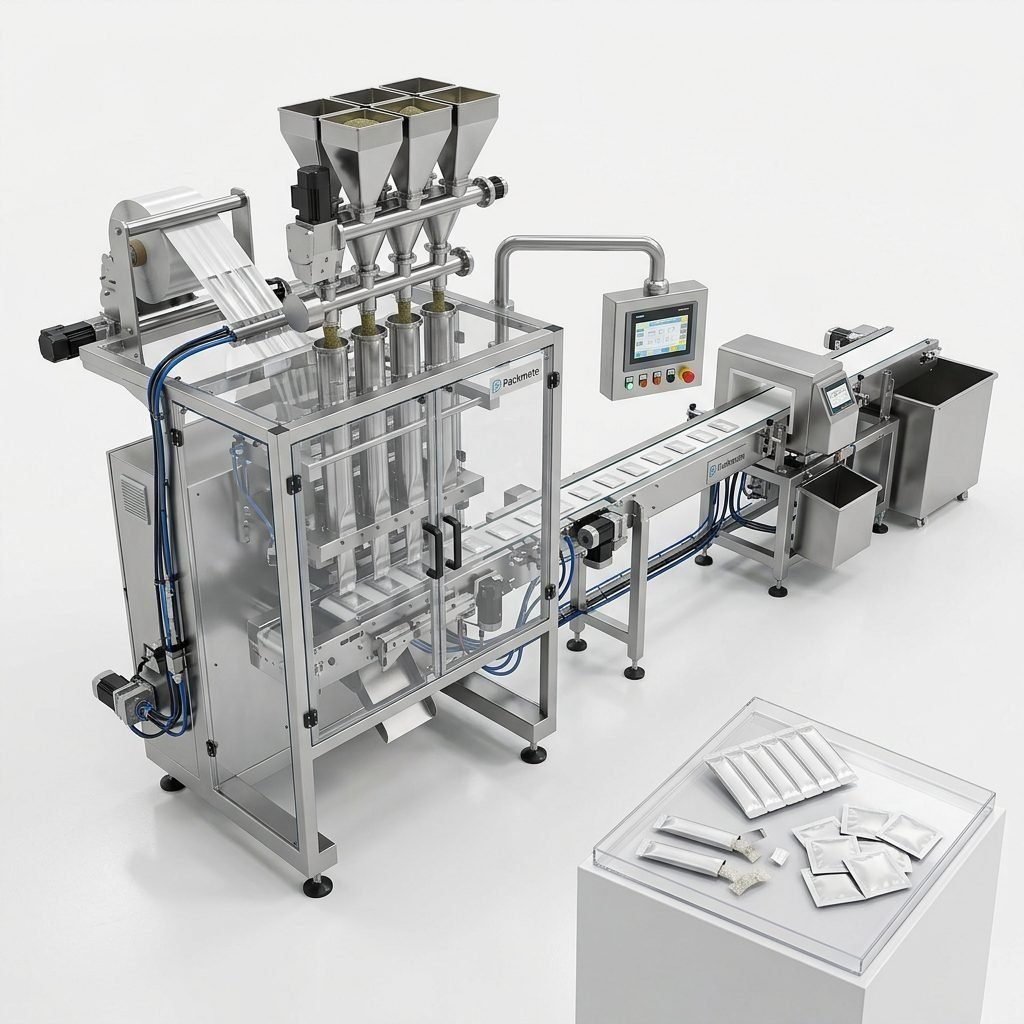
The High-Speed Stick Pack Snus Machine is designed to meet the growing demand for efficient, reliable, and precise portion packaging of both moist and dry snus (nicotine pouches). Modern manufacturers require machines that offer high throughput, flexible dosing, and sturdy construction while remaining easy to maintain and integrate into an automated line. In this article we explore the core capabilities, engineering highlights, application scenarios, quality assurance, and operational guidance for adopting a stick pack snus packing solution from an experienced supplier like Packmate.
Core Advantages of a High-Speed Stick Pack Snus Machine
A high-speed stick pack machine tailored for snus delivers several strategic advantages for manufacturers:
- Reliable portion control for consistent product weight and consumer experience.
- High throughput — multi-lane and multi-head systems that scale production without sacrificing accuracy.
- Adaptability to both moist and dry formulations, reducing product changeover time.
- Compact footprint with easy integration into modular filling and packaging lines.
🔧
Engineering highlight:
precision dosing with low giveaway and stable portion fill even at high speeds is essential for economic production of nicotine pouches.
Key Technical Features
When evaluating a stick pack snus machine, consider these technical points:
- Multi-lane capability: from single lane to 8+ lanes depending on model and product size.
- Servo-driven motion control for synchronized film feed, dosing, and sealing.
- Interchangeable filling heads for powder, granule, and paste-like moist snus formulations.
- Temperature-stable sealing systems to ensure consistent hermetic seals for product shelf life.
- HMI with recipe management and quick-change parameters for fast product setup.
Material Handling & Product Compatibility
Stick pack lines for snus must handle a range of materials: from free-flowing powders to moist pastes and finely milled tobacco or nicotine blends. Modern systems include:
- Vacuum-assist or auger dosing for dry blends.
- Peristaltic or piston filling systems for wet or paste formulations.
- Gentle product pathways to avoid clumping or structural degradation of the pouch content.
ℹ️
Tip:
specify your exact product characteristics (moisture %, particle size, targeted dose tolerance) to ensure the dosing module is optimized for minimal maintenance and maximal accuracy.
Design Elements that Improve Efficiency
Engineering decisions directly impact uptime and labor costs. Look for machines that incorporate:
- Quick mold change mechanisms to reduce downtime during product changeover.
- Hygienic machine frames and easy-to-clean contact parts to accelerate sanitation routines.
- Tool-less access panels and modular subassemblies for faster maintenance.
- Remote diagnostics and recipe backup via the HMI for faster troubleshooting and consistent production runs.
Integration into a Complete Packaging Line
A high-speed stick pack snus machine often forms part of a larger filling and packaging line. Integration points typically include:
- Bulk hoppers and feeding systems for continuous supply.
- Weighing and check-weigh stations for quality assurance — see advanced weighing & packaging systems.
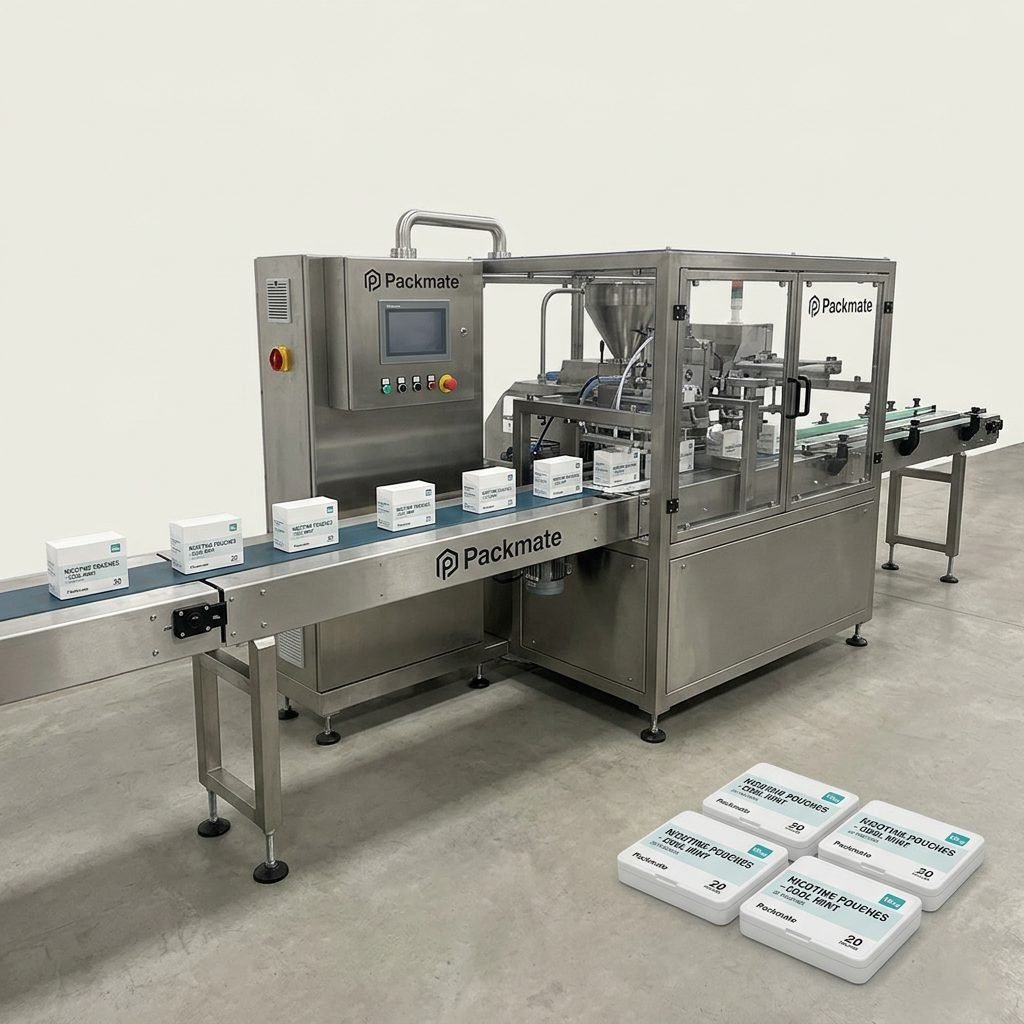
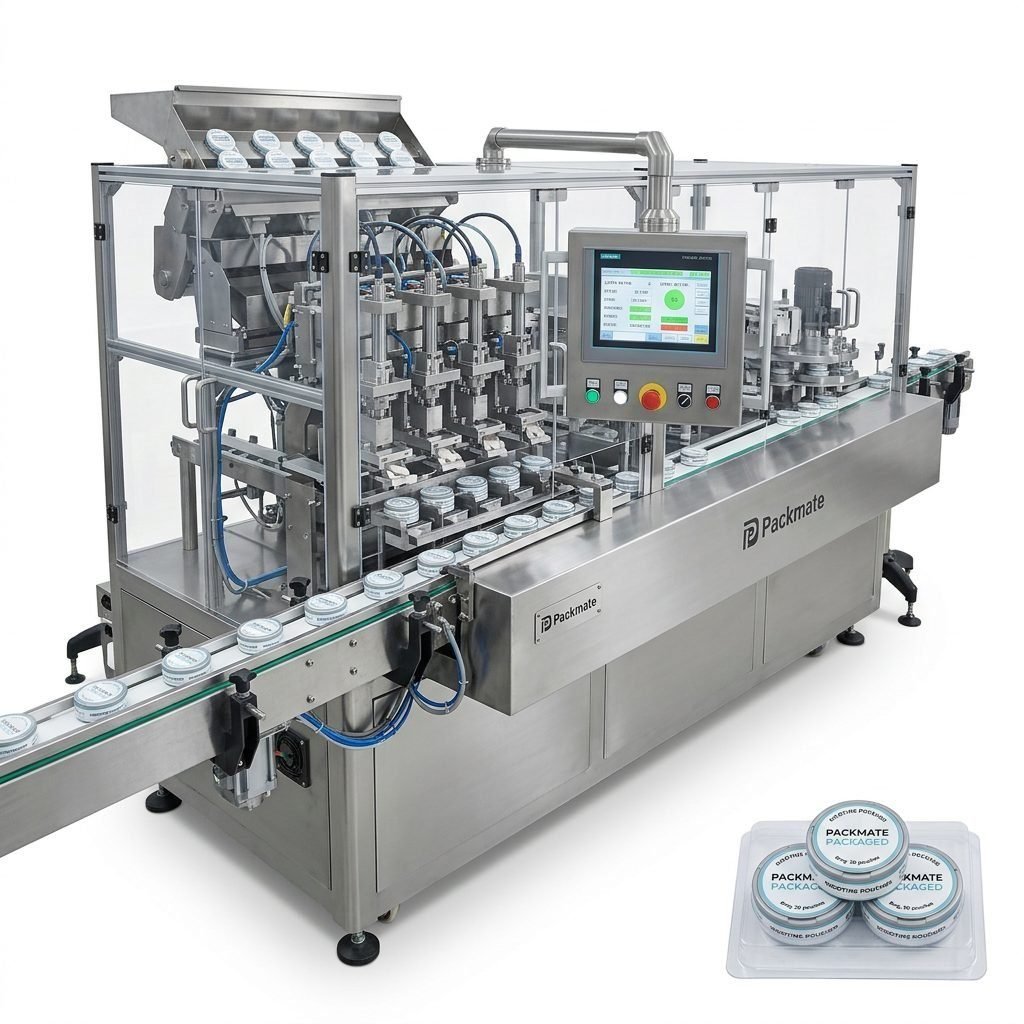
- Secondary packaging modules such as carton erectors, flow wrappers, and case packers.
- End-of-line inspection and serialization where required by regulation.
✅
Benefit:
smooth upstream and downstream integration reduces manual handling and increases line OEE (Overall Equipment Effectiveness).
Customization & Model Variants
Manufacturers like Packmate offer a range of models and customizable features. Typical options include:
- Different lane configurations and machine widths.
- Specialized dosing modules for low-dose nicotine pouches.
- Food-grade and pharmaceutical-grade construction materials (SS304/SS316 contact parts).
- Dust control and extraction for dry powder handling.
Learn more about the company and product portfolio: About Packmate, and view specific machine categories such as Sachet & Stick Pack Machines and the broader Snus & Nicotine Packaging Machines.
Quality, Certifications & After-Sales Support
Quality assurance is paramount for snus production. Trusted suppliers provide:
- CE and ISO certifications for machine safety and management systems.
- Comprehensive FAT (Factory Acceptance Test) and SAT (Site Acceptance Test) processes.
- Spare parts support, training, and long-term service agreements.
- Documentation including operation manuals, electrical diagrams, and preventive maintenance schedules.
🌍
Global reach:
Packmate’s machines are deployed worldwide, supported by demonstrable case studies — see examples in the Case section.
Operational Best Practices
To maximize machine life and production efficiency, follow these recommended practices:
- Implement a daily checklist for cleaning, lubrication, and visual inspection.
- Use correct sealing films and validate seal strength under production conditions.
- Monitor fill variation and adjust dosing parameters incrementally to avoid overcompensation.
- Keep spare wear parts on-site (seals, sensors, belts) to minimize downtime.
Safety & Regulatory Considerations
Nicotine pouch production is subject to local and international regulations. Machines must support:
- Traceability features (batch coding and serialization when required).
- Hygienic design for sanitation and contamination control.
- Guarding and interlocks to protect operators.
⚠️
Note:
ensure your local regulatory landscape for nicotine products is clear before scaling production.
Case Study Snapshot
A European snus producer upgraded to a multi-lane stick pack line to increase output by 3x while reducing give-away per pouch. Key outcomes included:
- Stable dosing with ±1% tolerance at rated speeds.
- Reduced labor through automation — fewer manual touchpoints in the line.
- Faster changeover thanks to modular tooling and recipe recall on the HMI.
For more customer stories and real-world deployments, visit the Case page.
Selecting the Right Supplier
Choosing a partner is as important as specifying the machine. Look for:
- Proven experience in snus and nicotine pouch packaging.
- Comprehensive manufacturing capabilities and in-house CNC for critical components.
- Transparent testing and commissioning procedures.
- Access to spare parts and service network for your region.
Explore product families and support offerings on the Bag & Pouch Packaging Machines and Filling & Packaging Lines pages to identify complementary equipment for your line.
Commissioning & Training
Proper commissioning and operator training shorten the time to revenue. Typical service packages include onsite commissioning, operator training, and maintenance training to ensure teams can run, adjust, and maintain the equipment safely and effectively.
📅
Exhibitions & Demos:
attend live demonstrations to evaluate machine ergonomics and production performance — check Our Exhibition schedule.
ROI Considerations
When calculating return on investment for a stick pack snus machine, factor in:
- Throughput increase and reduced labor costs.
- Material savings due to accurate dosing (reduced give-away).
- Reduced downtime from improved maintenance access and local support.
- Secondary packaging efficiencies and reduced shrinkage.
Final Thoughts
Investing in a high-speed stick pack snus machine is a strategic decision that can unlock production scalability and consistent product quality for both moist and dry snus products. Choosing a manufacturer with deep experience, robust manufacturing facilities, and global service capability — such as Packmate, with decades of engineering history and a broad machine portfolio — helps ensure a successful transition to automated portion packaging.
Frequently Asked Questions
Q1: Can one machine handle both moist and dry snus formulations?
A: Many modern stick pack machines are configurable to handle both types. The key is selecting the appropriate dosing module (auger/vacuum for dry, piston/peristaltic for wet) and ensuring the sealing system is compatible with your film and product moisture content.
Q2: How quickly can I changeover between product sizes?
A: With quick-change tooling and saved HMI recipes, typical changeover times can be reduced to under 30 minutes for most size changes. Full changeover time depends on lane configuration and product complexity.
Q3: What maintenance is required to keep high-speed performance?
A: Daily cleaning and lubrication, routine inspection of sealing elements, and periodic replacement of wear parts are necessary. A preventive maintenance schedule provided by the manufacturer will optimize uptime.
Q4: Where can I see machines in operation?
A: Many suppliers host live demos at their factory or showcase machines at industry exhibitions. Check the manufacturer’s exhibition and case pages to arrange a visit or view performance videos.
Q5: How do I get more detailed specifications and a quote?
A: Contact the supplier directly with your product details, target throughput, and regulatory requirements. For Packmate enquiries, visit the Contact Us page and request a tailored solution.