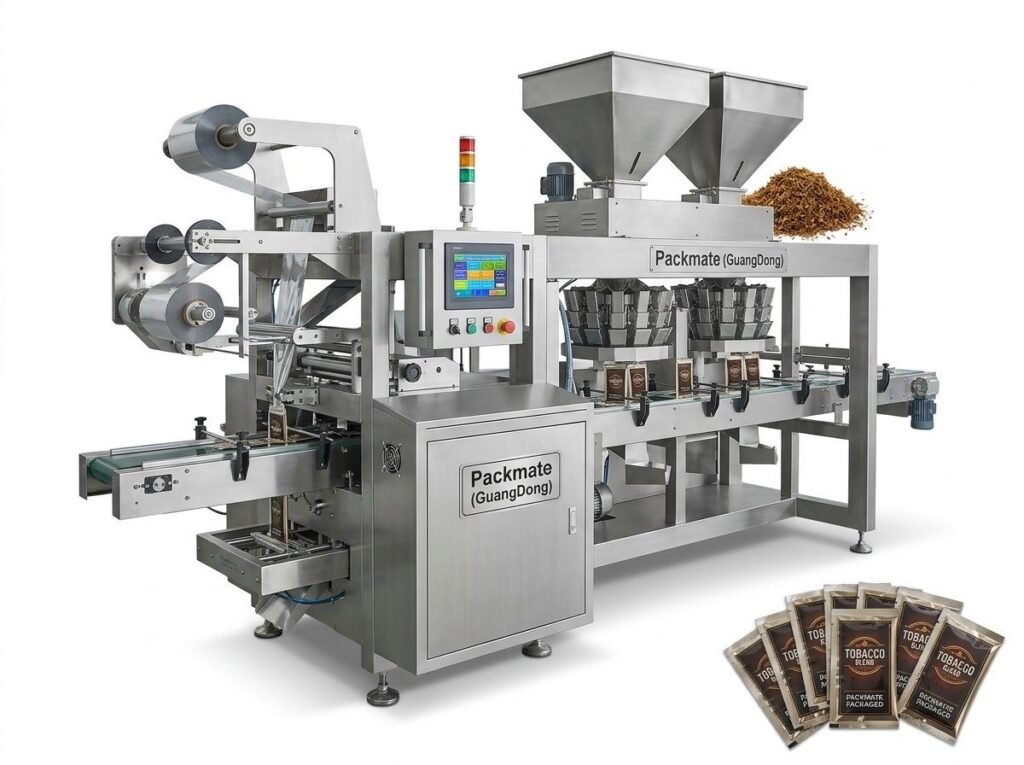
Choosing the right nicotine packaging machinery manufacturer in Colombia is a strategic decision that affects product quality, operational efficiency, regulatory compliance, and long-term costs. Whether you are launching a new nicotine pouch brand or scaling a production line, understanding how to evaluate suppliers, inspection criteria for machines, and post-sale support will help you align your investment with business goals. This guide walks you through practical steps, technical considerations, and negotiation tips to select the best manufacturer for your needs.
Understand Your Production Requirements
Start with a clear specification sheet. Define expected output (pouches per minute), pouch types (snus, nicotine pouches, stick packs, sachets), dosing accuracy, product characteristics (powder, granule, moisture-sensitive), and packaging materials (foil laminate, paper, film). This step reduces mismatches and helps manufacturers propose machines that fit your line layout and throughput targets.
⚙️ Key production parameters:
output, pouch format, dosing system, material compatibility, and product handling requirements.
Capacity & Scalability
Evaluate current and projected production volumes. Select machinery that meets immediate needs but also allows upgrades. Multi-lane systems or modular designs can grow with demand without large capital re-investments. Ask suppliers about upgrade paths and spare-part availability.
Assess Manufacturer Experience & Credentials
Experience in the nicotine and snus packaging sector is crucial. Look for manufacturers with a documented track record in snus/nicotine pouch solutions, evidence of turnkey projects, and references from similar clients. Technical maturity reduces commissioning time and troubleshooting during ramp-up.
📌 Pro tip:
request case studies or visit completed installations. Check for CE/ISO certifications and quality control processes to ensure compliance and reliability.
Why certifications matter
Certifications such as CE and ISO signal adherence to international design and manufacturing standards. Machines that meet these standards are easier to import, validate, and maintain in regulated markets.
Technical Features to Prioritize
When evaluating proposals, compare technical specifications across vendors. Prioritize features that directly influence yield, product integrity, and maintenance overhead.
- Precision dosing and weighing systems for consistent fill weight.
- Servo-driven transport for accurate pouch forming and reduced mechanical wear.
- Multi-lane capability if you plan high-volume small-dose production.
- Quick-change tooling for fast format changeovers and minimal downtime.
- Hygienic design and easy-to-clean surfaces to meet sanitary requirements.
💡 Focus:
prioritize machines that reduce product giveaway, simplify maintenance, and provide accurate dosing to protect margins and meet regulatory accuracy standards.
Customization & Turnkey Solutions
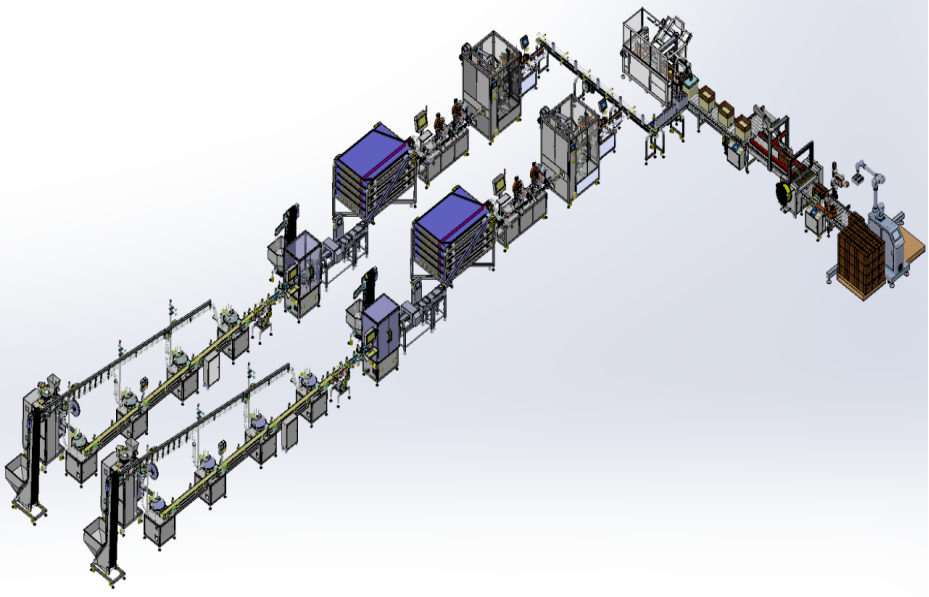
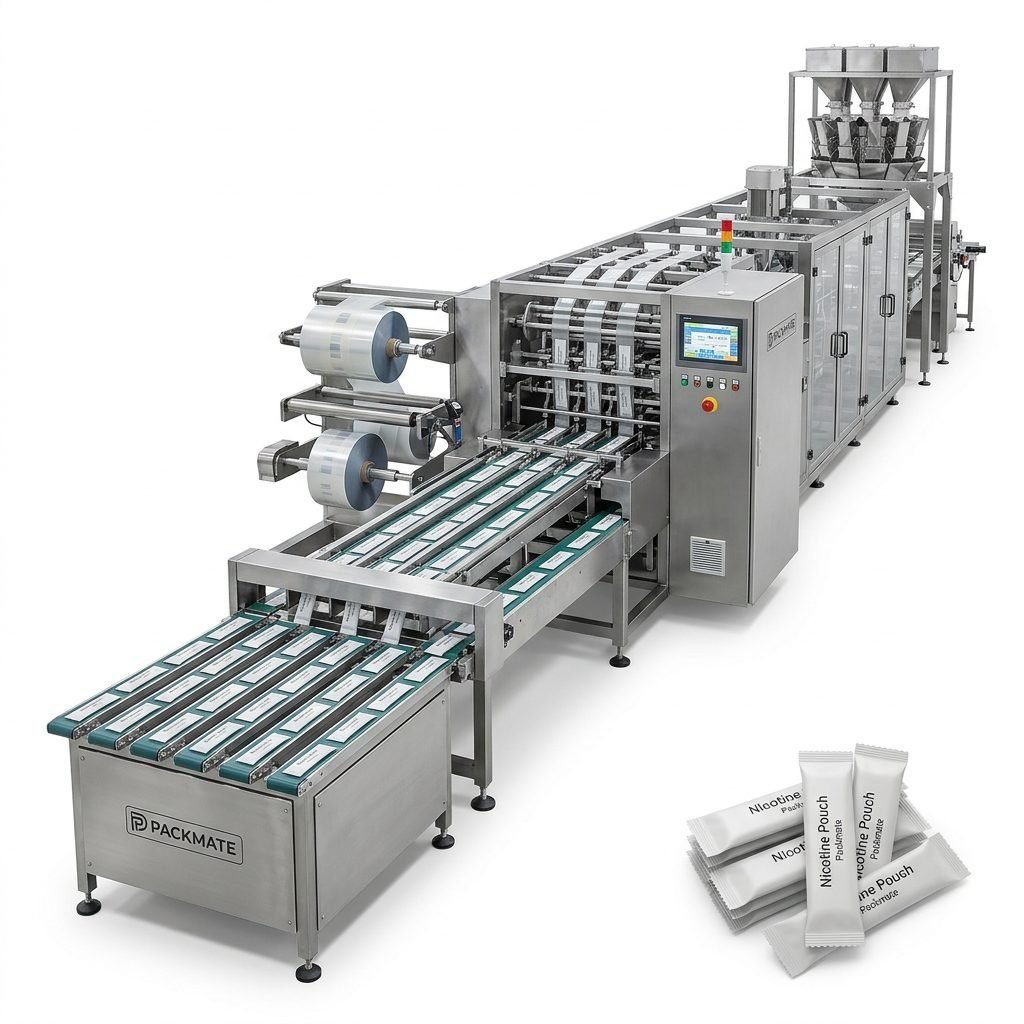
Some manufacturers offer standard machines while others provide fully customized turnkey lines including upstream feeding, weighing systems, and downstream case packing. If you need an integrated line, confirm the supplier’s capability to deliver mechanical, electrical, and software integration as a single project.
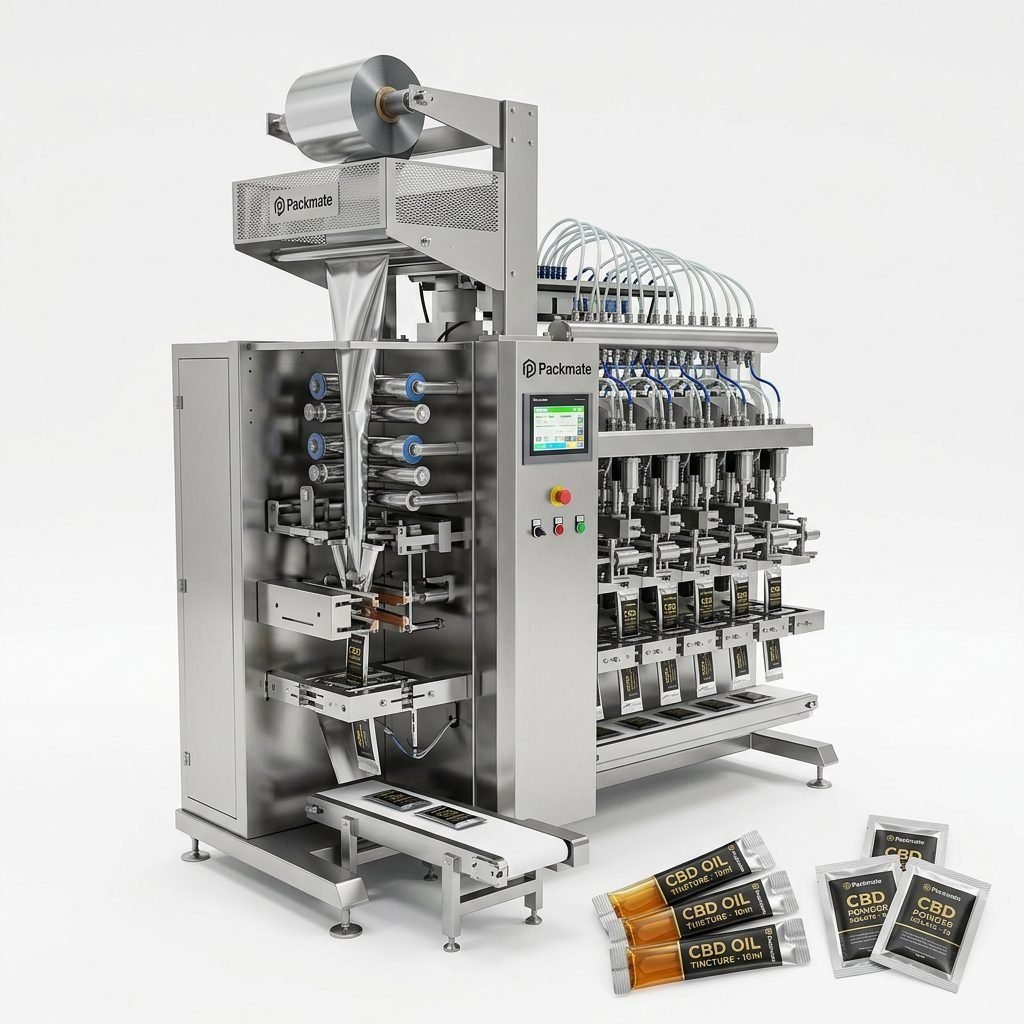
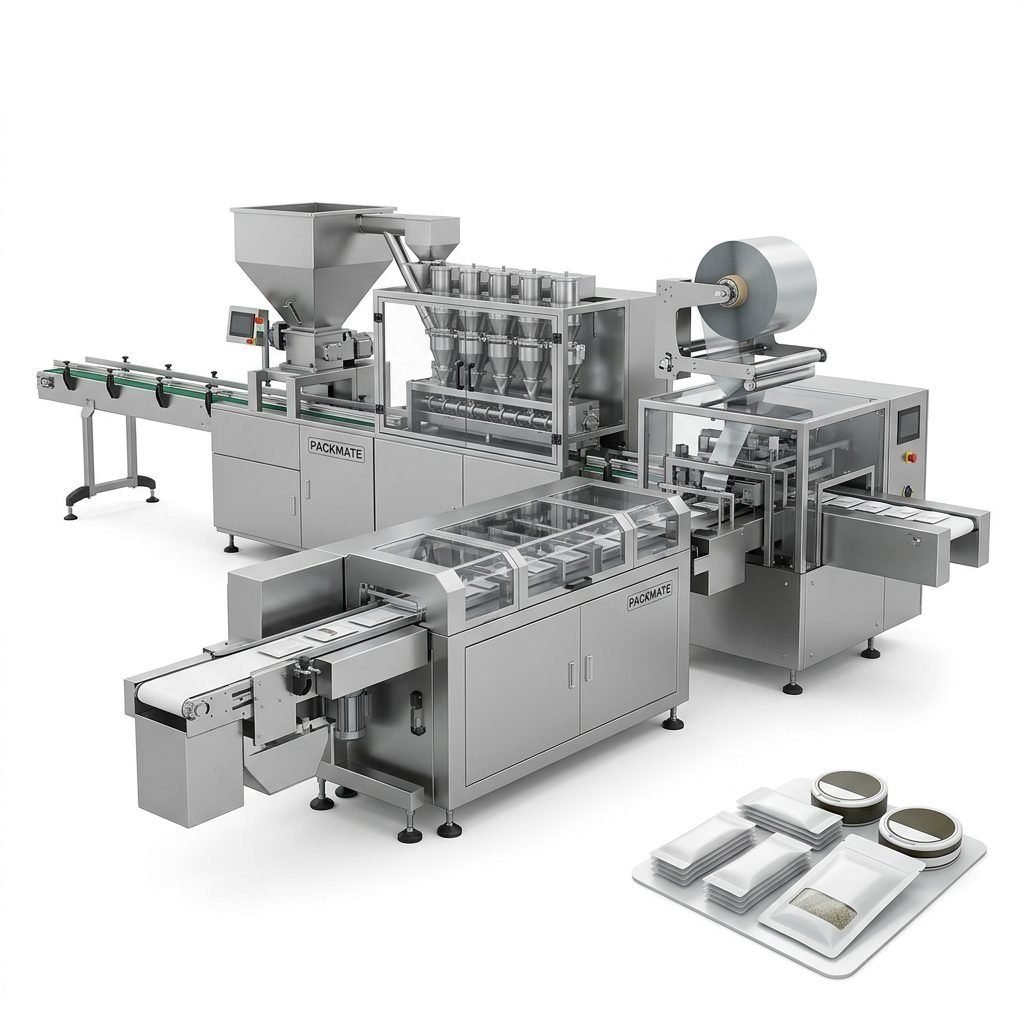
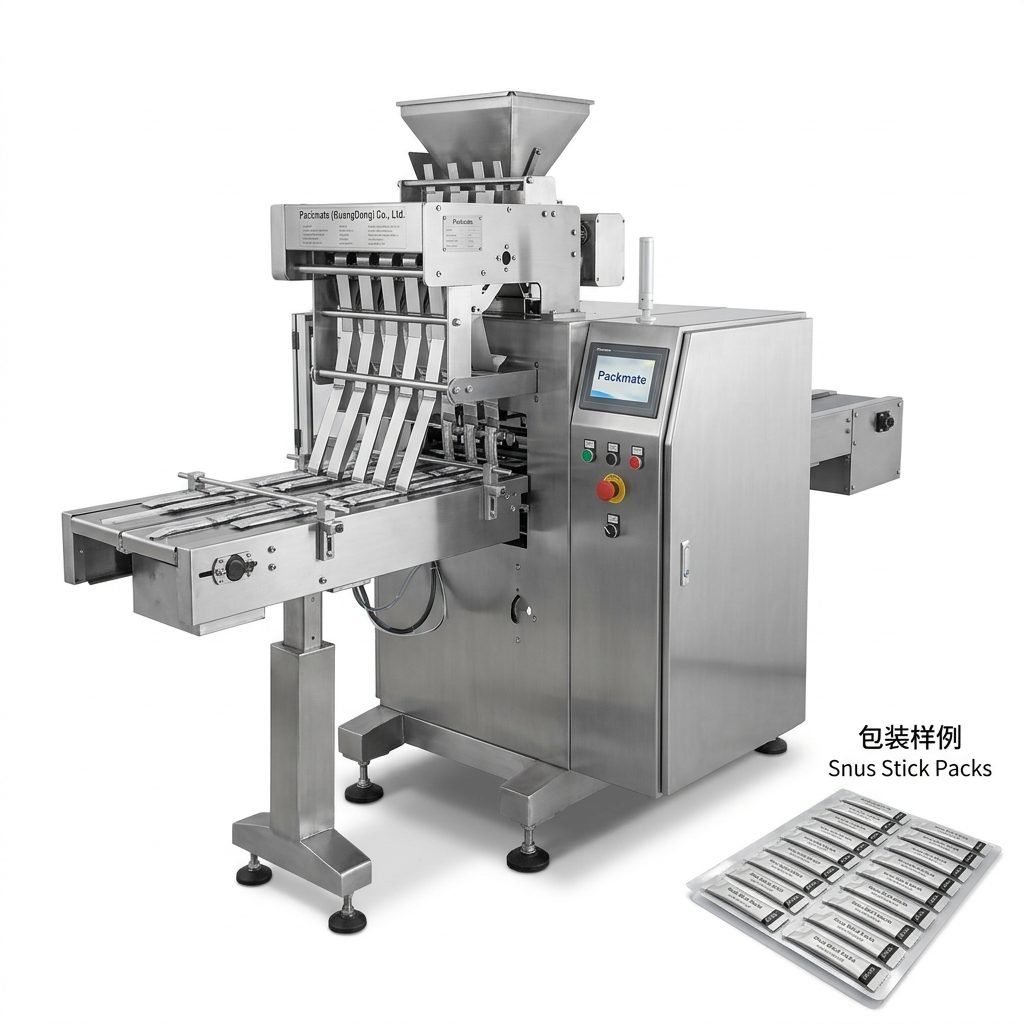
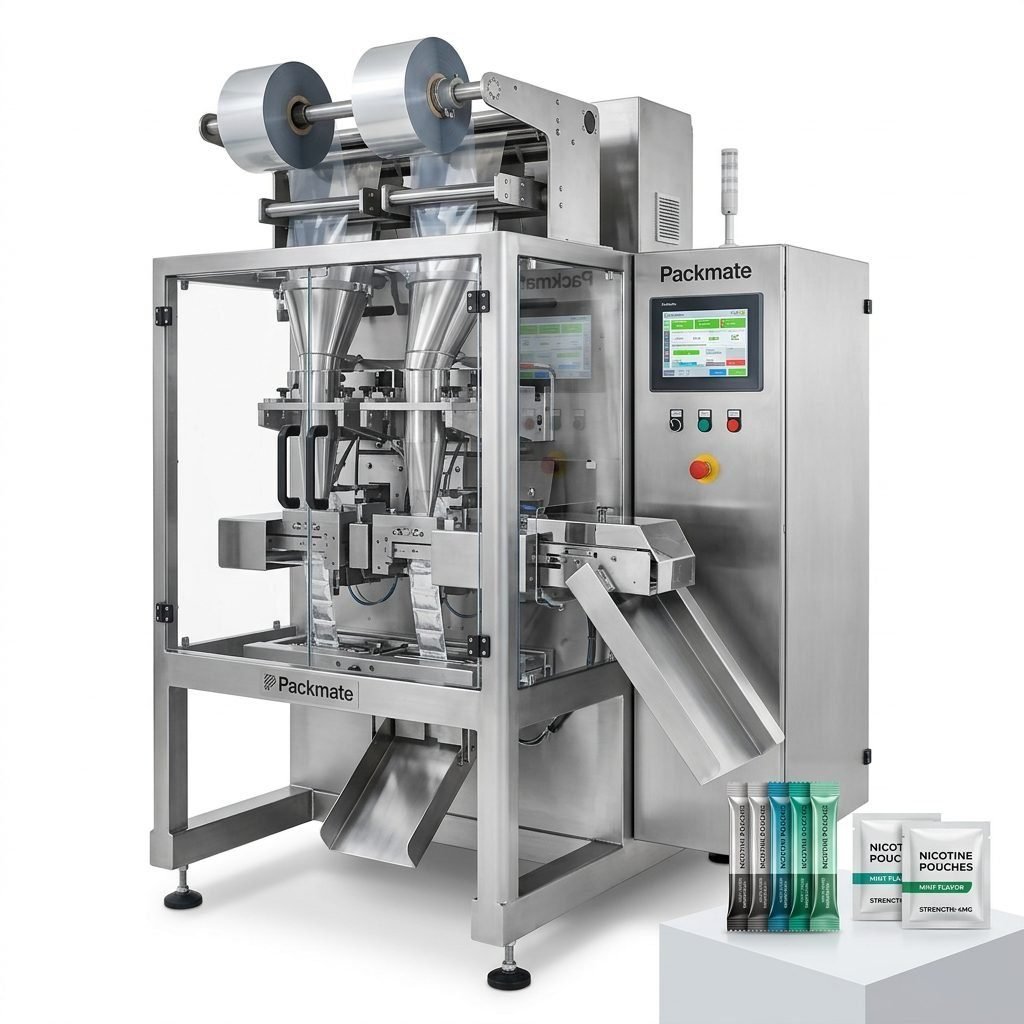
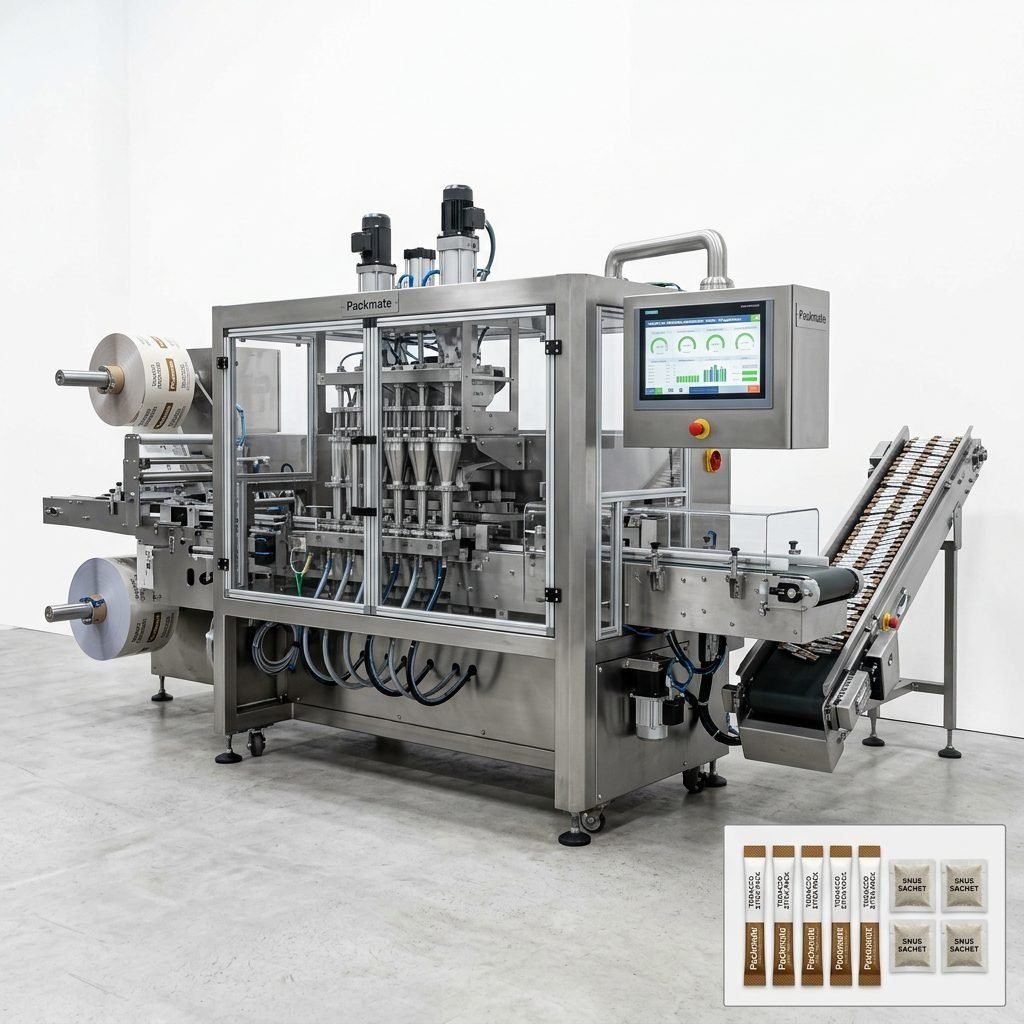
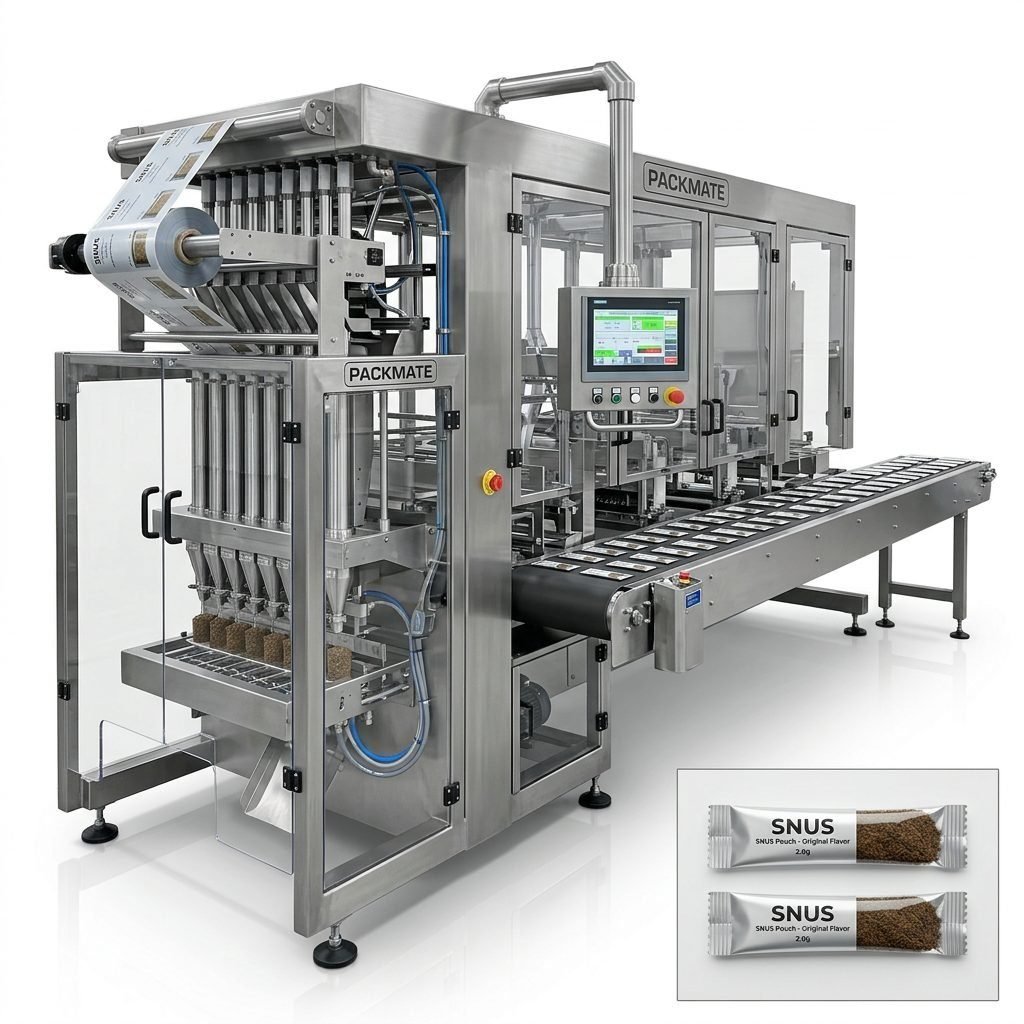
Packmate Snus Machine, for example, supplies a wide range of solutions from stand-alone machines to complete production lines and multi-lane systems. Learn more about their product range: Snus & Nicotine Packaging Machines and Sachet & Stick Pack Machines.
Quality Assurance & Factory Capabilities
Inspect the manufacturer’s factory capabilities. Important indicators include CNC machining centers, controlled assembly areas, test benches, and documented final testing procedures. A robust production facility fosters repeatable quality.
🏭 Factory checklist:
production floor area, precision tooling, quality control labs, and spare-parts inventory.
Spare parts & lead times
Confirm parts lead times and whether spare parts are stocked locally or shipped from overseas. Faster access to critical components reduces downtime and keeps production stable.
Service, Training & After-Sales Support
Machines perform best when operators are trained and maintenance routines are followed. Evaluate a supplier’s commitment to after-sales support, remote diagnostics, and on-site service. Ask for training programs, availability of technical documentation, and warranty terms.
If proximity matters, select a supplier that participates in regional exhibitions or has local representation. See their exhibition presence here: Our Exhibition.
✅ After-sales expectations:
scheduled maintenance, guaranteed response times, spare-part kits, and remote troubleshooting support.
Total Cost of Ownership (TCO) Analysis
Purchase price is only one component. Include operating costs (energy, consumables), maintenance, spare parts, training, downtime risk, and potential yield losses in your TCO model. Machines that save on product giveaway and energy can justify a higher upfront cost.
Compare financing and warranties
Evaluate warranty coverage, optional extended service contracts, and financing options. A favorable warranty and local service network can drastically reduce unforeseen costs.
Factory Acceptance Test & Site Acceptance Test
Insist on a thorough Factory Acceptance Test (FAT) before shipment. FAT verifies machine performance under simulated production conditions. After installation, conduct a Site Acceptance Test (SAT) to confirm the line achieves guaranteed throughput with your actual materials.
🧾 FAT/SAT checklist:
target speed, packaging integrity, weigher accuracy, format changeover time, and safety interlocks.
Regulatory & Compliance Considerations in Colombia
Nicotine products face regulatory scrutiny in many jurisdictions. Ensure machines meet local sanitary and electrical regulations, and that the supplier can provide technical dossiers and compliance support for import clearance and validation.
Documentation to request
Machine manuals, electrical and pneumatic schematics, material certificates, CE/ISO certificates, FAT reports, and spare-parts lists. Good documentation reduces commissioning time and future troubleshooting effort.
Vendor Evaluation Checklist
Use a scoring matrix to compare vendors across key criteria: technical fit, price, TCO, lead time, spare-part policies, service response time, and references. A systematic approach reduces bias and keeps procurement decisions objective.
- Technical compliance and machine performance
- Factory and QC capabilities
- After-sales service and training
- Price vs. long-term operating costs
- References, case studies, and customer testimonials
Negotiating the Best Terms
Negotiate payment terms, milestone-based payments tied to FAT completion, clear warranty clauses, and commitments for spare parts and training. Secure a Service Level Agreement (SLA) specifying response times for critical issues.
📝 Contract tips:
link payments to FAT/SAT, define acceptance criteria, include spare-parts list, and require remote diagnostics access.
Local Representation & Logistics
Having local agents, partners, or service teams in Colombia reduces lead times for parts and accelerates response for on-site support. Confirm the supplier’s export experience and ability to handle customs clearance, installation, and field training.
If you want to contact a supplier directly for tailored advice, see: Contact Us. For an overview of the manufacturer, visit their company profile: About Packmate.
Making the Final Decision
Base your final selection on a balanced assessment of technical fit, TCO, support readiness, and the supplier’s demonstrated capability. Prioritize partners who offer transparency during FAT, clear timelines, and documented warranty/service commitments.
Final checklist before purchase:
FAT results, SAT acceptance criteria, warranty terms, spare-parts availability, training plan, and a signed SLA.
Conclusion
Selecting the best nicotine packaging machinery manufacturer in Colombia requires a structured approach: define your production needs, verify technical and factory capabilities, insist on FAT/SAT, evaluate TCO, and secure strong after-sales support. A reliable partner who demonstrates vertical expertise in snus and nicotine pouch packaging, offers clear documentation, and supports your growth with scalable solutions can transform your production performance and protect your market entry.
Frequently Asked Questions (FAQs)
Q1: How long does it take to install a complete nicotine pouch production line?
Installation time varies by complexity. A single stand-alone machine can be installed in days, while a turnkey multi-lane line typically requires weeks for mechanical installation, electrical integration, and validation. Allow additional time for FAT and SAT procedures.
Q2: What maintenance practices minimize downtime?
Regular preventive maintenance, stocking critical spare parts, following manufacturer-recommended lubrication and cleaning schedules, and training operators in basic troubleshooting all reduce downtime. Remote diagnostics also speed up issue resolution.
Q3: Can machines be adapted for different pouch formats?
Yes. Many modern packaging machines use modular tooling and quick-change format sets, enabling adaptation between sachets, stick packs, and nicotine pouches. Confirm changeover times and tooling costs with the manufacturer.
Q4: How important is the Factory Acceptance Test (FAT)?
FAT is critical. It validates machine performance under controlled conditions, verifies acceptance criteria, and reduces surprises at site. Require a documented FAT with signed test results before shipment.
Q5: Where can I view manufacturer references and product catalogs?
Manufacturer websites often provide case studies, exhibitions, and downloadable catalogs. For product catalogs and system overviews, see Catalog and product pages such as Bag & Pouch Packaging Machines.