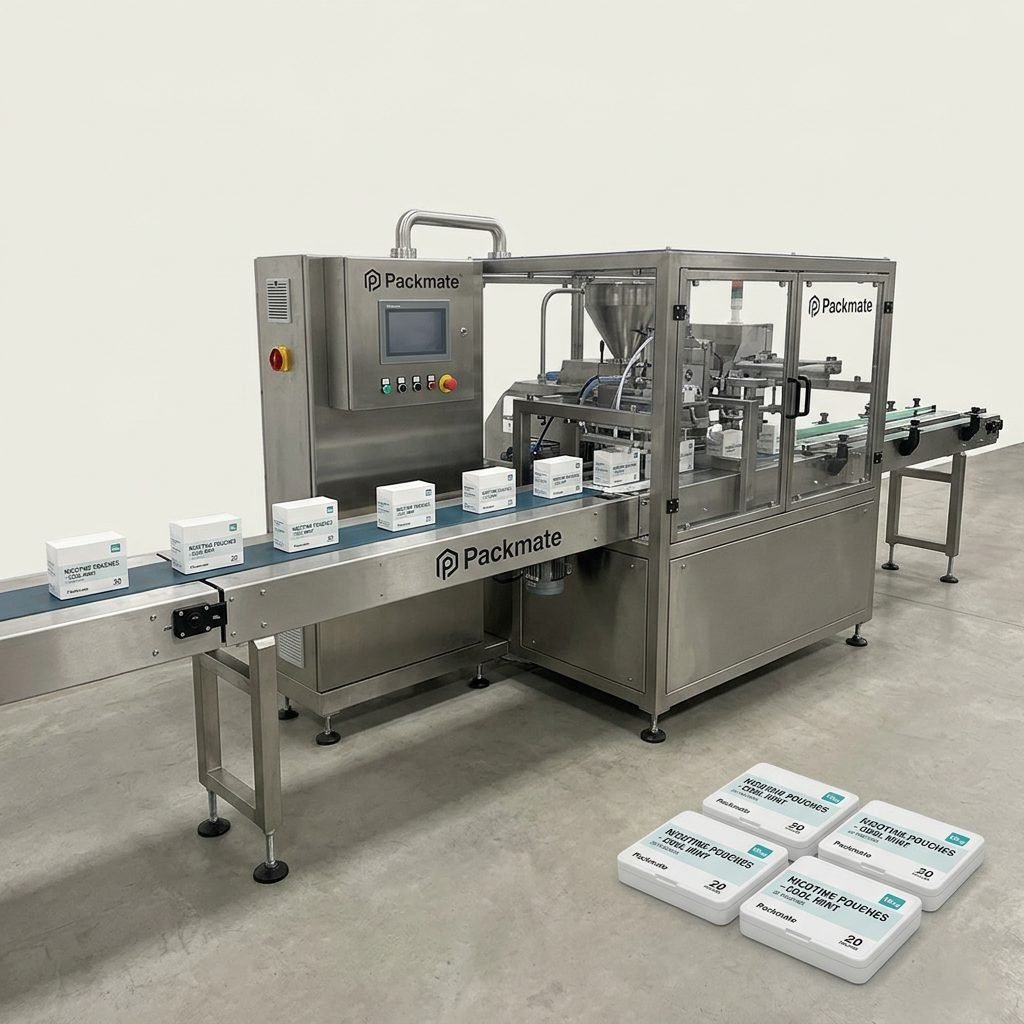
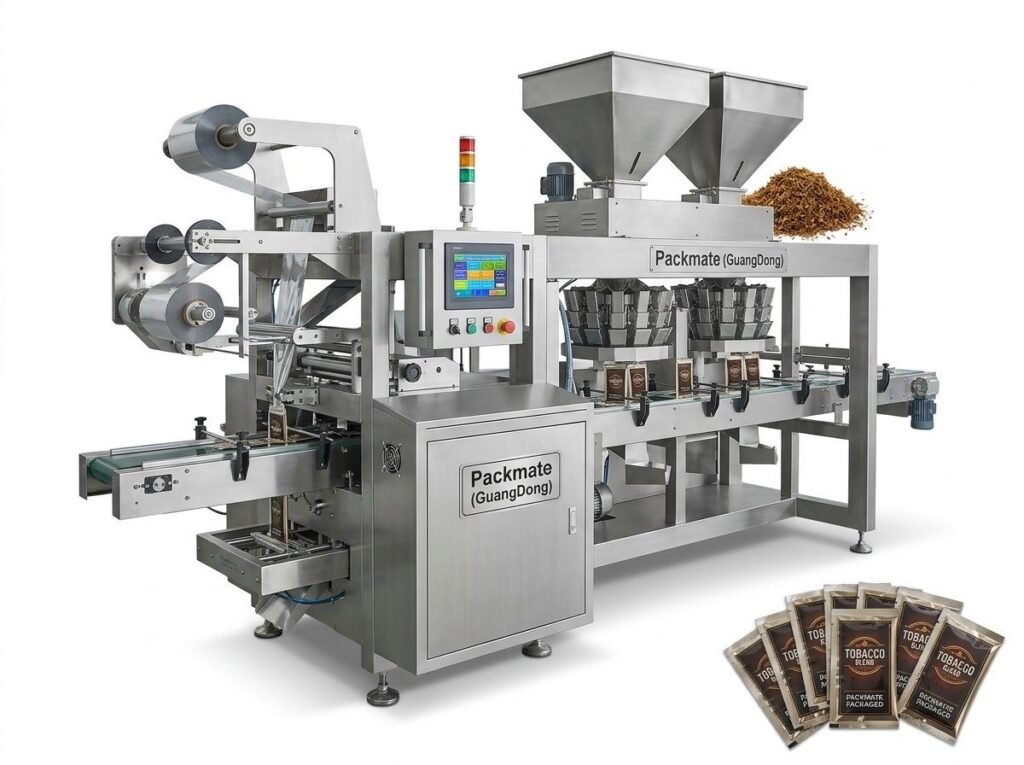
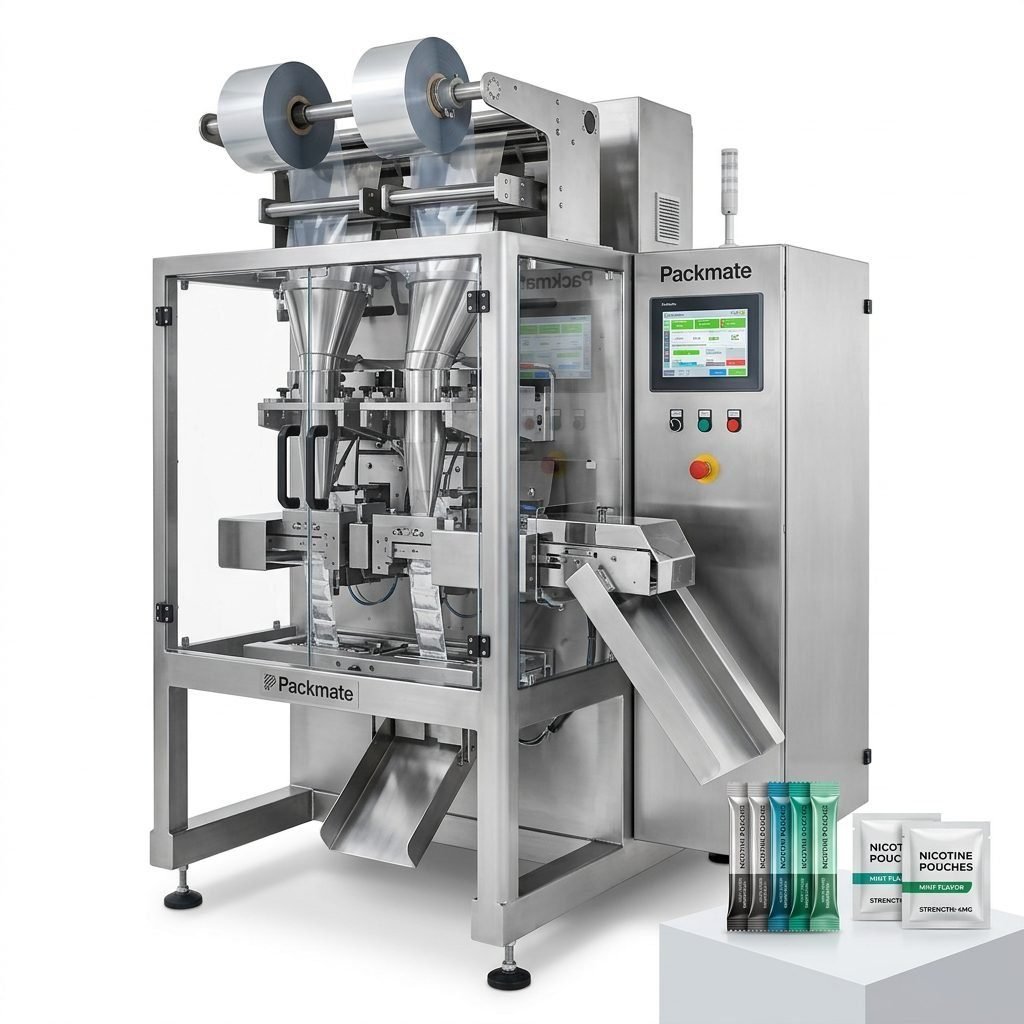
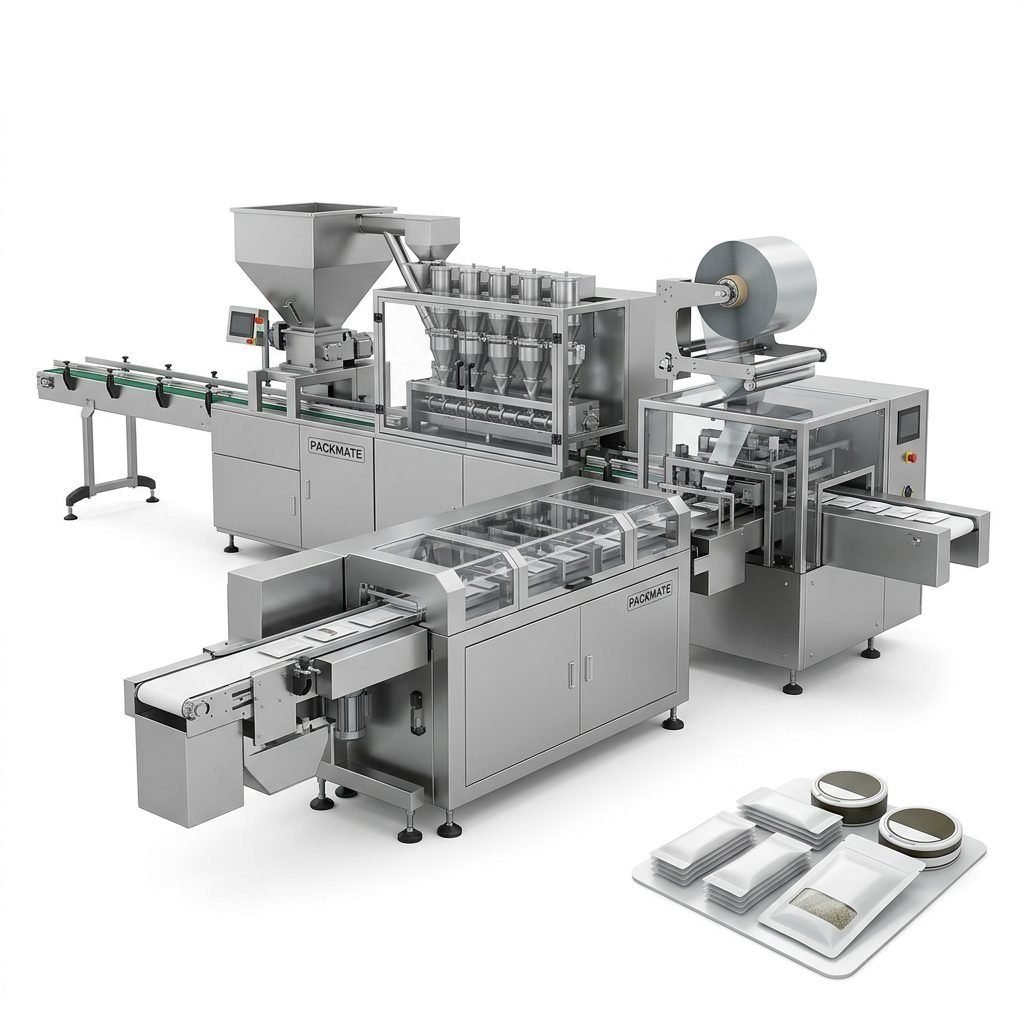
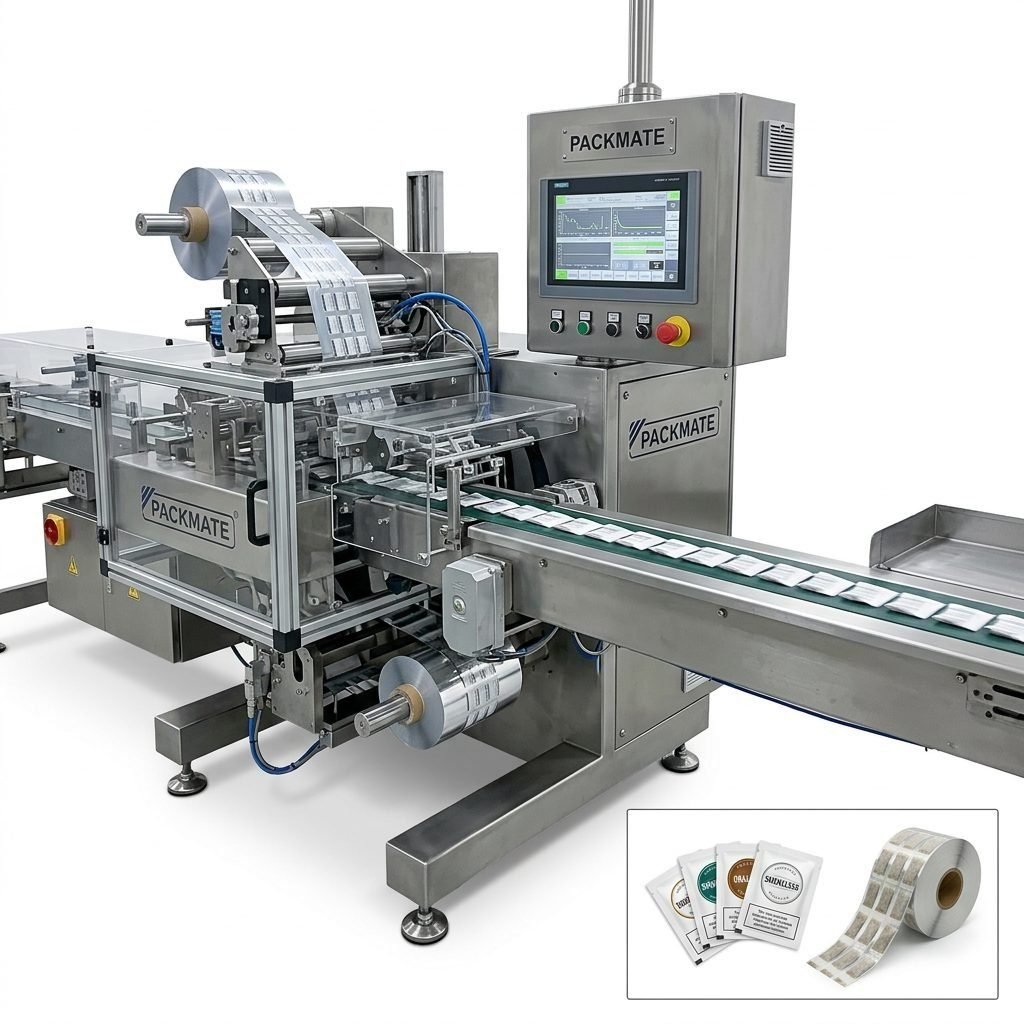
Choosing the right snus packaging machine in Algeria can make or break the efficiency and profitability of a new or growing factory. This guide walks factory owners, production managers, and procurement teams through the essential technical, operational, and commercial factors to consider when selecting snus and nicotine pouch packaging equipment. Whether you plan to run multi-lane high-speed lines or compact single-lane cells, understanding capacity, accuracy, regulatory compliance, and long-term support will save time and reduce costs.
1. Understand the Algerian market and your product mix
Before evaluating machines, define your target SKUs: portion size, pouch shape, materials (foil, paper, laminated films), and whether you will package nicotine pouches, snus, or related products. Algeria’s market is evolving, with growing demand for premium and discreet formats. Factor in SKU variety and planned monthly output to determine whether a flexible multi-format machine or a dedicated line is best for you.
2. Machine types: match form to function
There are several common snus packaging formats. Choose the machine type that aligns with your products and expansion plans.
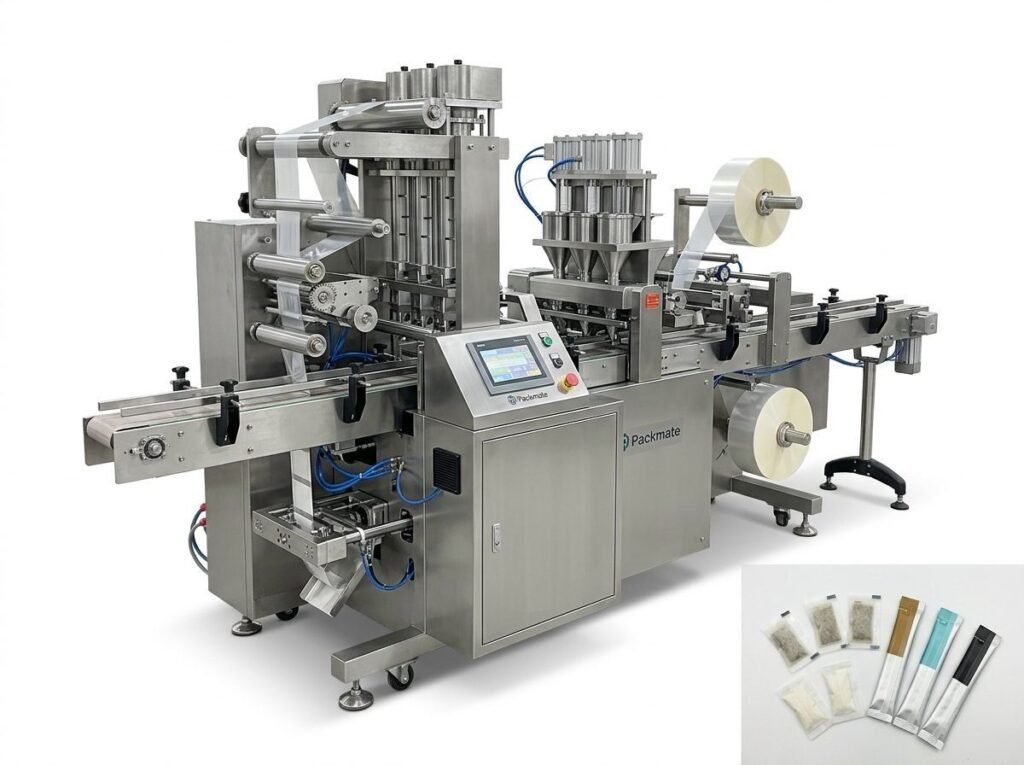
Stick pack and sachet machines
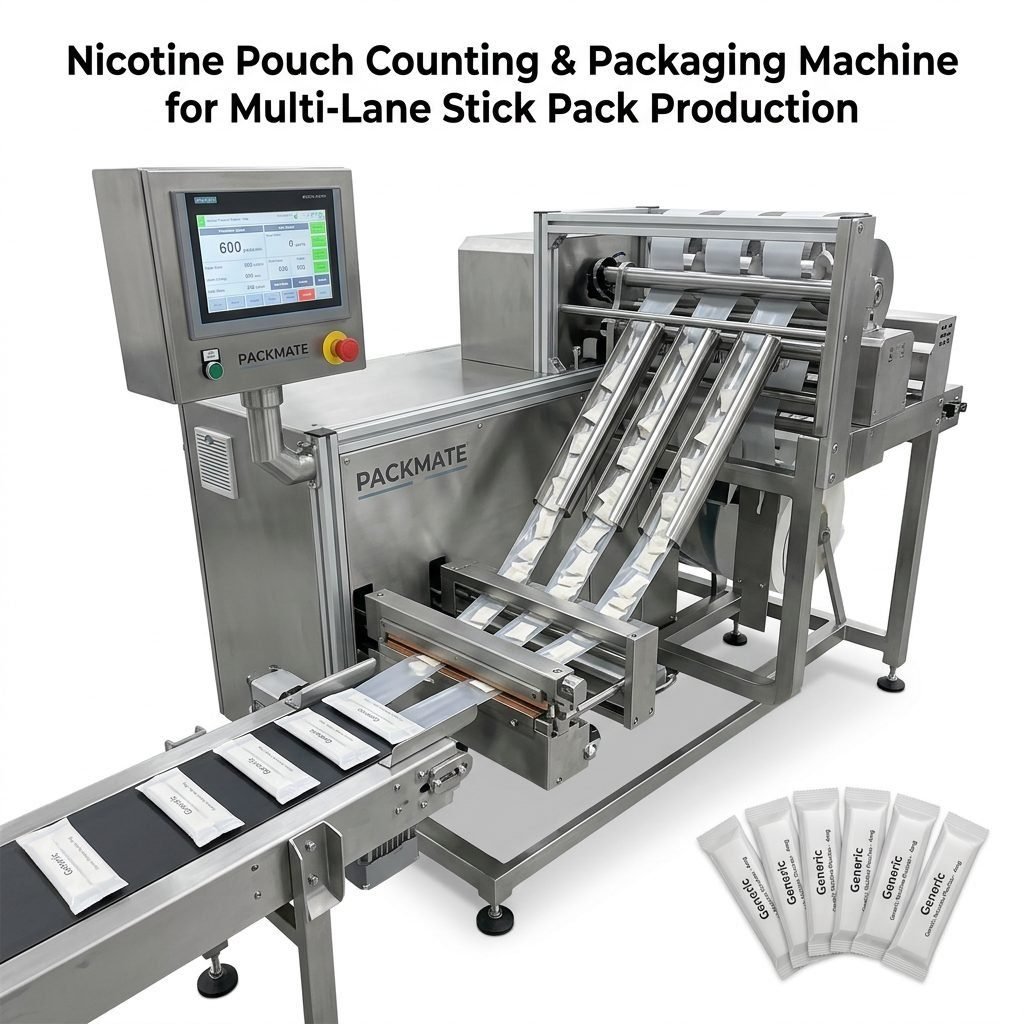
Stick pack and sachet machines are ideal for single-dose pouches and are often compact and cost-effective. If you prioritize flexible pouch shapes and variable lengths, consider machines capable of both stick and pillow sachets.
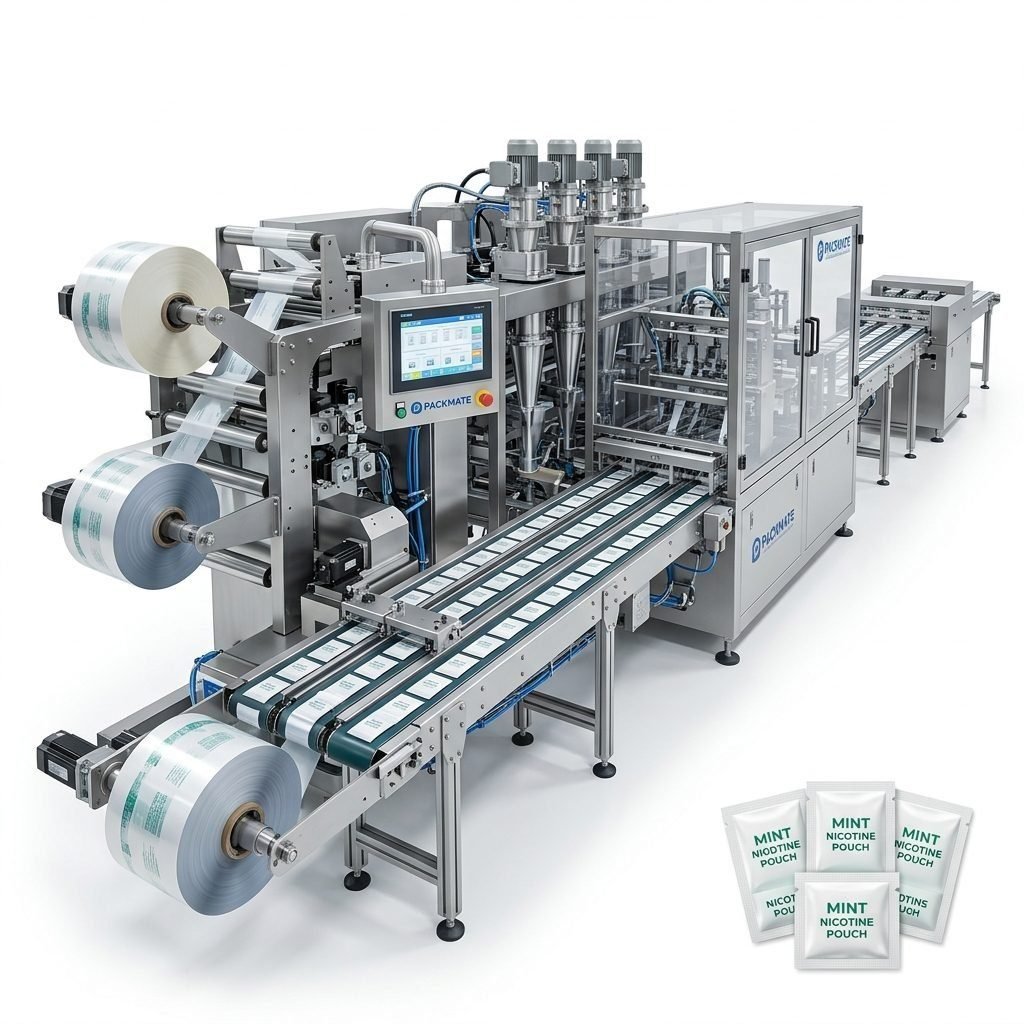
Multi-lane snus pouch systems
Multi-lane lines dramatically increase throughput while maintaining small-dose accuracy—perfect for medium to high-volume operations. For factories planning rapid growth, multi-lane systems often deliver the best ROI.
3. Production capacity and speed considerations
Align machine speed (packs per minute) with realistic production targets. Remember: theoretical top speed is rarely achievable continuously—consider net productive speed after changeovers, cleaning, and maintenance. A machine that can run at slightly higher capacity than your immediate need gives room for growth.
📌 Tip: For growing factories, target a machine whose peak capacity is 20–40% above your expected demand for the next 18–36 months.
4. Dosing accuracy and quality control
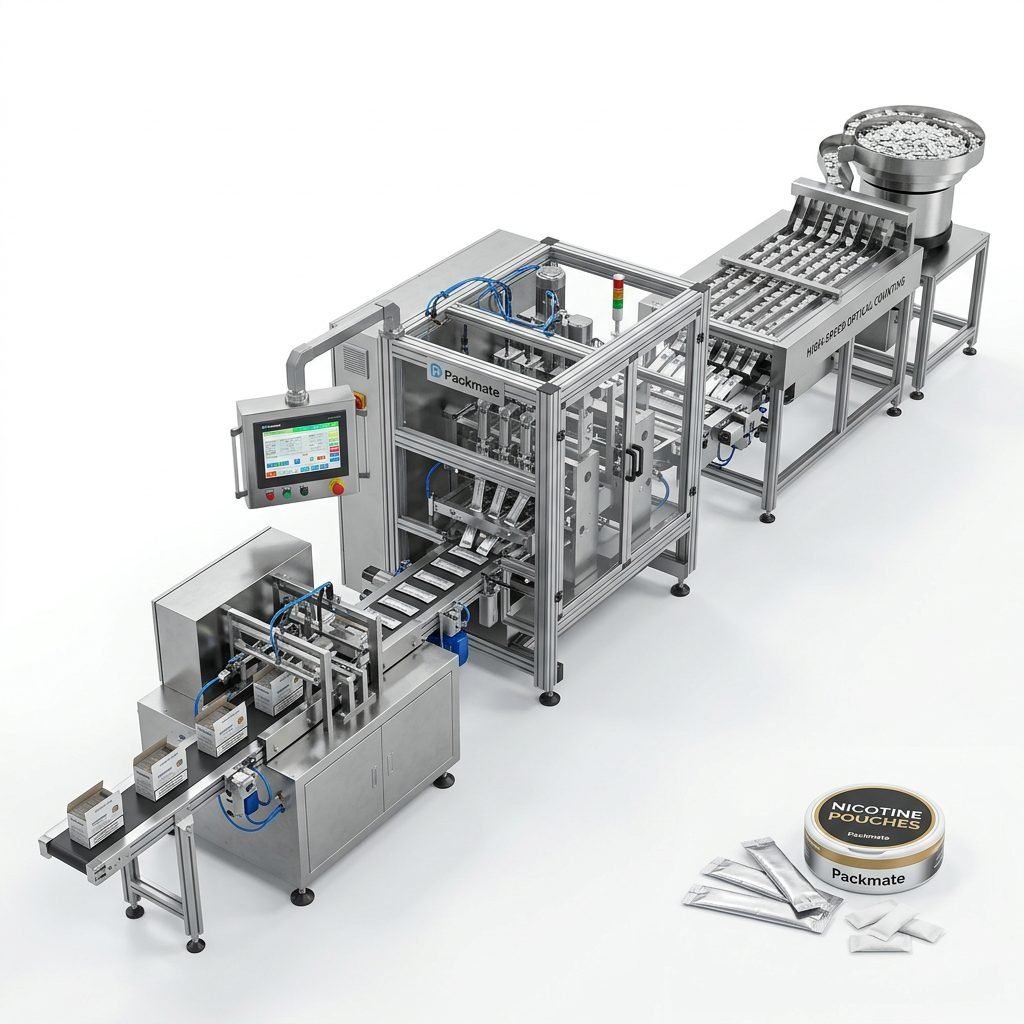
Snus and nicotine pouches require consistent dosing to meet regulatory and consumer expectations. Evaluate the machine’s dosing technology (auger, multi-head weighers, vibratory feeders) and its accuracy tolerance. Look for built-in weight-check systems, automatic reject mechanisms, and statistical process control features.
5. Materials compatibility and packaging formats
Confirm the machine supports the film types and laminate structures you plan to use: biodegradable films, aluminum foil laminates, or heat-seal coatings. Machines with adjustable forming and sealing stations offer greater flexibility when introducing new SKUs.
6. Compliance, certifications and safety
Ensure the supplier provides machines that meet international standards like CE and ISO. For export-oriented lines, verify documentation and traceability features. Compliance reduces regulatory risks and signals professional engineering. Packmate Snus Machine emphasizes CE and ISO-certified designs in their portfolio.
7. Turnkey solutions and customization
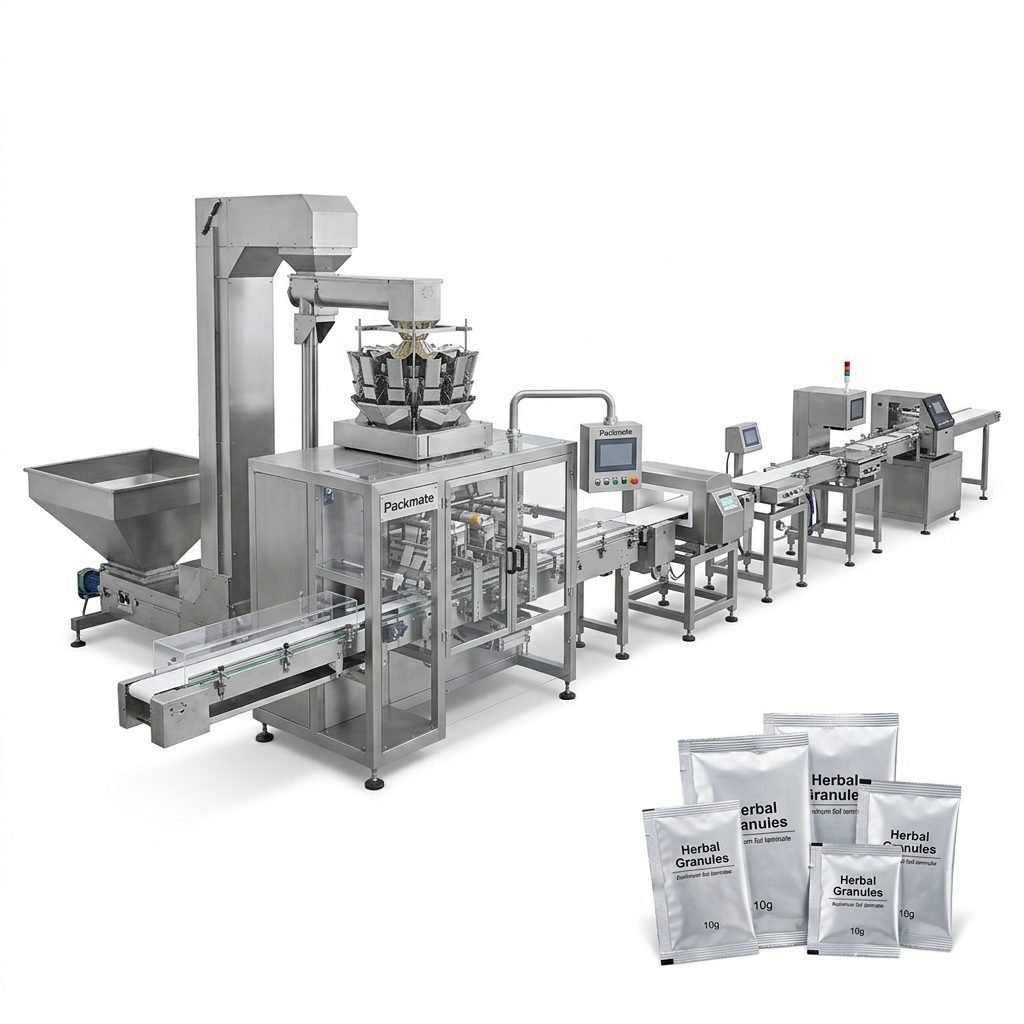
New factories benefit from turnkey systems where the supplier offers not just machines but integrated solutions: feeders, weighers, conveyors, and final packaging stations. Customized multi-lane layouts and automation ensure seamless workflow and faster ramp-up. Explore suppliers who can tailor a line to your floor plan and product specs.
For examples of integrated options, review product ranges such as Snus & Nicotine Packaging Machines and Sachet & Stick Pack Machines which showcase flexible configurations.
8. After-sales support, spare parts and training
Reliable after-sales service is critical. Confirm the supplier offers local or regional technical support, training programs, and fast access to spare parts. Consider a service agreement covering preventive maintenance, remote diagnostics, and on-site assistance for critical stops.
🔧 Ask for: response time commitments, spare parts list with pricing, and evidence of training programs used with previous customers.
9. Footprint, utilities and plant layout
Analyze the machine footprint, aisle clearance, and required utilities (power, compressed air, vacuum, chilled water). Machines that are modular and mobile simplify reconfiguration. Work with suppliers who can provide layout drawings and 3D models to validate integration before installation.
10. Total cost of ownership and return on investment
The purchase price is only a portion of lifetime cost. Calculate energy consumption, spare part costs, labor requirements, and expected uptime to estimate ROI. Machines with higher initial cost but superior uptime, accuracy, and lower maintenance can deliver lower cost per pouch and faster payback.
11. Supplier track record and factory capability
Choose suppliers with demonstrated experience in snus packaging. A manufacturer with a strong factory setup, CNC capability, and quality inspection systems is more likely to deliver robust equipment. Packmate’s multi-decade experience, 20,000㎡ facility, and 50+ machine models are the type of credentials to prioritize.
See examples of customer installations and solutions in supplier case studies such as Case and learn more About Packmate.
12. Practical procurement checklist
Use a checklist when requesting quotes and evaluating machines:
✅ Production speed and realistic net throughput
✅ Dosing accuracy and inspection systems
✅ Supported film types and pouch formats
✅ Certifications (CE, ISO) and documentation
✅ Warranty, spare parts, and local support
✅ Commissioning, training, and testing on your product
13. Installation, FAT and SAT testing
Factory Acceptance Testing (FAT) and Site Acceptance Testing (SAT) are essential. Request FAT with your actual materials and product to confirm performance. Detailed commissioning schedules and operator training plans shorten ramp-up time and reduce initial rejects.
14. Financing, lead times and logistics
New lines often require equipment financing and careful logistics planning. Discuss lead times, export documentation, and local clearance issues with the supplier. A vendor experienced with global shipments and installations is an advantage.
15. Final selection: balancing flexibility and specialization
For a new Algerian factory, consider a compromise between specialized machines (lower capex, simpler operation) and flexible multi-format lines (future-proofing). If growth is likely, favor suppliers who can scale lines or provide modular upgrades.
📌 Decision framework: Match current demand, planned growth, available floor space, and budget to decide between single-lane, multi-lane, or turnkey solutions.
16. Where to find suppliers and more information
Evaluate manufacturers that specialize in snus packaging. Explore product pages and catalogs to compare machine models and complementary equipment like weighing systems and auxiliary devices. Recommended product pages include Weighing & Packaging Systems, Filling & Packaging Lines, and Auxiliary Packaging Equipment.
17. Practical tips for running a successful snus production line in Algeria
– Train a small group of multi-skilled operators who can handle mechanical adjustments and basic PLC troubleshooting.
– Maintain a strategic stock of critical spare parts to minimize downtime.
– Implement simple daily checks and weekly preventive maintenance protocols.
– Use consistent raw material suppliers to limit variability in sealing and dosing performance.
Summary and next steps
Selecting the best snus packaging machine for an Algerian factory requires balancing capacity, accuracy, flexibility, and long-term support. Prioritize machines with proven dosing systems, modular layouts, and strong after-sales service. Request FAT tests, verify certifications, and confirm spare parts availability before signing agreements. When in doubt, choose suppliers who offer turnkey lines and documented local or regional service networks to reduce commissioning risk.
Further resources
To explore models and company information, check the manufacturer resources such as the product catalog and contact pages: Catalog and Contact Us.
Frequently Asked Questions
Q1: What speed should a start-up consider for a single-lane snus machine?
A1: For start-ups, a practical single-lane target is the speed that achieves your daily output with room for growth—commonly 40–120 packs/min depending on pouch size and automation level.
Q2: How important is multi-lane equipment for future growth?
A2: Very important if you expect rapid volume increases. Multi-lane systems reduce labour per unit and lower cost per pouch at scale, though they require more initial investment and floor space.
Q3: What documentation should be requested before purchase?
A3: Ask for machine specifications, electrical and pneumatic requirements, CE/ISO certificates, FAT reports, spare parts lists, and service level agreements.
Q4: Can a supplier train local staff in Algeria?
A4: Most experienced suppliers provide on-site training during commissioning and remote support. Confirm language, training duration, and follow-up support options in the contract.
Q5: Where can I see real machine demonstrations and past projects?
A5: Suppliers often participate in international exhibitions and post case studies online. Visit the Our Exhibition and Case pages for examples and demo schedules.