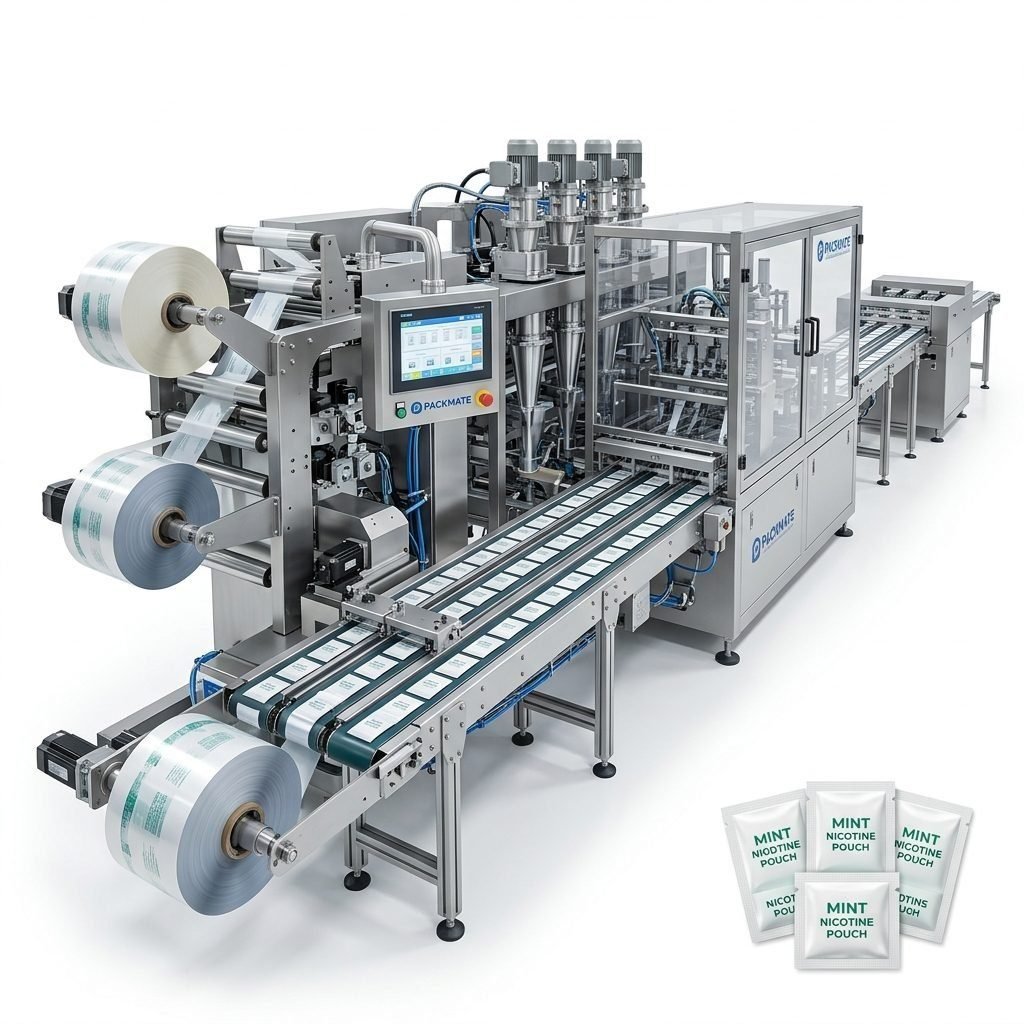
In modern snus and nicotine pouch production, automation is no longer optional — it is the backbone of competitive and compliant manufacturing. This guide dives deep into snus pouch line automation, covering the machines, line layouts, integration with upstream and downstream equipment, quality control methods, and practical tips for scaling production while maintaining product integrity and regulatory compliance.
Why Automate Snus Pouch Production?
Automation transforms snus production from labor‑intensive assembly into a precise, repeatable, and traceable process. For producers of nicotine pouches and snus, automation offers several concrete advantages:
⚙️ Increased throughput — Multi‑lane pouch machines and high‑speed sachet systems can multiply output while maintaining dose accuracy.
📦 Consistent package quality — Automated sealing, cutting, and forming drastically reduce variation and rework.
🔧 Traceability & compliance — Integrated control systems log batches, parameters, and alarms for audits and quality assurance.
Core Components of a Snus Pouch Line
A complete snus pouch line typically consists of several integrated subsystems. Each subsystem can be selected and configured to meet product format, dose size, and production speed requirements.
1. Feeding & Dosing Systems
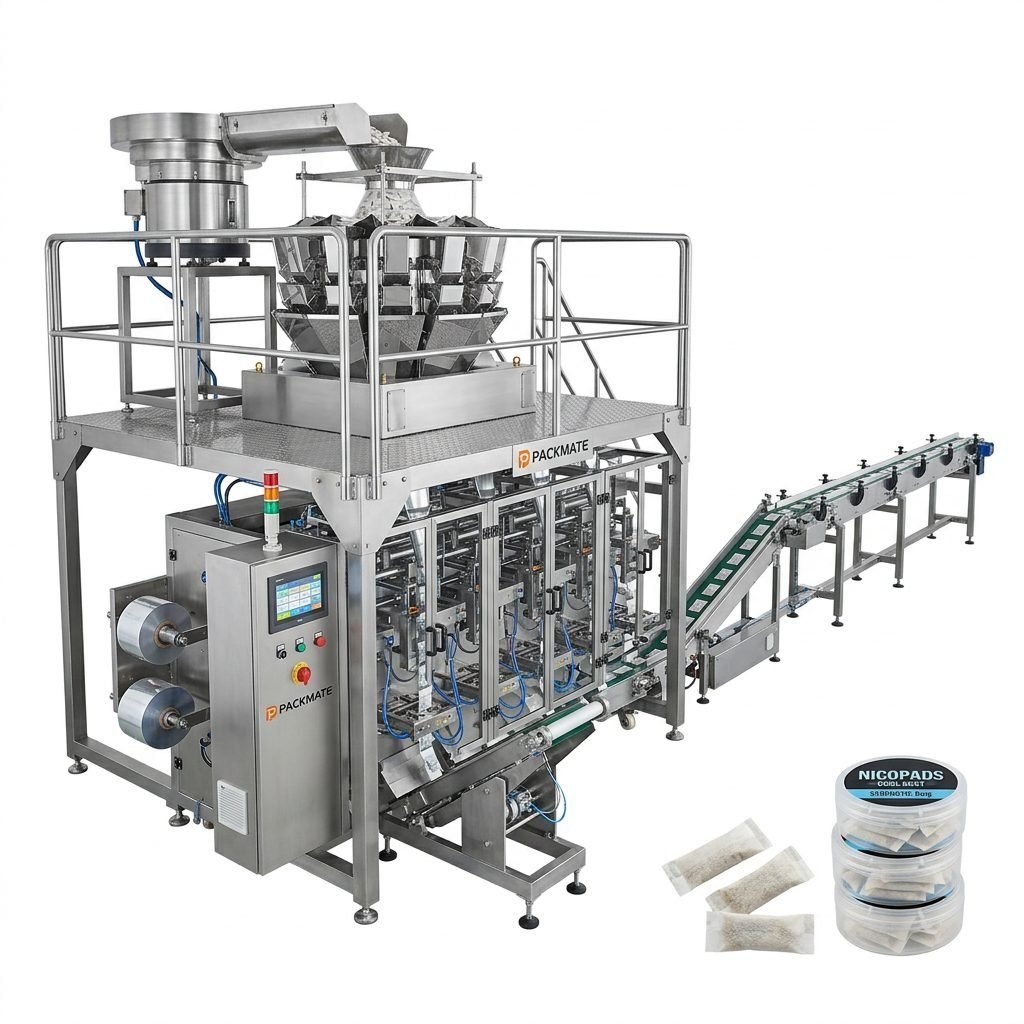
Accurate weighing and dosing are crucial for nicotine pouches where small deviations can affect product performance and regulatory compliance. Weighing & auger or volumetric dosing systems must be calibrated for powders, fibers, and blends. For turnkey solutions that include advanced weighing modules, suppliers like Packmate offer integrated options compatible with high‑speed pouch fillers.
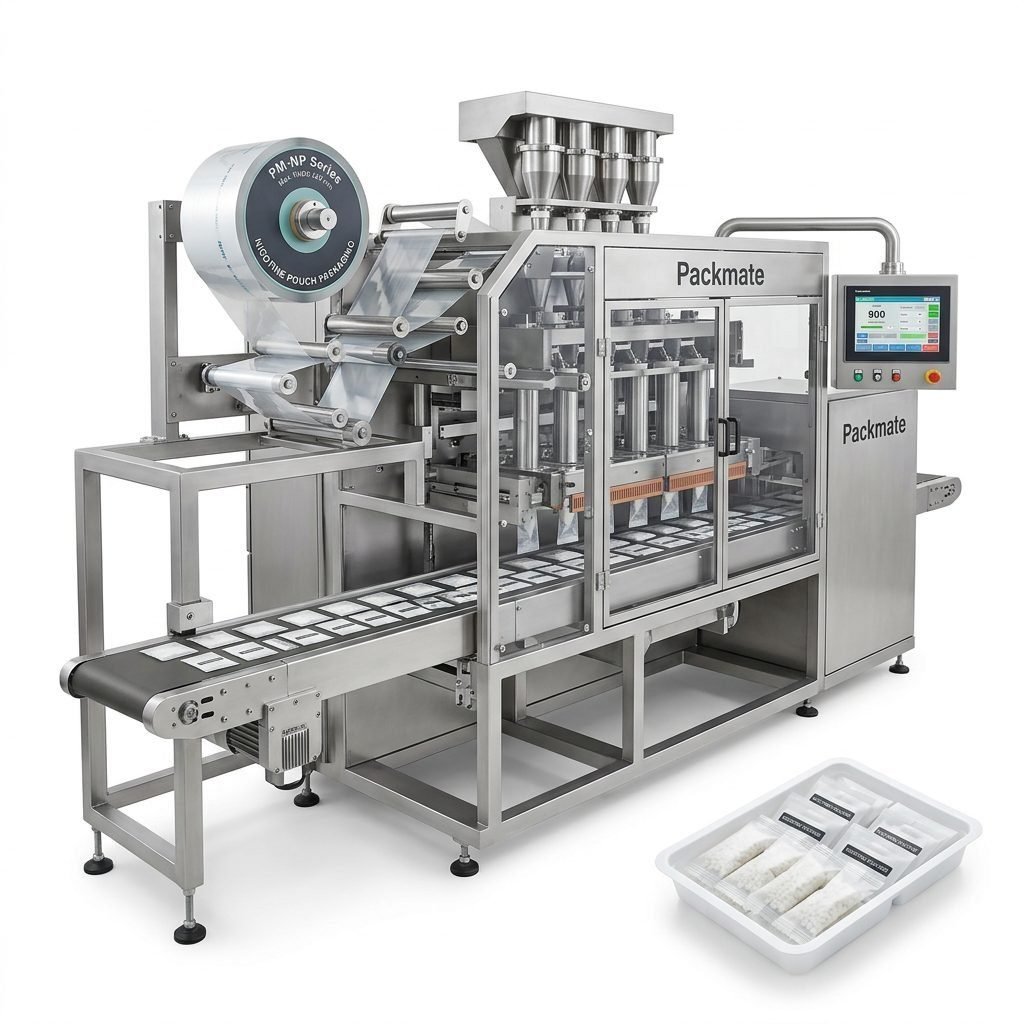
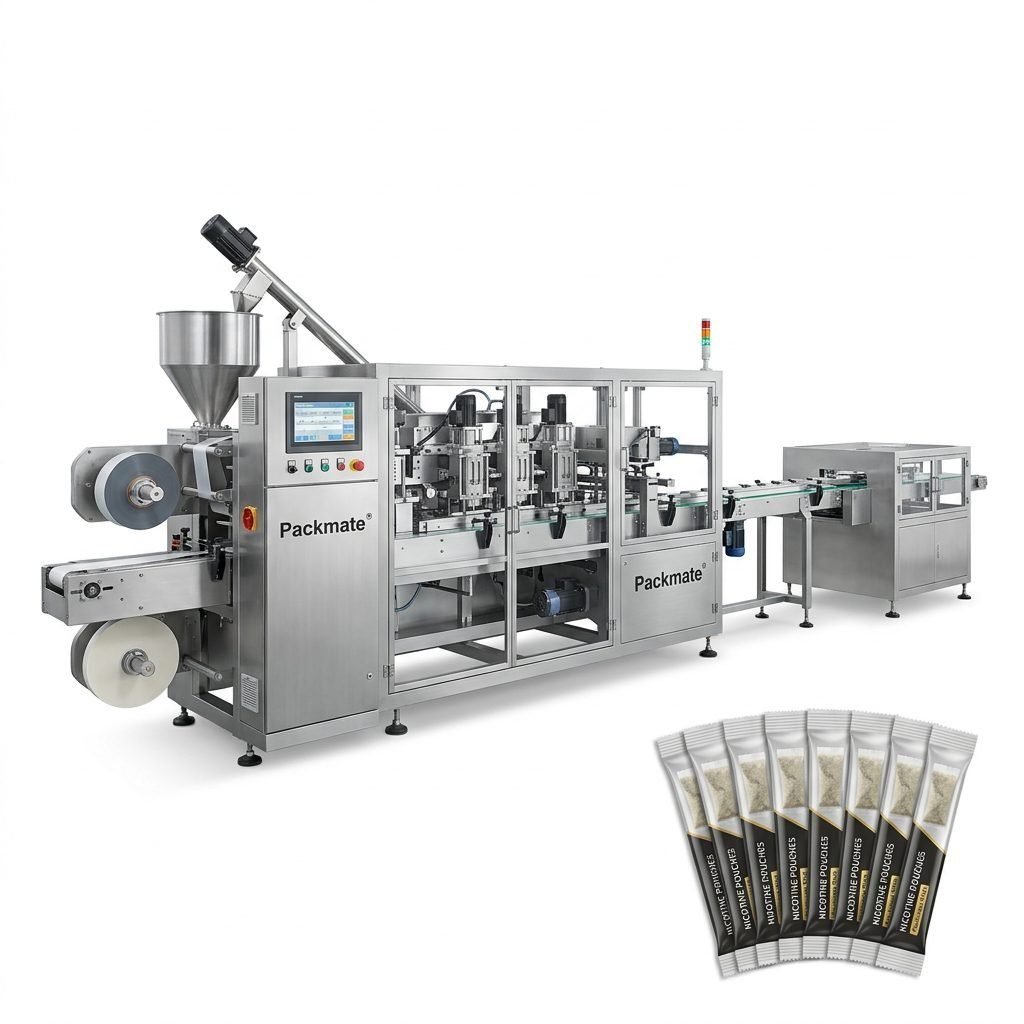
2. Form‑Fill‑Seal and Pouch Formers
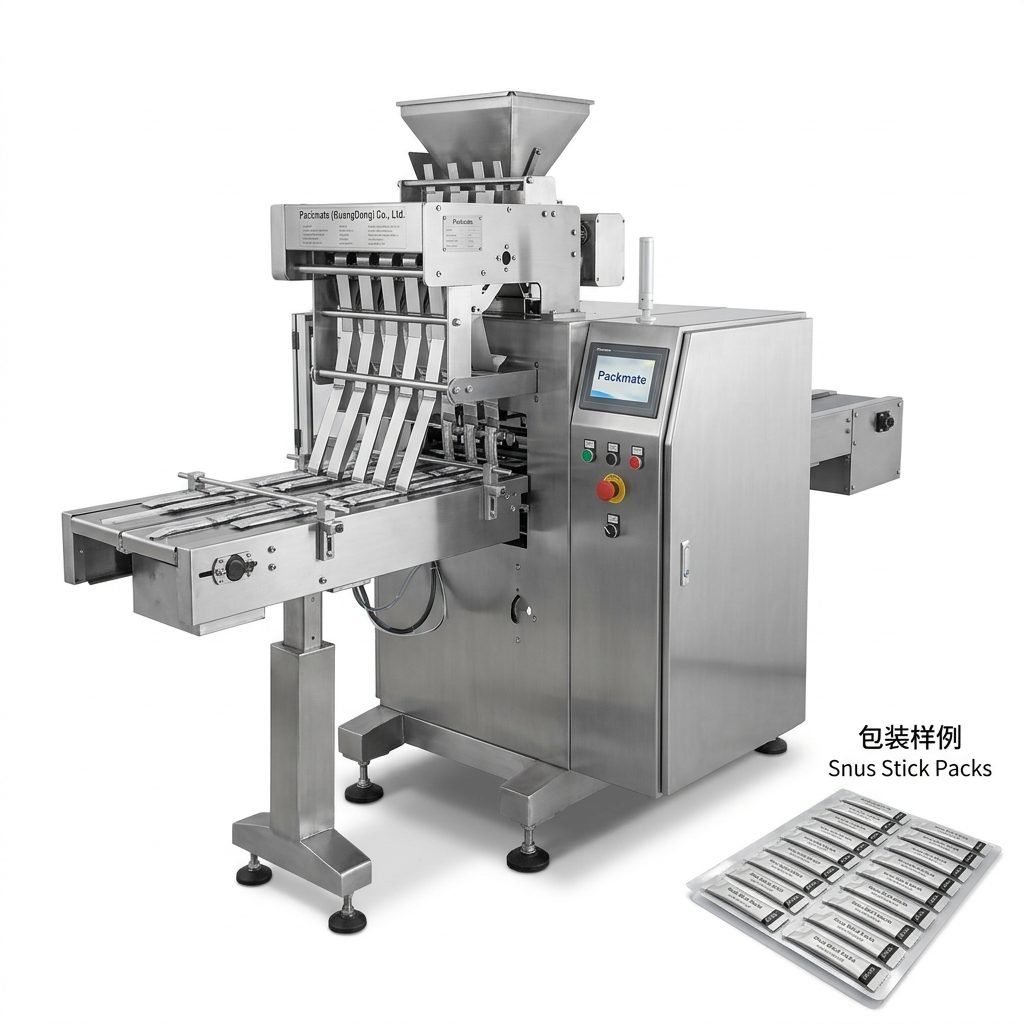
Pouch format options include flat sachets, round pouches, stick packs, and multi‑lane small‑dose pouches. Selection depends on brand positioning, shelf presentation, and consumer convenience. Machines in this category need to deliver consistent forming, clean sealing, and precise cutoffs. For more machine types, explore resources like Snus & Nicotine Packaging Machines and Sachet & Stick Pack Machines.
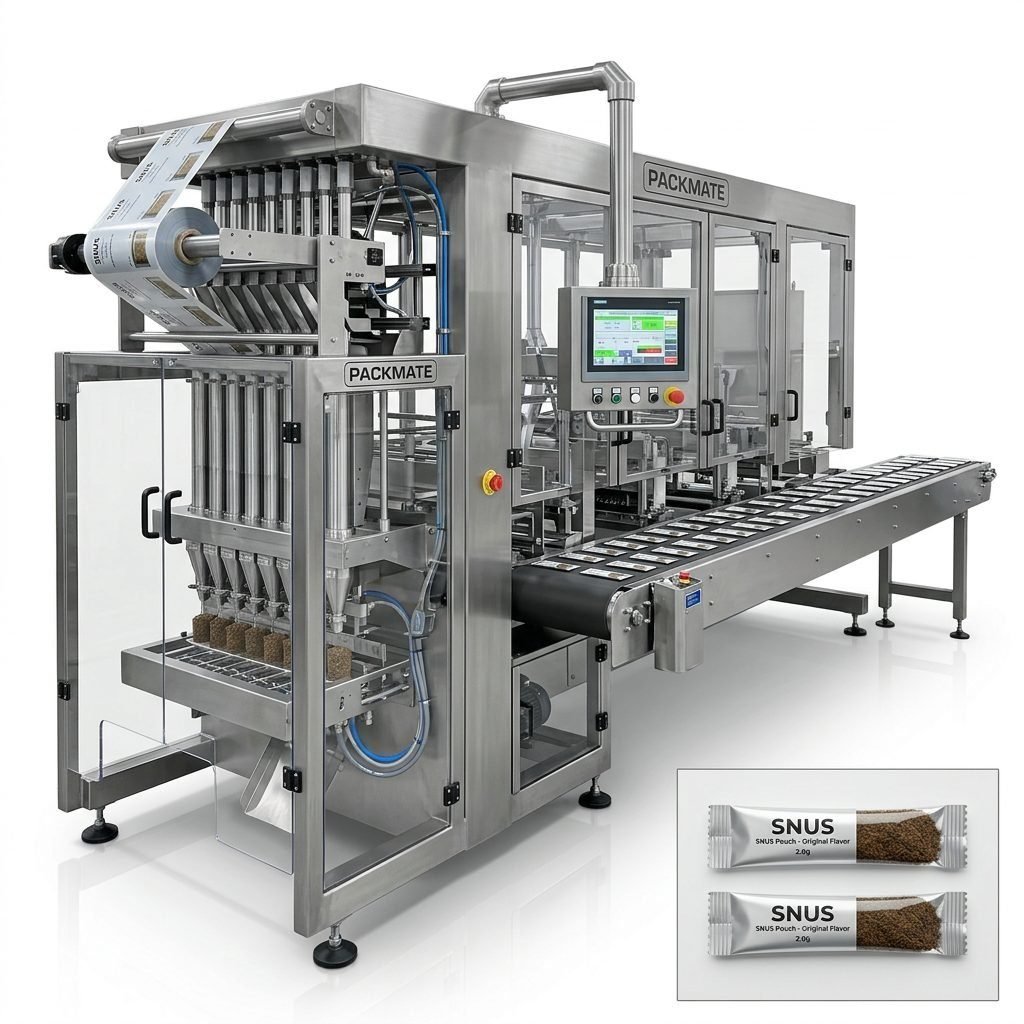
3. Multi‑Lane Systems for Small‑Dose Pouches
To meet demand for high volumes of small pouches, multi‑lane machines run multiple parallel lanes from a single forming head. These systems require precise synchronization to ensure uniform dosing and sealing across lanes. The complexity of multi‑lane design increases the need for robust predictive maintenance and monitoring.
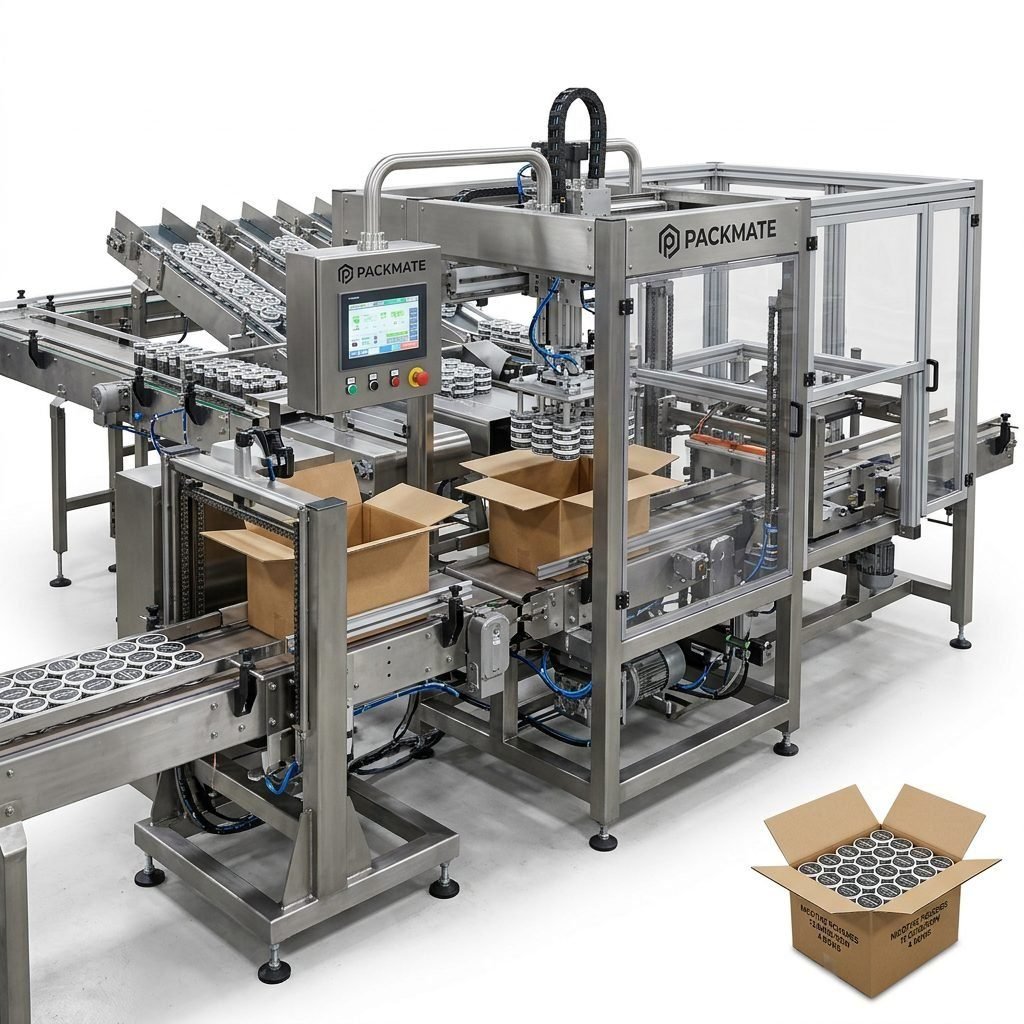
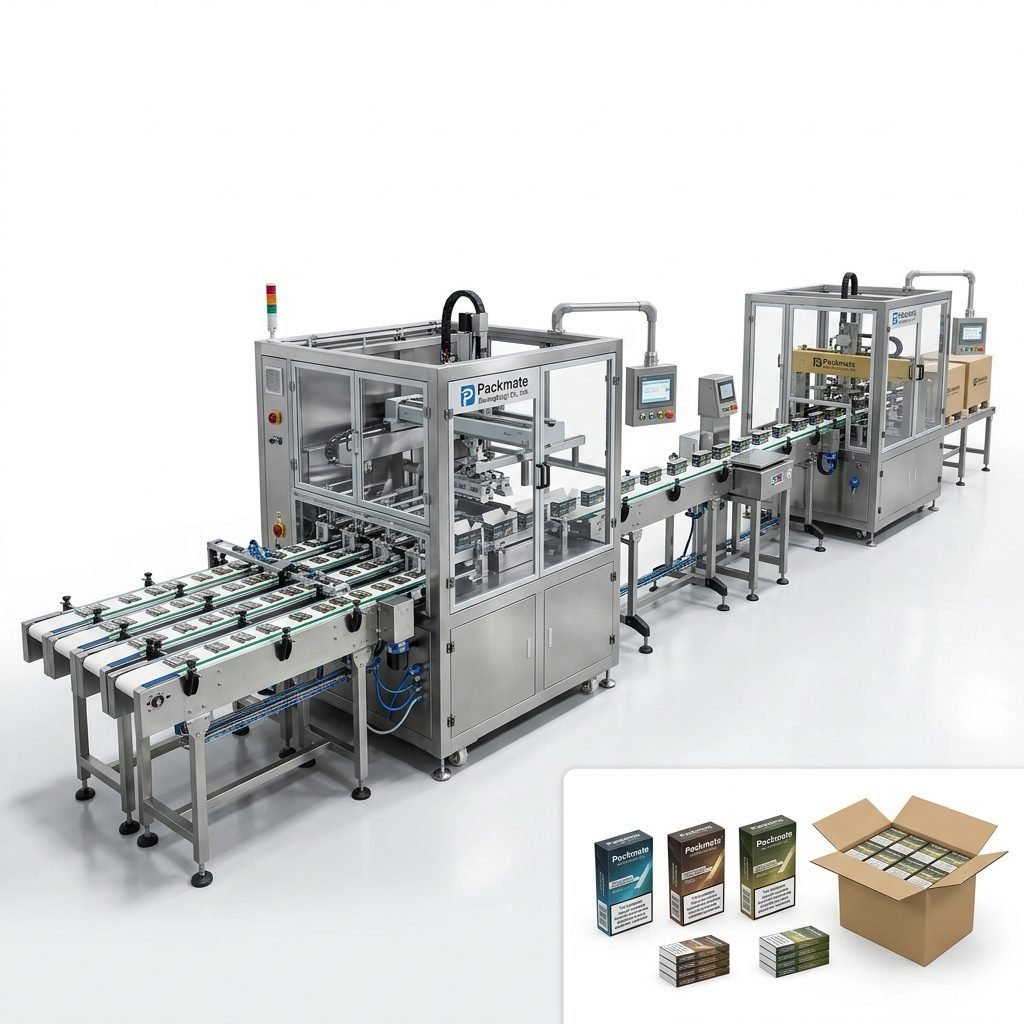
4. Labelling, Cartoning & Case Packing
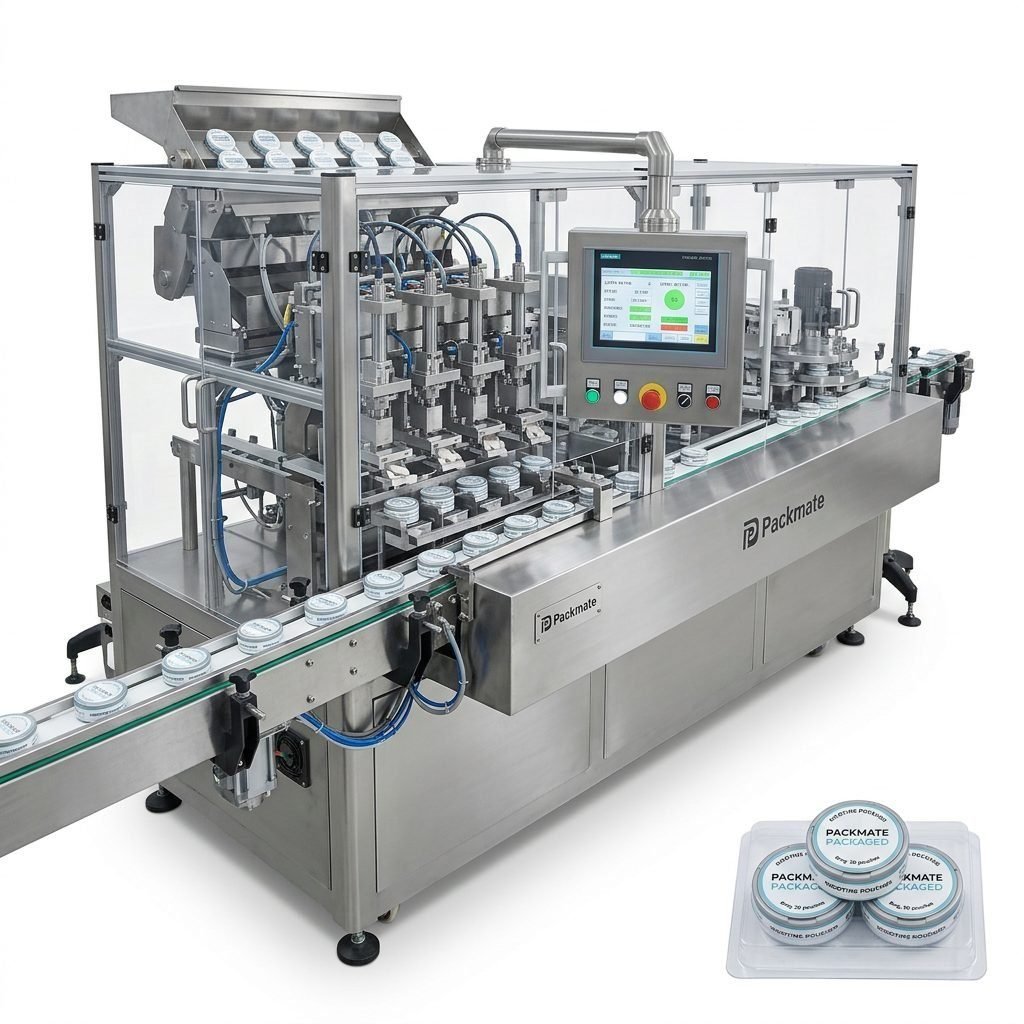
Downstream equipment takes the finished pouches through collection, orientation, secondary packaging, and final case packing. Automated cartoners and case packers can be integrated with serialization modules and vision systems to verify labels and expiry codes. For combined filling and final packing workflows, see Filling & Packaging Lines.
Designing an Efficient Line Layout
Line design must balance floor footprint, accessibility for maintenance, hygienic cleaning, and material flow. Key design principles include modularity, minimal transfer distances between machines, and clear access lanes for operators.
✔️ Modularity: Choose equipment that can be isolated and swapped with minimal downtime.
✔️ Service access: Maintain 360° access where possible for regular cleaning and troubleshooting.
✔️ Sanitation: Use materials and designs that support CIP (clean‑in‑place) or quick washdowns.
Control Systems and Data Integration
Modern snus lines are controlled by PLC and HMI systems that coordinate dosing, sealing, and material handling. Integration with MES and ERP systems allows for production scheduling, batch tracking, and quality analytics. Key features to specify:
• Recipe management for quick product changeovers.
• Real‑time alarms & SPC dashboards for immediate corrective actions.
• Remote support & diagnostics to reduce on‑site downtime.
Quality Control: Ensuring Dose and Package Integrity
For nicotine pouches, product safety and correct dosage are essential. Implement a layered quality control program combining in‑line sensors with offline lab verification.
🔍 In‑line weight checks: High‑accuracy check weighers detect under/overfilled pouches and trigger line sorting.
🖼️ Vision systems: Verify sealing integrity, pouch print position, and label accuracy.
🔁 Statistical sampling: Cross‑verify in‑line readings with lab analysis on nicotine content and moisture.
Material Selection and Packaging Formats
Packaging materials must preserve product freshness, prevent leakage, and meet regulatory labeling requirements. Common choices include multi‑layer laminates with barrier properties and heat‑seal adhesives compatible with your sealing equipment. The chosen format (stick, sachet, round pouch) should align with branding, consumer convenience, and shelf display considerations.
Maintenance, Spare Parts and Lifecycle Support
To achieve sustained uptime, build a preventive maintenance schedule covering bearings, seal jaws, sensors, and dosing components. Working with a manufacturer that offers global support, spare parts, and retrofit options helps extend machine life and protect production investment. Packmate’s 30+ years of engineering experience and large manufacturing footprint enable reliable lifecycle services — learn more on the About Packmate page.
Regulatory Considerations and Compliance
Nicotine pouches and snus are subject to strict regulations that vary by market. Packaging lines must support accurate labeling, batch traceability, and hygienic processing. Certifications such as CE and ISO indicate that equipment meets recognized safety and quality standards. Packmate machinery complies with these international benchmarks, ensuring equipment can be validated for regulated markets.
Selecting a Supplier: Practical Criteria
When evaluating suppliers for snus pouch lines, consider the following:
• Experience & references: Look for a track record in nicotine pouch lines and global cases.
• Customization capability: Can the manufacturer deliver multi‑lane or specialty pouch formats?
• Service network & training: On‑site commissioning, operator training, and remote diagnostics are critical.
Case Study Snapshot: Scaling a Snus Line
A medium‑sized producer needed to scale from 10,000 to 100,000 pouches per day while keeping SKU flexibility. The solution combined a 12‑lane pouch former, high‑precision dosing, and a synchronized cartoning line. Key outcomes included a fivefold increase in throughput, reduced product giveaway, and improved traceability through MES integration.
Global Services, Exhibitions and Where to See Machines Live
Manufacturers exhibit at major trade shows where you can view live demonstrations and discuss turnkey solutions. For event participation and demonstrations, check the company exhibition listings and certification details on their website: Our Exhibition and Certificate.
Practical Implementation Checklist
Before commissioning a snus pouch line, ensure the following are completed:
1. Site power, compressed air, and utilities validated.
2. Floor plan with maintenance access and material flow finalized.
3. Quality protocols, cleaning SOPs, and labeling templates approved.
4. Operator training schedule and spare parts kit prepared.
Integration with Auxiliary Equipment
Effective lines often pair primary packaging machines with auxiliary equipment such as conveyors, metal detectors, and sorters. For a complete solution, consult the Auxiliary Packaging Equipment catalog to ensure compatibility and single‑source support.
Sustainability and Material Efficiency
Reducing material waste, optimizing pouch film usage, and choosing recyclable laminates are becoming important differentiators. Automated systems that minimize changeover time and detect misfeeds early help conserve materials and reduce the carbon footprint of production.
Why Packmate as a Partner
With over 30 years of engineering experience and a 20,000㎡ manufacturing facility, Packmate delivers tailored snus pouch lines, from small‑dose multi‑lane systems to full turnkey packaging lines. Their portfolio includes Bag & Pouch Packaging Machines and robust support services for global customers.
Next Steps for Manufacturers
Start with a pilot line configuration, gather production data, and refine recipes and dosing parameters. Engage equipment suppliers early to align mechanical, electrical, and software interfaces. For quotes, case studies, and technical catalogs, visit the manufacturer’s service pages or contact them directly: Contact Us.
Conclusion
Automating snus pouch production unlocks higher throughput, consistent quality, and stronger traceability — all essential for competing in regulated and fast‑moving markets. Careful selection of dosing systems, multi‑lane formers, and integrated control architectures will define long‑term success. Partnering with experienced manufacturers who provide full lifecycle support ensures the line not only meets initial targets but continues to perform as production scales.
Frequently Asked Questions
Q1: What is the typical throughput of a multi‑lane snus pouch machine?
A1: Throughput varies by lane count, pouch size, and dosing method. A modern multi‑lane system can range from tens of thousands to several hundred thousand pouches per day when running continuously with optimized changeovers.
Q2: How do I ensure dose accuracy for very small nicotine pouches?
A2: Use high‑precision weighing and dosing modules with frequent calibration and in‑line check weighing. Combine in‑line sensors with statistical lab verification to validate performance.
Q3: Can existing packaging lines be retrofitted to handle snus pouches?
A3: Many lines can be retrofitted with new formers, dosing units, and control updates, but feasibility depends on floor space, power, and mechanical interfaces. A site survey is recommended.
Q4: What certifications should I expect from reputable machine suppliers?
A4: Look for CE and ISO compliance as baseline certifications. Additional sector‑specific validations may be requested depending on market regulations and quality systems.
Q5: How do I get a quote or see real machines in operation?
A5: Contact manufacturers directly to request quotes, schedule site visits, or attend trade show demonstrations. For more information and case studies, visit the company’s case and service pages: Case and Service.