Producing nicotine pouches at scale requires a precise combination of regulatory awareness, hygienic manufacturing practices, robust equipment, and consistent quality assurance. This guide covers the practical standards and production controls that help manufacturers deliver safe, compliant, and repeatable nicotine pouch products — from raw material handling to packaging and traceability. Whether you are evaluating a complete production line or optimizing an existing snus pouch facility, the practices below reflect industry-proven approaches that balance safety, compliance, and operational efficiency.
🔧 Key Regulatory and Safety Foundations
Before any equipment is installed, a manufacturer must establish the regulatory framework applicable to nicotine pouches in each target market. Typical considerations include product classification (tobacco-derived nicotine vs. synthetic nicotine), age-restriction packaging requirements, labeling obligations, and ingredient disclosure. Internationally recognized certifications such as CE and ISO provide baseline equipment safety and quality assurances that help streamline regulatory approval of the production line.
Important: maintain documented regulatory assessments for each market and ensure machines are validated against safety standards (e.g., CE, ISO 9001) to reduce audit friction and support quality claims.
✅ Product Safety Controls
Product safety begins with raw material sourcing. Establish approved suppliers for nicotine, filler matrices, flavorings, and packaging films. Each incoming batch should be accompanied by Certificates of Analysis (COA) and quarantined until tested for purity, potency, and contaminants. Implement critical control points (CCPs) across the process: mixing, pouch forming, dosing, sealing, and final packaging.
🏭 Production Equipment: Selection and Validation
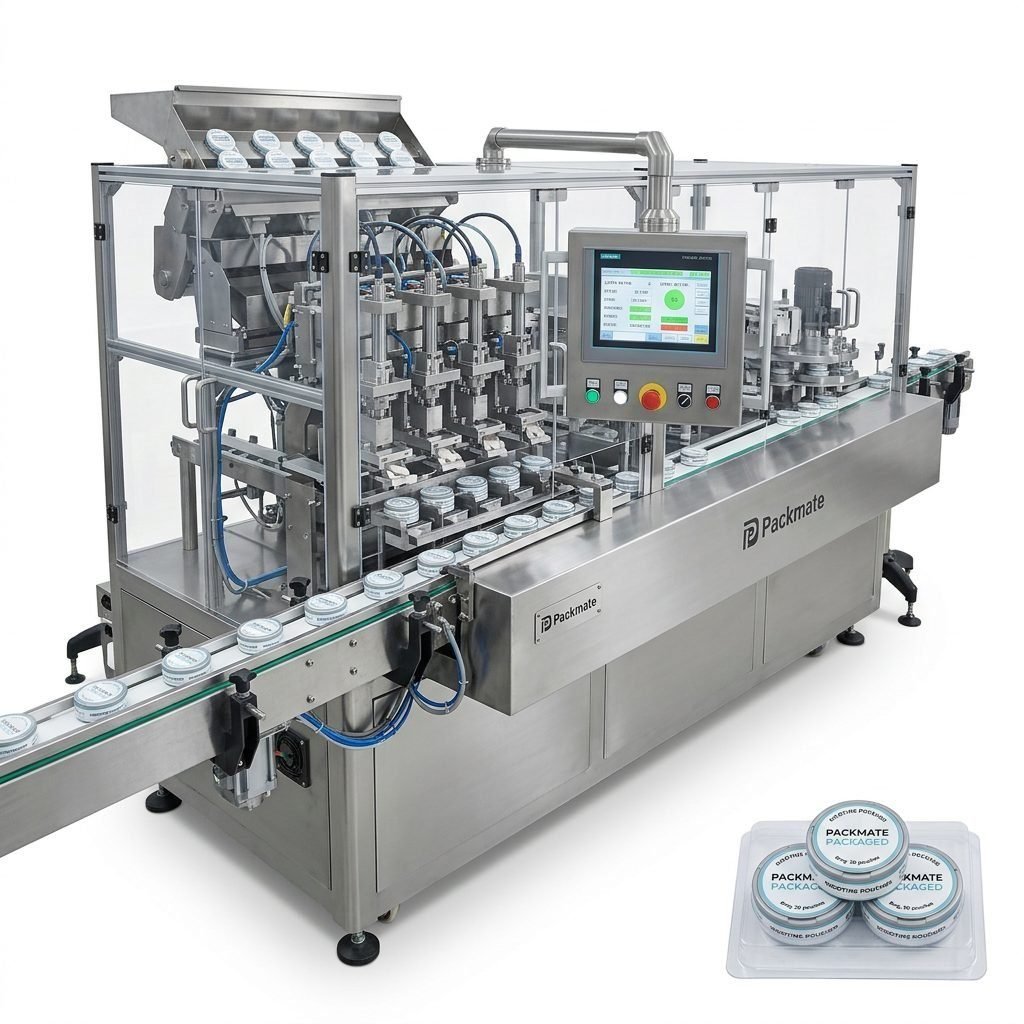
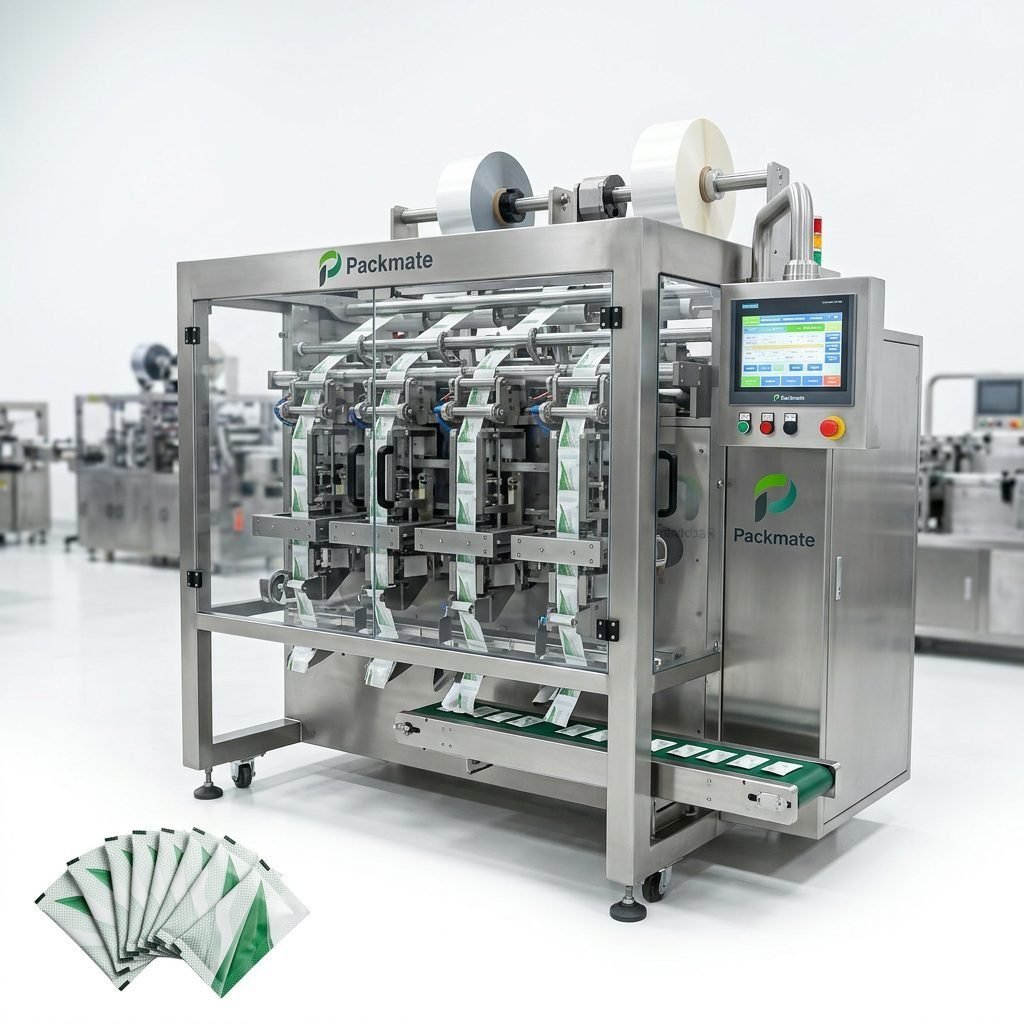
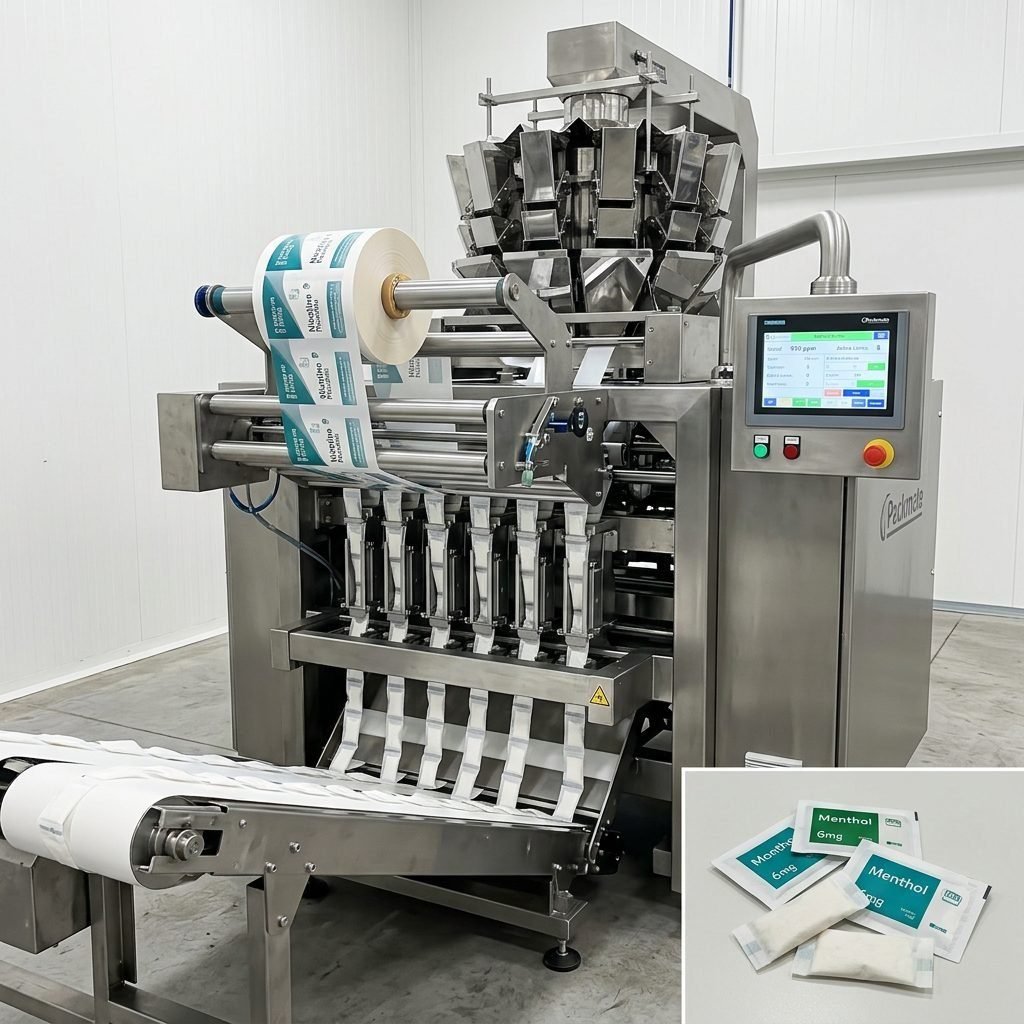
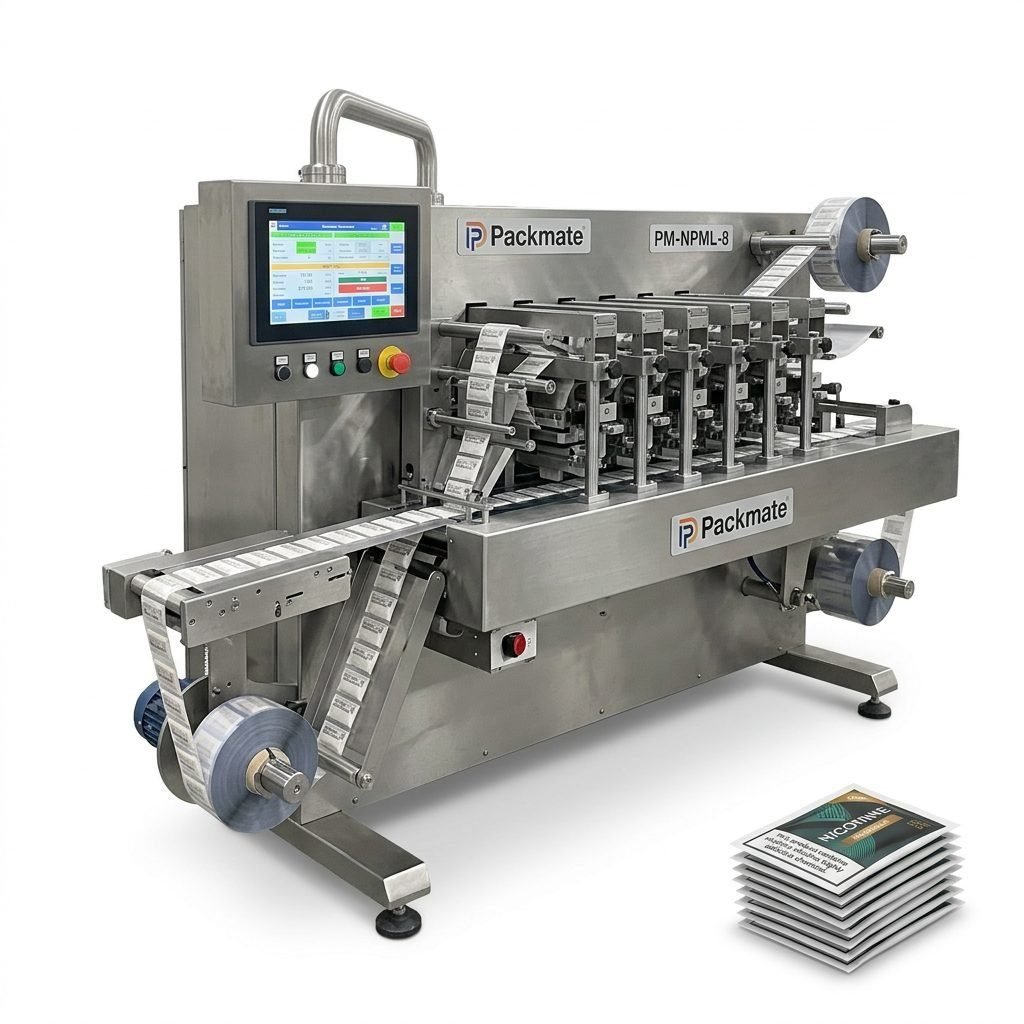
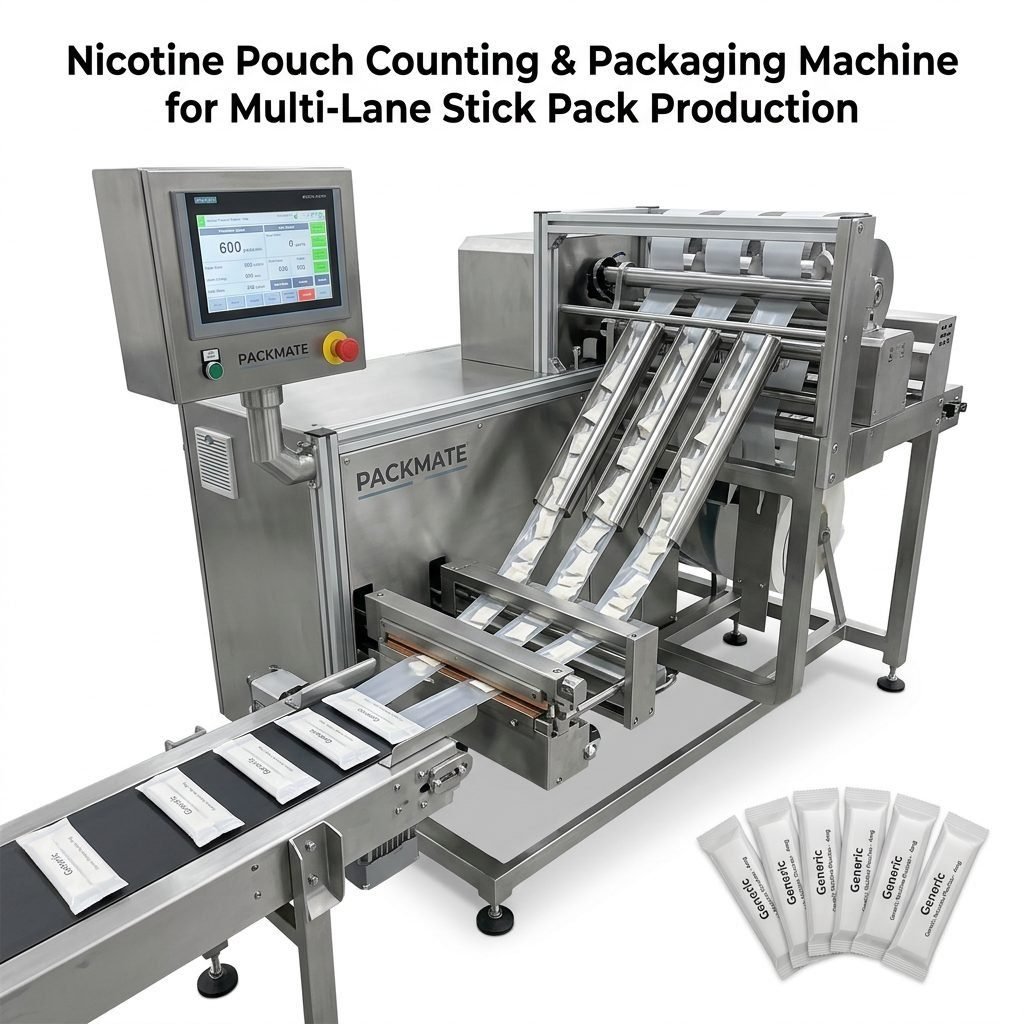
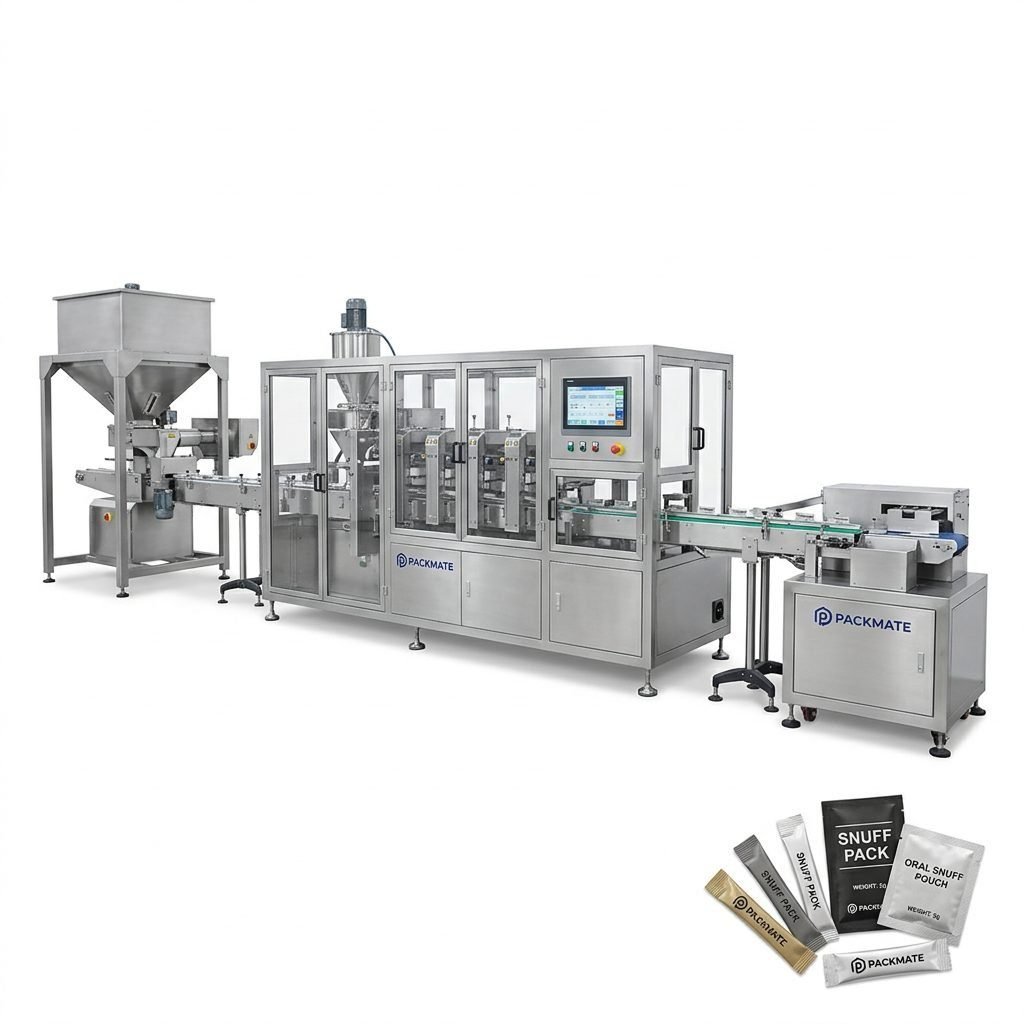
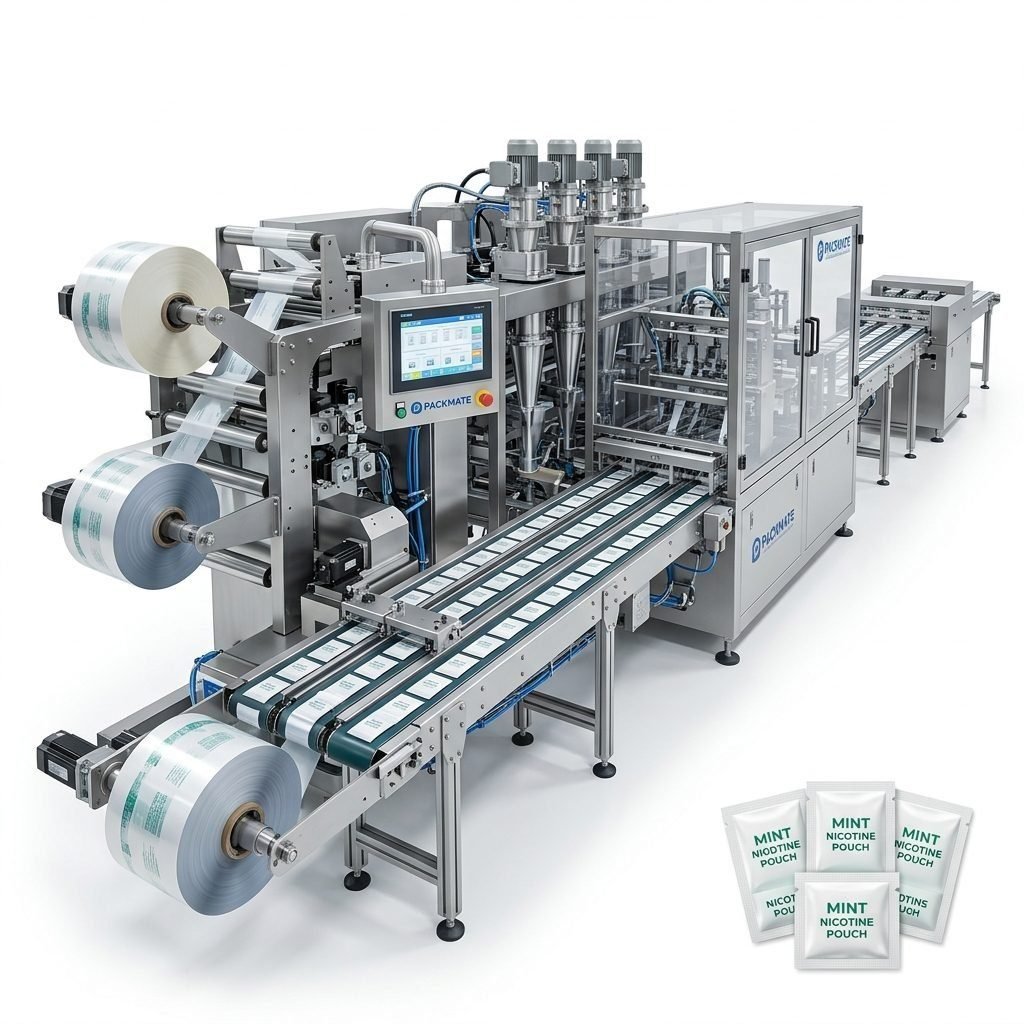
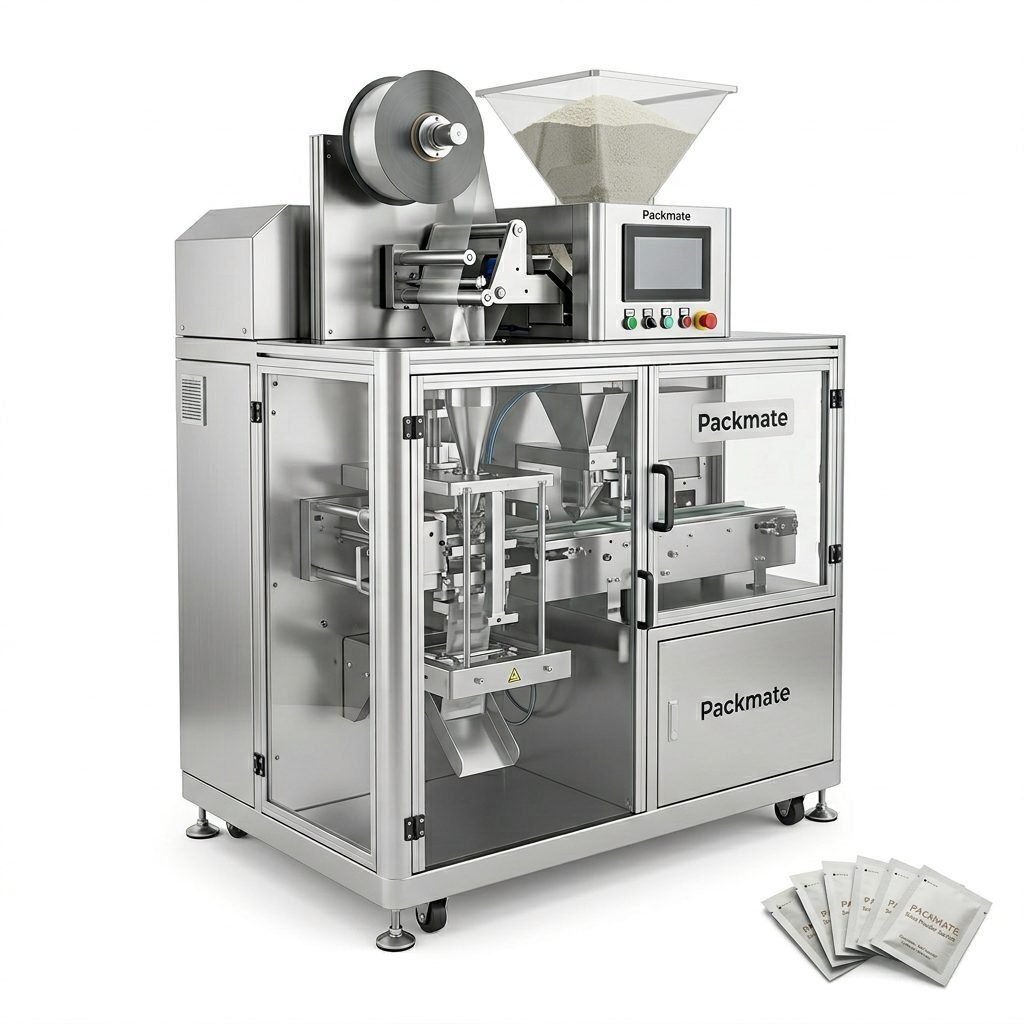
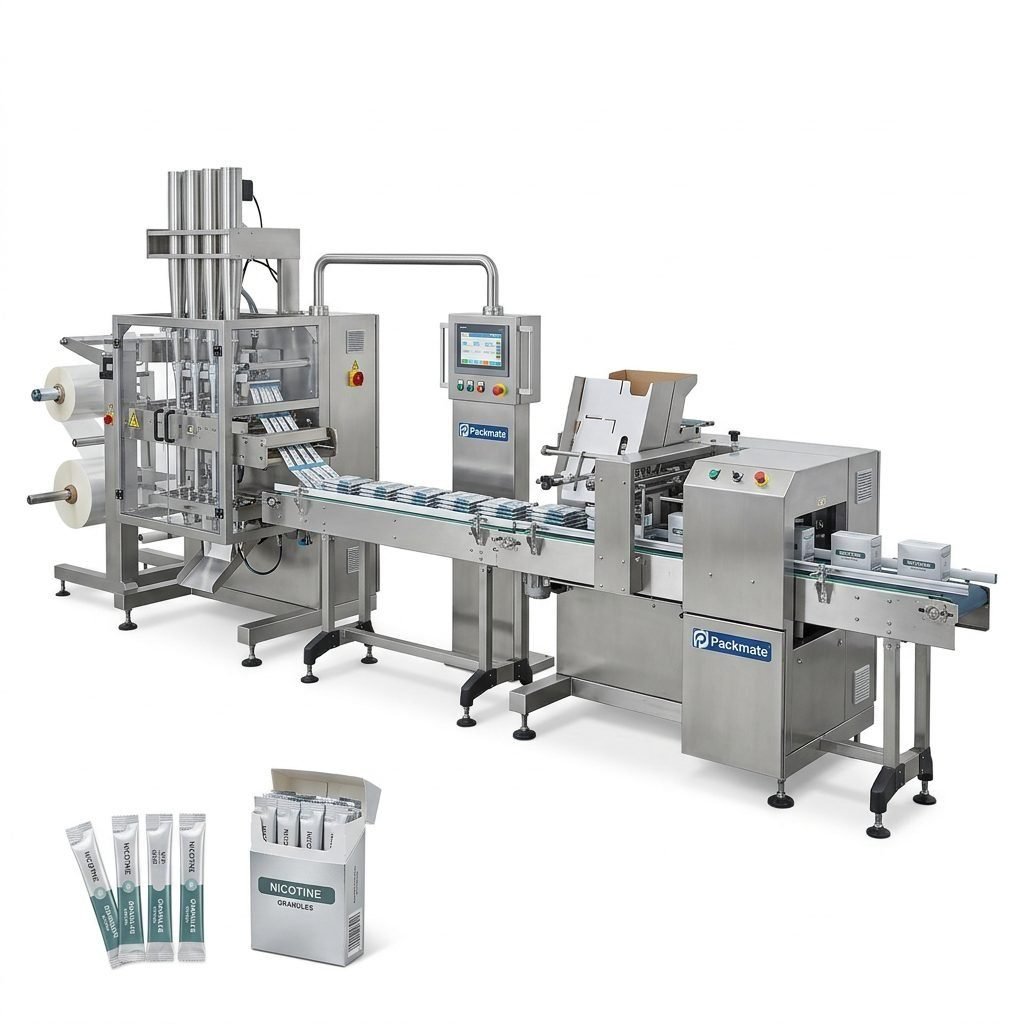
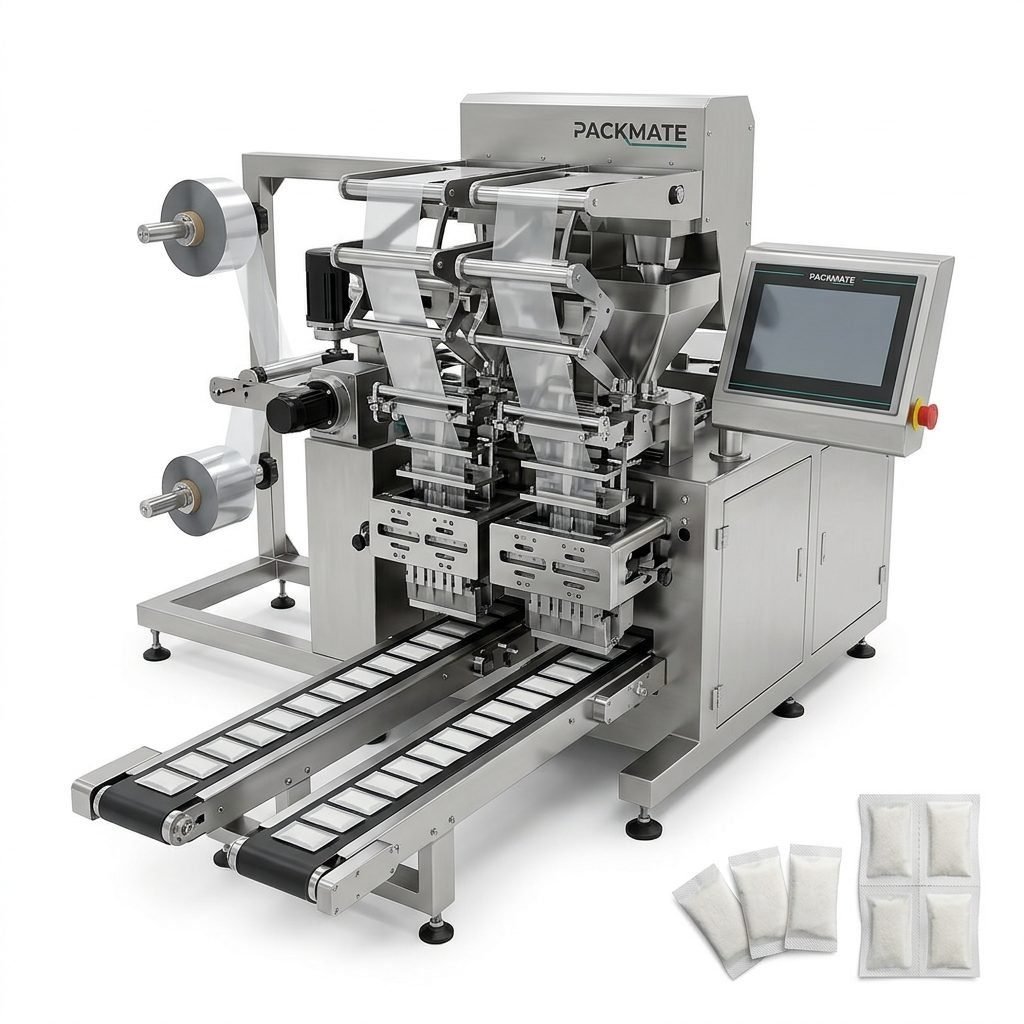
Selecting the right equipment influences product consistency, throughput, and regulatory traceability. For nicotine pouches, high-precision multi-lane snus packing machines and sachet/stick pack machines are commonly used. Evaluate machines for dosing accuracy, lane synchronization, sealing integrity, and ease of cleaning. Consider a modular turnkey solution that integrates weighing, dosing, pouch forming, and downstream case packing.
Machines that meet hygiene and food-grade material contact standards reduce contamination risk and simplify validation. When evaluating suppliers, request FAT (Factory Acceptance Test) documentation, performance data, and service agreements to support long-term uptime.
Suggested review items: dosing repeatability, lane balance, sealing temperature control, CIP accessibility, and HMI data capture for process parameters.
🔗 Recommended equipment links
Explore integrated machines and lines that are widely adopted for nicotine pouch production:
• Snus & Nicotine Packaging Machines
• Sachet & Stick Pack Machines
• Weighing & Packaging Systems
🔬 Quality Assurance and Process Control
A robust QA program enforces product uniformity and safety. Establish sampling plans for weight/dose accuracy, moisture content, sealing integrity, and microbiological limits. Use in-line checkweighers and vision systems to detect pouch defects and foreign particles automatically. Statistical process control (SPC) should monitor critical variables and trigger alarms for drift beyond set tolerances.
Maintain a documented change control and deviation process for product or process changes. Routine equipment calibration and preventive maintenance schedules help sustain accuracy and reduce unplanned downtime.
Quality checkpoint examples: dosing CV% thresholds, seal burst tests, packaging integrity, and random destructive testing for nicotine content.
🧼 Hygiene, Cleaning and Contamination Prevention
Hygiene practices are critical when handling nicotine and related materials. Design the production area with material flow that separates raw material handling from finished goods to avoid cross-contamination. Use food-grade, corrosion-resistant materials for contact parts and design equipment with minimal crevices for easy cleaning. Implement validated cleaning procedures and maintain cleaning logs for audit readiness.
Control airborne particulates through local exhaust, HEPA filtration where necessary, and positive pressure clean zones. Personal protective equipment (PPE) and controlled access to production zones reduce contamination vectors.
⚠️ Handling Nicotine Safely
Nicotine is a bioactive compound and should be treated with appropriate occupational safety controls. Provide MSDS for all materials, engineering controls (ventilation, closed transfer systems), exposure monitoring, and training for staff in handling and emergency response. Ensure proper waste management and neutralization processes for nicotine-contaminated materials.
📦 Packaging, Labeling and Traceability
Final packaging is a critical compliance point. Labels must reflect nicotine content, ingredient listings, batch/lot codes, manufacturing dates, and appropriate warnings per jurisdictional requirements. Use tamper-evident and child-resistant outer packaging where required. Automated serialization and batch coding equipment allow each package to be traced back to raw material lots and production parameters.
Integrate coding and vision inspection directly after sealing to prevent mislabeling. This helps ensure legal compliance and simplifies recall management if ever required.
📈 Production Optimization and Scalability
Effective scaling requires assessing throughput bottlenecks: dosing accuracy, pouch sealing speed, or downstream case packing. Multi-lane packing systems can multiply output without proportionally increasing floor space. Modular auxiliary equipment such as feeders, bulk material handling, and case erectors enable staged growth and reduce capital risk.
Consider a supplier that offers turnkey assembly, commissioning, and global service to accelerate ramp-up. Many manufacturers choose partners who can deliver complete lines including filling & packaging lines and auxiliary systems.
🔁 Validation, Records and Continuous Improvement
Validation comprises IQ (Installation Qualification), OQ (Operational Qualification), and PQ (Performance Qualification). Documented protocols and acceptance criteria for each stage are essential for regulatory and internal quality assurance. Retain batch records, equipment logs, calibration certificates, and deviation reports for defined retention periods.
Use process data to drive continuous improvement: reduce variability, identify recurring issues, and implement corrective actions. A culture of data-driven decision making accelerates improvements in yield, waste reduction, and compliance.
🔍 Audit Readiness
Maintain an audit-friendly documentation system that includes supplier approvals, COAs, training records, cleaning logs, and equipment maintenance history. Regular internal audits highlight gaps before external inspections and help maintain consistent product quality.
🤝 Choosing a Packaging Partner
When selecting a packaging machinery partner, prioritize long-term service capability, spare parts availability, and references in nicotine pouch applications. Suppliers experienced in snus and nicotine pouch lines can offer designs optimized for small-dose multi-lane formats and efficient cleaning cycles. Explore supplier case studies and certifications to validate their experience.
For example, vendors offering integrated solutions across snus and nicotine packaging, Snus & Nicotine Packaging Machines, and auxiliary equipment such as Auxiliary Packaging Equipment can accelerate deployment and reduce integration risk.
Vendor checklist: industry experience, FAT/PAT support, spare parts lead time, training programs, and global service coverage.
📌 Final Recommendations
Build compliance and safety into the production design from the outset. Validate processes, document rigorously, and choose equipment that minimizes contamination risk while maximizing dose accuracy and throughput. Emphasize supplier partnerships that provide turnkey experience in nicotine pouch lines and offer robust after-sales support.
For more information about integrated packaging solutions and machine capabilities, learn about the manufacturer profile and production lines on the About Packmate page or review technical case studies under Case.
Frequently Asked Questions
Q1: What certifications should packaging machines for nicotine pouches have?
A1: Machines typically should comply with CE and ISO standards; additionally, manufacturers should provide FAT/OQ/PQ documentation and material contact certifications to meet local regulatory reviews.
Q2: How is dosing accuracy ensured on multi-lane pouch machines?
A2: Accuracy is maintained through high-precision feeders, in-line weighing/checkweighers, synchronized multi-lane control, and frequent calibration against certified weight standards.
Q3: What are the primary hygiene controls for nicotine pouch production?
A3: Controls include material separation, validated cleaning procedures, food-grade contact surfaces, HEPA filtration where appropriate, and documented cleaning logs with validated removal of residues.
Q4: Can a packaging partner supply a full turnkey line?
A4: Yes. Many experienced suppliers provide turnkey lines including weighing systems, pouch forming machines, filling modules, and case packing — reducing integration burden and time-to-market.
Q5: How should batch traceability be handled?
A5: Use automated batch coding, serialized lot numbers, and an electronic batch record system linking each finished package back to raw material COAs, machine parameters, and operator records for rapid retrieval during audits or quality investigations.