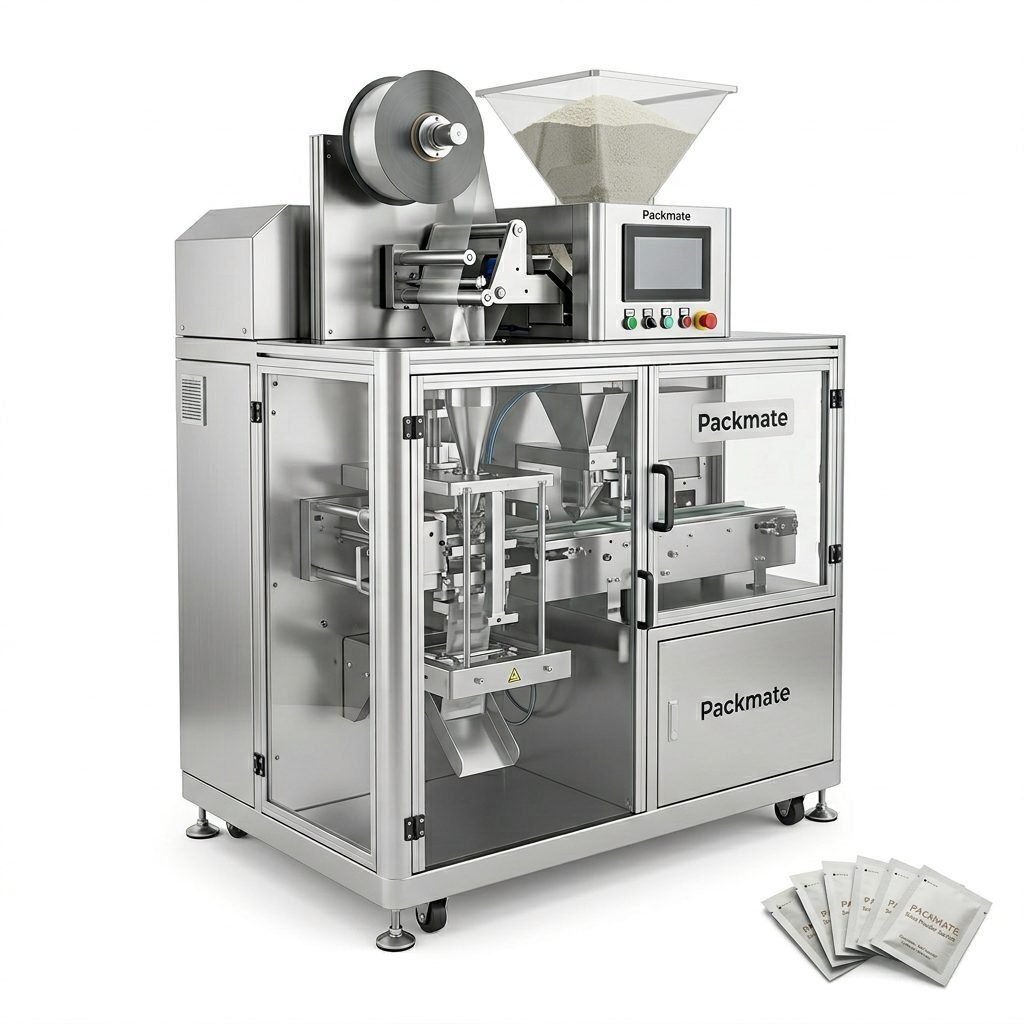
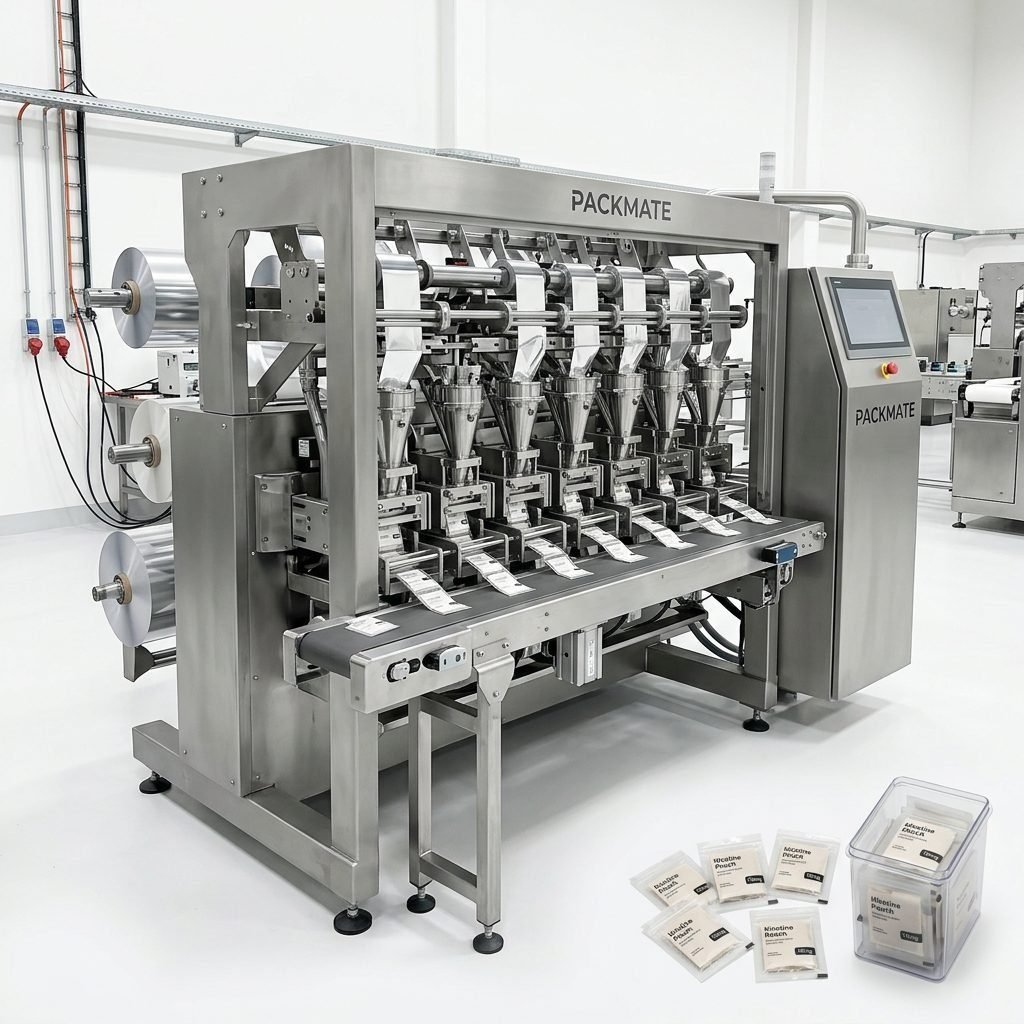
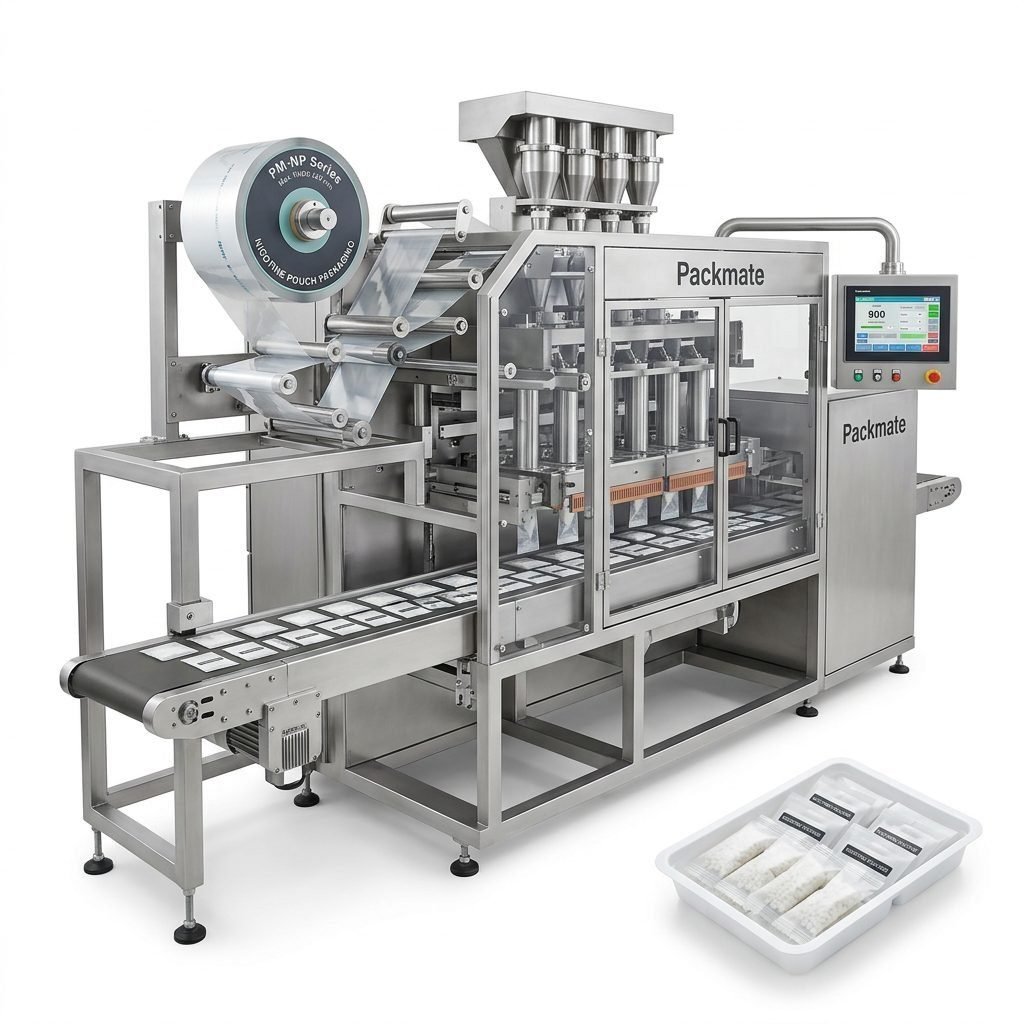
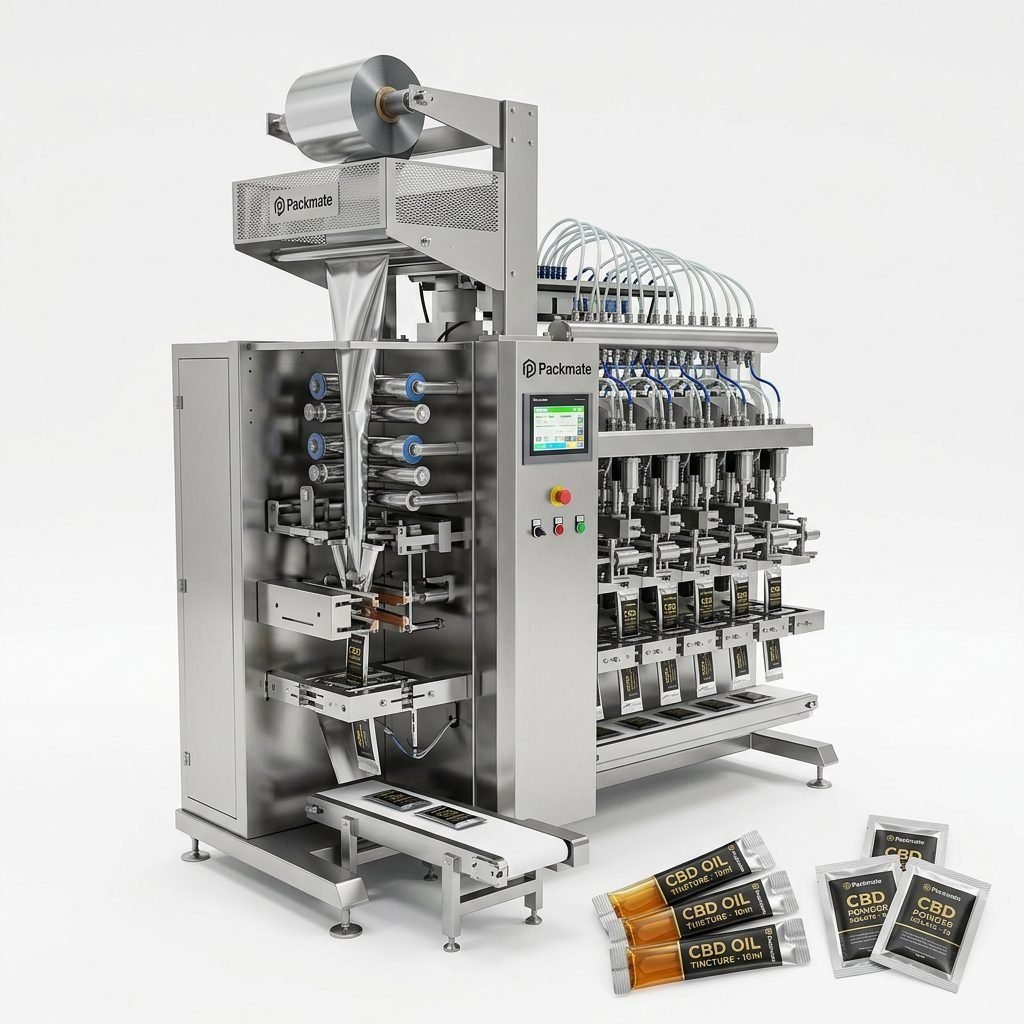
In the evolving nicotine pouch market, manufacturers and packagers must balance regulatory compliance, production safety, and operational efficiency. A CE-certified nicotine pouch production line is not only a mark of conformity with European safety standards but also a practical investment that reduces downtime, improves worker safety, and enhances product consistency. This guide covers the essentials you need to know about CE certification, machine selection, hygiene and safety requirements, efficiency best practices, and real-world implementation strategies for nicotine pouch packaging.
Why CE Certification Matters for Nicotine Pouch Production ⚖️
CE marking demonstrates that equipment meets EU safety, health, and environmental protection requirements. For nicotine pouch production lines, CE certification ensures that electrical systems, mechanical guards, and control logic conform to directives such as the Machinery Directive and Low Voltage Directive. This has three immediate benefits:
- Market access across the European Economic Area (EEA) with reduced regulatory friction.
- Lower risk of workplace incidents through verified safety features such as emergency stops, protective guards, and safety interlocks.
- Improved customer confidence: buyers and contract packagers prefer CE-labeled equipment for easier compliance of their own facilities.
Key point: CE certification focuses on machine safety and conformity to standards — it is separate from product-level regulations for nicotine-containing products. Ensure both your equipment and product regulatory strategy are aligned.
Core Components of a CE‑Compliant Nicotine Pouch Line 🧩
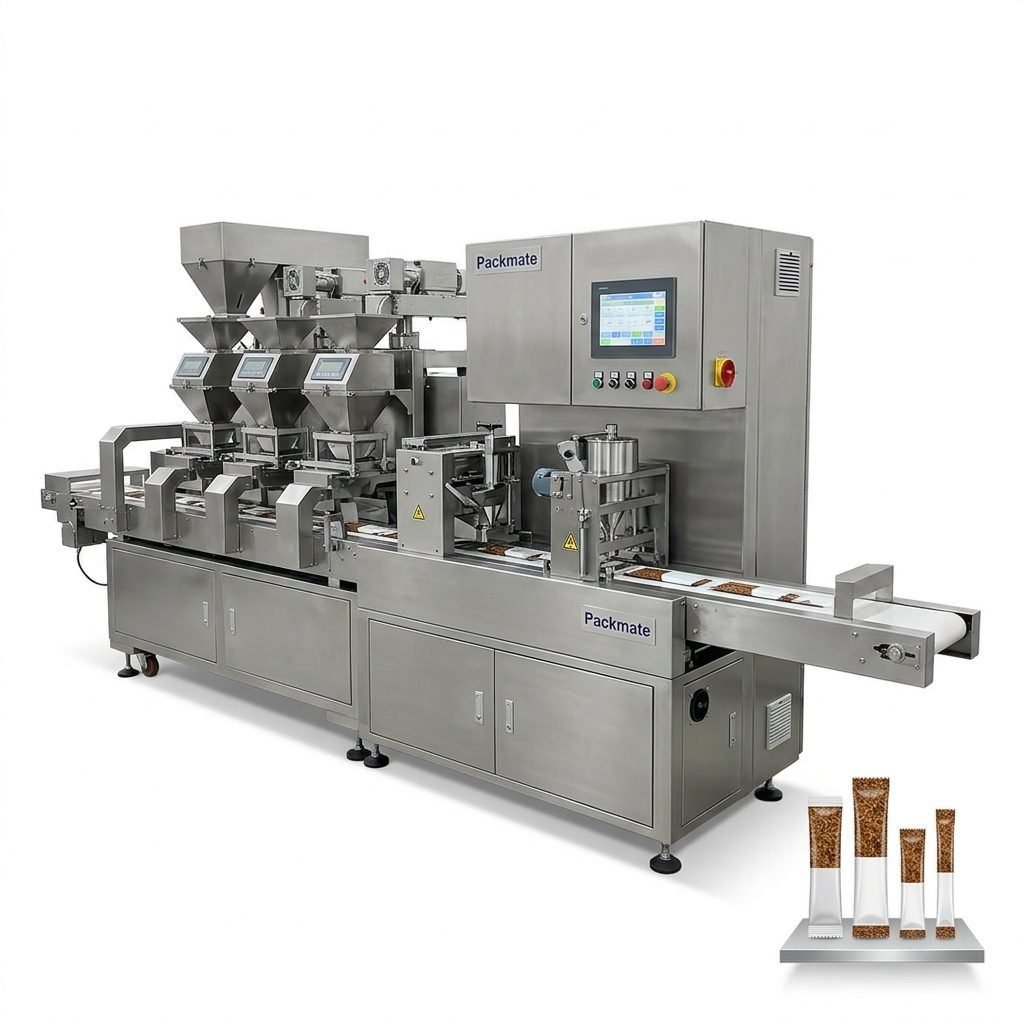
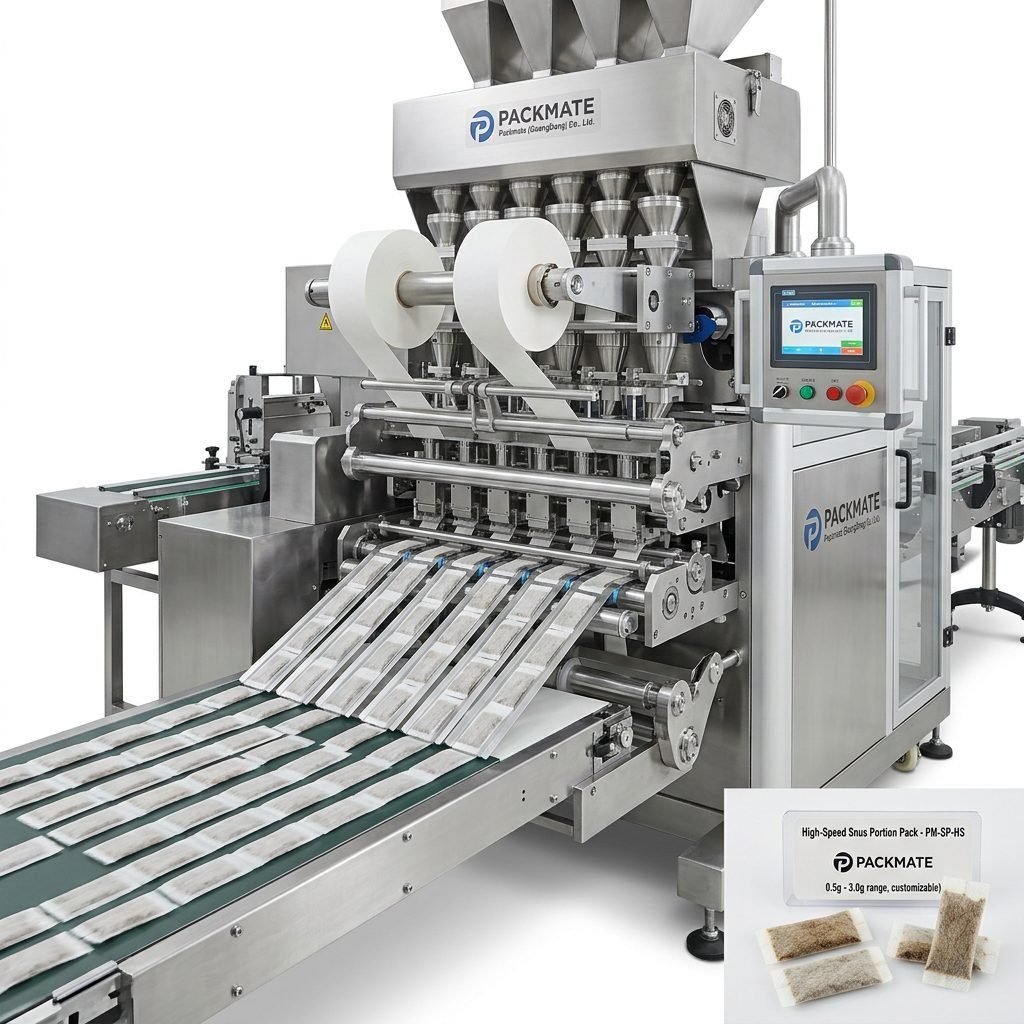
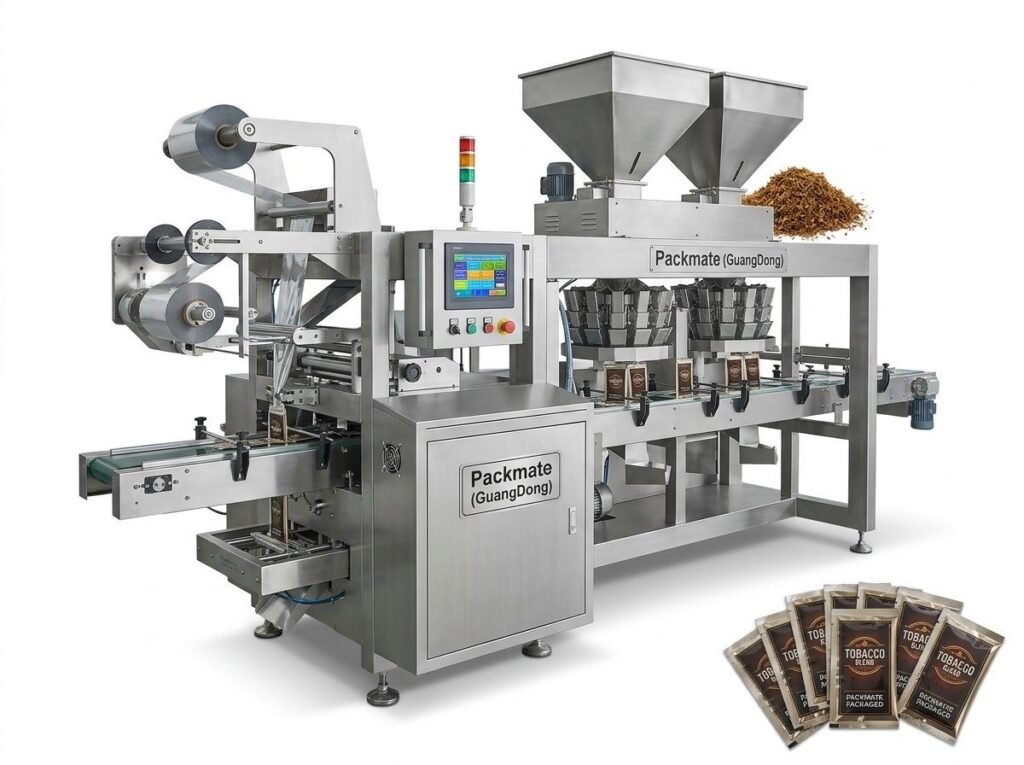
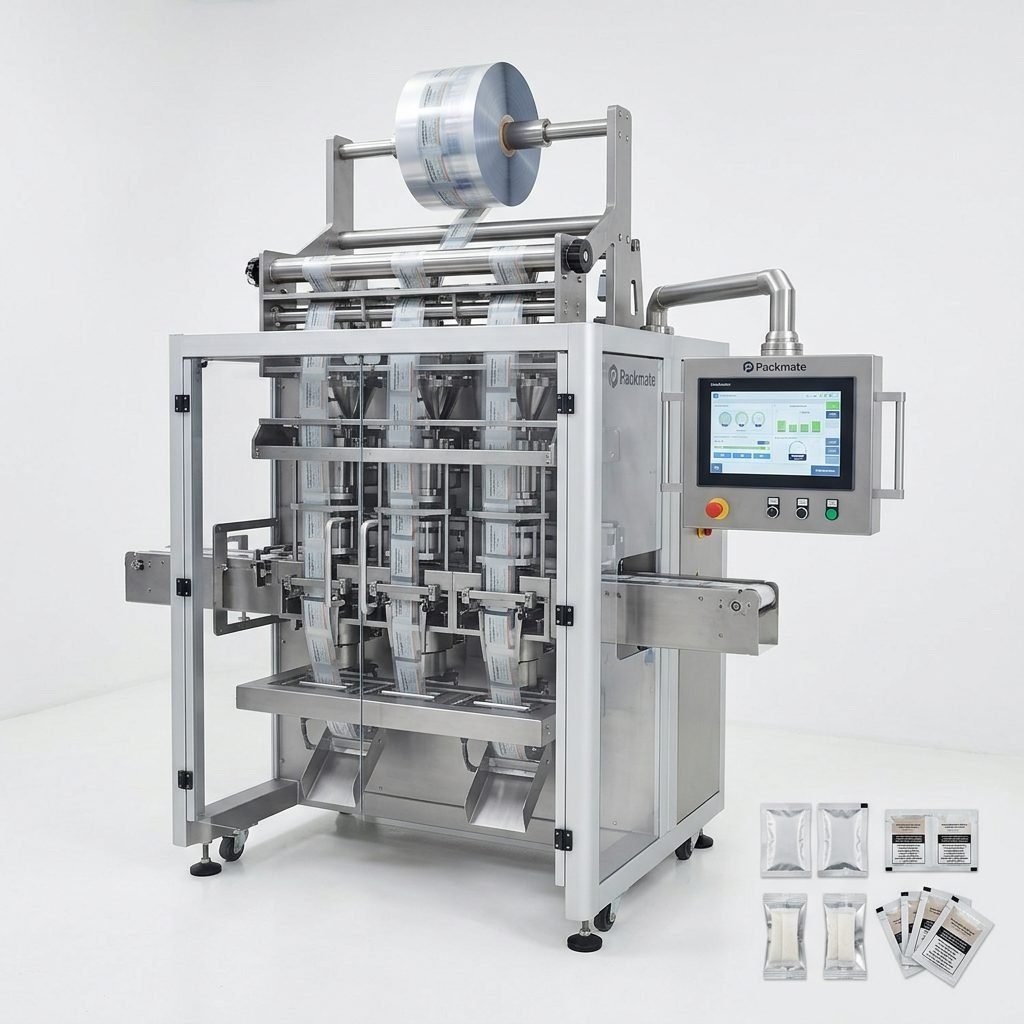
A modern nicotine pouch production line combines feeding, dosing, pouch forming, filling, sealing, secondary packaging, and quality inspection. Each subsystem must meet safety and hygiene standards:
- Feeding & weighing systems: Accurate multi-head weighers or loss-in-weight feeders for consistent pouch dosing.
- Pouch forming & sealing: Precise temperature control, seal integrity monitoring, and hygienic contact surfaces.
- Automation & controls: PLC-driven synchronization, safety PLCs, and fail-safe interlocks.
- Inspection & traceability: Vision systems for seal checks, barcode/UID printing and serialization options.
Selecting the Right Machine: Performance & Customization 🔧
When choosing a production line, prioritize machines from experienced manufacturers who offer CE documentation, strong after-sales service, and flexible customization for nicotine pouches (sizes, formats, and materials). Consider:
- Production speed vs. product format — multi-lane systems can greatly increase throughput for small-dose pouches.
- Material compatibility — ensure compatibility with biodegradable or barrier films and different laminate structures.
- Turnkey solutions — integration of weighing, forming, filling and secondary packaging simplifies validation and commissioning.
For a comprehensive range of solutions, manufacturers often present product families such as Snus & Nicotine Packaging Machines and Filling & Packaging Lines to help match production goals with equipment capabilities.
Safety, Hygiene and Worker Training 🛡️
CE certification addresses equipment safety, but nicotine pouch production demands strict hygiene and operator training to prevent contamination and ensure consistent product quality:
- Hygienic design: stainless steel contact surfaces, CIP-friendly structures, and easy-to-clean enclosures.
- Personal protective equipment (PPE): enforce appropriate PPE for handling concentrated material and cleaning agents.
- Operator training: safety lockout-tagout (LOTO), emergency procedures, and correct line changeover methods.
- Cleaning & validation: documented cleaning procedures, sampling zones, and residue limits to maintain product safety.
Safety reminder: CE-compliant guards and interlocks must remain in place — bypassing safety features voids certification and increases liability.
Quality Control & Traceability: Reduce Recall Risk 🔍
Traceability and inline quality systems are essential for nicotine pouch brands. Integrate the following:
- In-line vision systems for print, seal and pouch integrity checking.
- Batch coding and UID systems for lot tracking throughout the supply chain.
- Automated rejection systems to remove non-conforming pouches without stopping the line.
Operational Efficiency: Best Practices for High‑Yield Production ⚙️
Efficiency is achieved through both equipment selection and process optimization. Follow these proven practices:
- Preventive maintenance: Scheduled maintenance and predictive diagnostics reduce unexpected downtime.
- Changeover optimization: Quick-change tooling and modular spares minimize downtime between product runs.
- Data-driven decisions: Use OEE metrics, SPC charts and downtime logs to locate bottlenecks and improve throughput.
- Operator ergonomics: Line layouts that prioritize safe, efficient operator access reduce errors and fatigue.
Sustainability & Packaging Materials 🌱
Consumer demand for sustainable packaging is influencing material selection. Work with suppliers and machine manufacturers to ensure:
- Compatibility with recyclable and compostable films while maintaining seal quality.
- Reduced waste through accurate dosing and film usage optimization.
- Energy-efficient components such as servo drives and optimized heat-seal systems.
Business advantage: Brands that reduce material usage and energy consumption can often lower costs per pouch and improve consumer perception.
Validation, Documentation and Commissioning 📋
CE-marked equipment requires supporting documentation and safe commissioning practices:
- Technical file: risk assessments, user manuals, wiring diagrams and machine layouts.
- Installation Qualification (IQ), Operational Qualification (OQ) and Performance Qualification (PQ) where applicable.
- Factory acceptance testing (FAT) and site acceptance testing (SAT) with defined acceptance criteria.
Trusted manufacturers can provide FAT reports, CE declaration of conformity and commissioning support. For more details on certifications, refer to provider pages such as Certificate.
Customization & Turnkey Services — When to Choose Them 🔁
Turnkey solutions from experienced suppliers reduce integration risk. Consider turnkey lines when you need:
- Full integration from raw material handling to final case packing.
- Single-vendor responsibility for timeline, performance and warranty.
- Faster commissioning and simplified validation documentation.
Explore modular equipment ranges like Sachet & Stick Pack Machines and auxiliary components via Auxiliary Packaging Equipment to build a solution tailored for nicotine pouch production.
Case Studies & Proven Outcomes 📈
Real-world examples show reduced rejects, faster ramp-up and improved traceability after CE‑compliant turnkey installations. When vetting suppliers, request case studies demonstrating:
- Throughput improvements (pouches per minute or lanes utilized).
- Reduction in downtime due to predictive maintenance features.
- Quality metrics after commissioning, such as seal integrity pass rates.
See examples and references on manufacturer pages such as Case to gauge real outcomes.
Local Considerations: Cultural Habits and Market Needs (EU Focus) 🌍
In Europe, nicotine pouches have diverse consumer bases with preferences for portion size, flavor intensity, and packaging aesthetics. Local regulatory nuances may include labeling requirements, waste handling, or flavor restrictions. When designing production strategies:
- Adapt packaging sizes and multi-lane formats to popular portion counts in target countries.
- Implement labeling flexibility for multiple languages and regulatory marks.
- Ensure waste streams (film scrap, dust) comply with local disposal and recycling rules.
Partnering With Trusted Manufacturers 🤝
Work with suppliers that demonstrate long-term support, verified CE documentation, and a track record of international delivery. For background on reputable manufacturers and their global support networks see About Packmate and connect via Contact Us for project inquiries.
Tip: Request references from customers in similar markets and ask for a site visit or live demonstration at an exhibition — meeting manufacturers at events listed on their Our Exhibition page can be invaluable.
Implementation Roadmap: From Specification to Production 🗺️
Deploying a CE-certified nicotine pouch line can be broken into clear phases:
- Requirements & feasibility — define formats, throughput, and material choices.
- Supplier selection — evaluate CE documentation, references, and service capabilities.
- FAT & contractual milestones — confirm performance before shipment.
- Commissioning & training — perform IQ/OQ/PQ and operator training.
- Ongoing support — establish spare parts, service SLAs and preventive maintenance plans.
Additional support offerings like calibration and spare part kits can shorten time to stable production. For equipment types and integrated systems, visit product pages such as Weighing & Packaging Systems.
Common Pitfalls & How to Avoid Them ⚠️
Avoid the most frequent mistakes that delay production:
- Underestimating validation time — allow time for OQ/PQ and sample runs.
- Neglecting spare parts planning — critical spares reduce stoppage risks.
- Poor integration planning — ensure upstream and downstream equipment interfaces are defined early.
Avoidance strategy: Build a project timeline that includes FAT, clear acceptance criteria, and a buffer for regulatory labeling adjustments.
Conclusion
Investing in a CE-certified nicotine pouch production line brings measurable benefits: regulatory clarity in the EEA, safer working environments, improved product quality, and operational efficiencies. By selecting experienced manufacturers, validating thoroughly, and prioritizing hygiene and traceability, producers can scale confidently while meeting market expectations and regulatory requirements.
Frequently Asked Questions (FAQs)
Q1: How long does CE certification for a production line take?
A1: CE marking timelines depend on the manufacturer’s preparedness. If technical files, risk assessments and conformity assessments are complete, documentation and marking can be issued within weeks; full validation (FAT, SAT, IQ/OQ/PQ) typically spans several weeks to months depending on line complexity.
Q2: Does CE certification cover product regulatory compliance for nicotine pouches?
A2: No. CE certification covers equipment safety and conformity with EU machinery and electrical directives. Product-level compliance (tobacco or nicotine regulations, labeling, ingredients) must be managed separately according to local laws.
Q3: Can existing non-CE equipment be upgraded to meet CE standards?
A3: Some upgrades like adding safety guards, interlocks, or electrical rerouting can improve conformity, but a comprehensive risk assessment is required. In many cases, retrofitting is possible, but manufacturer support and recertification assessments are necessary.
Q4: What are the typical throughput rates for multi-lane nicotine pouch lines?
A4: Throughput varies with pouch size, lane count and machine design. Multi-lane systems dramatically increase capacity for small-dose pouches; consult manufacturers for benchmark performance and on-site demonstrations to establish realistic rates.
Q5: Where can I learn more about manufacturers and product lines?
A5: Visit manufacturer product pages to explore equipment categories, case studies and certifications, such as Bag & Pouch Packaging Machines and the company About Packmate information page.