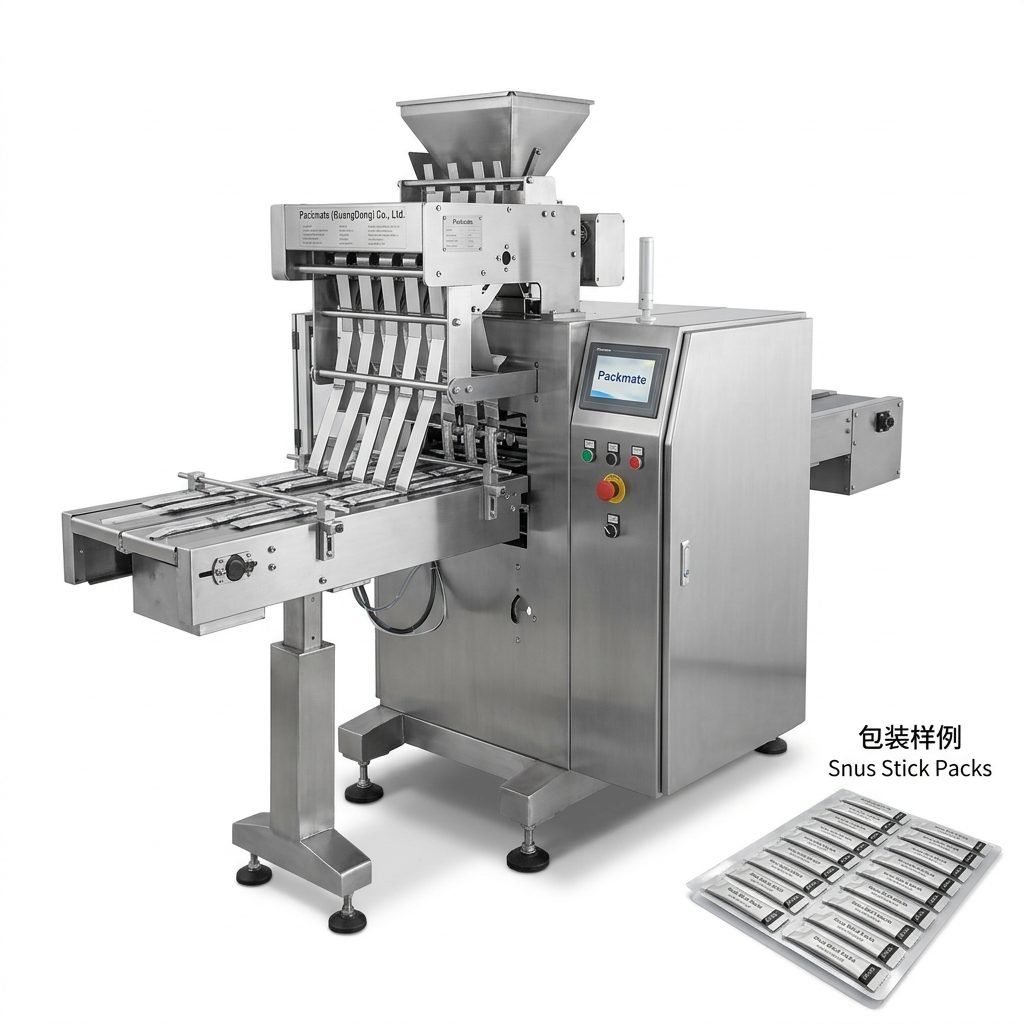
Finding a reliable snus packaging machine supplier in Denmark requires more than price comparison — it needs a clear understanding of local market preferences, regulatory constraints, machine performance metrics, and after-sales support. This guide walks you through practical steps to identify trustworthy suppliers, evaluate technical capabilities, and make decisions that fit Danish business practices and sustainability expectations.
Why Denmark Needs a Focused Buying Strategy
Denmark is known for strong consumer protection, environmental awareness, and meticulous business ethics. While traditional snus sales are restricted across much of the EU, the nicotine pouch and nicotine-free pouch markets are evolving rapidly. In this climate, Danish buyers prioritize: compliance, high-quality engineering, and energy-efficient solutions that fit small-batch and multi-line production approaches commonly adopted by Nordic manufacturers.
Local habits and expectations
Practical points to keep in mind when sourcing in Denmark:
📌 Danish buyers value transparency in pricing and lifecycle costs (not just initial purchase price).
📌 There is an emphasis on eco-friendly materials and recyclable packaging options.
📌 Quick and clear documentation in English — and availability of technical manuals — is expected.
Step 1 — Define your exact production needs
Before contacting suppliers, craft a concise brief covering: product types (nicotine pouch, snus, herbal pouch), pouch formats (stick, sachet, round pouch), target speed (pouches per minute), lanes (single vs. multi-lane), filling materials (powder, granule, liquid), and expected batch sizes. A clear brief helps suppliers provide accurate quotes and suitable machine models.
✅ Quick brief checklist:
• Production targets: daily/weekly/monthly output
• Product format and target pouch weight
• Required automation level: manual feeding, semi-auto, fully automated line
• Footprint and integration needs with existing lines
Step 2 — Shortlist suppliers with proven snus expertise
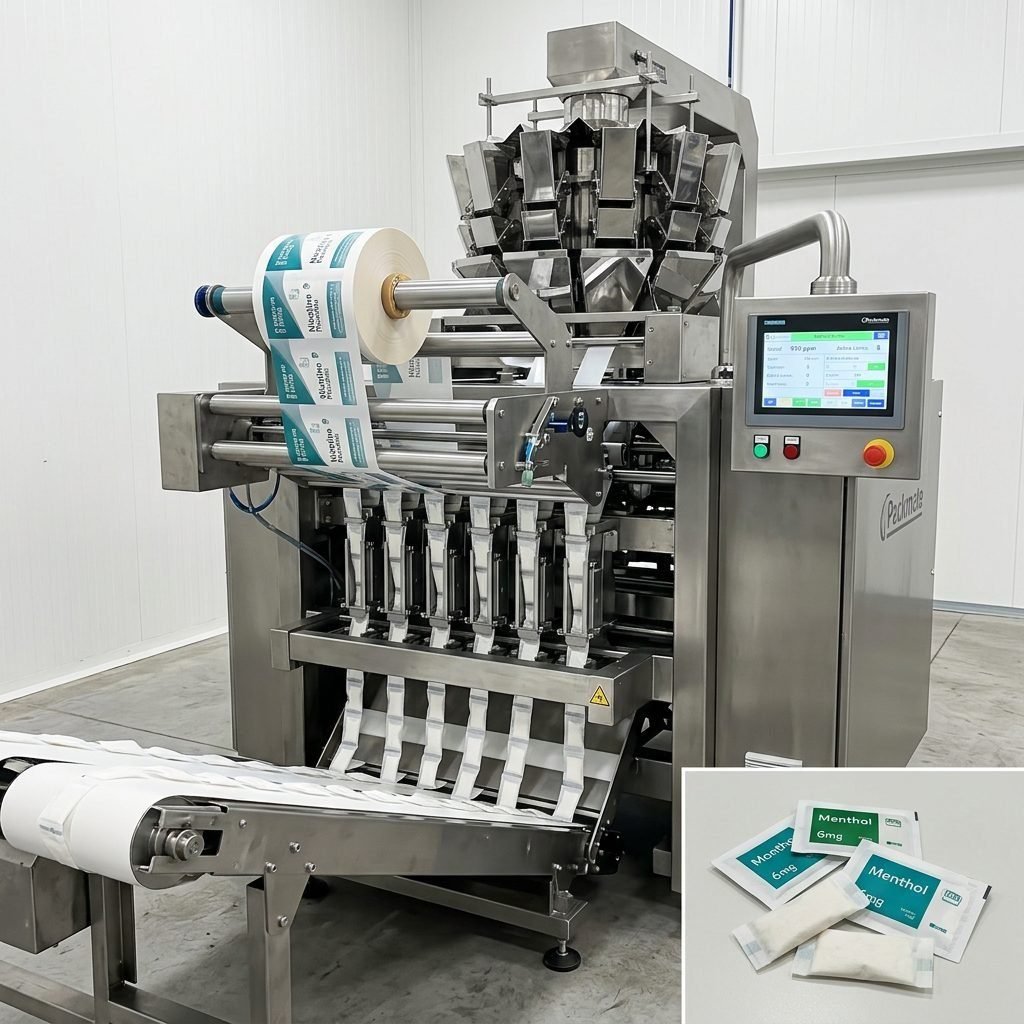
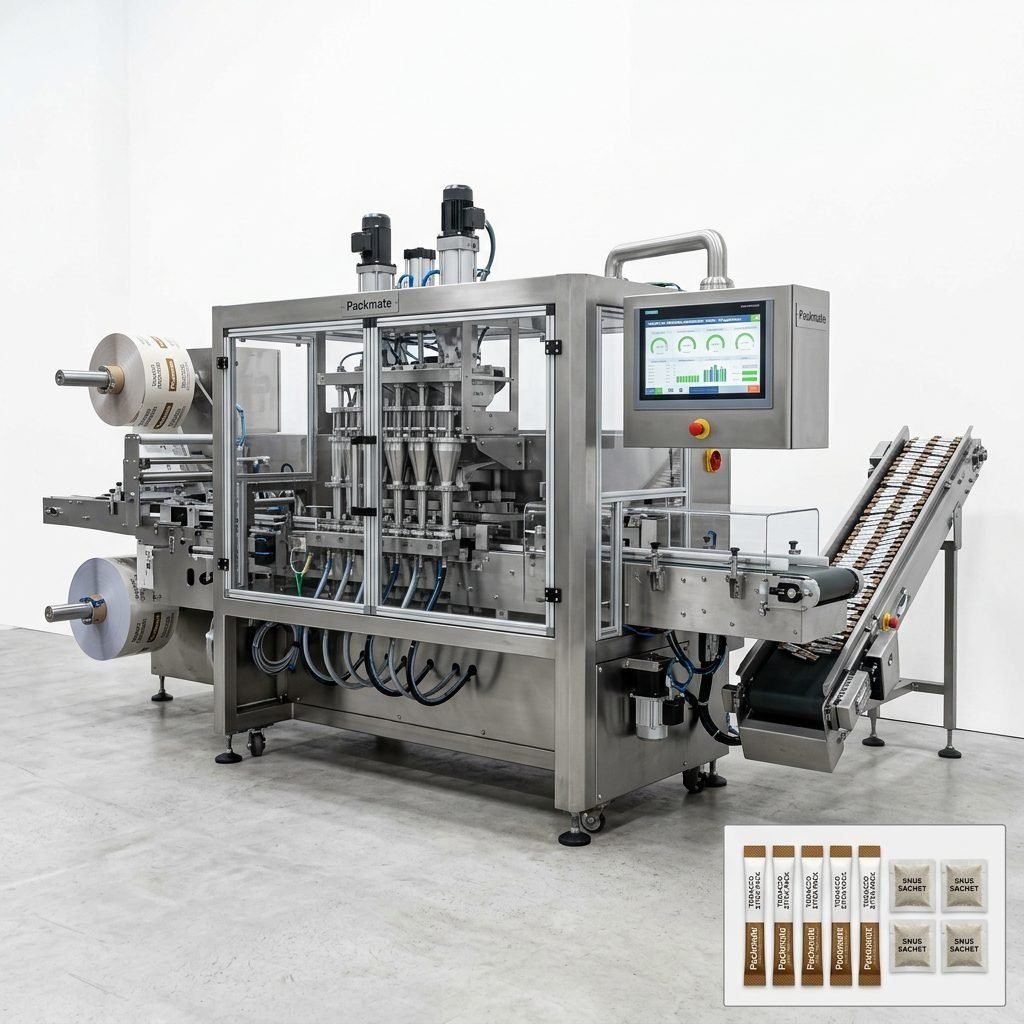
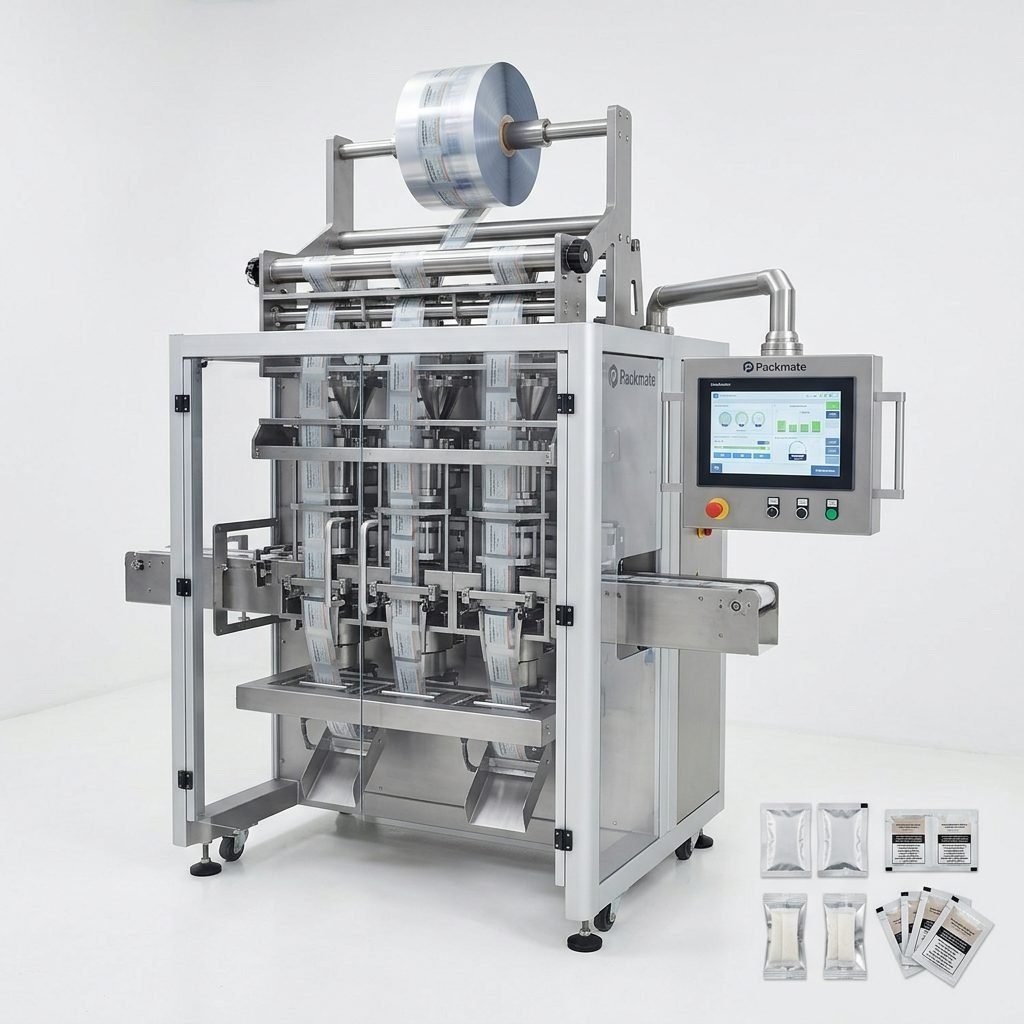
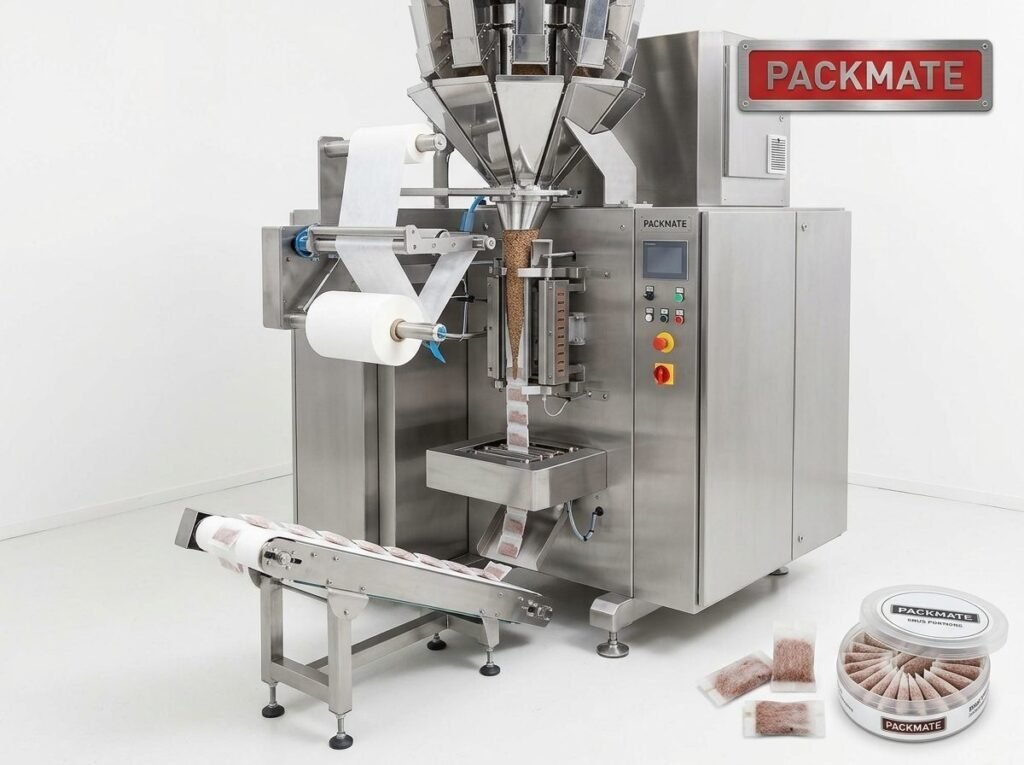
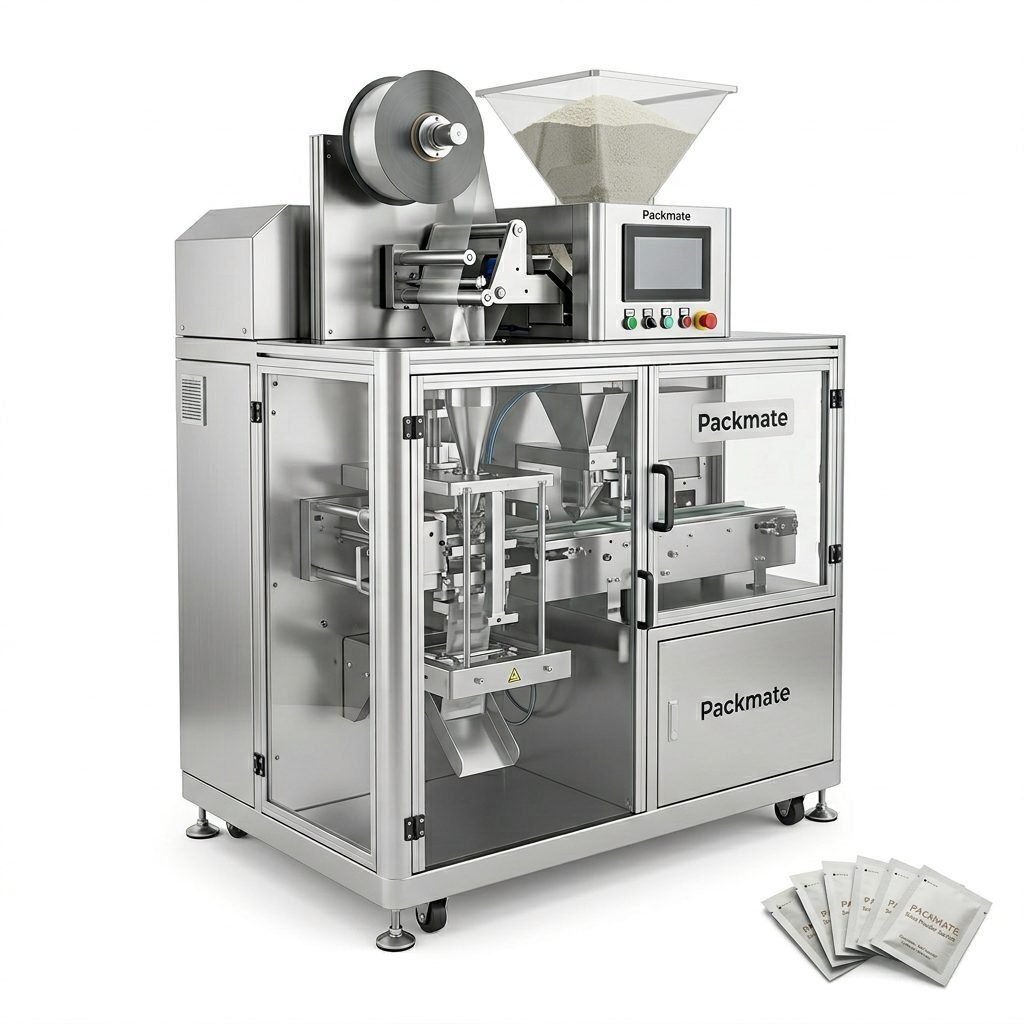
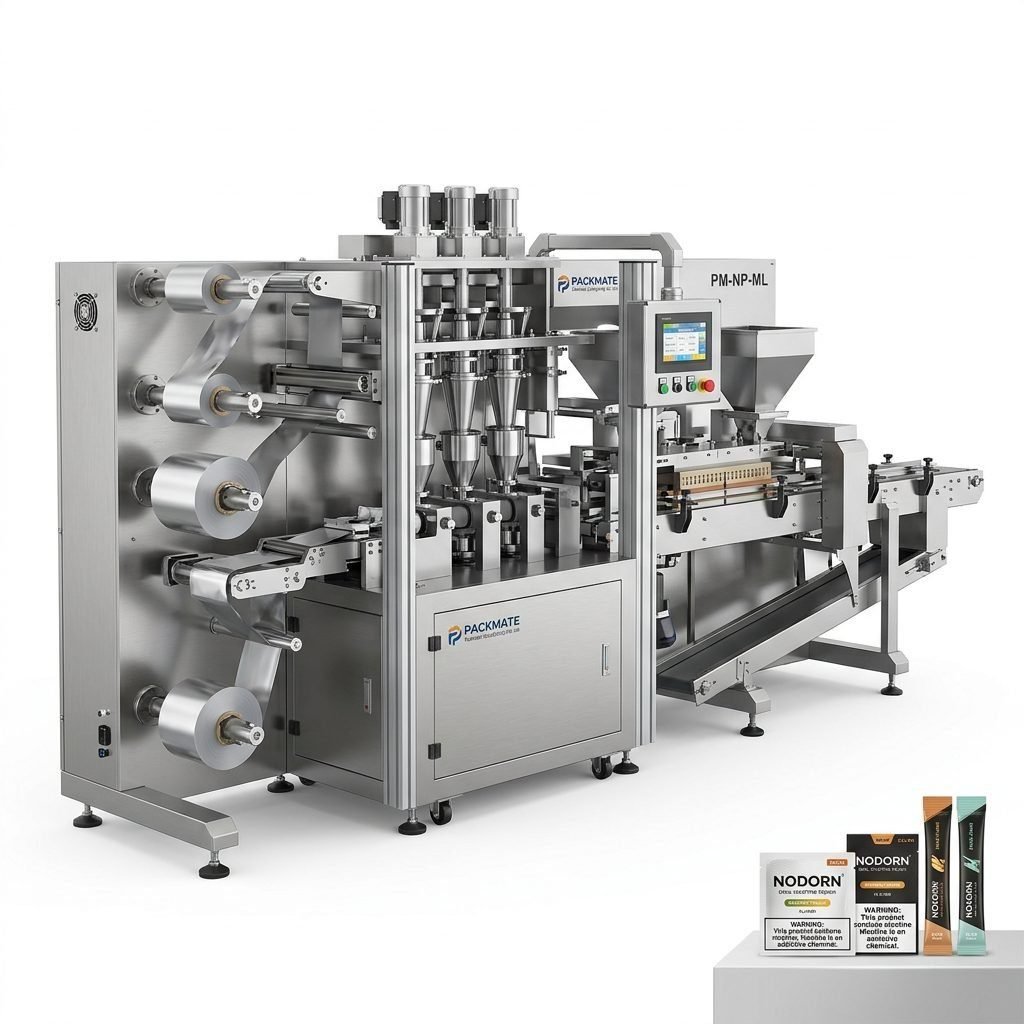
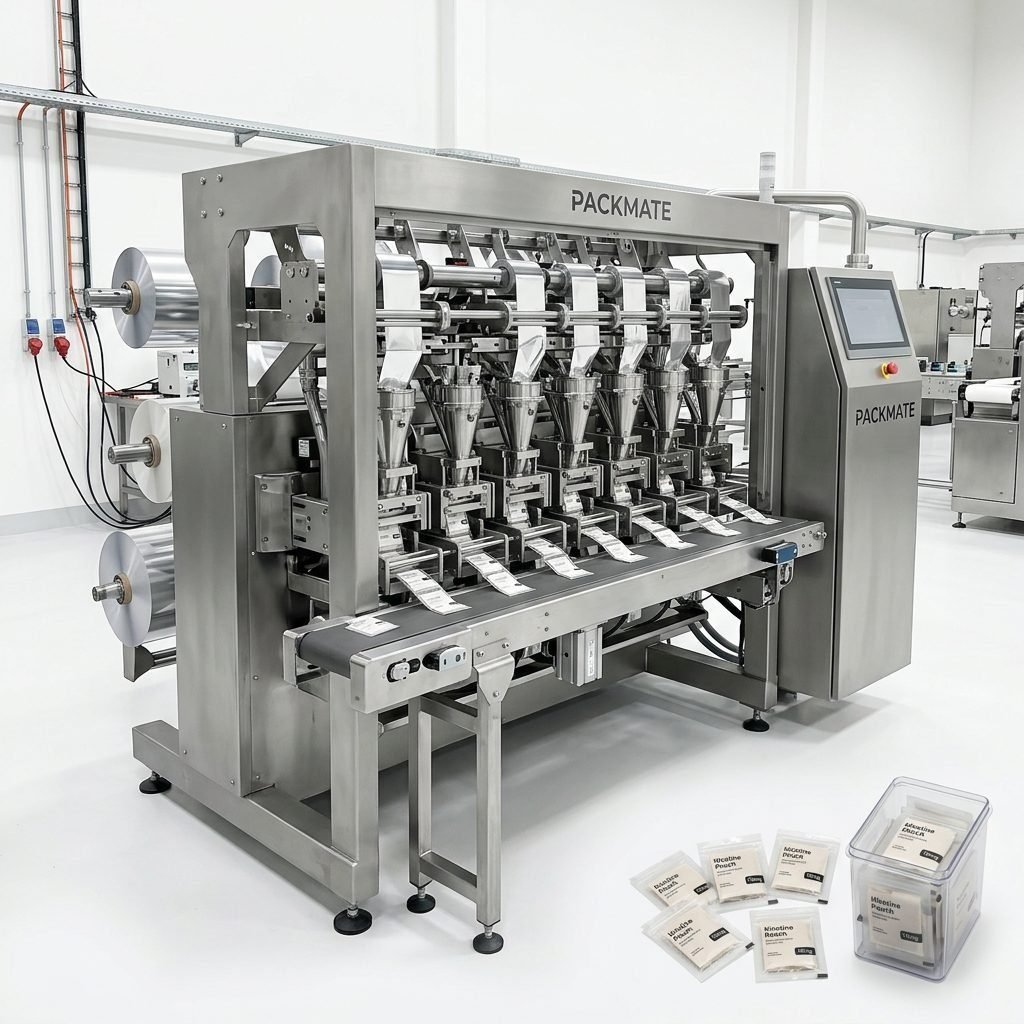
Look for manufacturers that explicitly list snus & nicotine pouch packaging lines in their portfolio. Suppliers with specialized models such as stick pack, sachet, and multi-lane systems have a big advantage when handling small-dose, multi-lane pouch production. For example, a dedicated snus machine manufacturer will offer modular lines and precise dosing systems to maintain consistent pouch fill and sealing.
Explore product pages like Snus & Nicotine Packaging Machines and related systems to compare models and specifications.
Important supplier attributes
🔍 Demonstrated experience in snus or nicotine pouch equipment (years of R&D and real-case lines).
🔍 Clear factory information and production capacity (factory size, CNC machining centers, assembly lines).
🔍 Compliance evidence: CE, ISO certificates and test reports — ask to see them (e.g., Certificate).
Step 3 — Technical evaluation: what to inspect
A technical checklist will help separate high-performance suppliers from the rest. Evaluate machine stability, dosing accuracy, sealing quality, material compatibility, and ease of cleaning. Danish operations often favor compact, energy-efficient machines that support flexible production runs.
⚙️ Technical must-haves:
• Accurate dosing ± tolerance for small-dose pouches
• Reliable multi-lane synchronization to avoid misfeeds
• Quick-change tooling for format swaps
• CIP-friendly design and food-grade materials (where applicable)
Step 4 — Quality, certifications, and compliance
For Denmark, CE marking and ISO certification are baseline requirements. Ask for full documentation and traceability records. If you plan to export finished products across the EU, ensure the machine supports validation and cleanability standards required for regulated items. Reliable manufacturers provide test reports, inspection records, and third-party verification when requested.
Refer to suppliers’ certification pages and company background — for instance, review company credentials on the About Packmate page.
Step 5 — Factory visits, exhibitions and live demos
A visiting policy is common in Denmark: buyers prefer to see machines running or watch demonstrations at trade shows. Confirm the supplier participates in international exhibitions and provides onsite trials or video demos. Packmate, for example, shows machines at global exhibitions — attendance lists and live demos are valuable to assess performance and operator ergonomics.
Check exhibition schedules such as Our Exhibition to plan visits or remote demonstrations.
What to observe during a demo
📌 Actual running speed vs. rated speed — verify stable output for extended periods.
📌 Operator interface language options and ease of training for Danish staff.
📌 Noise, energy consumption, and footprint — Danish factories often focus on low-noise and compact setups.
Step 6 — After-sales service, spare parts and response time
After-sales support is crucial. Ask prospective suppliers about spare parts availability, warranty terms, training programs, and remote diagnostics. A European or local service partner shortens response times and reduces downtime. Suppliers that provide long-term technical support, spare parts list, and remote troubleshooting capabilities are better suited for demanding Danish operations.
For full-service offerings, check the supplier’s service section such as Service and contact pages.
Step 7 — Customization, turnkey lines and scalability
Many Danish customers prefer modular lines that can be expanded as demand grows. A reputable supplier will offer turnkey solutions including weighing systems, filling lines, sealing, labeling, and packaging integration. Confirm compatibility with upstream and downstream equipment and ask for references of similar installations in Europe.
Explore integrated product lines like Filling & Packaging Lines and Weighing & Packaging Systems when planning a full production upgrade.
Step 8 — Pricing, payment terms and ROI assessment
Total cost of ownership (TCO) should include machine price, installation, training, spare parts, energy consumption, and periodic maintenance. Danish companies frequently run detailed ROI models — consider reduced labor costs from automation and increased yield from precision dosing when calculating payback time. Negotiate payment terms that align with milestones: deposit, factory acceptance tests (FAT), shipping, and installation.
💡 Negotiation tips:
• Link payment to successful FAT and acceptance testing
• Request a spare parts kit and an initial training package included
• Ask for an extended warranty if the supplier has strong local or European references
Step 9 — Logistics, installation and local compliance
Shipping heavy machinery to Denmark requires careful planning: customs, VAT, and technical compliance paperwork must be correct. Verify that the supplier provides installation supervision, commissioning, and documentation for CE conformity. If needed, engage a local integrator for electrical adaptation and to ensure safe workplace integration under Danish regulations.
Real-world indicators of a reliable supplier
When evaluating suppliers, look for these trust signals:
✅ Transparent company history and verifiable factory credentials (factory size, machinery list).
✅ Active global case studies or customer references — ask for contacts and installation photos or videos (see Case).
✅ Clear certification and test evidence (CE, ISO) with traceable documentation.
Supplier example and what they bring
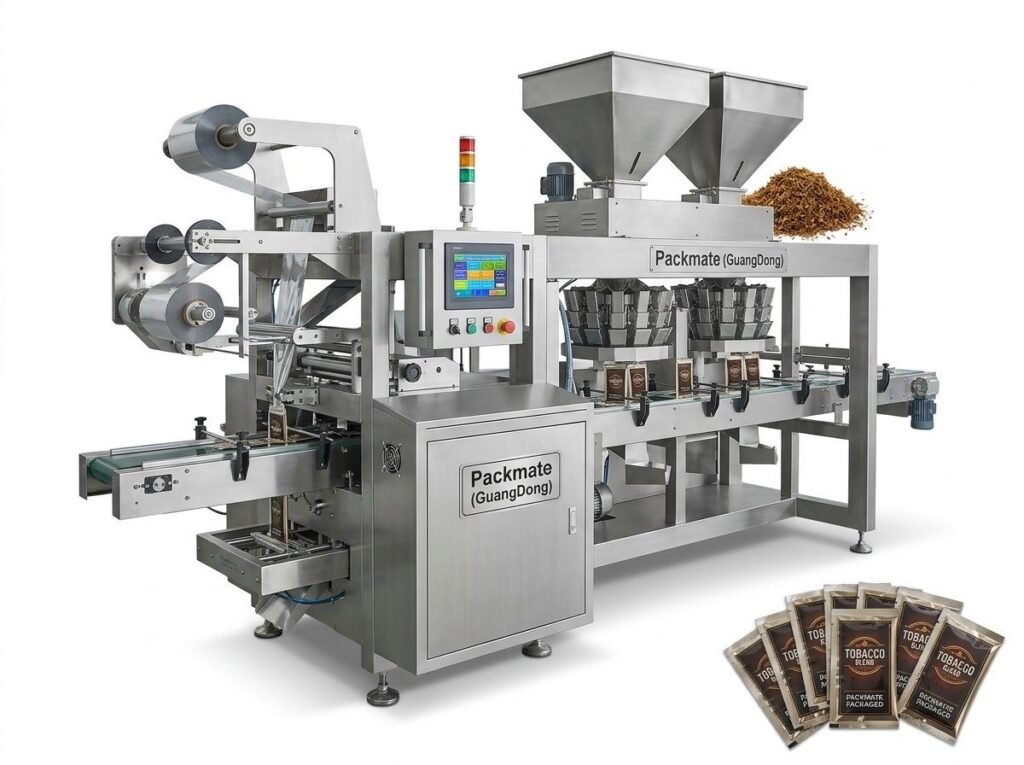
A supplier like Packmate Snus Machine brings decades of packaging experience, a large factory footprint, and specialized snus packaging lines including stick pack, sachet, and multi-lane systems. Their portfolio typically covers auxiliary equipment, weighing systems, and turnkey production lines — a valuable one-stop solution for Danish companies building new or expanding capacity.
Purchase checklist before you sign
✔︎ Final pre-purchase checklist:
• Signed FAT plan with acceptance criteria
• Spare parts list and recommended stock levels
• Training schedule for operators and maintenance staff
• Warranty and extended support terms
Sustainable considerations for Danish buyers
Sustainability is central to many Danish companies. When selecting packaging machinery, consider energy-efficient drives, recyclable packaging compatibility, and reduced material waste through precision dosing. Ask suppliers about lifecycle assessments, recyclable material handling, and any energy-saving modes on their machines.
Where to get more help
If you need a deeper dive into model comparisons or local integration partners, use supplier contact pages to request tailored consultations. Reputable suppliers provide catalogs, machine datasheets, and references — view the company catalog or contact their sales team directly for tailored proposals.
Useful resources: Catalog, Contact Us.
Final practical tips
• Start with a pilot line or rental demo if possible to validate production parameters in a real Danish production environment.
• Ensure documentation and manuals are available in English and confirm remote support hours align with your operations.
• Prioritize suppliers who offer transparent spare parts pricing and short lead times for critical components.
Frequently Asked Questions
Q1: Is snus packaging equipment legal to buy and use in Denmark?
A1: Machine acquisition is legal, but product regulations vary. Traditional snus sales are restricted in much of the EU; many Danish companies focus on nicotine pouches or herbal alternatives that meet local laws. Always consult local regulatory advisors for product compliance before launching sales.
Q2: How important are certifications like CE and ISO?
A2: Very important. CE and ISO certifications provide baseline assurance of safety and quality. Request certificates and laboratory test reports to verify compliance with European standards.
Q3: What lead time should I expect for delivery and installation?
A3: Typical lead times vary between standard models and custom turnkey lines. Expect a range from several weeks for standard units to several months for customized multi-lane systems. Always confirm lead times and milestone delivery dates in the purchase contract.
Q4: How can I evaluate long-term reliability?
A4: Ask for references, uptime statistics, and case studies from similar installations. Confirm the supplier’s spare parts availability and average response time for technical support in Europe.
Q5: Can suppliers assist with regulatory documentation for EU distribution?
A5: Many experienced suppliers provide compliance documentation and validation support, but product regulatory approval is the buyer’s responsibility. Engage legal or regulatory consultants early when planning product launches across Denmark and the EU.