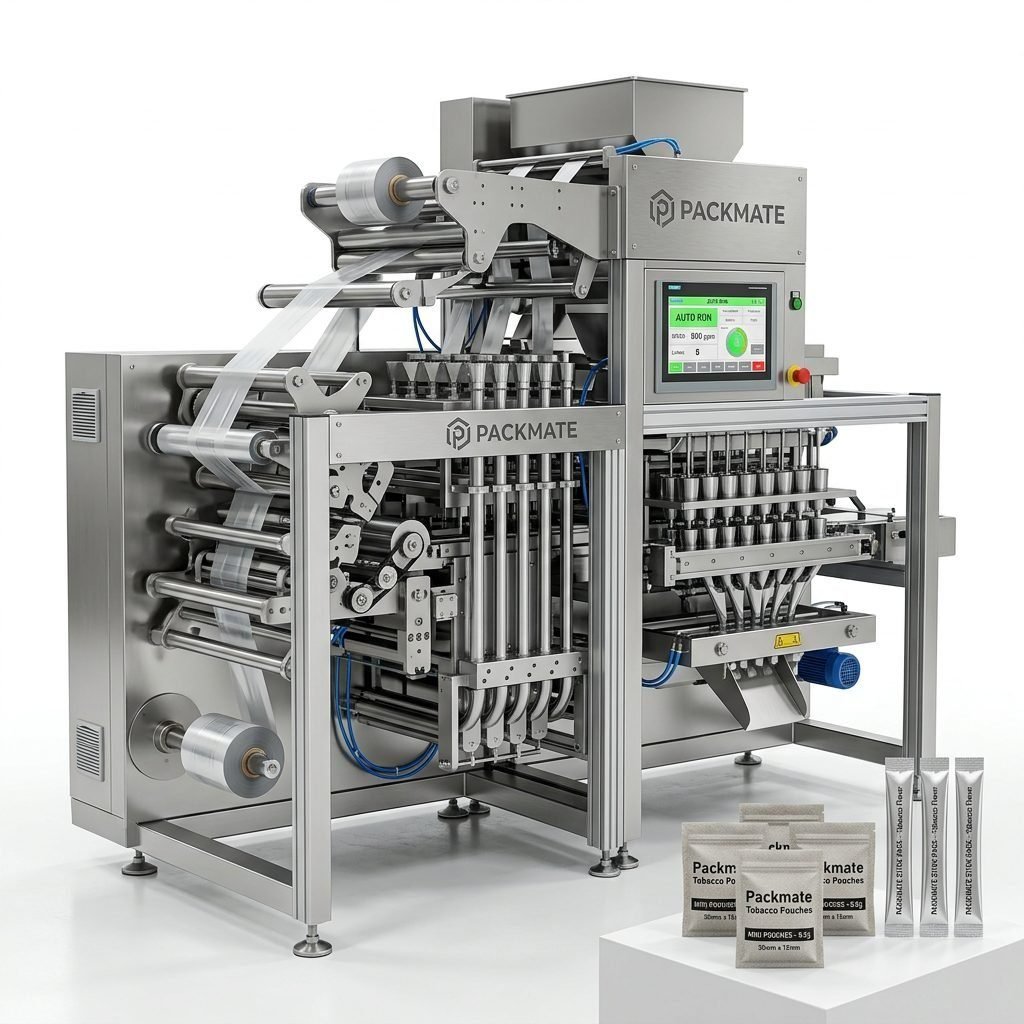
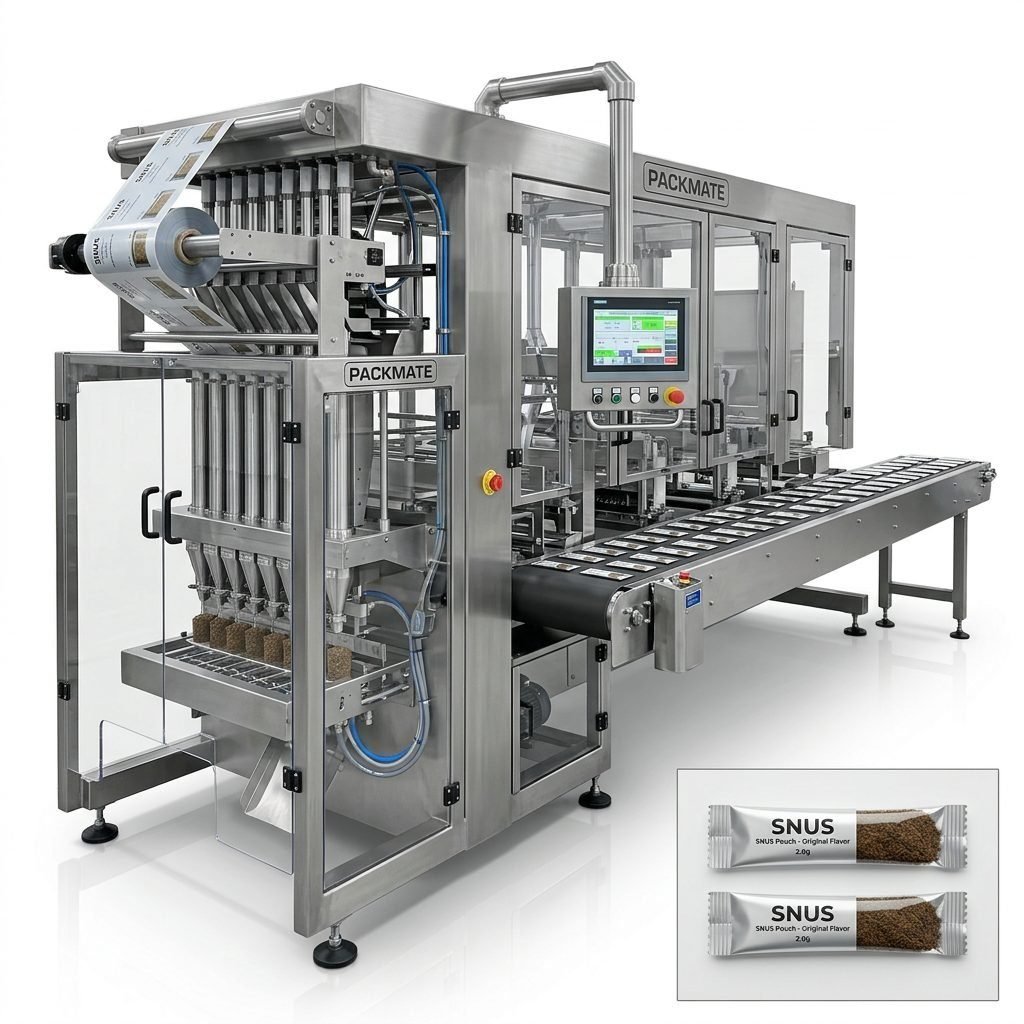
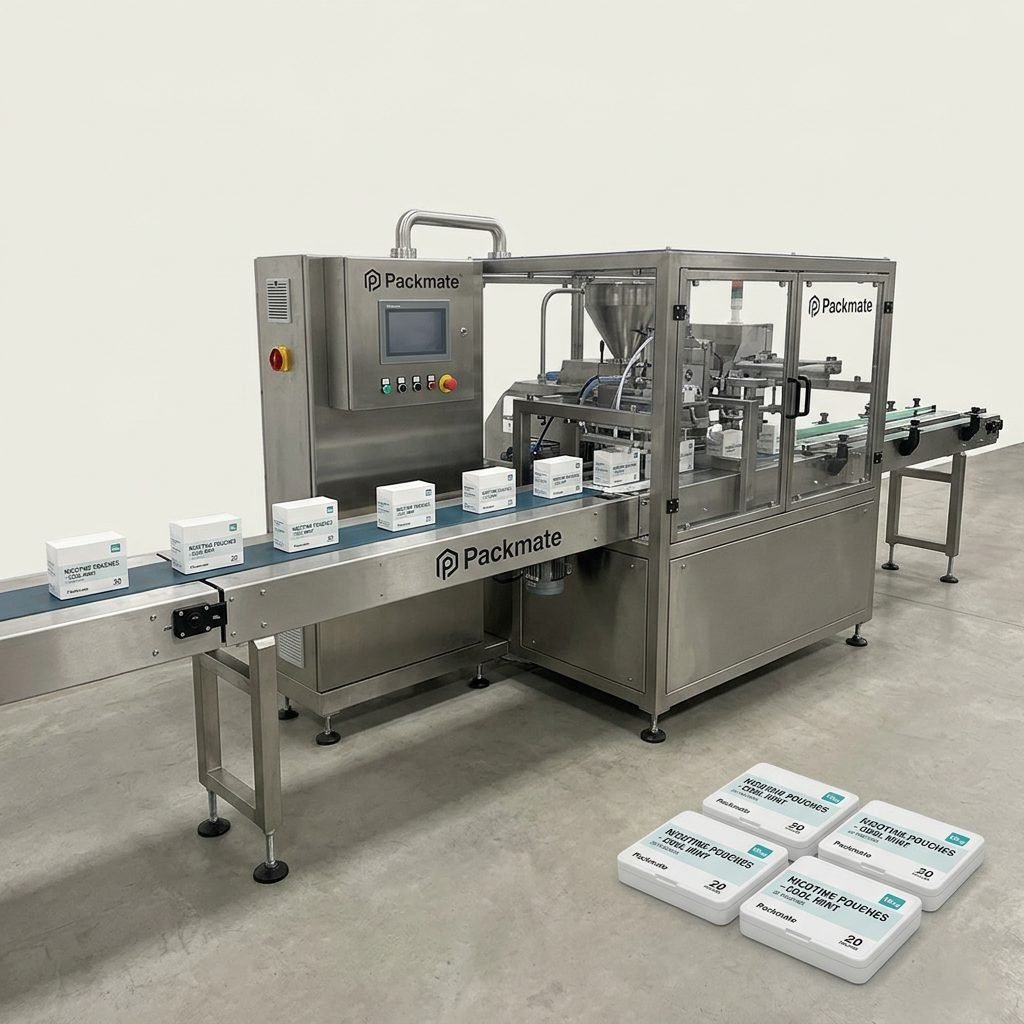
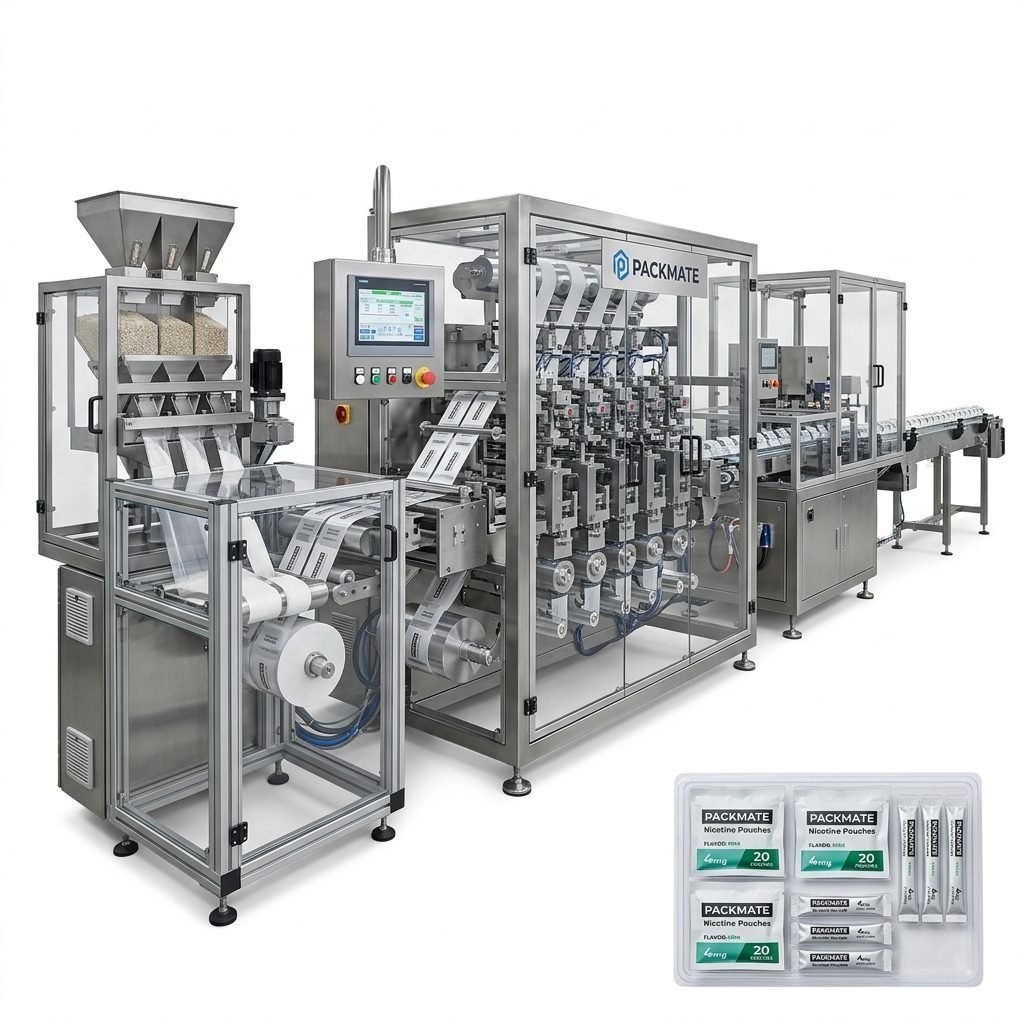
Choosing the right snus packaging machine for your Canadian production operation is a strategic decision that affects product quality, compliance, throughput, and long-term costs. This guide breaks down the essential technical, regulatory, and commercial considerations so you can match your production needs with the best equipment and supplier.
Understand Your Product and Format Requirements
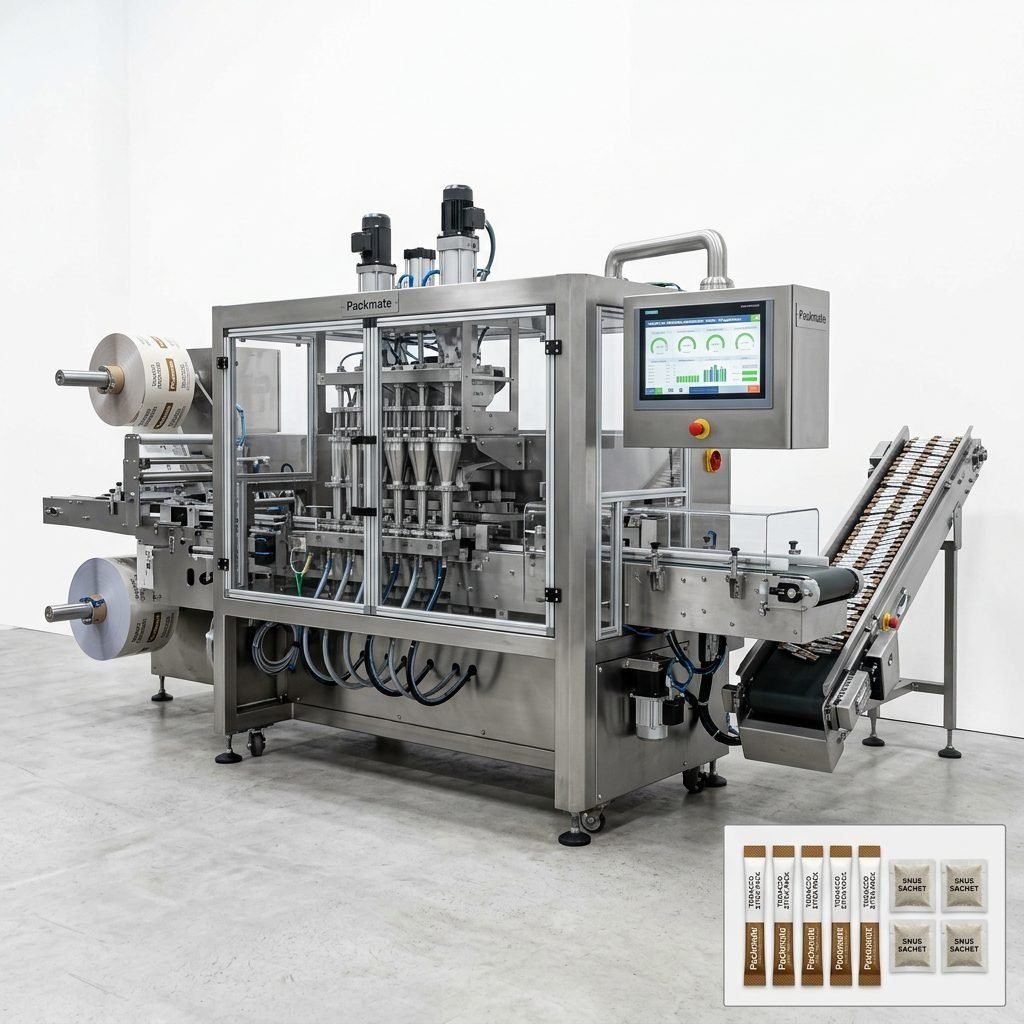
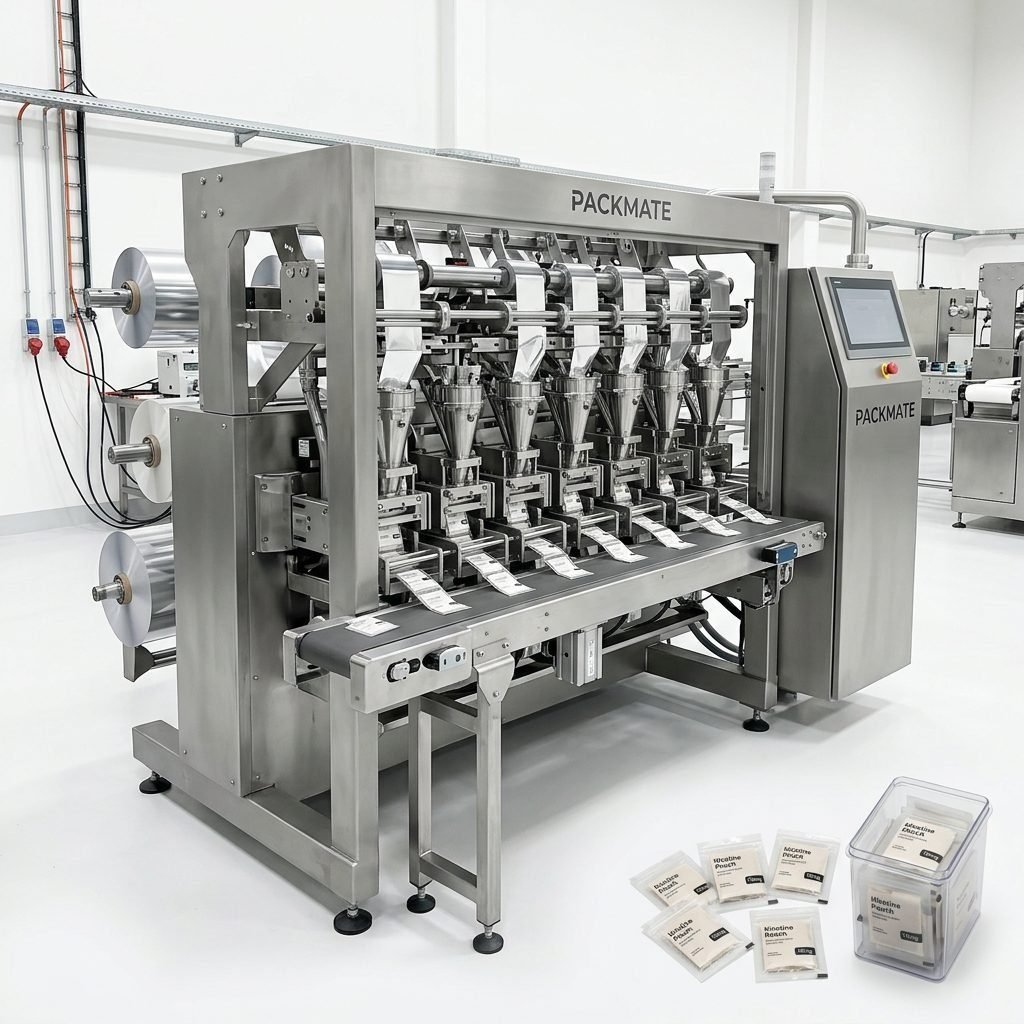
Start by defining the exact format and features of your snus or nicotine pouch products. Key variables include pouch type (stick pack, sachet, multi-lane pouch), pouch size, fill weight range, and whether you need re-sealable or unique barrier films. Machines are optimized by format — for example, multi-lane systems excel for small-dose, high-volume pouches while single-lane sachet machines work for varied sizes and frequent changeovers.
✓ pouch format and dimensions
✓ target fill weights and tolerances
✓ number of lanes (single vs multi-lane)
Production Capacity and Speed
Calculate daily and monthly throughput targets before selecting a machine. Consider both peak capacity and steady-state production. A machine’s rated speed (pouches per minute or per lane) must be realistic after accounting for product handling, filling time, and operator interventions. Multi-lane systems from experienced manufacturers can significantly increase output while maintaining consistent dosing accuracy.
Key metrics to evaluate
Look at nominal machine speed, expected net output after changeovers, mean time between failures (MTBF), and maintenance downtime. Ask suppliers for real-world case studies or references showing sustained performance under conditions similar to yours.
Filling Accuracy and Weighing Systems
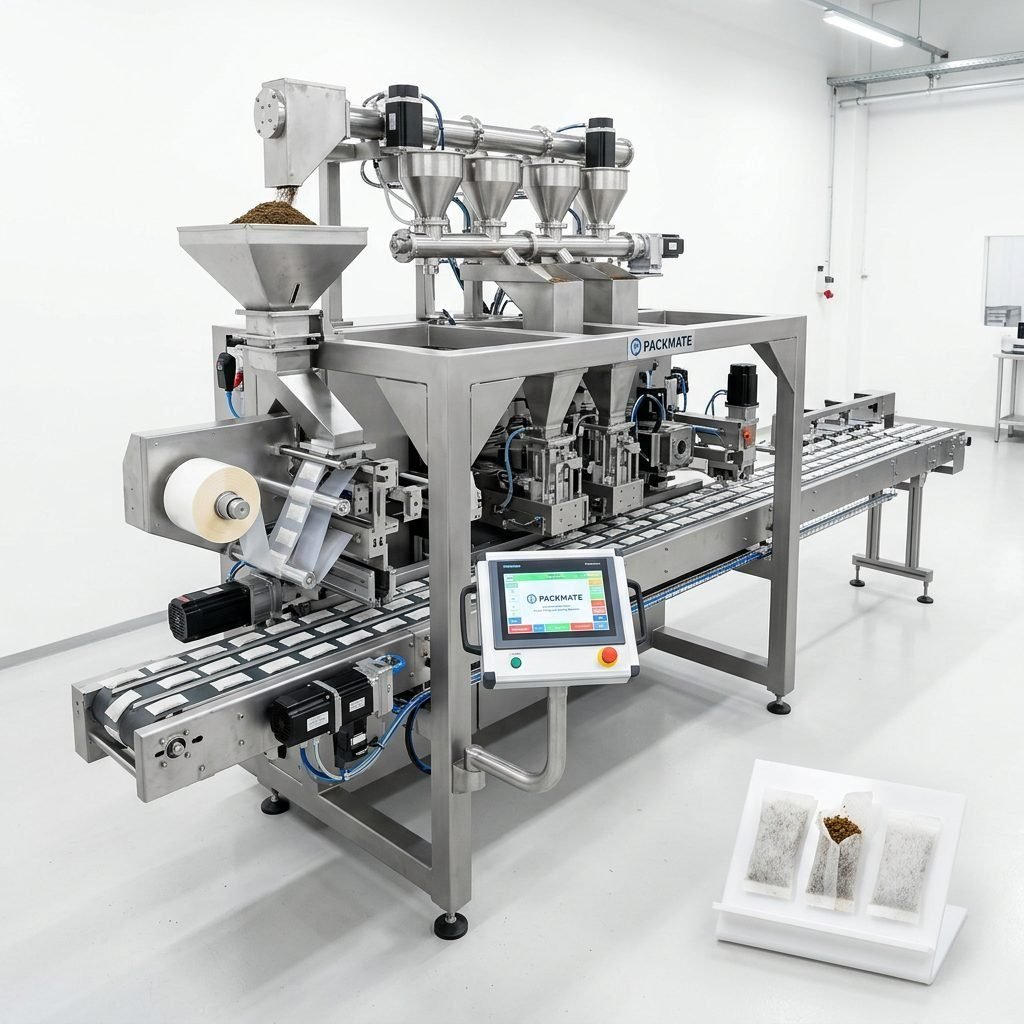
For nicotine pouches, dosing accuracy is critical for regulatory compliance and brand reputation. Evaluate whether the machine uses precision auger fillers, volumetric systems, or integrated weighing systems. For very small-dose products, multi-head weighers or high-precision volumetric feeders can deliver better consistency.
A calibrated weighing & packaging system reduces waste and ensures consistent nicotine content per pouch.
Material Compatibility and Film Handling
Packaging films and laminates vary widely in seal temperature, barrier properties, and thickness. Verify the candidate machine’s sealing range, tension control, and film unwinding features. Machines built for flexible packaging and snus applications should offer stable film tracking, adjustable seal parameters, and quick tool-free changeovers.
Hygiene, Cleanability, and Food-Grade Standards
Even though snus is not a conventional food, manufacturing best practices borrow heavily from food and pharmaceutical standards. Stainless-steel contact parts, hygienic design to prevent buildup, and easy access for cleaning reduce contamination risk and simplify maintenance.
Regulatory Compliance for Canadian Market
Ensure the machine and its documentation support compliance with Canadian labeling and product standards. Request CE, ISO, and any applicable test certificates from the manufacturer. If you need traceability or batch coding, verify the machine can integrate marking, coding, and serialization systems.
For a closer look at machine categories that suit nicotine pouch production, you can review specialized equipment like
Snus & Nicotine Packaging Machines and
Sachet & Stick Pack Machines.
Automation, Controls and Integration
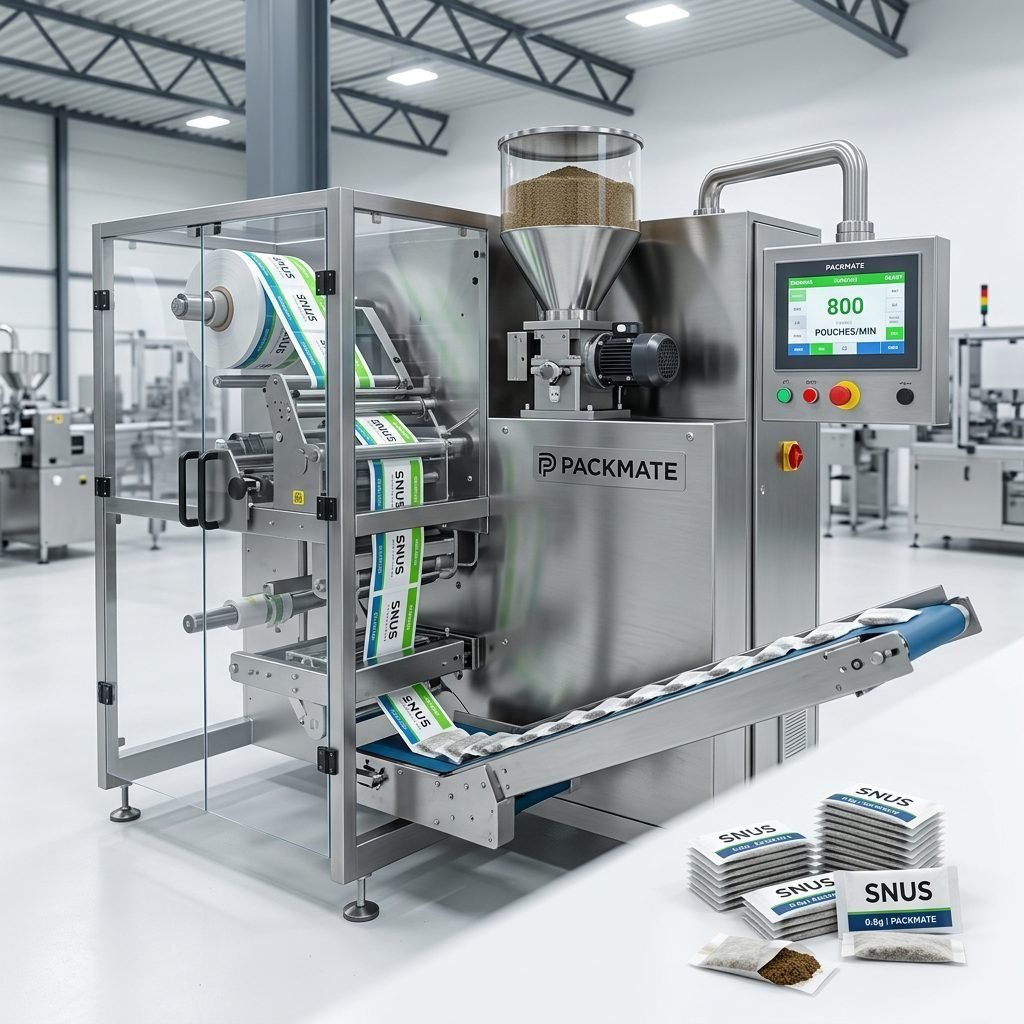
Modern packing lines benefit from PLC-based controls, HMI touchscreens, and remote diagnostics. Ensure the control architecture supports integration with upstream and downstream equipment: fillers, weighing systems, conveyors, and case packers. Remote monitoring and data logging are valuable for process control and uptime improvements.
Ask about Industry 4.0 features and whether the supplier offers IoT-ready diagnostics for predictive maintenance.
Flexibility & Changeover Time
If you plan multiple SKUs, prioritize machines with quick changeover features, tool-free adjustments, and recipe storage. Reducing changeover time directly increases effective production time and lowers the cost of running multiple SKUs on the same line.
Reliability, Service and Spare Parts Support
Evaluate the supplier’s service footprint, availability of spare parts, and training programs. A local or regional support arrangement for Canada reduces downtime. Request Mean Time To Repair (MTTR) data and a spare parts list for critical wear items.
Many reputable suppliers provide comprehensive services—view examples under their Service and About pages such as
Service and
About Packmate.
Total Cost of Ownership (TCO)
Purchase price is only one component. Include installation, commissioning, operator training, spare parts, consumables, utility consumption, and expected maintenance in your TCO calculation. High-quality machines often deliver lower lifetime costs through reduced waste and fewer stoppages.
Factory Layout, Utilities and Installation
Confirm that your facility can accommodate the machine footprint, including service space around the equipment. Check electrical, compressed air, and any vacuum or water requirements. Good suppliers will provide detailed drawings and assist with installation planning.
Customization and Turnkey Lines
If you need a complete solution that covers filling, weighing, packaging, and end-of-line operations, consider vendors who offer turnkey lines. Full-line suppliers can optimize handoffs between machines to maximize throughput and simplify integration testing.
For full production solutions, explore product groups like
Filling & Packaging Lines and
Weighing & Packaging Systems.
Supplier Vetting: Questions to Ask
When evaluating vendors, ask for references in the snus or nicotine pouch space, test reports, and on-site or video demonstrations. Confirm lead times, warranty terms, and after-sales support levels. If possible, visit the manufacturer’s facility or request a remote walkthrough of production lines.
Case studies showing similar installations (e.g., global turnkey deliveries)
Factory certifications such as CE and ISO
On-site testing and FAT (Factory Acceptance Testing) options
Real-World Examples and Use Cases
Suppliers with decades of experience in snus and nicotine packaging often provide multi-lane pouch lines, stick pack systems, and sachet machines tailored to small-dose, high-precision production. These systems are typically deployed with strict quality control, automated weighing systems, and easy-to-change tooling to accommodate new SKUs.
Making the Final Decision
Balance technical capability, reliability, local support, and total lifecycle costs. A trusted manufacturer will provide clear specifications, references, FAT options, and transparent spare parts pricing. If you are scaling production quickly, prioritize modular systems and vendors known for rapid installation and commissioning.
Request a detailed spec sheet and a customized proposal based on your SKU list and target throughput.
Arrange a FAT or on-site demo to validate performance with your actual materials.
Additional Resources
To compare machine types and view product lines specific to snus packing, visit vendor pages such as their product catalogs and case studies. Example links:
– Snus & Nicotine Packaging Machines
– Case studies
– Catalog
Final considerations before purchase
Ensure the chosen supplier can meet Canadian timelines and provide training for operators and maintenance staff. Confirm spare parts lead times and recommended spare kits. Where applicable, plan for incremental upgrades so your line can grow with demand.
Decision checklist
– Confirm format, speed, and accuracy requirements
– Require factory testing with your materials (FAT)
– Validate service, spare parts, and warranty terms
– Calculate TCO and plan floor space & utilities
Summary of Key Benefits from the Right Machine
A well-chosen snus packaging machine will reduce waste, ensure dosing consistency, increase uptime, and provide the flexibility to grow your product range. Working with an experienced manufacturer that offers turnkey lines and strong after-sales support is often the fastest route to predictable, compliant production in the Canadian market.
Frequently Asked Questions
Q1: How do I know if I need a multi-lane machine or a single-lane system?
A1: Choose multi-lane for very high-volume, small-dose pouches where parallel lanes increase throughput; choose single-lane for frequent SKU changes and varied pouch sizes.
Q2: What documents should I request from a supplier before purchase?
A2: Ask for technical specifications, CE/ISO certificates, FAT procedures, maintenance manuals, spare parts lists, and references or case studies.
Q3: How important is on-site commissioning and operator training?
A3: Extremely important — proper commissioning and training reduce start-up issues, optimize performance, and shorten time to stable production.
Q4: Can machines be upgraded later to increase capacity?
A4: Many high-quality machines are modular and can be upgraded with additional lanes, automation modules, or integrated weighing systems; confirm upgrade paths with the vendor.
Q5: Where can I see examples of installed lines and learn more about suppliers?
A5: Review supplier case pages and catalogs for examples. For instance, check product and case pages like
Snus & Nicotine Packaging Machines and
Case to evaluate real installations and capabilities.