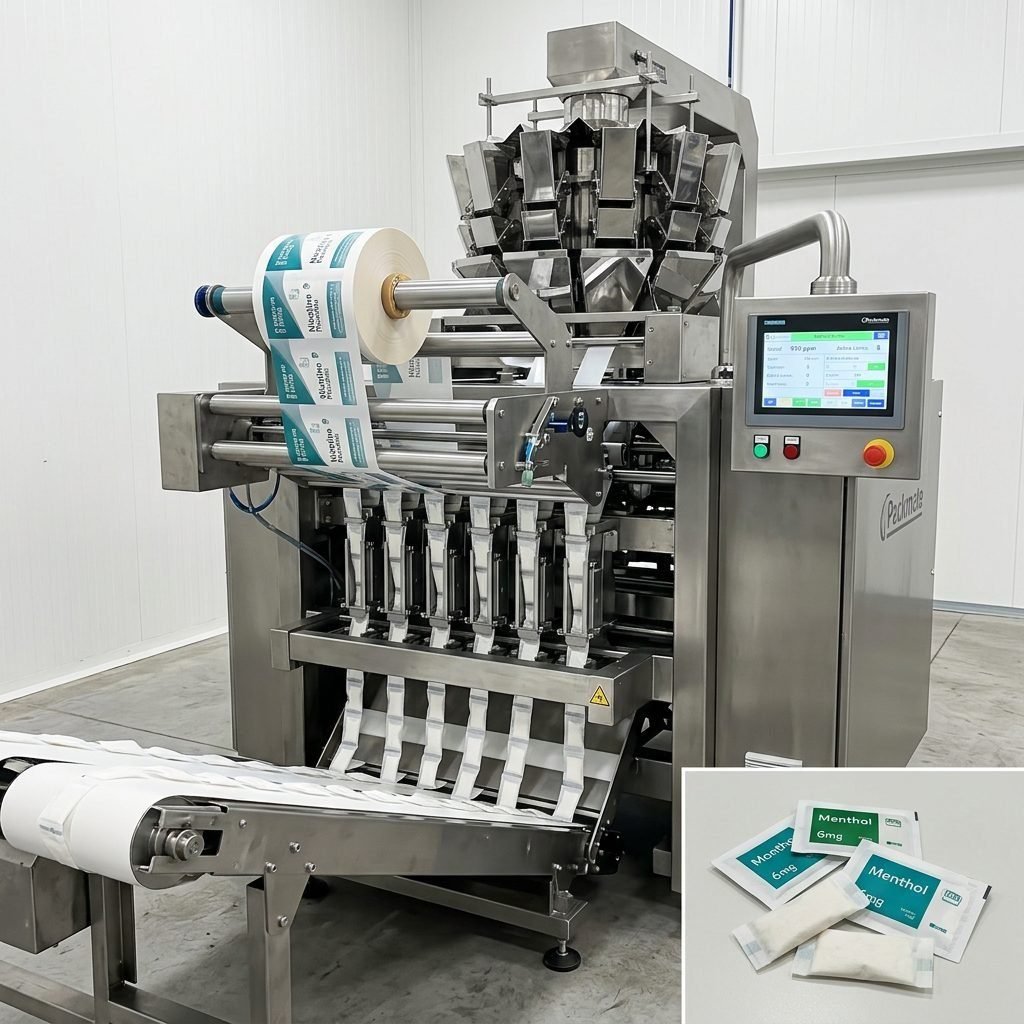
Choosing the right nicotine packaging machinery manufacturer in Lithuania is a critical decision that affects product quality, regulatory compliance, and long-term production efficiency. Whether you are launching a new nicotine pouch line or upgrading an existing snus packaging operation, understanding key evaluation criteria will help you minimize risks and maximize return on investment. The following guide walks you through the most important dimensions to compare, with practical tips, red flags to avoid, and actionable checklist items to ensure the supplier you select can meet both your technical and commercial needs.
1. Define your production requirements early
Before contacting manufacturers, create a clear specification document for your packaging line. Include projected daily output, number of lanes, pouch sizes, acceptable downtime, and planned product formats (nicotine pouches, snus sachets, stick packs, etc.). A well-formed brief will let suppliers respond with precise proposals instead of generic sales information.
Key items to list in your brief:
✓ Target daily throughput (pieces per hour / per shift).
✓ Product formats and tolerances (pouch width, dose range, fill weights).
✓ Required automation level (turnkey line or modular stations).
2. Verify machine capabilities and specialization
Not all packaging machine manufacturers have the same expertise. Some excel in general pouch machinery, while others focus on snus and nicotine pouch lines with multi-lane small-dose accuracy. Look for vendors who demonstrate:
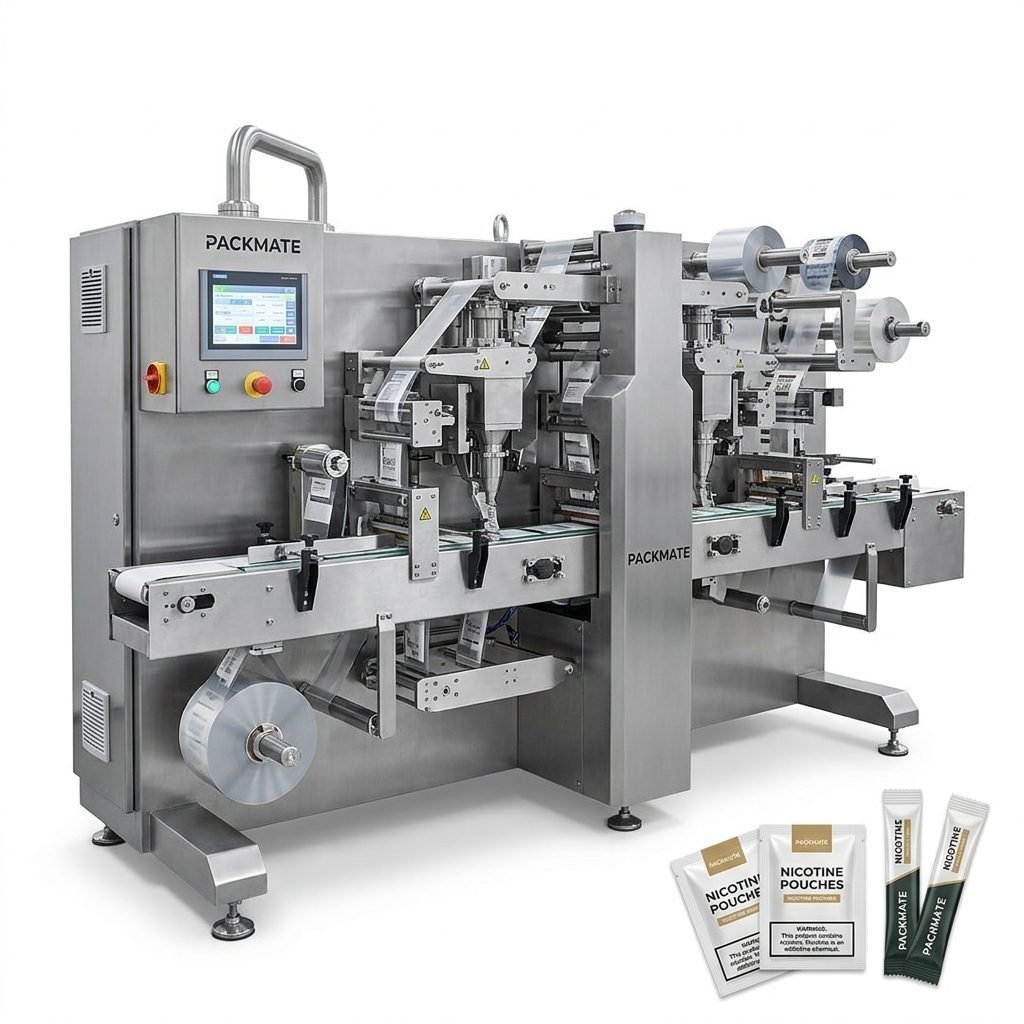
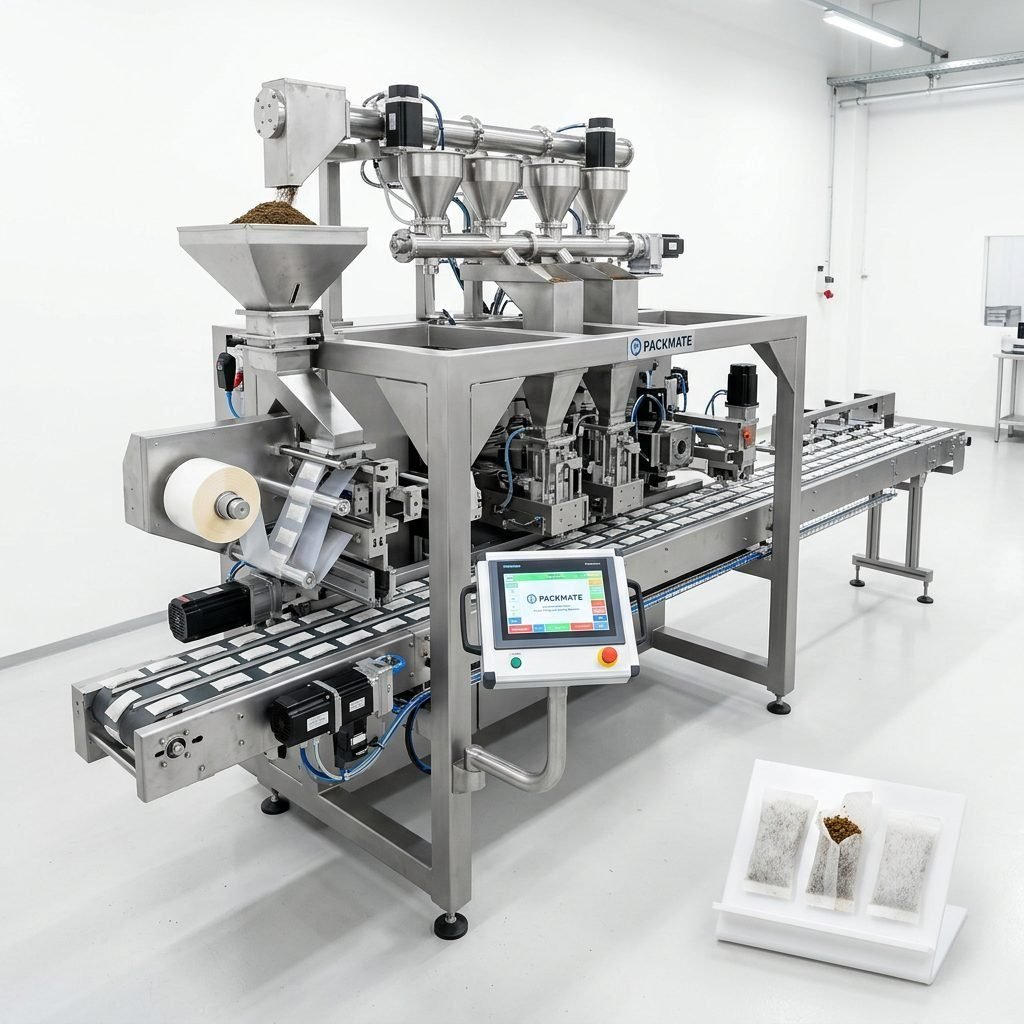
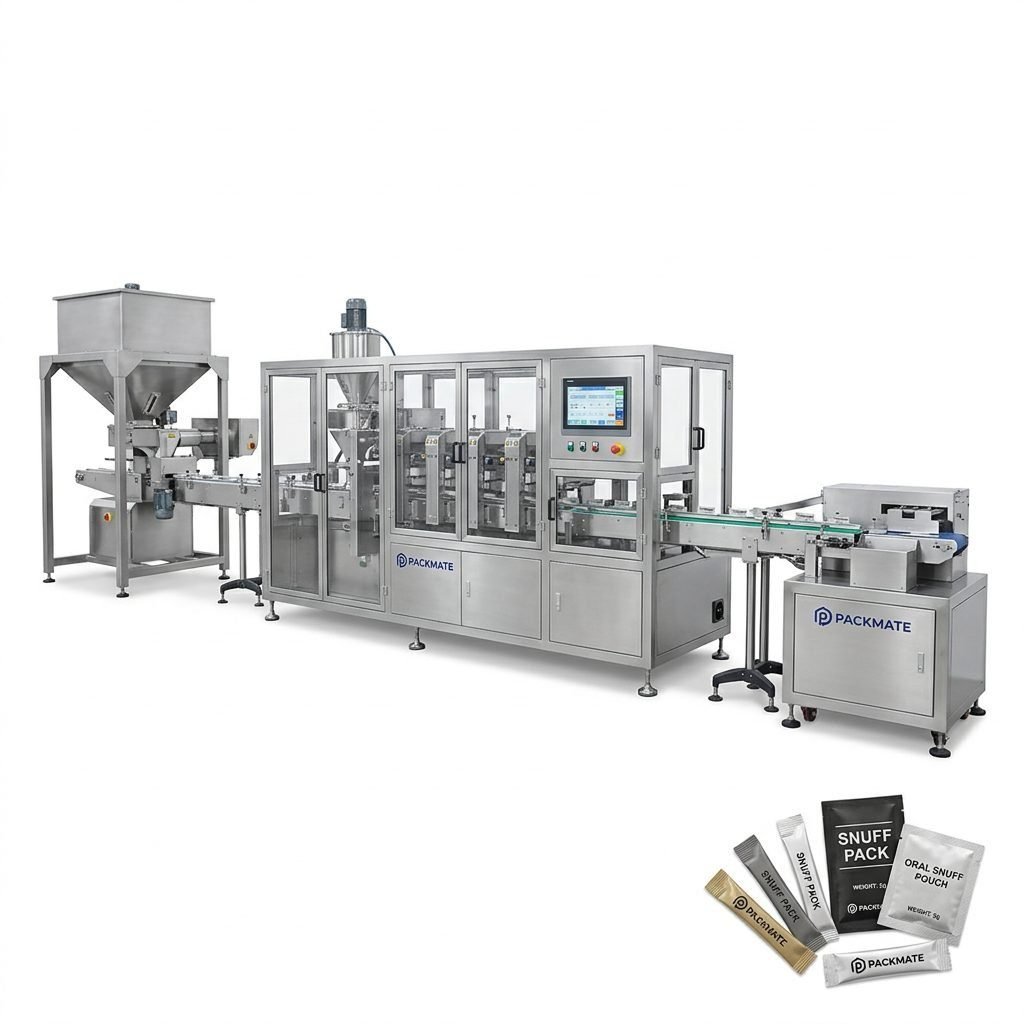
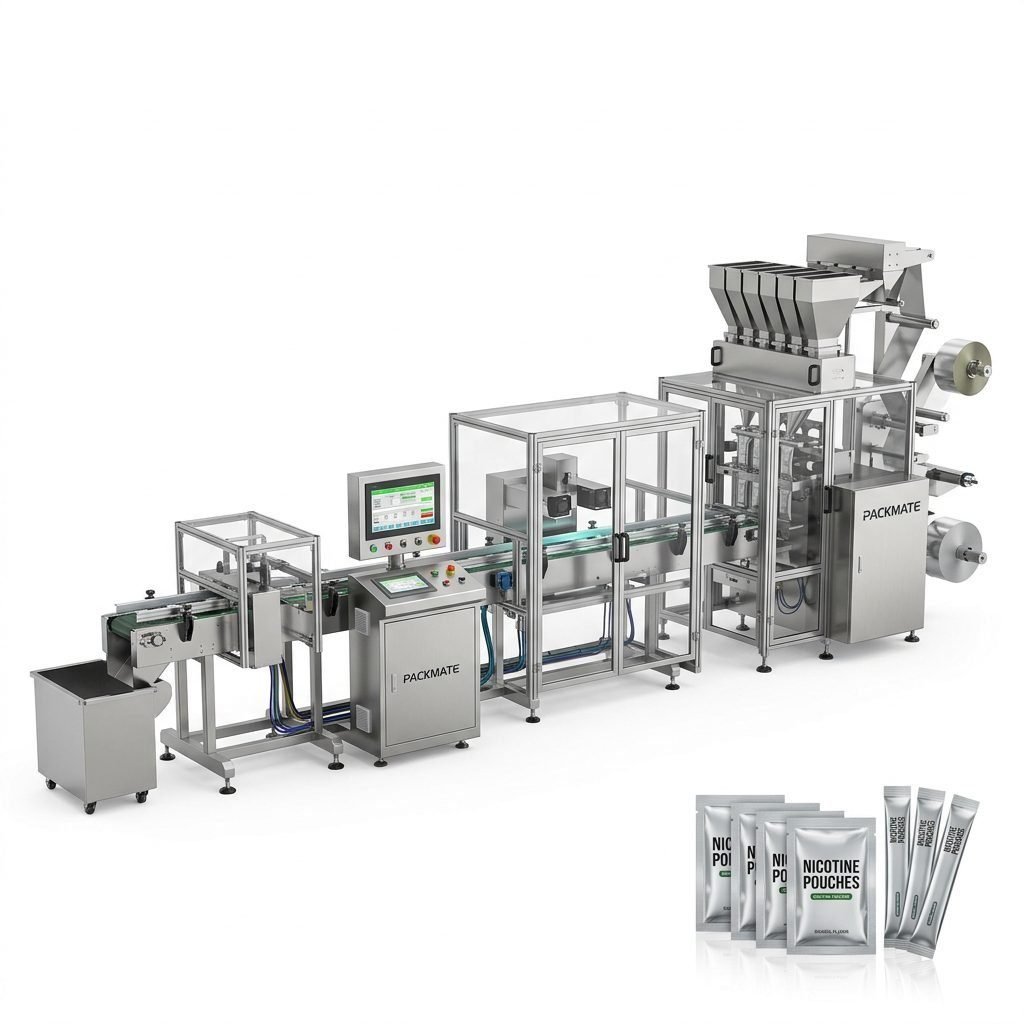
🔧 Proven experience with nicotine pouch and snus formats. Suppliers who list specific models for snus or nicotine packaging are preferred. See product examples: Snus & Nicotine Packaging Machines.
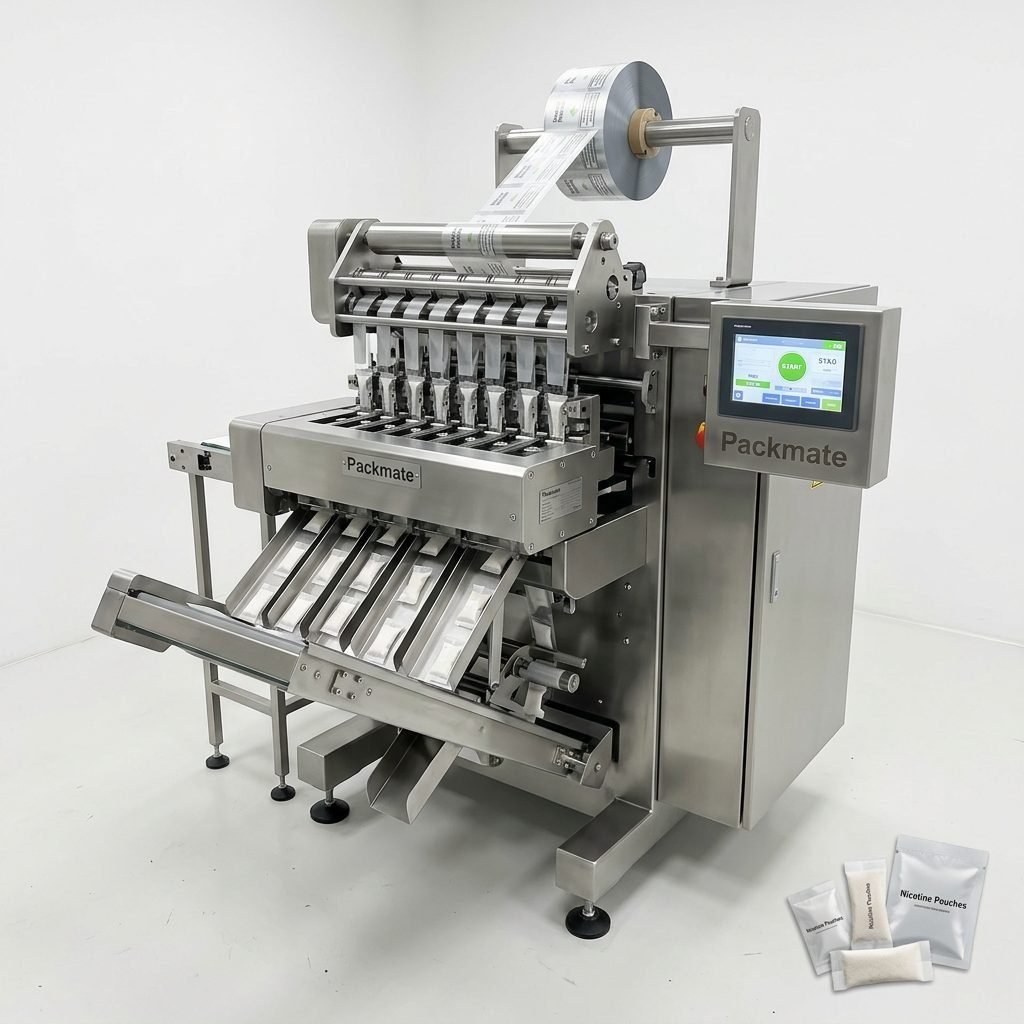
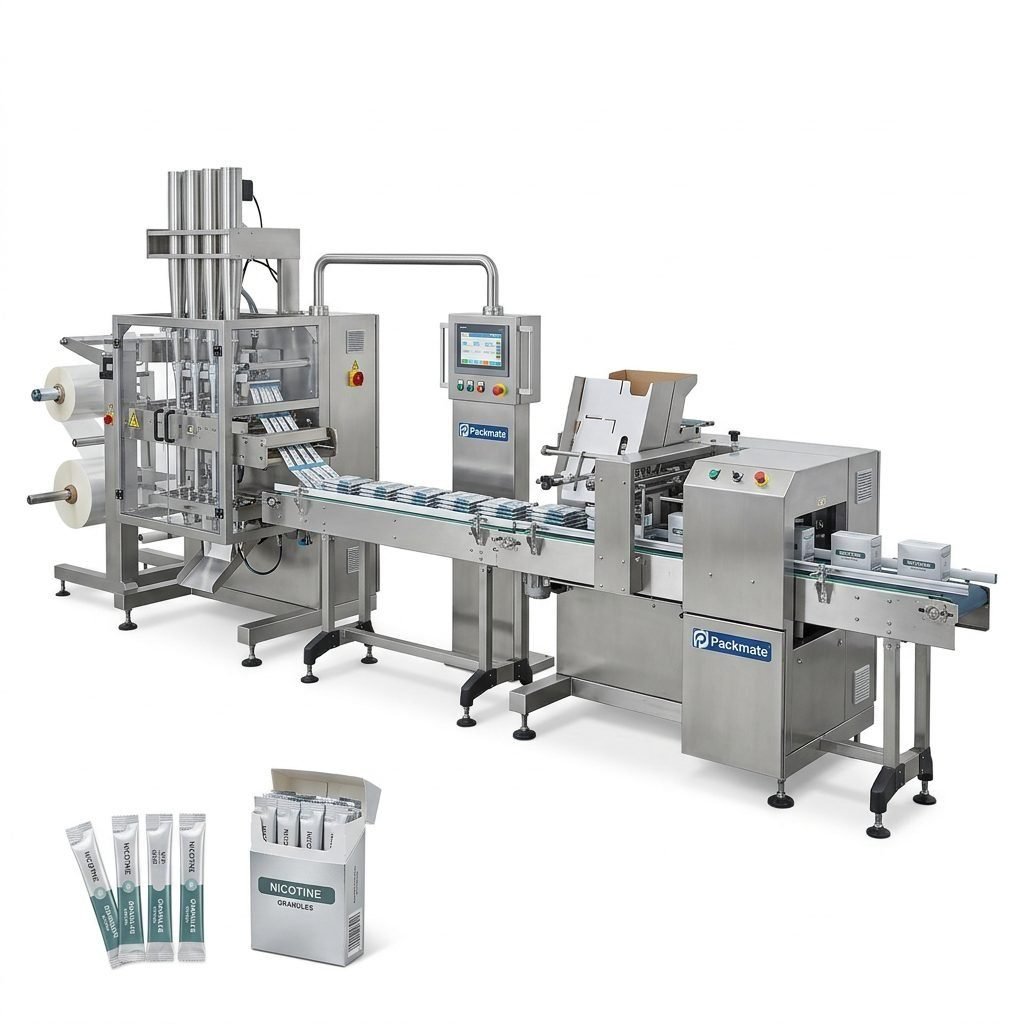
🔧 Support for stick pack, sachet, multi-lane pouch lines and auxiliary systems such as dosing, weighing and filling. Check related lines: Sachet & Stick Pack Machines, Weighing & Packaging Systems.
Why specialization matters
Nicotine pouches require precise dosing at small weights and reliable sealing to maintain product integrity. A manufacturer with targeted experience will have calibrated feeders, accurate multi-lane timing systems, and machine recipes tailored to low-dose products — reducing trial-and-error time on your floor.
3. Factory strength, quality systems and certifications
Inspect the manufacturer’s manufacturing capability and quality assurance processes. Key indicators include facility size, CNC machining centers, precision assembly lines, and a documented QC system. Certifications like CE and ISO indicate compliance with international standards — ask for copies of certificates and audit reports.
If available, review the supplier’s factory profile and certifications: About Packmate and Certificate pages can clarify capacity and compliance.
4. Evaluate production references and case studies
Ask for live references and case studies of lines that currently produce nicotine pouches. A trustworthy vendor should provide customer contacts, video demonstrations, or documented case studies showing production metrics and uptime. Seeing machines running at scale is one of the best predictors of future performance.
🔍 Request at least two customer references in Europe. If the company participates regularly in industry expos, that demonstrates openness and product visibility: Our Exhibition.
🔍 Review documented cases: Case materials should show setups similar to your expected line.
5. After-sales support, spare parts and training
Post-sale service is often the differentiator between a good investment and a costly headache. Confirm the supplier’s service network in Lithuania and nearby regions:
⚠ Response time for urgent breakdowns (ideally measured in hours, not days).
⚠ Spare parts lead times and stock availability—ask for a list of consumables and typical replacement intervals.
⚠ On-site training and commissioning scope—who is responsible for installation, line validation and operator training?
Vendors that offer detailed service agreements and remote diagnostics are preferable for continuous operations.
6. Total cost of ownership (TCO) over purchase price
The initial machine price is only part of the equation. Estimate your TCO including energy consumption, spare parts, maintenance labor, expected yield loss and downtime. A slightly more expensive machine with a higher OEE (Overall Equipment Effectiveness) and lower maintenance needs can be cheaper over five years.
💡 Ask for an OEE projection and a breakdown of consumable costs per million pouches. Compare proposals side-by-side on this basis.
Cost categories to compare
– Capital cost and payment terms.
– Installation and validation expenses.
– Spare parts, wear components, and recommended stock levels.
– Energy consumption and compressed air usage.
7. Design for regulatory compliance and product safety
Nicotine-containing products are highly regulated in many markets. Machines and materials must allow for traceability, hygienic design, and sanitary cleaning where required. Confirm the manufacturer can support documentation for regulatory audits and provide material certificates for contact parts.
Ask for: cleanability reports, material traceability files, and software features that record production batches and machine parameters for audit trails.
8. Flexibility and future-proofing your line
Your product mix and market requirements will evolve. Choose equipment that supports flexible formats, quick changeovers, and software-driven recipes. Modular design allows you to add auxiliary stations (weighers, metal detectors, secondary packaging) without replacing the core machine.
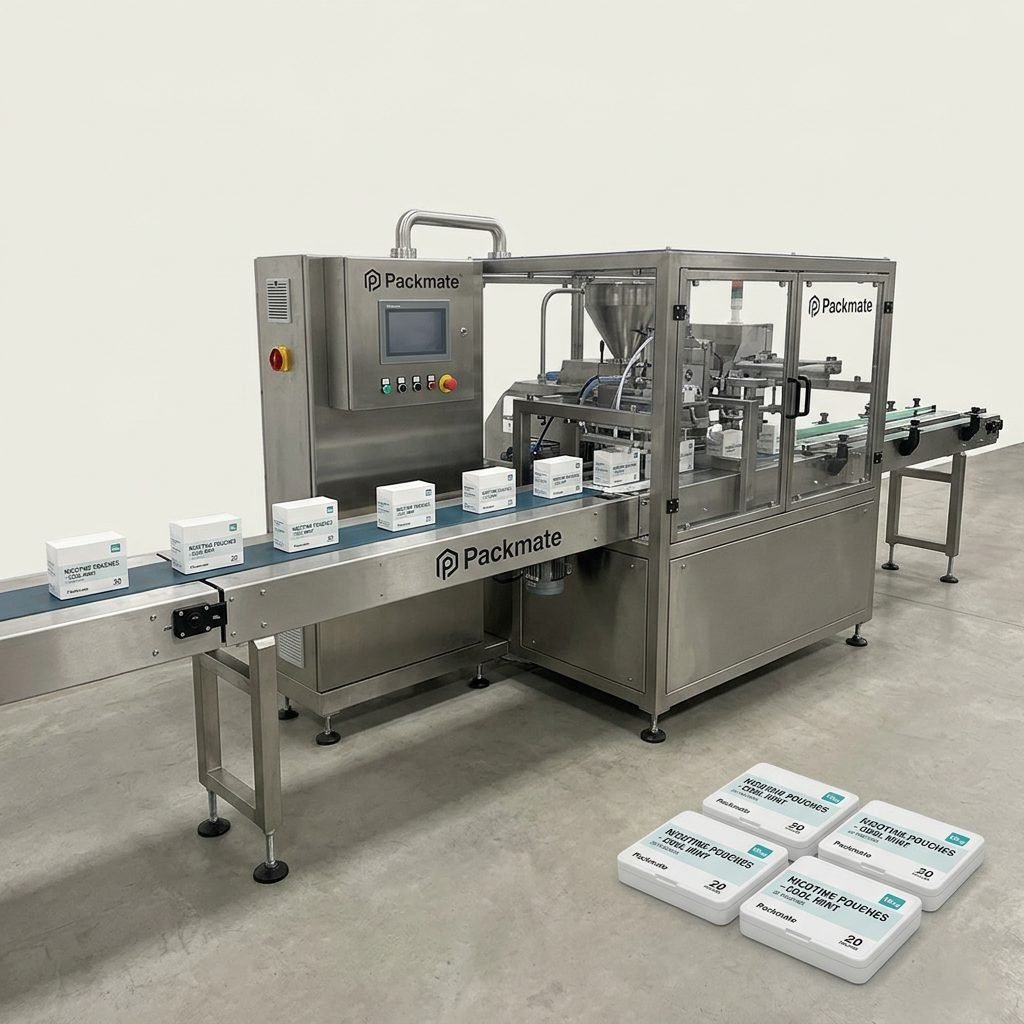
If you plan to integrate upstream or downstream equipment, confirm compatibility with common automation protocols and whether the supplier can deliver a complete filling and packaging line: Filling & Packaging Lines.
Software and controls
Modern PLC/HMI systems with recipe management, remote access, and data logging increase uptime and make troubleshooting faster. Request a demo of the control interface and remote support capabilities.
9. Inspection and acceptance criteria
Include clear Factory Acceptance Test (FAT) and Site Acceptance Test (SAT) criteria in your purchase contract. FAT should validate machine performance with your samples or simulated loads before shipment. SAT should verify installed performance, operator training completion, and final acceptance metrics.
Standard FAT items:
✓ Continuous run at target speed for a defined period.
✓ Sample product runs with documented weight and seal integrity checks.
✓ Functionality of alarms, interlocks and safety devices.
10. Logistics, lead times and warranty
Lead times and shipping capabilities matter, especially for turnkey lines that include multiple machines and auxiliary equipment. Confirm realistic delivery dates, packing standards for international shipment, and warranty terms covering parts and workmanship.
A clear warranty with defined service response times and warranty exclusions will protect your investment. Prefer suppliers who publish standard warranties and offer extended coverage options.
11. Price negotiation and contractual protections
During contract negotiation, align payment milestones with tangible deliverables (design approval, FAT completion, shipment, SAT acceptance). Include penalties or remedies for missed performance metrics and delivery delays. Ensure intellectual property of custom designs is clearly assigned in the contract.
✅ Practical tip: Hold back a final percentage of payment until SAT is complete and all punch-list items are closed. This motivates timely commissioning and post-install support.
12. Local presence vs. international suppliers
A local representative can accelerate spare part delivery and support, but many reputable international suppliers offer strong remote diagnostics and regional stocking. Balance the advantages of local service with the engineering depth and price competitiveness of global manufacturers. If you choose an international vendor, confirm customs clearance, import duties, and on-site commissioning logistics are well-coordinated.
13. How a proven supplier can accelerate your launch
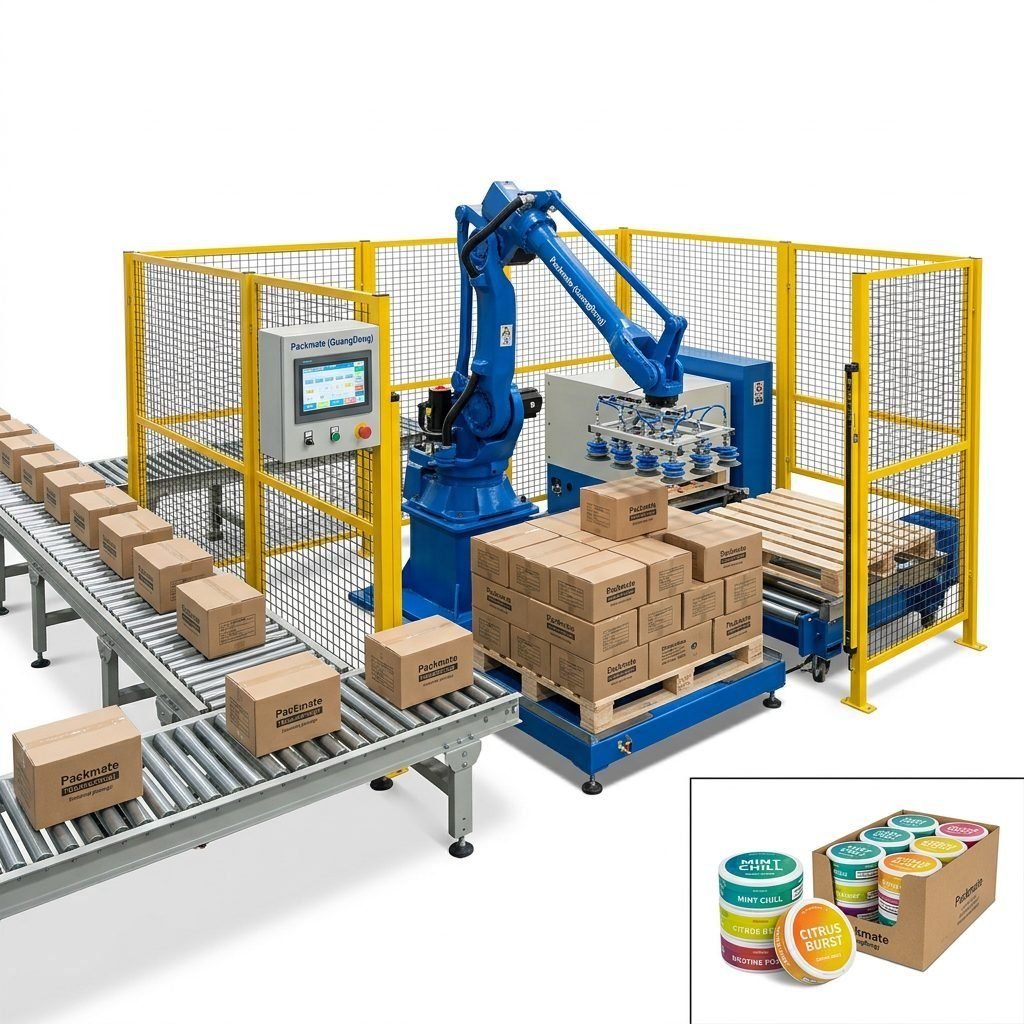
Selecting an experienced snus and nicotine pouch packaging supplier reduces ramp-up time. A partner with deep engineering experience, extensive machine models and a documented track record can provide turnkey solutions, from dosing and filling to final secondary packaging. If you want to explore established packaging solutions and machine families, review product categories such as Bag & Pouch Packaging Machines and Auxiliary Packaging Equipment.
14. Final checklist before signing
– Confirm machine specs match your brief and FAT criteria.
– Validate references, case studies and expo demonstrations.
– Secure warranties, spare part lists and support SLAs in writing.
– Ensure payment terms align with deliverables and acceptance tests.
Conclusion
Choosing the best nicotine packaging machinery manufacturer in Lithuania means balancing technical fit, factory capability, service readiness and commercial safeguards. Prioritize suppliers with demonstrated experience in snus and nicotine pouch systems, documented quality processes, robust after-sales support, and transparent TCO estimates. Thorough FAT/SAT procedures, clear spare part plans, and committed installation and training services will ensure a smooth ramp-up and long-term production reliability.
Need expert help?
If you would like to review specific machine families or turnkey line options, explore product pages and contact the manufacturer directly to request technical proposals and FAT demos: Contact Us.
Frequently Asked Questions
Q1: What certifications should I expect for nicotine packaging machines?
A: Expect at least CE and ISO-related quality documentation. For machines interacting with food-like products, confirm hygienic design, material traceability and any regional regulatory compliance documents. Ask the supplier to provide scanned certificates and audit summaries before purchase.
Q2: How long does it take to commission a full snus packaging line?
A: Typical lead times vary widely based on customization, but a standard off-the-shelf machine can ship in a few months, while turnkey lines with multi-station integration often require 4–6 months or longer including FAT, shipping and SAT. Plan for an additional commissioning and validation window on-site.
Q3: What are common red flags when vetting a supplier?
A: Red flags include unwillingness to provide factory references, absence of clear FAT procedures, vague spare part policies, no access to demonstrable machine videos or case studies, and refusal to commit to defined acceptance tests or service SLAs.
Q4: Should I prioritize price or proven performance?
A: Prioritize proven performance. Lower purchase price is attractive but may lead to higher downtime, maintenance and poorer yields. Use TCO modeling to compare options and favor vendors who provide realistic uptime estimates and documented OEE performance.
Q5: Where can I find more detailed machine information?
A: Review product catalogs and product pages for machine families and technical specifications. For example, explore Snus & Nicotine Packaging Machines and related equipment pages to compare models and request datasheets.