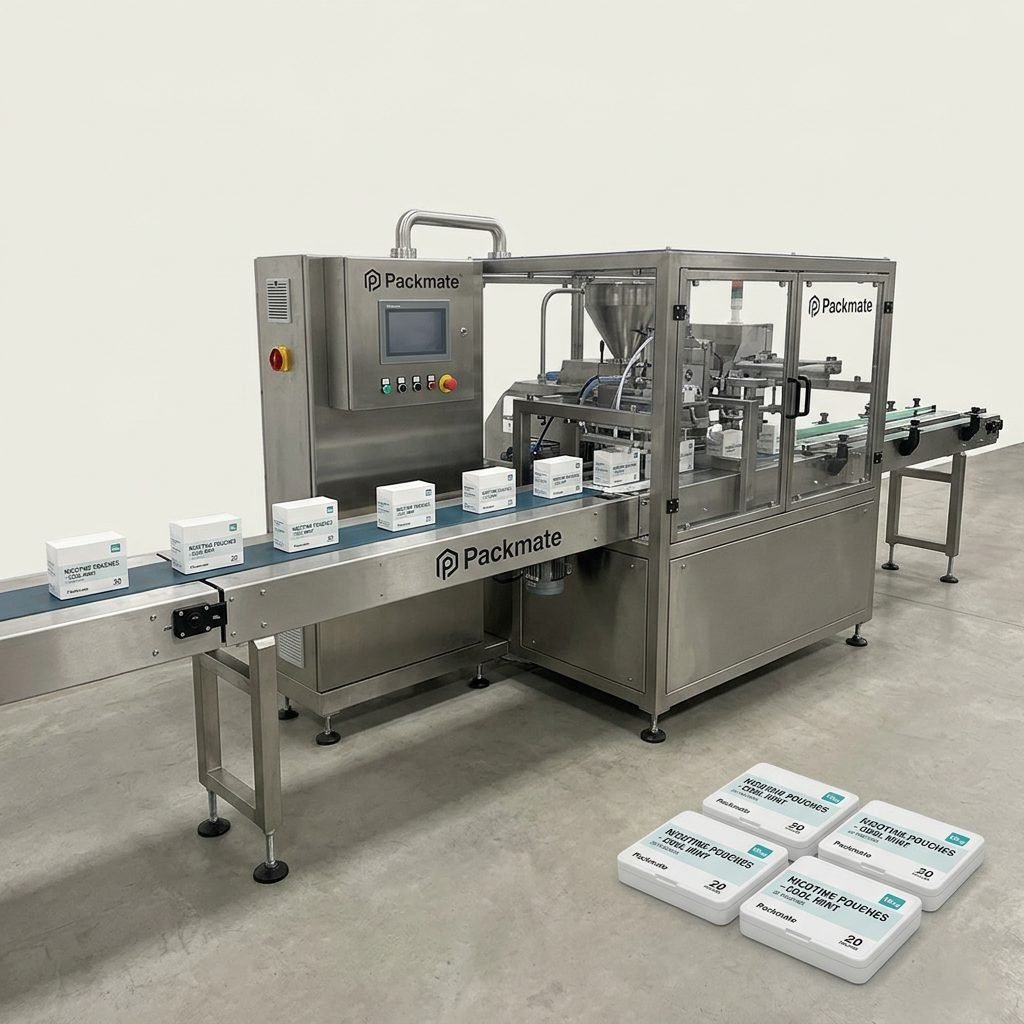
Entering the nicotine pouch and snus market in Uruguay requires careful selection of a packaging machinery partner. Whether you plan to produce small-dose nicotine pouches or run a high-output multi-lane production line, the right manufacturer will influence your product quality, regulatory compliance, and long-term operational costs. This guide walks you through the practical criteria to choose the best nicotine packaging machine manufacturer for your Uruguay-based business, highlights key machine types, and explains how to evaluate after-sales support and total cost of ownership.
Understand the Local and International Regulatory Context
Uruguay has a well-developed regulatory landscape for tobacco and nicotine-related products. It is essential to ensure that any packaging line you buy can meet local labeling, safety, and hygiene standards, as well as international export requirements if you plan to sell abroad. Ask manufacturers for documentation of compliance, such as CE and ISO certificates, and request references showing successful installations in regulated markets.
Why certifications matter
Certified machines are typically engineered to predictable safety, electrical, and mechanical standards. For example, a supplier with CE and ISO certification demonstrates consistent manufacturing quality and adherence to globally accepted testing procedures. If you are considering a turnkey supplier, verify certifications for both machines and control systems.
Tip: Request certificate copies and ask for machine test reports and FAT (Factory Acceptance Test) videos to confirm compliance before purchase.
Match Machine Type to Your Product Format
Nicotine pouches and snus can be packaged in various formats. Choosing the correct machine type is fundamental to product consistency and line efficiency.
Common packaging systems
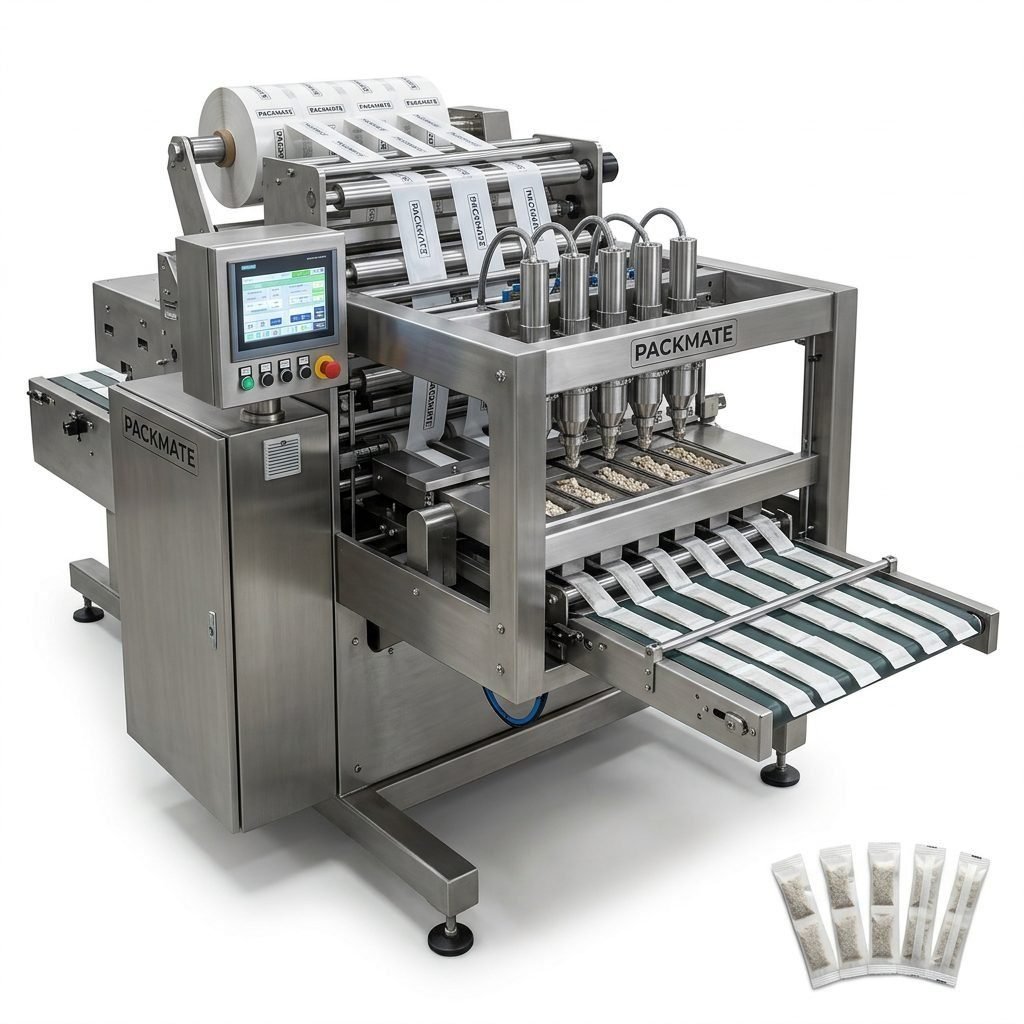
– Stick pack machines: ideal for single-dose stick formats and sachets.
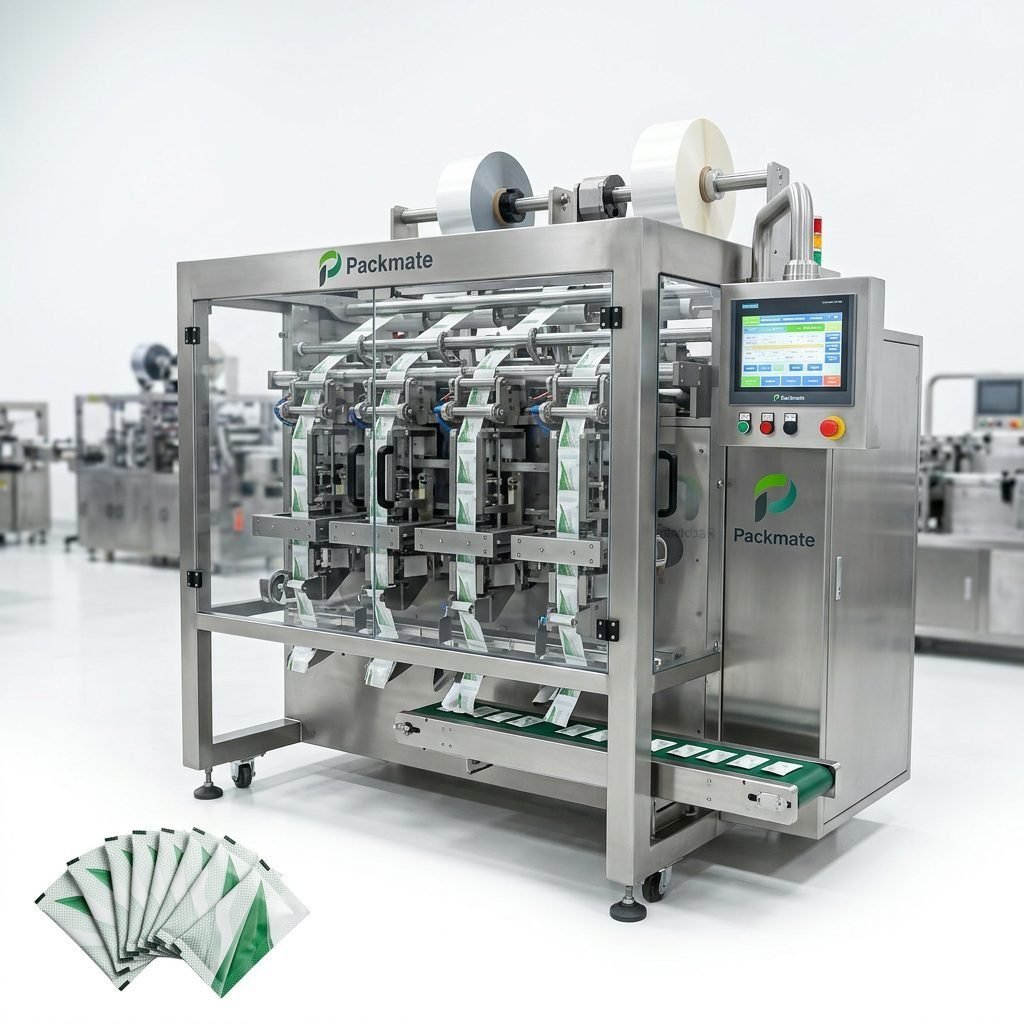
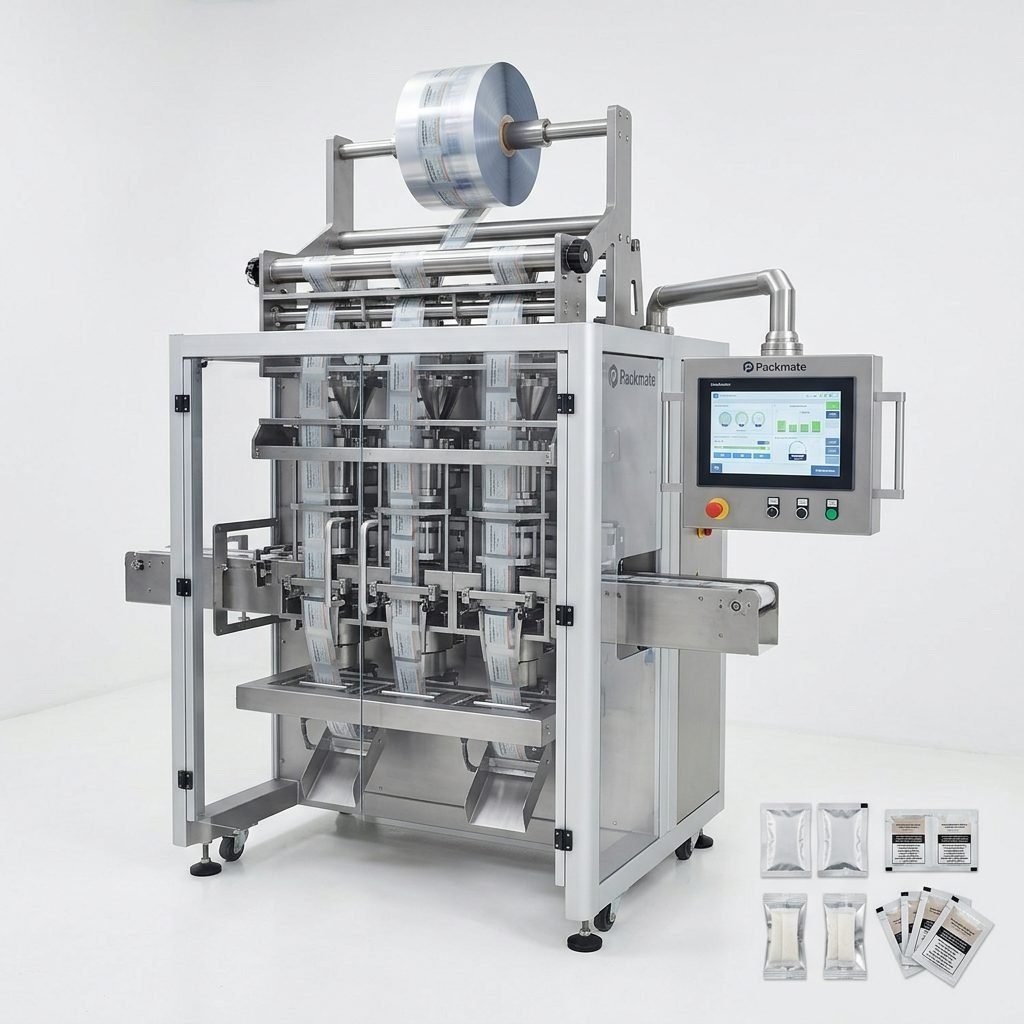
– Sachet & multi-lane pouch machines: optimized for small-dose nicotine pouches and high-throughput production.
– Bag & pouch packaging machines: for finished consumer packs and outer packaging operations.
– Auxiliary lines: including weighing, filling, and cartoning systems for complete production integration.
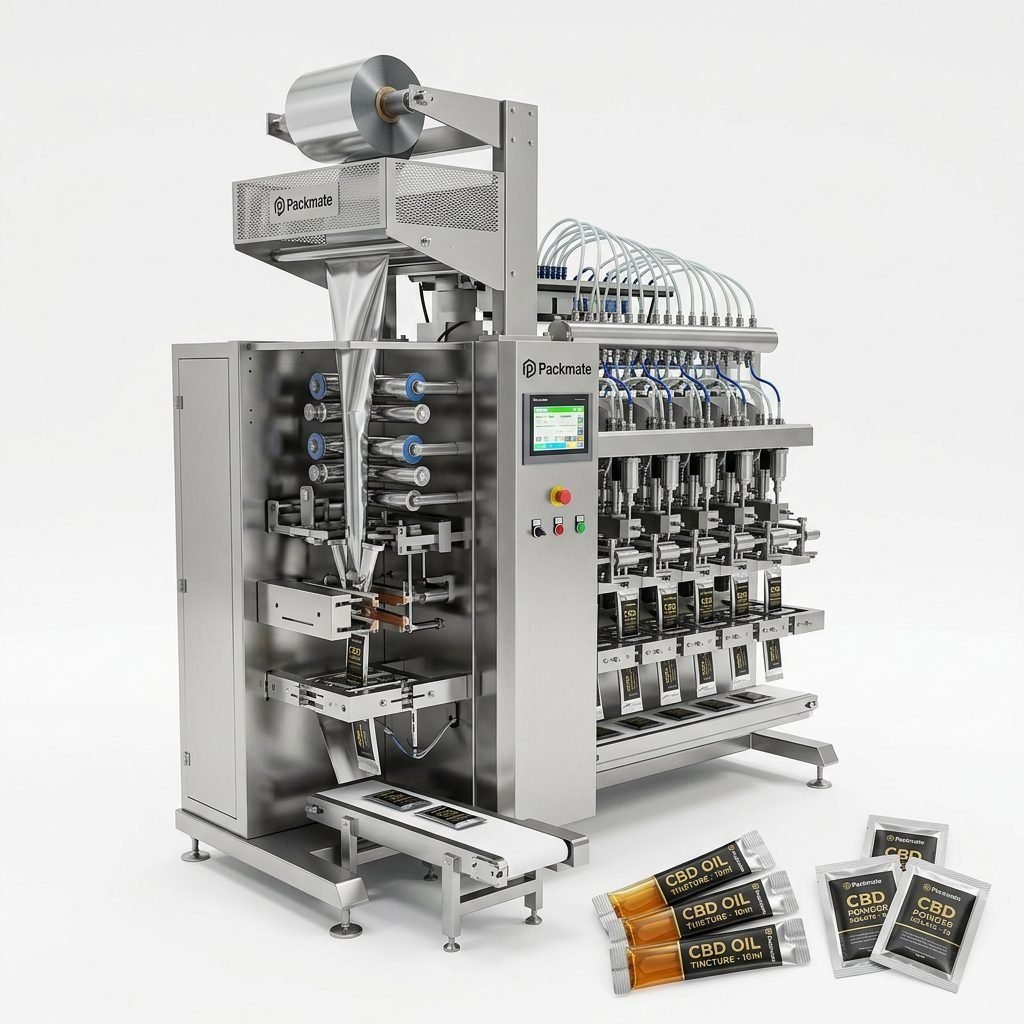
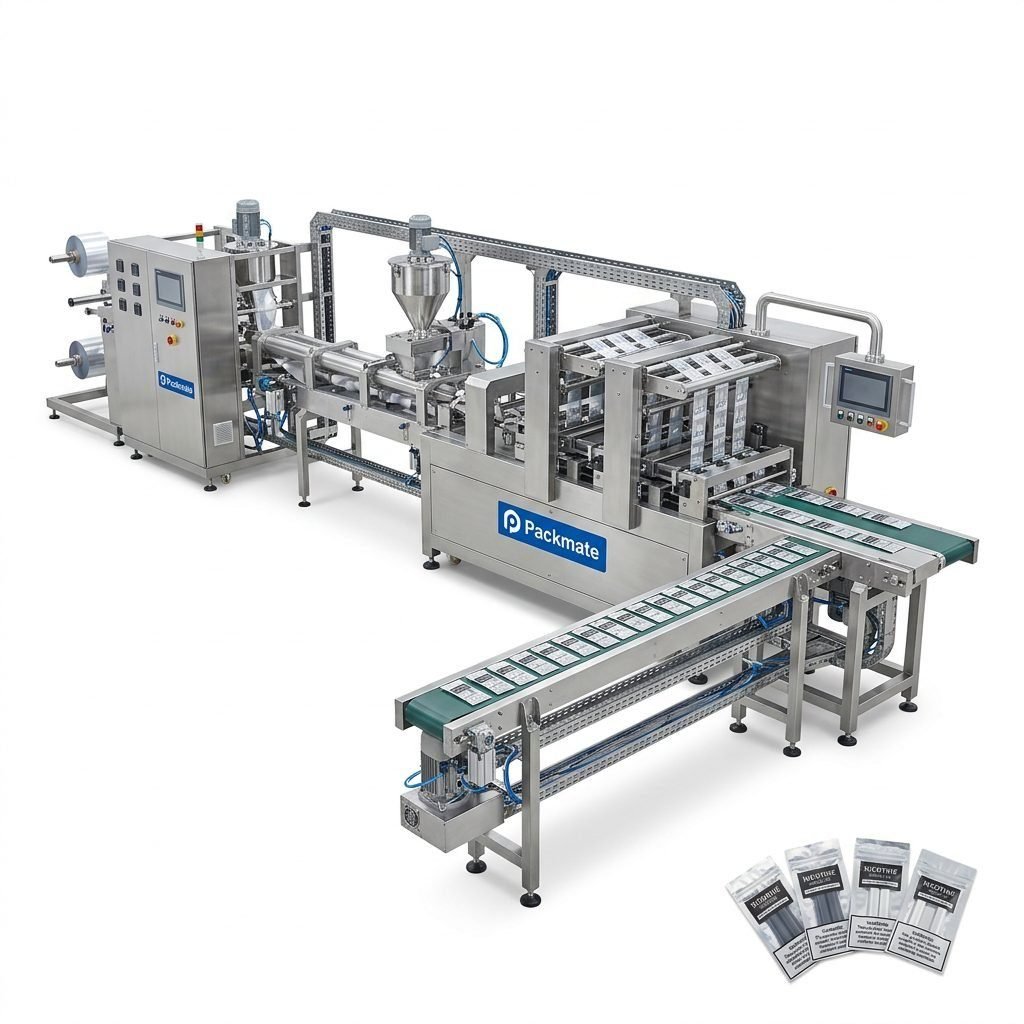
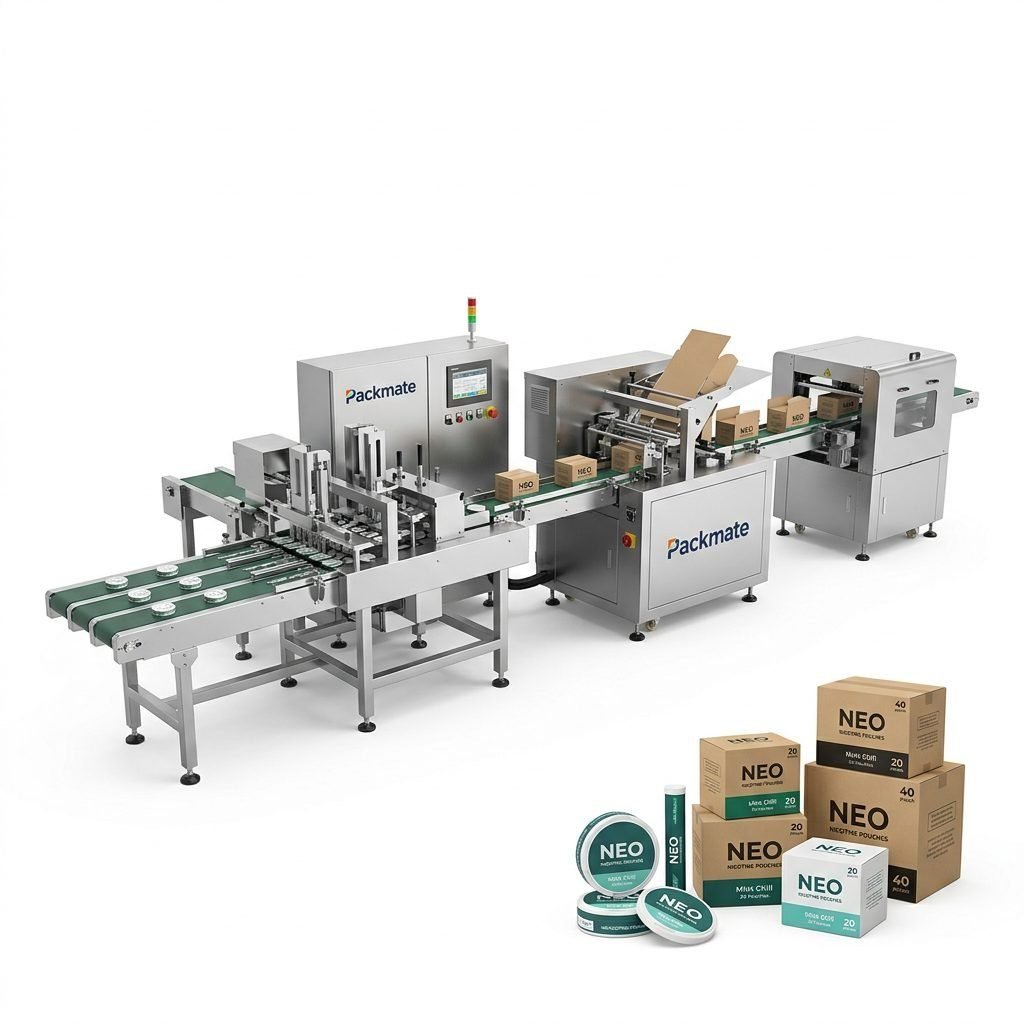
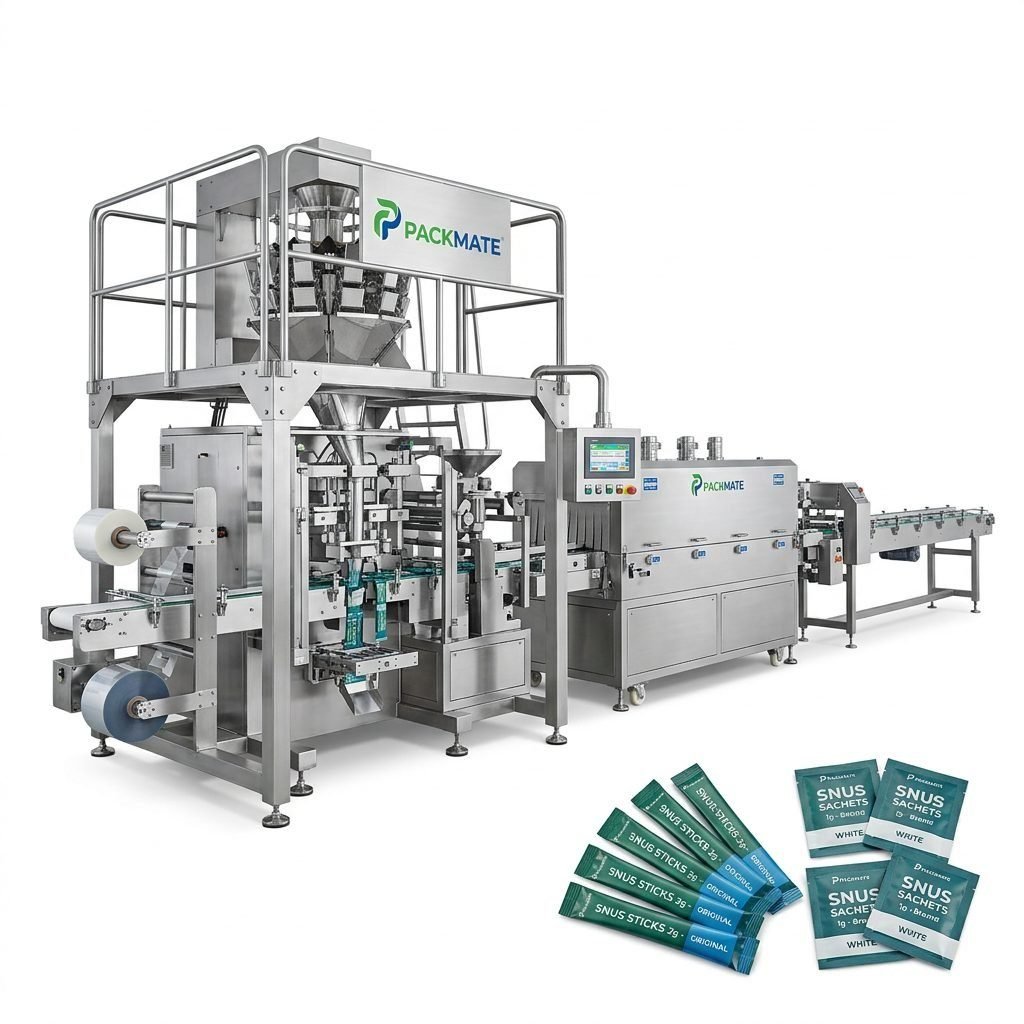
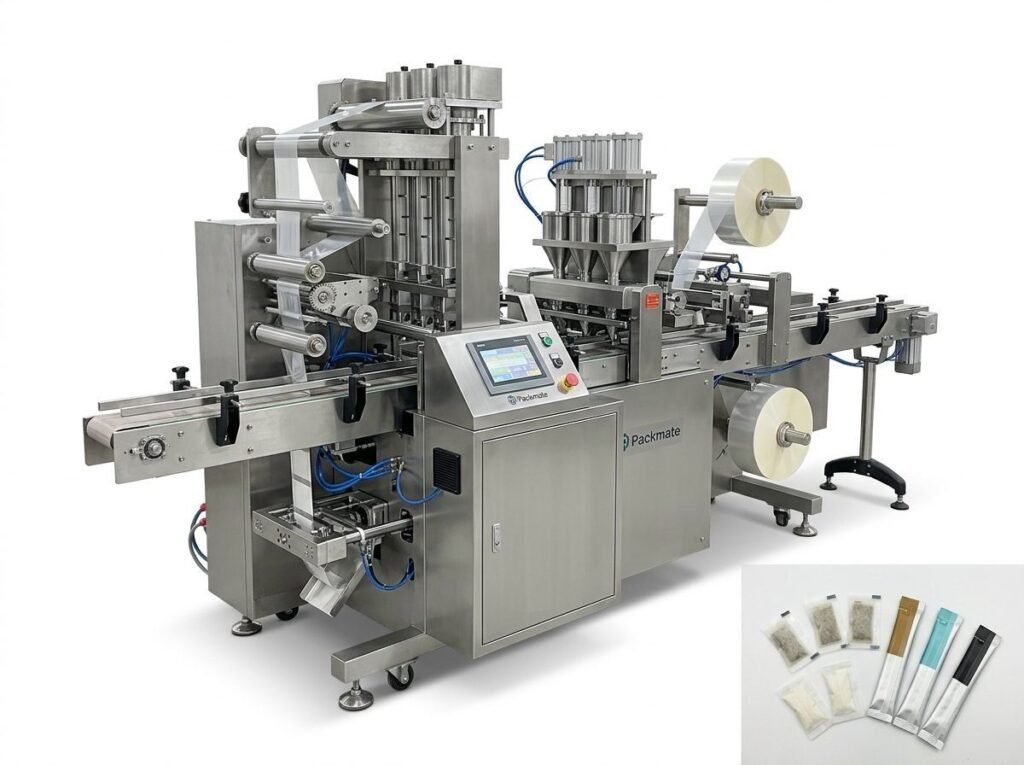
Reliable manufacturers typically provide modular solutions that allow you to combine primary packaging (pouch formation and sealing) with secondary operations like boxing and case packing. Review the manufacturer’s product portfolio such as their dedicated snus and nicotine packaging offerings to ensure they have the right machine classes for your target SKUs. For reference, explore Snus & Nicotine Packaging Machines and Sachet & Stick Pack Machines to compare models and capabilities.
Evaluate Production Capacity and Scalability
Think beyond initial production needs. Your chosen line should meet current demand and scale with growth. Key metrics to evaluate:
Key performance indicators
– Throughput (units per minute or hour) per lane and total for multi-lane systems.
– Changeover times between SKUs and format adjustments.
– OEE (Overall Equipment Effectiveness) projections and uptime guarantees.
– Footprint and utility requirements (power, air, compressed lines).
Important: Ask for production validation data from existing installations. A manufacturer with multi-lane snus lines and documented throughput (e.g., Packmate’s multi-lane systems) can provide a realistic output forecast.
Assess Engineering and Manufacturing Strength
A manufacturer’s engineering depth determines machine robustness and long-term reliability. Look for:
What to inspect
– Years of R&D and product development experience.
– Factory size, CNC capability, and precision assembly lines.
– Range of models and ability to deliver custom turnkey solutions.
– Quality control systems and traceability in component sourcing.
For example, suppliers that operate large manufacturing facilities with advanced CNC centers and rigorous quality tests (see About Packmate for an example) are more likely to produce machines that hold up under continuous production cycles.
Request On-Site Demonstrations and References
Seeing a machine run and speaking with existing clients are invaluable steps. Prioritize suppliers who can provide:
Validation checklist
– Live demonstrations or recorded FAT sessions.
– Customer references with similar product profiles and regulatory constraints.
– Case studies showing deployment in comparable markets (export experience is a plus).
Review manufacturer case histories to confirm field performance. You can often find documented installations and customer stories under the manufacturer’s case or exhibition pages, which help validate claims and show real-world outcomes.
Consider After-Sales Support, Spare Parts and Training
After-sales service is critical for reducing downtime and protecting your investment. Important service aspects include:
Support must-haves
– Clear warranty terms and response time commitments.
– Local or regional service partners to ensure timely spare parts delivery.
– On-site installation supervision and operator training programs.
– Remote diagnostics capability and spare parts kits for critical wear items.
Service highlight: A manufacturer offering comprehensive service packages, documented spare parts lists, and training will reduce your total cost of ownership and improve line stability.
Total Cost of Ownership and Return on Investment
Purchase price is only one component of the investment. Calculate TCO by including:
TCO components
– Upfront machine cost and shipping.
– Installation, commissioning, and validation expenses.
– Consumables and spare parts over projected production life.
– Energy consumption and maintenance labor.
– Expected throughput improvements and yield increases that drive revenue.
A practical approach is to request a sample ROI calculation from the supplier based on your target daily production, predicted scrap rates, and labor savings from automation. Suppliers experienced with nicotine pouch lines can often model expected payback periods using real-world data.
Customization, Flexibility and Future-Proofing
Nicotine markets evolve rapidly. A flexible machine design that supports format changes, additional lanes, or integration of new dosing systems will protect your investment. Confirm that:
Ask the manufacturer about
– Speed and lane expansion options for multi-lane systems.
– Compatibility with different filling technologies (powder, granule, liquid dosing).
– Control system architecture allowing easy software updates and recipe storage.
– Availability of modular auxiliary equipment such as weighing systems and cartoners.
A supplier with a broad product range including filling & packaging lines and weighing & packaging systems will more easily deliver a fully integrated solution.
Supplier Reputation, References and Global Footprint
Strong reputations are earned through consistent delivery and global cooperation. Evaluate:
Reputation indicators
– Years in business and documented development timeline.
– Exhibition presence and willingness to demonstrate machines at trade shows.
– Case studies and partnerships across multiple regions.
– Transparent contact and service channels that make communication easy—especially important for Uruguay-based projects where timely logistics matter.
For more examples of supplier capabilities and global presence, check manufacturer exhibition and case pages and contact their sales team to request local references.
Quick checklist: Certification, proven throughput, spare parts availability, on-site training, and modular expansion are essential selection criteria.
Commercial Terms, Lead Time and Warranty
Negotiate clear commercial terms up front. Key items to review:
Contract essentials
– Delivery lead time, shipping method, and port of origin.
– Payment milestones and acceptance criteria (including FAT acceptance).
– Warranty coverage, spare parts lead time guarantees, and support response windows.
– Training scope and documentation delivery.
Manufacturers that maintain clear project timelines and documented acceptance procedures reduce risk and help your production plan remain on schedule.
How to Run an Effective Supplier Selection Process
Follow a structured evaluation to compare suppliers objectively:
Evaluation steps
1. Define technical and business requirements (formats, throughput, footprint, budget).
2. Request detailed proposals with specs, drawings, and FAT plans.
3. Visit factories or request live FAT videos and references.
4. Score proposals on cost, compliance, service, and scalability.
5. Negotiate commercial terms and schedule a pilot or test run where feasible.
By scoring suppliers against the same criteria, you can make a data-driven decision rather than a price-only choice.
Why Choose a Specialist Snus and Nicotine Machine Supplier?
Suppliers that specialize in nicotine pouch packaging have deep domain knowledge of dosing, pouch construction, and regulatory sensitivities. They understand the unique requirements for small-dose product handling and multi-lane speed synchronization. Specialist suppliers often provide advanced features for yield optimization, dust control, and gentle handling of delicate pouches.
If you want to explore specialized machines, look at dedicated product pages or contact the manufacturer for model recommendations tailored to your product. Useful starting points include Snus & Nicotine Packaging Machines, Filling & Packaging Lines, and Weighing & Packaging Systems.
Next Steps: From Inquiry to Installation
1. Prepare a detailed RFQ with product specs, target throughput, and site utilities.
2. Shortlist suppliers based on technical fit, references, and lead time.
3. Conduct FAT and accept machine when it meets agreed KPIs.
4. Supervise installation, validation, and operator training on-site.
5. Monitor performance and refine SOPs with the supplier’s support post-commissioning.
If you are ready to take the next step, reach out via the manufacturer’s contact page or request a catalog and case studies to compare models and successful installations.
Helpful resources
– Explore product options: Snus & Nicotine Packaging Machines.
– See integrated solutions: Filling & Packaging Lines.
– Review company background and manufacturing strength: About Packmate.
– Request references and case studies: Case.
Final reminder: Prioritize validated performance data, local support availability, and regulatory compliance when choosing a nicotine packaging machine manufacturer for your Uruguay operation.
Frequently Asked Questions
Q1: How long does it take from order to installation for a nicotine pouch packaging line?
A1: Lead times vary by supplier and customization level. Standard machine deliveries often range from 12 to 24 weeks, with additional time for shipping, customs clearance, installation, and validation. Always confirm lead times and FAT schedules in writing.
Q2: What certifications should I request from the manufacturer?
A2: Ask for CE and ISO certification for manufacturing quality and electrical safety, plus any export-related documentation. Also request machine-specific test reports and FAT documentation to confirm performance.
Q3: Can machines be adapted for multiple pouch formats and future expansion?
A3: Many modern lines are modular and allow format changeovers and lane expansion. Confirm modular upgrade paths and software recipe management before purchase.
Q4: What should I budget for spare parts and service in the first year?
A4: Typical first-year budgets include a spare parts kit, a service contract for commissioning and training, and contingency for consumables. This can vary widely; get a detailed spare parts list and recommended service plan from suppliers.
Q5: How can I verify a manufacturer’s field performance before buying?
A5: Request FAT videos, factory visits, customer references, and documented case studies. Touring an installation or speaking directly with end-users provides the clearest validation of real-world performance.