Choosing the right nicotine packaging machine for your production line in Asia requires balancing regulatory compliance, local market preferences, production volume, and long-term serviceability. This guide walks you through the technical, commercial, and cultural considerations—from machine type and lane configuration to after-sales support—so you can make a decision that improves throughput, reduces waste, and fits regional needs.
🧭 Understand Your Production Requirements
The first step is to precisely define output goals. Ask: how many pouches per minute do you need? Are you producing single-dose nicotine pouches, snus, or multi-format sachets? In Asia, manufacturers often prefer machines that can handle high-mix, low-volume SKUs because domestic and regional markets (especially in Southeast Asia and East Asia) demand frequent flavor and pack-size changes.
Capacity planning impacts machine selection directly. Multi-lane systems are popular when you want higher throughput from a smaller footprint; stick pack and sachet lines work well for single-serve nicotine pouches. If your product uses multiple substrates (paper, foil, or laminated films), ensure the filling and sealing modules are compatible.
📌 Key production questions to answer
– Target output per shift and per month
– Number of SKUs and expected changeover frequency
– Product type: powder, granule, paste, or moisture-sensitive nicotine pouches
– Packaging format: sachet, stick pack, pillow, or custom pouch
⚙️ Machine Types & Which Fits Best
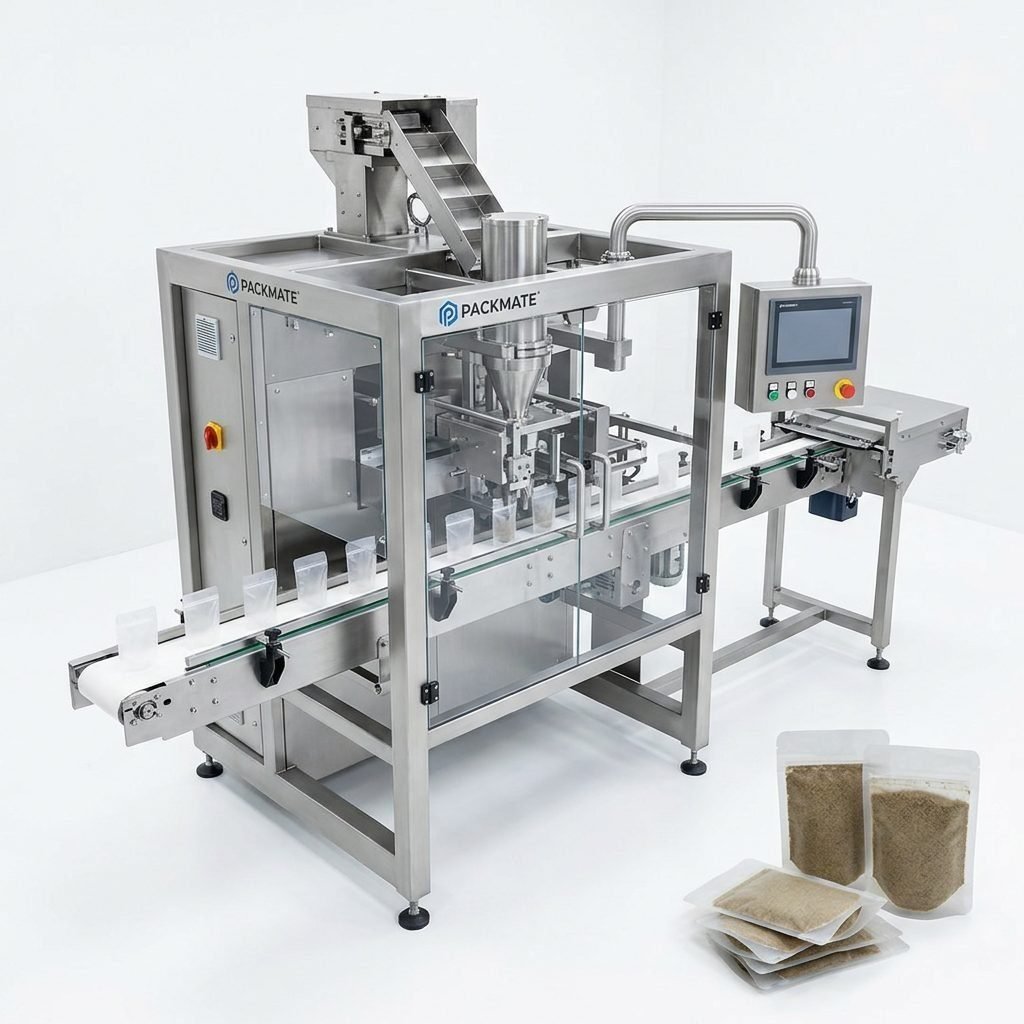
There are several core machine types for nicotine pouch/snус packaging. Understanding the strengths of each will save procurement time and avoid costly retrofits.
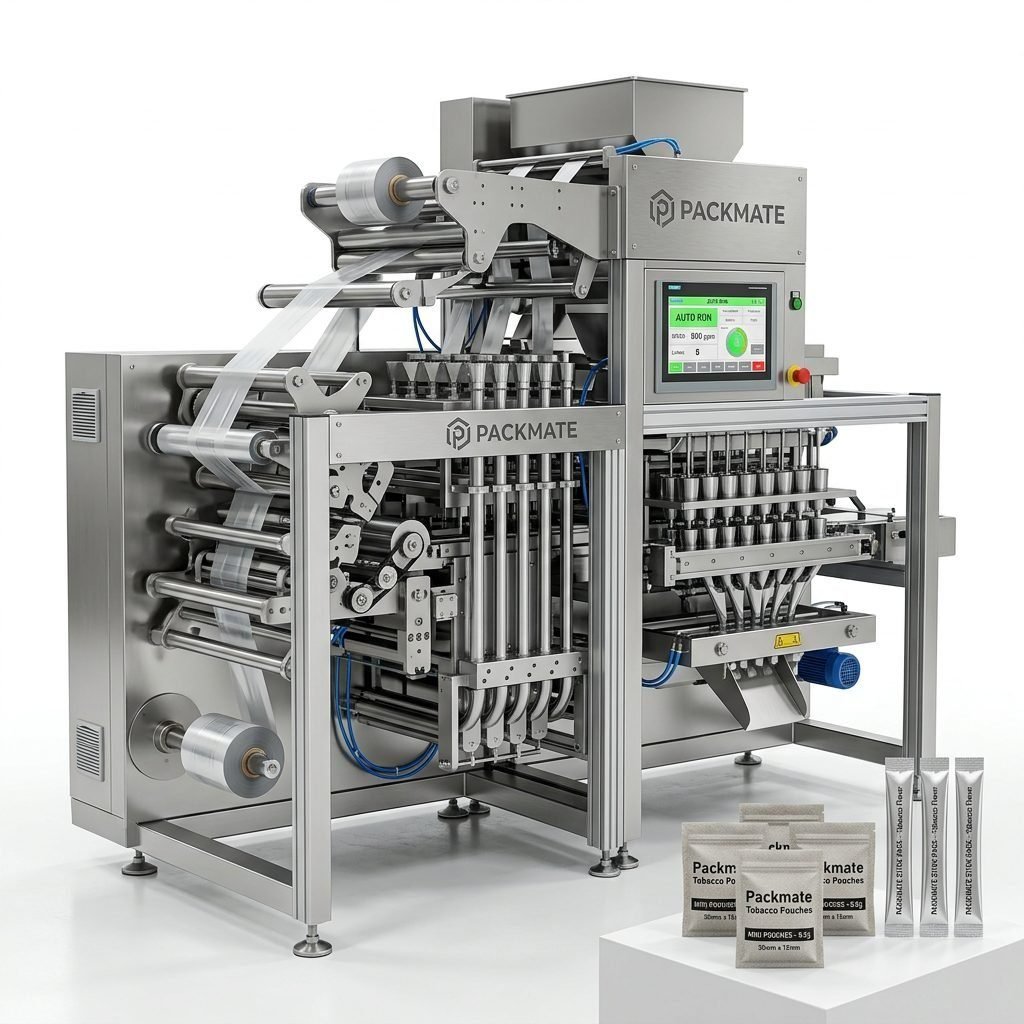
Sachet & Stick Pack Machines
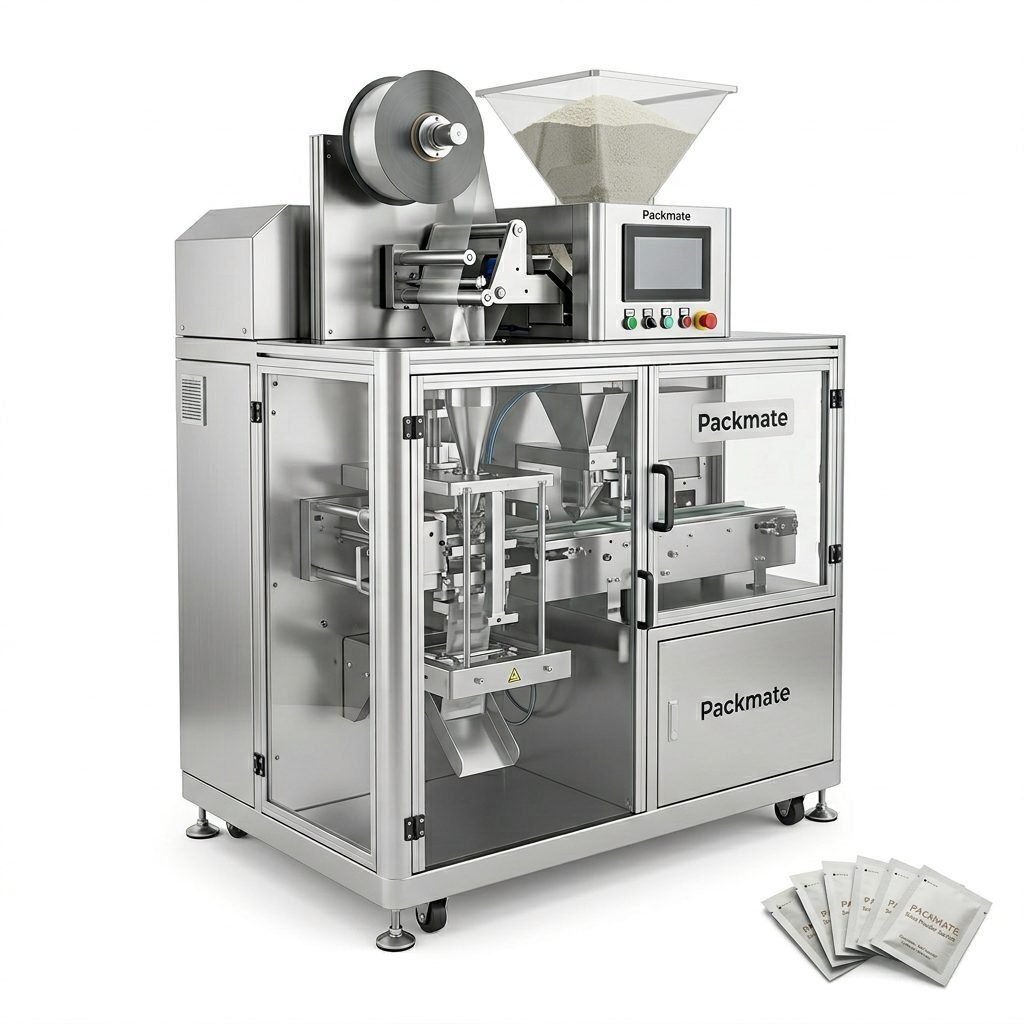
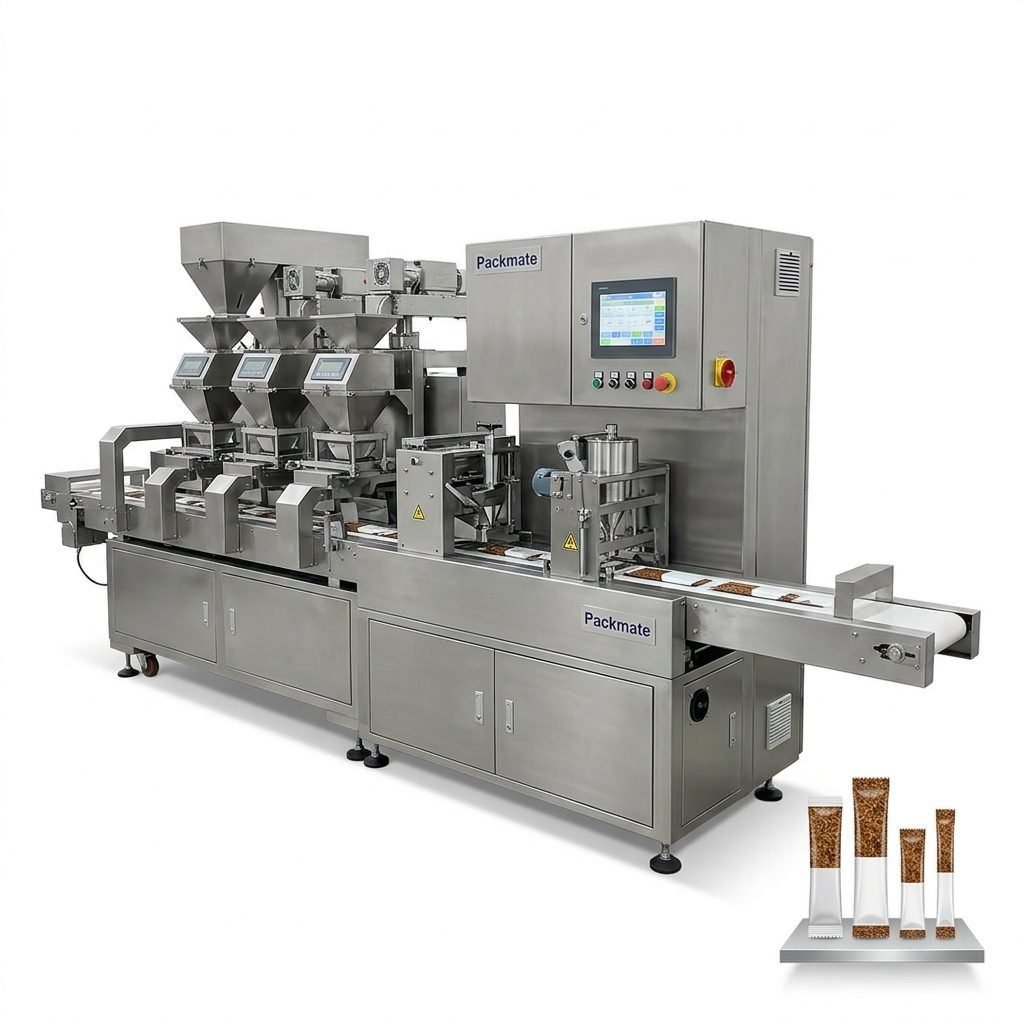
Ideal for single-dose and portioned pouches. These machines offer fast format changeovers and are often the right choice for flavored nicotine pouches sold in single-use sticks or sachets.
For product lines and models, see Sachet & Stick Pack Machines.
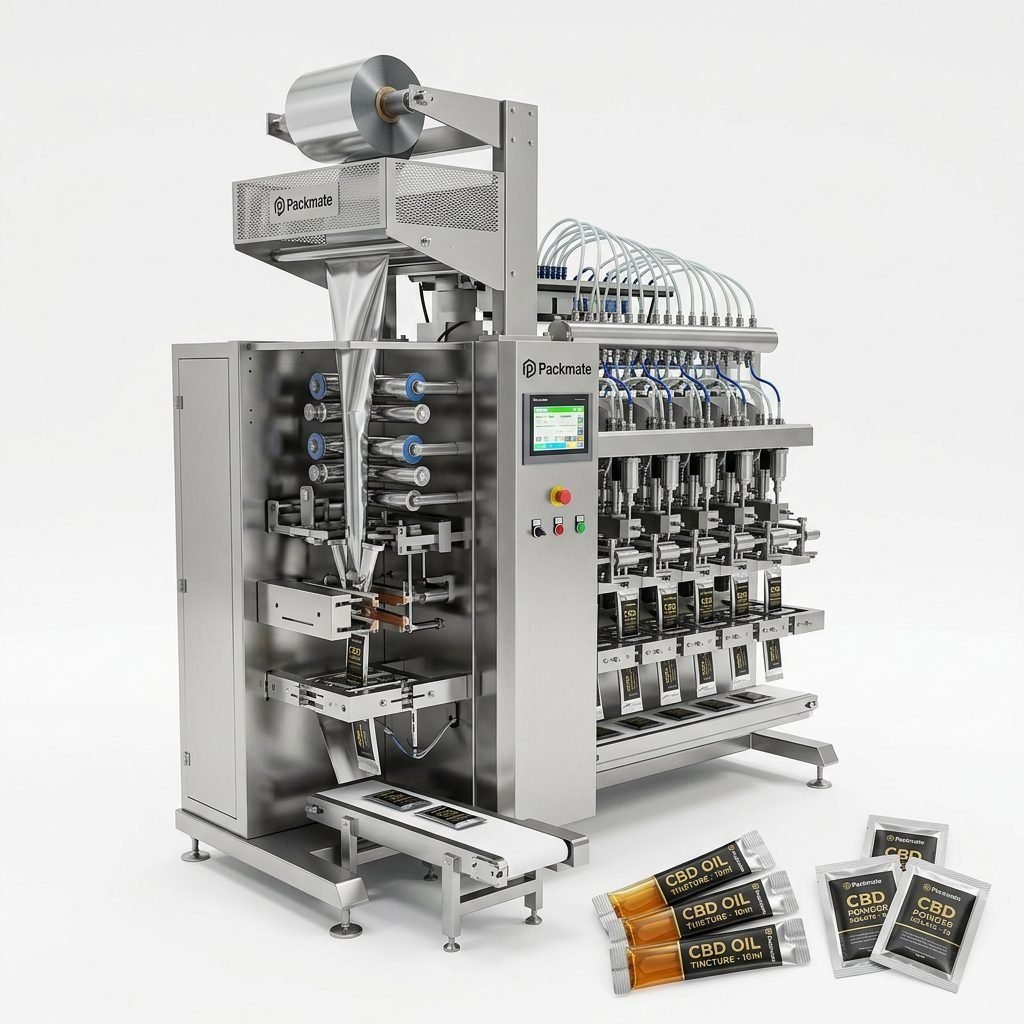
Multi-lane Snus & Nicotine Packaging Machines
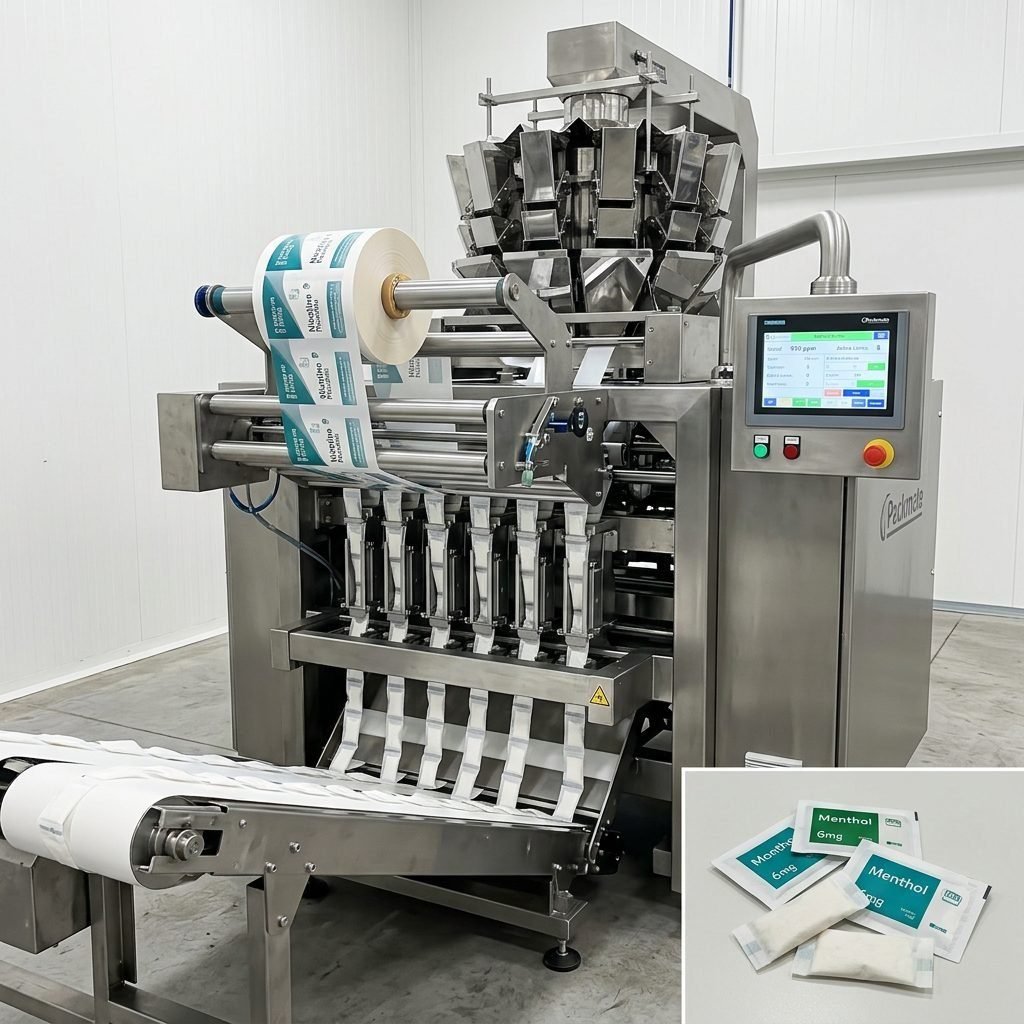
When footprint and throughput matter, multi-lane systems deliver multiple parallel streams of pouches with synchronized filling and sealing. They are particularly popular in Asia for small-dose nicotine pouch production because they combine compact design with high throughput.
Explore Snus & Nicotine Packaging Machines for typical multi-lane solutions.
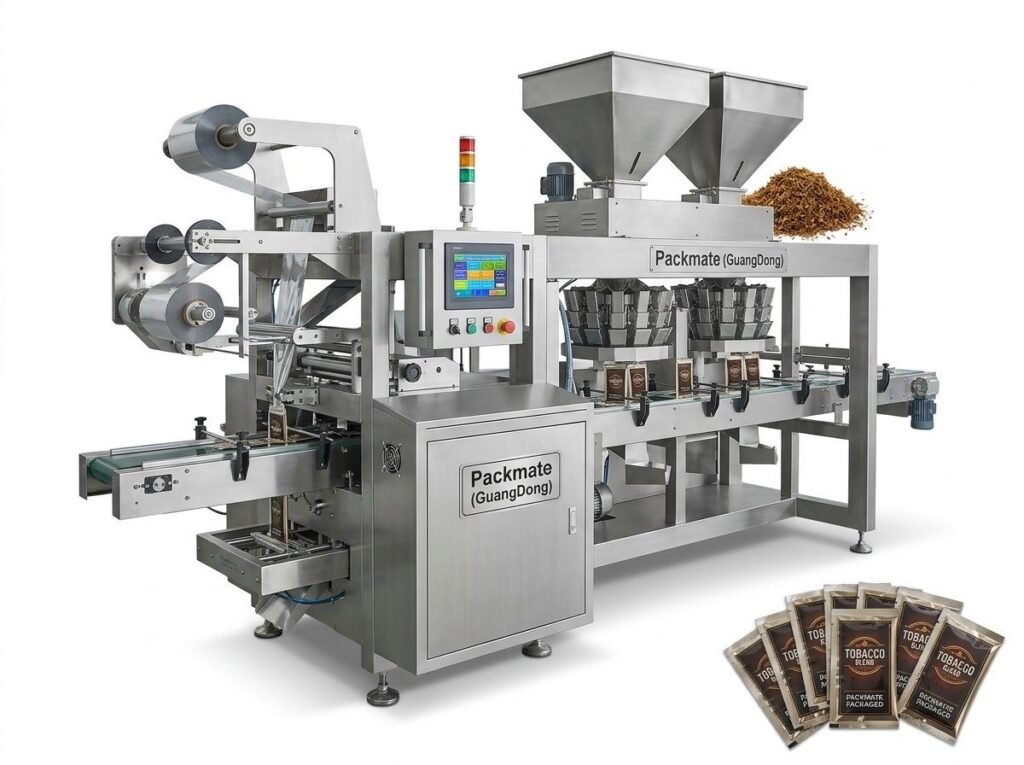
Filling & Integrated Packaging Lines
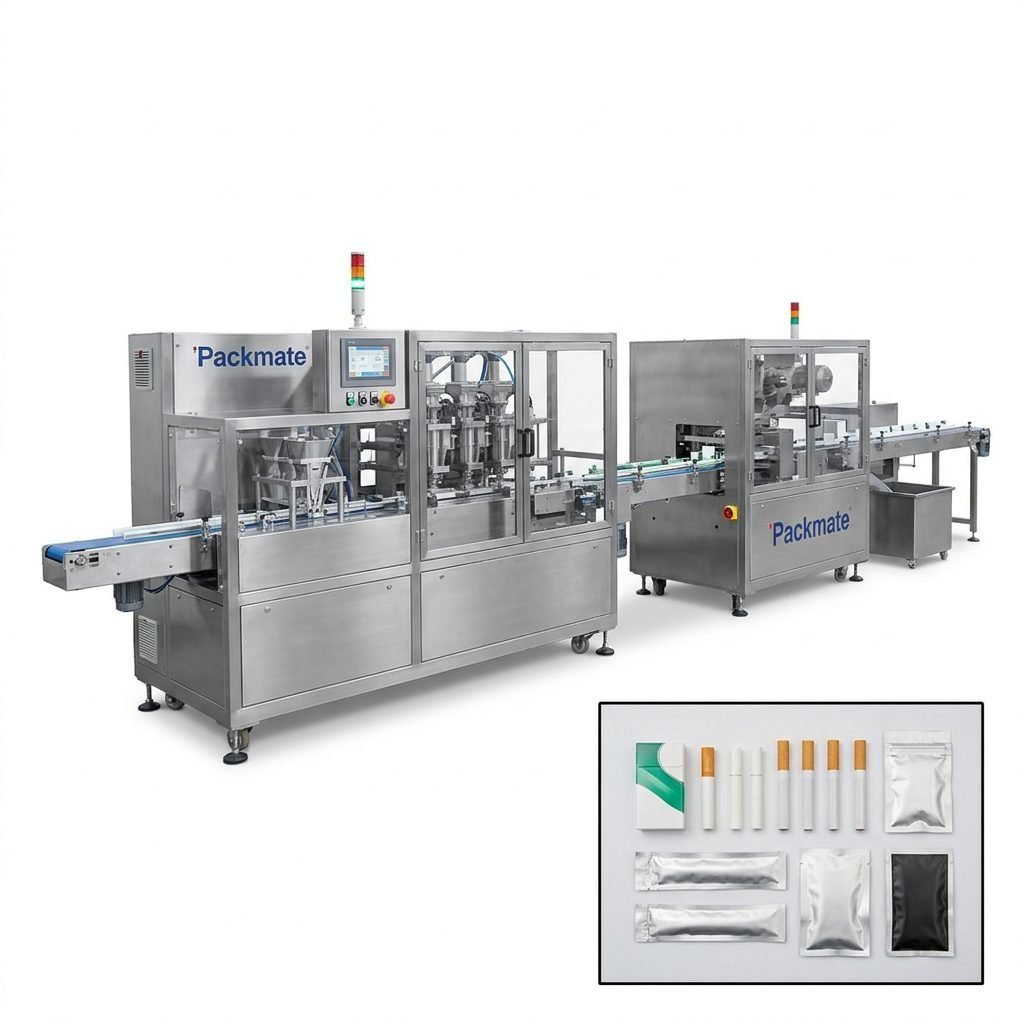
For turnkey operations that include dosing, forming, filling, and secondary packaging, consider integrated lines that reduce handling and contamination risk. These systems are easier to validate and scale for export markets.
Check integrated options at Filling & Packaging Lines.
Quick Tip: If you plan to export across Asia and Europe, choose modular machines that can be reconfigured for different product weights, materials, and secondary packaging formats without major mechanical changes.
🔍 Material Compatibility & Sealing Technology
Packaging materials and barrier performance are crucial for nicotine products because moisture, oxygen, and aroma loss can degrade quality. Machines should handle laminated films, foil, and heat-sealable laminates. Look for adjustable sealing temperature control, accurate web tensioning, and sensors for continuous quality monitoring.
Sealing Methods
Common methods include thermal sealing, ultrasonic sealing, and impulse sealing. Ultrasonic sealing is sometimes preferred for delicate films and when heat-sensitive active ingredients are present.
📈 Automation, Control & Data Tracking
Modern nicotine packaging lines must include PLC controls, HMI interfaces, recipe management, and connectivity for Industry 4.0 monitoring. In Asia, where labor availability and cost vary widely, higher automation can yield better consistency and lower long-term costs.
Important features:
in-line weighing, automatic reject systems, and remote diagnostics. These minimize downtime and maintain traceability for quality audits.
🛡️ Regulatory Compliance & Certifications
Different Asian markets have varying regulatory frameworks for nicotine products. Japan and South Korea have strict labeling and ingredients oversight; Southeast Asian countries may require specific import permits and health notices. Choose machines and suppliers with international certificates (CE, ISO) and experience in cross-border compliance.
Packmate Snus Machine, for example, offers production lines designed to meet CE and ISO standards and has experience exporting to Europe and Asia—which can simplify regulatory documentation and validation.
Learn more About Packmate.
💡 Local Market & Cultural Considerations Across Asia
Asia is diverse. Consumer habits, religious practices, and legal attitudes toward nicotine vary:
- Japan & South Korea: High expectations for consistent packaging quality and discreet designs. Compact multi-lane systems that maintain tight tolerances are valued.
- Southeast Asia: Rapid SKU rotations and flavor experimentation. Machines that offer quick changeovers and flexible dosing win market share.
- China: Strong local manufacturing ecosystem—suppliers that offer local support, spare parts inventory, and fast installation are preferred.
- India & South Asia: Cost-sensitive buyers often favor robust, low-maintenance equipment that tolerates variable power and environment conditions.
Regional Note: If you operate in regions with high humidity, ensure the machine includes environmental controls for the filling area and material storage to prevent moisture pickup and quality loss.
💰 Cost, ROI & Total Cost of Ownership
Purchase price is only part of the story. Evaluate total cost of ownership (TCO): spare parts, local service, training, energy consumption, and expected uptime. Machines with higher automation or better sealing control often deliver faster ROI by reducing product rejects and manual labor.
When comparing vendors, request a breakdown of common consumables, recommended spare parts list, and mean time between failures (MTBF) statistics.
Checklist for ROI calculation
– Capital cost vs planned production life (years)
– Labor savings per shift with automation
– Scrap & reject rate improvements
– Spare parts & consumables annual cost
– Local service & training costs
🔧 After-Sales Support, Training & Spare Parts
Support is a critical differentiator. Choose suppliers with local or regional service partners who can provide fast response times, installation support, and operator training. Packmate’s global exhibition footprint and case history reflect their experience in delivering turnkey solutions and post-sales service—vital for minimizing downtime.
See real-world examples at Case.
Spare parts strategy
Maintain ready stock of wear parts (seals, belts, cutting knives) and establish a service SLA with the supplier. Remote diagnostic tools (via PLC/HMI connectivity) can shorten troubleshooting times and avoid unnecessary service trips.
🔗 Where to Find Trusted Machines & Further Resources
When evaluating manufacturers, prioritize firms with industry experience, broad model ranges, and demonstrable export/installation history. For a quick start, review these product categories:
– Snus & Nicotine Packaging Machines
– Bag & Pouch Packaging Machines
– Weighing & Packaging Systems
– For commercial inquiries, use Contact Us.
Essential Buyer Reminder: Conduct a site survey for floor loading, power supply, and ventilation before placing an order. This avoids installation delays and unexpected electrical upgrades.
✅ Final Selection Steps Before Purchase
1. Define specifications and produce a machine request for quotation (RFQ).
2. Ask for performance videos and references from local installations in Asia.
3. Request a pre-shipment FAT (Factory Acceptance Test) or live demo.
4. Confirm warranty terms, spare parts lead times, and local support availability.
5. Plan for operator training and preventive maintenance schedules.
Why choose a specialized supplier?
Suppliers focused on snus and nicotine pouch equipment bring domain expertise that general packaging vendors may lack. They understand dosing nuances, regulatory packaging needs, and the production rhythms of this category. Check out dedicated solutions at Auxiliary Packaging Equipment and full catalogs at Catalog.
🔁 Post-Installation: Optimization & Continuous Improvement
After installation, track key metrics: OEE (Overall Equipment Effectiveness), scrap rate, and changeover time. Periodic audits and close supplier collaboration will help you tune recipes and mechanical settings for different film suppliers or ingredients.
Training & SOPs
Create standard operating procedures (SOPs) for cleaning, line startup/shutdown, and routine maintenance. Regular training sessions reduce operator errors and extend machine life.
📌 Conclusion & Next Steps
Selecting the best nicotine packaging machine in Asia means aligning machine capabilities with your production profile, local market needs, and long-term support expectations. Focus on material compatibility, automation level, service network, and regulatory readiness. Engage suppliers who can demonstrate regional experience and offer modular, scalable equipment designed for snus and nicotine pouch production.
Further resources
Visit manufacturer pages for detailed models and downloadable specifications, and request demos to validate real throughput and product quality under your specific conditions.
❓ Frequently Asked Questions
Q1: How do I choose between a single-lane high-speed machine and a multi-lane system?
A1: Choose multi-lane for higher throughput in a compact footprint and when product portion sizes are small. Single-lane high-speed machines may be better for large pouch formats or when you need simpler mechanics and lower initial cost.
Q2: What certification should packaging machines for nicotine products have for Asian & export markets?
A2: CE and ISO certifications are common requirements for export. Additionally, verify that the supplier can support documentation for local import permits, health declarations, and product-specific labeling standards in your target markets.
Q3: How important is local service and spare parts availability?
A3: Extremely important. Fast access to spare parts and trained technicians reduces downtime and protects production schedules. Prefer suppliers with regional warehouses or reliable local agents.
Q4: Can machines be upgraded later for higher automation or more lanes?
A4: Many modern suppliers design modular systems that allow upgrades. Confirm upgrade paths, costs, and mechanical limits before purchase.
Q5: Where can I see real installations and get references?
A5: Ask suppliers for case studies and on-site references. Packmate displays project cases and exhibition demos—review their exhibition and case pages for examples.