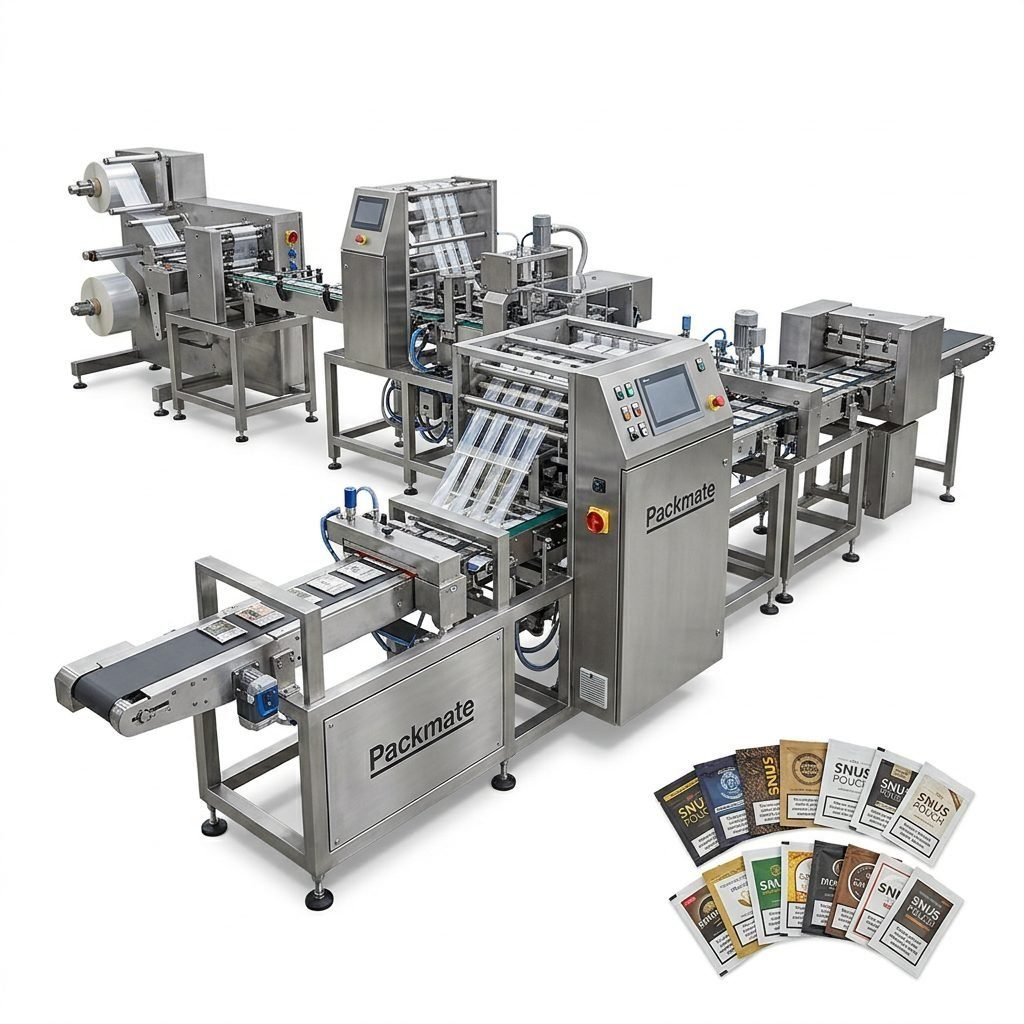
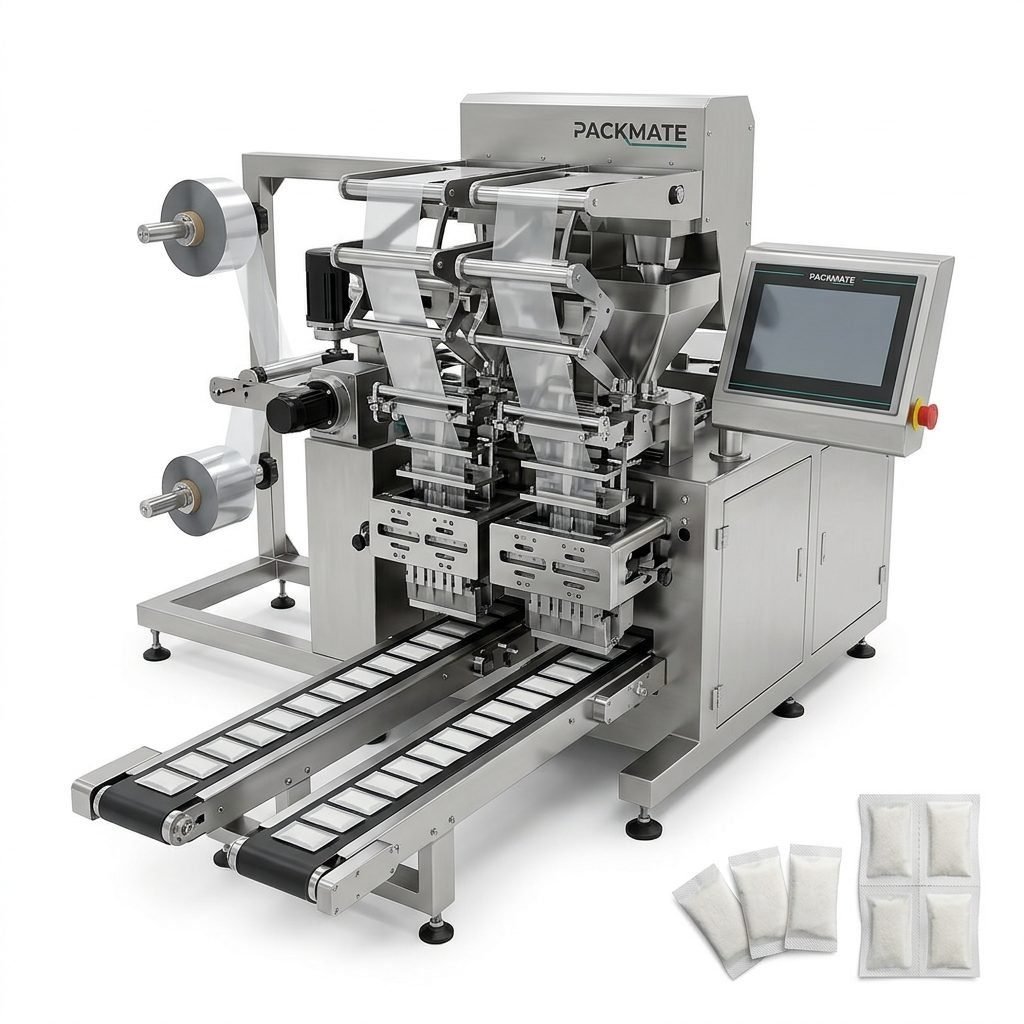
The modern nicotine pouch production line blends precision mechanical engineering with smart automation to deliver high-throughput, compliant, and flexible packaging for snus and nicotine pouches. This guide walks you through essential machinery, workflow steps, automation strategies, quality controls, and practical tips to select and operate a complete production line that meets international standards and market needs.
Overview: Why Specialized Lines Matter
Nicotine pouch production is distinct from general pouch packaging due to strict dose accuracy, small-dose multi-lane formats, and regulatory traceability requirements. A purpose-built line reduces waste and downtime, increases yield, and supports scalability. Leading manufacturers such as Packmate Snus Machine design turnkey solutions that integrate filling, sealing, and secondary packaging to support global distribution and regulatory compliance. For detailed equipment categories, see Snus & Nicotine Packaging Machines.
Core Machine Components
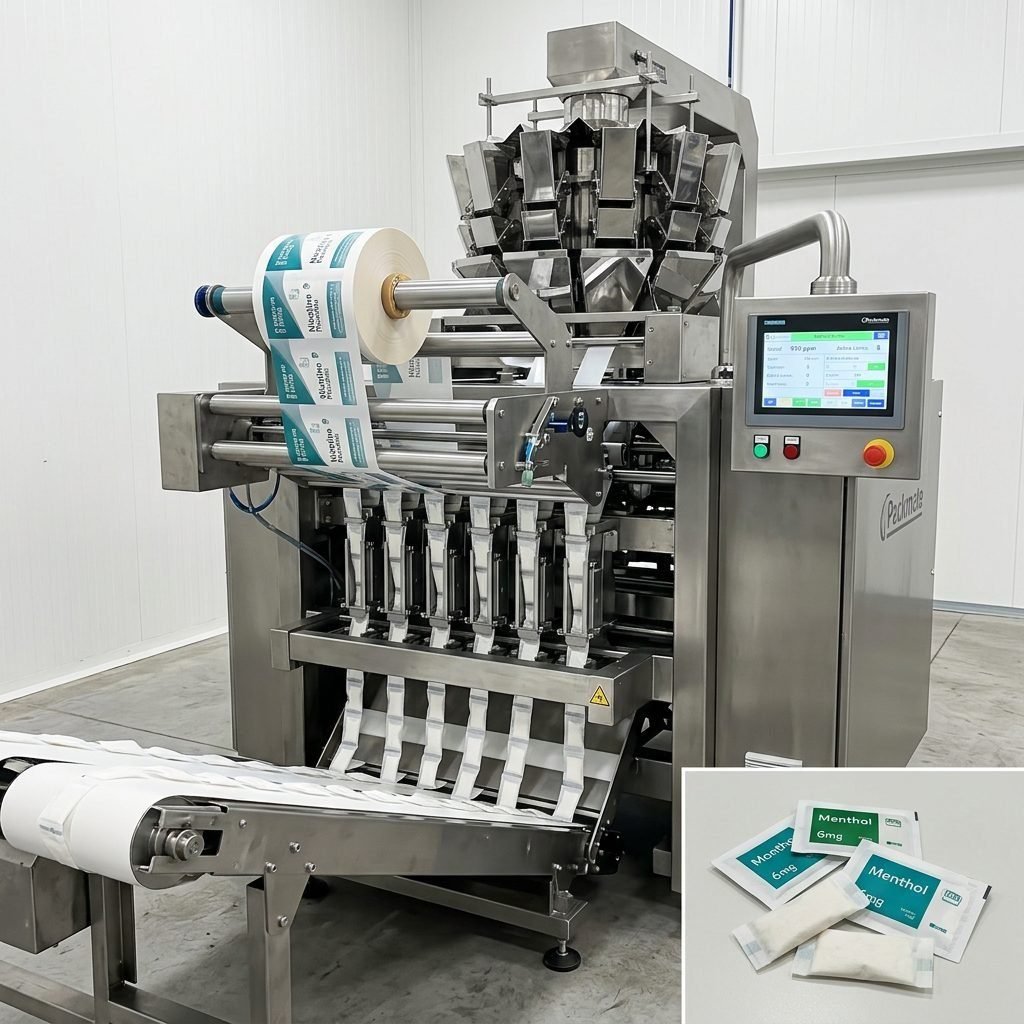
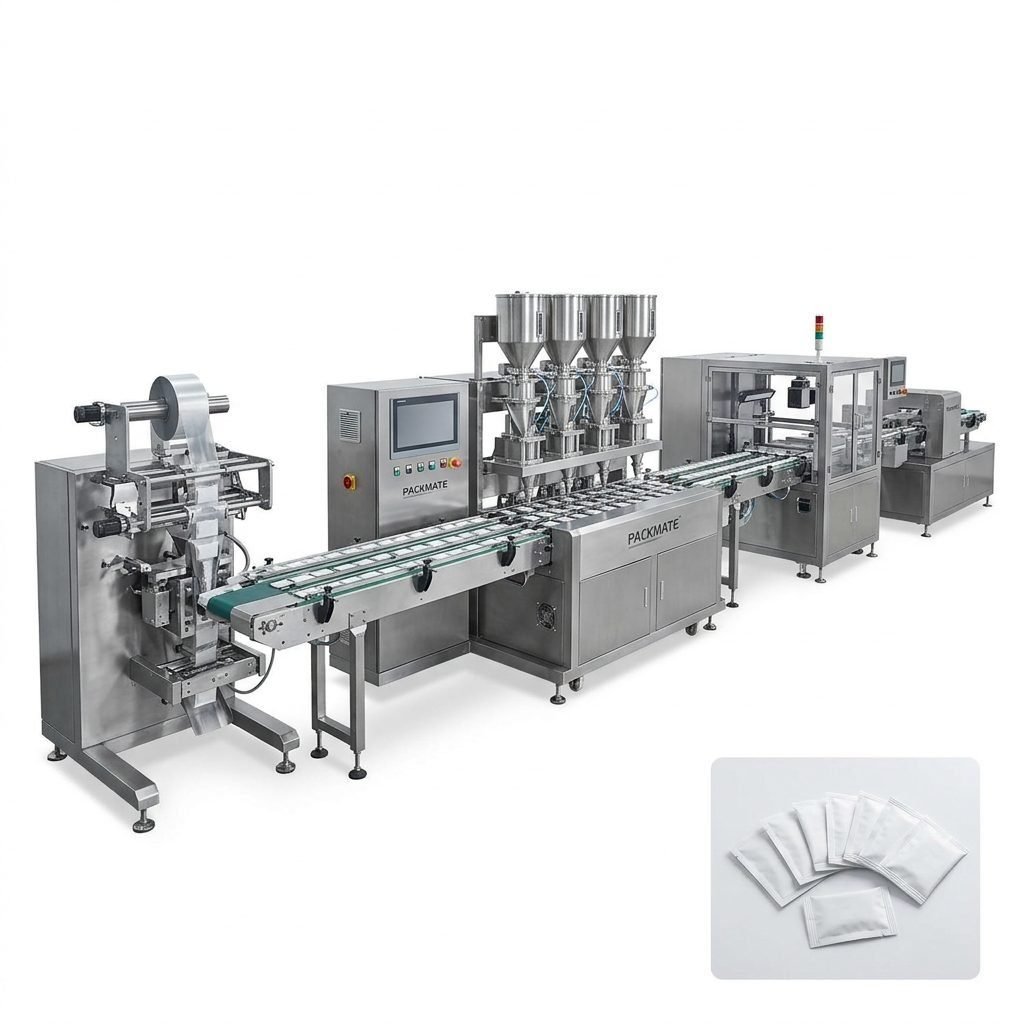
A typical nicotine pouch production line includes several integrated modules. Each module must be selected for accuracy, hygiene, and compatibility with small-dose pouches:
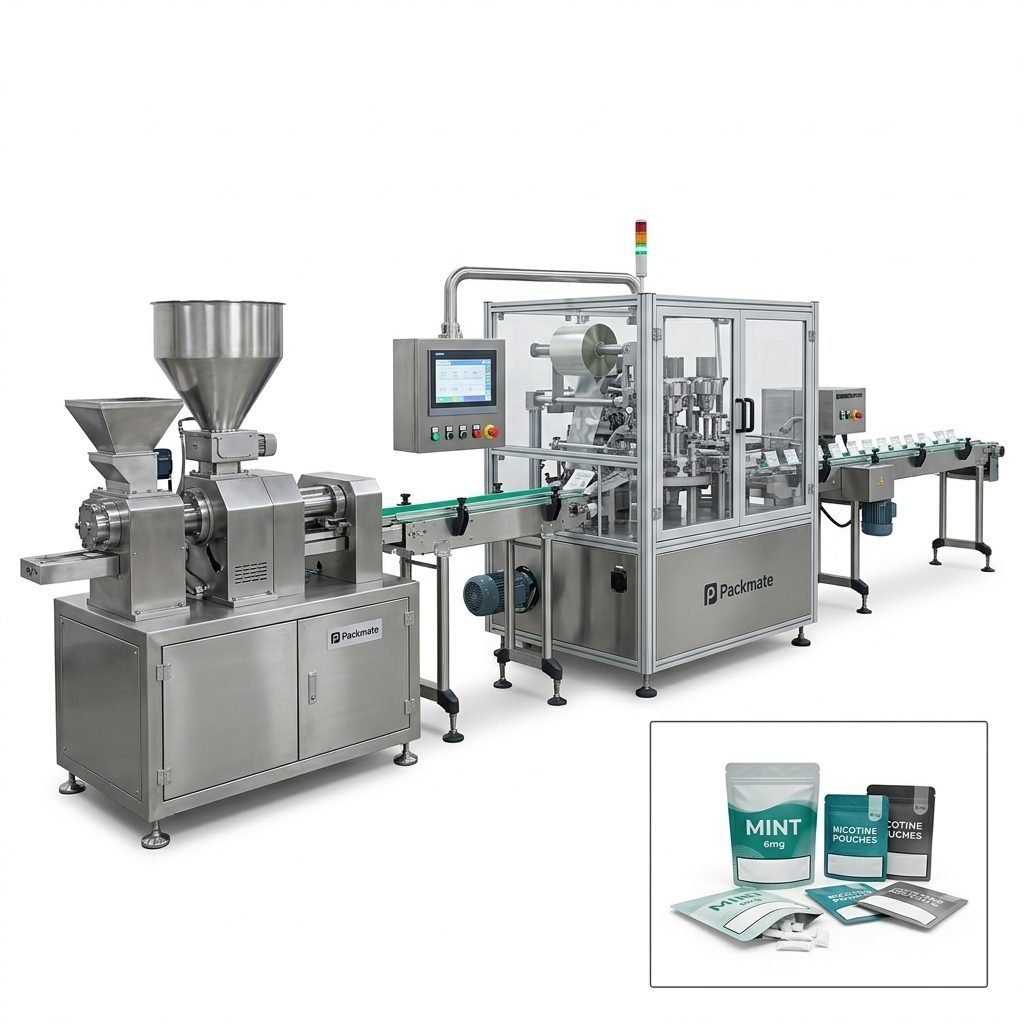
🔶 Filling System: Precise volumetric or gravimetric dosing to ensure consistent nicotine dose per pouch. Multi-head weighers or auger fillers are common depending on the formulation (powder, granular, or moist blend).
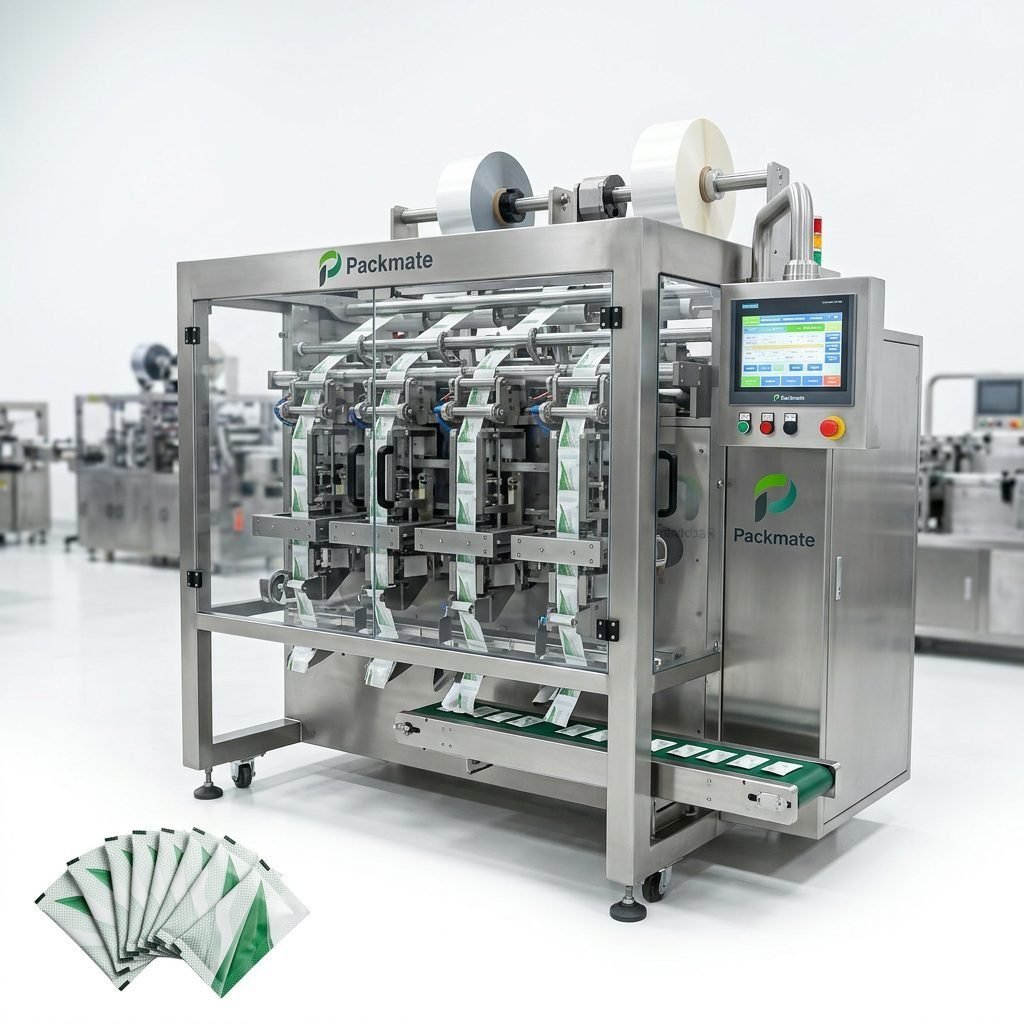
🔶 Pouch Forming & Sealing Machine: Form-fill-seal (FFS) or pre-formed pouch sealing solutions with controlled heat and pressure to secure hermetic closure and maintain product integrity.
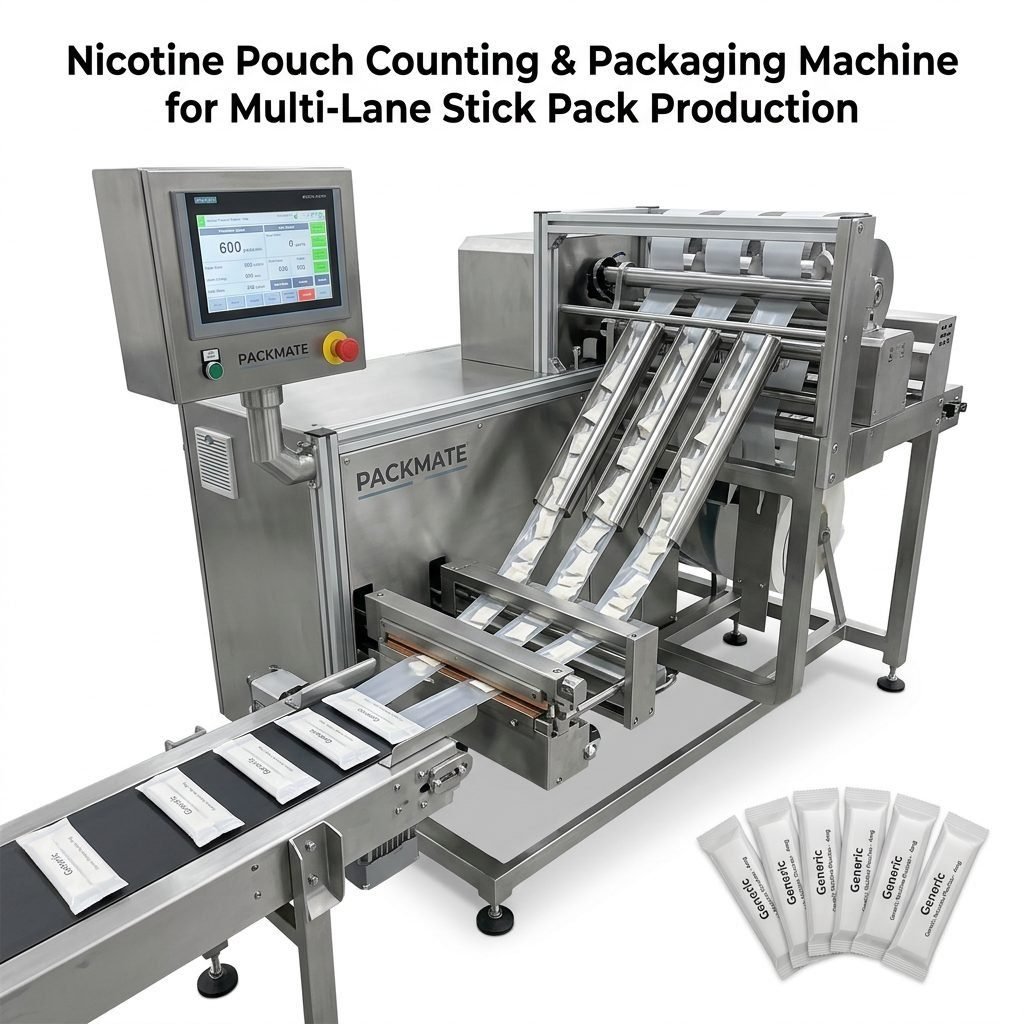
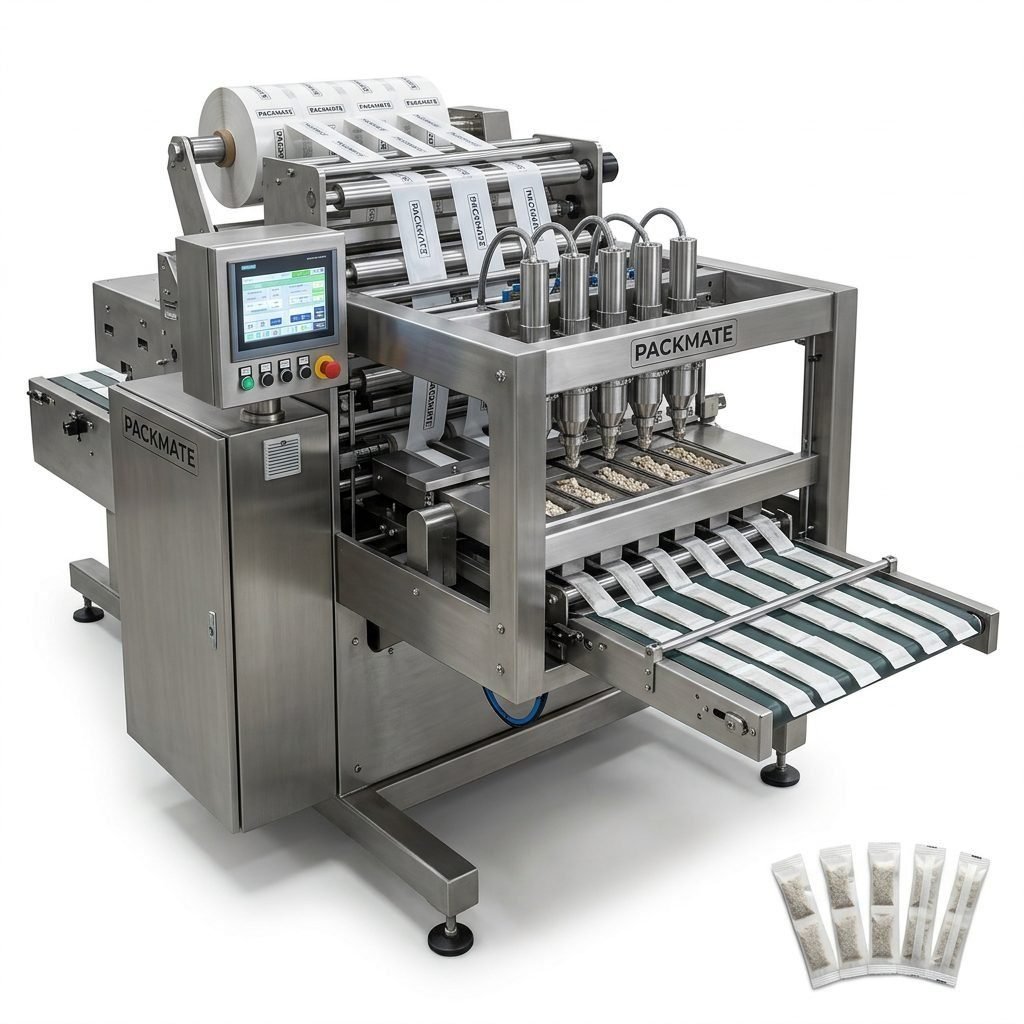
🔶 Multi-Lane Track & Indexing System: Enables high throughput by running several small-diameter lanes in parallel—critical for low-dose pouches to meet production targets.
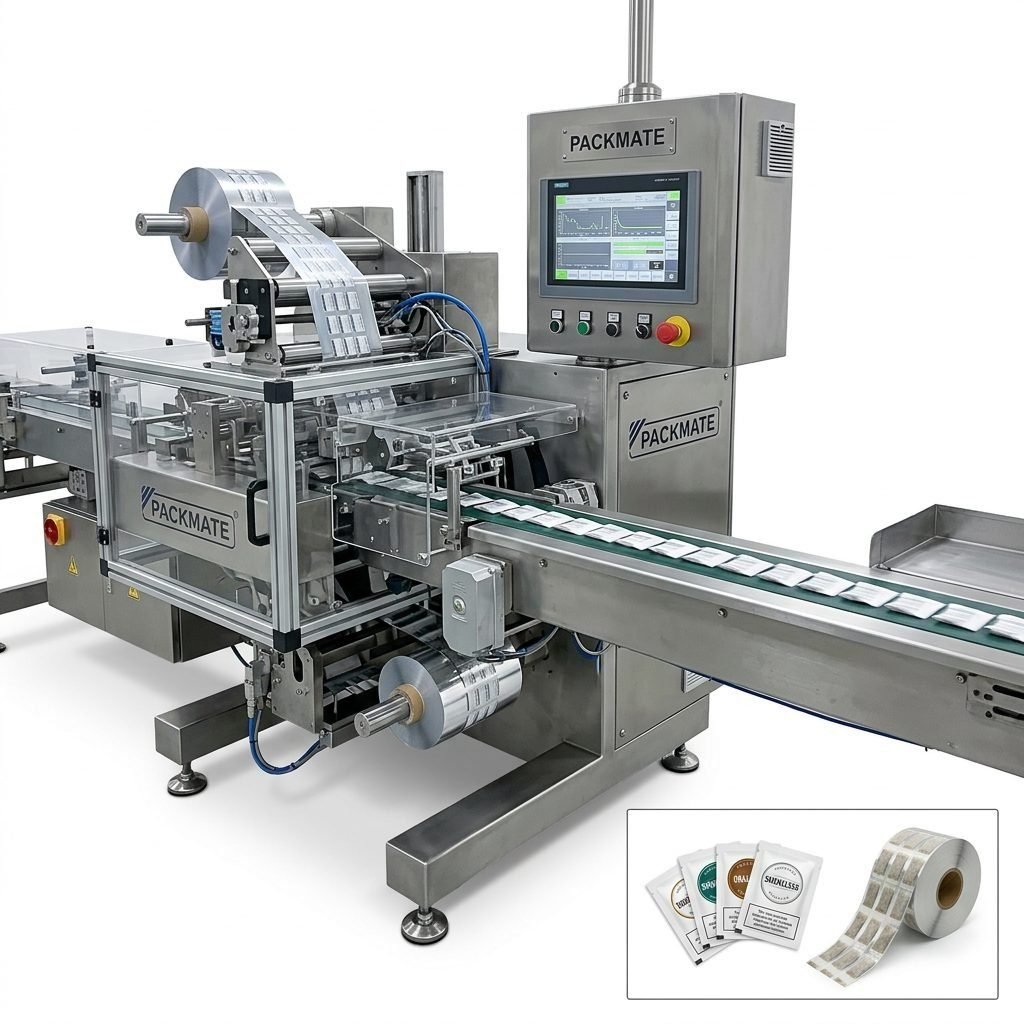
🔶 Conveying, Inspection & Metal Detection: In-line vision systems, weight checkers, and metal detectors for safety and quality conformity.
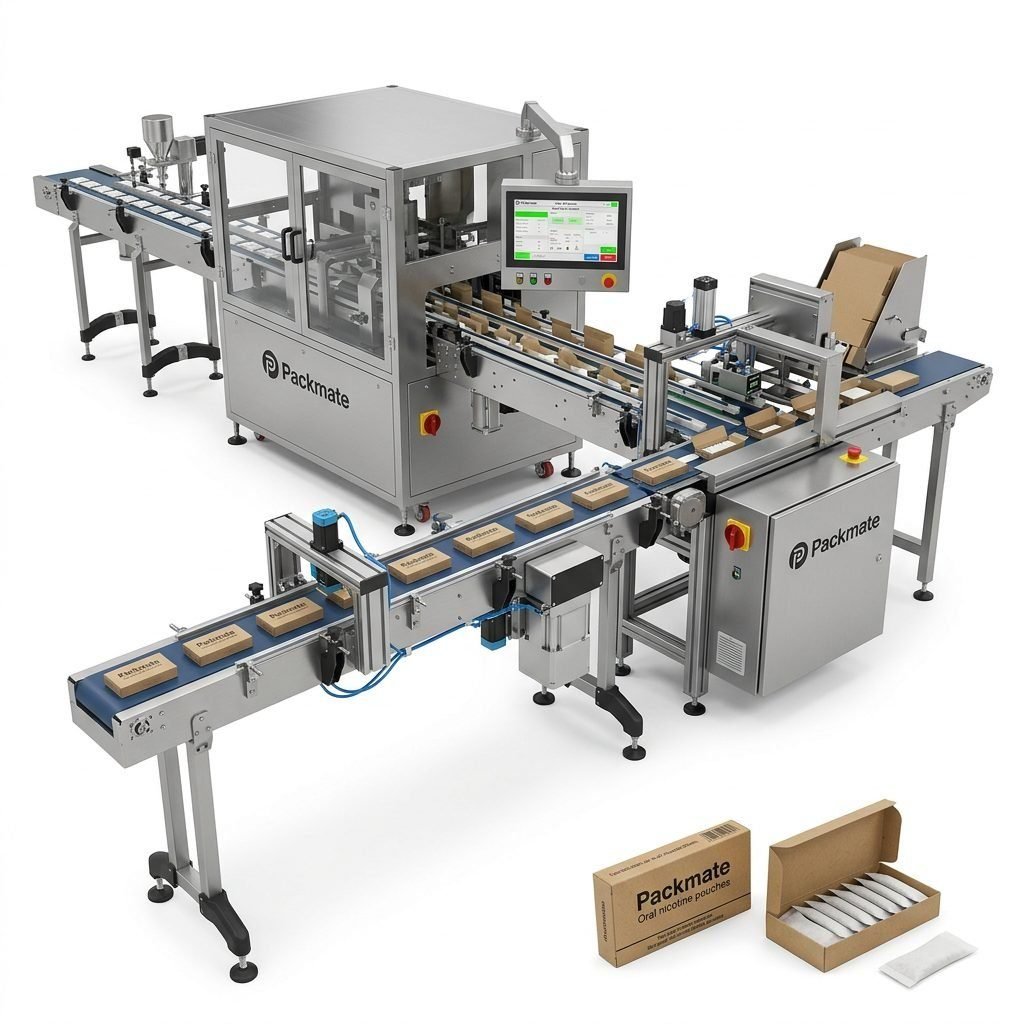
🔶 Secondary Packaging & Cartoning: Automated cartoners, flow wrappers, and case packers to prepare products for retail distribution and compliance labeling.
Production Process: Step-by-Step
Understanding the flow helps optimize line balance and reduce bottlenecks. Typical sequence:
1. Raw material handling and conditioning — controlled humidity and temperature to maintain consistency.
2. Precision dosing into pouch carriers — gravimetric scales or multi-head weighers distribute the correct dose per pouch.
3. Pouch formation and sealing — heat sealing and controlled pressure to avoid leaks or product migration.
4. Inline inspection — vision systems check fill level, seal integrity, and label placement; rejects are automatically separated.
5. Secondary packaging and case packing — ensures batch traceability and prepares shipments.
Automation & Control: Smart Manufacturing
Automation improves consistency, reduces labor costs, and allows rapid format changes. Modern lines adopt PLC and HMI integration, recipe management, and Industry 4.0 connectivity to enable remote diagnostics and predictive maintenance.
Key automation features to prioritize:
✅ Recipe-driven HMI for rapid changeovers between pouch sizes and formulas.
✅ Servo-driven motion control for accurate dosing and repeatable sealing cycles.
✅ Real-time data logging for traceability, batch records, and regulatory audits.
✅ Remote support & OTA updates to minimize downtime and support global clients.
Quality, Safety & Regulatory Compliance
Nicotine products require rigorous safety and quality systems. Machinery should be designed for easy cleaning, HACCP compatibility, and minimal contamination risk. Certifications such as CE and ISO provide confidence in global markets. For certificate details, visit Certificate.
🔶 Material Contact Surfaces: SUS316 stainless steel, polished finishes, and sanitary design reduce contamination risk and simplify cleaning.
🔶 Traceability: Batch coding, lot numbers, and electronic batch records must be integrated across the line.
🔶 Validation & IQ/OQ Support: Vendors should provide installation and operation qualification documentation to help meet regulatory audits.
Line Layout & Customization
Space, throughput goals, and product formats influence layout. Multi-lane systems are popular for nicotine pouches to achieve high output without increasing machine footprint. Custom turnkey solutions combine upstream dosing, multi-lane pouch forming, and downstream cartoning into a single coherent line. Packmate provides tailored lines and has extensive case references—see Case.
Consider flexible modules to allow:
• Rapid lane reconfiguration for new SKUs.
• Add-on modules such as desiccant insertion, labeling, or batch coding.
Maintenance, Service & Lifetime Support
A reliable after-sales ecosystem reduces risk: spare parts availability, remote troubleshooting, and preventive maintenance programs are essential. Vendors with in-house CNC machining and large factories typically offer faster turnaround and customized parts—learn more About Packmate.
🔶 Planned Maintenance: Schedule lubrication, sensor checks, and belt inspections to avoid unexpected stoppages.
🔶 Spare Parts Kits: Keep critical wear parts in stock—seals, belts, sensors, and knives—to minimize MTTR.
🔶 Field Service & Training: On-site commissioning and operator training shorten the learning curve and improve uptime.
Case Studies & Global Adoption
Regions such as Scandinavia and parts of Europe have long-established snus traditions; manufacturers in these markets focus on small-dose, multi-lane systems to support compact consumer formats. Meanwhile, North America and Asia show growing demand for nicotine pouches with varied flavors and packaging styles. International exhibitions are ideal to view live demos—see Our Exhibition.
Selecting the Right Supplier
When evaluating vendors, consider:
• Industry experience and R&D capability (look for >10 years in niche packaging).
• In-house manufacturing capacity (CNC, assembly lines) to ensure quality control and fast spare parts.
• Customized turnkey solutions and references across similar product categories. See product categories such as Bag & Pouch Packaging Machines and Sachet & Stick Pack Machines.
Practical Tips for Startups
New entrants should balance cost with flexibility:
🔶 Start with a modular line that allows incremental upgrades as volume grows.
🔶 Validate formulations at pilot scale before full-line integration to avoid costly rework.
🔶 Invest in training and standard operating procedures (SOPs) to maintain consistent product quality.
Sustainability & Waste Reduction
Efficient dosing and containment reduce material waste. Consider recyclable outer packaging designs and minimalistic secondary packs to reduce environmental footprint. Automated reject handling and accurate dosing play a significant role in lowering scrap rates and improving overall equipment effectiveness (OEE).
Where to Learn More & Next Steps
To explore machine specifications, turnkey solutions, and service offerings, review product catalogs and contact manufacturers directly. Packmate provides a broad portfolio across filling and packaging lines—browse Filling & Packaging Lines and auxiliary equipment at Auxiliary Packaging Equipment. For direct inquiries, use Contact Us.
Final Thoughts
Investing in a specialized nicotine pouch production line ensures accuracy, compliance, and long-term scalability. Prioritize machines with proven multi-lane performance, robust after-sales support, and automation that provides data visibility for continuous improvement. Selecting an experienced supplier with in-house manufacturing and a global footprint shortens lead times and supports reliable operations.
Frequently Asked Questions
Q: How fast can a multi-lane nicotine pouch line run?
A: Throughput depends on lane count, pouch size, and dosing method. Typical multi-lane systems can achieve tens of thousands of pouches per hour when optimized—discuss your SKU mix with vendors for accurate estimates.
Q: What level of automation is recommended for startups?
A: A modular automated line with recipe management and essential inspection systems balances cost with quality. Startups often adopt semi-automated upstream modules and scale automation as volumes rise.
Q: How important is material traceability on the line?
A: Extremely important. Electronic batch records, batch codes on secondary packaging, and integrated data logging help satisfy regulatory bodies and enable product recalls or investigations if necessary.
Q: Can lines be customized for unique pouch shapes or inserts?
A: Yes. Most reputable manufacturers offer customization including desiccant insertion, perforations, or unique pouch geometries—discuss requirements early to ensure smooth integration.
Q: Where can I view real-world installations and get supplier references?
A: Ask suppliers for case studies and exhibition schedules. Packmate frequently presents live demos at international events; details are available on their exhibition and case pages.