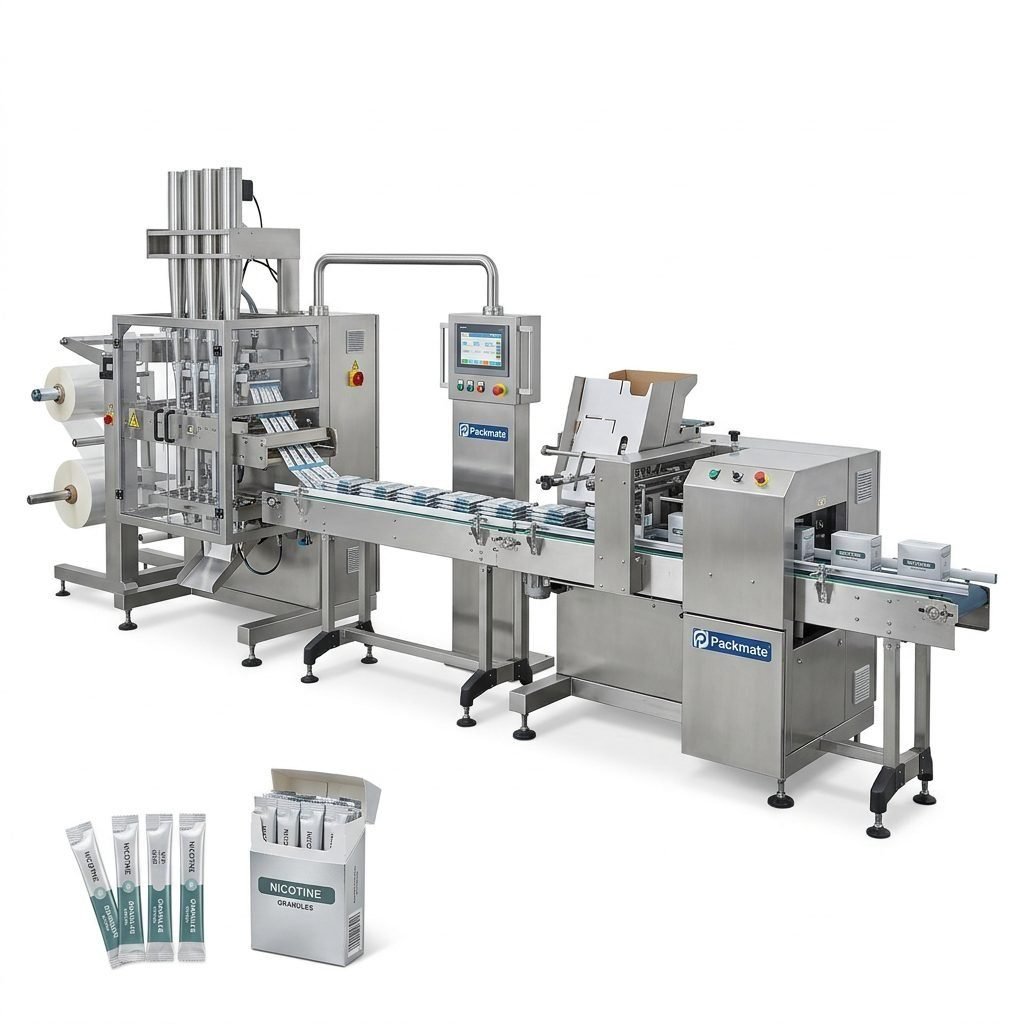
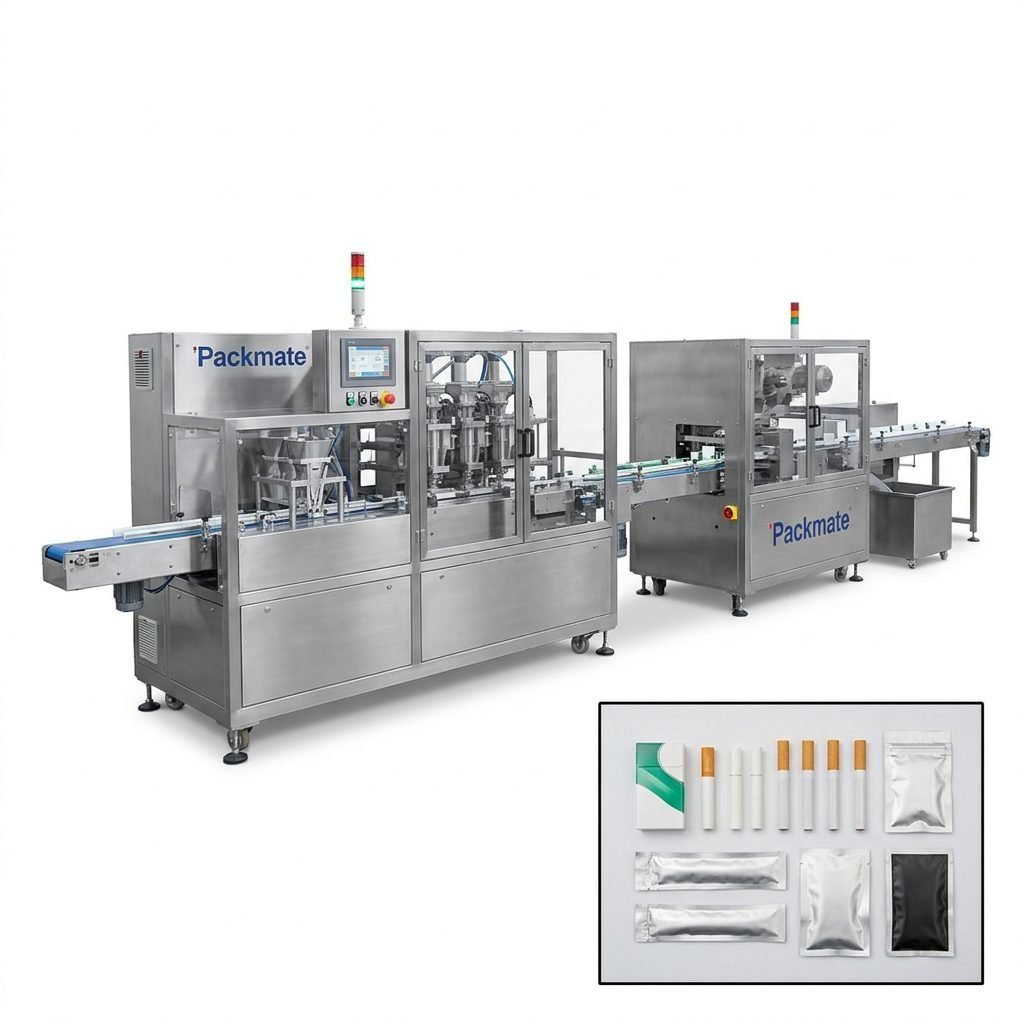
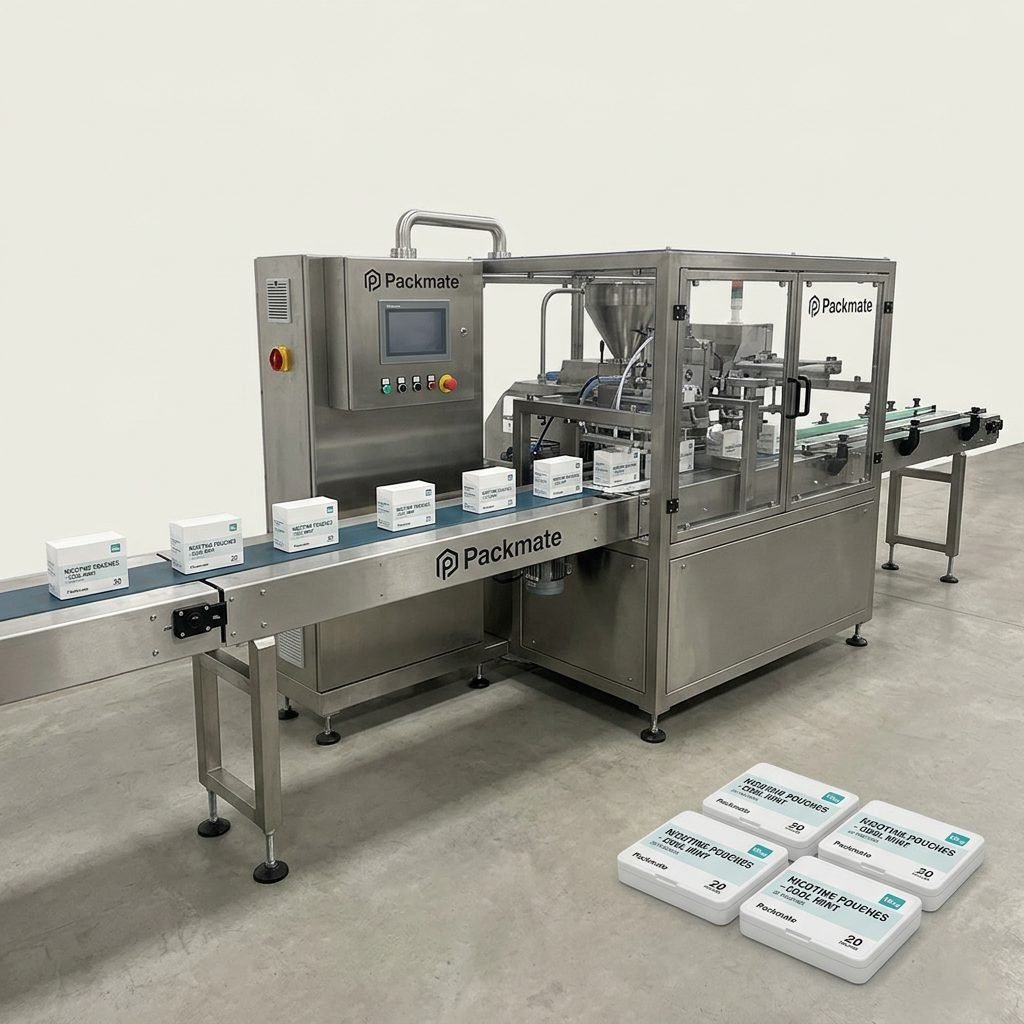
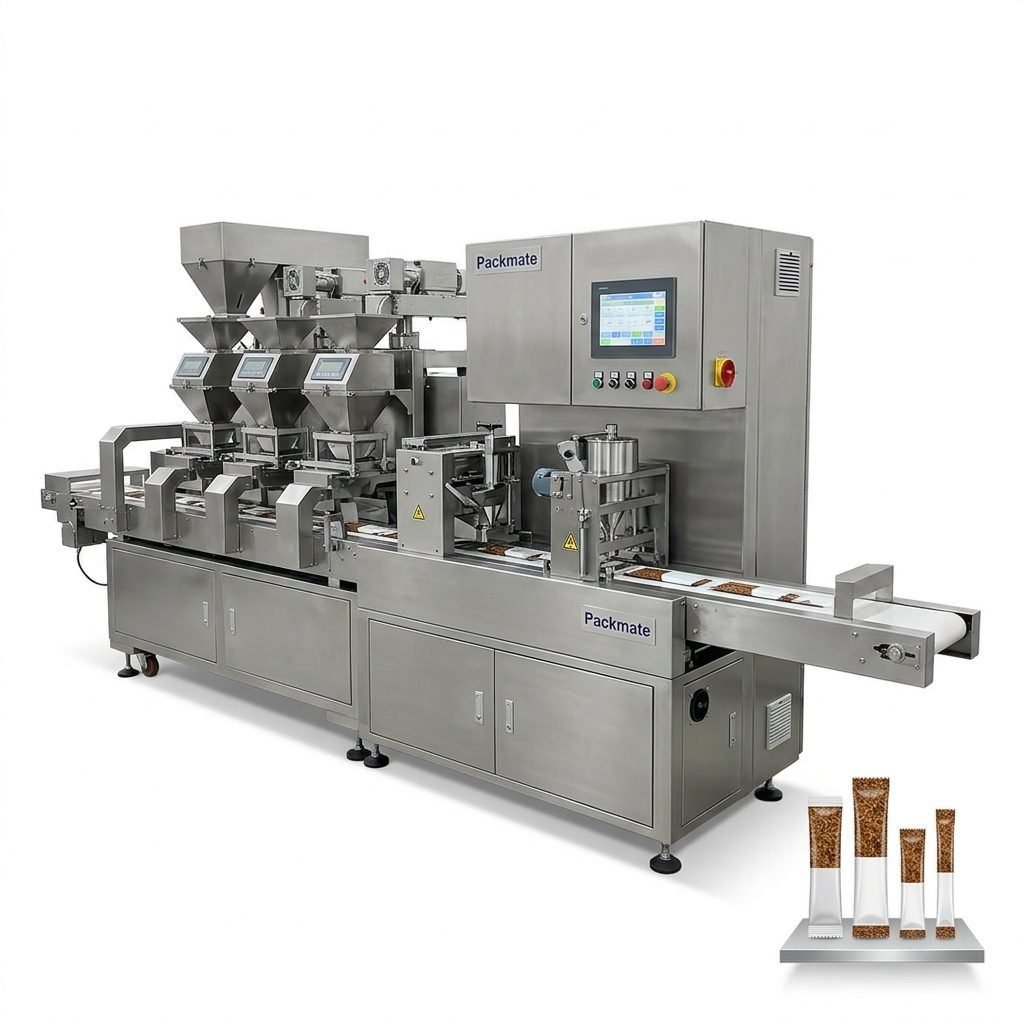
Choosing the right nicotine packaging machine manufacturer in Paraguay requires more than just comparing price tags. You need a partner who understands the technical demands of snus and nicotine pouch production, local market nuances in Paraguay, and can provide reliable after-sales support, spare parts access, and compliance documentation. This guide walks you through practical steps, key evaluation criteria, and local considerations so you can confidently select the best manufacturer for your operations in Paraguay.
Understand Paraguay’s Market and Local Habits
Paraguay is a country with strong agricultural ties and a growing interest in modern nicotine products across urban centers like Asunción. While traditional tobacco products still exist, there is a noticeable shift among younger adults toward smoke-free nicotine alternatives such as snus and nicotine pouches. Local consumption patterns are influenced by Spanish and Guarani languages, and packaging that communicates clear dosing information and regulatory labeling in Spanish will be important.
Why Manufacturer Selection Matters
A high-quality nicotine packaging machine supplier delivers more than equipment: they provide stability, repeatable sealing quality, compliance support, and rapid service. In an industry where marginal differences in pouch weight, seal integrity, or multi-lane synchronization can affect product safety and brand reputation, selecting an experienced manufacturer reduces risk and total cost of ownership.
Key business risks prevented by a good supplier
⚠️ Poor sealing: leads to product spoilage and returns.
⚠️ Inconsistent dosing: causes regulatory issues.
⚠️ Lack of spare parts: extends downtime and costs.
Top Features to Look For in Nicotine Packaging Machines
The ideal machine for snus and nicotine pouches should combine precision dosing, high sealing reliability, flexible packaging formats, and user-friendly controls. Look for these features when evaluating manufacturers:
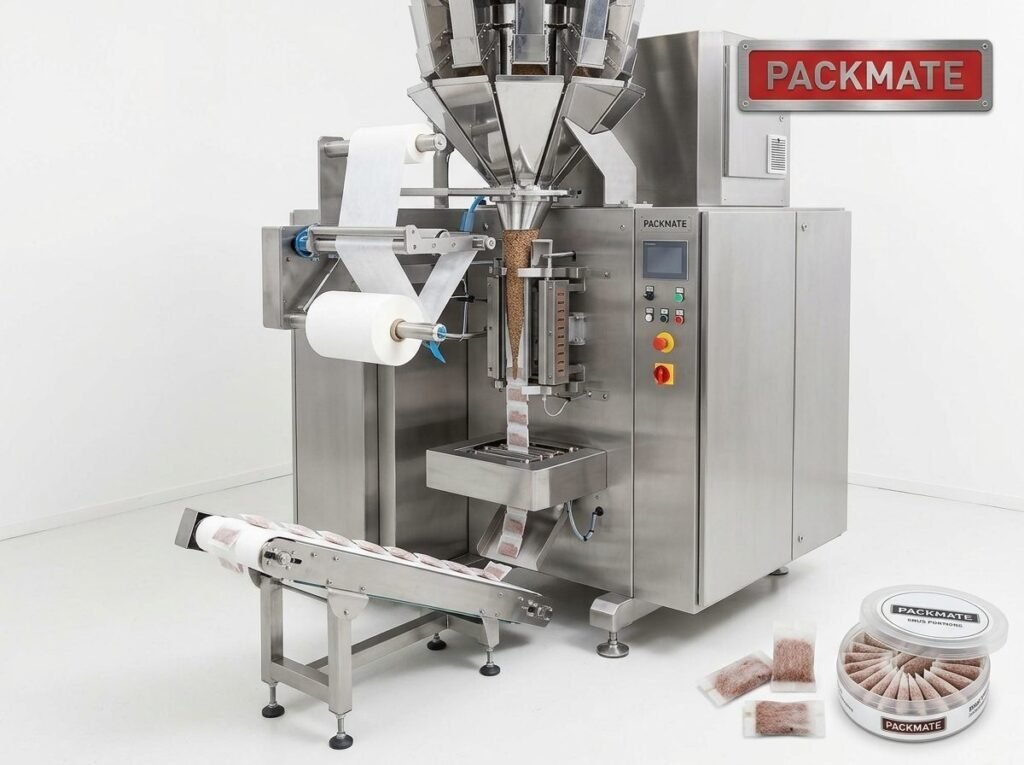
- High-precision multi-head weighing systems for consistent pouch weight across lanes.
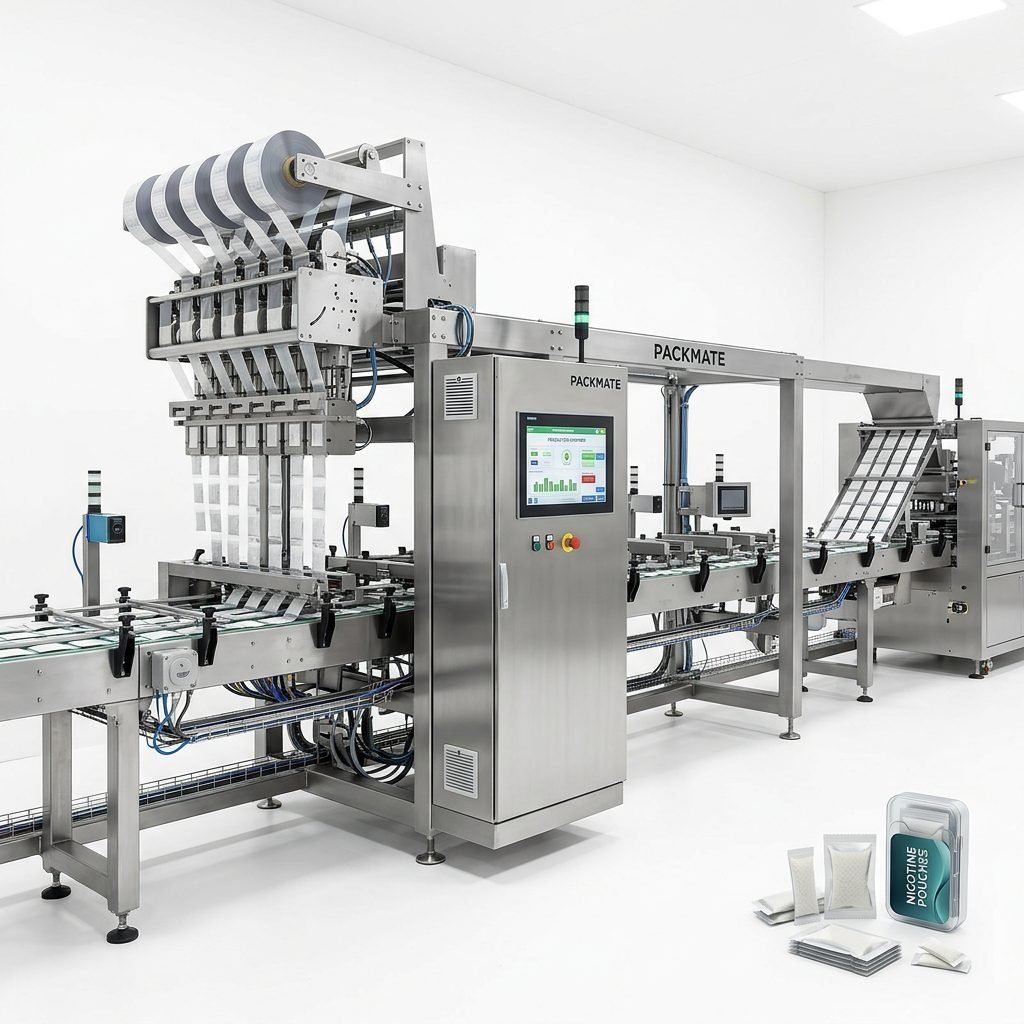
- Stable multi-lane synchronization enabling small-dose pouch production at scale.
- Adjustable sealing temperature and pressure to handle various pouch materials and humid climates like Paraguay’s.
- HMI with multi-language support (Spanish + English), intuitive recipe management, and remote diagnostics.
- Robust CIP-friendly design where applicable, and easy cleaning for food-grade components.
Evaluate Manufacturer Credentials and Factory Strength
Some critical checks include factory size, production capacity, machining capabilities, and quality control systems. A manufacturer that invests in CNC centers, precision assembly lines, and full testing can better guarantee consistency and faster lead times.
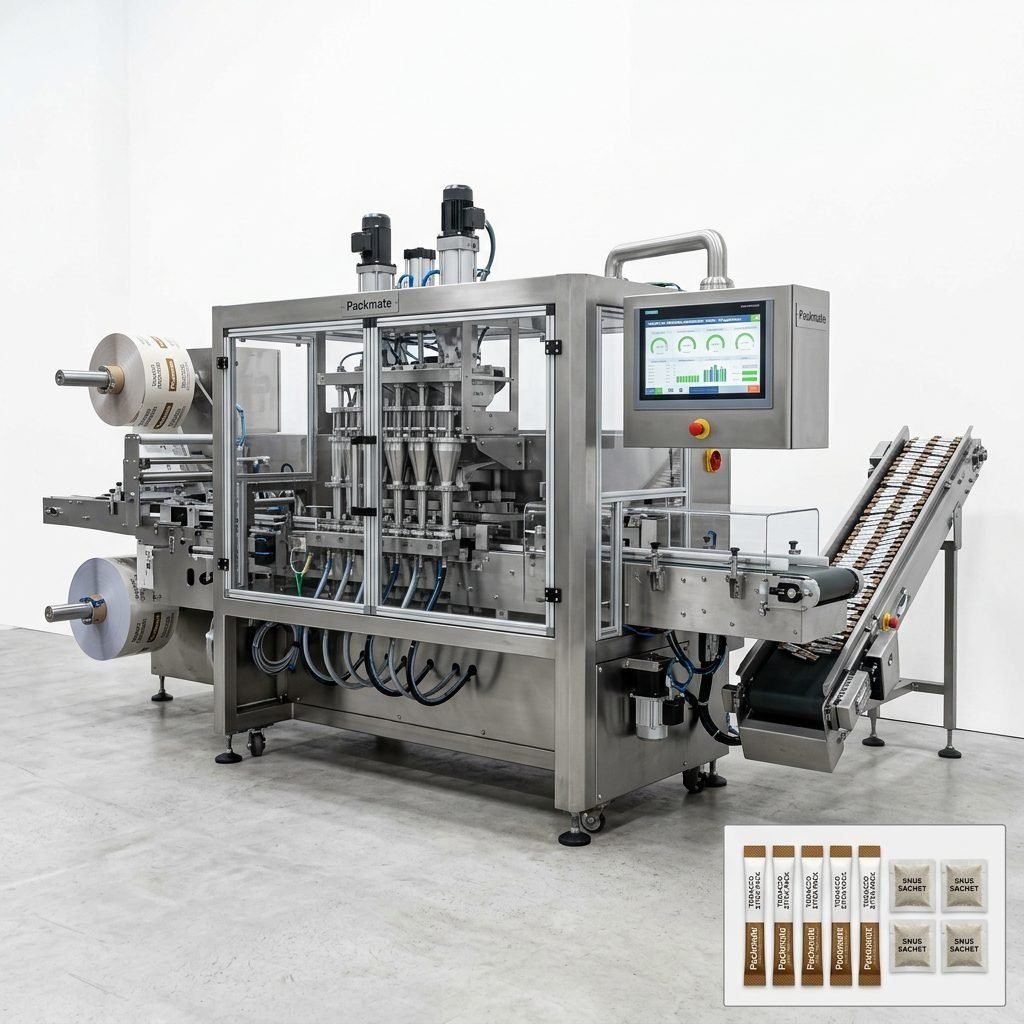
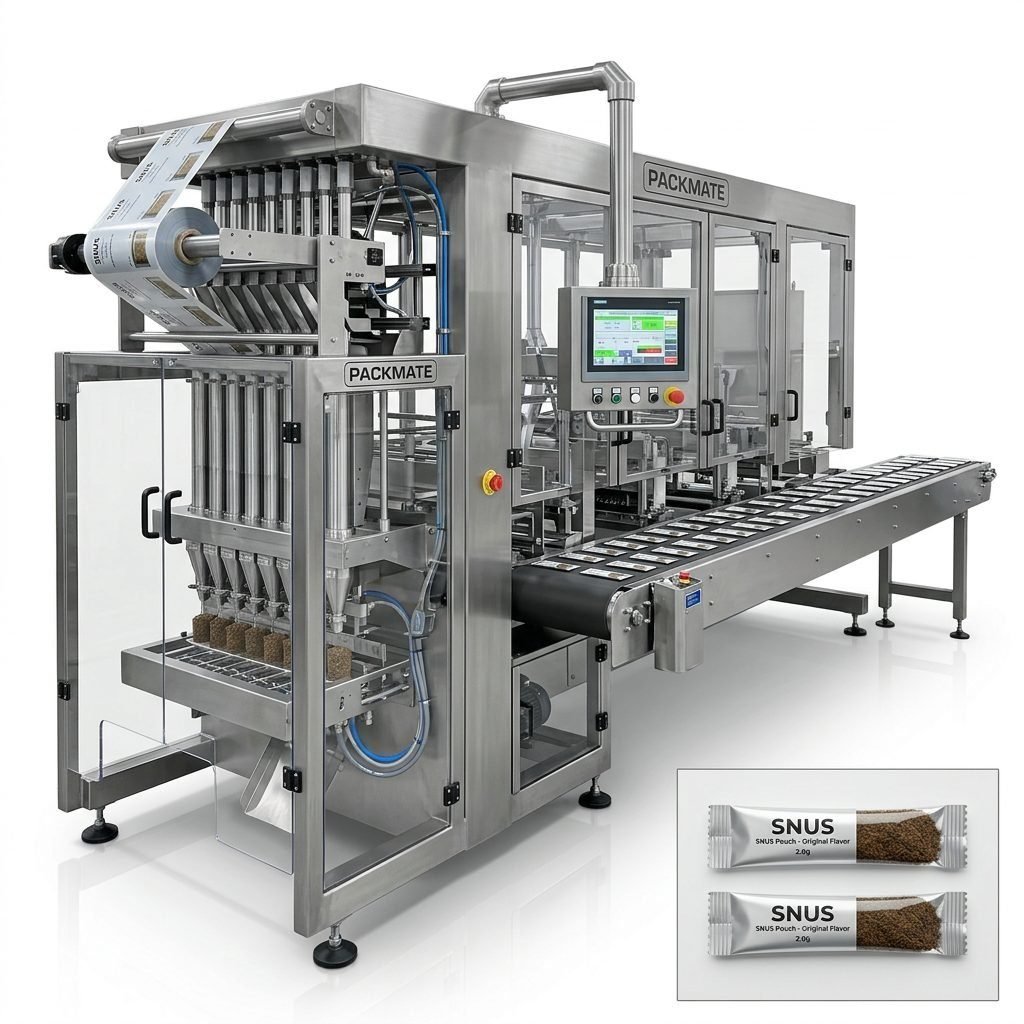
For example, Packmate Snus Machine operates a 20,000㎡ facility with advanced CNC machining centers and a wide model range, offering turnkey packaging solutions for snus and nicotine pouch lines. Learn about their company profile and capabilities on their About page.
About Packmate
Certifications, Standards, and Compliance
Regulatory compliance is essential. Choose manufacturers that provide international certifications like CE and ISO, as these reflect rigorous safety and quality processes. Paraguay importers also benefit from clear CE documentation to expedite customs clearance and meet local regulatory queries.
Manufacturers often supply full test reports and certificates—verify them and keep originals for customs and future audits. See typical certs a reliable supplier provides on their Certificate page.
Certificates
Customization & Turnkey Solutions
Nicotine pouch projects often require tailored solutions: multi-lane pouch makers, stick packs, sachets, and integrated weighing/filling systems. A supplier that offers turnkey lines—combining filling, sealing, and packaging—simplifies delivery and reduces integration risk.
Explore examples of packaged solutions like snus & nicotine packaging machines or complete filling and packaging lines to understand the range of offered systems.
Snus & Nicotine Packaging Machines,
Filling & Packaging Lines
After-Sales Service, Spare Parts & Local Support
After-sales support is often the deciding factor. Paraguayan buyers should prioritize suppliers who provide:
- Local or nearby service partners or fast shipping options for spare parts.
- Clear warranty terms and remote troubleshooting services.
- Operator and maintenance training in Spanish (and documentation that can be translated into Guarani if needed).
- Availability of consumables and replacement sealing jaws or belts.
Logistics, Shipping & Local Import Considerations
Importing large packaging machines to Paraguay requires planning: verify machine dimensions for container loading, obtain clear packing lists, and confirm customs documentation. Manufacturers with export experience often assist with commercial invoices, packing lists, and certificates of origin to speed customs clearance.
For reference cases and export experience, review manufacturer case studies to see how they handled deliveries to diverse regions.
Case Studies
Power, Climate & Site Requirements in Paraguay
Paraguay’s subtropical climate with high humidity in the rainy season means manufacturers must ensure machines are protected from corrosion and moisture. Consider machines with stainless contact parts, sealed electrical cabinets, and appropriate humidity controls in your facility.
Also confirm site requirements before purchase: foundation load, compressed air quality, electrical supply (220V / 50Hz), and available floor space. A good manufacturer will provide a pre-installation checklist and remote or on-site commissioning support.
Price vs Total Cost of Ownership (TCO)
While budget matters, prioritize TCO: energy consumption, spare parts availability, expected MTBF (mean time between failures), and training expenses. A machine with a slightly higher upfront price but greater stability and lower maintenance frequency often yields better ROI.
Questions to Ask Every Potential Manufacturer
Use this checklist during vendor evaluation and factory visits:
- Factory tour: Can you see the machining centers and assembly lines?
- Performance proof: Can they run your exact product and provide video or live demo?
- Spare parts: What are lead times and recommended stocking levels?
- Certifications: Are CE/ISO documents available and valid?
- After-sales: What are guaranteed response times and costs for on-site visits?
Vendor Documentation & Contract Details
Ensure the contract covers acceptance tests, FAT/SAT (Factory/ Site Acceptance Testing), training, spare parts list, and warranty terms. Seek manufacturer transparency on performance guarantees including throughput, waste rate, and sealing integrity.
Finding Trusted Manufacturers and Additional Resources
Start with vendors that have global experience in snus and nicotine pouch packaging. Check product lines like sachet & stick pack machines, weighing & packaging systems, and look for auxiliary packaging equipment that complements your line.
If you require a full line or need to integrate with existing systems, consult with a manufacturer that offers bag & pouch packaging machines and auxiliary equipment to ensure seamless integration.
Case Example: Selecting a Supplier for an Asunción Facility
Imagine a mid-size nicotine pouch producer in Asunción needs a 4-lane pouch line with a daily output target. Key steps they followed:
- Defined product specs, target throughput, and preferred pouch materials.
- Shortlisted suppliers with field-proven multi-lane solutions and requested videos of similar installations.
- Verified factory capacity, CNC capability, and spare parts policy; reviewed CE/ISO certificates.
- Negotiated bundled training and spare parts, confirmed local electrical compatibility (220V), and scheduled FAT prior to shipping.
- Arranged customs clearance through a local customs broker and booked on-site commissioning by the supplier’s engineer.
How to Compare Final Quotes
When all technical specs are comparable, build a comparison matrix that includes:
- Machine price, shipping, and estimated customs duties
- Warranty length and coverage
- Guaranteed throughput and acceptable waste rate
- Included training, spare parts, and commissioning
- Estimated annual maintenance cost and recommended spare parts inventory
Working with Suppliers: Communication & Contracts
Clear communication is essential. Request a written project timeline, FAT checklist, and deliverables. Prefer suppliers who provide multi-language documentation and offer an initial test run with your granulate or pouch material. Reliable vendors will place these guarantees in contract annexes.
Summary Checklist — Quick Decision Guide
✅ Factory strength: CNC machining, assembly lines, 20,000㎡ scale preferred.
✅ Certifications: CE, ISO documentation on hand.
✅ Local fit: Electrical compatibility (220V), humidity-resistant parts, Spanish documentation.
✅ Service plan: Fast spare parts, training, on-site commissioning.
✅ Costing: Compare TCO, not just purchase price.
Where to Start
Begin by contacting manufacturers with proven snus and nicotine pouch experience. Request product brochures, machine videos, and a standard FAT checklist. Packmate’s product lines and turnkey services can be a reference point for capabilities and service scope.
Snus & Nicotine Packaging Machines
Final Reminders for Paraguayan Buyers
Remember to adapt labeling content to Spanish, check local import duties, and plan for seasonal humidity impact on materials. Work with suppliers who demonstrate international export experience and can provide clear timelines for delivery, installation, and training.
Useful Links
Manufacturer pages and resources mentioned in this guide can provide additional technical details and contact points:
Frequently Asked Questions
Q1: What certifications should I insist on?
Ask for CE and ISO certificates as a minimum. For food-grade contact parts, request material certificates and hygienic design documentation. Keep original certificates to facilitate customs and regulatory review in Paraguay.
Q2: How do I ensure machines work with Paraguayan electrical supply?
Confirm the machine’s voltage and frequency ratings (most Paraguay industrial sites use 220V/50Hz). Request that the manufacturer supply local-compatible motors or transformers and provide wiring diagrams for your electrician. Consider surge protection in regions with variable grid stability.
Q3: What sort of after-sales support is critical?
Fast spare parts delivery, remote diagnostics, and scheduled maintenance visits are essential. Ensure training in Spanish is included and ask for a spare-parts list with expected consumption rates and recommended stock levels.
Q4: Should I prioritize price or proven performance?
Prioritize proven performance and TCO. A lower purchase price may lead to higher downtime and maintenance expenses. Request references and performance videos for similar product runs to validate claims.
Q5: How can I verify a manufacturer’s global experience?
Review case studies, ask for references in similar climates or industries, and confirm export documents handled for previous international customers. A supplier with global turnkey deliveries is better equipped to manage customs, shipping, and commissioning challenges.