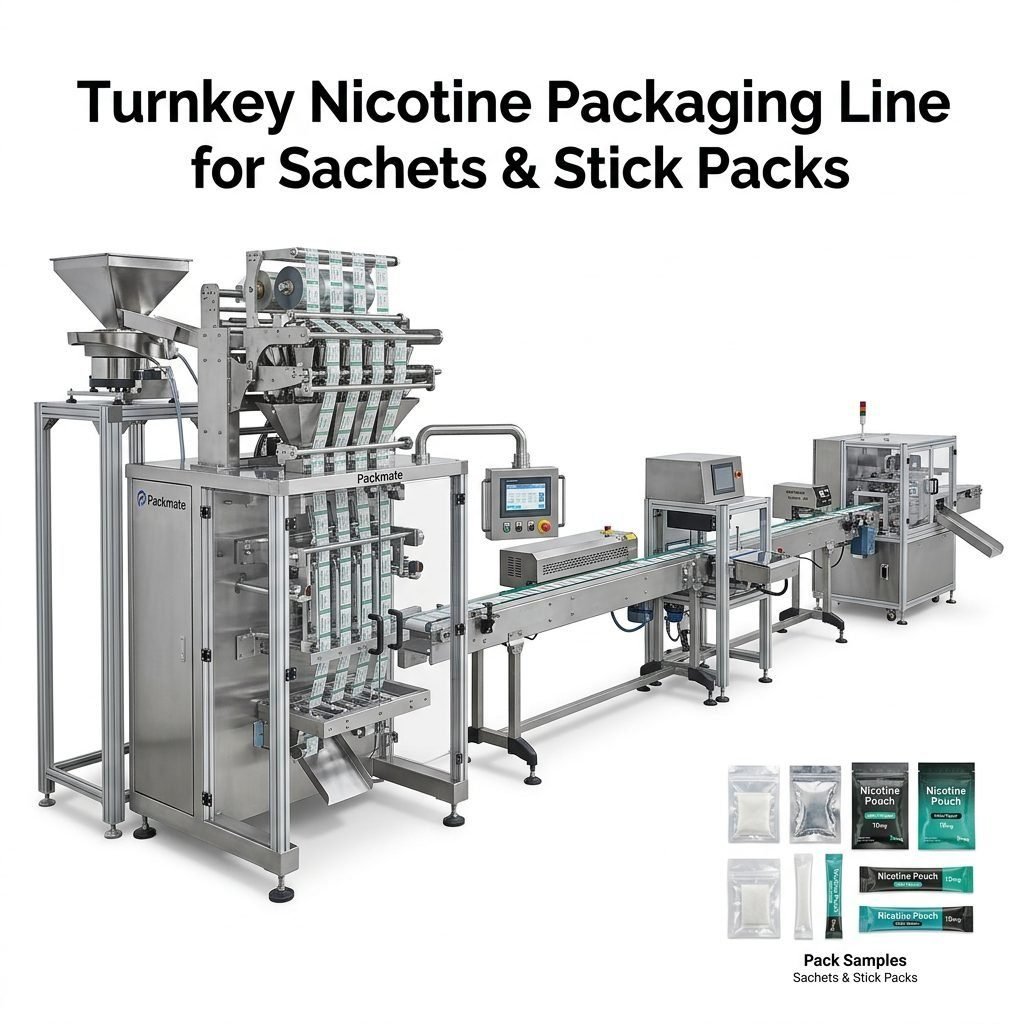
Choosing the right snus packaging machinery supplier for production in Denmark requires more than comparing price tags. You must match machine performance, regulatory compliance, sustainability preferences, after-sales support, and local production habits. This guide walks you through practical steps and decision points so you can confidently choose a supplier that delivers reliability, uptime, and the packaging quality Danish consumers expect.
Understand Your Production Needs
First, define the core requirements of your production line. Are you starting with small-scale test batches or planning a high-speed multi-lane snus line? Typical considerations include:
- Target output (pouches per minute or per lane).
- Dose accuracy and consistency for nicotine pouches.
- Number of product SKUs and expected changeover frequency.
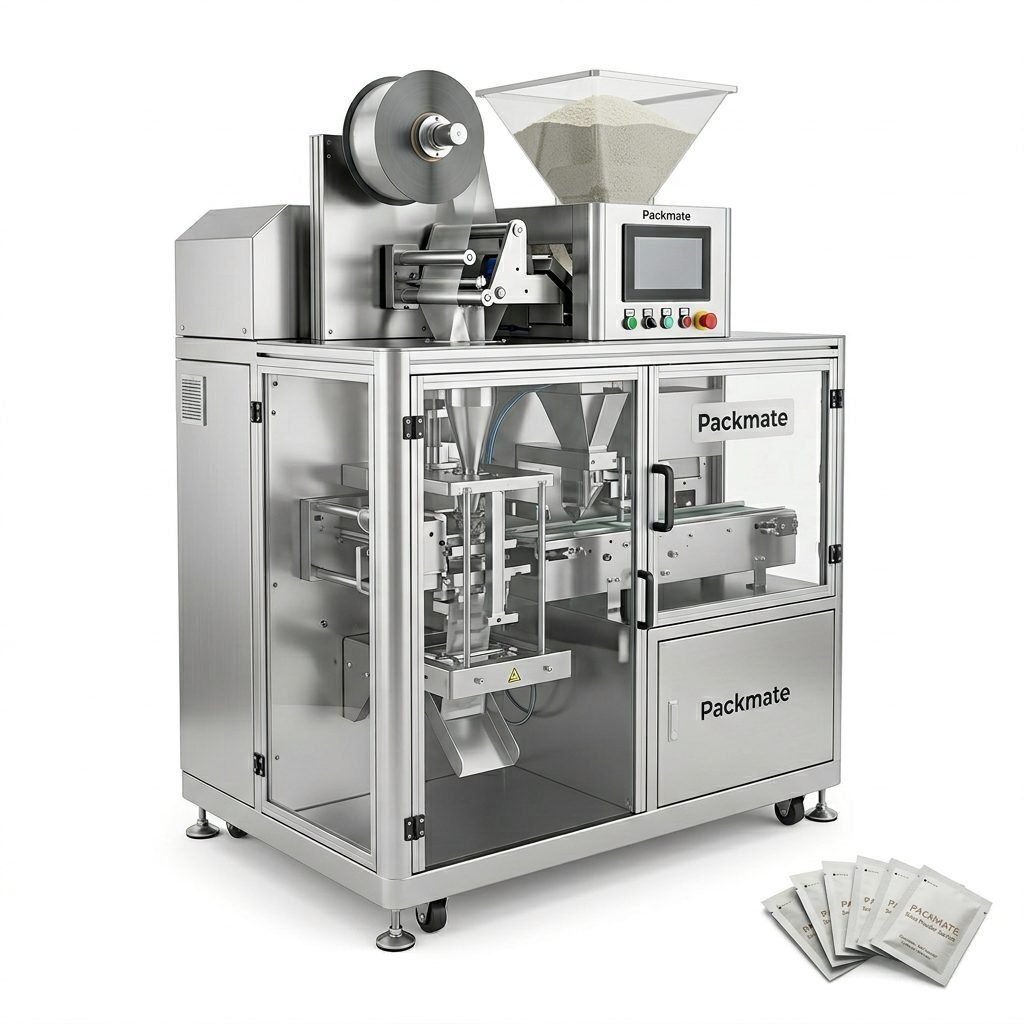
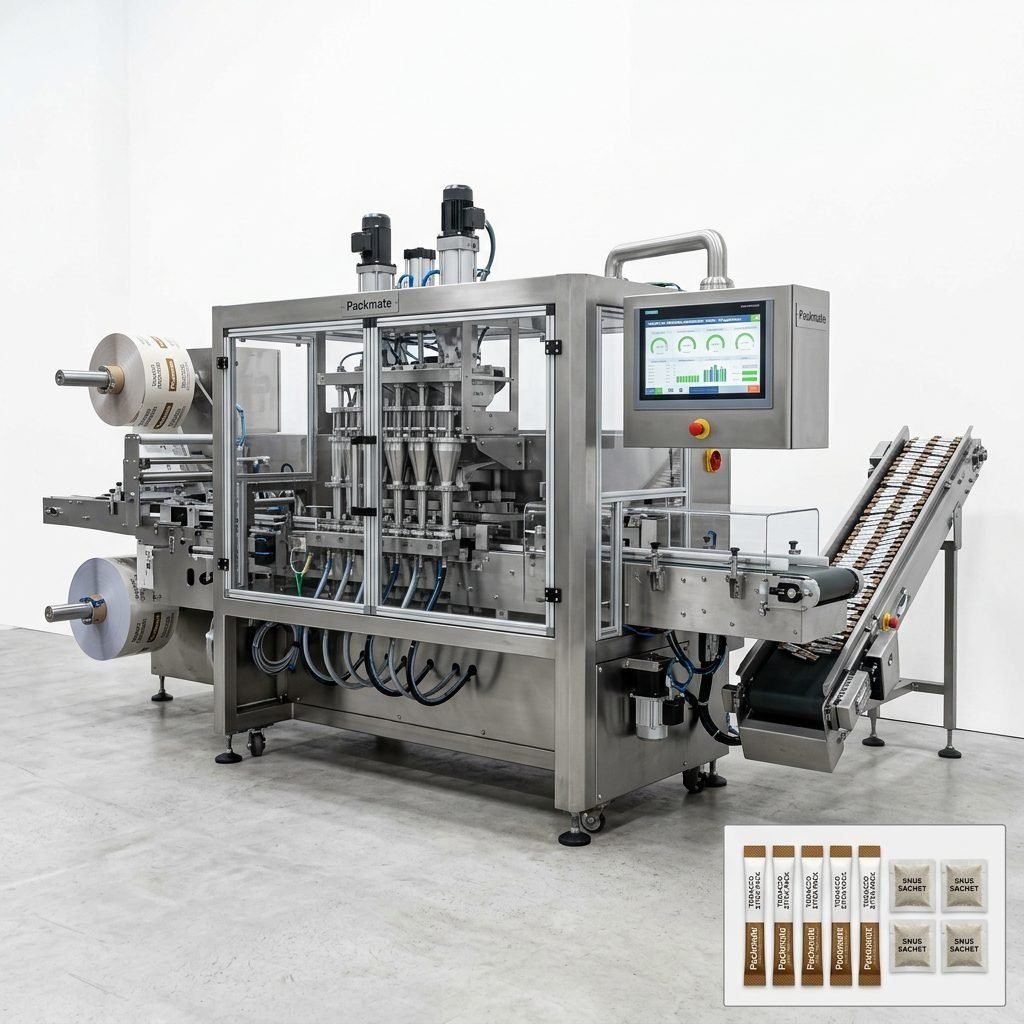
- Desired packaging formats: pouch, sachet, stick pack, tray, or multi-lane pods.
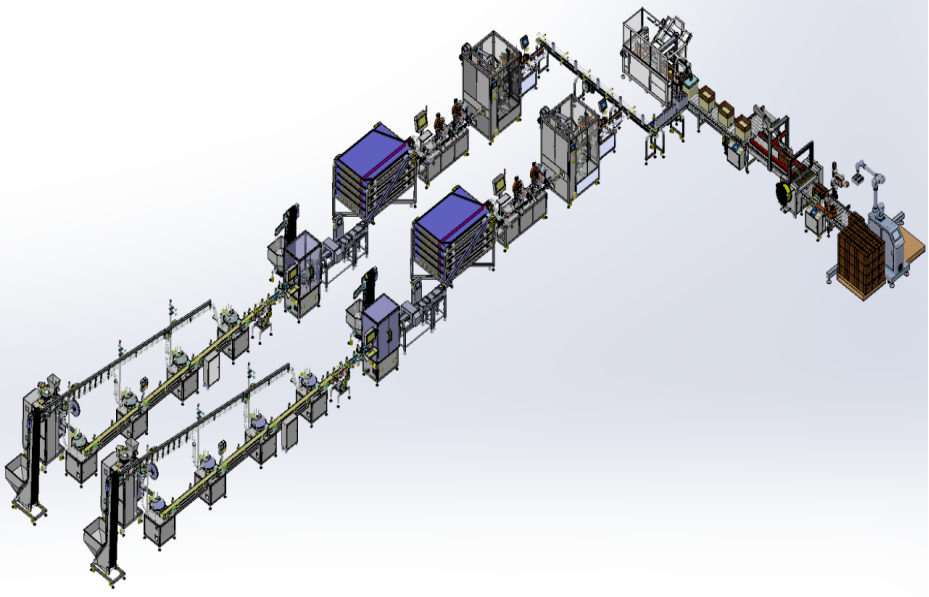
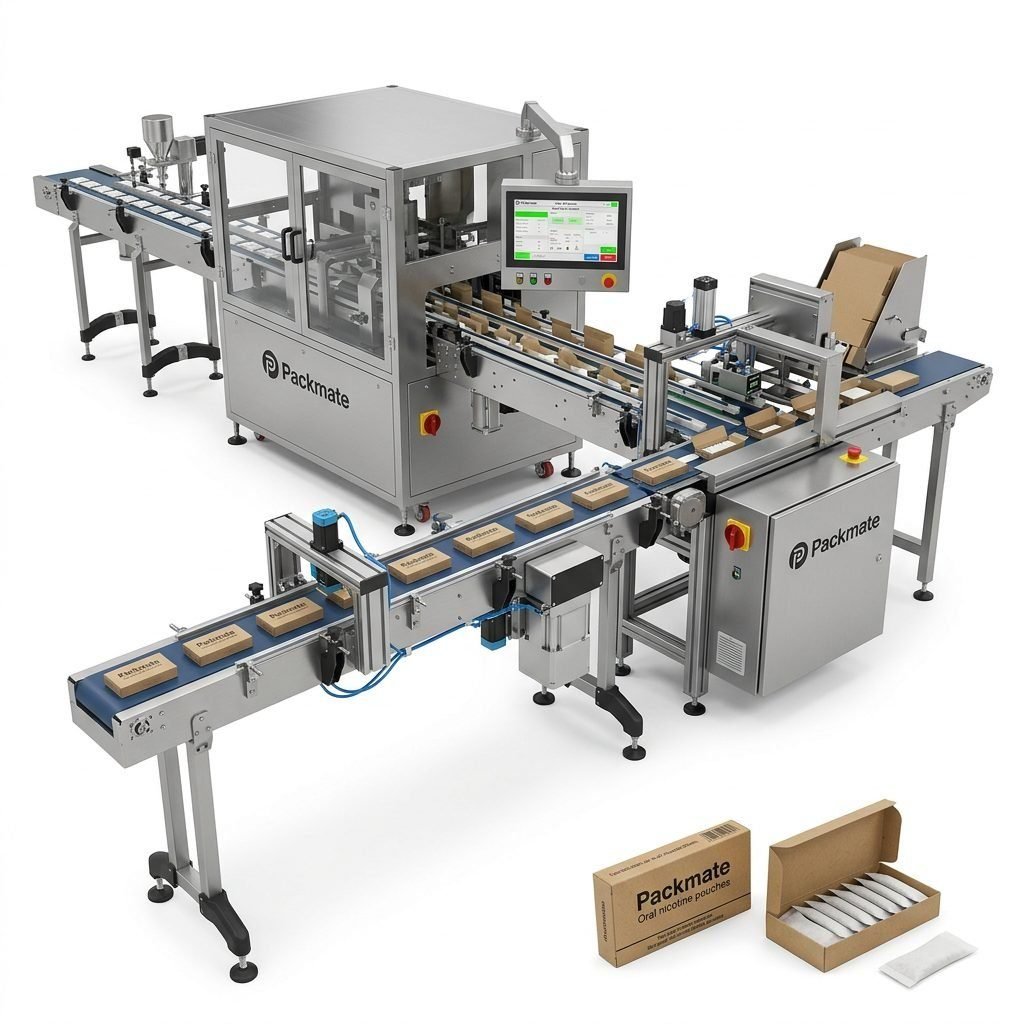
- Integration with upstream filling/weighing and downstream cartoning or case packing.
Why clear specifications matter
A supplier can only recommend the right equipment when you communicate detailed specs: production volumes, SKU counts, pouch dimensions, material types (biodegradable film, barrier films, aluminum-laminates), and space constraints. Clear specs reduce customization costs and speed up lead times.
Regulatory, Cultural and Market Considerations in Denmark
Denmark shares many Nordic preferences: high expectations for product safety, sustainable packaging, and clean production. While snus and nicotine pouch regulations vary across Nordic countries, Danish buyers tend to favor suppliers and machines that:
- Comply with CE and ISO standards and provide clear documentation for audits.
- Support recyclable or reduced-waste packaging formats to meet consumer and retailer sustainability goals.
- Offer hygienic design and easy cleaning to maintain high product safety.
- Deliver compact, energy-efficient machines that match Denmark’s focus on sustainability and efficiency.
- Traceability and documentation for regulatory review.
- Low-waste packaging, easy recycling and recyclability documentation.
- Reliable technical support — minimal downtime is essential to avoid costly idle time.
Essential Machine Features for Snus & Nicotine Pouch Production
When you evaluate suppliers, look for machinery that provides repeatable performance and flexibility. Critical features include:
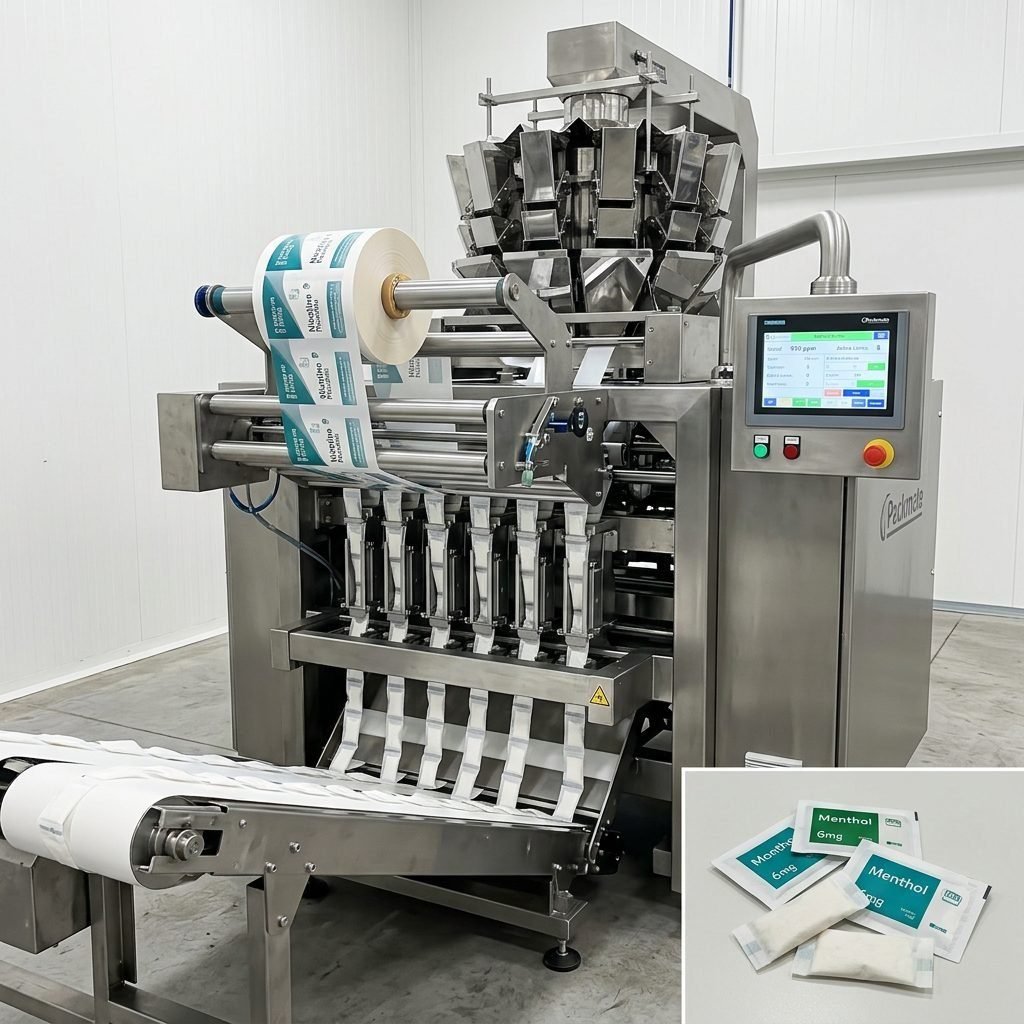
- Multi-lane capability for scaling production without a proportional increase in footprint.
- High-precision dosing and sealing to meet tight weight tolerances and preserve shelf life.
- Simplified changeover with modular tooling or servo-assisted adjustments to minimize downtime.
- Hygienic design and easy-to-clean surfaces for fast sanitation cycles.
- PLC controls and HMI with data logging to support traceability and production records for audits.
Many suppliers also offer turnkey integration with weighing and upstream filling systems, which reduces engineering time and integration risk. See integrated solutions such as those found in weighing and packaging systems pages for reference: Weighing & Packaging Systems.
Supplier Evaluation Checklist — What to Verify
Use this checklist when you contact potential suppliers. It helps to compare apples-to-apples.
- Company history and manufacturing scale — can they manufacture complete lines? (look for 20,000㎡ facilities or similar).
- Relevant experience — have they built snus or nicotine pouch machines before?
- Certifications — CE, ISO and any food-safety related compliance.
- Customization capability — do they offer modular or bespoke solutions for format changes?
- After-sales support — availability of spare parts, service engineers, and training.
- References and live case studies — factory acceptance tests (FAT) or customer site visits.
Factory and Trust Signals
A supplier with a large, well-equipped facility, CNC centers, and a variety of production models shows greater manufacturing maturity. For example, established manufacturers often present:
- Multiple machine models covering stick pack, sachet, and multi-lane systems.
- Clear documentation of testing protocols and certification pages.
- Case studies demonstrating global turnkey solutions and exhibitions where machines can be seen in action. See an example of company exhibitions and cases: Our Exhibition and Case.
Service, Spare Parts and Local Support for Danish Operations
In Denmark, rapid service response and reliable spare parts supply reduce risk. Ask suppliers:
- Do they maintain stock of critical spares or provide EU/nearby warehouses?
- What are typical lead times for spare parts shipments to Denmark?
- Do they provide remote troubleshooting, training videos, and on-site commissioning teams?
- Are service contracts and preventive maintenance plans available?
Ensure spare parts part numbers are provided in the quotation and that a minimum stock list is agreed upon for the first 12 months of operation.
Technical & Performance Considerations
Evaluate the mechanical and electrical details closely. Important specs include:
- Rated throughput and realistic throughput under your product conditions.
- Accuracy of dosing devices and sealing temperature control.
- Mean time between failures (MTBF) and available warranty terms.
- Level of automation for material handling, infeed, and outfeed operations.
- Compatibility with auxiliary equipment such as feeders, metal detectors, or cartoners — suppliers often list complementary solutions; examine pages for filling & packaging lines: Filling & Packaging Lines.
Choosing the Right Machine Type
Match machine type to the product and market positioning:
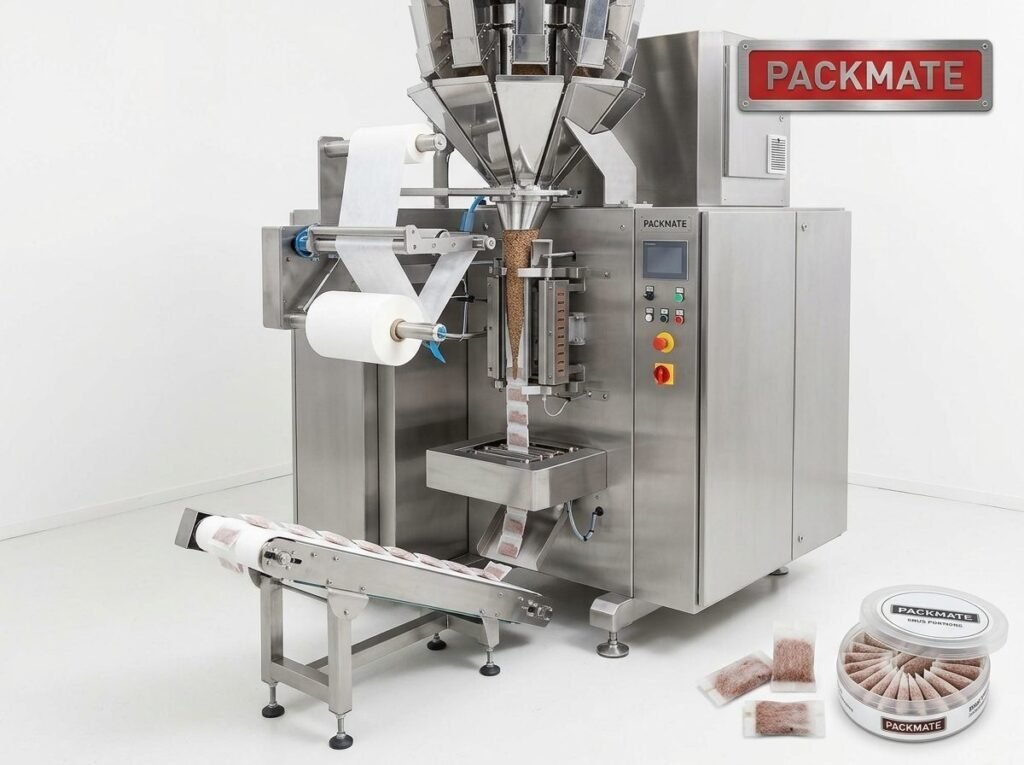
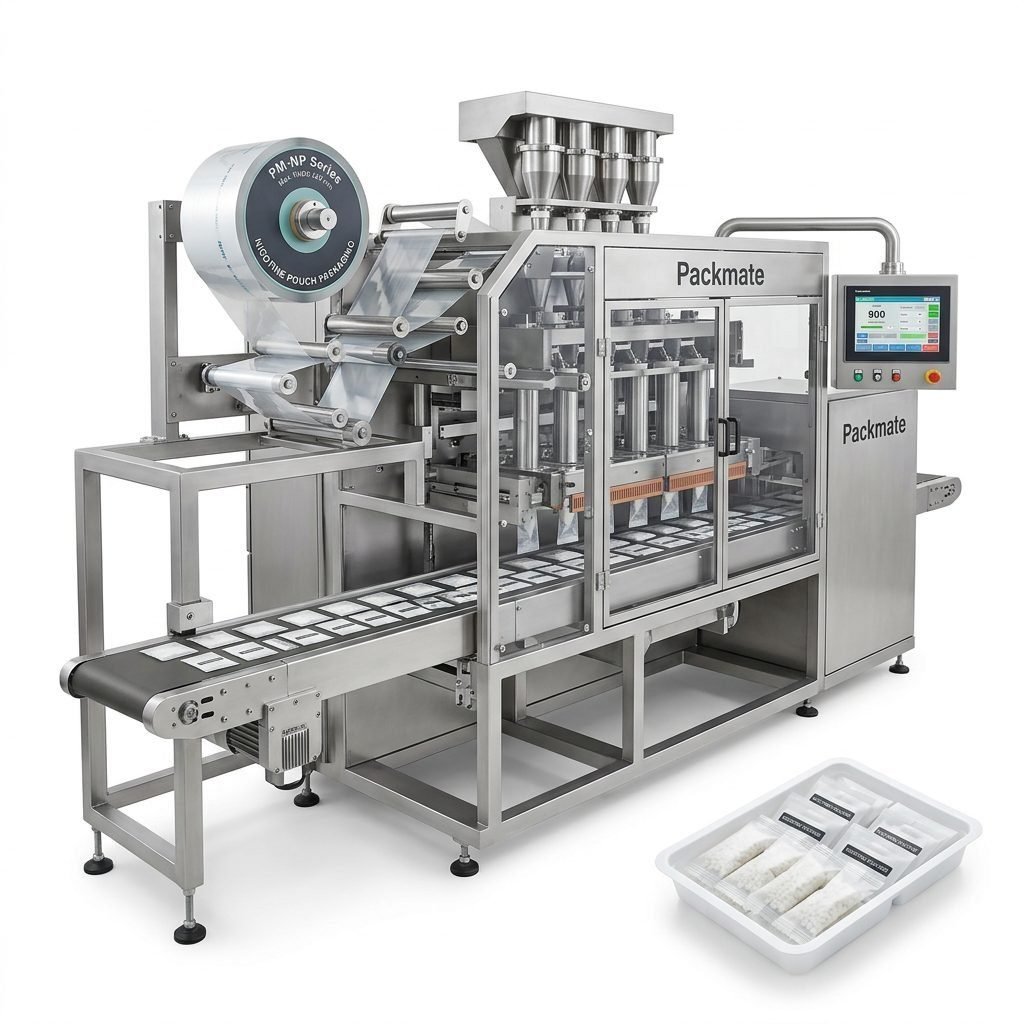
- Multi-lane pouch machines — ideal for high-volume nicotine pouches with small-dose per pouch operations.
- Sachet and stick pack machines — suitable for single-serve or promotional packaging. See options at Sachet & Stick Pack Machines.
- Hybrid lines with weighing systems — when high accuracy dosing is a must, look for integrated weighing and packaging lines for best results: Weighing & Packaging Systems.
Quotation, FAT, SAT and Acceptance Testing
A professional supplier will include the following in their commercial and technical proposal:
- Detailed BOM, life-cycle spare parts list, and estimated consumables usage.
- Factory Acceptance Test (FAT) with your product or representative material.
- Site Acceptance Test (SAT) after installation in Denmark to validate performance under real conditions.
- Service Level Agreements (SLA) and warranty terms with response times.
- Run rates with your product and film.
- Seal integrity and pouch dimension tolerances.
- Electrical and safety verification.
- Operator training and basic maintenance walkthrough.
Implementation Tips for Denmark
For smooth on-site commissioning in Denmark:
- Confirm import documentation and local compliance paperwork well in advance.
- Plan for site utilities, compressed air quality, and required electrical connections.
- Schedule operator training and maintenance training during commissioning weeks.
- Agree on spare parts kit to be shipped with the machine or held in a nearby warehouse.
Why Consider Established Manufacturers (Example Supplier Profile)
Established firms with long manufacturing histories often offer the most predictable outcomes. Look for vendors that publicize technical depth and manufacturing scale — for example, companies with decades of engineering experience, large facilities, and a wide product portfolio. Suppliers that also publish certifications and exhibition participation demonstrate transparency and industry engagement. You can review an example supplier’s profile and product categories to benchmark: About Packmate and explore product groups like Snus & Nicotine Packaging Machines.
Checklist before signing a contract
Before you finalize a supplier agreement, confirm:
- The machine performance guarantee and agreed KPIs.
- Spare parts list and initial stock included in the quotation.
- Training scope and language options for Danish operators.
- Lead times for production and delivery to Denmark, including customs handling.
Prioritize suppliers who can demonstrate installed lines or provide live demos. If a supplier attends major trade shows and publishes case studies, you can often arrange a demonstration or visit—see the supplier’s exhibition page for opportunities: Our Exhibition.
Next Steps — Requesting Quotes and Moving Forward
When you are ready to request quotes, prepare a concise technical appendix with: product specifications, target outputs, preferred materials, utility constraints, and the expected project timeline. Ask suppliers for:
- Detailed proposal with machine model numbers and lead times.
- FAT plan and acceptance criteria.
- An outlined service package and spare parts recommendations.
- References or contactable customers in similar markets.
If you want a deeper look at product families or to see detailed catalogs, many suppliers maintain catalogs and FAQs online. Example links include a product catalog and service pages for further reading: Catalog and Service.
Summary — What Distinguishes the Best Suppliers for Denmark
To summarize, the best snus packaging machinery suppliers for Danish production combine:
- Proven machine performance with multi-lane and modular designs.
- Strong documentation and CE/ISO compliance for regulatory peace of mind.
- Clear spare parts strategies and responsive after-sales service.
- Sustainability-focused design options and compact, efficient machines that align with Nordic values.
- Transparent FAT/SAT procedures and real-world case studies you can verify.
Useful links to start your supplier conversations
For product browsing and initial supplier research, you may find these pages useful:
Frequently Asked Questions
Q1: How do I know which machine speed I actually need?
Estimate daily or monthly production targets and allow for peak demands. Ask suppliers for realistic yield data using your product — FAT runs are the most reliable way to validate true in-line speeds.
Q2: What sustainability options should I request?
Request compatibility with recycled or mono-material films, reduced film thickness options, and ways the supplier reduces packaging waste in the production process. Ask for documentation supporting recyclability claims.
Q3: How important is CE / ISO certification?
Very important. CE shows compliance with European safety directives; ISO indicates quality management. Both simplify import and audit processes in Denmark and are often non-negotiable for retailers.
Q4: What is a typical lead time for a customized snus line?
Lead times vary by customization level. Simple standard machines might ship in a few months; highly customized multi-lane turnkey lines can take 4–9 months. Always confirm lead times in writing.
Q5: How should I plan for spare parts and maintenance?
Agree on an initial spare parts kit, service contract terms, and recommended preventive maintenance schedules. Confirm whether the supplier has European spare stock or a distribution partner to reduce downtime.