Choosing the right nicotine packaging machinery supplier in the Czech Republic is more than a technical decision — it’s a strategic investment that affects your product quality, regulatory compliance, production uptime, and brand reputation. This guide walks you through the practical steps Czech manufacturers, distributors and entrepreneurs should follow to select a partner who understands both high-precision packaging and local market realities.
Understand the Czech Market and Local Preferences
Czech consumers and trade customers value discreet, high-quality nicotine products, clear labeling in Czech, and stable supply. For packaging lines, that translates into demand for machines that produce consistent pouch weights, clean seals, and packaging formats that reflect local preferences (single-dose sachets, stick packs, or small multi-pouch trays). When evaluating suppliers, prioritize those who demonstrate knowledge of Czech labeling rules, language requirements, and EU trade routines.
Practical local considerations
⚠️ Voltage & Power — Czech Republic uses 230V, 50Hz. Confirm machine compatibility and available motor options.
📦 Labeling & Language — Ensure supplier supports Czech-language label printing or easy integration with local printers.
🛠️ Local Service — Fast parts and maintenance options in Central Europe reduce downtime.
Check Regulatory Compliance and Certifications
Nicotine products and their packaging are heavily scrutinized. A reliable supplier should provide machines that meet international safety and hygiene standards. Look for CE certification and ISO-compliant manufacturing processes. Suppliers who document safety interlocks, cleanable contact parts and containment solutions for powders or nicotine formulations are preferred for Czech and broader EU market entry.
What to ask about certifications
✔️ CE & ISO: Confirm machine certificates and factory audit reports.
✔️ Material Traceability: Request material lists for product-contact surfaces (stainless steel grade, FDA compliance if applicable).
✔️ Validation Support: Can the supplier support IQ/OQ/PQ documentation for your qualification process?
Evaluate Technical Capability and Product Range
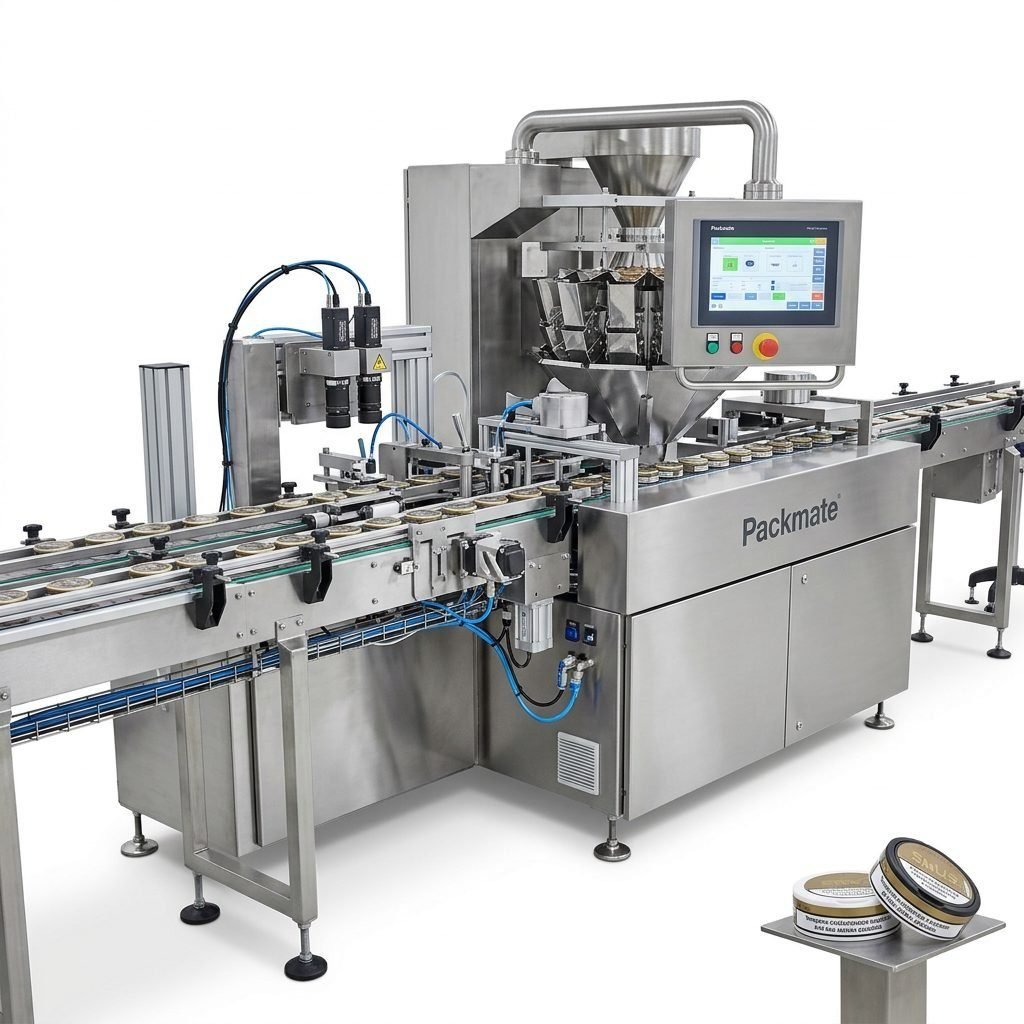
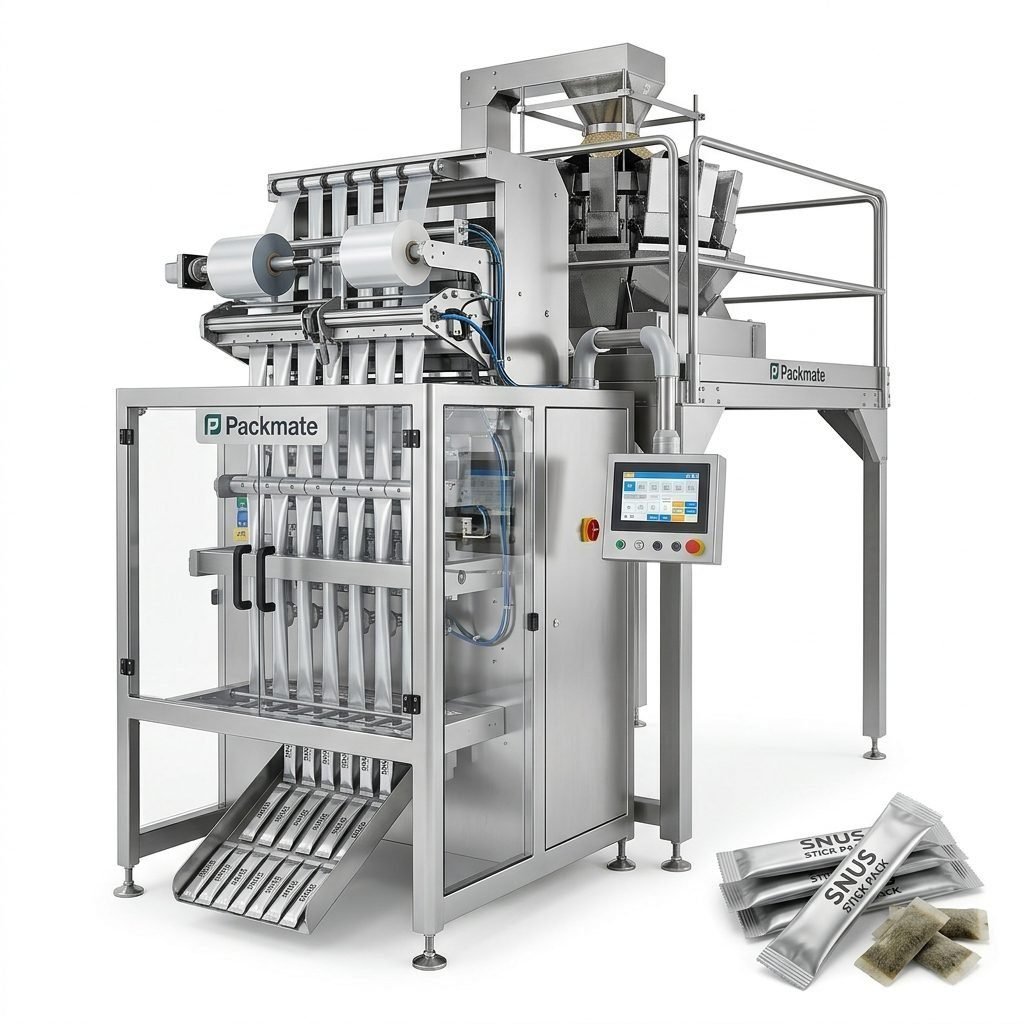
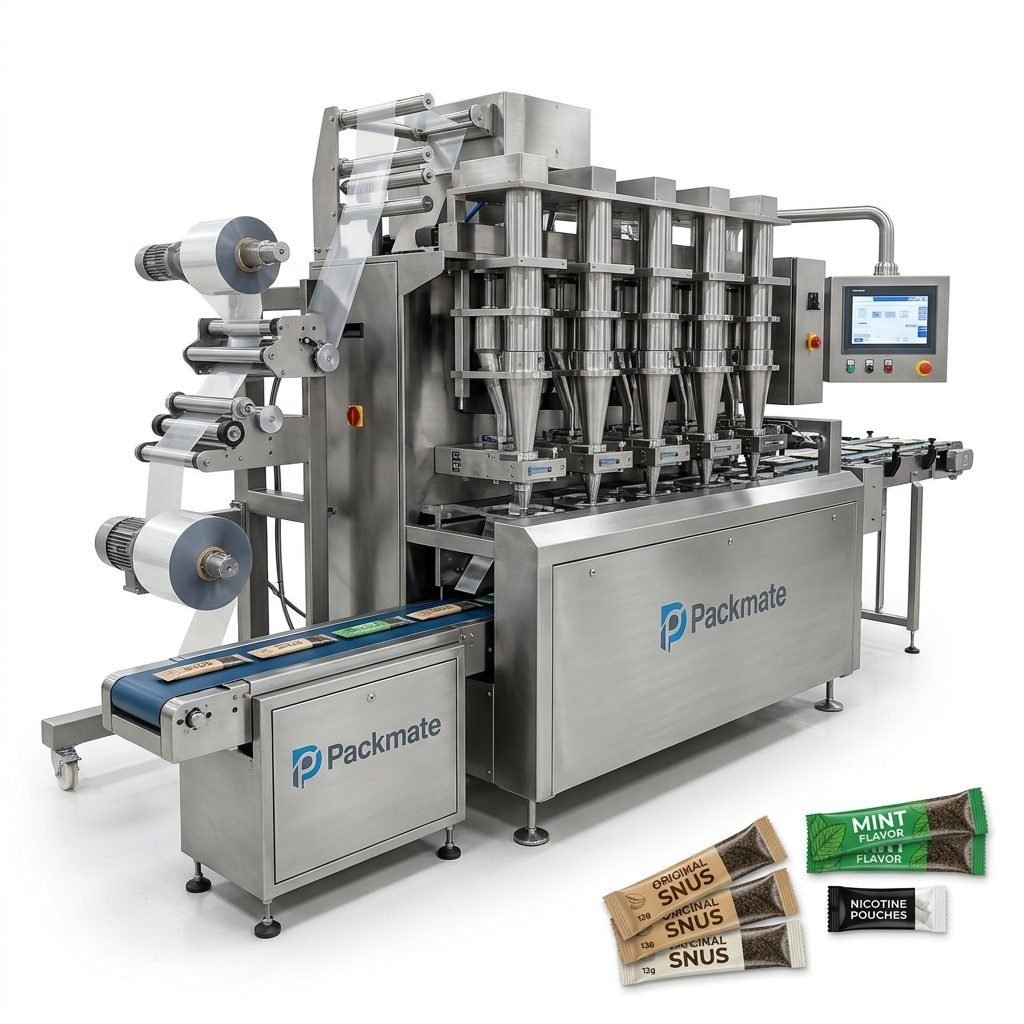
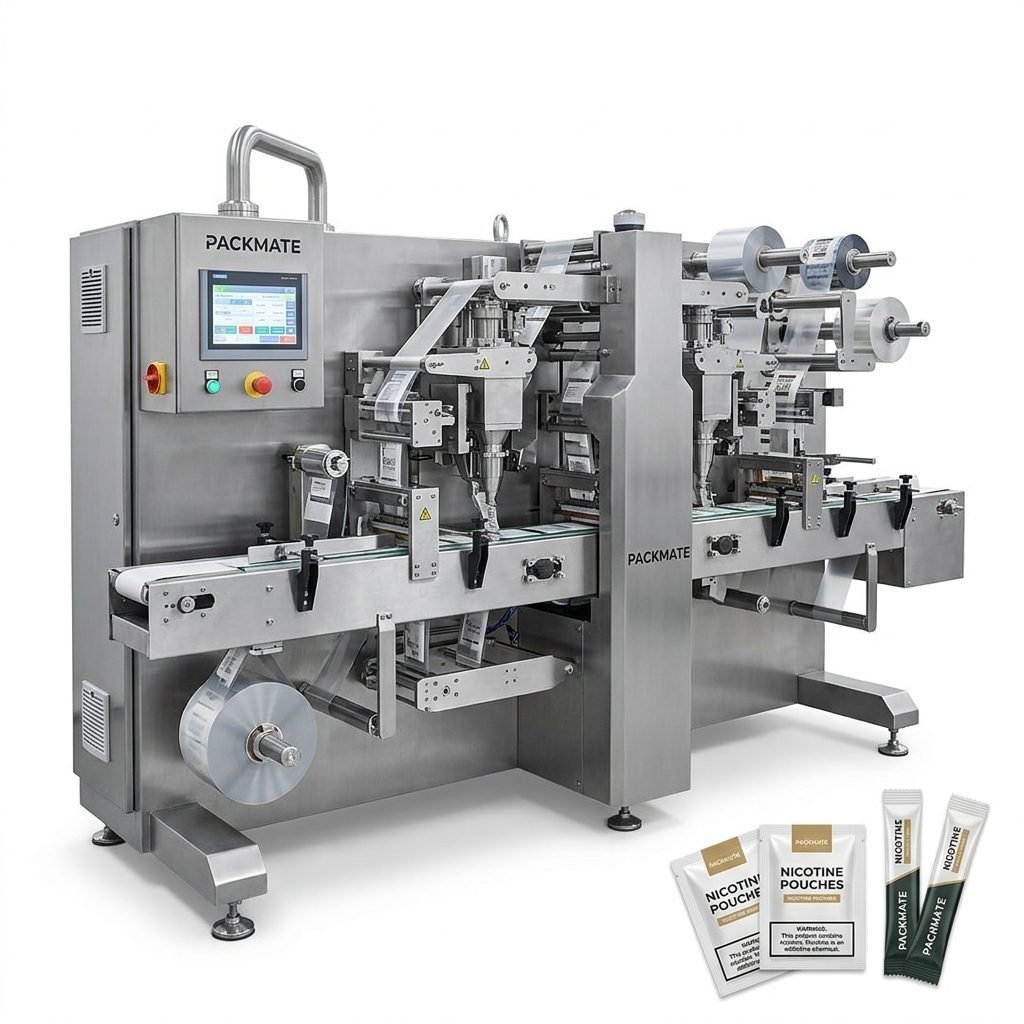
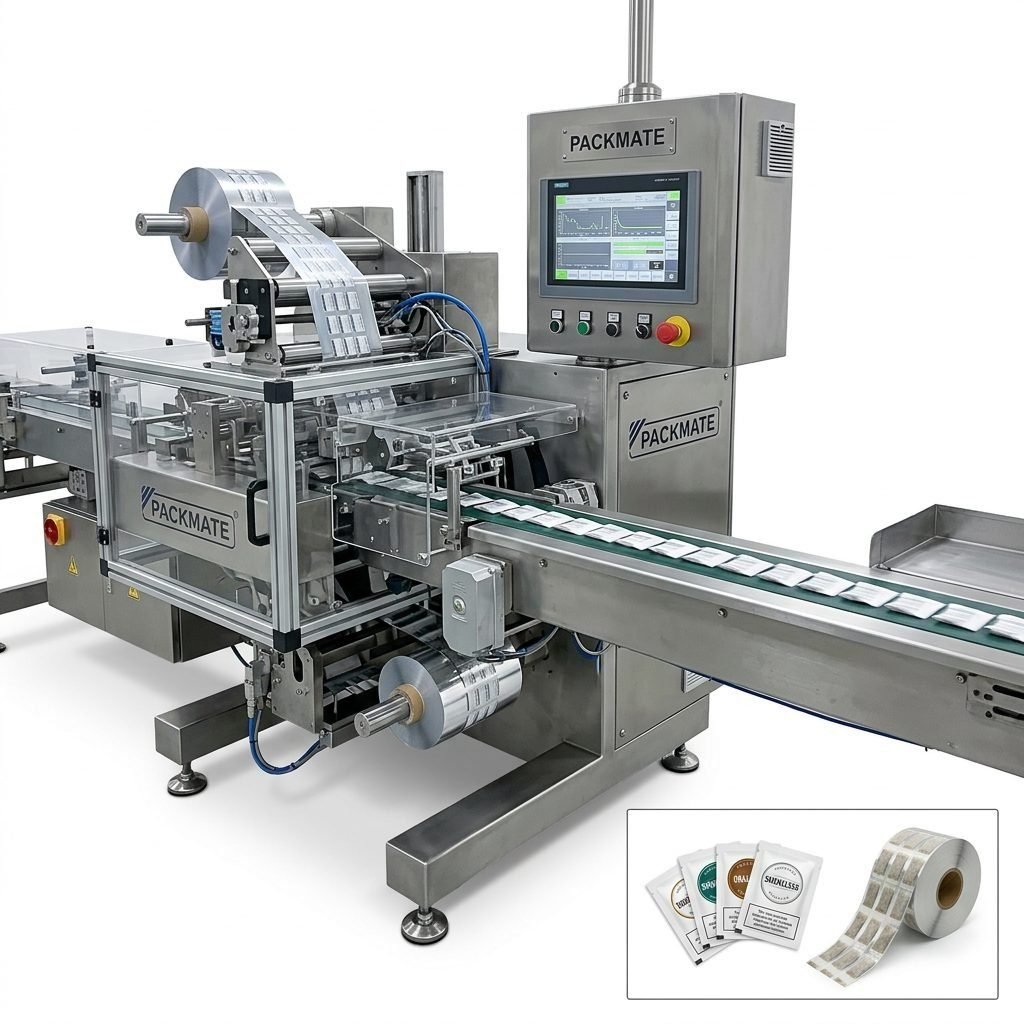
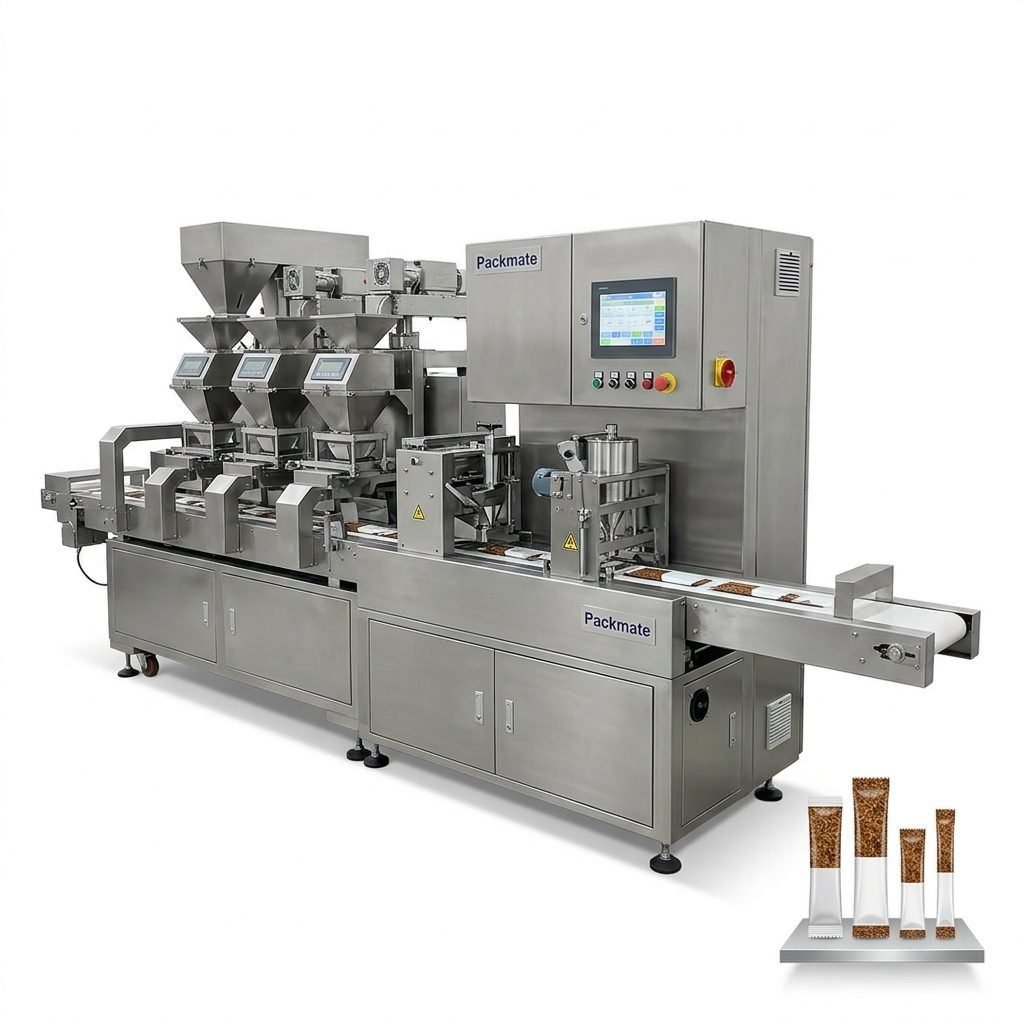
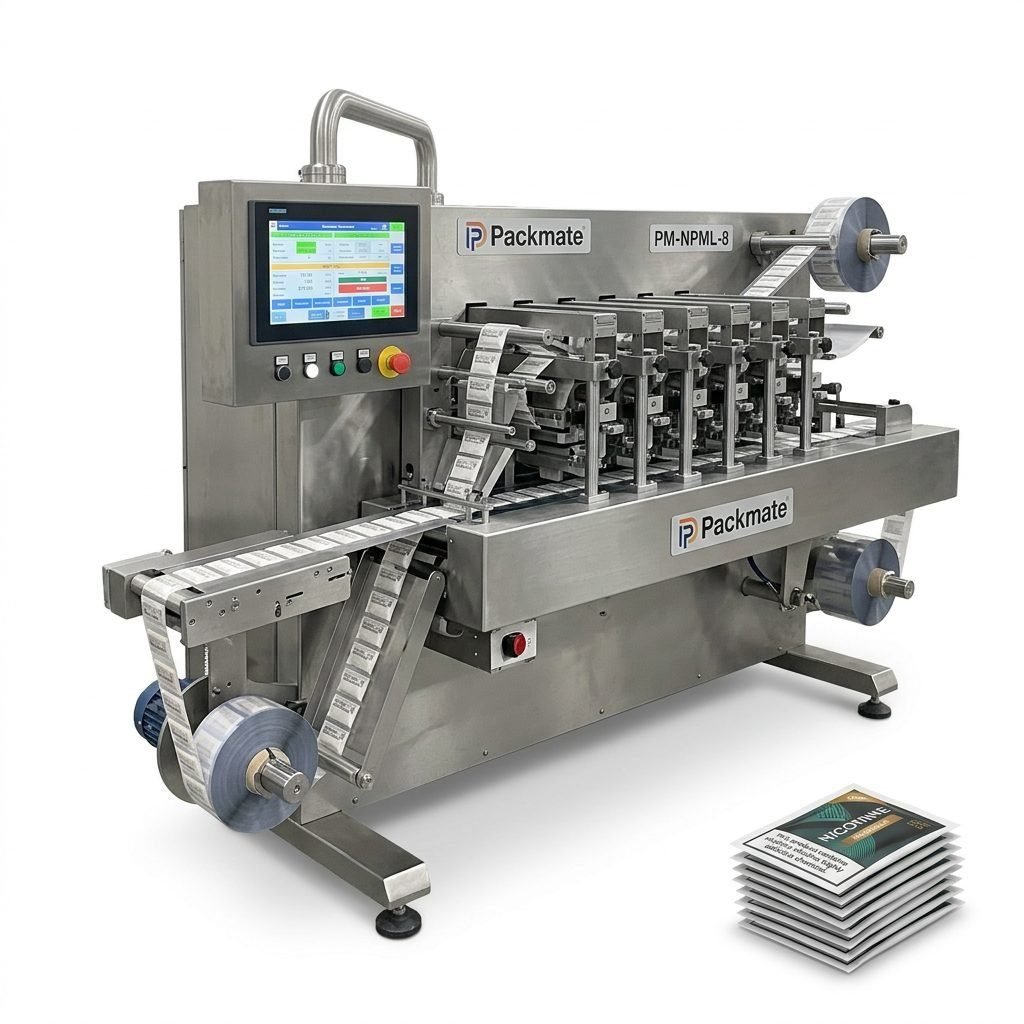
The right supplier provides machines matched to your output, product format and future growth. For Czech clients producing nicotine pouches and snus-like products, multi-lane high-precision systems, stick-pack and sachet machines are common choices. Review the supplier’s product catalog: look for modular lines, multi-format capability, and auxiliary equipment such as feeding systems, weighing units and sealing modules.
Packmate is an example of a manufacturer with deep experience in snus and nicotine pouch packaging; their product range covers specialized snus machines and full lines. Learn more about dedicated options on their Snus & Nicotine Packaging Machines page: Snus & Nicotine Packaging Machines.
Key technical attributes to compare
Precision dosing — Accurate micro-dosing for nicotine pouches to ensure consistent product weight.
Multi-lane capability — For high throughput on small-dose products, multi-lane systems can maximize output.
Format flexibility — Ability to switch between sachet, stick pack and pouch formats with minimal changeover time.
Assess Factory Strength and After-Sales Support
A supplier’s production capacity, machining quality and testing practices directly affect machine reliability. Verify the factory footprint, CNC capabilities and quality control processes. Ask for photos of the assembly line, reports on factory capacity, and references from customers in Europe.
For example, a manufacturer with a 20,000㎡ facility and advanced CNC centers that offers turnkey solutions demonstrates the kind of scale that supports fast spare parts delivery and engineered customization. You can review about the manufacturer’s profile and capabilities here: About Packmate.
After-sales and spare parts
Prioritize suppliers who commit to spare parts availability in Central Europe, remote diagnostics, and training for your operators and maintenance staff. Ask whether they maintain a local stocking partner or a European service hub. Quick response times are essential to reduce production loss in Czech facilities.
Inspect Case Studies and References
Real-world performance matters. Request case studies that show deployments in similar regulatory and market environments. Look for examples of nicotine pouch lines, multi-lane systems, and turnkey installations. Vendor case pages and exhibition records help you verify claims and see machine demos.
Check documented projects and trade show presence to evaluate how a manufacturer showcases reliability: Case studies and exhibition history give transparency on global deployments.
Compare Total Cost of Ownership (TCO), Not Just Purchase Price
Upfront price is only part of the picture. Consider energy use, consumables (films, sealing inserts), spare part costs, expected uptime, and the level of technical training required. A slightly higher investment in a robust, well-supported machine often yields lower cost-per-pack over time.
Key TCO components: installation, commissioning, spare parts, preventive maintenance contracts, energy consumption, and changeover labor time.
Request a Factory Visit or Virtual Demonstration
Whenever feasible, visit the supplier’s factory or arrange a live virtual demonstration. Observing a machine running your specific product — or at least a very similar formulation — is invaluable. Pay attention to hygiene, operator ergonomics, safety guards, user interfaces in English and the ease of format changeover.
Virtual demo checklist
📌 Product handling — Check how gently pouches are transferred and aligned.
📌 Sealing quality — Verify heat seals and hermetic integrity.
📌 Control system — Confirm the HMI language support and data logging features.
Negotiate Service Agreements and Training
A strong supplier will provide a clear warranty, spare-parts lead times, optional preventive maintenance plans, and operator training at your site in the Czech Republic. Ask for a detailed proposal that outlines response targets for breakdowns, availability of remote support, and the extent of commissioning support.
If you intend to scale production or launch multiple SKUs, negotiate modular expansion clauses so you can add lanes, integrate new weighing modules, or upgrade control systems without full replacement.
Integration with Your Production Line and Suppliers
Packaging machines rarely operate in isolation. Confirm compatibility with your upstream dosing/weighing systems and downstream case packers, cartoners or secondary packing machines. Also ensure the supplier can coordinate film suppliers or suggest suitable consumer-safe films for nicotine pouches.
Explore modular packages such as integrated weighing and packaging systems — for instance, view available options on the supplier’s Weighing & Packaging Systems page: Weighing & Packaging Systems.
Make a Balanced Decision: Technical Fit, Service, and Cultural Match
Czech manufacturers prefer suppliers who combine solid engineering with accessible support in Central Europe. Cultural fit matters: responsiveness in local time zones, willingness to provide Czech-language documentation, and experience working with EU compliance processes will reduce friction.
🔧 Recommended approach: shortlist 2–3 suppliers, request machine demos, inspect references in Central/Eastern Europe, and negotiate a pilot or phased payment tied to performance milestones.
Why Established Manufacturers Matter
Established builders with decades of R&D and a wide product line provide confidence in parts continuity, proven designs and engineering depth. For nicotine pouch lines, choose suppliers that have focused expertise in snus and nicotine packaging and who can deliver turnkey lines — including upstream feeding, pouch forming, dosing and downstream packaging. Explore product families such as Bag & Pouch Packaging Machines for broader options: Bag & Pouch Packaging Machines.
Final checklist before signing
– Written technical specs and acceptance criteria for performance tests.
– Warranty terms, spare parts list and response times.
– Training plan for operators and maintenance crew.
– Electrical and pneumatic requirements aligned with Czech plant utilities.
– Commissioning schedule and penalties for missed milestones.
Contact and next steps
When you are ready to evaluate suppliers, request a detailed quotation with performance guarantees. If you want to investigate a supplier with a proven snus packaging focus and global experience, check their product catalog and support pages such as Sachet & Stick Pack Machines and arrange direct contact through their Contact Us page.
FAQs — Common questions from Czech buyers
Q1: Are nicotine pouch packaging machines allowed in the Czech Republic?
Yes. While traditional snus (tobacco-containing products) faces EU restrictions, many manufacturers in the Czech Republic produce and pack nicotine pouches. Ensure your product classification meets Czech and EU regulations and that packaging and labeling comply with local law.
Q2: How long does commissioning a turnkey nicotine pouch line usually take?
Commissioning timelines vary with complexity. A single machine installation can be completed in a few days to weeks; a full turnkey line including feeding, dosing, multi-lane packaging and secondary packaging typically requires several weeks to a few months including FAT, shipping, installation and qualification.
Q3: What are typical spare part lead times to the Czech Republic?
Lead times depend on the supplier’s European stock and whether they have a local distributor. Established manufacturers with centralized European warehouses often supply common wear parts within days; custom parts may take several weeks. Negotiate stocking agreements for critical components.
Q4: Can machines handle multiple nicotine pouch formats without major retooling?
Many modern lines are modular and support format changeovers with quick-change tooling. Confirm the supplier’s typical changeover times and whether they provide change parts as a kit for fast swaps. Multi-lane format flexibility is a major asset for portfolio-driven producers.
Q5: How do I ensure after-sales support in Czech language?
Discuss language support during negotiations. Many global suppliers provide English documentation and multilingual HMIs; some maintain local partners or translate manuals into Czech. If Czech-language service is critical, request local partner introductions or translation services as part of the agreement.