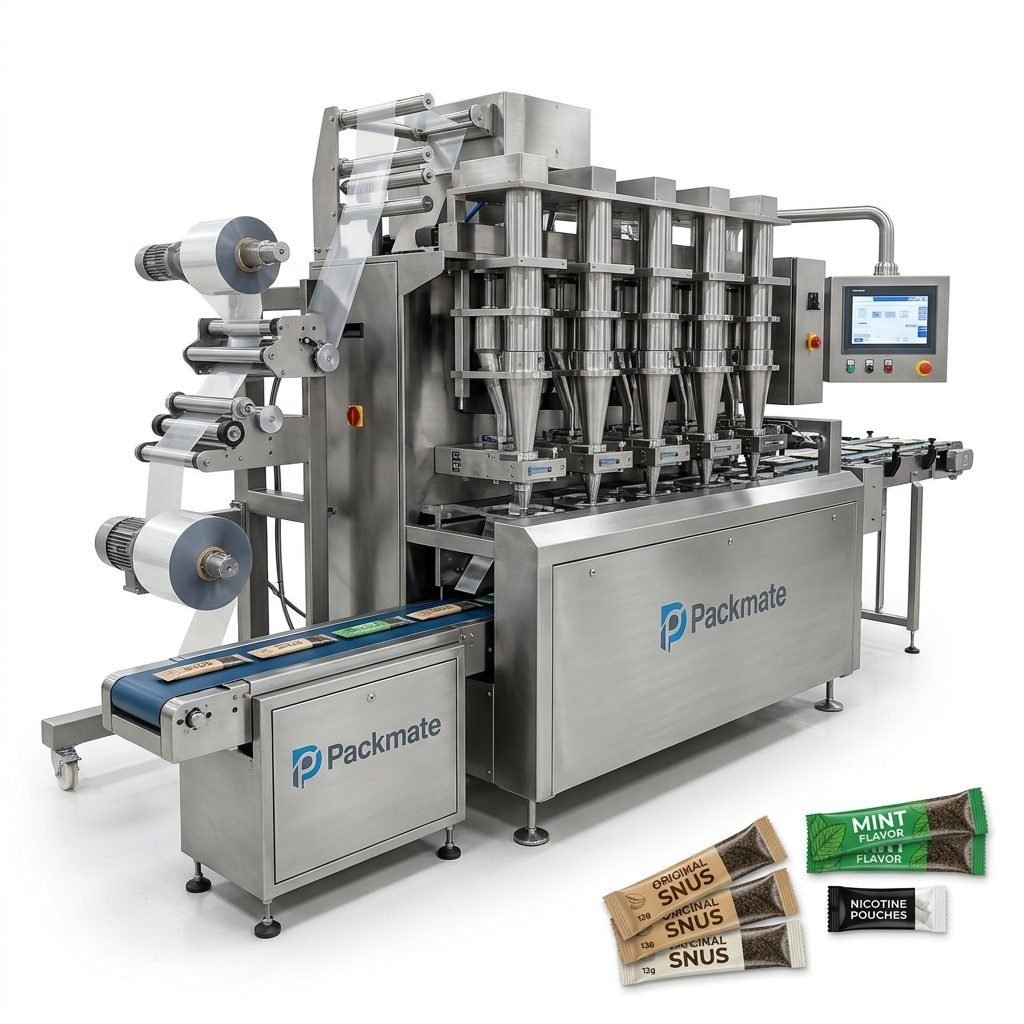
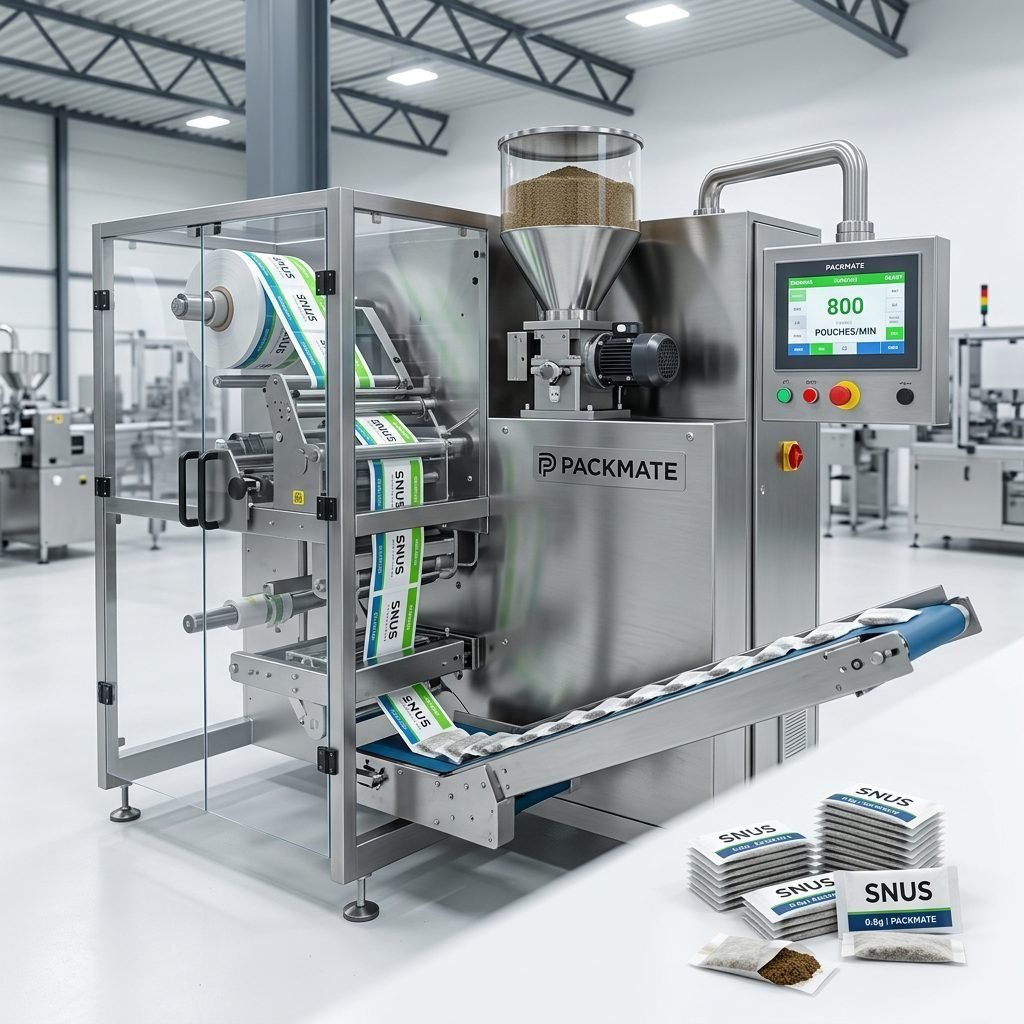
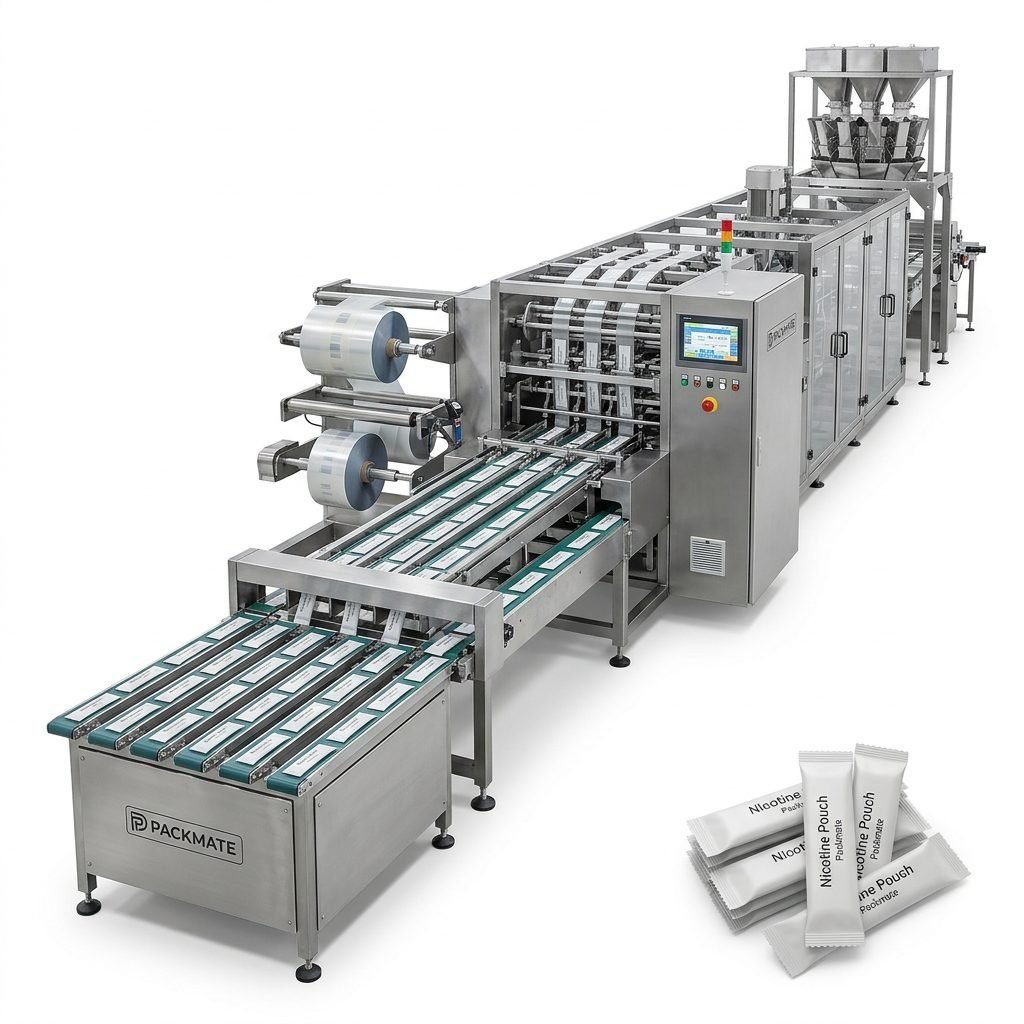
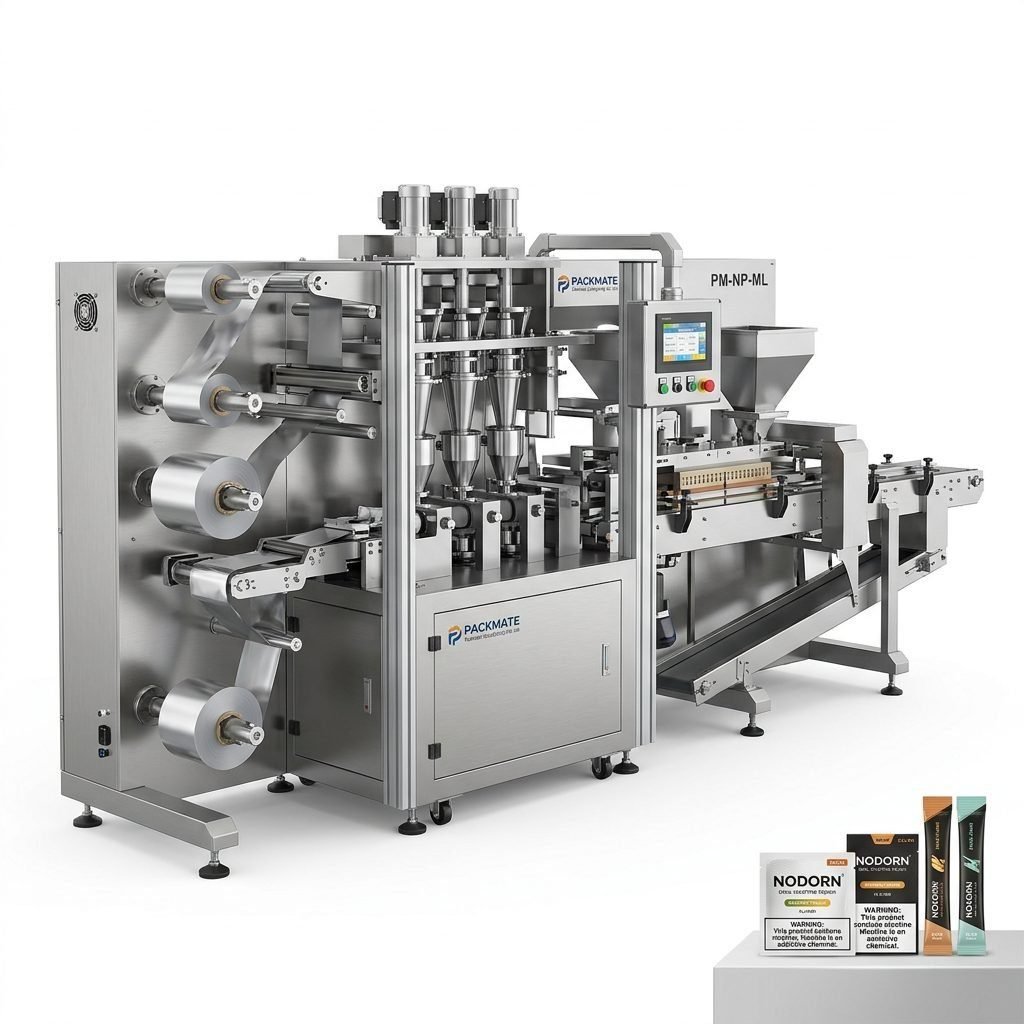
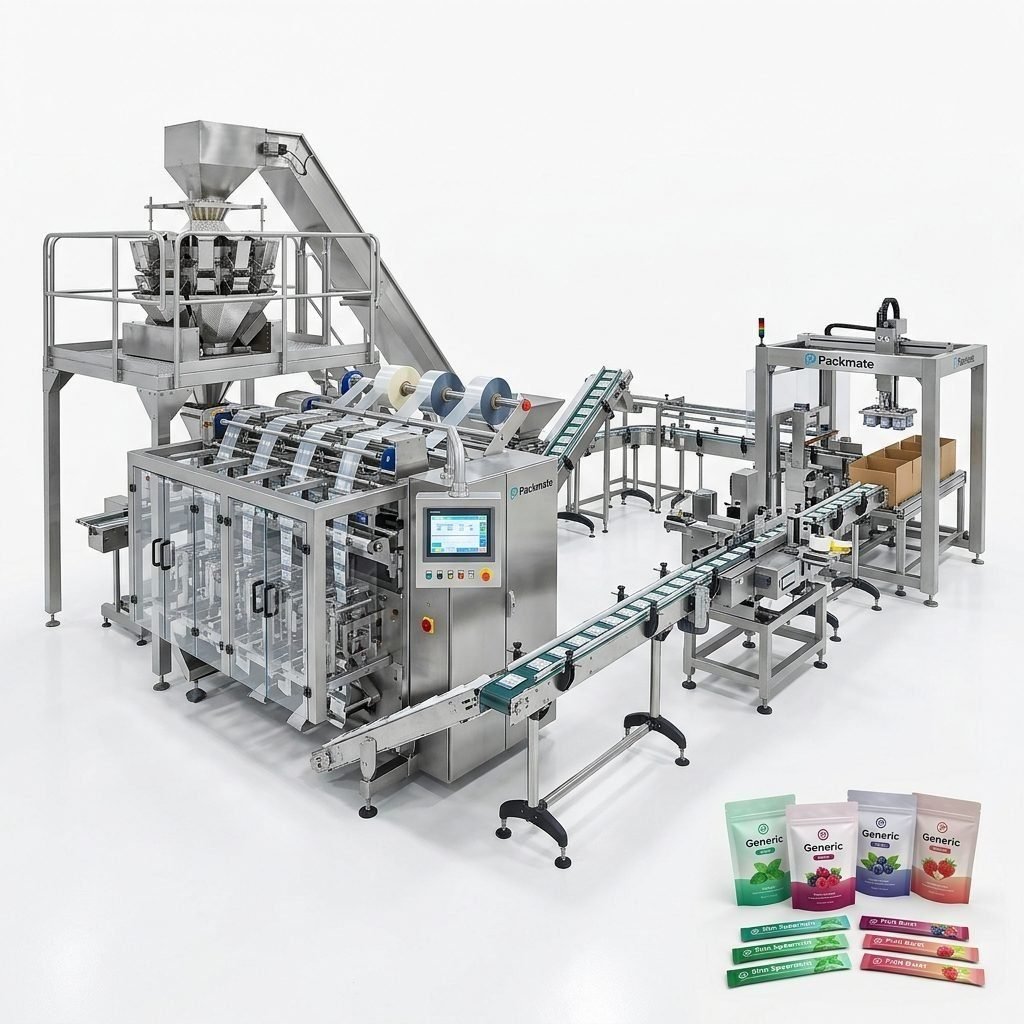
Snus packing machines are specialized automated systems designed to form, fill, seal, and deliver pouches for nicotine products such as snus and nicotine pouches. These machines combine precision mechanics, controlled dosing, and hygienic design to ensure consistent pouch weight, clean seals, and reliable output. In this article you will find a clear, practical explanation of how a snus packing machine works, step-by-step operation tips, essential maintenance guidance, and quality / compliance considerations for manufacturers and packagers.
How a Snus Packing Machine Works — Overview
At a high level, a snus packing machine integrates several functional modules into a continuous production line. The core process flow is:
- Film or pouch material unwinding and forming
- Accurate dosing (weighing or volumetric filling)
- Sealing and cutting into individual pouches
- Coding, inspection, and counting
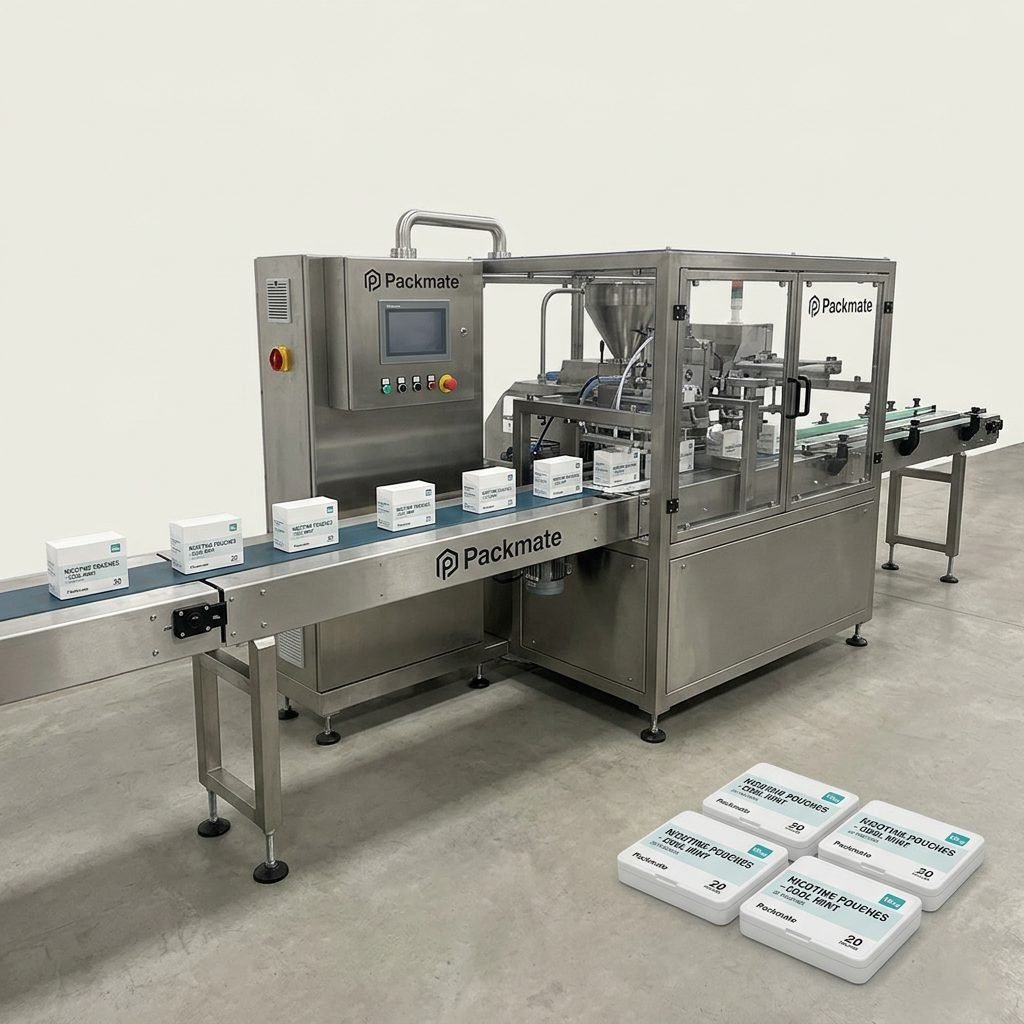
- Collection and secondary packaging
Key functional modules
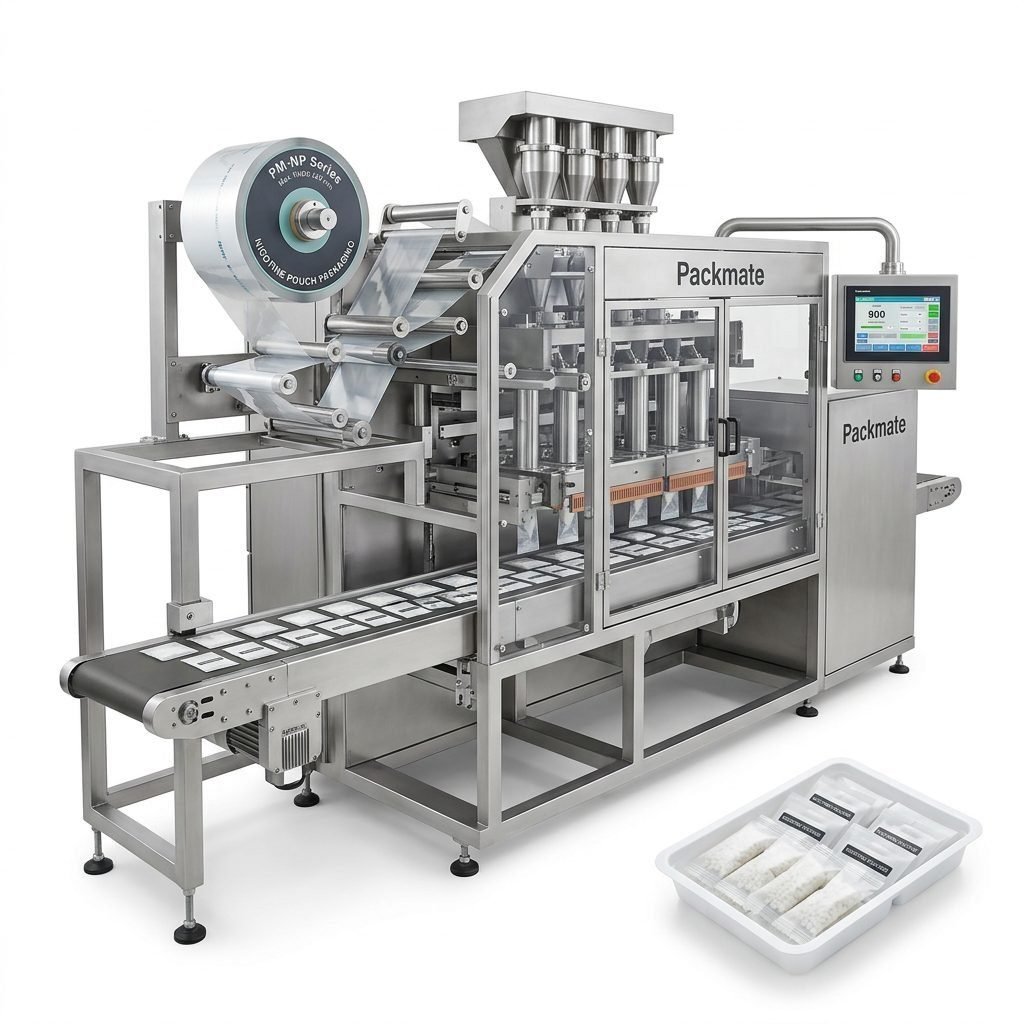
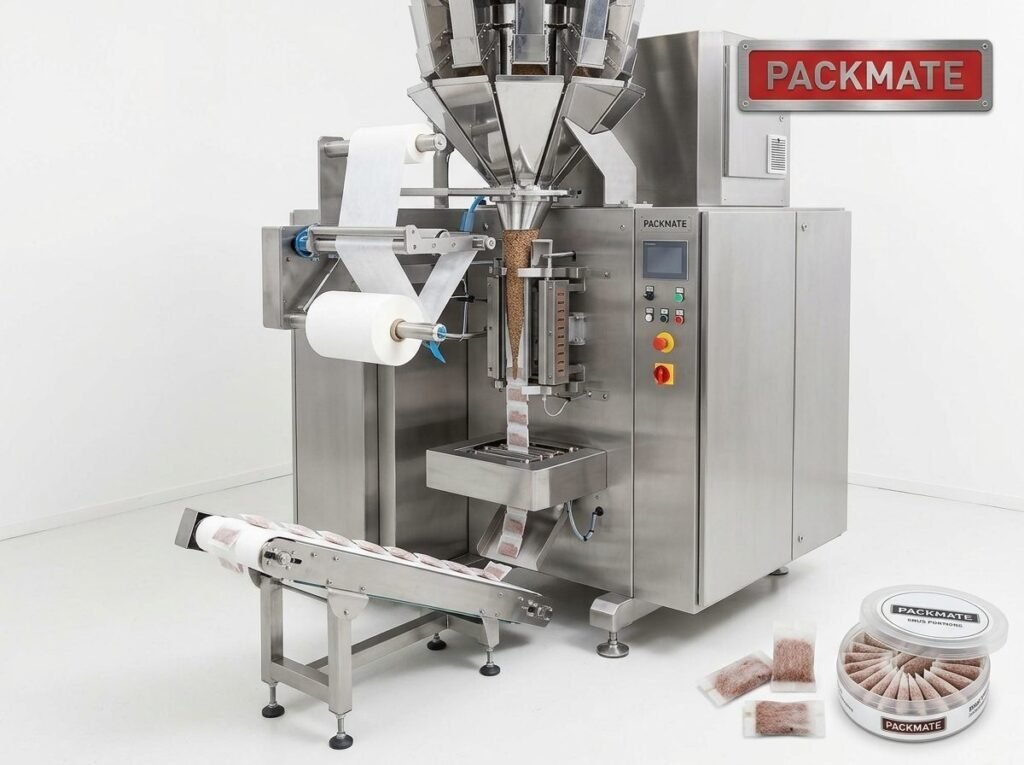
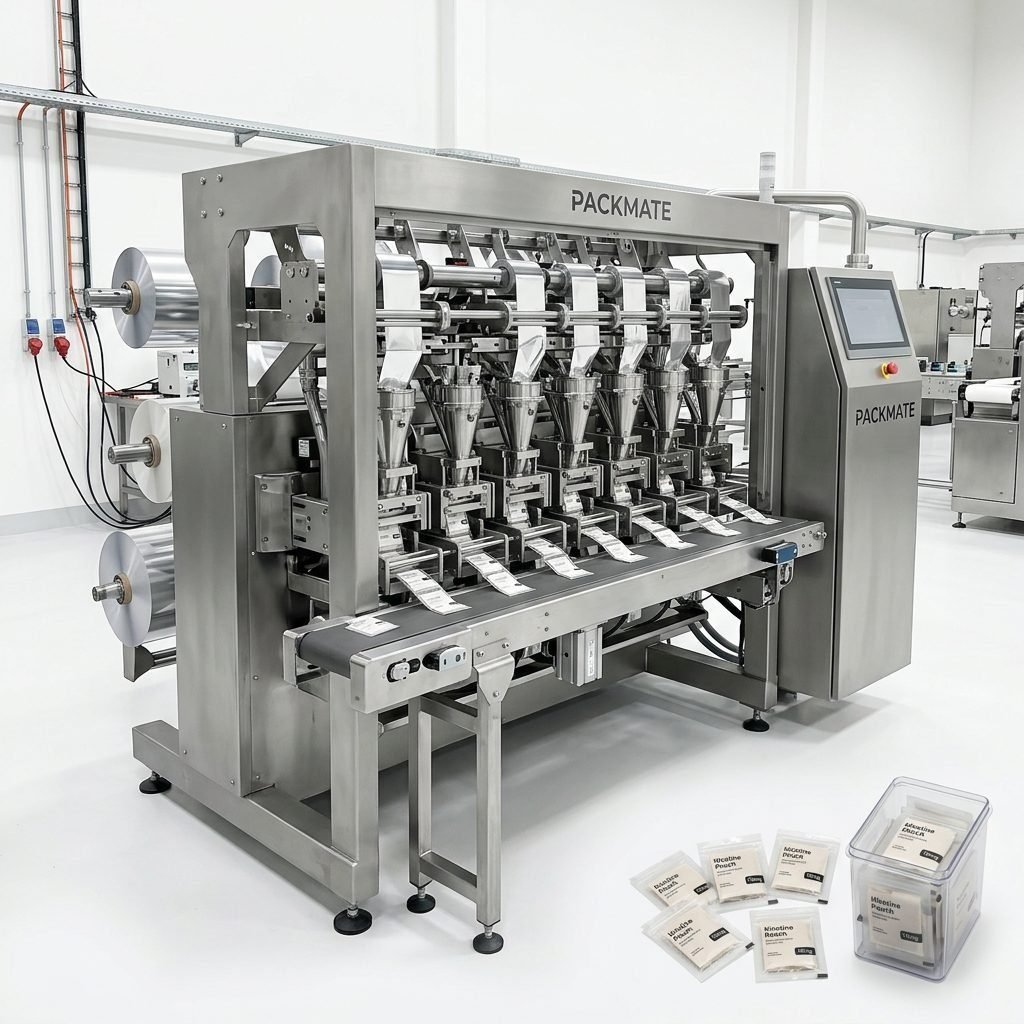
Each module is engineered for speed, hygiene, and repeatability. Typical modules include the material feed,forming head (for sachets, stick packs, or pillow pouches),multi-lane dosing systems,heat-sealing station,cutting section,and discharge conveyor. Modern snus systems may add vibration densification, nitrogen flushing, or integrated tray/case packers.
Quick note: Different product forms (e.g., small-dose nicotine pouches vs. traditional snus sachets) require tailored dosing heads and multi-lane arrangements. Packmate offers a variety of models to match product type and output targets — see Snus & Nicotine Packaging Machines for details.
Detailed Working Principle — Step by Step
1. Material supply and film handling
The process begins with unwinding the packaging film or pre-made pouches from reels. For sachet or stick pack systems the machine uses a forming collar or fold to shape the web into a pouch profile. Tension control, edge guides, and dancer systems maintain precise alignment. Sensors detect web position and trigger synchronization with downstream operations.
2. Dosing and metering
Accurate dosing is critical for regulatory compliance and product consistency. Two common approaches:
- Gravimetric/weighing systems: High-precision weigh hoppers or multi-head weighers feed exact doses into each pouch, ideal for powder or granular nicotine blends.
- Volumetric/auger fillers: Suitable for finely metered pastes or specific formulations where weight variability is minimal.
3. Filling, sealing and cutting
Once the pouch is formed and positioned, the dosing system deposits the product. After filling, heated jaws or ultrasonic sealing create airtight seals. The machine then cuts between pouches to separate them. Precision cams, servomotors, and encoder feedback ensure every pouch is identical in volume and appearance.
4. Inspection and sorting
Inline quality checks — such as weight checkers, vision systems, and metal detectors — remove defective pieces or trigger line stops. Count systems and label/coding stations add batch codes and manufacturing data. Rejected pouches are guided to a rejection chute for separation.
Performance tip: Synchronizing the dosing index with servo-driven sealing reduces product spillage and improves yield. Consider multi-lane dosing for higher throughput while maintaining dose accuracy.
Main Components Explained
Understanding the role of each component helps operators optimize line performance and troubleshoot issues quickly.
Unwinder and web guiding
Controls film tension and alignment. Servo or pneumatic brakes compensate roll diameter changes to keep tension steady.
Forming unit
For sachets and stick packs the forming collar shapes the film; for pre-made pouches the pick-and-place system positions each pouch for filling.
Weigher/filler
Multi-head weighers, auger fillers, or piston fillers are used depending on product characteristics.
Sealer and cutter
Options include heat-seal jaws, ultrasonic sealing, or impulse sealing depending on film materials and production speed. Knife or rotary cutters separate units cleanly.
Operation Guide — Setup, Run, Changeover
Pre-start checks
Always perform these checks before powering the line:
- Verify film/pouch material is compatible and loaded correctly
- Confirm dosing parameters and target weights are programmed
- Check sensors, safety interlocks, and emergency stops
- Ensure the reject and collection bins are empty and in place
Running the line
Start at low speed to verify synchronization between forming, dosing, sealing, and cutting. Use the HMI to monitor alarms, cycle counters, and weight statistics. Increase speed in stages while confirming quality metrics remain within tolerance.
Changeover and format adjustment
Changeovers for size or material typically involve replacing forming parts, adjusting fill nozzles, and resetting sealing temperatures. Well-designed machines feature quick-release components and programmable format recipes to reduce downtime.
Efficiency tip: Use saved format recipes on the HMI for fast changeovers — especially important when running multiple SKUs in the same shift.
h3 style=”color:black;margin:16px 0 8px 0;”>
Cleaning, Maintenance & Troubleshooting
Daily cleaning
Maintain hygiene by cleaning product-contact surfaces after each run or shift. Use approved cleaning agents that don’t damage seals or sensors. Ensure electrical components are protected during washdown.
Preventive maintenance
Establish a PM schedule that includes lubrication of bearings, inspection of sealing jaws, calibration of weighers, and inspection of belts and cams. Replace wear parts on a planned cycle to avoid unplanned downtime.
Common troubleshooting
Frequent issues include inconsistent fill weights, poor seals, or web tracking problems. Troubleshoot by checking material properties (thickness, coatings), verifying weigh calibration, confirming jaw temperature, and inspecting alignment sensors.
Reminder: Keep a log of alarms and corrective actions. Trend data from weight checkers and sensors helps identify root causes over time.
Quality, Compliance and Safety
Snus and nicotine pouch packaging is subject to strict quality and regulatory requirements. Machines must support traceability (batch codes), hygienic design, and operator safety. Certifications such as CE and ISO demonstrate compliance with international standards.
If you need complete line solutions or certification details, Packmate’s product pages and certificates are useful references. See Bag & Pouch Packaging Machines and Certificate for typical machine families and compliance information.
Custom Solutions and Upgrades
Many manufacturers require tailored features: multi-lane high-speed systems for small-dose pouches, nitrogen flushing for extended shelf-life, or integrated weighing and secondary packaging. Vendors like Packmate provide turnkey options including Filling & Packaging Lines and Weighing & Packaging Systems for complete integration.
Real-world cases and support
Global suppliers often demonstrate machines at trade shows and run pilot production for validation. Explore case studies and exhibition schedules to see machines in operation — check Our Exhibition and Case for examples and partner success stories.
Pro tip: Before committing to high-speed multi-lane systems, run a production trial with your specific blend and film to confirm dosing behavior and seal integrity.
Buying Considerations
When selecting a snus packing machine consider:
- Throughput requirements (units/min and lanes)
- Product type and dosing precision
- Hygienic and regulatory compliance
- Ease of changeover and spare parts availability
- After-sales service and local support
For a catalog of available models and modular options, see Catalog and Snus & Nicotine Packaging Machines.
Final Thoughts
A properly specified snus packing machine is the backbone of a consistent, compliant snus or nicotine pouch production line. Combining accurate dosing, robust sealing, and inline inspection yields high product quality and optimized yield. Work with experienced suppliers who offer machine customization, installation support, and long-term servicing to protect production uptime.
Frequently Asked Questions
Q1: What dosing accuracy can I expect?
A: High-quality multi-head weighers and calibrated auger fillers typically achieve ±0.5–2.0% depending on product properties and machine tuning. Gravimetric systems are more accurate for lightweight pouches.
Q2: Can one machine handle multiple pouch sizes?
A: Yes—many machines offer format kits and programmable recipes for fast changeovers. Confirm quick-change capabilities when ordering.
Q3: How do I ensure regulatory compliance?
A: Use machines with hygienic design, maintain detailed batch records (coding), and choose equipment with relevant certifications (CE, ISO). Working with an experienced supplier simplifies documentation.
Q4: Where can I see machines in action or request service?
A: Visit supplier exhibition pages or contact the manufacturer for on-site demos and service options. For more information, see About Packmate and Contact Us.
⚙️🔧📦✅