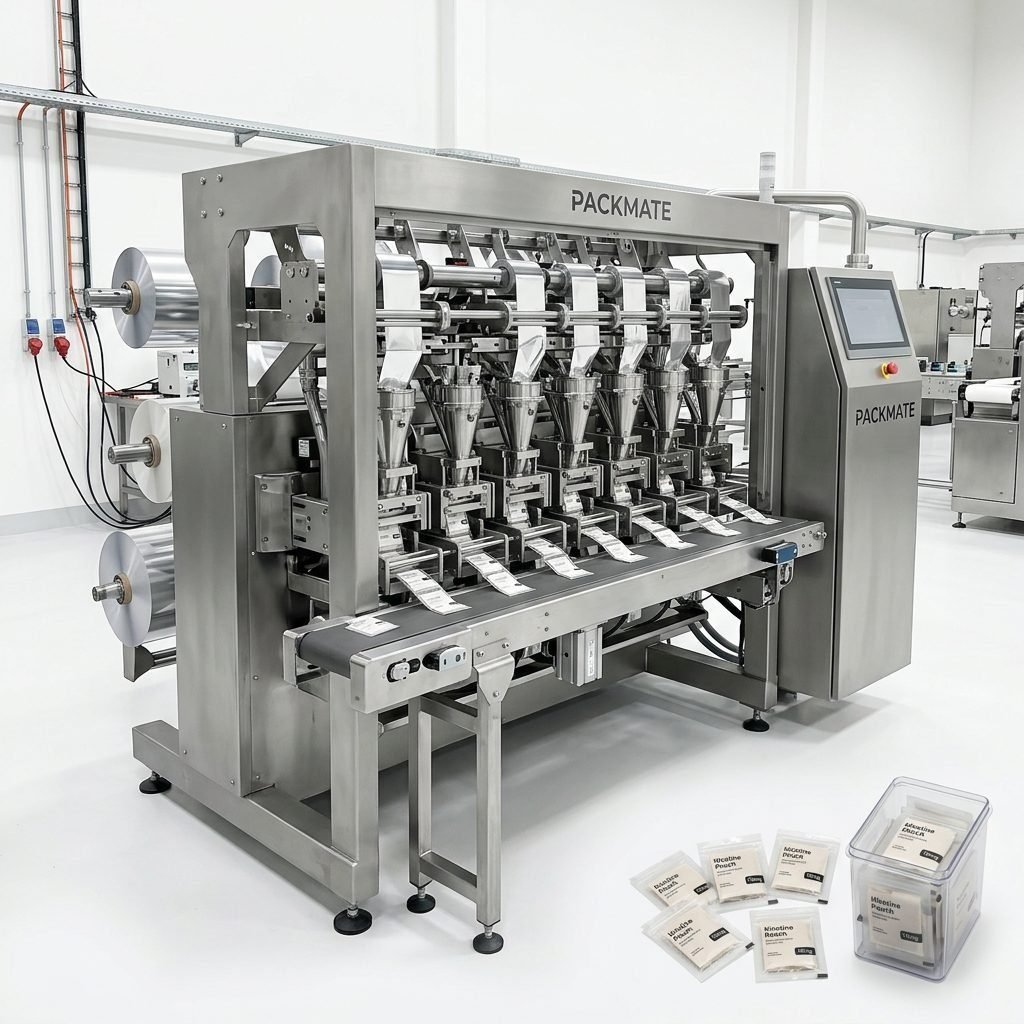
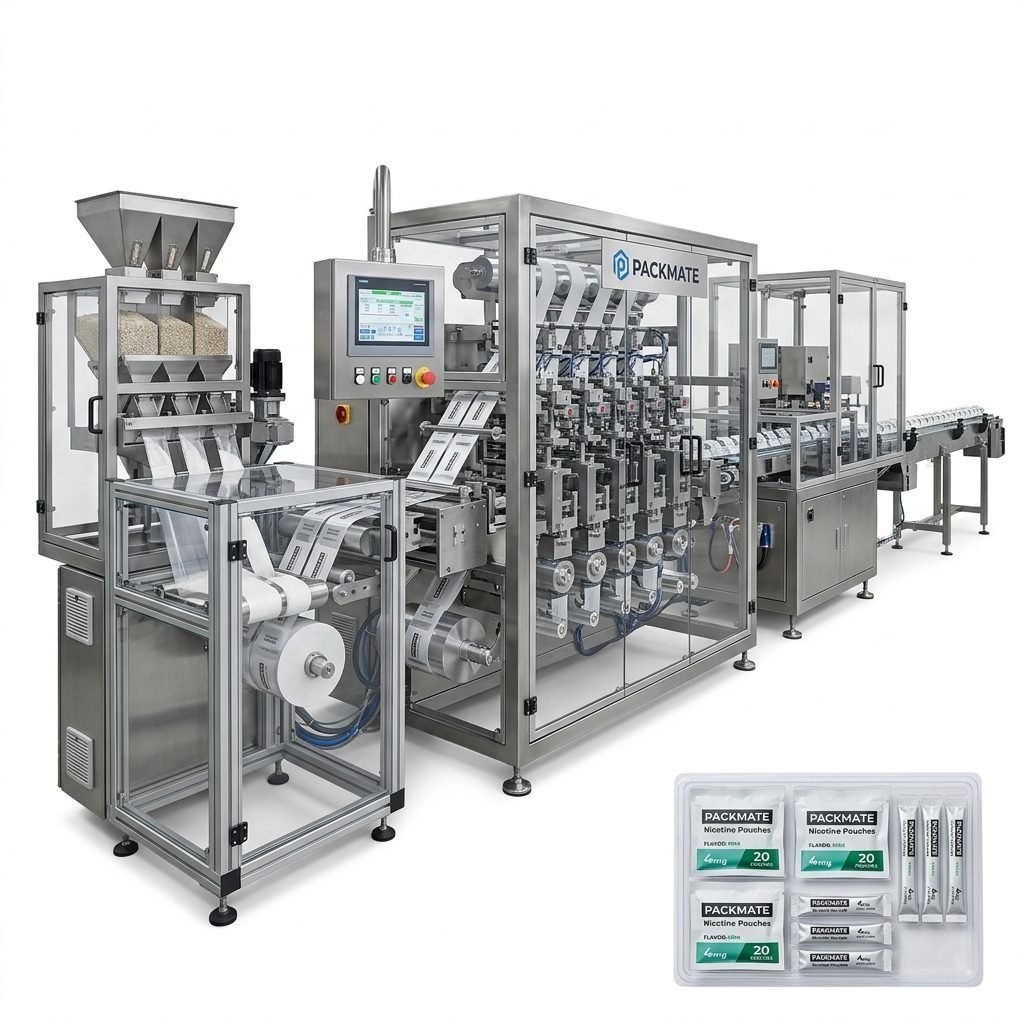
In an era where product safety, regulatory compliance, and production efficiency define competitive advantage, a food grade snus production line offers manufacturers a complete automatic manufacturing solution for safe oral tobacco and nicotine pouch products. This article explores the technical features, hygiene requirements, modular equipment, and business benefits of a fully integrated snus production line — detailing how modern packaging machinery transforms small-dose oral tobacco production into a scalable, consistent, and compliant operation.
Why “Food Grade” Matters for Snus and Nicotine Pouch Production
The term food grade refers to materials, process controls, and hygienic design principles that minimize contamination risks and allow products to meet strict safety standards. For oral tobacco products like snus and nicotine pouches, adopting food grade standards not only helps satisfy regulatory requirements but also supports consumer trust and quality assurance across export markets.
Key elements of food grade snus production include:
- Use of stainless steel (304/316) contact parts and sanitary fittings
- Closed transfer systems for tobacco, fillers, and liquids to prevent airborne contamination
- Cleanable, wash-down-capable equipment with minimal crevices
- Traceable material flows and batch recording for quality control
Core Components of a Complete Automatic Snus Production Line
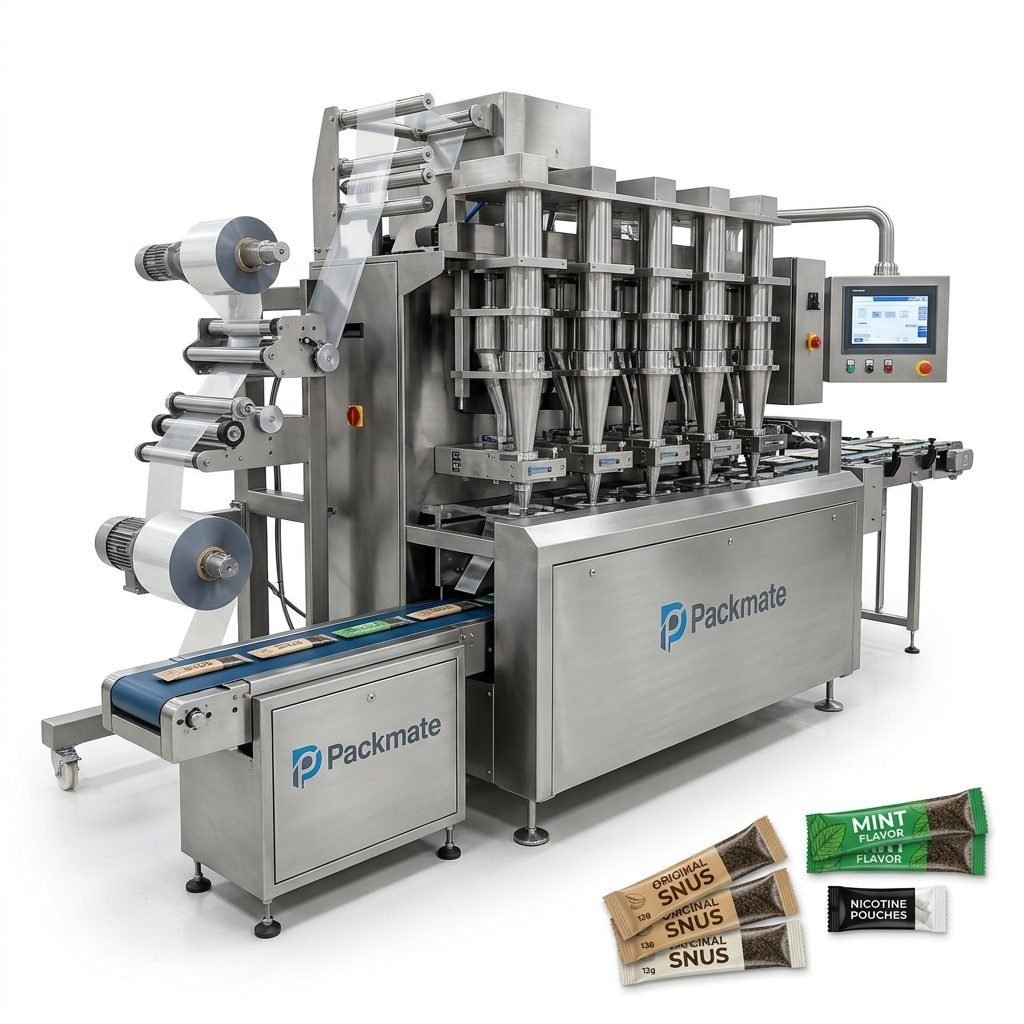
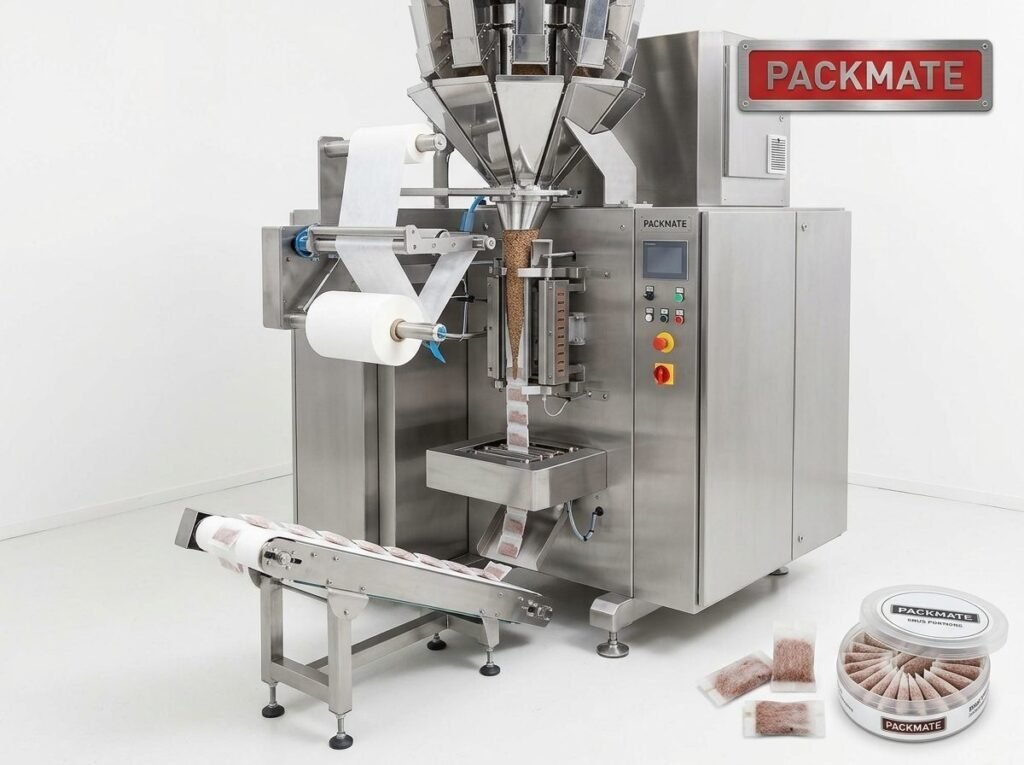
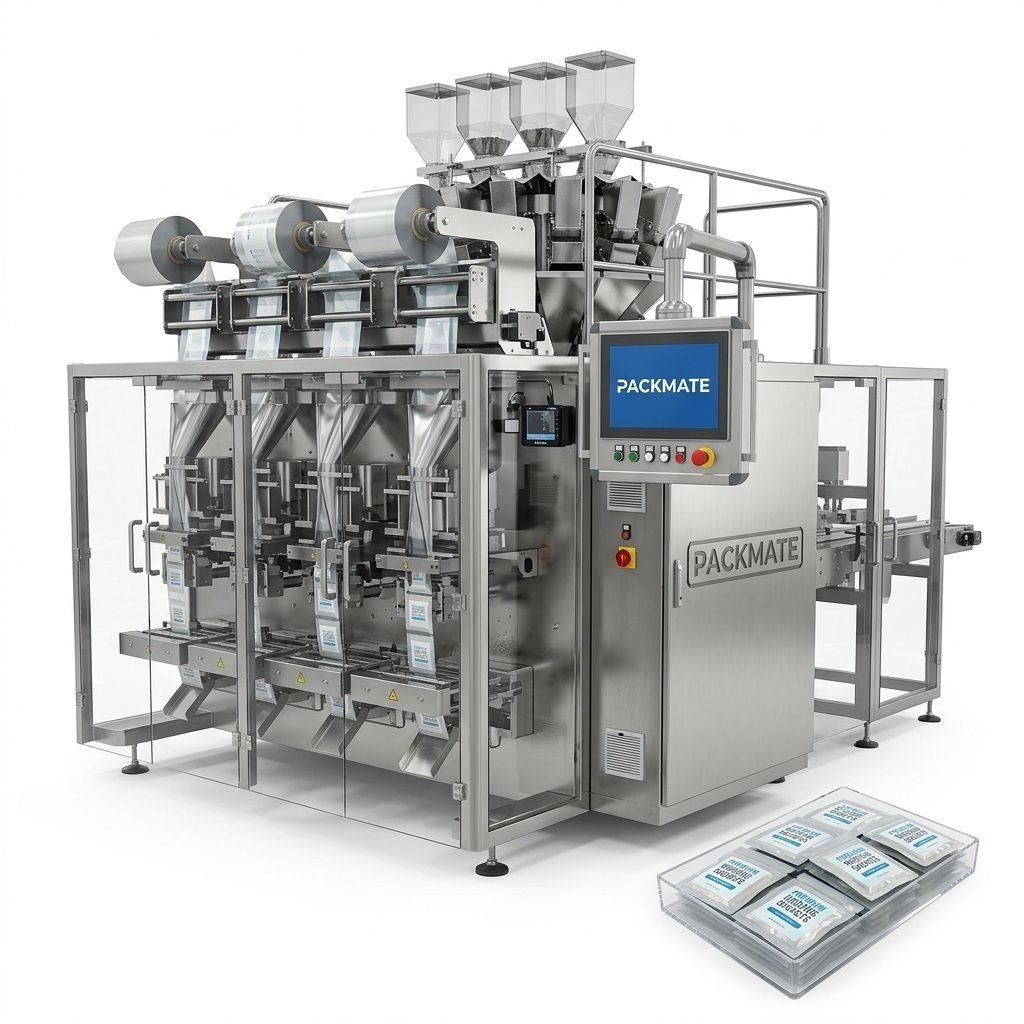
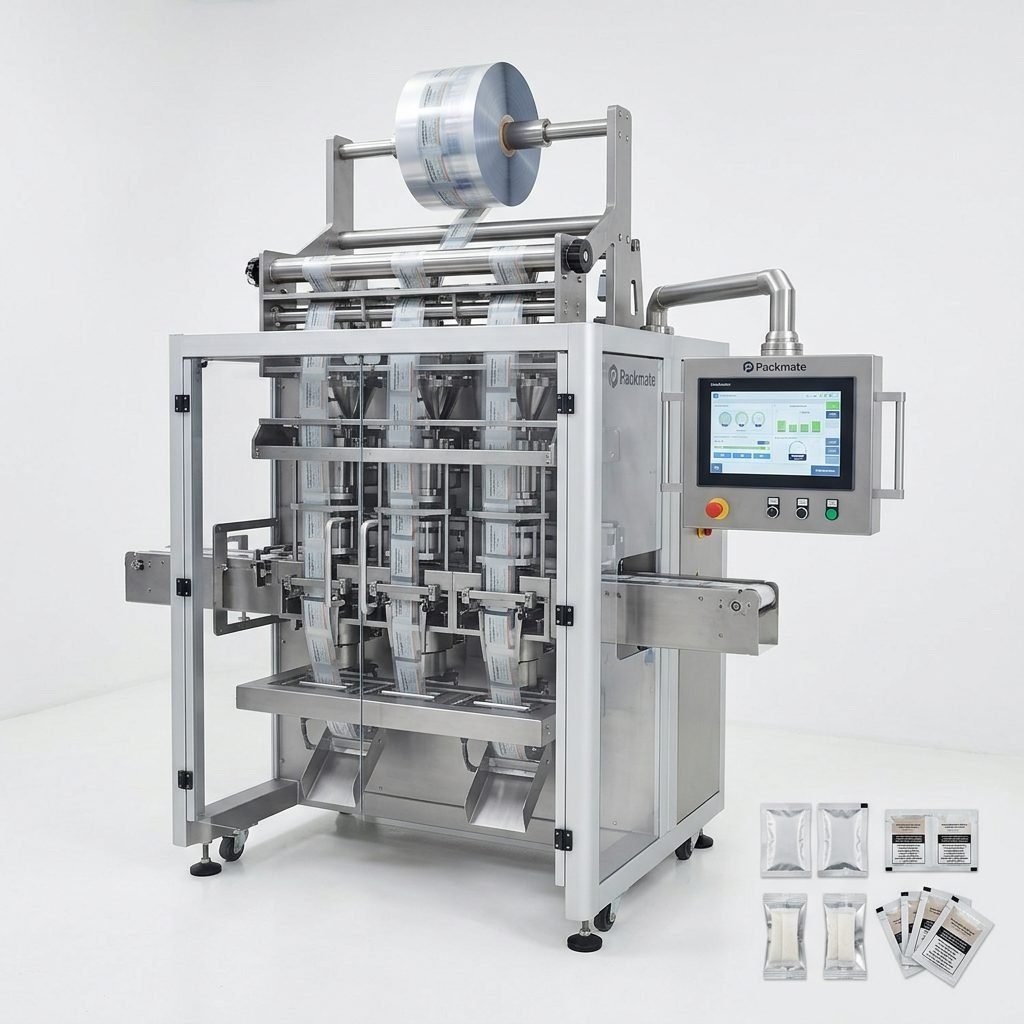
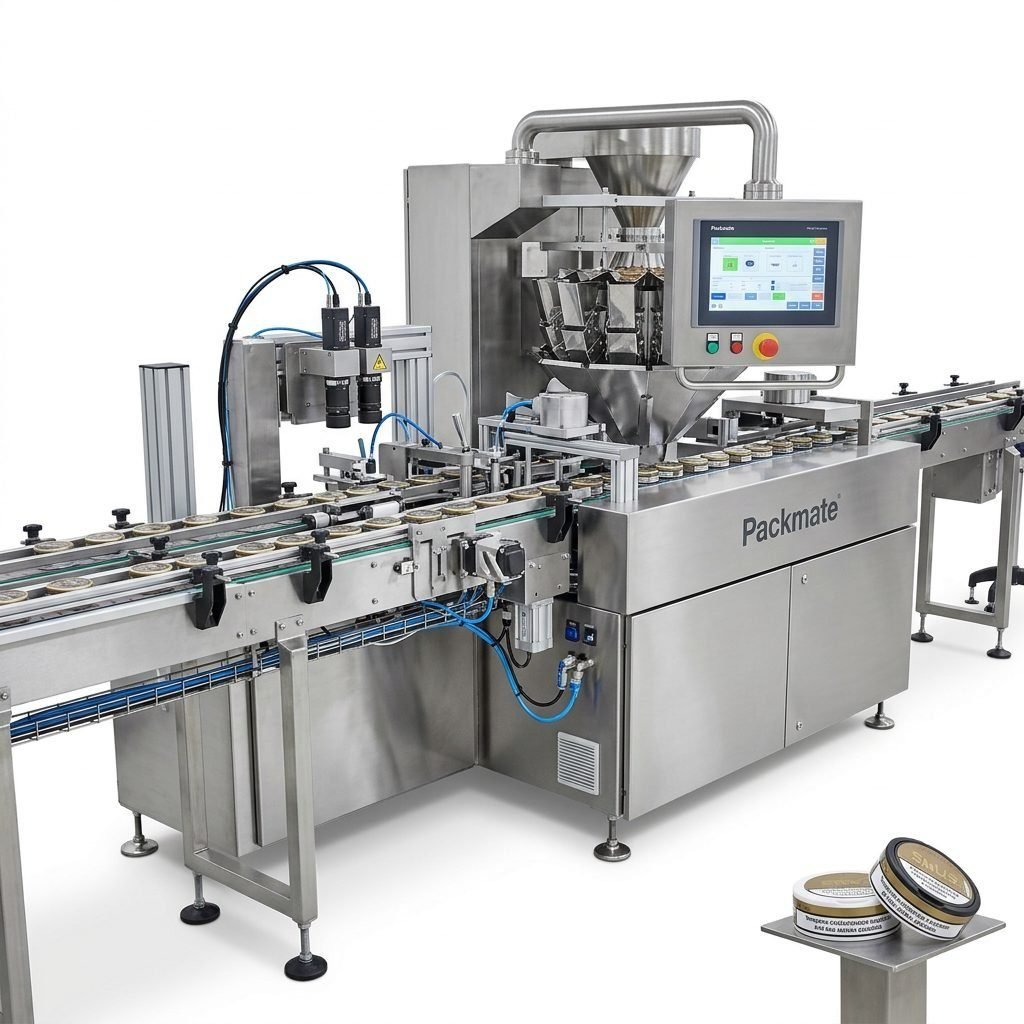
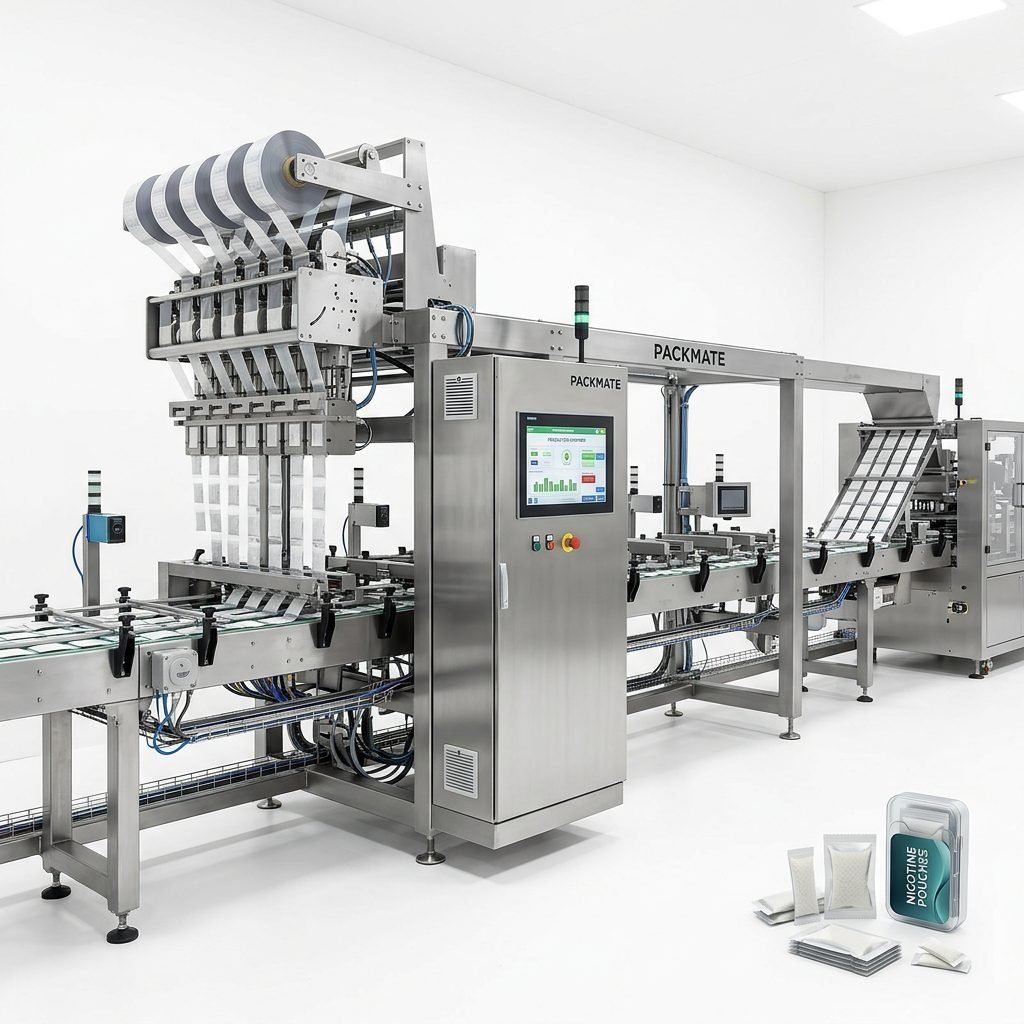
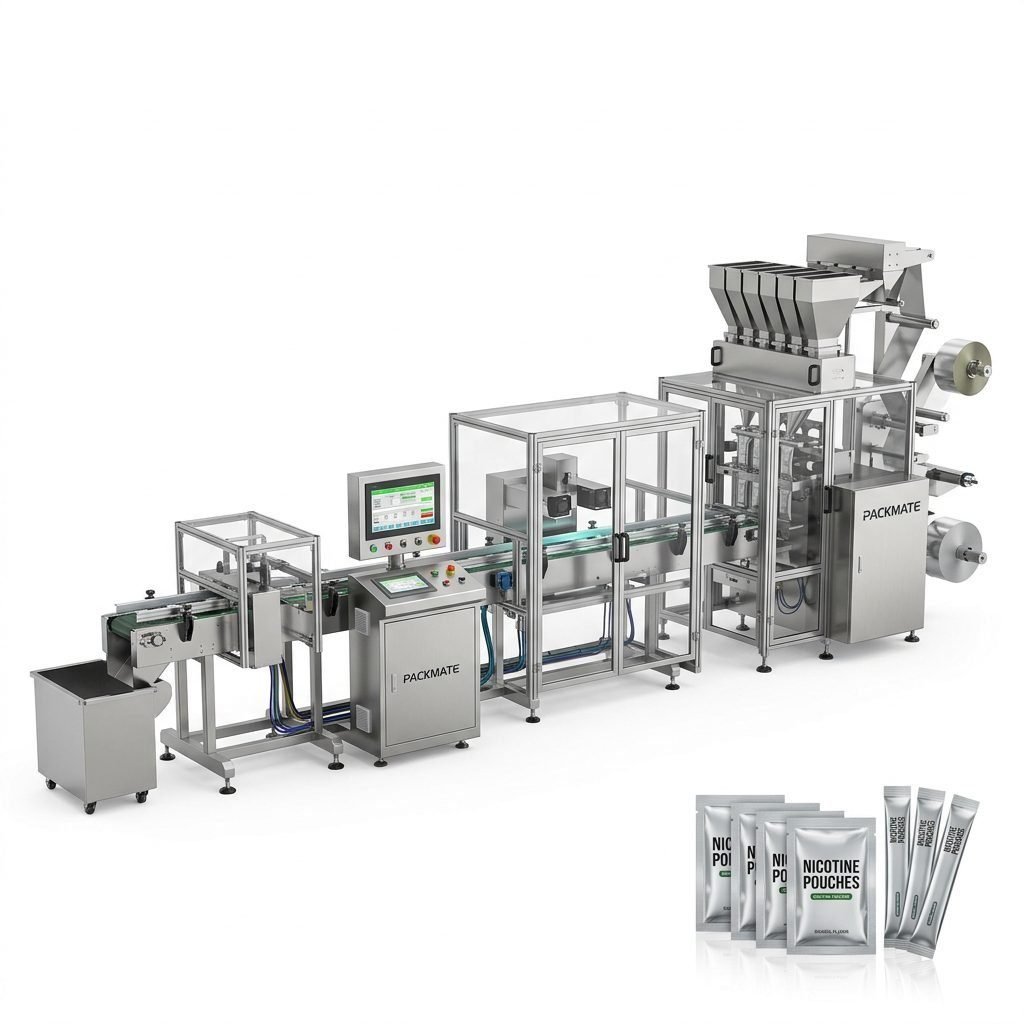
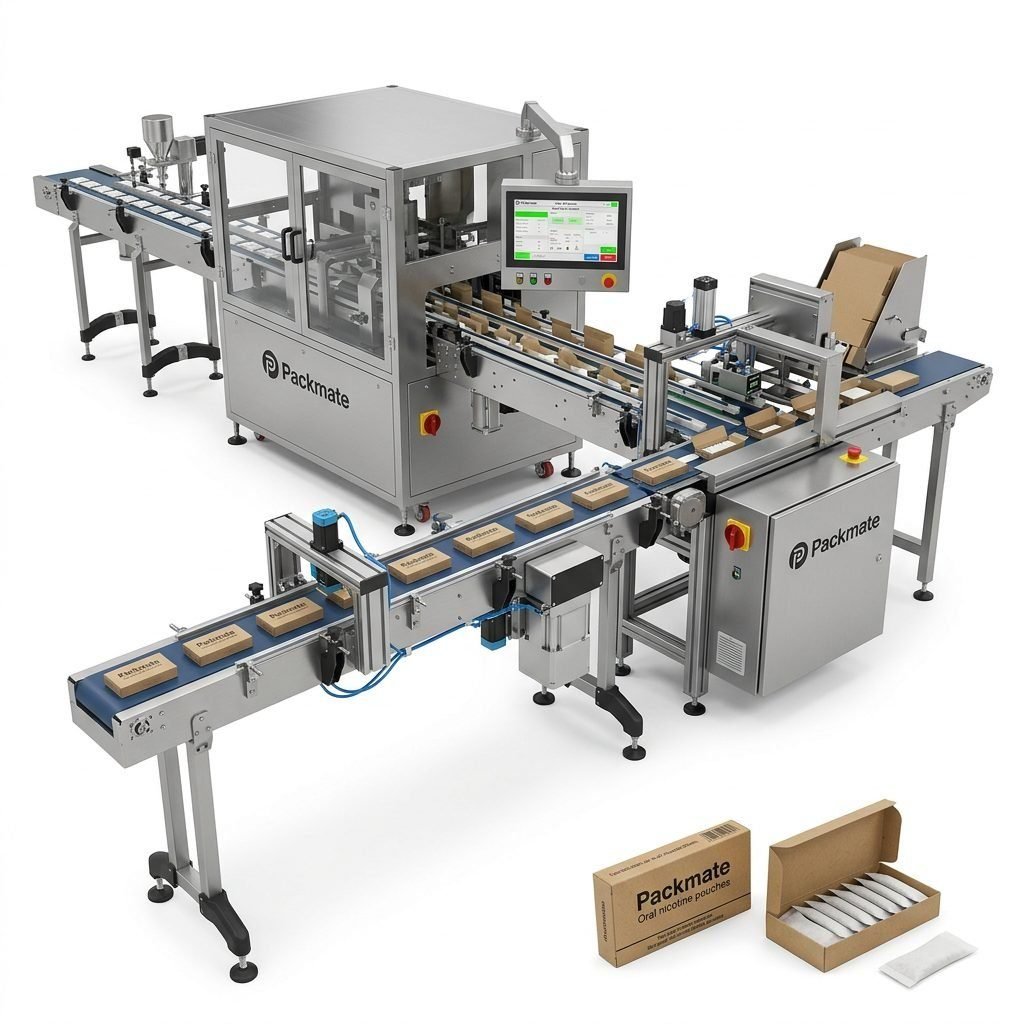
A turnkey snus production line integrates multiple machines to perform raw material handling, portioning, pouch forming, filling, sealing, and final packaging. Below are the principal modules commonly found in modern lines:
- Raw Material Handling: Hygienic hoppers, conveyors, and vacuum systems for tobacco, powder blends, and micro-ingredients.
- Weighing & Dosing: High-precision multi-head weighers and loss-in-weight feeders to ensure consistent pouch weights (Weighing & Packaging Systems).
- Pouch/Forming Machines: Multi-lane snus pouch formers for stick packs, sachets, or multi-dose pouches with accurate film handling and low dust exposure (Snus & Nicotine Packaging Machines).
- Filling & Sealing: Precision filling stations with rotary or intermittent sealing systems, often integrated into high-speed packaging heads (Filling & Packaging Lines).
- Secondary Packaging: Cartoners, case packers, and labeling units for retail-ready presentation.
- Control panels with PLC/HMI integration and data logging for traceability.
Automation Levels and Throughput Options
Manufacturers can choose from semi-automatic stations to fully automatic multi-lane lines. Typical configurations range from single-lane pilot systems for R&D to 8-lane or higher production lines for high-volume output. Regardless of scale, automation improves consistency and reduces labor dependency.
Production planning tip:
For start-ups, a two- to four-lane line balances flexibility and capital investment. Established brands targeting export markets often adopt 6- to 12-lane configurations to meet peak demand and reduce unit costs.
Hygiene, Cleaning, and Regulatory Compliance
Achieving food grade production requires validated cleaning procedures, documented standard operating procedures (SOPs), and materials certification. Machines should be designed for easy disassembly, have smooth welds, and support CIP (clean-in-place) where applicable. Certifications such as CE and ISO are expected in global supply chains — Packmate machines hold relevant industry certifications and can be delivered with factory documentation for audits.
Material Selection and Contact Surfaces
Stainless steel grades and food-grade polymers are used for product-contact parts. Non-contact areas may use painted or anodized surfaces, but product zones must be non-reactive, corrosion-resistant, and easy to sanitize.
Customization and Turnkey Services
An effective supplier delivers not only machines but also integration services: layout design, instrumentation, utility planning (compressed air, vacuum, electrical loads), commissioning, and operator training. Suppliers like Packmate offer end-to-end solutions tailored to small-dose oral products, from stick packs to sachets and multi-lane pouch systems. Learn more about the company and its history on the About Packmate page.
Case Studies and Global Deployment
Packmate has delivered snus packaging lines across Europe, Asia, and the Americas, supporting customers with installation and long-term service. These cases often involve adapting equipment to local product recipes, pouch formats, and downstream carton/palletizing systems. To view real-world references, explore sample projects in the company case library (Case).
Performance highlights customers often cite:
- Stable dosing accuracy within ±2–4%
- Reduced waste through closed handling and film optimization
- Higher throughput with multi-lane synchronization
- Faster changeovers and recipe-driven production
Economic Considerations and ROI
Investment in a food grade snus production line is justified by labor savings, higher yields, and market access. Key financial drivers include:
- Labor reduction through automation of repetitive tasks
- Lower scrap rates due to precise dosing and sealing
- Ability to scale production without proportional increases in overhead
- Faster market entry with compliant equipment and documentation
Design Features That Improve Uptime and Maintainability
Reliability is built by design: plug-and-play modules, accessible wear parts, predictive maintenance alerts from PLC diagnostics, and spare parts kits reduce downtime. Many modern lines incorporate quick-change cassettes for sealing jaws and dosing nozzles, enabling rapid format changes during production runs.
Operator Training and After-Sales Service
Comprehensive training programs ensure operators understand machine mechanics, hygienic cleaning, GMP protocols, and troubleshooting. Reputable suppliers provide local service networks or remote support, spare parts supply, and scheduled maintenance plans — all critical for long-term performance.
Selecting the Right Supplier: Criteria Checklist
When choosing a partner for a food grade snus production line, evaluate the following:
- Engineering pedigree and industry experience (years and scale of manufacturing)
- Range of machine models and customization capability
- Certifications and compliance documentation
- Factory layout and manufacturing capacity
- Customer references and case studies
- After-sales support and spare parts availability
Quick checklist icon: ✓ Seek suppliers with proven turnkey delivery, on-site commissioning, and clear documentation.
Integration with Upstream and Downstream Processes
A production line does not operate in isolation. Integrating material pre-treatment (blending, conditioning) and downstream systems (cartoning, case packing, palletizing) drives full-line efficiency. Many customers pair their pouch lines with complementary systems, such as auxiliary equipment for metal detection or nitrogen flushing, to meet product-stability requirements. Explore compatible machines in the broader product catalog: Bag & Pouch Packaging Machines and Auxiliary Packaging Equipment.
Commissioning, Validation, and Documentation
Successful commissioning includes FAT (Factory Acceptance Test), SAT (Site Acceptance Test), IQ/OQ/PQ (Installation, Operational, Performance Qualification) protocols, and complete machine documentation. These steps prove the line operates within specified parameters and generates consistent output to be accepted by product auditors and regulators.
Sustainability and Waste Reduction
Modern production lines emphasize material efficiency: film usage optimization, energy-efficient drives, and recycling programs for production waste. A food-grade approach also reduces product loss due to contamination, adding an environmental benefit by minimizing discarded batches.
Exhibitions and Live Demonstrations
Seeing a machine in operation is invaluable. Manufacturers often showcase their systems at industry exhibitions where live demonstrations reveal practical speed, format changeover ease, and build quality. To learn where the supplier exhibits, visit Our Exhibition.
Practical Steps to Implement a Food Grade Snus Production Line
Implementation follows a phased approach:
- Define product formats, target volumes, and regulatory destinations.
- Engage with a supplier to finalize equipment scope and factory layout.
- Execute FAT and finalize tooling for specific pouch types.
- Install, commission, and qualify the line on site with pilot runs.
- Train operators and establish cleaning & maintenance schedules.
- Scale production with continuous improvement feedback loops.
Need help? Contact the supplier’s sales and service team for a tailored proposal: Contact Us.
Common Challenges and How to Mitigate Them
Common challenges include dust control, static buildup in dry blends, film sealing integrity, and precise dosing of small-volume sachets. Mitigation strategies:
- Install dust extraction and local exhaust ventilation.
- Implement anti-static measures and humidity control.
- Use continuous seal monitoring and reject mechanisms.
- Maintain tight calibration routines for dosing equipment.
Final Thoughts
A food grade snus production line represents a strategic investment for manufacturers seeking quality, consistency, and market access. By combining hygienic design, precise dosing, and fully integrated automation, companies can scale production, maintain compliance, and reduce per-unit costs while meeting consumer expectations for safe, reliably packaged oral tobacco products.
For product brochures and machine specifications, download the catalog or review specific machine families in the product pages: Catalog.
Frequently Asked Questions
Q1: What does “food grade” imply for snus packaging equipment?
A1: Food grade implies the use of sanitary materials, hygienic machine design, validated cleaning procedures, and documentation that support product safety and regulatory compliance. It reduces contamination risk and meets auditor expectations.
Q2: How quickly can a turnkey line be delivered and commissioned?
A2: Lead times vary with customization level. Standard modular lines can be delivered and commissioned within several months, while highly customized multi-lane lines may require longer engineering time. Early supplier engagement shortens the timeline.
Q3: Can the same line handle different pouch formats and nicotine doses?
A3: Yes. Modern machines support quick-change tooling and recipe management for switching pouch sizes, doses, and film types. Multi-lane flexibility enables parallel production of multiple SKUs.
Q4: What after-sales services are typically provided?
A4: Suppliers usually offer commissioning, operator training, preventive maintenance contracts, spare parts lists, remote diagnostics, and on-site repair services to ensure long-term uptime.
Q5: How can I view live demonstrations or arrange a factory visit?
A5: Contact the sales team to schedule live demonstrations either at trade shows or in the factory. For details and scheduling, visit the supplier’s exhibition and contact pages: Our Exhibition, Contact Us.