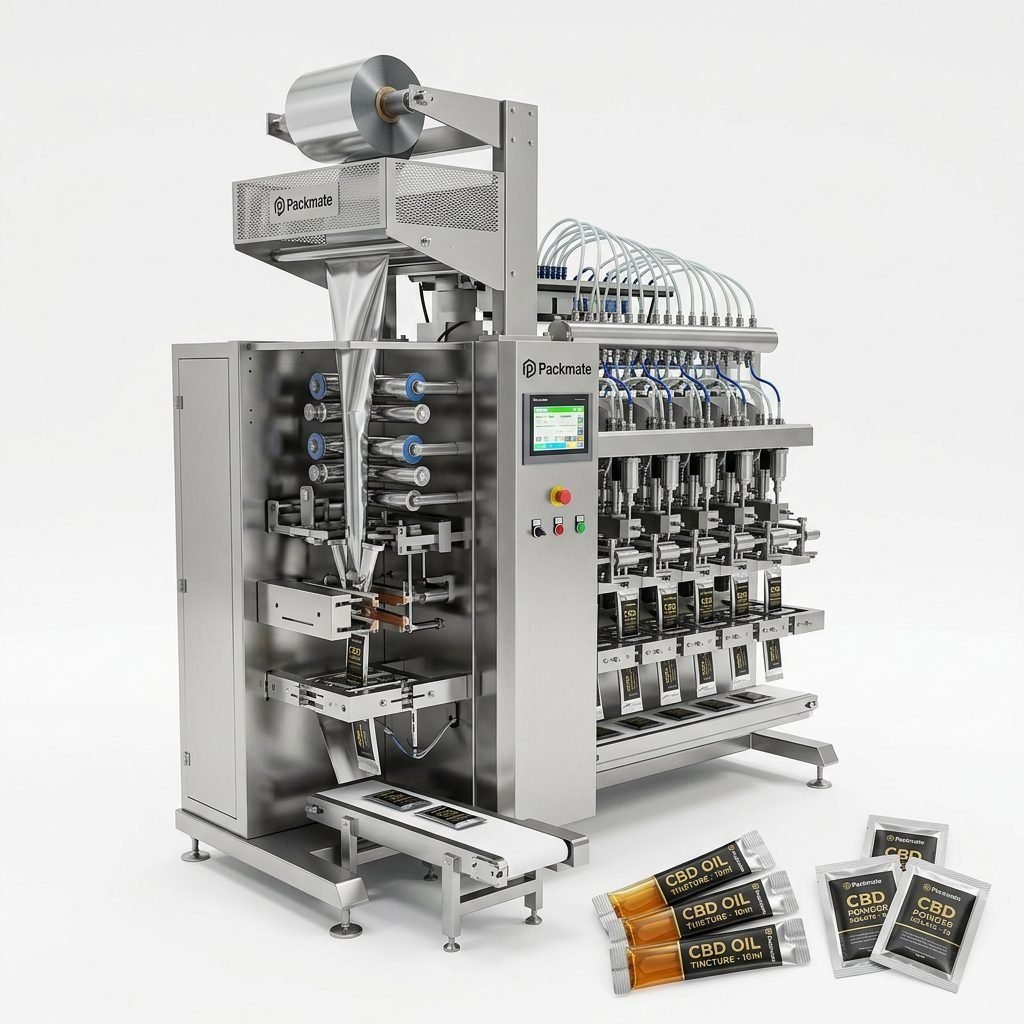
The snus production ecosystem has evolved rapidly over the last two decades, driven by consumer demand for consistent product quality and regulatory compliance. Manufacturers now rely on specialized equipment to transform raw tobacco or nicotine formulations into well-sealed pouches and sachets, ensuring uniform dosing, reliable shelf life, and efficient high-speed output. This guide walks through the machines, line configurations, and selection criteria that define modern snus production, with practical tips for efficient operation and investment decisions.
Overview of Snus Manufacturing Equipment
Snus and nicotine pouch production requires a combination of precision dosing, pouch-forming, sealing, and packaging equipment. Core systems are designed to handle fine powders, moist blends, micro-dosed fillings, and various pouch materials. For manufacturers seeking turnkey lines, fully integrated solutions include feeding systems, multi-lane pouch formers, weighing modules, and final packagers that prepare retail-ready boxes or bags.
Key functions covered by production lines
✓ Precise filling and weighing to secure dose consistency.
✓ Pouch forming and sealing to maintain freshness and prevent leaks.
✓ Multi-lane high-speed packaging to increase throughput without sacrificing accuracy.
✓ In-line quality checks and rejection systems for compliance and consumer safety.
Essential Machines in a Snus Production Line
A standard snus packaging line typically includes several specialist machines working in sequence. Below are the most common units and their roles.
1. Feeding & Blending Units
Accurate and homogeneous blending of the base material or nicotine formulation is crucial. Feeders and mixers are designed to handle hygroscopic powders and moist blends while minimizing dust and segregation. Consistent feed rates are the foundation for repeatable pouch weights.
2. Weighing & Dosing Systems
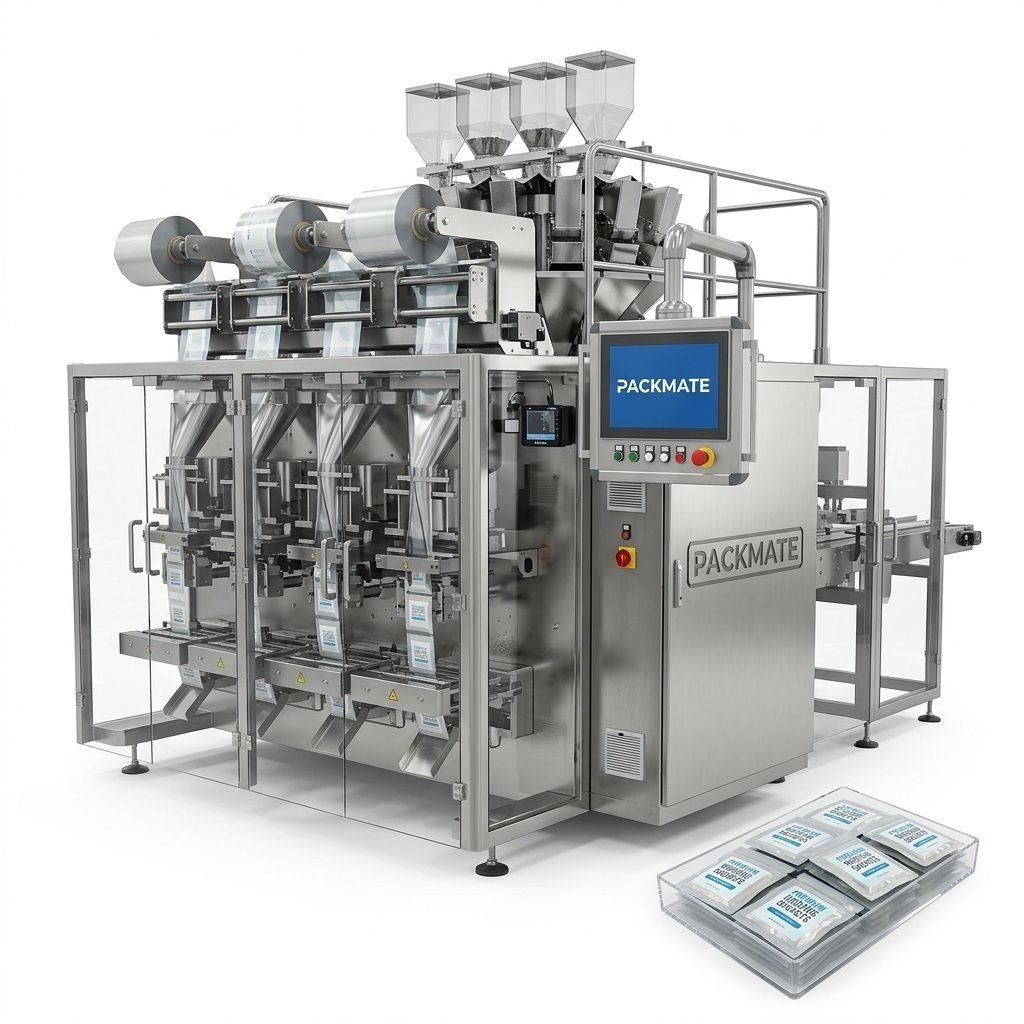
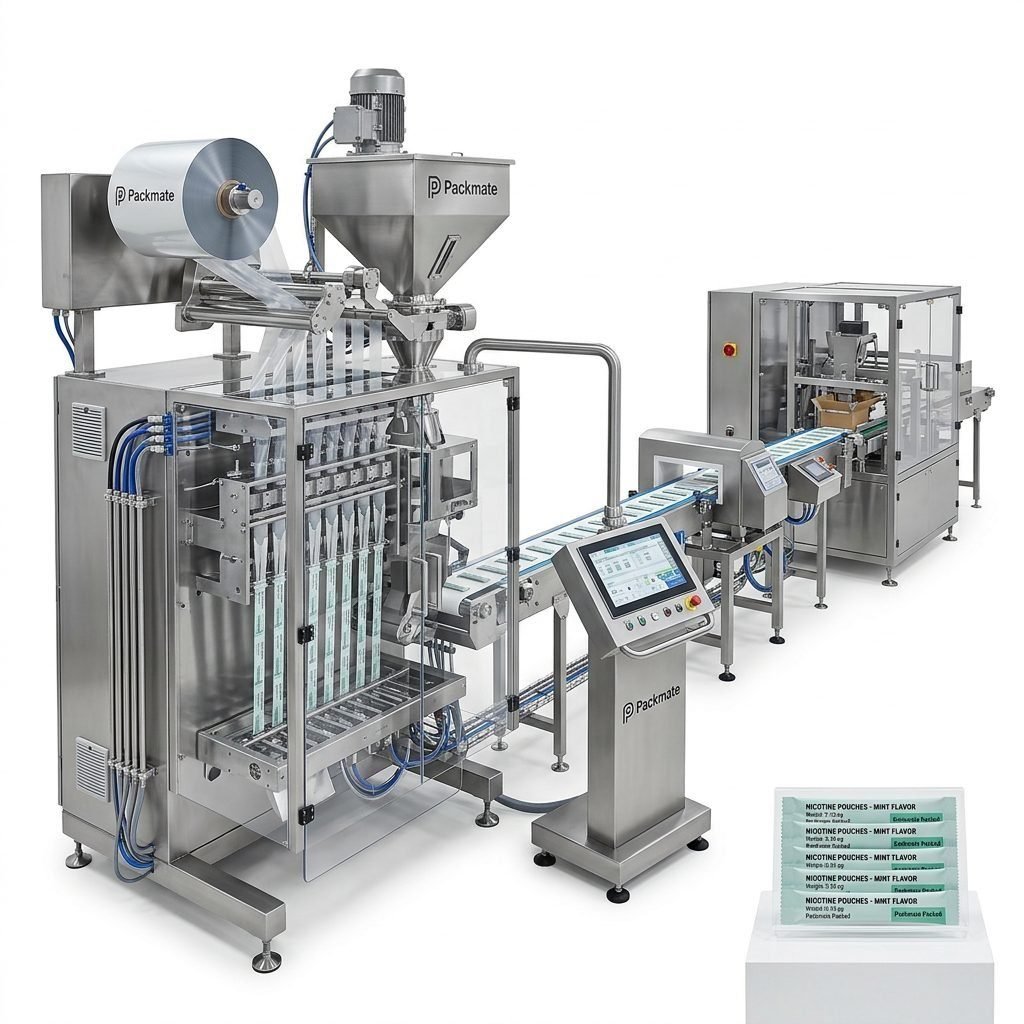
Whether using volumetric dosers or precision multi-head weighers, the goal is the same: exact dosing at production speeds. Modern systems often integrate with line controls to adapt feed rates on-the-fly and to log production data for traceability. See examples of weighing and packaging systems for varied product types.
(Weighing & Packaging Systems)
3. Pouch Forming & Sealing Machines
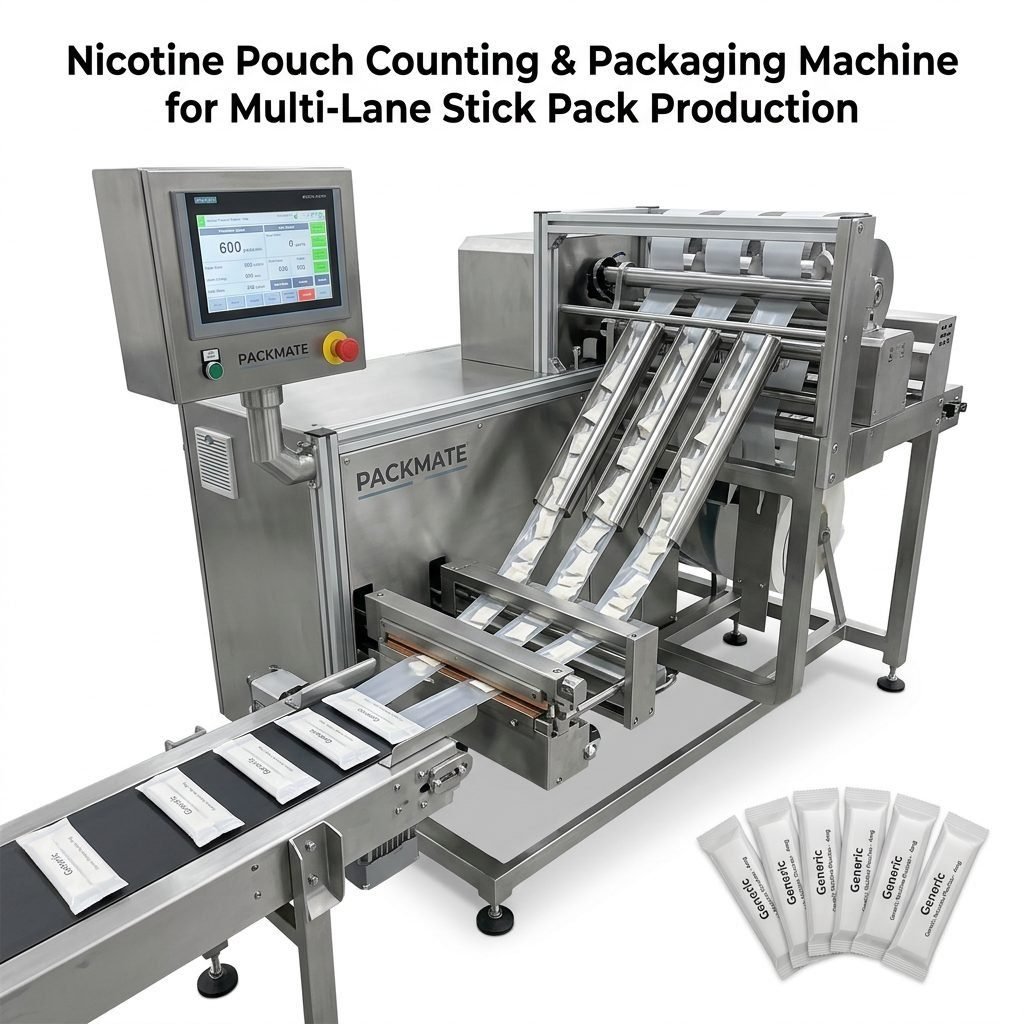
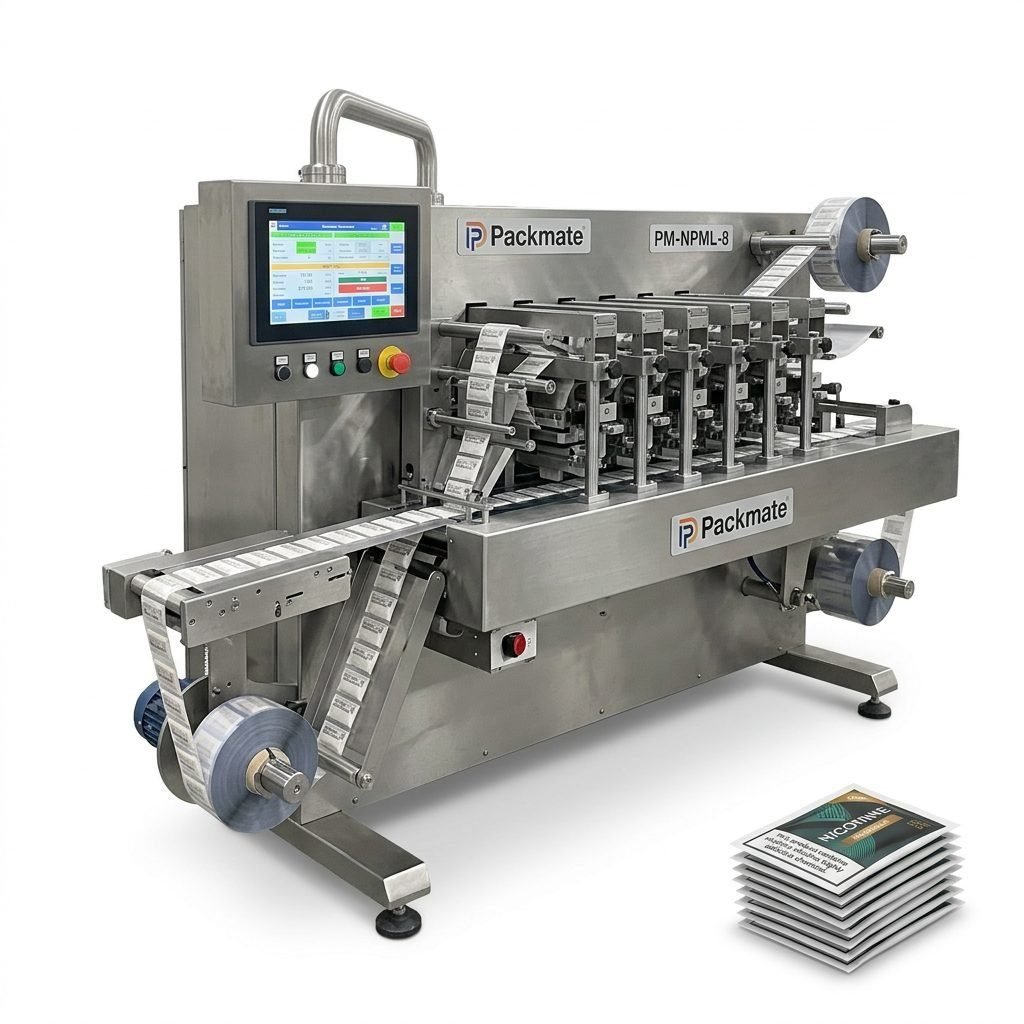
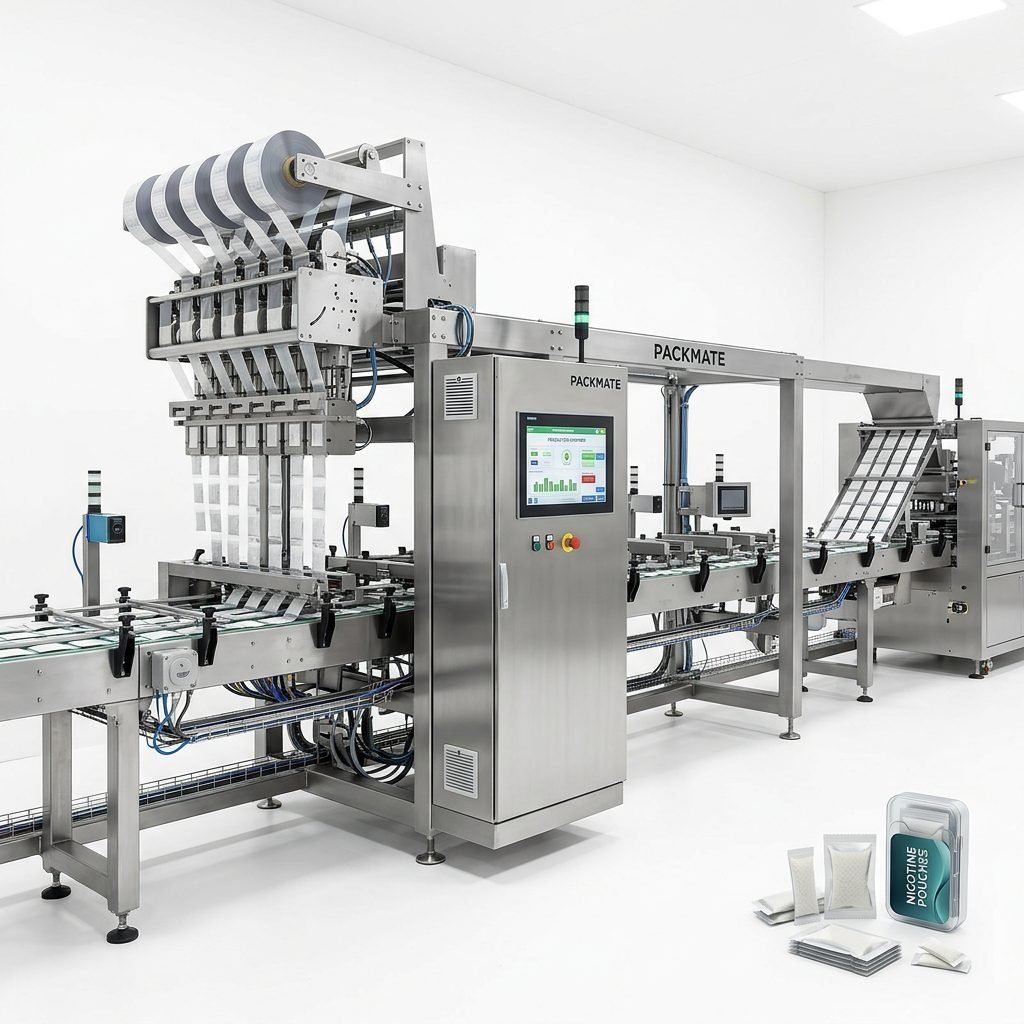
Pouch formers are tailored to the pouch type: sachet, stick pack, or small nicotine pouches. For snus, multi-lane pouch machines enable simultaneous forming and filling of multiple lanes, multiplying throughput. Reliable sealing systems (heat, ultrasonic, or combination) ensure the integrity of each pouch.
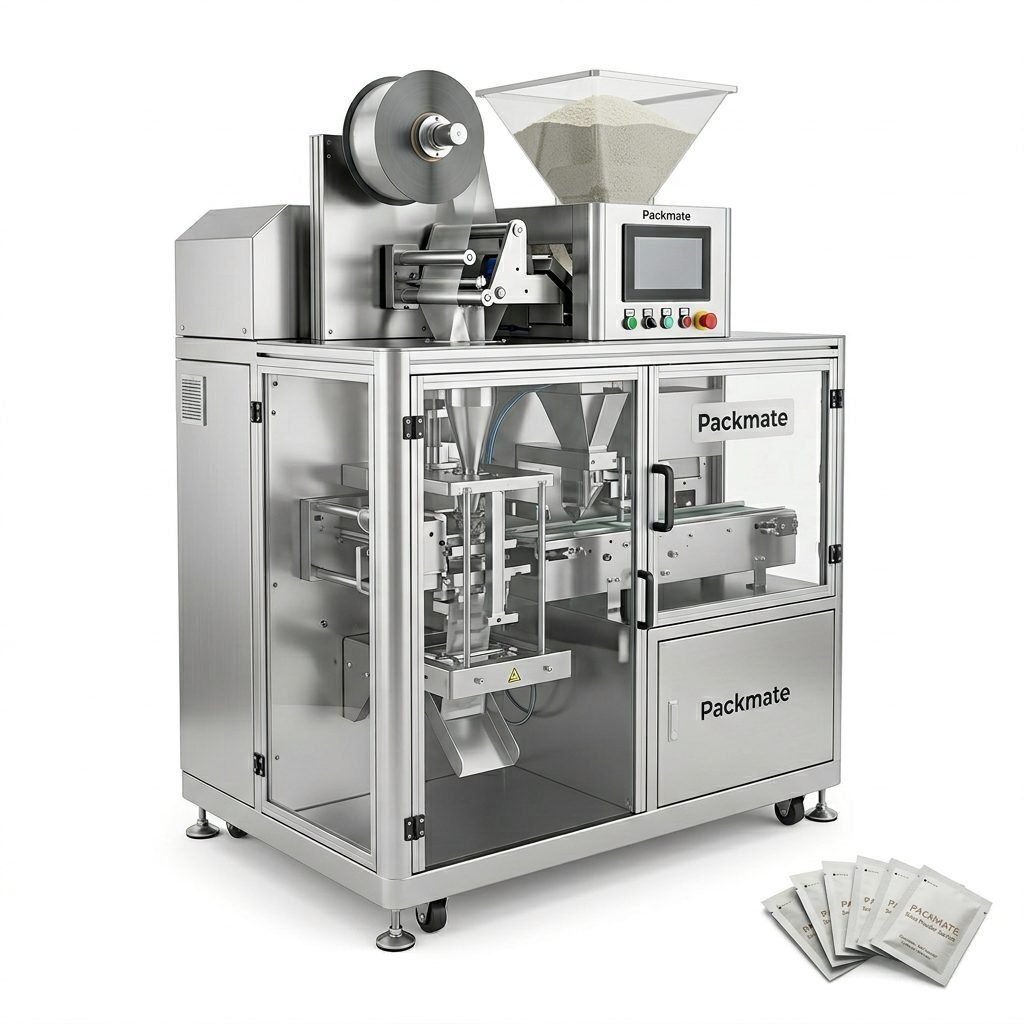
For manufacturers focused on sachets and stick packs, specialized equipment can be found here:
(Sachet & Stick Pack Machines)
4. Secondary Packaging: Cartoning & Bagging
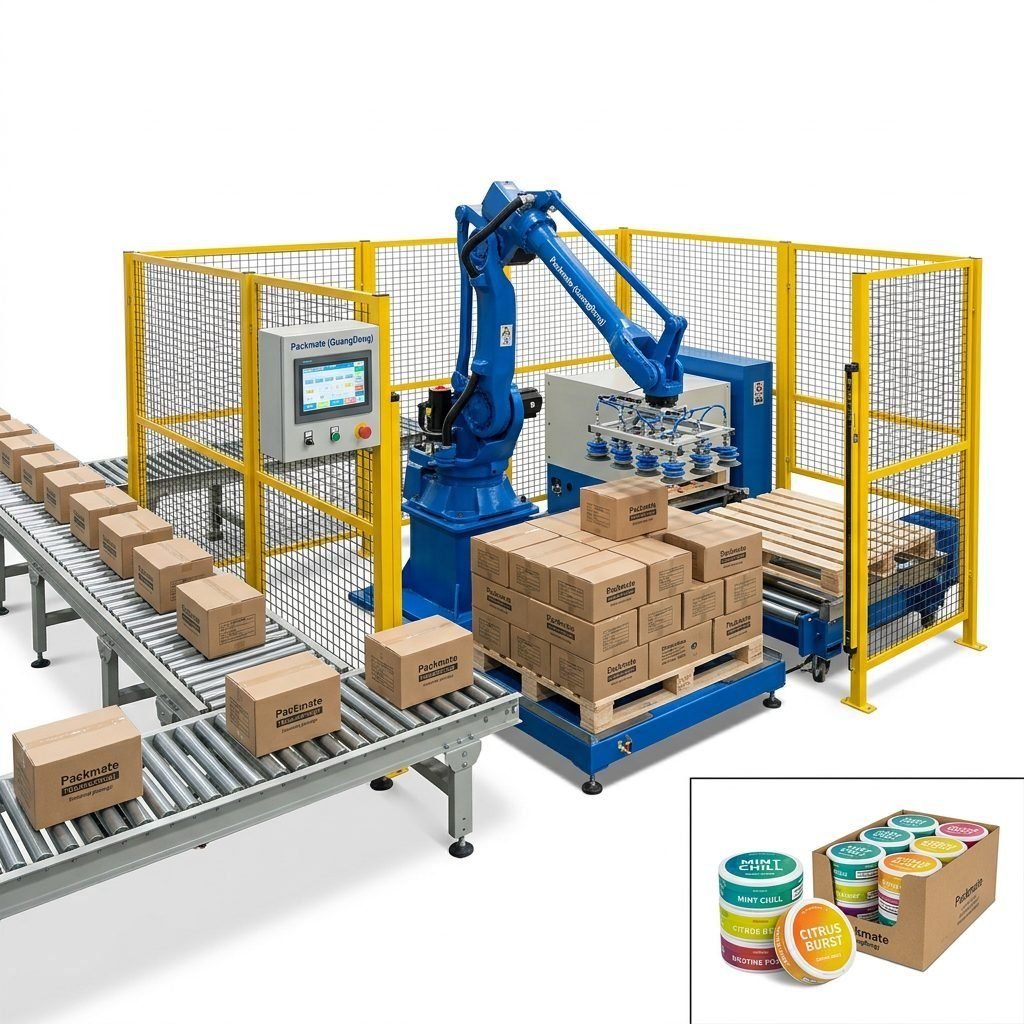
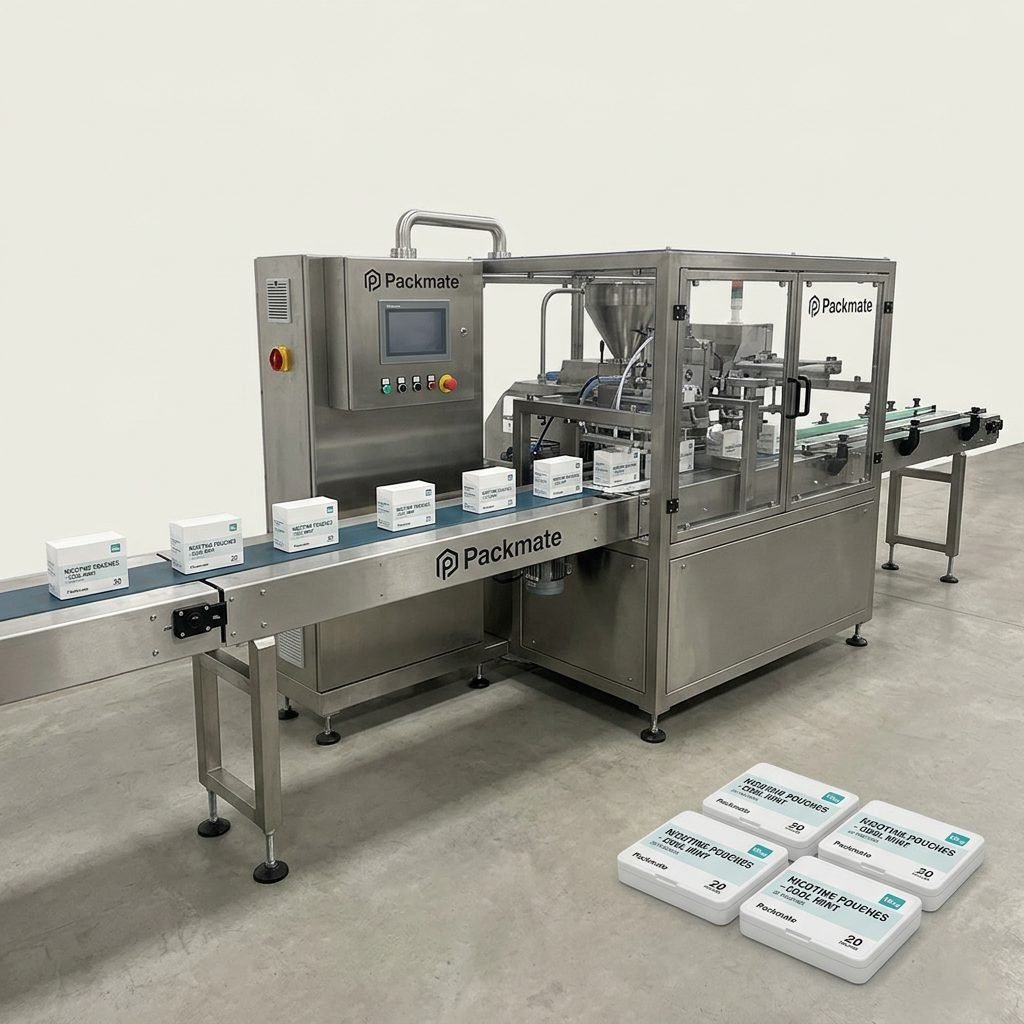
After primary pouch production, automated cartoners or bagging machines group pouches into consumer units. These machines are tailored to the target retail format and often include labeling, date coding, and tamper-evident features.
5. Auxiliary Equipment
Conveyors, metal detectors, dust extractors, and dedicated CIP (clean-in-place) components complete the production line. Auxiliary devices maintain hygiene and product safety while streamlining operations.
(Auxiliary Packaging Equipment)
Multi-lane snus machines can increase output by up to 4x to 8x compared to single-lane systems, but they demand more rigorous synchronization and higher-quality upstream dosing.
Selecting the Right Machine: Criteria and Trade-offs
Choosing the correct equipment depends on production volume, product format, regulatory environment, and budget. Below are practical criteria to weigh when selecting a supplier or machine model.
Production Capacity vs. Flexibility
High-capacity multi-lane machines excel for large runs of a single SKU, while modular single-lane or small multi-lane units are better for frequent changeovers and multiple SKUs. Consider line balancing: investing in upstream dosing and downstream cartoning that match pouch machine throughput avoids bottlenecks.
Regulatory Compliance and Certifications
Ensure machines meet CE and ISO standards for safety and quality. Many global buyers require documented compliance and validation support. Trusted suppliers often provide performance qualification, training, and after-sales service to help with regulatory audits.
Packmate Snus Machine maintains internationally recognized certifications and global service capabilities.
(Certificate)
Automation & Integration
Modern lines should be Industry 4.0 ready: remote diagnostics, PLC & HMI controls, data logging, and recipe management. Integrated systems reduce manual tasks and improve batch traceability.
Factor in lifetime operating cost — spare parts, consumables, and service agreements — not just the initial price when calculating payback period.
Operational Best Practices for Efficient Manufacturing
Efficiency gains often come from process optimization rather than speed alone. The following best practices maintain uptime and product quality.
Scheduled Preventive Maintenance
Implement routine checks for seals, cutter blades, heating plates, and sensors. Establish spare parts inventory for fast replacement of high-wear items. Routine maintenance reduces unscheduled downtime and preserves consistency.
Operator Training & SOPs
Skilled operators who understand changeover procedures, cleaning protocols, and basic troubleshooting can dramatically reduce waste and downtime. Suppliers that offer hands-on training and clear SOPs provide added long-term value.
For full-line solutions and training support, learn more about Packmate’s offerings:
(About Packmate)
Cleanliness & Cross-Contamination Controls
Hygienic design and regular cleaning are essential when handling nicotine or tobacco blends to avoid contamination and maintain worker safety. Use sealed conveyors and appropriate extraction systems to minimize airborne particulates.
Customization: When Standard Machines Aren’t Enough
Many snus producers require customization: unique pouch sizes, enhanced tamper evidence, or special materials. Reputable manufacturers can adapt machine infeed systems, change tooling, or redesign conveyors to meet bespoke requirements. Customization often involves collaboration on prototypes, validation runs, and iterative adjustments.
Packmate has delivered multi-lane solutions and full packaging lines for global customers; customers can review real-world projects and exhibition demonstrations to evaluate fit.
(Case)
Supply Chain & After-Sales Considerations
Long-term reliability depends on parts availability, spare inventories, and technical support. Select suppliers with global service networks, documented lead times for critical components, and clear warranty terms. Remote diagnostics and timely on-site service reduce production losses.
Choosing a Partner
When evaluating vendors, consider: track record in snus/nicotine packaging, factory capabilities, and ability to provide turnkey lines. Visit the manufacturer’s plant or request virtual tours to assess manufacturing quality and testing procedures. For turnkey packaging solutions including filling lines, check detailed product portfolios:
(Filling & Packaging Lines)
Regulatory and Market Considerations by Region
Market restrictions and consumer habits differ by region. For example, in some European countries snus products have long-standing consumer preferences for specific pouch sizes and flavors, whereas in other markets nicotine pouches are evolving quickly with a preference for portioned micro-pouches. Manufacturers should align packaging formats and labeling to local legal requirements and cultural expectations.
Sizing Your Investment: Small Plant vs. Industrial Line
Small pilot plants favor flexible machinery with quick changeovers to support product development. Large industrial investments focus on automation, high uptime, and reduced labor per unit. Use pilot runs to validate formulations before committing to large multi-lane systems — this minimizes costly retooling.
Start with a modular approach — invest in scalable units that can be combined into higher-capacity lines as demand grows.
How Packmate Supports Snus Manufacturers
With over 30 years of experience and a 20,000㎡ manufacturing base, Packmate delivers tailored snus and nicotine pouch packaging solutions. Their portfolio spans single-lane machines for R&D to multi-lane high-speed production lines, backed by CNC manufacturing and precision assembly processes.
Learn more about their machine categories and contact the team for consultations:
(Snus & Nicotine Packaging Machines)
|
(Contact Us)
Implementation Roadmap: From Specification to Commissioning
A typical implementation follows these stages: requirement analysis, line design & proposal, prototype or FAT (Factory Acceptance Test), delivery & installation, SAT (Site Acceptance Test), and operator training. Clear communication at each stage reduces surprises and accelerates time-to-market.
– Production capacity target and SKUs
– Pouch material and sealing method
– Regulatory labeling and traceability needs
– Spare parts and service agreement preferences
Sustainability & Waste Reduction
Sustainable design minimizes material waste and energy consumption. Look for machines with optimized cutting patterns, smart dosing to reduce overfill, and energy-efficient drives. Recycling or reusing trim and offcuts can reduce costs and environmental impact.
Conclusion
Investing in the right snus production machinery requires a balance of throughput, flexibility, compliance, and lifecycle support. Whether you are scaling a start-up or upgrading an industrial plant, prioritize proven suppliers with robust engineering capabilities, global service networks, and a clear track record in snus and nicotine pouch packaging.
Frequently Asked Questions
Q1: What machine type is best for small-batch R&D of nicotine pouches?
A1: Start with a single-lane or modular small-capacity pouch machine that offers quick changeovers and easy cleaning to validate formulations before scaling up.
Q2: How important is multi-lane technology for scaling production?
A2: Multi-lane technology greatly increases throughput and unit economics for large volumes, but it requires accurate upstream dosing and tighter process control to maintain consistency.
Q3: What certifications should snus packaging machines have?
A3: Look for CE and ISO certifications, and ensure the supplier supports validation documentation, safety features, and maintenance programs.
Q4: How do I evaluate after-sales support from a supplier?
A4: Check spare parts lead times, availability of on-site service, remote diagnostics capability, training packages, and references from existing customers.
Q5: Where can I see real-world machine demos and customer cases?
A5: Visit supplier exhibition pages, request case studies, or attend industry events. Packmate provides exhibition demos and documented case studies to help buyers assess fit.
(Our Exhibition)