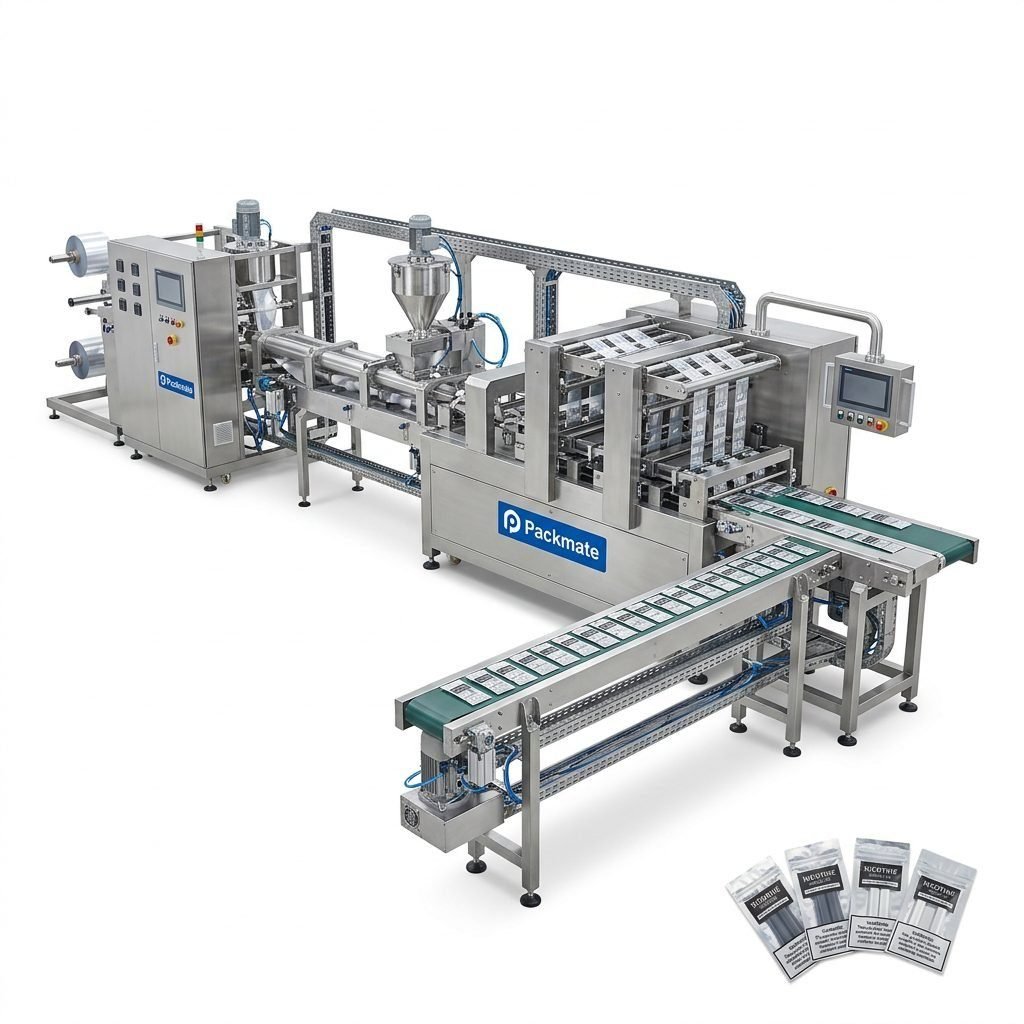
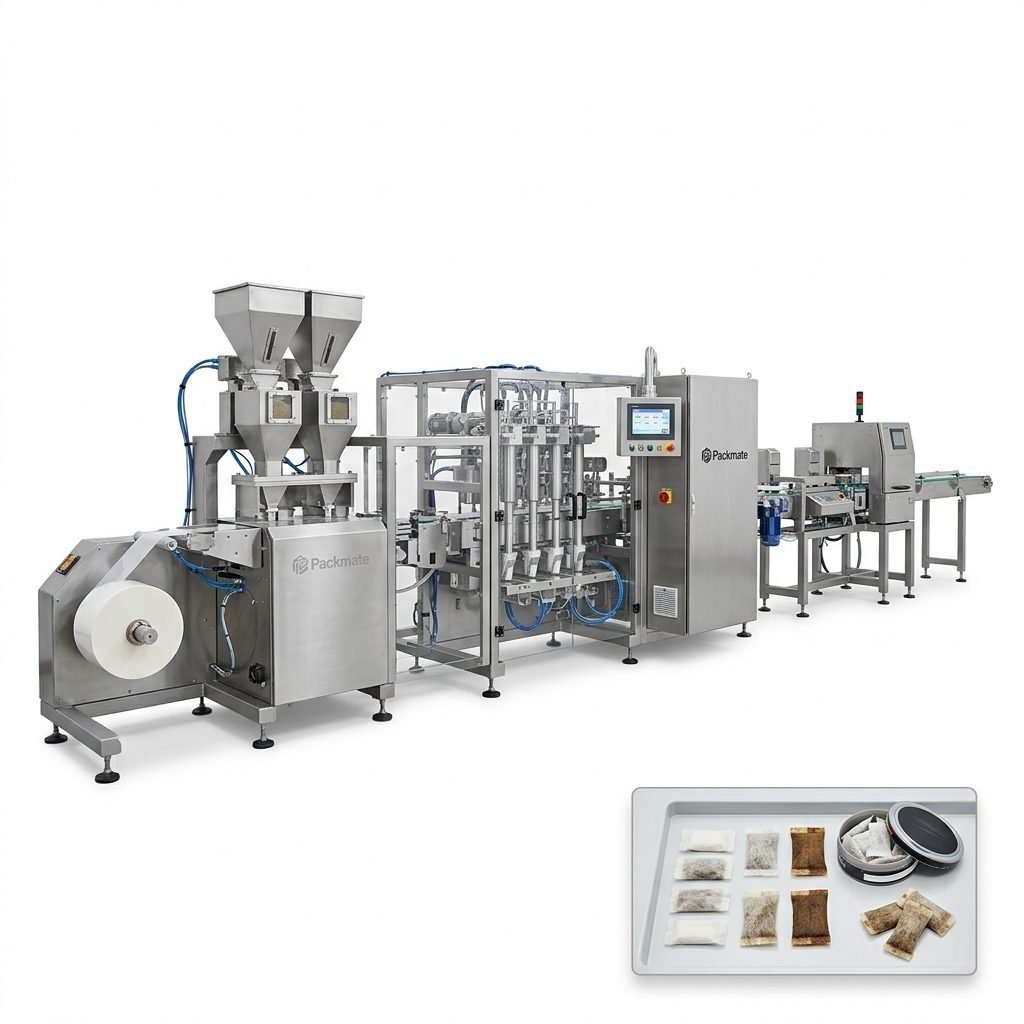
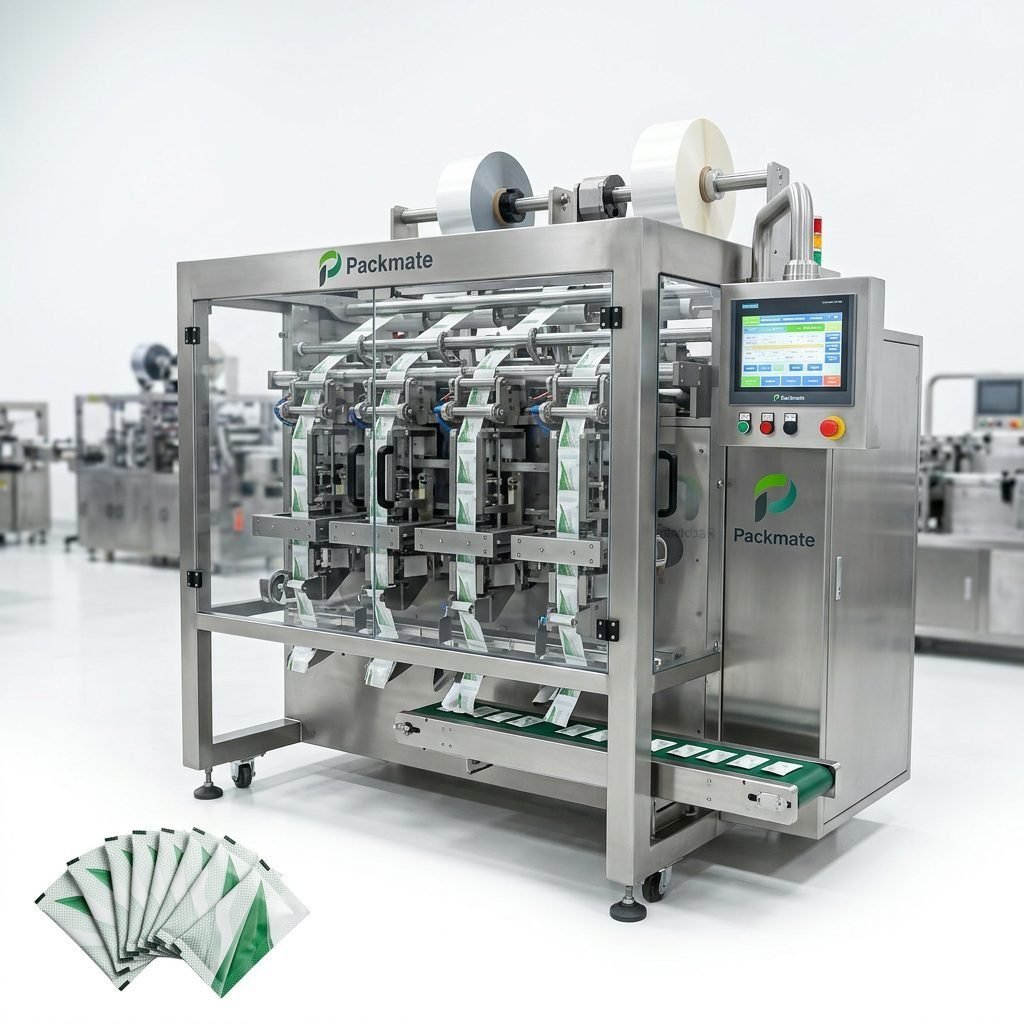
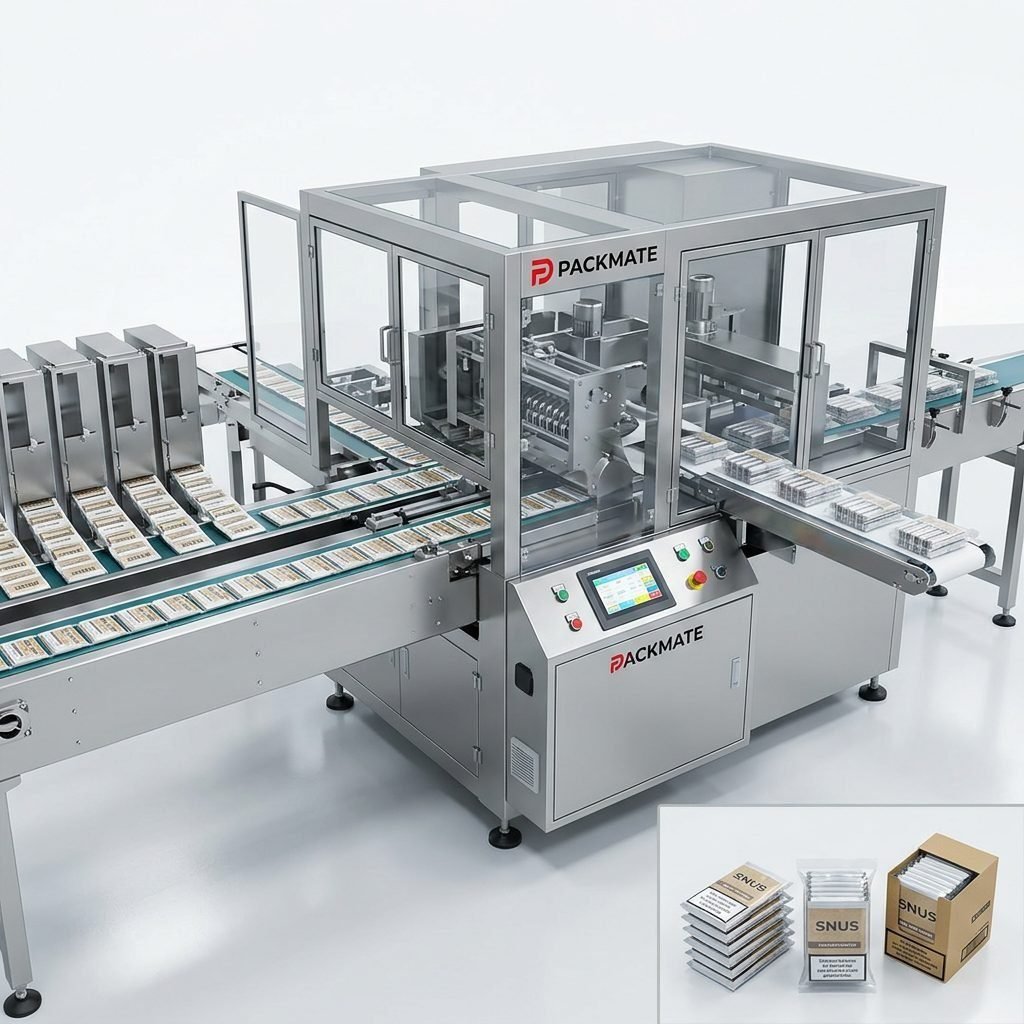
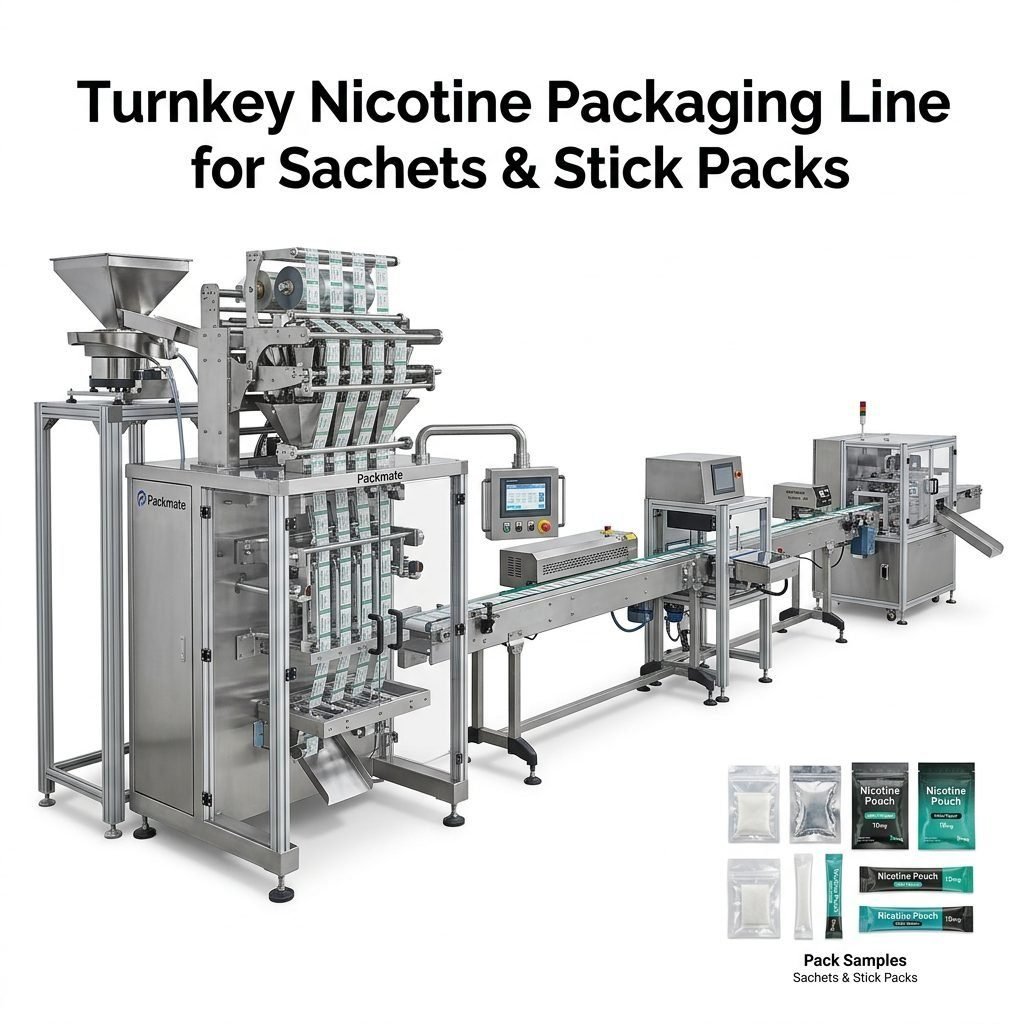
The nicotine pouch market demands packaging that preserves aroma, ensures consumer safety, and enables high-speed, reliable production. Modern packaging lines combine precision mechanical design, intelligent control systems, and materials science to deliver freshness, tamper resistance, and regulatory traceability. This article explores advanced nicotine pouch packaging technology and practical solutions that manufacturers — from startups to high-volume producers — can deploy to meet current market expectations.
Why Packaging Matters for Nicotine Pouches
Nicotine pouches are small-dose products where texture, moisture balance, and flavor longevity define product acceptance. Poor packaging can lead to dryness, contamination, or leakage, damaging brand reputation and increasing product returns. Key packaging goals are: extend shelf life, maintain consistent dosing, and enable safe consumer use.
Core Technical Requirements
Barrier performance: multi-layer films with excellent oxygen and moisture resistance to protect flavors and nicotine potency.
Sealing integrity: consistent, hermetic seals that prevent ingress and leakage during handling.
Gentle product handling: automated feeders and multi-lane systems that minimize product deformation.
Traceability & compliance: serialization, batch coding, and systems that support CE/ISO standards for global markets.
Advanced Machine Architectures
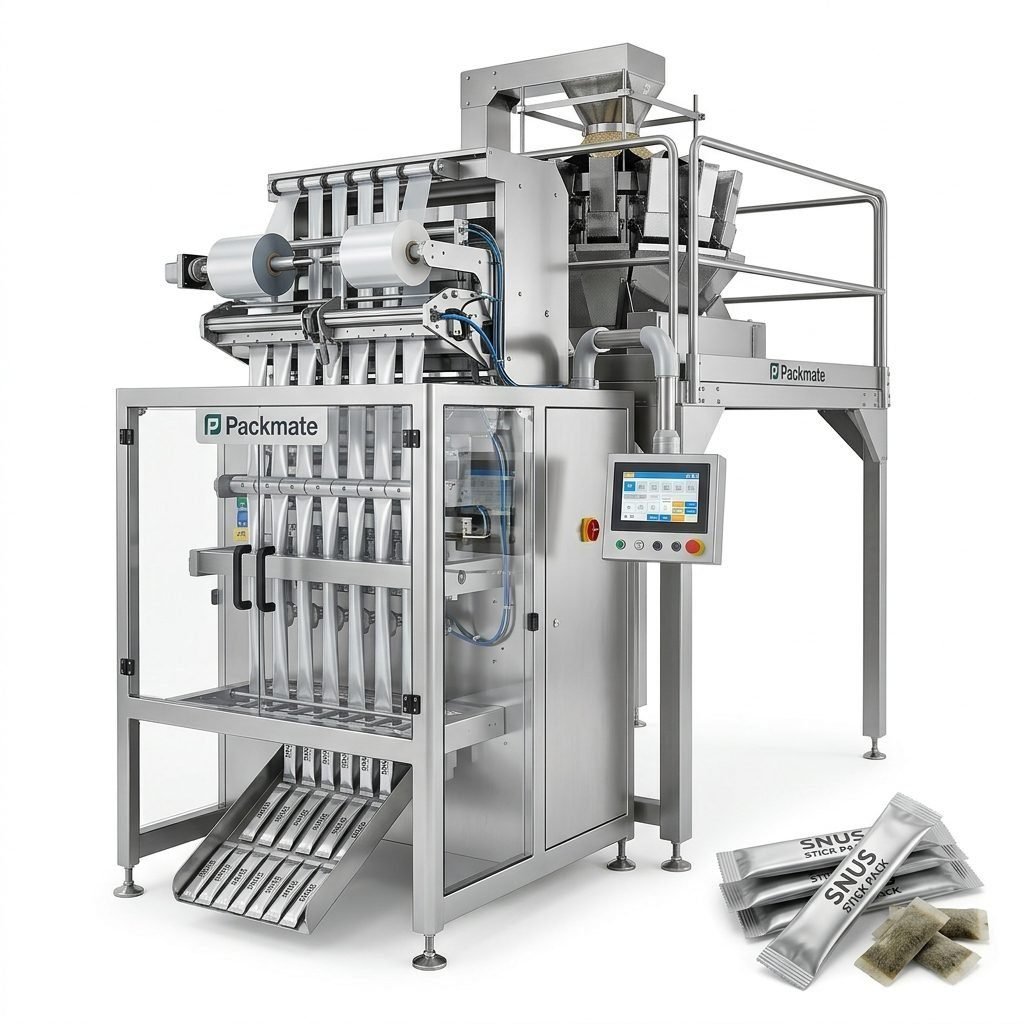
Packaging machines for nicotine pouches range from single-lane sachet machines to high-speed multi-lane lines capable of thousands of pouches per minute. Manufacturers focus on modular designs to support quick format changeovers and adaptable workflows. Typical machine families include:
Sachet & Stick Pack Systems
Ideal for single-dose formats and promotional packs, these systems are compact and offer fast format adjustments.
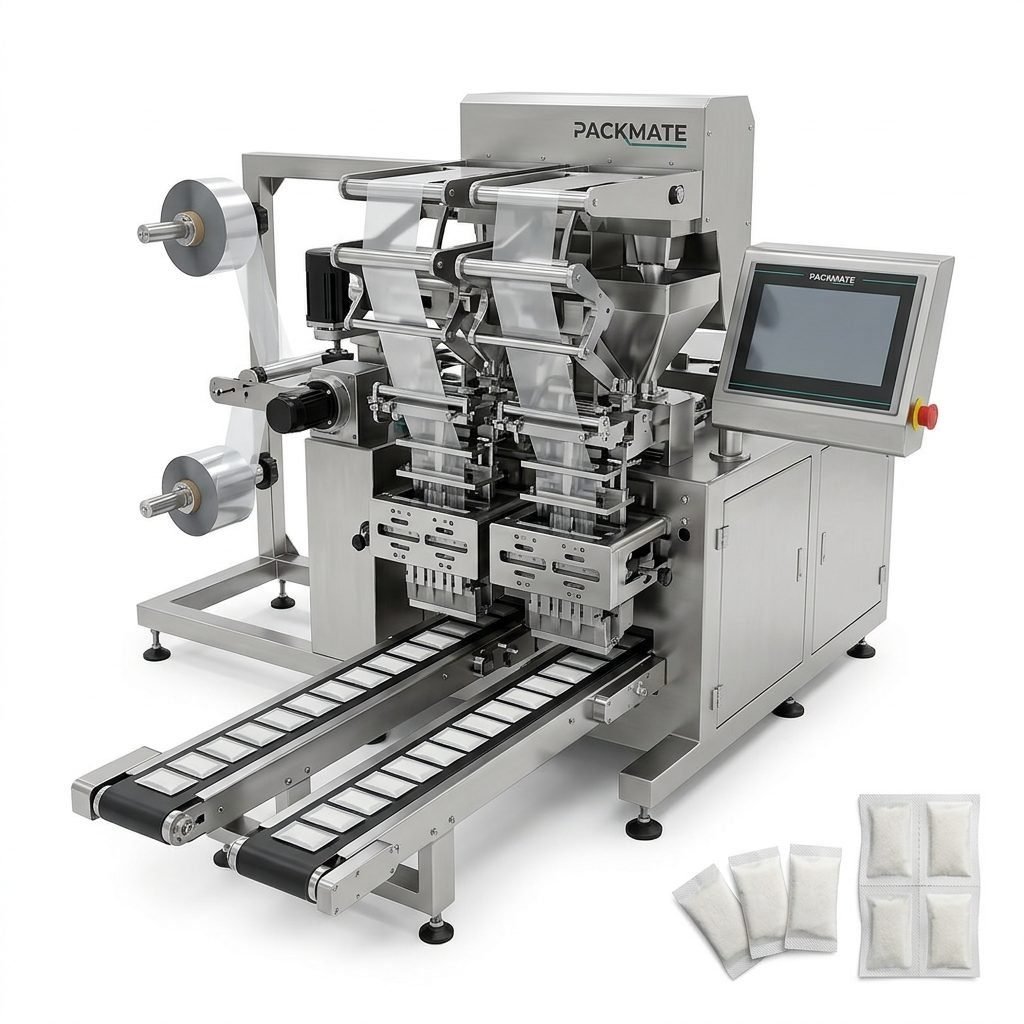
Multi-lane Pouch Lines
Designed for high output with synchronized lanes, ensuring consistent pouch dimensions and fill weights across all lanes.
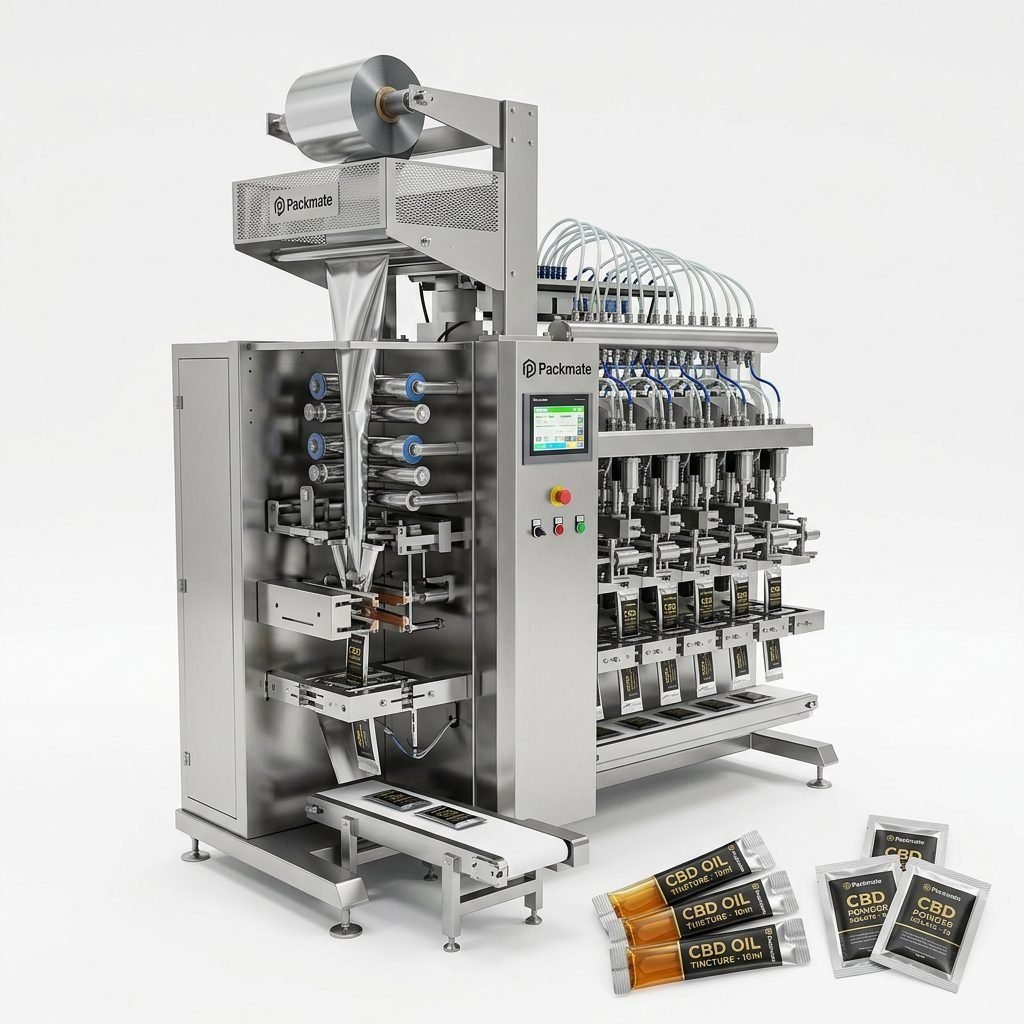
Integrated Filling & Packaging Lines
Combining precise weighing, dosing, and hermetic sealing for turnkey production: reduces footprint and manual handling.
Freshness Solutions: Materials & Technologies
Maintaining flavor and nicotine stability depends on packaging materials and internal atmosphere control. Innovations include:
📦 Barrier films — multi-layer laminates incorporating EVOH or metallized layers reduce oxygen and moisture transmission.
🧪 Active desiccants — micro-pouches or integrated adsorbents control humidity inside secondary packaging.
⚗️ Modified atmosphere packaging (MAP) — nitrogen flush before sealing to reduce oxidation risk for sensitive flavors.
🛡️ Aseptic filling options — for markets with strict microbial control demands, specialized filling modules lower contamination risk.
Sealing & Closure Innovations
Heat-seal optimization, ultrasonic seals, and laser scoring offer manufacturers flexible exit strategies — resealable lids, peelable foils, and child-resistant closures for regulated markets. Robust quality monitoring systems (seal force sensors, vision inspection) ensure only properly sealed pouches reach secondary packaging.
Safety, Compliance and Traceability
Safety is both a product and process requirement. Packaging lines must integrate labeling, batch coding, and serialization in accordance with regional regulations. Systems often include:
🔒 Tamper-evident features to protect consumers and brands.
🖨️ High-resolution batch coding and human/machine readable codes for recall capability.
🔍 Vision inspection and metal detection to exclude foreign objects and ensure fill accuracy.
📊 Data logging & MES integration so production metrics and traceability records are automatically stored.
Regulatory Certifications
Choose equipment compliant with CE and ISO standards for electrical safety, machine guarding, and quality management. Suppliers with documented certification simplify audits and market entry in regulated jurisdictions.
Automation & Production Efficiency
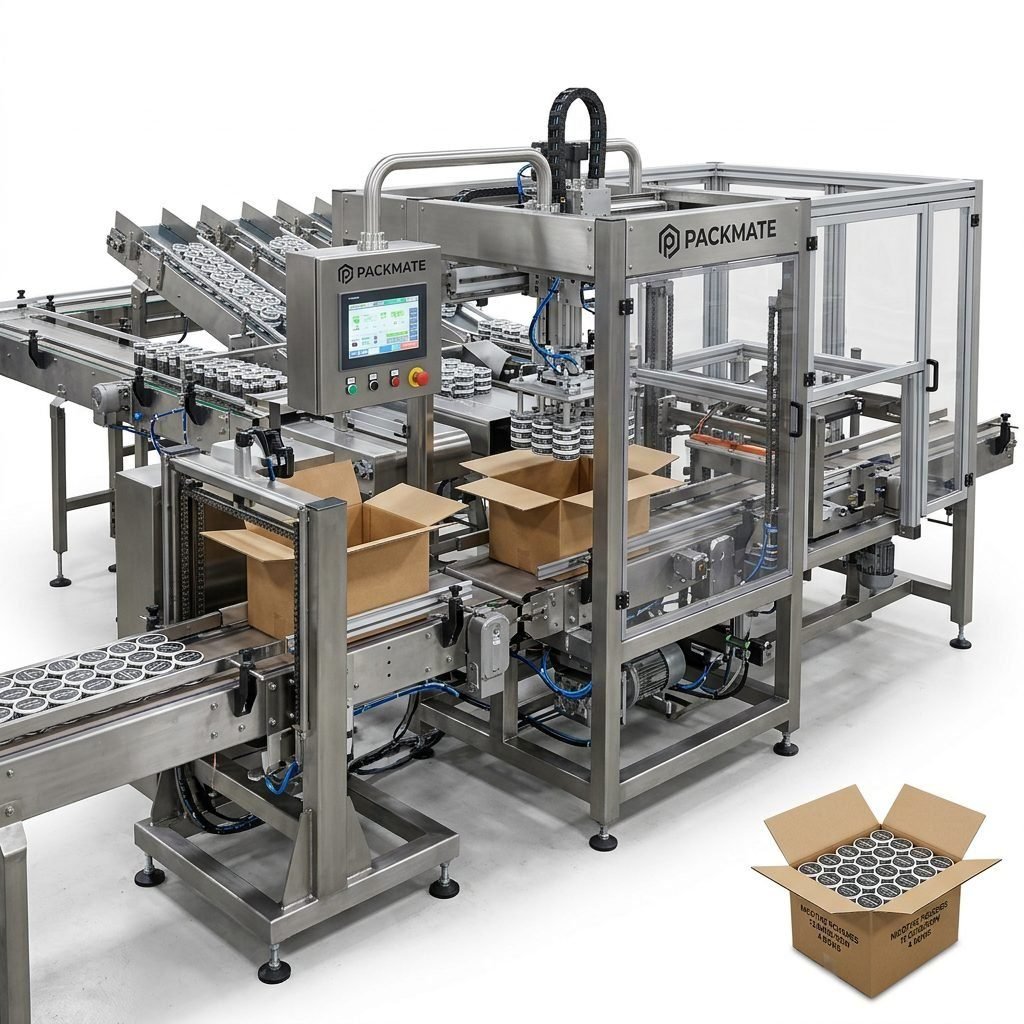
Full automation minimizes manual handing and increases throughput. Key automation elements include robotic pick-and-place for secondary packing, synchronized multi-lane indexing, and smart feeders that reduce downtime during format changeovers. Predictive maintenance and remote diagnostics help maximize uptime.
⚙️ PLC & HMI control for recipe management and rapid format switching.
📡 IoT-enabled sensors for condition monitoring and remote support.
🔄 Quick-change tooling to reduce downtime between SKUs.
Designing a Turnkey Production Line
A turnkey approach bundles weighing, filling, pouch forming, sealing, inspection, and secondary packaging into a single, optimized flow. Benefits include reduced integration risk, single-source technical support, and coordinated validation of product handling across the line.
Typical Turnkey Components
– Precision weigher and dosing system to control nicotine and filler mass.
– Form-fill-seal (FFS) modules for sachets or multi-lane pouches.
– In-line nitrogen flushing and sealing stations for MAP.
– Vision systems for label position, code readability, and seal inspection.
– Secondary packaging machines for cartons, displays, or bundling.
Operational Best Practices
Manufacturers should adopt standard operating procedures (SOPs) for line start-up, hygiene, changeover, and cleaning. Regular calibration of weighing systems and periodic validation of barrier films are essential for consistent product quality. Training programs for operators significantly reduce misfeeds and mechanical disturbance to delicate pouches.
Maintenance & Support
Preventive maintenance schedules, spare parts kits, and responsive remote service reduce downtime. Look for suppliers offering documentation, on-site commissioning, and training to accelerate time-to-market.
Why Choose an Experienced Manufacturer
Manufacturers with decades of engineering experience provide mature designs, proven multi-lane synchronization, and global service networks. They can deliver standardized platforms or fully customized lines built for specific product formulations and output targets.
Packmate Snus Machine — A Case in Point
Packmate Snus Machine has more than 30 years of experience in snus and nicotine pouch packaging, with a 20,000㎡ manufacturing facility and over 50 machine models. The company’s portfolio includes multi-lane snus packaging lines, stick pack and sachet systems, and complete filling & packaging lines designed for global markets.
For more information on product families and turnkey solutions, explore their product pages: Snus & Nicotine Packaging Machines, Bag & Pouch Packaging Machines, and the Weighing & Packaging Systems.
Custom Solutions & Global Support
A global footprint matters when you need spare parts, commissioning, or compliance documentation. Leading suppliers participate in international exhibitions, document certifications, and maintain case studies across regions to demonstrate real-world performance. Visit the About Packmate and Contact Us pages to learn about factory capabilities and after-sales service.
Choosing the Right Partner
✔️ Proven multi-lane synchronization and stable mechanical platforms.
✔️ Comprehensive testing and quality control before shipment.
✔️ Clear documentation (CE, ISO) and long-term spare parts availability.
✔️ Flexible engineering for future product variants and regulatory changes.
Implementation Timeline & ROI Considerations
Typical lead times include design, factory acceptance testing (FAT), installation and commissioning. Return on investment depends on throughput, yield improvement, and reductions in labor and material waste. When evaluating suppliers, compare total cost of ownership, not just initial machine price.
Key Performance Indicators
Focus KPIs on yield (good packs/total packs), downtime, changeover time, and sealing rejection rates. A well-designed line should minimize variability while enabling predictable scaling as demand grows.
Conclusion & Next Steps
Advanced nicotine pouch packaging blends materials science, precision engineering, and automated control to deliver products that stay fresh, safe, and regulatory-compliant. For manufacturers exploring upgrade paths or new production capacity, partnering with an experienced packaging equipment supplier delivers technical assurance and faster time-to-market. Consider full turnkey lines for the best integration and long-term support.
Further Resources
Case studies and machine catalogs help validate supplier claims. See real-world implementations on the Case page and download technical details from the Catalog.
Frequently Asked Questions
Q1: How do packaging materials affect nicotine pouch shelf life?
High-barrier films with low oxygen and moisture transmission rates significantly extend flavor and nicotine stability. Multi-layer laminates and metallized films are common choices; pairing them with nitrogen flushing further reduces oxidation.
Q2: Are multi-lane systems reliable for small-dose pouches?
Yes. Modern multi-lane systems synchronize lanes precisely to maintain uniform fill weights and pouch dimensions. Choosing proven mechanical designs and accurate weighing systems reduces lane-to-lane variation.
Q3: What safety features should I expect?
Expect tamper-evident closures, seal integrity monitoring, vision inspection, and metal detection. Data logging for batch traceability and batch codes for recall management are also standard in regulated supply chains.
Q4: How do I choose between sachet, stick pack and pouch formats?
Choice depends on brand positioning, dosing accuracy, and consumer convenience. Sachets and stick packs suit single-serve promotions; multi-lane pouches often enable higher throughput and better shelf presentation for mainstream SKUs.
Q5: Where can I review certified suppliers and machine models?
Review supplier certifications, exhibition presentations, and product pages. For detailed machine specifications and service offerings, see supplier product catalogs and case study pages.