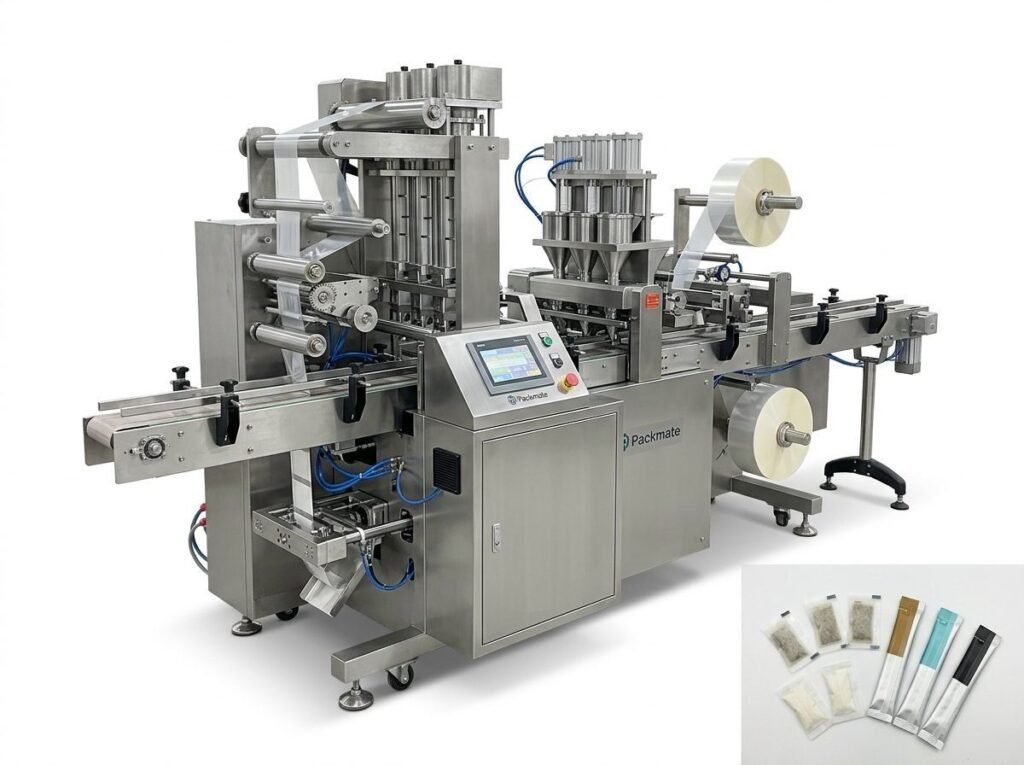
Choosing the right snus packaging machine in Italy requires balancing production efficiency, regulatory compliance, and long-term reliability. This guide walks production managers, procurement teams, and business owners through the practical criteria for selecting a machine that delivers high throughput, consistent pouch quality, and dependable service. We cover machine types, critical technical features, supplier evaluation, ROI considerations, and an actionable procurement checklist tailored to the European market.
Why the Right Machine Matters for Snus Production
⚙️ The snus and nicotine pouch market demands precision dosing, hygienic handling, and consistent sealing quality. A suboptimal packaging machine can lead to wasted product, frequent stoppages, and regulatory headaches. Selecting the correct equipment helps you:
✅ Improve yield with accurate dosing and consistent pouch construction.
✅ Reduce downtime with robust mechanical design and accessible maintenance points.
✅ Meet European safety and hygiene standards with certified equipment.
✅ Scale production by choosing multi-lane or modular systems that grow with demand.
Common Types of Snus Packaging Machines
Understanding the differences among machine families helps narrow choices fast. Here are the primary systems used for snus, nicotine pouches, and similar small-dose formats:
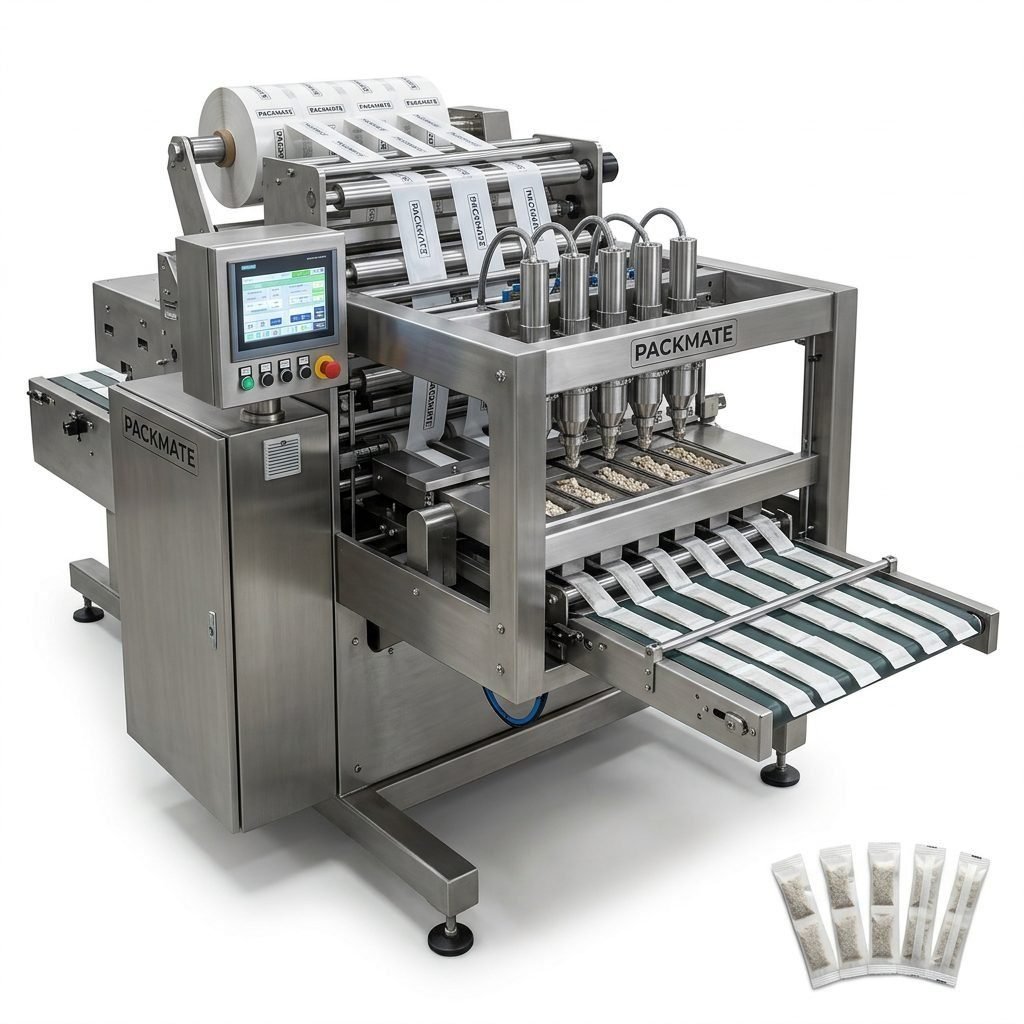
Stick Pack Machines
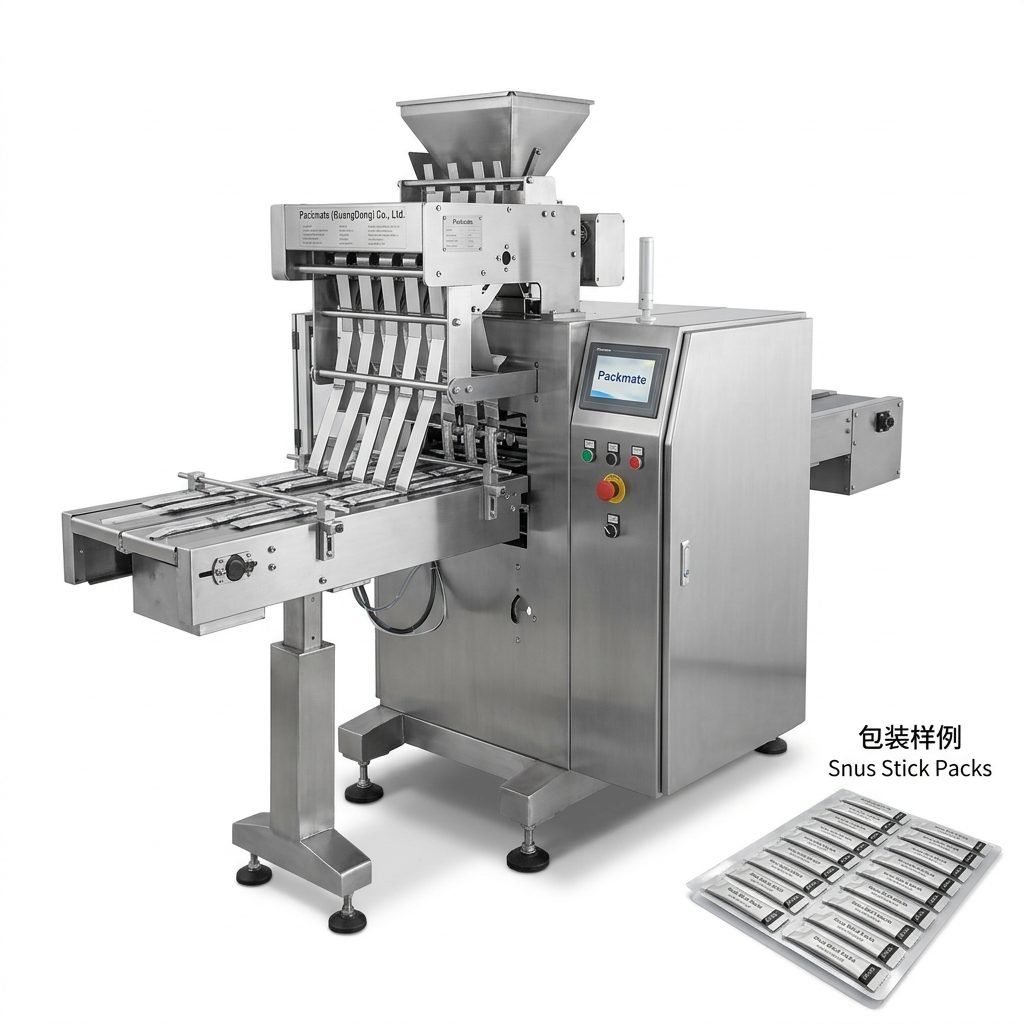
Stick pack systems are ideal for single-dose, elongated packets. They are simple, fast, and cost-effective for products requiring easy opening and single-use dosing.
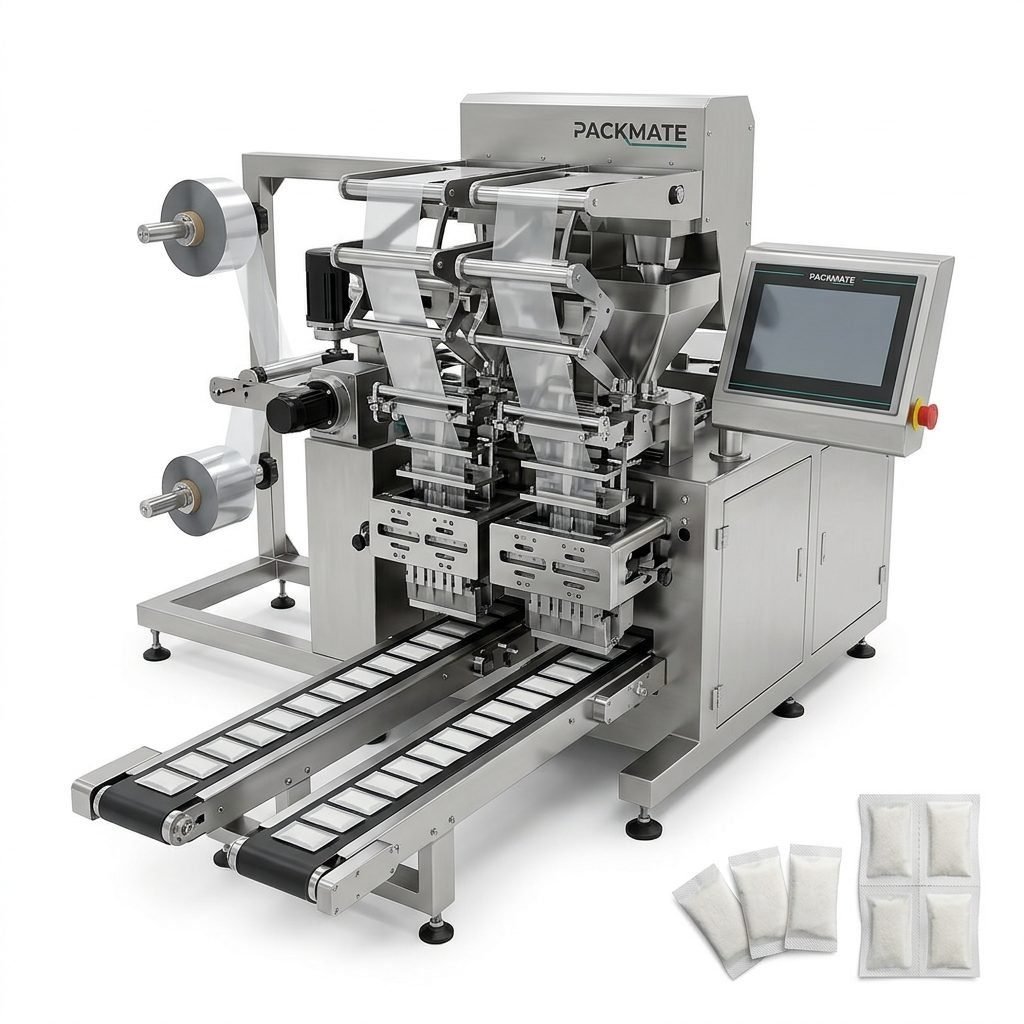
Sachet & Multi-Lane Pouch Machines
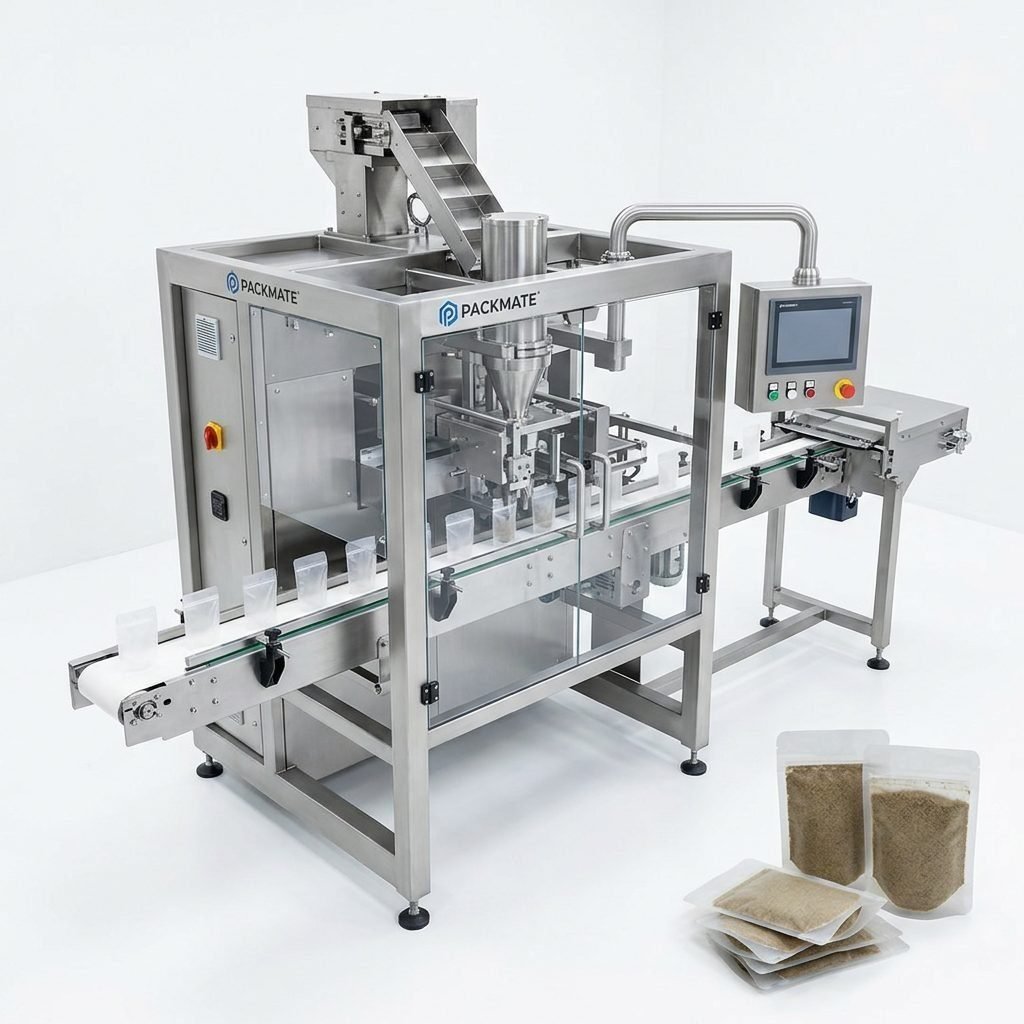
Multi-lane sachet machines are the best choice for high-volume snus and nicotine pouch production. They support multiple lanes of pouch formation, filling, and sealing in parallel to maximize output per square meter.
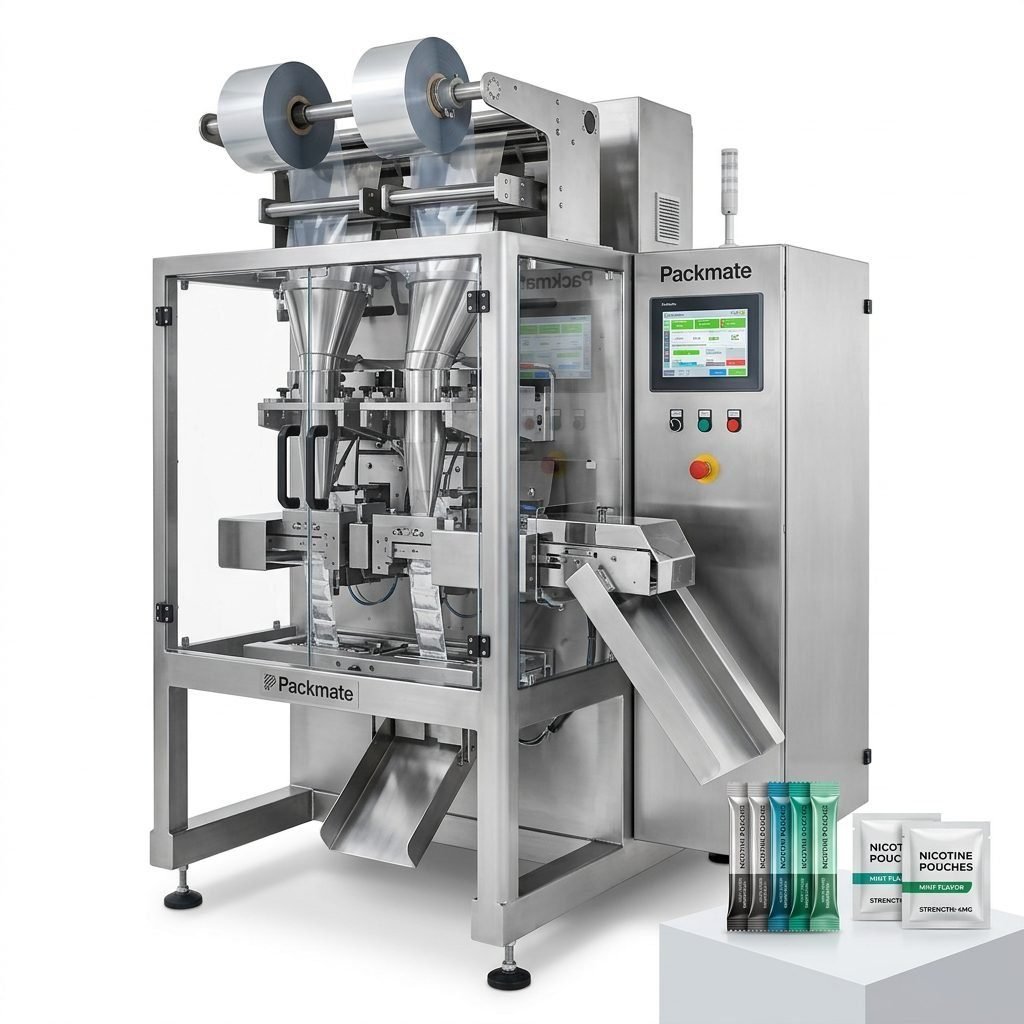
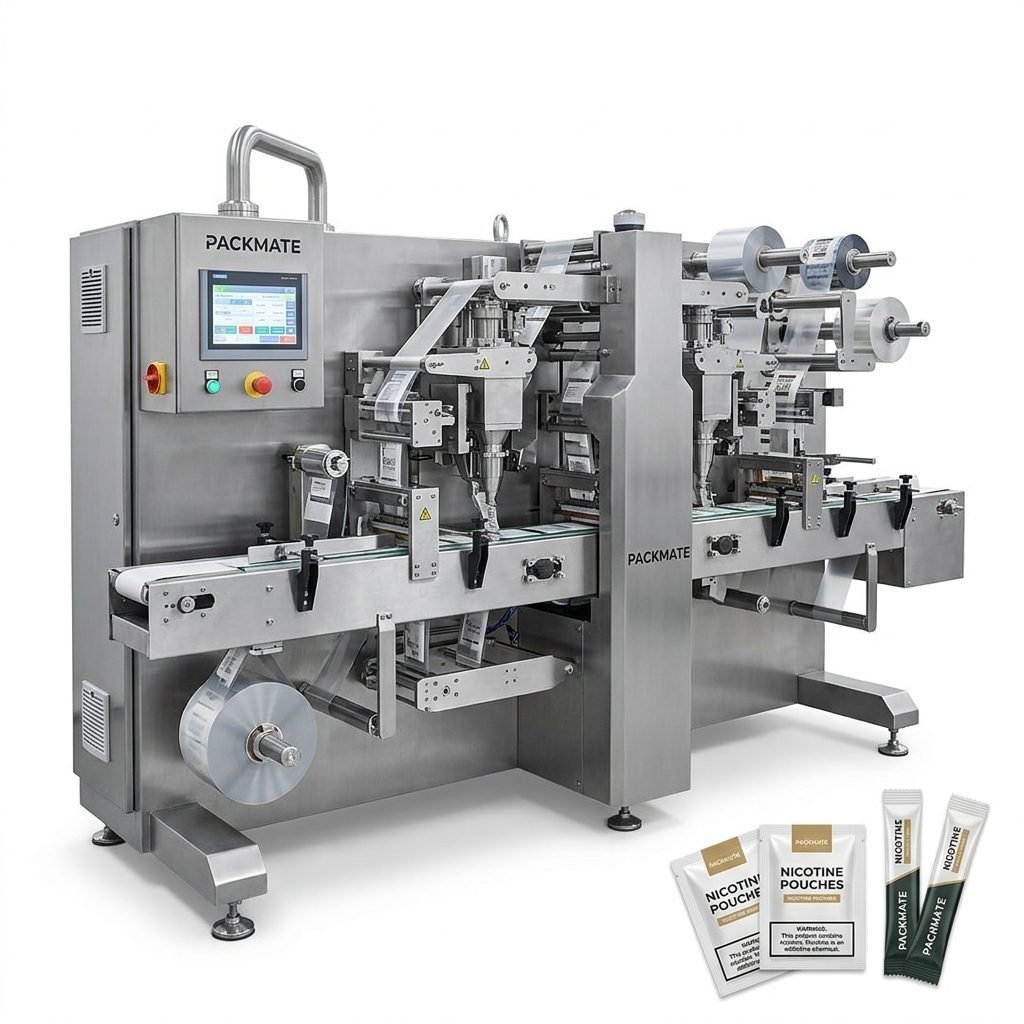
Form-Fill-Seal (FFS) & Customized Lines
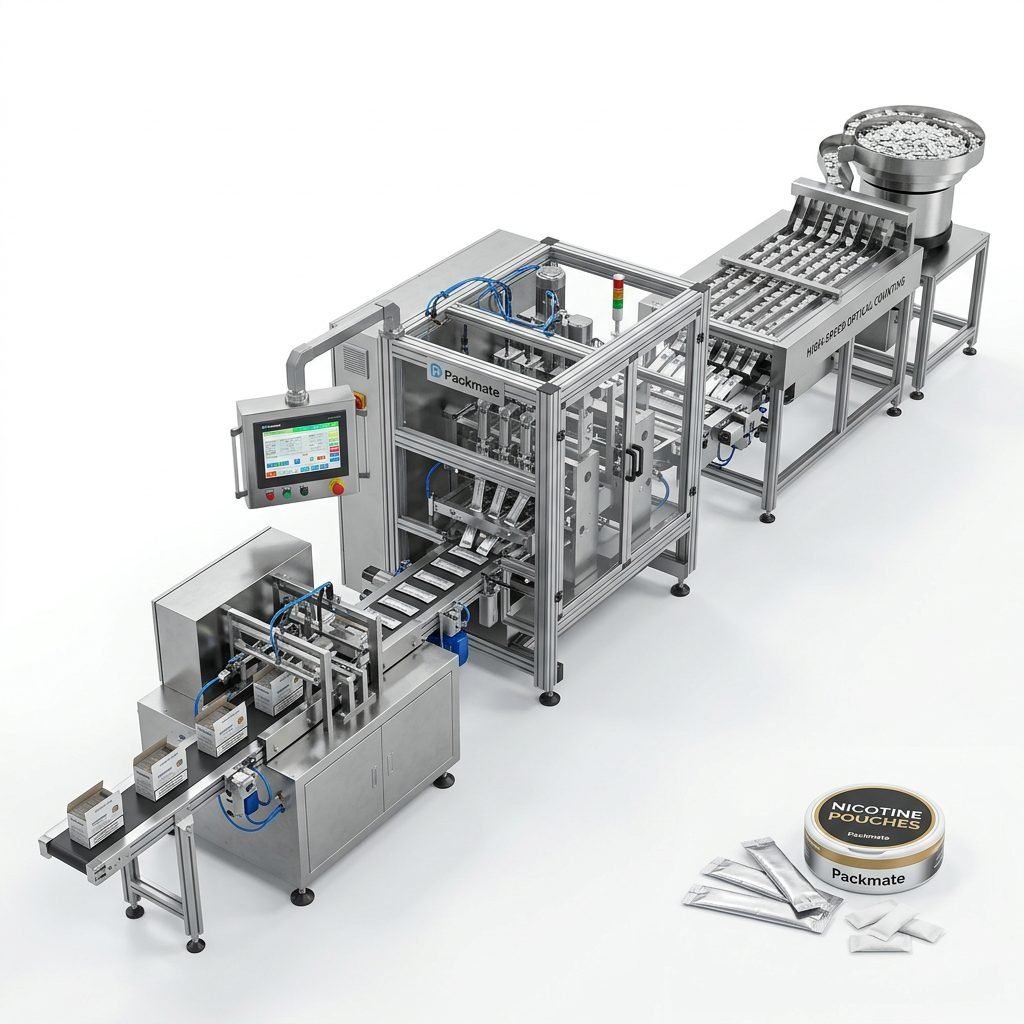
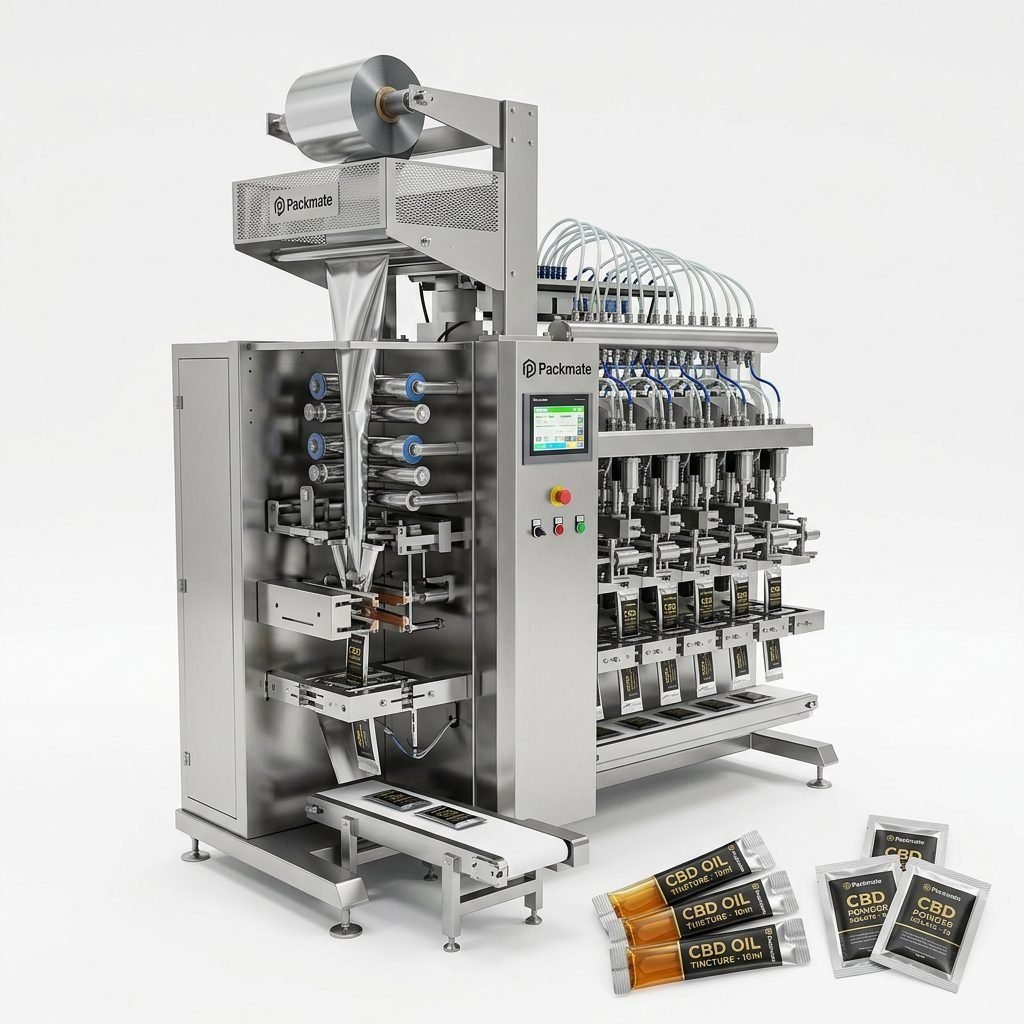
For complex formulations, liquid additions, or integration with upstream dosing (weighing/scraping) and downstream cartoning, fully integrated FFS and turnkey lines are common. These lines may combine packaging, weighing, and secondary packaging modules.
Tip: If you aim to expand rapidly in the EU market, prioritize multi-lane sachet or modular FFS systems that allow easy lane additions rather than replacing the entire machine later.
Key Technical Features to Evaluate
Evaluating technical specifications is crucial. Below are the attributes that directly impact efficiency, reliability, and total cost of ownership.
1. Production Capacity and Lane Configuration
Understand your target output (pouches per minute and daily throughput). Multi-lane machines multiply capacity; a 4- or 6-lane sachet machine can significantly reduce floor space required for a given output.
2. Accurate Dosing & Filling Technology
For snus and nicotine pouches, dosing accuracy affects both product consistency and cost. Look for precision screw feeders, auger dosing, or advanced weighing systems for powders/granules.
3. Changeover Flexibility and Tooling
Quick tooling changeovers reduce downtime when switching pouch sizes or products. Machines with modular tooling kits and toolless adjustments are preferred in mixed-product plants.
4. Reliability, Build Quality and Components
Examine the mechanical design: hardened cam systems, servo-driven motion control, and components from reputable brands (motors, PLCs, HMI) translate into longer runtime and easier maintenance.
5. Hygiene, Cleanability and Material Compatibility
Machines must support easy cleaning, minimal product exposure to contaminants, and compatibility with typical pouch films and liners used for snus. Stainless contact parts and hygienic design reduce contamination risks.
6. Automation, PLC and Operator Interface
Modern PLC systems with touchscreen HMIs streamline troubleshooting, recipe storage, and remote diagnostics. Confirm language support and diagnostic capabilities for Italian/English operators.
Must-have: CE and ISO certification for equipment sold and installed in the EU. Packmate machines comply with international standards to ensure smooth regulatory acceptance.
Evaluating Suppliers: What to Ask
Selecting the right supplier is as important as choosing the right machine. Here are practical questions to ask potential vendors:
🔍 Can you provide detailed technical specifications and reference case studies for similar snus lines?
🔍 What is your factory lead time and spare parts availability in Europe?
🔍 Do you offer installation, operator training, and commissioning services in Italy?
🔍 Are remote diagnostics and long-term service contracts available?
🔍 Can the machine be customized for my pouch style, dosing method, or secondary packaging requirements?
Why Factory Strength & Experience Matter
A manufacturer with a large factory, advanced CNC machining, and precision assembly lines is more likely to deliver consistent machine quality and spare parts on schedule. Packmate Snus Machine, with over 30 years of experience and a 20,000㎡ facility, illustrates how manufacturing capacity and expertise reduce delivery risk and extend machine lifetime.
What to verify on-site or via factory tour
– Assembly quality and test benches for full-speed trials.
– Availability of CNC machining centers and dedicated quality control stations.
– Completed turnkey lines and customer references that demonstrate installed performance.
Compliance, Certification and EU-Specific Concerns
Italy follows EU regulations on machinery safety, electrical standards, and product labeling. Make sure your chosen machine:
– Carries CE marking and related declarations of conformity.
– Meets local electrical (CE) and EMC requirements.
– Provides documentation (manuals, spare parts lists, electrical drawings) in English and/or Italian.
Installation, Commissioning and After-Sales Service
Reliable after-sales support shortens the learning curve and improves uptime. Confirm whether the supplier offers:
📦 On-site installation and operator training in Italy.
📦 Remote troubleshooting and firmware updates.
📦 Fast spare parts shipping or local stocking options in Europe.
📦 Preventive maintenance plans and performance audits.
Cost Considerations & Return on Investment (ROI)
The lowest upfront price is rarely the best long-term value. Calculate ROI using these inputs:
– Total acquisition cost (machine, tooling, installation).
– Estimated uptime and expected production speed (pouches/min).
– Labor savings from automation and reduced changeover time.
– Energy consumption and maintenance costs.
– Scrap/waste rate improvements with higher dosing accuracy.
ROI example: A multi-lane sachet line that cuts changeover time by 50% and improves dosing accuracy by 2% will often pay for itself through reduced waste and higher throughput within 12–24 months.
Procurement Checklist for Italian Buyers
Use this concise checklist to evaluate machines and suppliers before issuing a purchase order:
1. Confirm target throughput and lane configuration.
2. Verify dosing method and product compatibility.
3. Inspect build quality: materials, components, and tolerances.
4. Ask for CE/ISO certificates and test reports.
5. Review installation, training, and service scope.
6. Agree on spare parts lead times and optional local stocking.
7. Request a site acceptance test (SAT) at full speed with your product.
8. Obtain clear warranty terms and service-level agreements.
Real-World Examples and References
Look for published case studies or exhibition showings to assess a supplier’s market presence and machine performance. Manufacturers often share installation reports that demonstrate consistent operation under industrial conditions.
Explore machine portfolios such as the manufacturer’s snus-specific product lines to match model capabilities to your needs. Example resources include the manufacturer’s Snus & Nicotine Packaging Machines page, and the broader Bag & Pouch Packaging Machines catalog.
Snus & Nicotine Packaging Machines |
Bag & Pouch Packaging Machines |
Filling & Packaging Lines
Making the Final Decision
Final selection should balance technical fit, supplier reliability, and long-term support. Request site demonstrations, full technical dossiers, and client references. For turnkey or high-volume projects, prioritize vendors with proven multi-lane systems and experience delivering complete lines.
Why Packmate Is a Strong Consideration
With 30+ years of engineering experience, a 20,000㎡ facility, advanced CNC machining centers, and more than 50 machine models, Packmate offers tailored snus packaging solutions and global turnkey lines. Their experience in multi-lane machines and compliance with CE/ISO standards make them a practical partner for the Italian market. Learn more about the company, project cases, and certifications to validate performance.
About Packmate |
Case |
Certificate
Practical Tips for Installation in Italy
– Plan floor layout for multi-lane lines, including ease of access for maintenance.
– Prepare utility hookups (electrical phases, compressed air, vacuum) per supplier drawings.
– Schedule operator and maintenance training during commissioning to speed ramp-up.
– Keep a small inventory of critical wear parts locally to reduce downtime risk.
Pro tip: When importing equipment to Italy, confirm VAT, import duties, and CE documentation to avoid customs delays. Coordinate with your supplier for documentation required at arrival.
Checklist Before Signing a Contract
– Finalize technical specs, acceptance criteria, and performance guarantees.
– Define penalties or remediation for missed performance metrics.
– Agree on training, documentation language, and the number of commissioning days.
– Confirm warranty coverage, spare part kits included, and optional extended service packages.
Conclusion
Selecting the best snus packaging machine in Italy blends technical evaluation with supplier due diligence. Prioritize production capacity, dosing accuracy, hygiene, modularity, and robust after-sales support. Use factory visits, references, and SATs to validate vendor claims. With the right machine and partner, your operation will gain stable throughput, lower waste, and smoother regulatory compliance — all critical for success in the competitive snus market.
Frequently Asked Questions
Q1: How do I determine the right lane count for my production?
A1: Estimate your peak daily output, calculate required pouches per minute, and compare machine lane outputs (e.g., a 4-lane machine at 100 pouches/min per lane = 400 pouches/min). Factor in future growth and floor space constraints.
Q2: What certifications should I require from a snus packaging machine supplier?
A2: Require CE marking, ISO manufacturing quality evidence, and electrical/EMC compliance documents. For food-contact surfaces, request material certificates and hygiene design documentation.
Q3: How important is local service presence in Italy or Europe?
A3: Very important. Local or regional service reduces downtime and shipping times for spare parts. Verify the supplier’s European partners, service network, and lead times for critical components.
Q4: Can a single machine handle multiple pouch sizes and product types?
A4: Many modern machines support modular tooling and recipe memory for multiple pouch sizes, but confirm the range of sizes, changeover time, and additional tooling costs before purchase.
Q5: What documentation should be provided at delivery?
A5: Provide detailed mechanical and electrical drawings, user manuals, spare parts lists, CE declaration, IQ/OQ templates if applicable, and commissioning/training records.
For further details or to view specific models and turnkey solutions, visit the manufacturer’s product pages and contact the technical sales team to arrange demonstrations and factory visits.
Contact Us |
Catalog |
FAQs