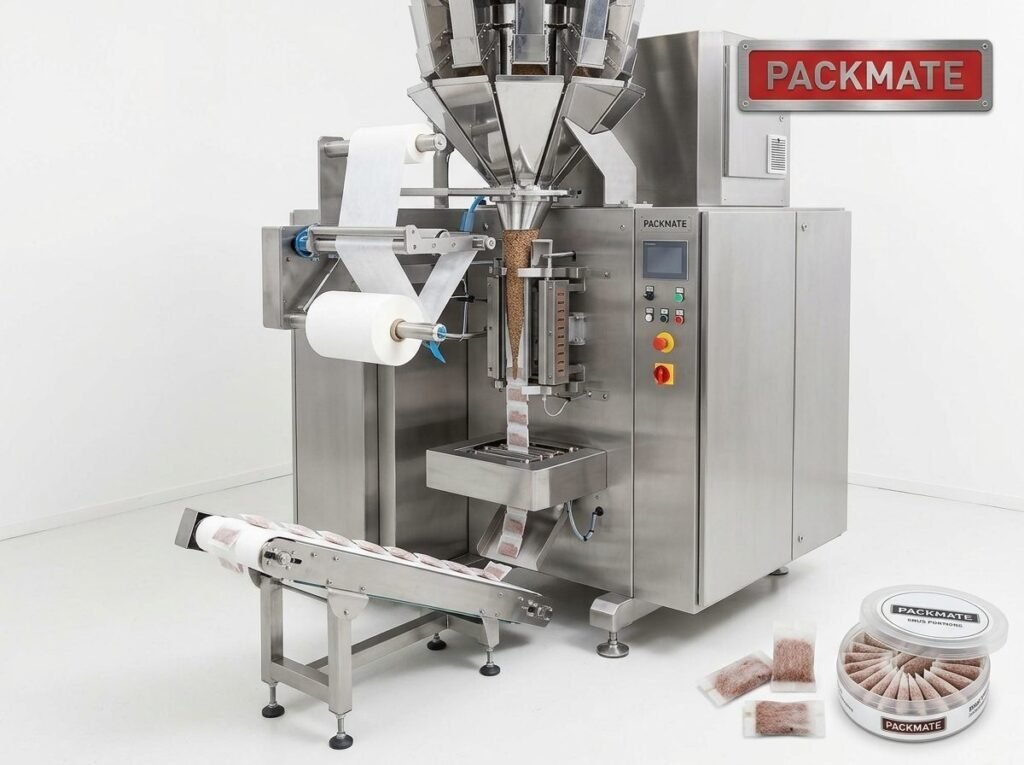
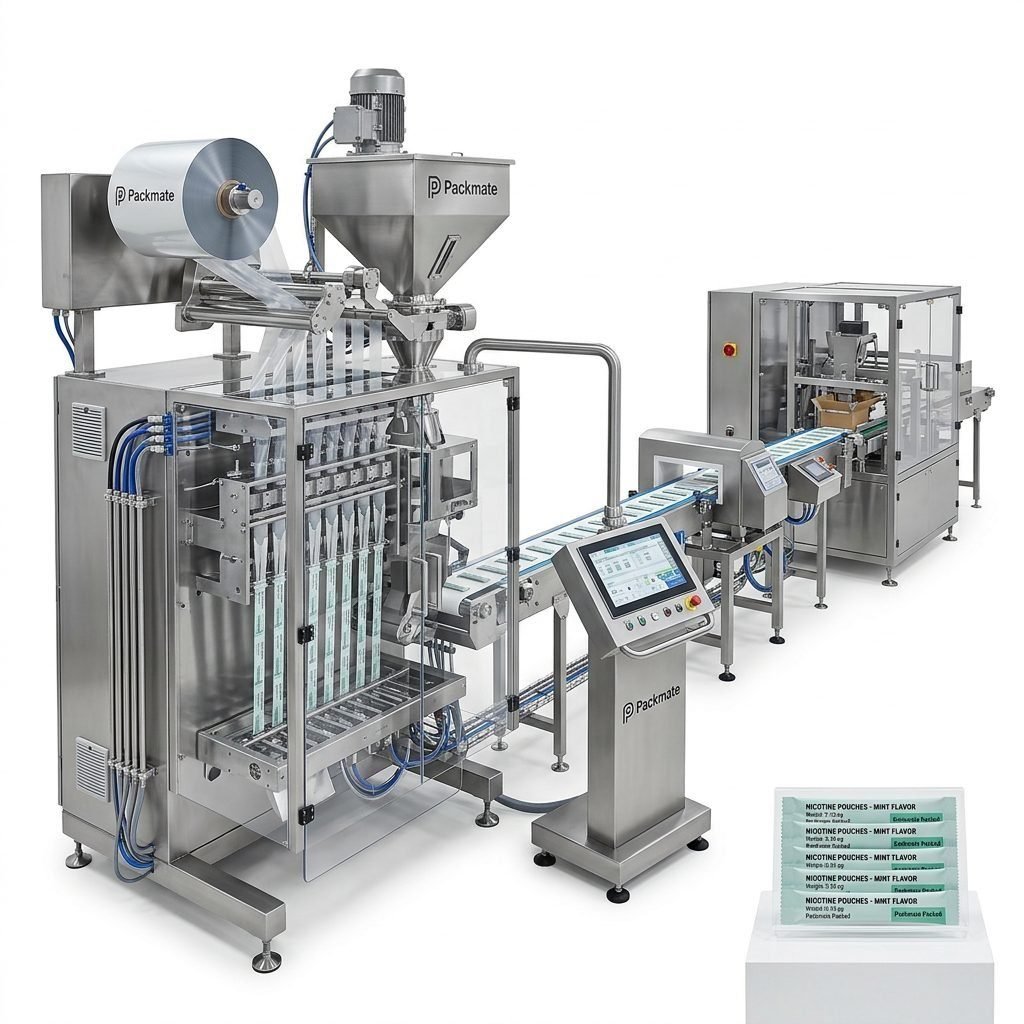
Choosing the right nicotine packaging machine manufacturer is one of the most consequential decisions for companies in Samoa entering or expanding in the snus and nicotine pouch market. The right supplier affects product quality, regulatory compliance, production uptime and long-term profitability. This guide walks through practical criteria, questions to ask, and red flags to watch for when selecting the best partner for nicotine pouch packaging lines in Samoa.
Understand Your Production Needs
Before contacting manufacturers, map out your production requirements: target daily output, pouch format (snus, nicotine pouch stick, sachet), lanes, dose size, downstream processes (weighing, labeling, cartoning), and future growth plans. Machines vary greatly in throughput and lane count — a single-lane sachet machine differs significantly from a high-speed multi-lane snus pouch system.
Consider your product mix. If you expect to run multiple SKUs or intend to expand from sachets to multi-lane pouches, prioritize modular or easily upgradable equipment. Manufacturers with a broad product line and turnkey capability can simplify integration.
Key capacity questions
– What is the machine’s realistic hourly and daily output under continuous operation?
– Can the machine handle the pouch sizes and weights you require?
– How many lanes are available and how easy is it to switch lane counts?
Machine Types and Technology
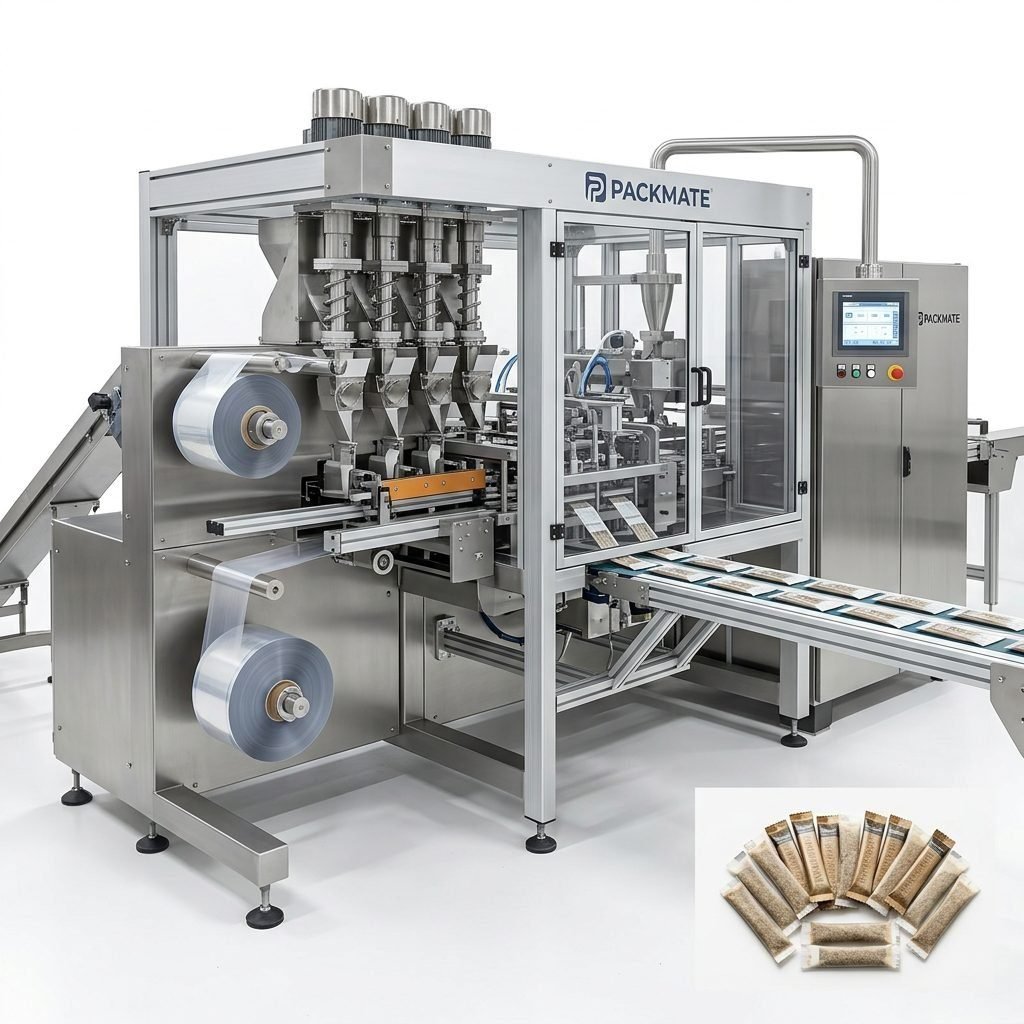
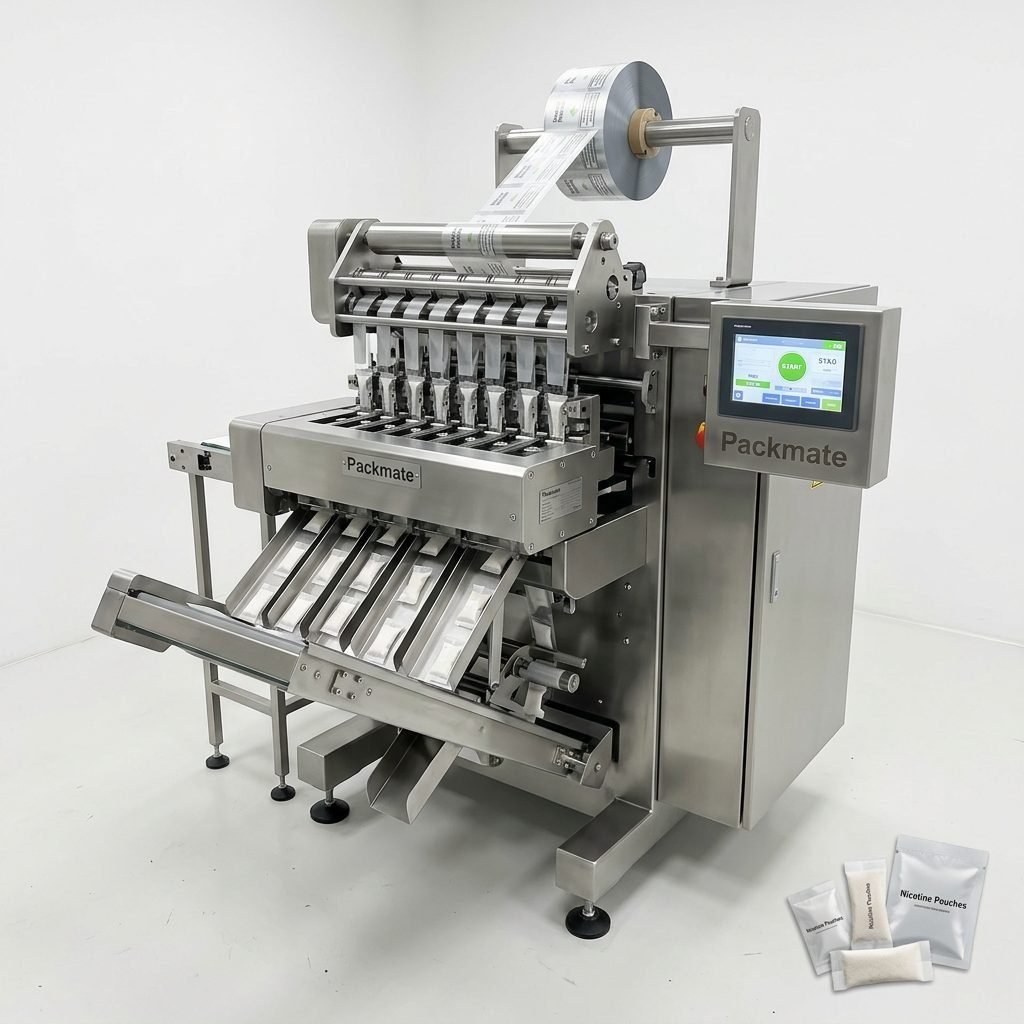
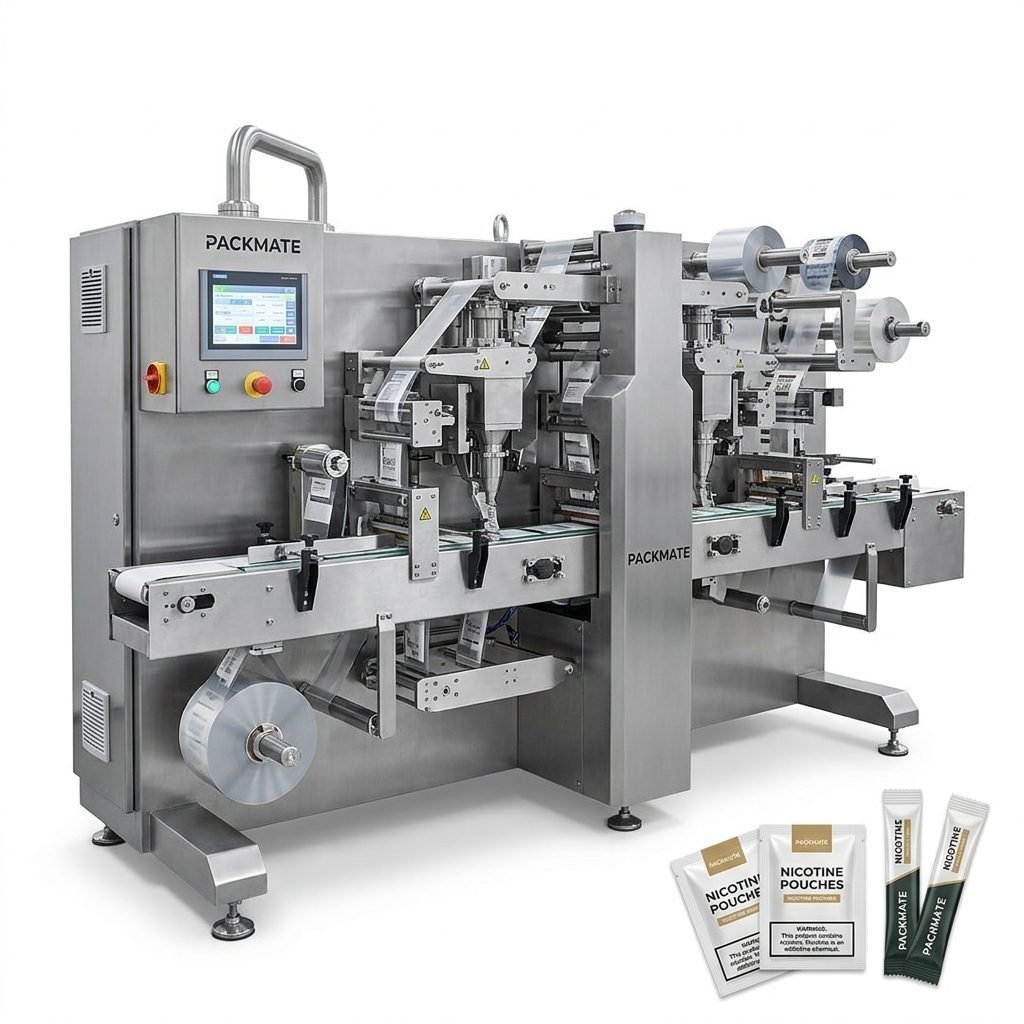
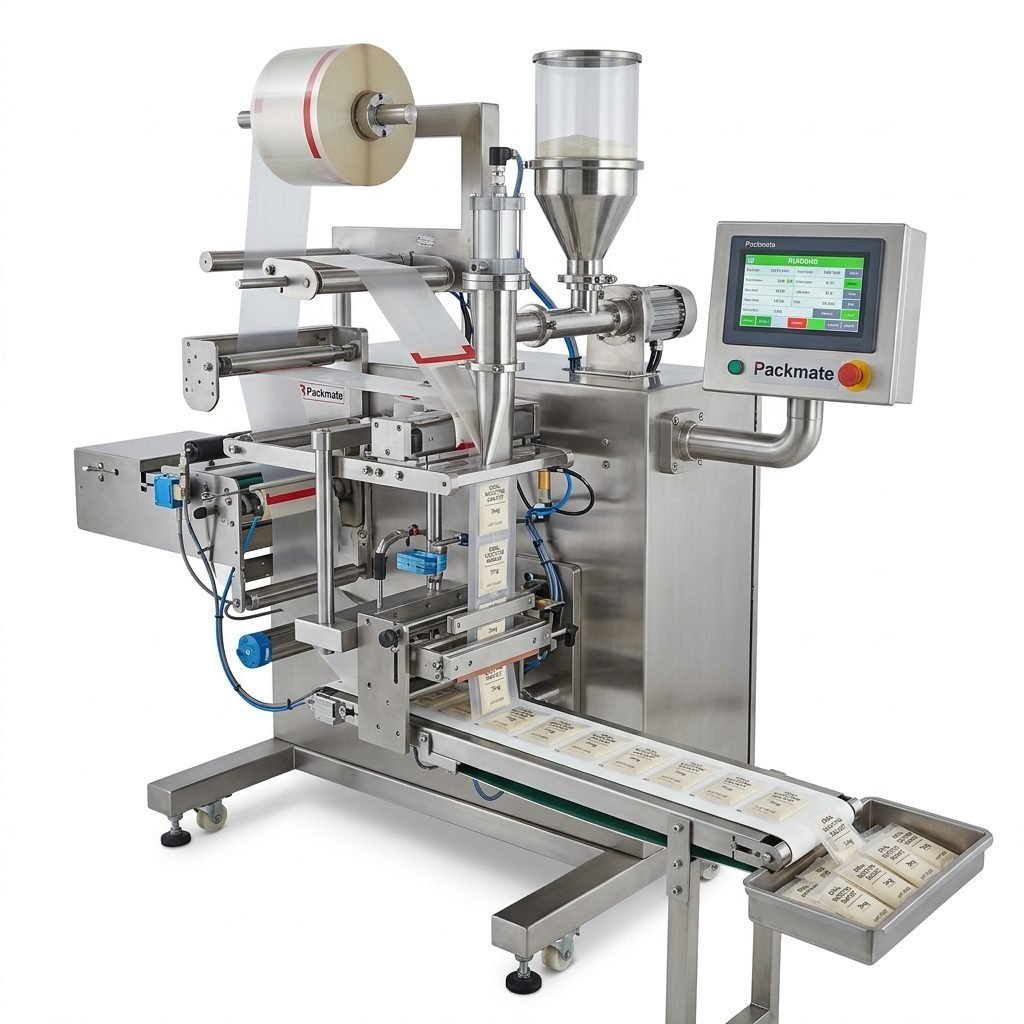
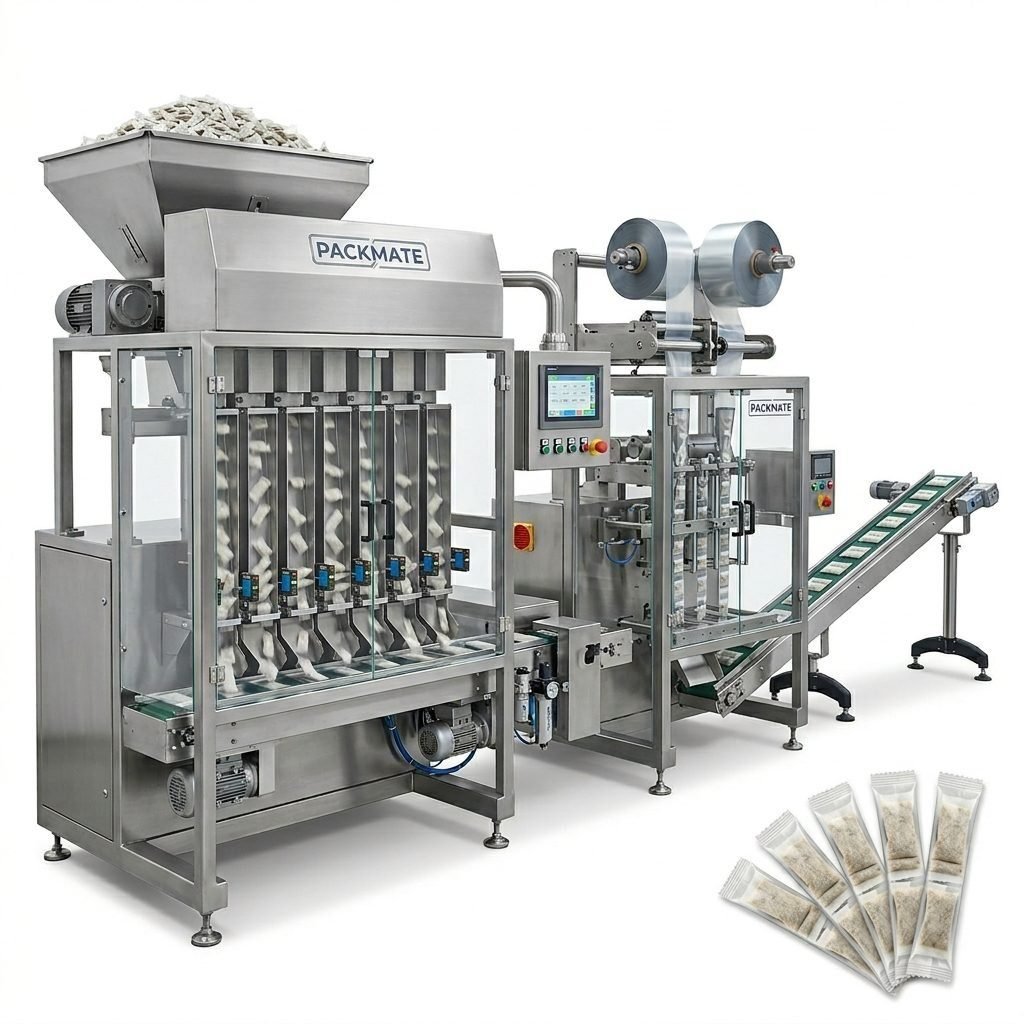
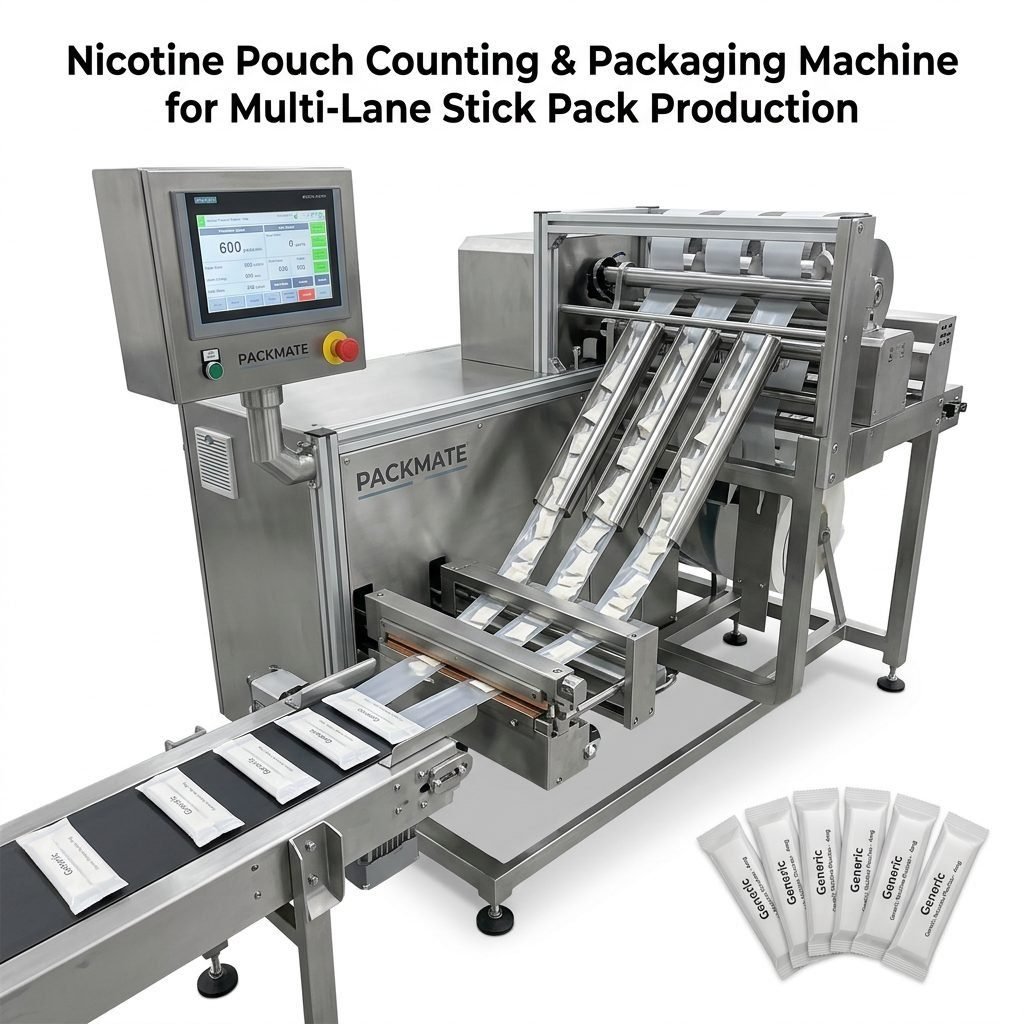
Familiarize yourself with the main machine families: stick pack, sachet, pillow/flat pouch, and multi-lane nicotine pouch systems. Each has trade-offs in speed, material usage, and sealing technology. For small-dose nicotine pouches and snus, high-precision multi-lane systems are often the most efficient.
If you want to see product options and specifications, review specialized equipment categories such as
Snus & Nicotine Packaging Machines,
Sachet & Stick Pack Machines, and
Filling & Packaging Lines.
Automation & Controls
Look for modern PLC and HMI controls with recipe management, fault diagnostics, and remote support options. Good automation reduces changeover time and allows operators to maintain consistent quality. Manufacturers that provide user-friendly interfaces and remote troubleshooting capabilities reduce downtime — a critical advantage for remote markets like Samoa.
✅ Quick Tip:
Prioritize machines with easy-to-access components and clear service routines — they simplify maintenance and lower operational risk in island markets.
Factory Strength and Manufacturing Quality
Manufacturing capacity and workshop capabilities speak volumes. A supplier with advanced CNC machining centers, precision assembly lines and a large factory footprint typically delivers more consistent machine quality and the ability to meet custom engineering needs. When evaluating suppliers, ask for factory photos, production capacity data and a list of available machine models.
For example, Packmate Snus Machine operates a 20,000㎡ manufacturing facility with over 50 machine models and advanced CNC systems, which supports customization and global turnkey solutions.
Learn more about the company background via the
About Packmate page.
Certifications & Compliance
Ensure equipment complies with international standards (CE, ISO) and can meet Samoa’s import and safety regulations. Request certification documents and confirm that electrical, mechanical and safety standards are clearly documented.
⚠️ Must-Have:
Copies of CE and ISO certificates and clear machine safety documentation before purchase.
After-Sales Service and Spare Parts
After-sales support determines long-term machine uptime. Inquire about warranty terms, spare parts availability, lead times for replacement components, and whether the manufacturer supplies remote diagnostics and training. For customers in Samoa, ask if the supplier can coordinate logistics, local technicians, or provide on-site commissioning.
Evaluate the supplier’s global service network. Supplier case histories and exhibition participation indicate broader market presence and commitment to international customers. See real-world deployments in the
Case section.
Service checklist
– Warranty period and scope (mechanical, electrical, wear parts).
– Local spare parts stock or guaranteed fast shipment.
– Training for your operators and maintenance staff.
– Remote troubleshooting and software updates.
Total Cost of Ownership (TCO) vs. Purchase Price
Don’t focus solely on the purchase price. Calculate TCO: energy consumption, changeover time, spare parts consumption, service costs, and expected lifetime. Higher-quality machines may cost more up front but save through reduced downtime and lower maintenance costs.
💡 Pro Tip:
Request real-world operating cost data from references to build an accurate TCO model tailored to Samoa’s energy and labor costs.
Customization and Turnkey Solutions
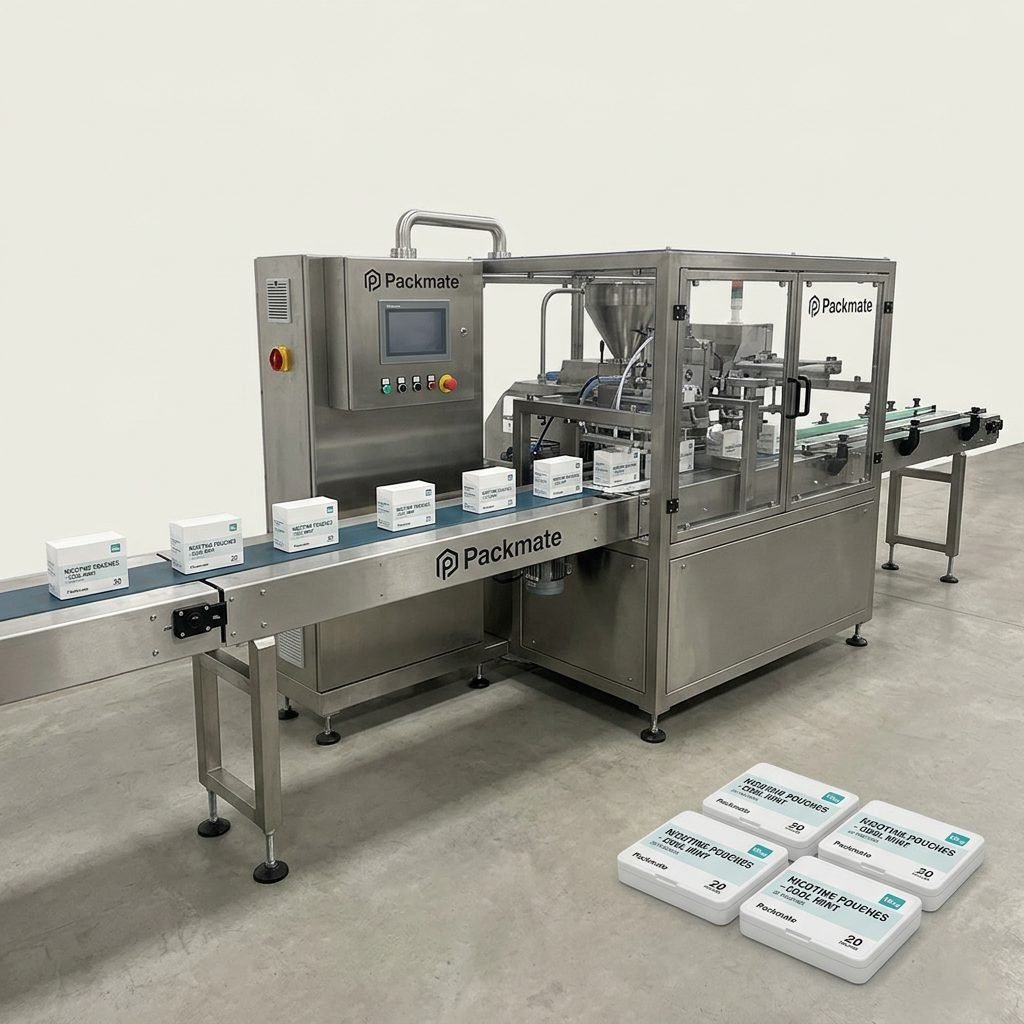
Nicotine pouch production often needs customized features: special dosing systems, nitrogen flushing, dust and odor control, and integration with automated packing or cartoning lines. Seek manufacturers that deliver whole-line solutions — from filling and weighing to primary packaging and case packing.
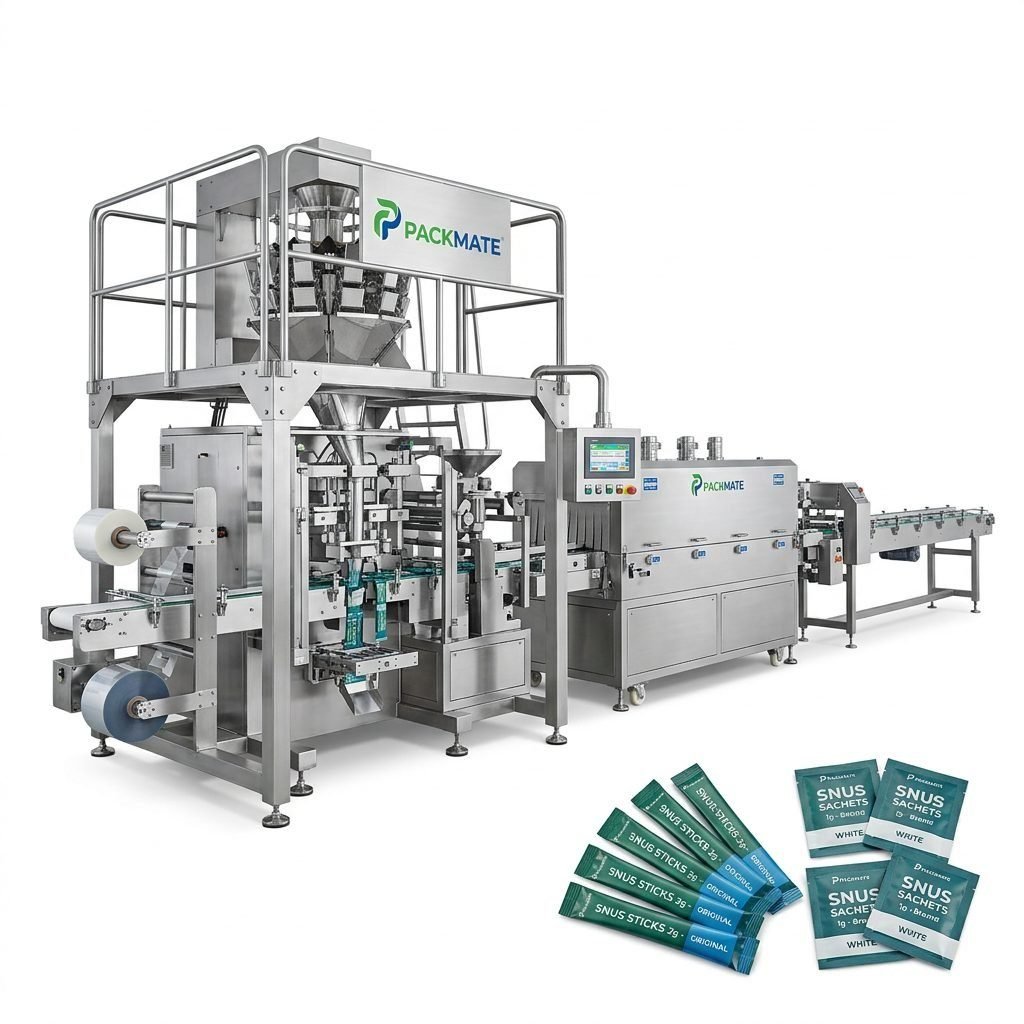
Packmate offers full production lines including weighing and packaging systems; explore complementary equipment under
Weighing & Packaging Systems and
Auxiliary Packaging Equipment.
Integration considerations
– Can the supplier provide PLC recipe transfers across modules?
– Are conveyors, checkweighers and metal detectors compatible?
– How will the line be validated for product quality and traceability?
Logistics, Shipping and Local Installation
For Samoa, shipping time and customs clearance are critical. Discuss crating standards, export documentation, and whether the manufacturer supports freight forwarding. Confirm installation packages: on-site commissioning, training and start-up spare parts.
Ask for a clear delivery timeline with milestones (factory test, FAT, shipment, ETA to port, installation window). Reliable suppliers will provide Factory Acceptance Test (FAT) reports and video demonstrations prior to shipment.
Questions to Ask Potential Manufacturers
1. Can you provide references and case studies for similar nicotine pouch lines?
2. What are the expected uptime metrics and MTBF (mean time between failures)?
3. What spare parts are recommended as on-site stock and what are their lead times?
4. Do you offer remote monitoring and software support?
5. Can you provide a full bill of materials and energy consumption estimates?
🔎 Buyer Checklist:
Always request references, FAT video, spare parts list and clear written warranty terms before signing.
Evaluating Manufacturer Reputation
Reputation is built on years of consistent delivery. Companies with decades of engineering experience and many installed lines are less likely to provide risky equipment. Look for long-term presence, exhibition participation, and published certifications. Packmate’s company history — originating from workshops in 1993 and evolving into a global supplier — is an example of steady industry development.
You can view more about their credentials under Certificate.
Red flags
– Refusal to provide FAT or machine videos.
– Vague warranty and spare parts commitments.
– No documented international certifications.
– No references for similar projects.
Negotiation Tips and Contract Essentials
When negotiating, clarify payment terms, delivery milestones, acceptance tests, spare parts kits, training scope, warranty coverage, and penalties for missed delivery. Insist on a written FAT acceptance checklist, clear performance guarantees and an agreed commissioning plan.
Make sure the contract specifies who handles customs clearance, local taxes and installation costs. For Samoa, consider including a clause for extended remote technical support due to travel constraints.
Making the Final Decision
Rank suppliers by total value, not just price. Use a weighted checklist: machine performance, TCO, certifications, after-sales, customization capability, and references. Visit the factory or request a live demonstration if possible. If travel isn’t feasible, request a comprehensive FAT with video walkthroughs and live Q&A.
Final Reminder:
Prioritize partners that offer long-term support and turnkey experience — particularly valuable for markets like Samoa with limited local service resources.
Where to Get Started
Start by shortlisting 3–5 reputable manufacturers and request a detailed technical proposal. Include required outputs, environmental constraints, and local support needs. Review proposals against your weighted checklist and schedule FATs for the top candidates.
For reference equipment types and to explore model options, view Packmate’s product pages:
Snus & Nicotine Packaging Machines,
Bag & Pouch Packaging Machines, and
Auxiliary Packaging Equipment.
Conclusion
Selecting the best nicotine packaging machine manufacturer for Samoa requires balancing machine capability, TCO, certifications, after-sales service and logistics. By preparing a clear specification, evaluating factory strength and certifications, insisting on FATs and spare parts agreements, and prioritizing long-term support, you significantly reduce risk and ensure a smoother production ramp-up.
Frequently Asked Questions
Q1: How long does it take to receive and commission a snus packaging line in Samoa?
A1: Typical delivery and commissioning timelines range from 12 to 20 weeks depending on customization, FAT scheduling and shipping. Allow additional time for customs clearance and onsite preparations.
Q2: What spare parts should be stocked locally for quick repairs?
A2: Keep critical wear parts (seals, belts, filling nozzles, sensors), a basic electrical spare kit (PLC modules, fuses, HMI components) and fast-moving mechanical parts. Suppliers should provide a recommended spare parts list.
Q3: Are turnkey lines available that include weighing and cartoning?
A3: Yes. Many manufacturers offer turnkey lines that integrate weighing, filling, primary packaging and cartoning. Review integrated solutions in the Weighing & Packaging Systems section.
Q4: How do I verify machine performance before shipment?
A4: Require a Factory Acceptance Test (FAT) with video documentation and test data. A FAT should include speed trials, seal integrity checks, and sample production runs of your SKU.
Q5: How important are certifications like CE and ISO for nicotine packaging equipment?
A5: Very important. Certifications demonstrate adherence to safety and quality standards and facilitate customs acceptance and insurance. Always request copies of relevant certificates before finalizing purchase.