Choosing the right nicotine packaging machine in Estonia involves balancing regulatory compliance, production capacity, and long-term reliability. This guide walks you through the technical, operational, and commercial considerations so you can make an informed purchase decision that supports both short-term needs and future growth.
🔍 Market context: Why Estonia is a smart place to invest in nicotine packaging
Estonia’s strategic location in Northern Europe, combined with an efficient logistics network and access to EU regulatory frameworks, makes it an attractive base for nicotine pouch production and export. Investing in an automated packaging line here can reduce lead times to European markets while ensuring compliance with international standards.
Key decision drivers at a glance
The most important factors to evaluate are production speed, pouch format flexibility, fill accuracy, hygiene design, compliance certifications, and the supplier’s after-sales support network. Prioritize the items that directly affect product quality, regulatory compliance, and your target output.
⚙️ Core technical features to evaluate
When comparing machines, check specifications carefully rather than relying on promotional claims. Look for measurable parameters (e.g., pieces per minute, filling tolerance ±g, lane count) and the test protocols used to verify them.
Production speed & lane configuration
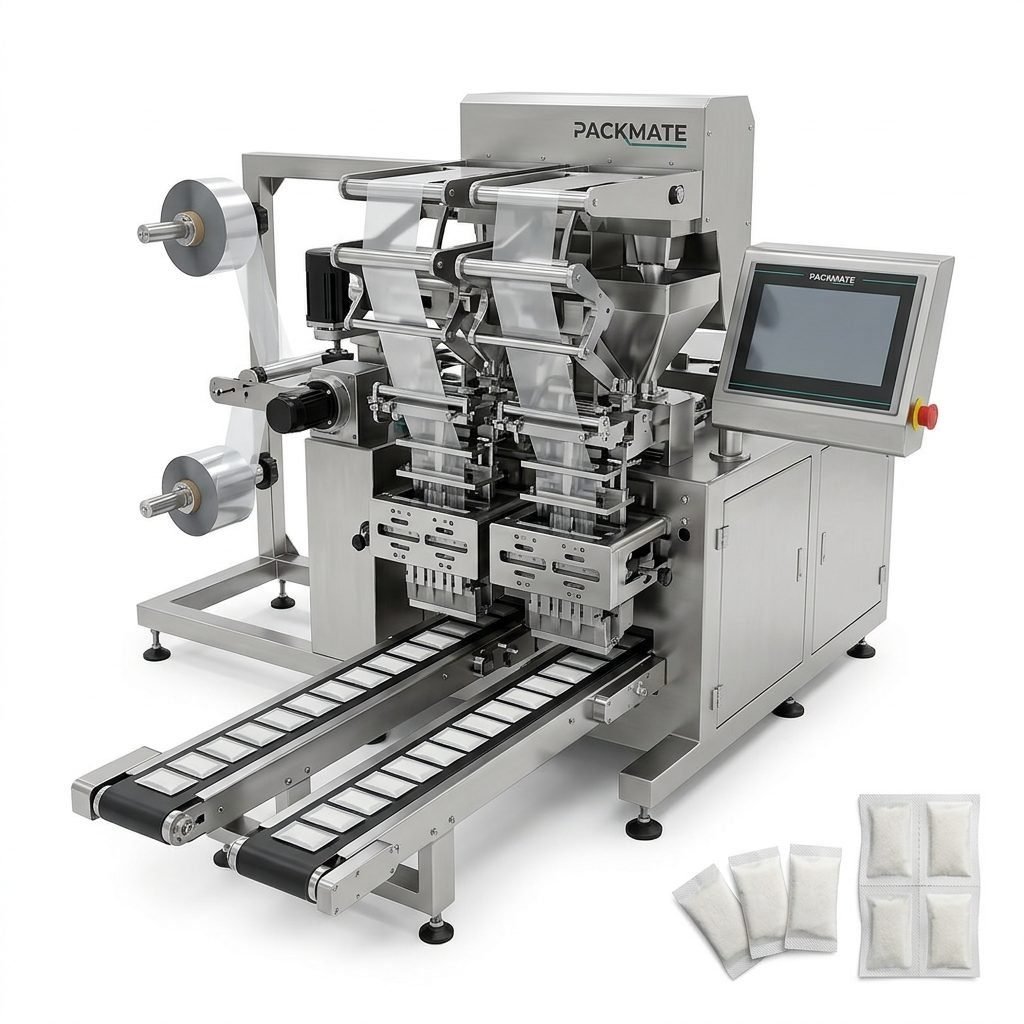
Speed is often expressed as pouches per minute (ppm). Multi-lane machines can multiply throughput without increasing machine footprint. Consider whether a single high-speed lane or a multi-lane configuration better fits your SKU mix and floor space.
Tip: If your product line includes multiple pouch sizes, choose a machine with quick-change tooling or modular lanes to minimize downtime and changeover cost.
Fill accuracy and dosing systems
Accurate dosing reduces waste and ensures compliance. Check the machine’s dosing tolerance and whether it uses volumetric, gravimetric, or loss-in-weight systems. For nicotine pouches, high-precision weighing systems are often preferred to maintain consistent nicotine content.
Material compatibility and sealing technology
Different pouch materials (paper, laminate, foil) require different sealing technologies and temperature controls. Confirm that the machine supports your chosen pouch materials and has robust sealing heads with temperature control and quality monitoring.
🧼 Sanitation, maintainability, and production hygiene
Hygiene is non-negotiable for nicotine pouch production. Look for stainless steel contact parts, easy-access panels for cleaning, and a design that minimizes product traps. Machines with CIP-compatible components or easily removable filling modules will save time during sanitation cycles.
Important: verify cleaning protocols and spare-part availability—downtime due to poor maintainability is one of the most costly risks.
📋 Regulatory compliance and certifications
Ensure the equipment meets EU and international standards. CE and ISO certifications are baseline; some customers will also require documentation for materials, traceability, and machine validation procedures. Suppliers that provide full documentation simplify regulatory audits.
🔗 Automation, control systems and Industry 4.0 readiness
Modern lines should support PLC/HMI controls, recipe management for quick SKU changeovers, and data logging for OEE and traceability. Check whether the machine can integrate with upstream dosing, weighing, or downstream case packing equipment.
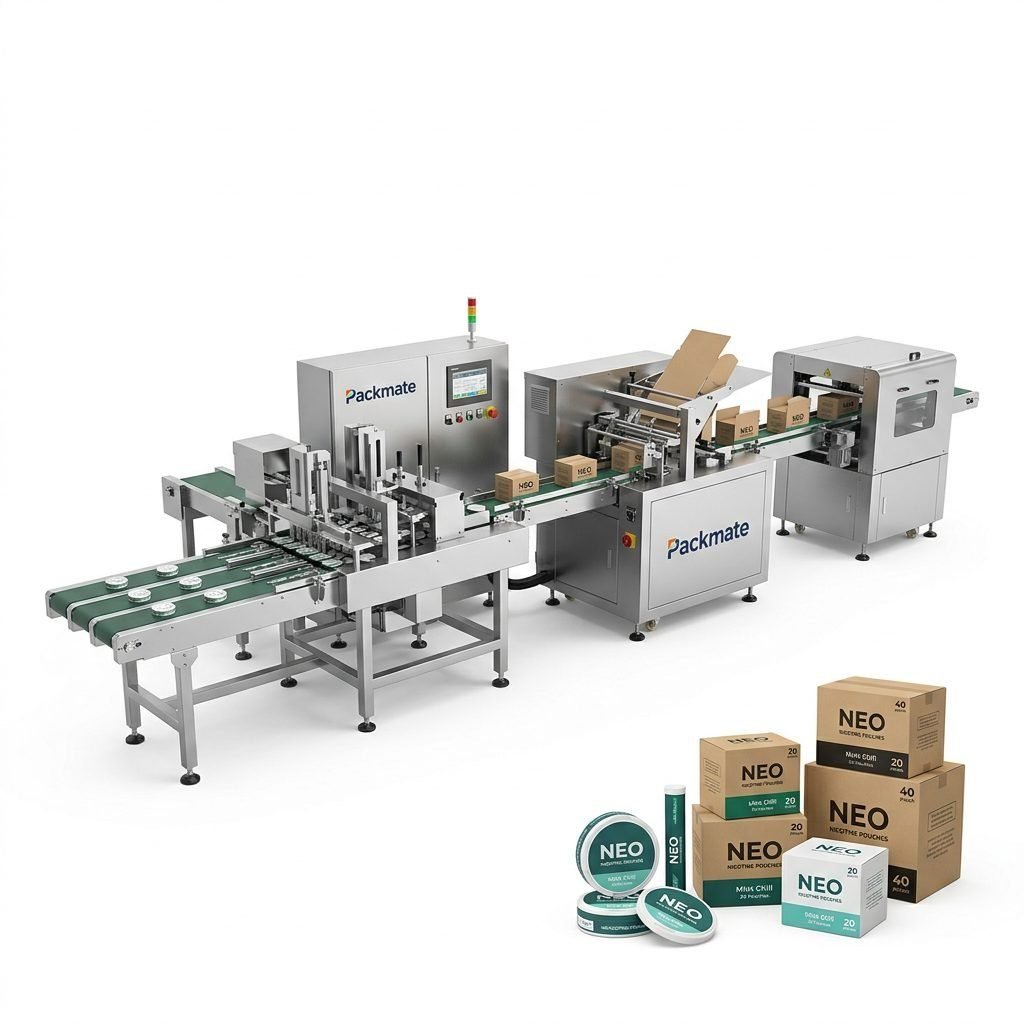
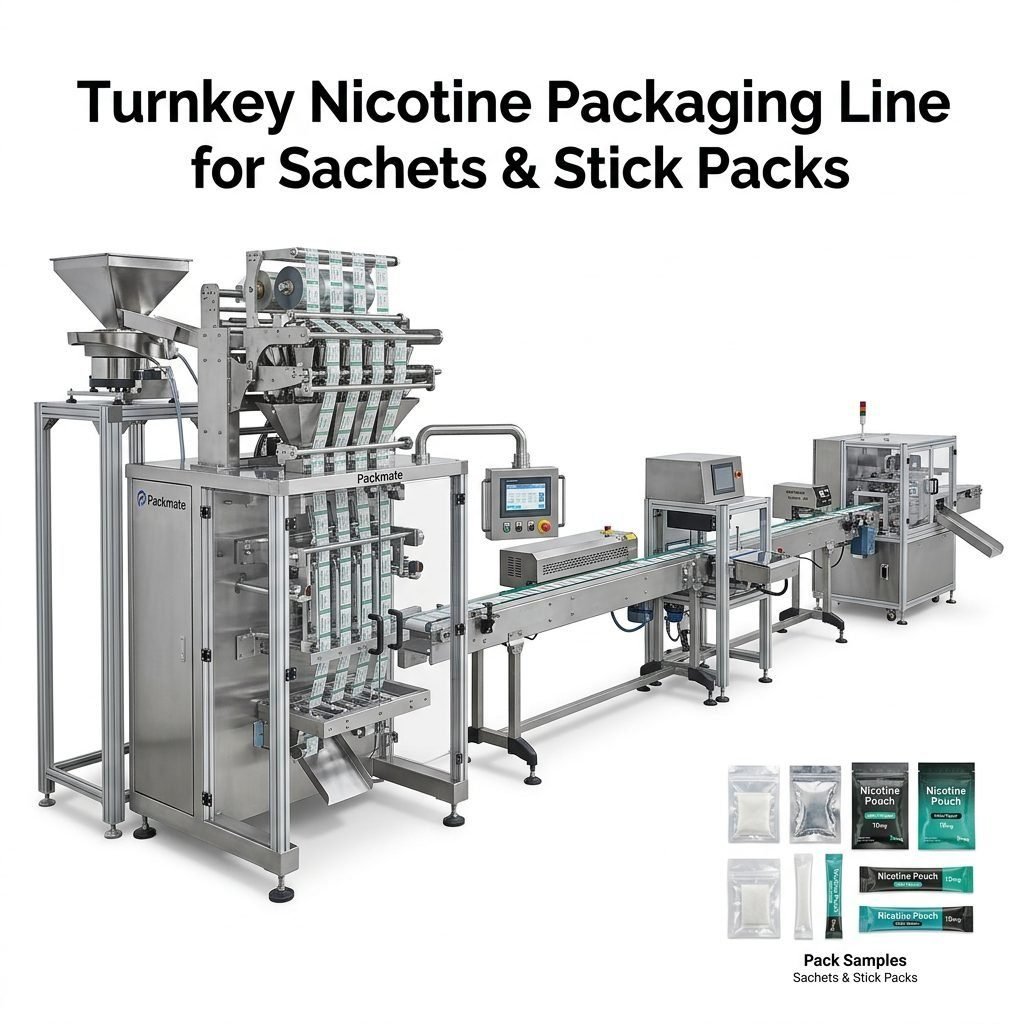
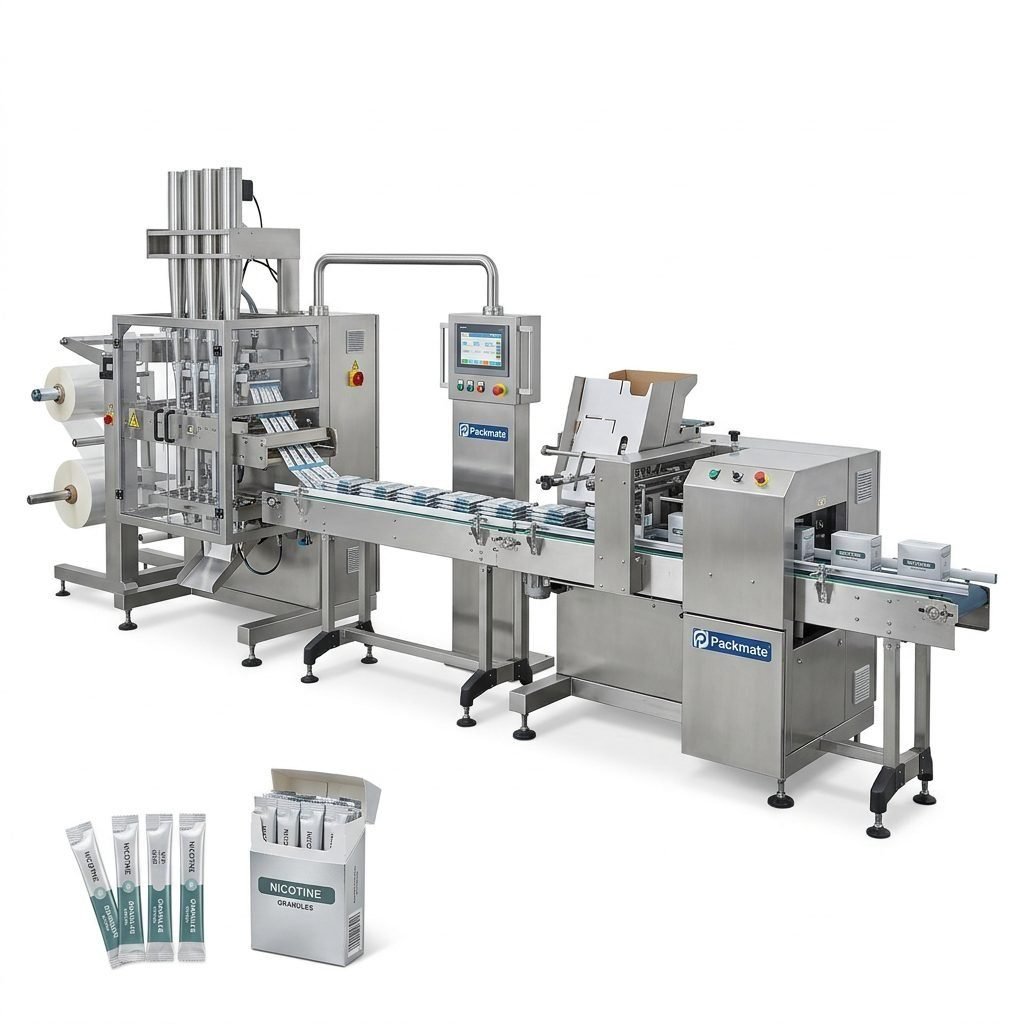
If you plan to scale, select equipment that can be integrated into a broader filling & packaging line to reduce future upgrade costs. For example, Packmate offers full Filling & Packaging Lines that combine multiple modules into a turnkey solution.
🛠 After-sales support, spare parts and local service
A strong after-sales network is critical. Ask about response times, spare-part lead times, remote diagnostics, and training packages. Local or regional technical support in Europe is a major advantage for minimizing downtime.
Warranty and service contracts
Negotiate warranty terms and consider a preventive maintenance contract. Clearly define service-level agreements (SLAs) for critical components and a list of recommended spare parts to keep on hand.
💰 Cost considerations and calculating ROI
The cheapest machine upfront may cost more over its lifetime. Calculate total cost of ownership (TCO) including installation, commissioning, spare parts, energy consumption, and expected downtime. Factor in gains from higher accuracy (less material waste) and faster changeovers.
ROI checklist: expected production days/year, average speed (ppm), yield improvement, maintenance costs, and spare-part consumption.
✅ Supplier evaluation checklist
Use a standardized checklist when evaluating vendors: technical specs, capacity guarantees, references, factory acceptance tests (FAT), installation and commissioning (SAT), training, certification, and spare parts availability.
Factory visits and FAT
Whenever possible, conduct a factory acceptance test (FAT) to see your product run on the machine. A reputable manufacturer will welcome FATs and provide videos, performance data, and customer references. Visit case studies to review real installations.
See real production examples in Packmate’s Case section for practical insights on line performance and customer outcomes: Case.
📦 Suggested machine types for nicotine pouch production
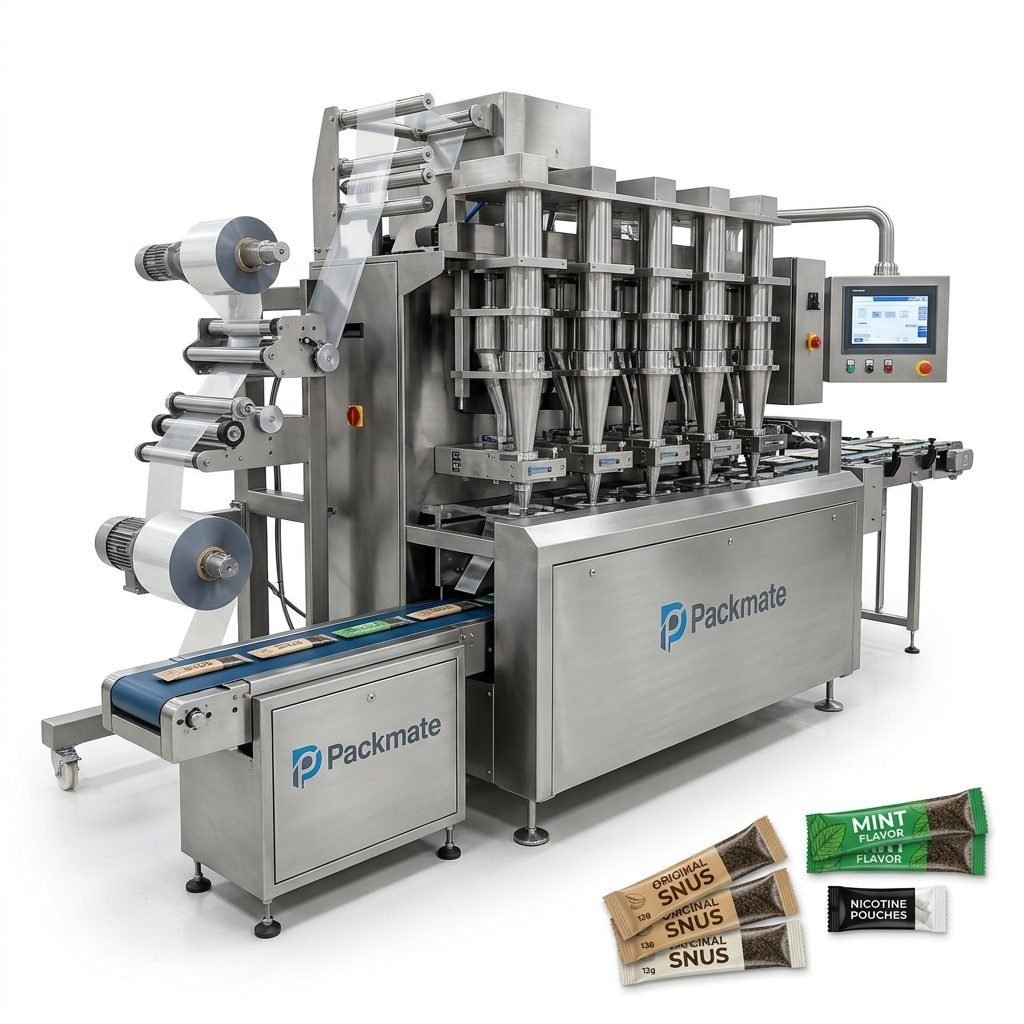
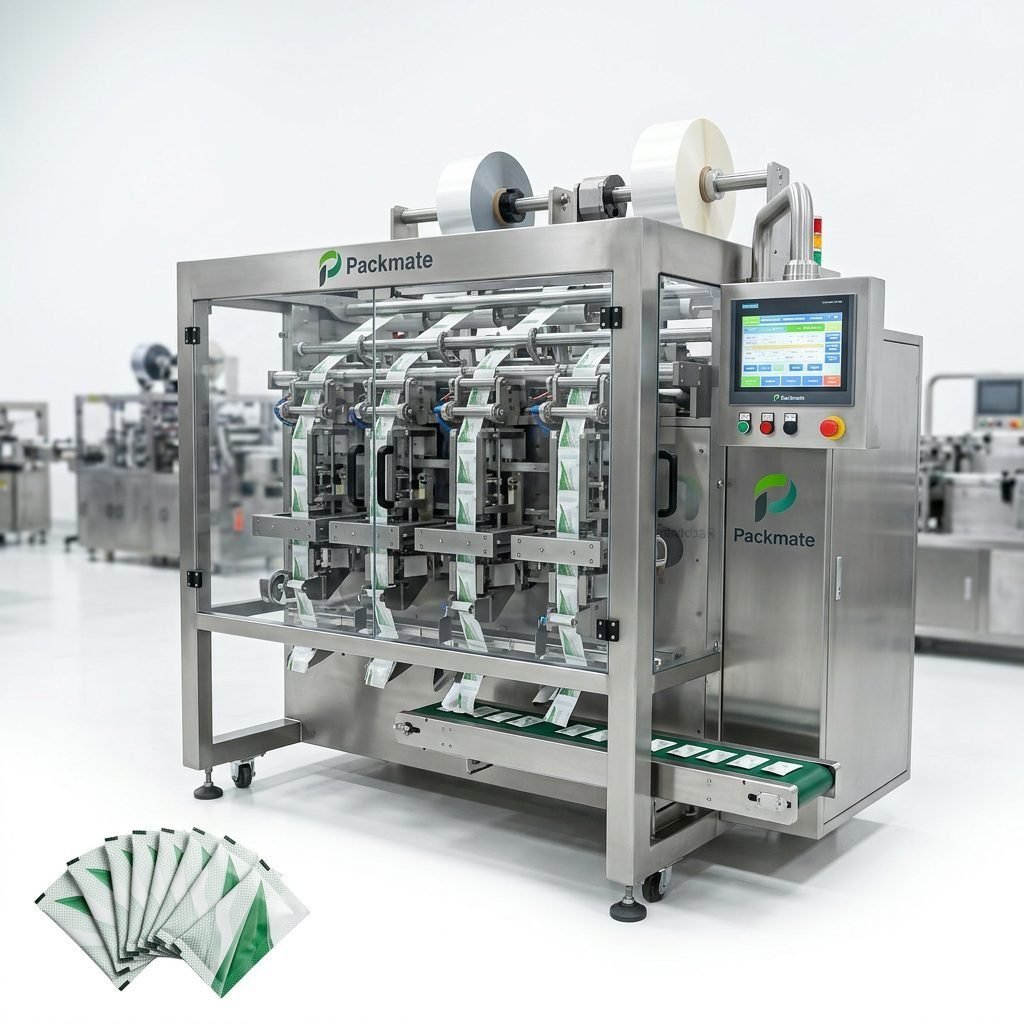
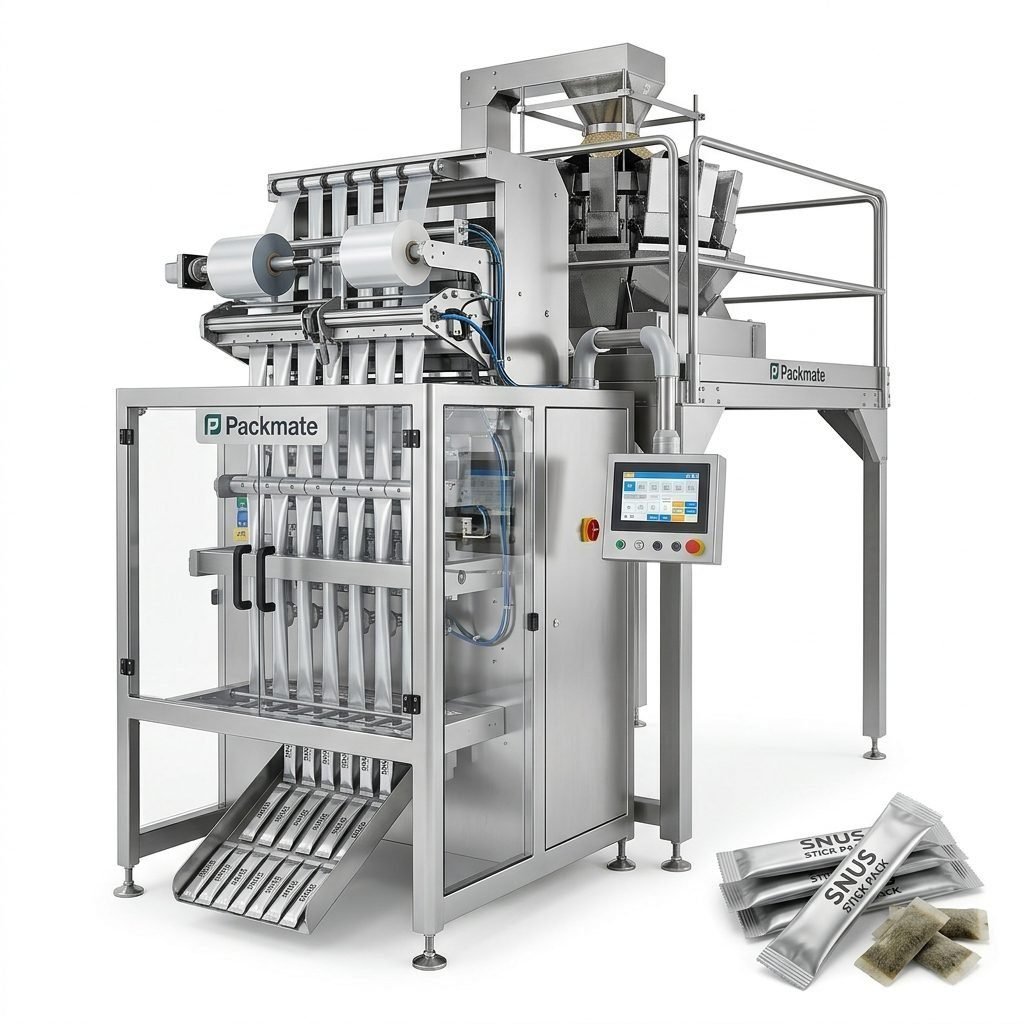
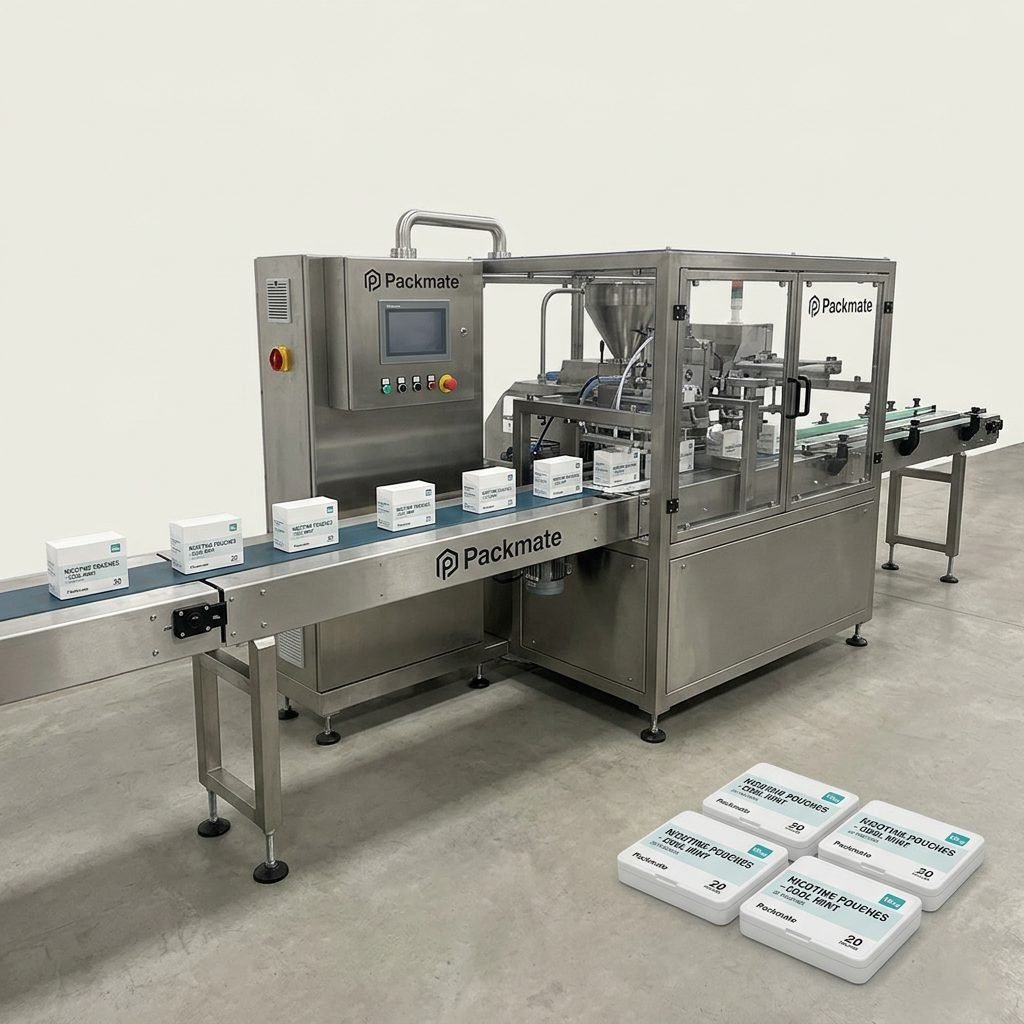
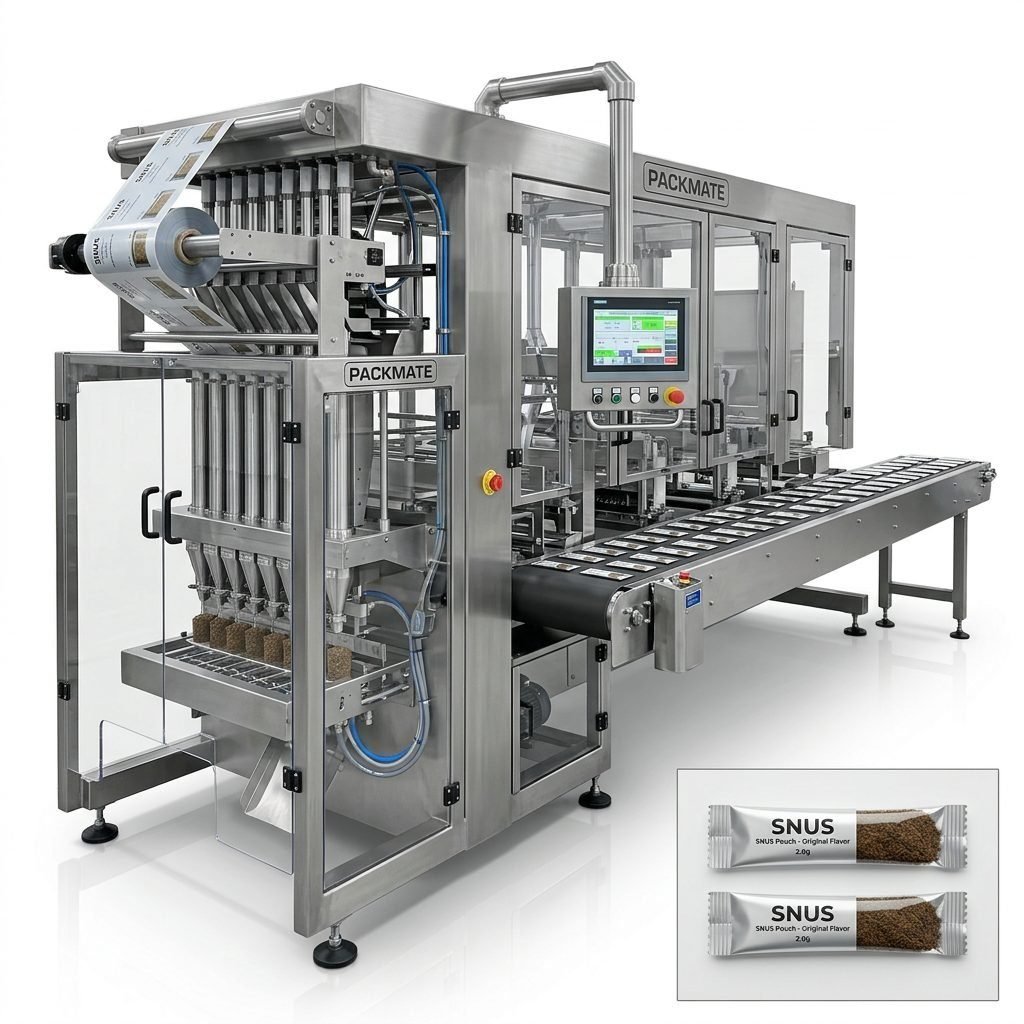
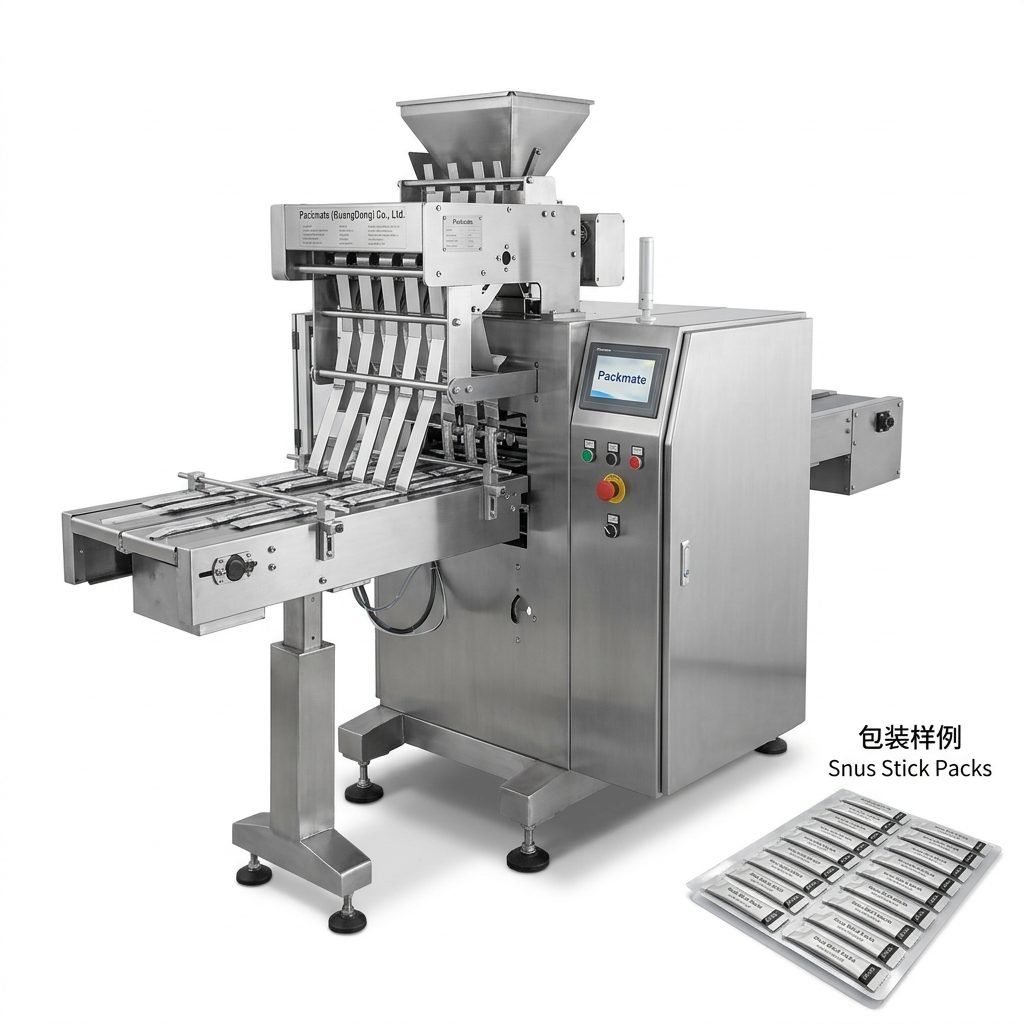
Choose between stick pack, sachet, multi-lane pouch machines, and complete filling systems depending on your product form. For most nicotine pouches, multi-lane snus packaging machines provide the best balance of throughput and consistent pouch formation.
Explore product categories such as Snus & Nicotine Packaging Machines, Bag & Pouch Packaging Machines, and Sachet & Stick Pack Machines to match machine type to your packaging format.
📝 Procurement and installation roadmap
Follow a step-by-step procurement process: define requirements, shortlist vendors, request detailed quotes, perform FAT, confirm commissioning plan, install with vendor support, and run SAT with documentation and operator training.
Procurement timeline (example): 1–2 weeks requirements, 2–4 weeks vendor shortlisting, 4–8 weeks FAT & contract, 6–12 weeks manufacturing, 2–4 weeks installation & commissioning.
🔧 Installation, validation and operator training
Ensure the vendor provides installation and validation support. Operator training is essential for consistent production quality and safety. Ask for process documentation, maintenance schedules, and spare parts lists to support your team post-installation.
📈 Scaling and future-proofing your investment
Consider modular machines that enable adding lanes or integrating additional modules (weighing, secondary packaging) later. Evaluate upgrade paths and software options for remote monitoring and predictive maintenance to extend the machine’s useful life.
🏭 Why consider Packmate (manufacturer profile)
Packmate Snus Machine brings 30+ years of packaging engineering experience and a wide range of models for snus and nicotine pouch production. Their capability to deliver turnkey solutions—from individual snus packaging machines to full filling & packaging lines—means fewer integration risks and a single technical partner for line performance.
Learn more about the company and offerings at About Packmate and browse detailed product categories such as Filling & Packaging Lines for complete solutions.
📌 Practical checklist before you sign a PO
1) Confirm production requirements and uptime targets. 2) Verify performance through FAT or references. 3) Secure documentation for compliance and materials. 4) Lock in spare-part lead times and SLAs. 5) Plan installation, training, and warranty terms.
Quick links: product categories and support pages to explore further: Snus & Nicotine Packaging Machines, Auxiliary Packaging Equipment, and Service.
Final considerations
A good investment in nicotine packaging equipment balances technical fit, supplier reliability, and a predictable TCO. Prioritize machines that match your product format, offer measurable performance guarantees, and come from a vendor with proven global installations and responsive technical support.
Next steps
Create a short list of vendors, request detailed quotes and FAT options, and plan a pilot run to confirm product quality under real production conditions. Where possible, prioritize suppliers that offer turnkey solutions to streamline integration.
Frequently Asked Questions
Q1: What is the typical lead time for a snus / nicotine pouch packaging machine?
Lead time varies by configuration and customization but typically ranges from 6 to 12 weeks for standard models; turnkey or custom lines can take longer. Confirm a firm schedule with the vendor and include FAT dates in your purchase agreement.
Q2: How do I ensure consistent nicotine dosing across pouches?
Use high-precision dosing systems (gravimetric or loss-in-weight) and perform regular calibration and inline quality checks. A weight-checking station and rejection system help maintain batch consistency.
Q3: What certifications should I request from the supplier?
Request CE and ISO certificates as a minimum, plus material safety documentation and traceability records. For European markets, ensure the supplier can provide documentation that supports regulatory compliance and validation.
Q4: Can I upgrade a machine later if my production needs grow?
Many manufacturers design modular systems that allow adding lanes, integrating smart controls, or connecting weighing and case-packing modules. Confirm upgrade paths and compatibility upfront.
Q5: How do I choose between single-lane high-speed and multi-lane systems?
Choose multi-lane systems if you need higher throughput with a smaller footprint and greater redundancy; choose single-lane high-speed when product formats require very tight control or when lane synchronization is complex. Evaluate based on SKU mix and expected production growth.