Choosing the right snus packaging machinery supplier in Brazil is more than a technical decision — it’s a strategic move that affects product quality, regulatory compliance, supply chain reliability, and brand perception in a market shaped by tropical climate, strict labeling expectations, and unique retail habits. This guide walks you through practical buying tips and a step-by-step checklist so you can select a partner who delivers performance, service, and long-term value.
Understanding the Brazilian snus and nicotine pouch market
Brazil’s consumer preferences and retail landscape influence packaging choices. Many Brazilian consumers favor bold flavors (mint, fruit notes) and discrete, easy-to-carry pouch formats suitable for on-the-go use. Retail channels include convenience stores, kiosks, supermarkets, and growing online sales. Because Brazil has warm, humid regions, moisture control and robust sealing are especially important to preserve product integrity during distribution across states like Amazonas and São Paulo.
Language and labeling matter: Portuguese-language labels, clear ingredient declarations, and locally compliant warnings help build retailer trust. Also consider cultural buying patterns — weekend consumption spikes, festival-driven promotions, and preference for multi-pack value packs — when evaluating packaging formats and machine flexibility.
Local regulations and due diligence
Regulations around nicotine products can change. Before committing to a purchase, verify local legal requirements in Brazil and consult local counsel or industry associations. Your supplier should be familiar with export documentation, customs processes, and any country-specific restrictions or labeling standards.
🔶 Key buyer’s checklist (quick view)
✅ Machine format compatibility: sachet, stick pack, multi-lane pouches
✅ Production speed & accuracy: ppm and dosing tolerance
✅ Humidity & sealing performance: crucial for Brazil’s climate
✅ After-sales service: spare parts, training, local support
✅ Certifications & factory capability: CE, ISO, CNC machining, FAT available
Technical specifications and performance metrics to evaluate
When comparing suppliers, get clear answers and documented data on technical capabilities. Ask for formal specifications and performance test reports (FAT — Factory Acceptance Test). Focus on the following:
Format and flexibility
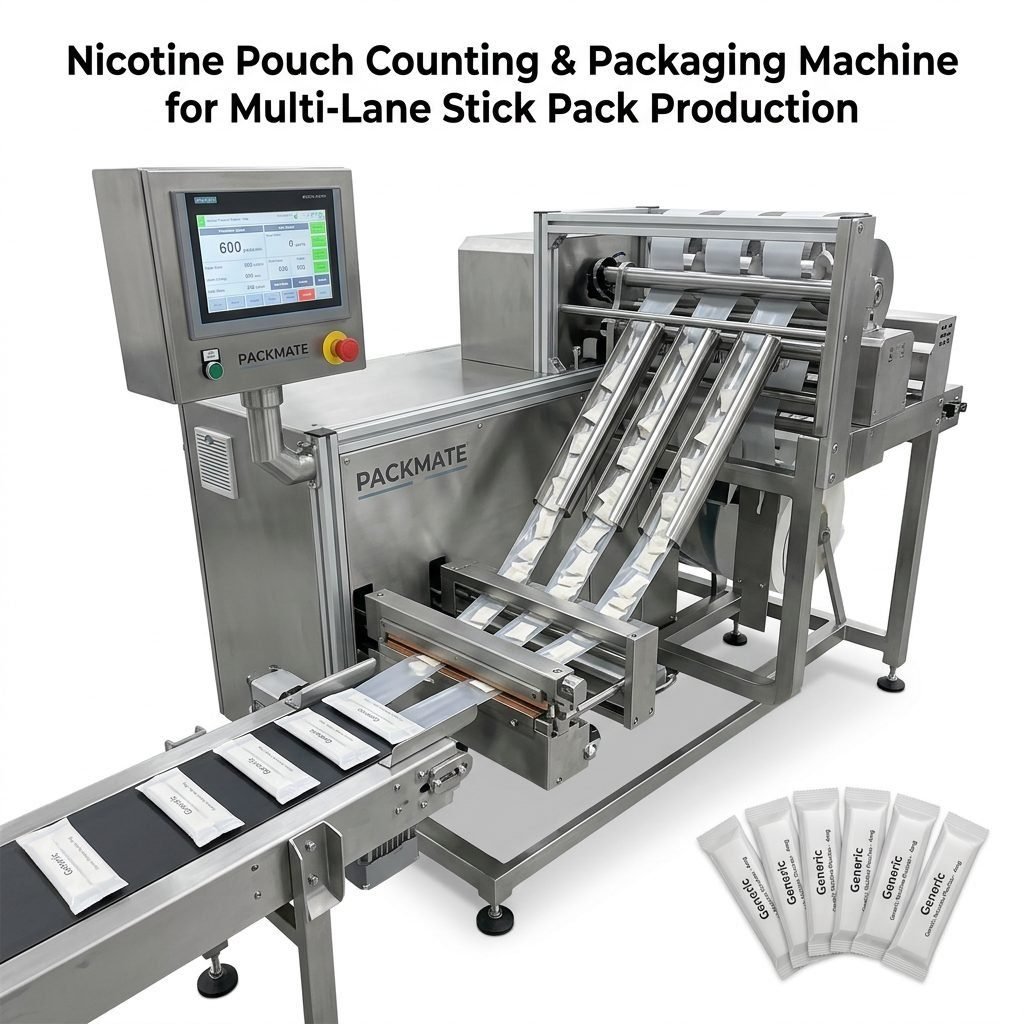
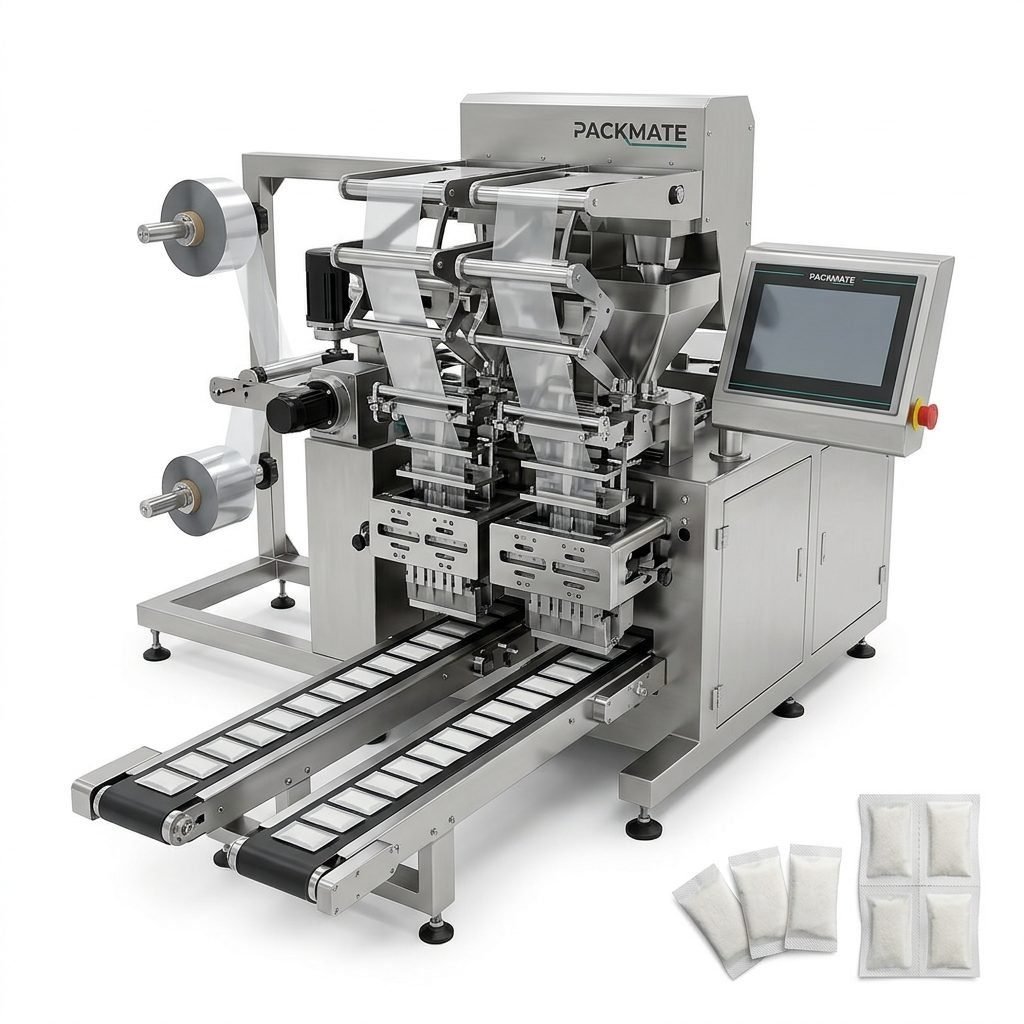
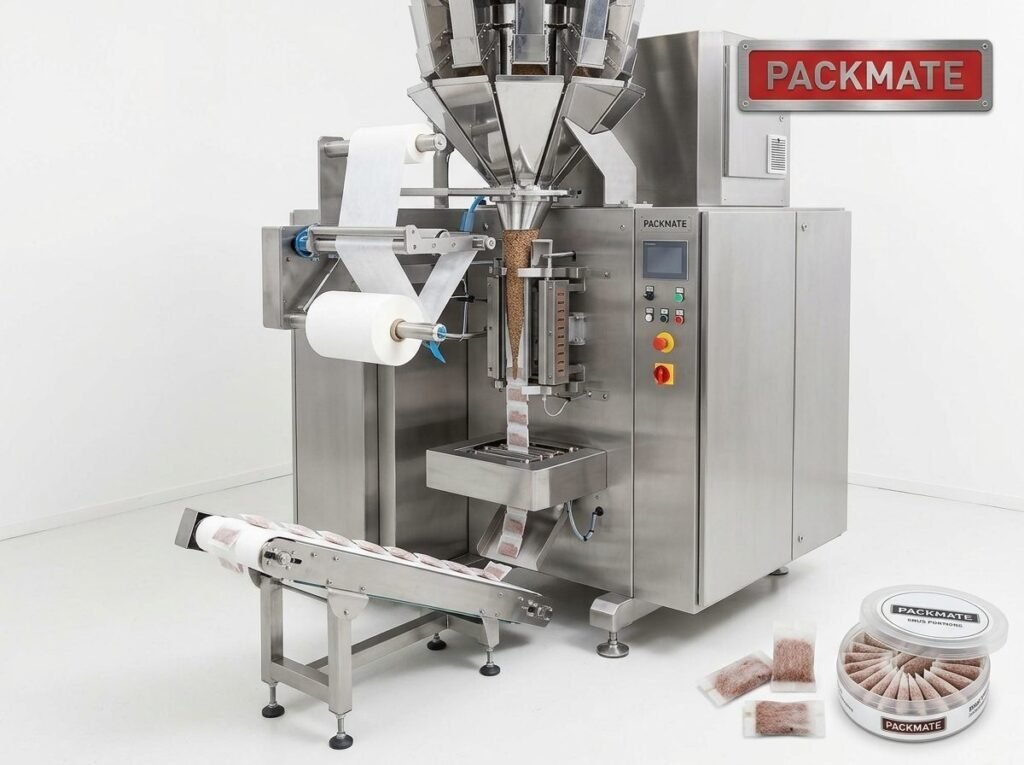
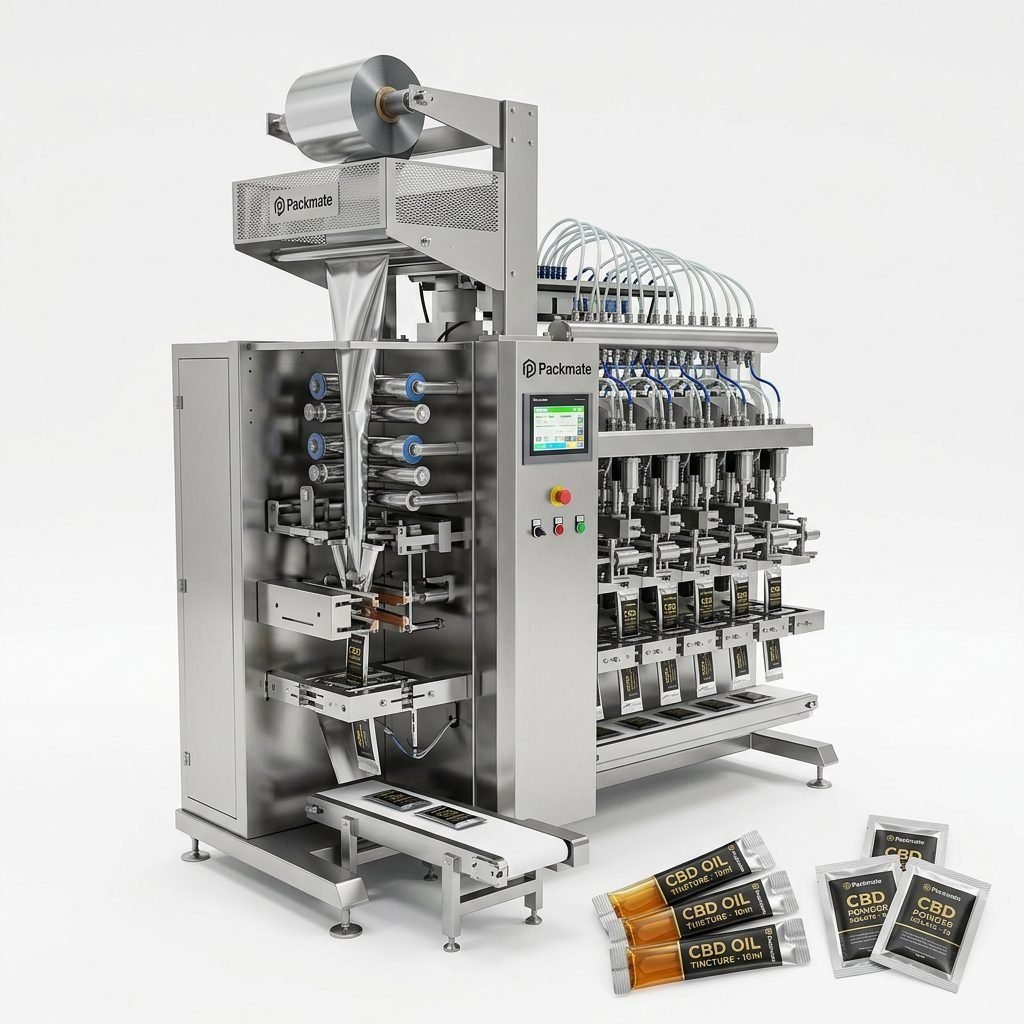
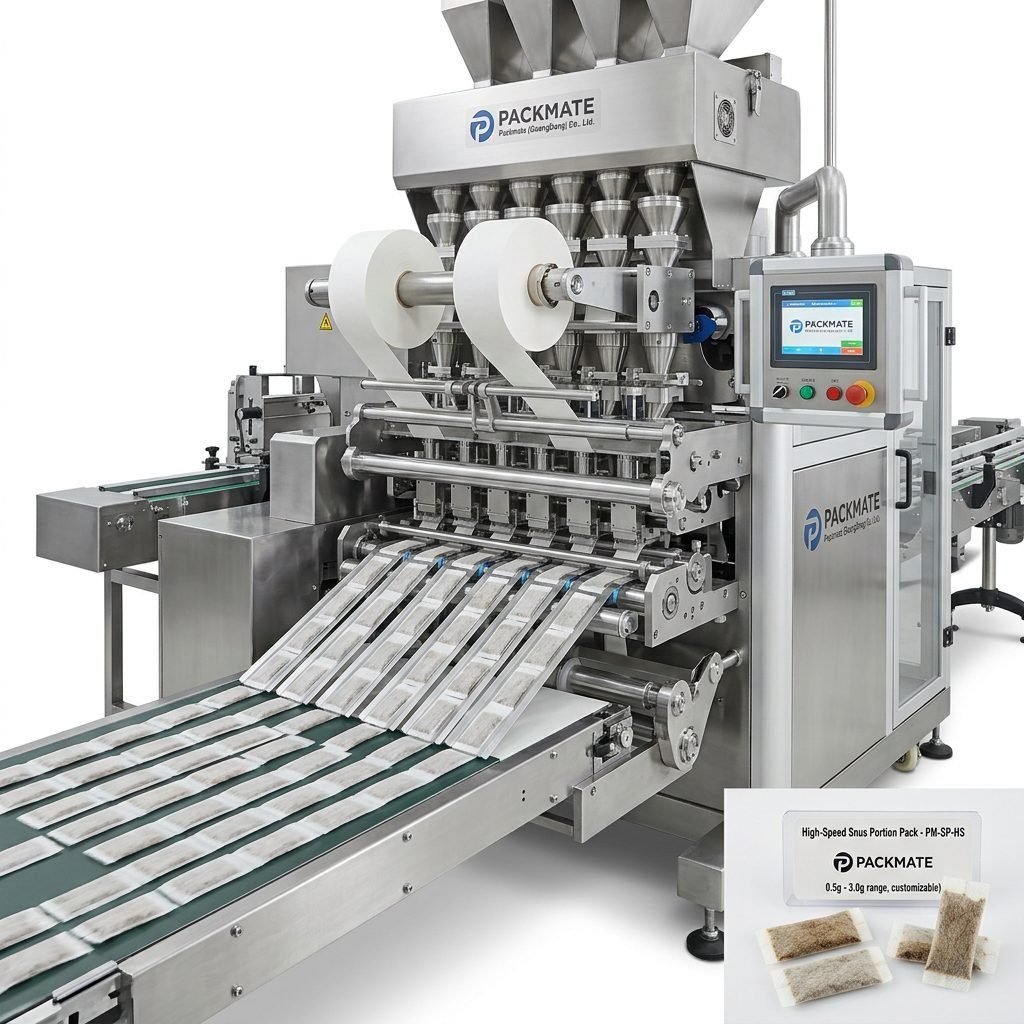
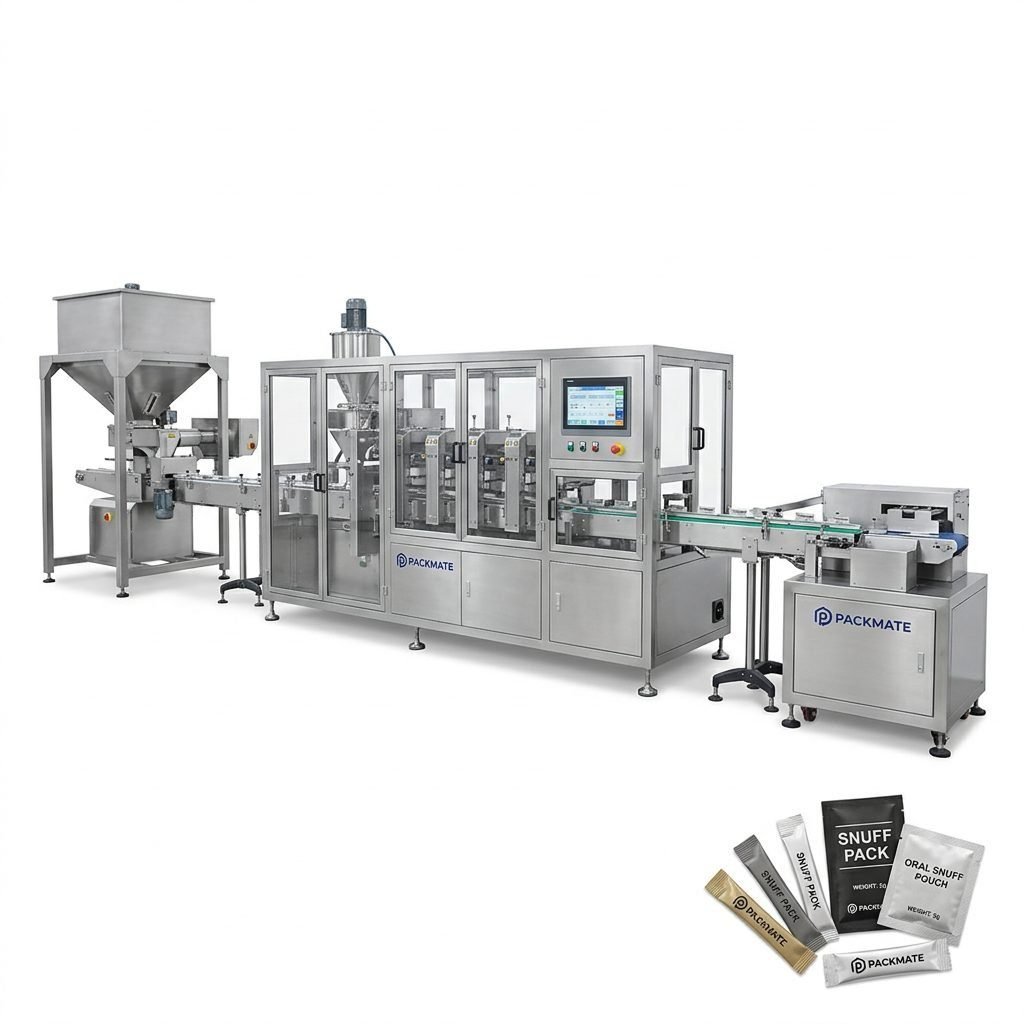
Can the machine handle your product formats (nicotine pouches, snus, powdered fillings)? Does it support stick packs, sachets, zipper pouches or multi-lane small-dose pouches? Choose equipment that minimizes changeover time and supports future SKUs. For examples and model references, review suppliers’ product pages such as Snus & Nicotine Packaging Machines and Sachet & Stick Pack Machines.
Speed, accuracy and multi-lane capability
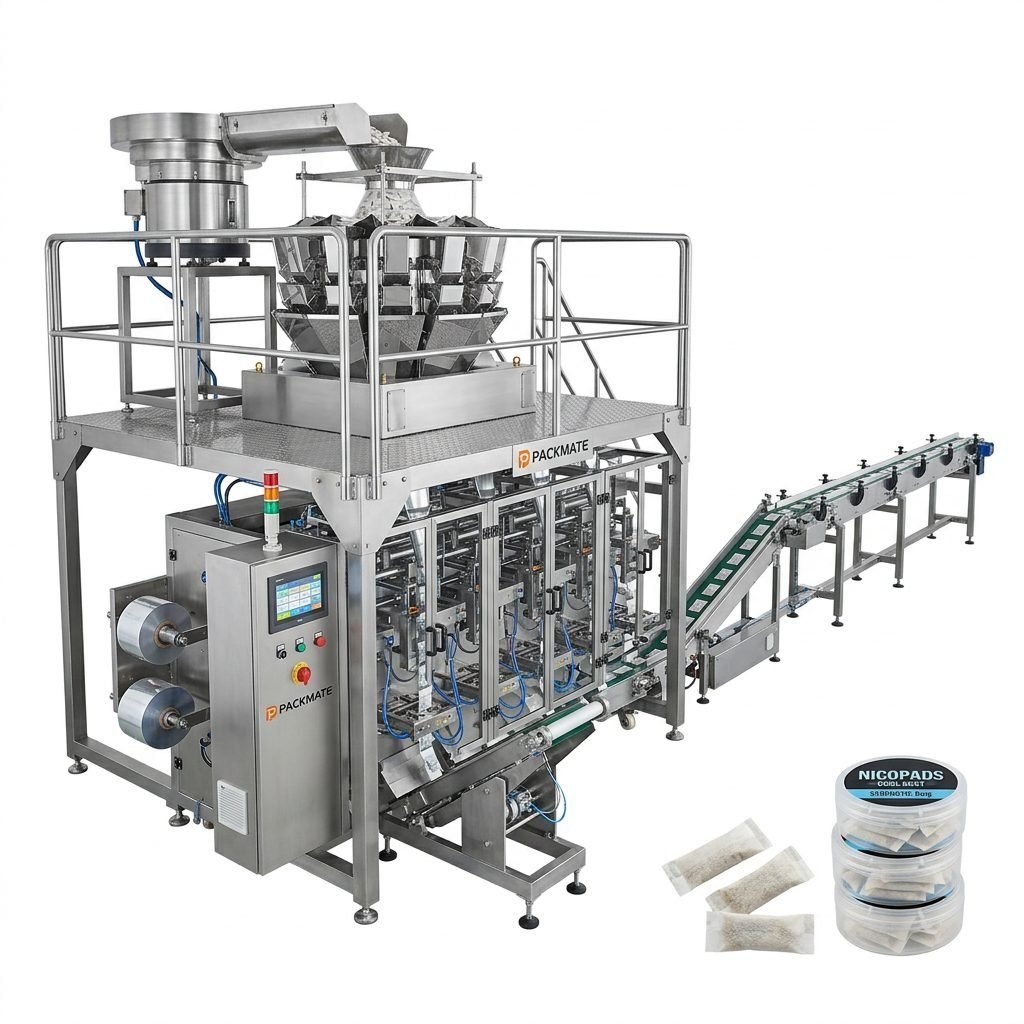
Evaluate nominal production speed (pouches per minute), filling accuracy (± tolerance), and the capability for multi-lane operation which multiplies throughput for small-dose products. Machines with precision volumetric or auger dosing reduce waste and ensure consistency across lots.
Materials compatibility and sealing performance
Packaging films, lamination types, and heat-seal parameters vary. Ask for sample seals under simulated humidity and temperature conditions to ensure hermetic closure. For Brazil’s climates, desiccant-friendly packaging and strong sealing jaws are essential to avoid moisture ingress during warehousing and transport.
Hygiene, cleaning and maintenance
Food- or pharma-grade hygiene design (easy-to-clean surfaces, CIP where applicable) reduces downtime and contamination risk. Confirm spare-parts lists, recommended service intervals, and the supplier’s capacity to supply parts quickly to Brazil.
Factory capability, certifications and trust signals
Verify the supplier’s manufacturing scale and quality systems. A factory with advanced CNC machining centers, precision assembly lines, and a documented quality control program is more likely to deliver consistent machines. Packmate’s profile — 20,000㎡ facility, 30+ years of experience, and multiple machine models — is an example of what to look for.
📌 Certifications and proof:
• CE and ISO certificates are basic trust signals.
• Request factory photos, assembly line descriptions, and machine test videos. See supplier case studies and exhibitions to confirm global presence: Case | Our Exhibition.
Service, training and local support — the non-negotiables
After-sales service is a major differentiator. Confirm the supplier offers:
- Remote troubleshooting, software updates, and training documentation in Portuguese when possible.
- On-site installation and commissioning or local partners who can represent the brand.
- Spare parts availability with clear lead times and recommended spares kit.
- Warranty terms, service response SLA, and optional maintenance contracts.
Check supplier service pages and contact channels — for example, view supplier support references at Service and establish a direct line via Contact Us.
Commercial terms, total cost of ownership and logistics for Brazil
Price is only part of the picture. Consider installation, training, spare parts, consumables, and downtime costs. Ask suppliers for:
- FOB/CIF/EXW quotes with estimated shipping times to major Brazilian ports (Santos, Rio de Janeiro).
- Packing and transport protection for humid tropical transit.
- Payment terms, lead times, and penalties for delay.
Factor in potential import duties, taxes, and local certification or inspection fees. If you plan to resell machines, understand distributor margins and after-sales commitments.
Choosing the right machine family
Match the machine family to your production plan:
- Stick pack machines — ideal for single-dose, low-waste formats.
- Sachet and pouch systems — flexible for multi-format SKUs.
- Multi-lane systems — scale throughput for small-dose snus/nicotine pouches.
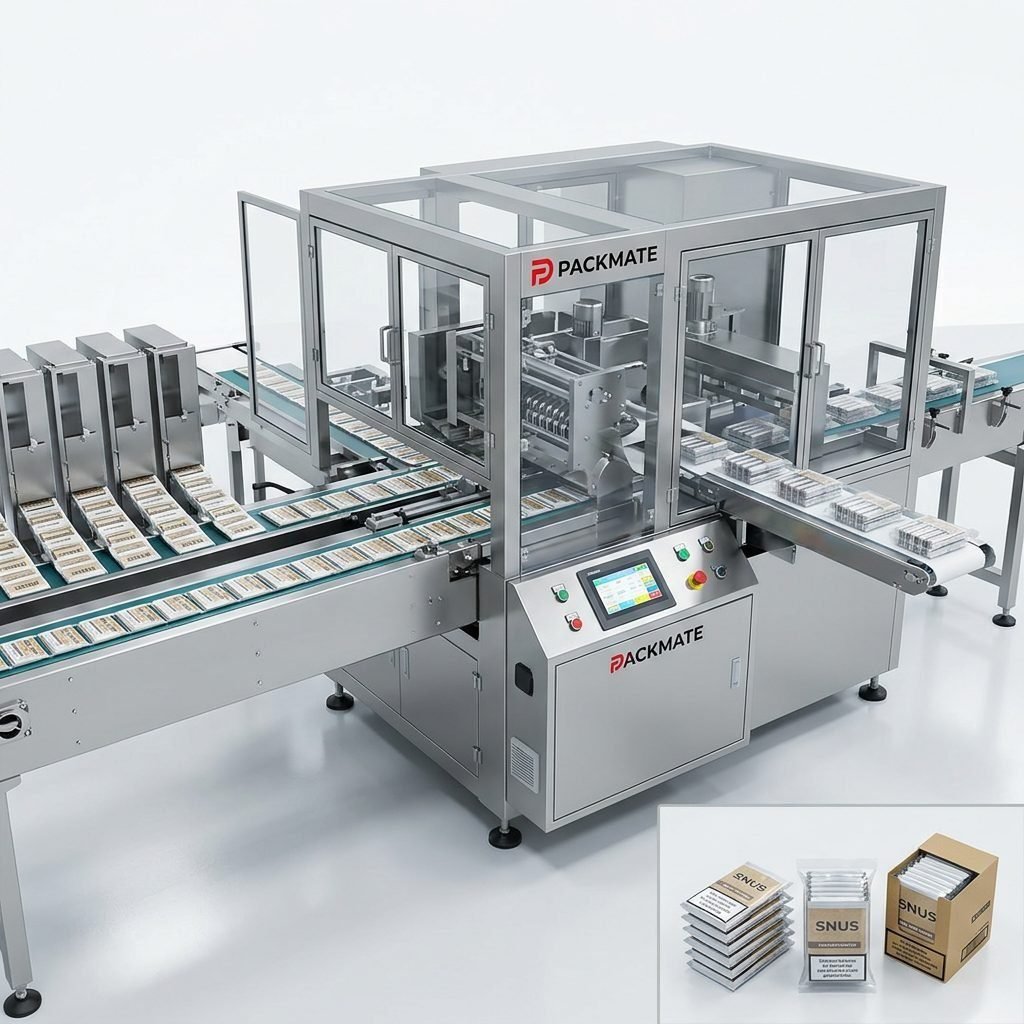
- Auxiliary equipment — sealing, metal detection, checkweighers, and cartoning lines. Explore related equipment at Auxiliary Packaging Equipment and Weighing & Packaging Systems.
Factory visit and verification checklist
If possible, visit the manufacturer. If not, request a live video tour and FAT. During a visit, confirm:
⚠️ On-site checklist
• Production floor and assembly line organization
• CNC machining centers and toolroom capability
• Test area where machines run your specific product samples
• Quality control records, certificates, and traceability systems
• Spare parts stock and lead-time documentation
• References from customers in similar climates and product categories
Contract terms, FAT, IQ/OQ and risk management
Insist on a clear contract: delivery milestones, acceptance criteria, FAT and performance guarantees. FAT should include running your actual packaging materials and filler to verify sealing, dosing, and cycle rate. After installation, perform IQ/OQ to confirm installed performance. Keep a contingency plan for spare parts and local service providers to minimize production disruption.
Warranty and spare parts strategy
Negotiate a reasonable warranty, clearly defined exclusions, and a spare-parts kit included with shipment. For Brazil, shipping times can vary, so request an emergency spares kit for critical wear parts to reduce downtime.
Common pitfalls and how to avoid them
Many buyers make avoidable errors; here are common ones and practical mitigations:
- Buying on price alone — prioritize total cost of ownership and uptime.
- Neglecting material tests — run your film and product on the machine before purchase.
- Unclear acceptance criteria — define FAT metrics in the contract.
- Ignoring local language needs — ensure manuals, HMI, and training can be provided in Portuguese.
How a reputable supplier stands out
A reputable supplier will provide transparent documentation, allow FAT with your product, show factory capabilities and certifications, offer local-language support, and present clear spare-parts and service policies. They will also be willing to customize machines for Brazil-specific requirements like reinforced sealing for humid climates and labeling fixtures for Portuguese labels. Learn more about an experienced partner at About Packmate.
Final decision framework — step-by-step
1) Define formats and target output; 2) Shortlist suppliers with proven snus/nicotine pouch experience; 3) Request detailed technical proposals and FAT; 4) Validate certifications and factory capability; 5) Negotiate contract terms, delivery, and service; 6) Plan for installation, training and spare parts stocking.
Useful links and resources
Explore product families and technical references for more details: Snus & Nicotine Packaging Machines, Bag & Pouch Packaging Machines, and Filling & Packaging Lines.
Conclusion
Selecting the best snus packaging machinery supplier in Brazil requires a balanced focus on machine capability, local-market adaptability, trustworthy factory practices, and strong after-sales support. Prioritize suppliers that demonstrate real experience with nicotine pouch formats, provide FAT with your materials, and commit to responsive service and spare-parts availability. Doing so protects product quality, shortens time-to-market, and builds a reliable production foundation for growth in Brazil’s dynamic market.
Frequently asked questions (FAQs)
Q1: How important is a Factory Acceptance Test (FAT) before purchase?
A1: FAT is essential — it verifies production speed, dosing accuracy, and sealing performance using your actual product and packaging materials. A documented FAT with acceptance criteria protects both buyer and supplier.
Q2: What machines are best for Brazil’s humid climate?
A2: Machines with strong sealing systems, humidity-resistant components, and the ability to incorporate desiccant packaging are recommended. Also choose materials and seals validated under elevated humidity/temperature tests.
Q3: Should I prioritize local service presence or direct factory support?
A3: Both matter. Local service reduces response times and travel costs for routine maintenance, while factory support is valuable for complex repairs and upgrades. Seek suppliers that can provide local partners or certified technicians in Brazil.
Q4: What documents should I verify before finalizing the purchase?
A4: Verify machine specs, FAT protocol, CE/ISO certificates, warranty terms, spare parts list, user manuals (preferably in Portuguese), and shipping/insurance terms.
Q5: Where can I find trusted machine models and support information?
A5: Review supplier product pages and documentation such as Catalog, service pages, and case studies. Reach out directly via the supplier’s contact channels to request references and FAT demonstrations.