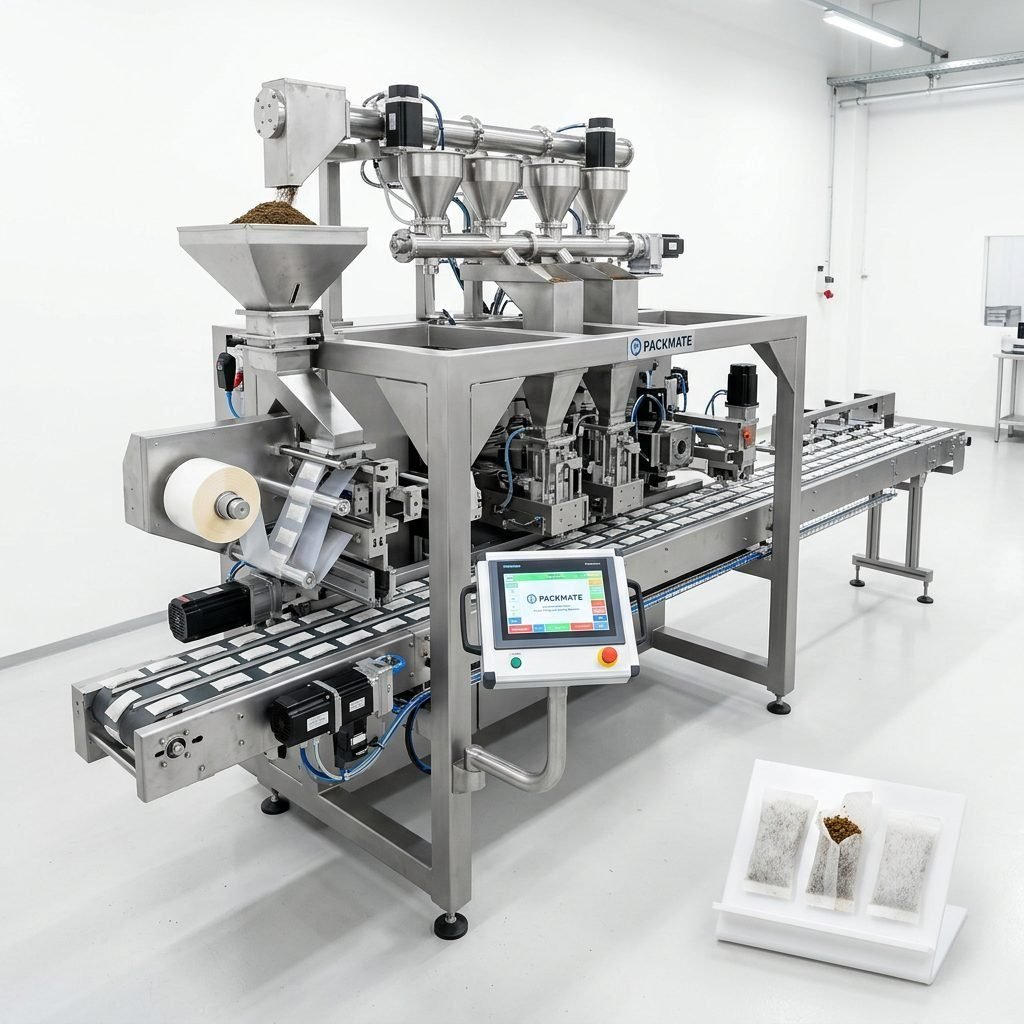
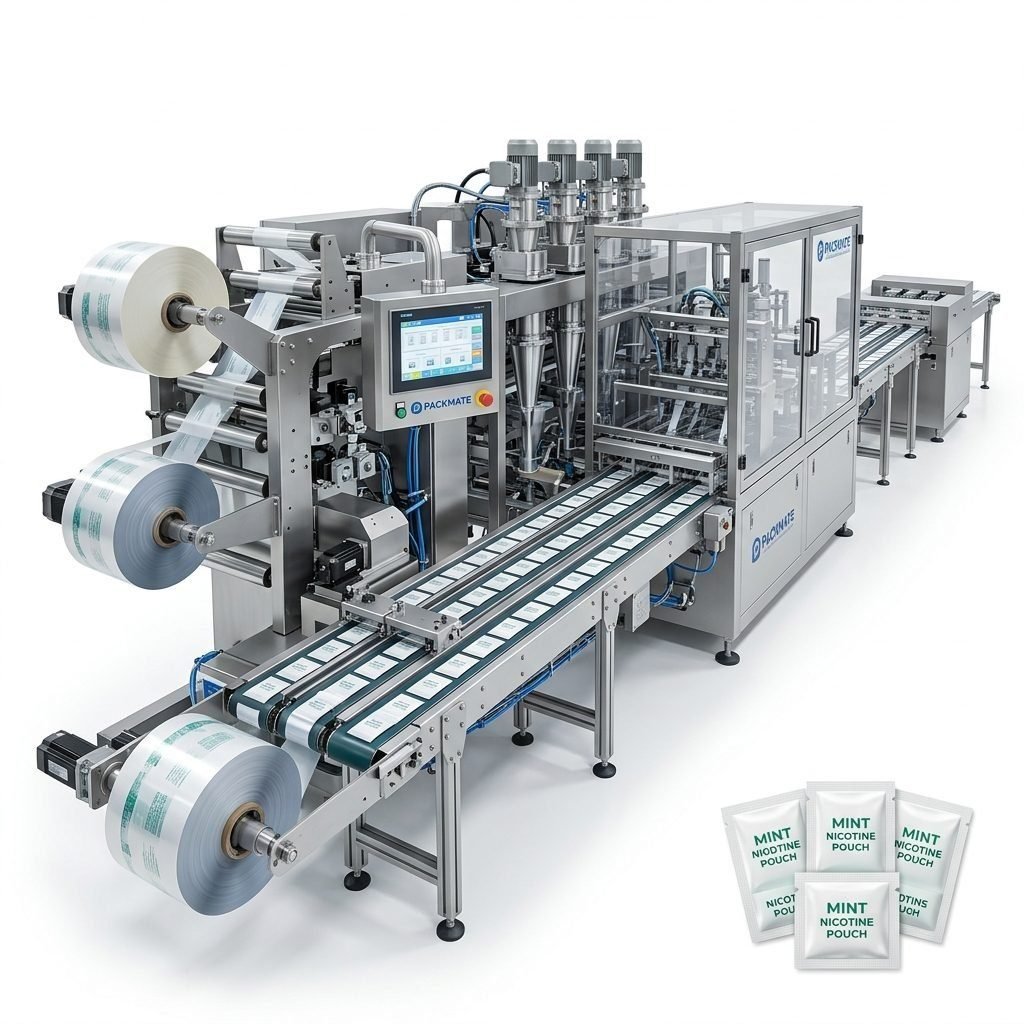
Choosing the right nicotine packaging machinery supplier in Liechtenstein is more than a procurement decision — it’s a strategic move that affects product quality, regulatory compliance, production costs, and brand reputation. For companies developing nicotine pouches, snus or related products targeted to the high-standard Central European market, selecting a supplier who understands precise engineering, local distribution logistics, and consumer preferences is essential. The guidance below helps production managers, founders, and procurement teams in Liechtenstein and neighboring regions choose a partner that delivers performance, reliability, and long-term value.
Understand Local Market & Regulatory Context
Liechtenstein is a small, affluent country with close economic and cultural ties to Switzerland and Austria. Buyers here expect premium presentation, precise portion consistency, and rigorous compliance with European technical and safety standards. When evaluating suppliers, prioritize those who can:
🔶 Demonstrate regulatory awareness — confirm that machines meet CE and ISO requirements and that the supplier understands documentation for customs and cross-border shipments to Liechtenstein and the EEA.
🔶 Support product labeling and traceability — many Liechtenstein buyers prefer discreet, premium packaging with clear lot codes and traceable production data for quality audits.
Local consumer preferences and cultural notes
Because households and retail channels in Liechtenstein value craftsmanship and understated luxury, packaging should reflect minimalistic yet premium aesthetics. Manufacturers often favor muted palettes, tactile finishes, and compact formats suitable for small-batch, high-margin offerings. Suppliers who have experience supporting premium brands or who can offer custom printing and finishing options will be better positioned to meet local tastes.
Technical Requirements: Match Machine Capabilities to Your Production Plan
Define production goals before you begin vendor conversations. Core questions include target daily output, product formats (pouch, sachet, stick-pack), desired lane counts, and flexibility for recipe/format changes.
Quick checklist:
✅ Target throughput (units/min or units/day) •
✅ Product formats (nicotine pouch, snus, tea-like pouch, stick) •
✅ Lane configuration (single vs multi-lane) •
✅ Changeover time and tool-less adjustments
Key machine features to demand
– Servo-driven motion and PLC controls for repeatable accuracy and quick format changeovers.
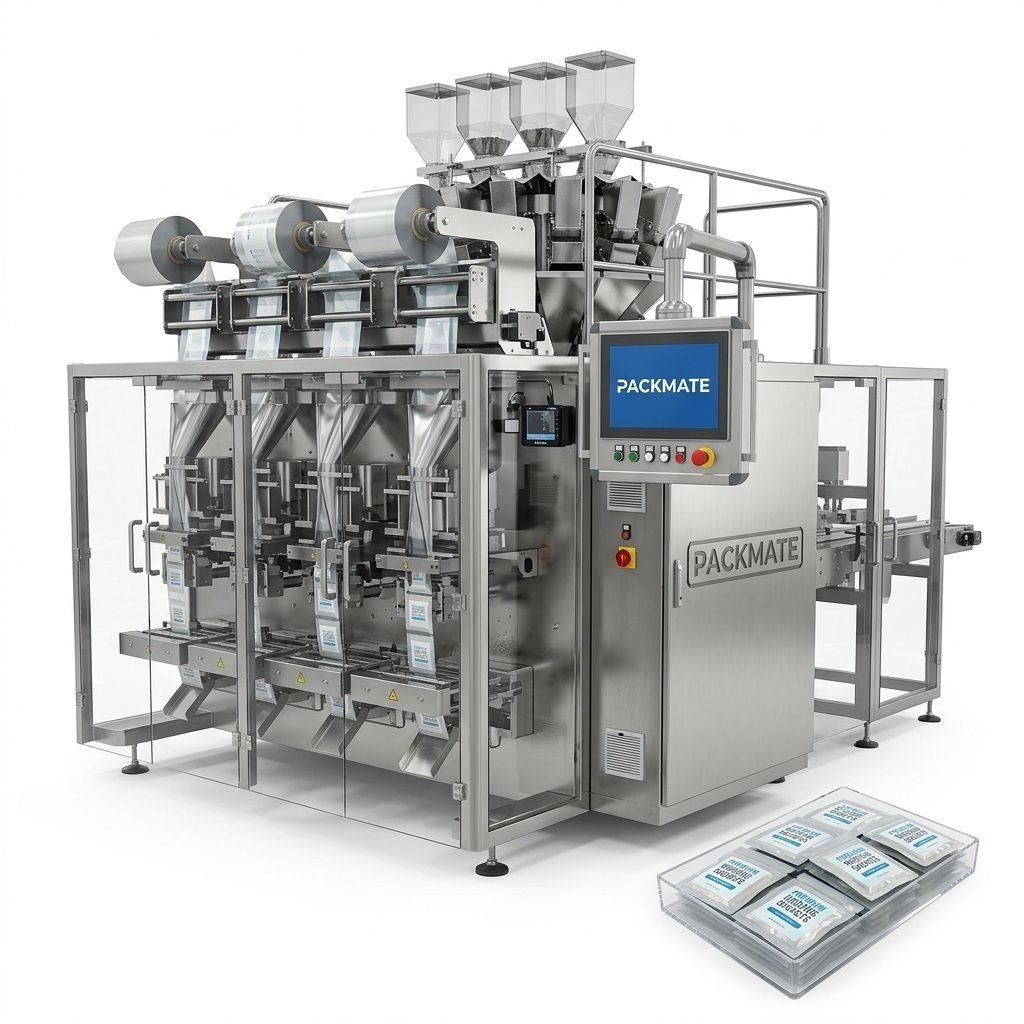
– Multi-lane capability if you plan to scale efficiently while keeping a compact footprint.
– Gentle product handling for powdered or fine nicotine pouches to avoid dusting and ensure fill accuracy.
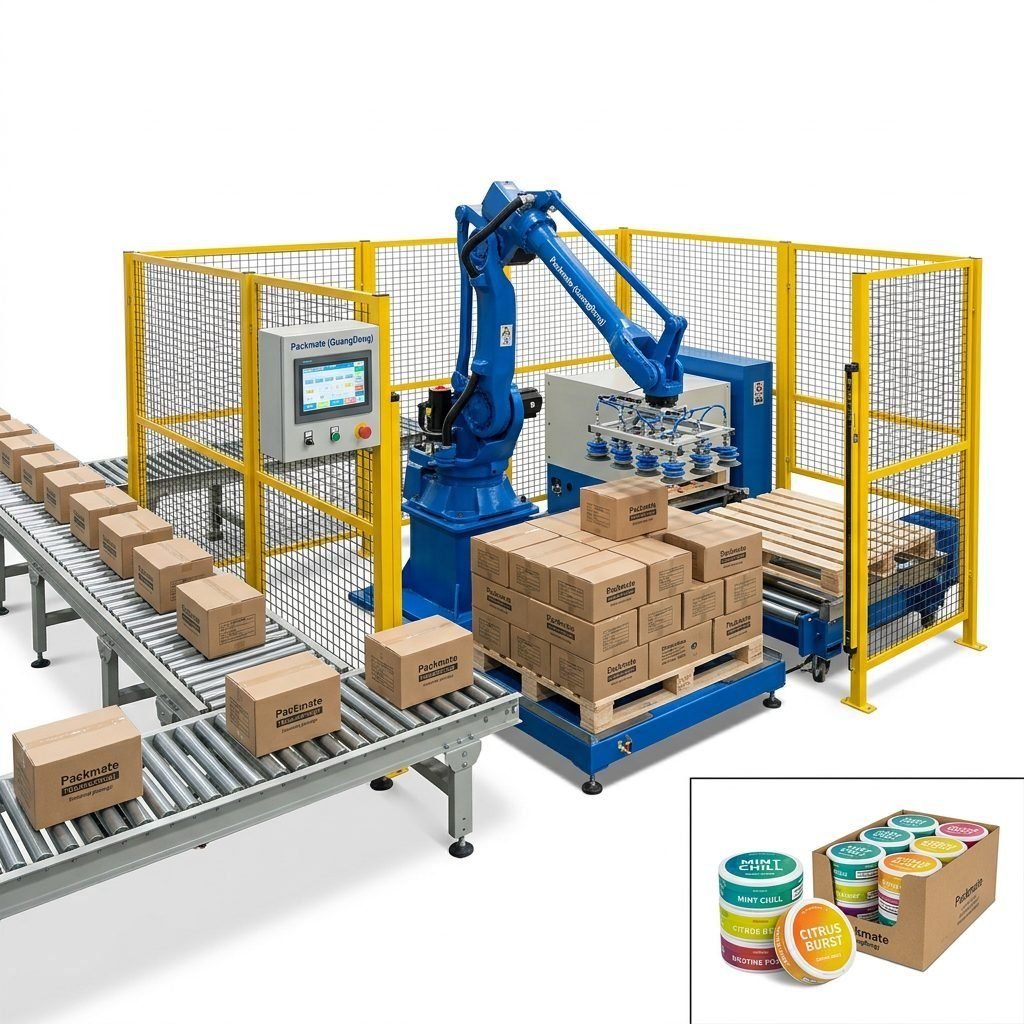
– Integration options for upstream dosing/weighing systems and downstream cartoning or case packing.
Evaluate Supplier Capabilities & Manufacturing Strength
The best suppliers combine engineering depth, production capacity, testing processes, and transparent documentation. Look for manufacturers with:
🔶 Proven factory capacity — a modern workshop with CNC machining centers and precision assembly lines shows the ability to deliver consistent machine tolerances and spare parts quickly.
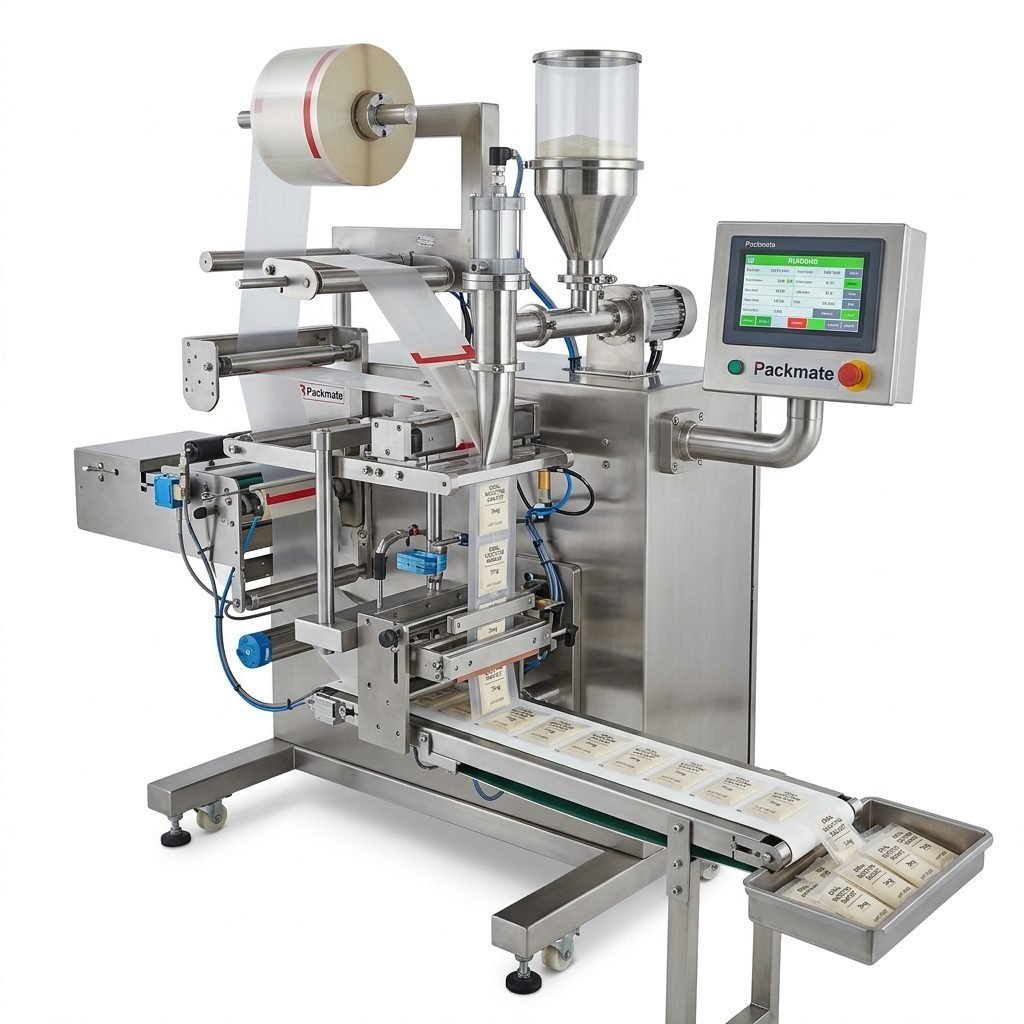
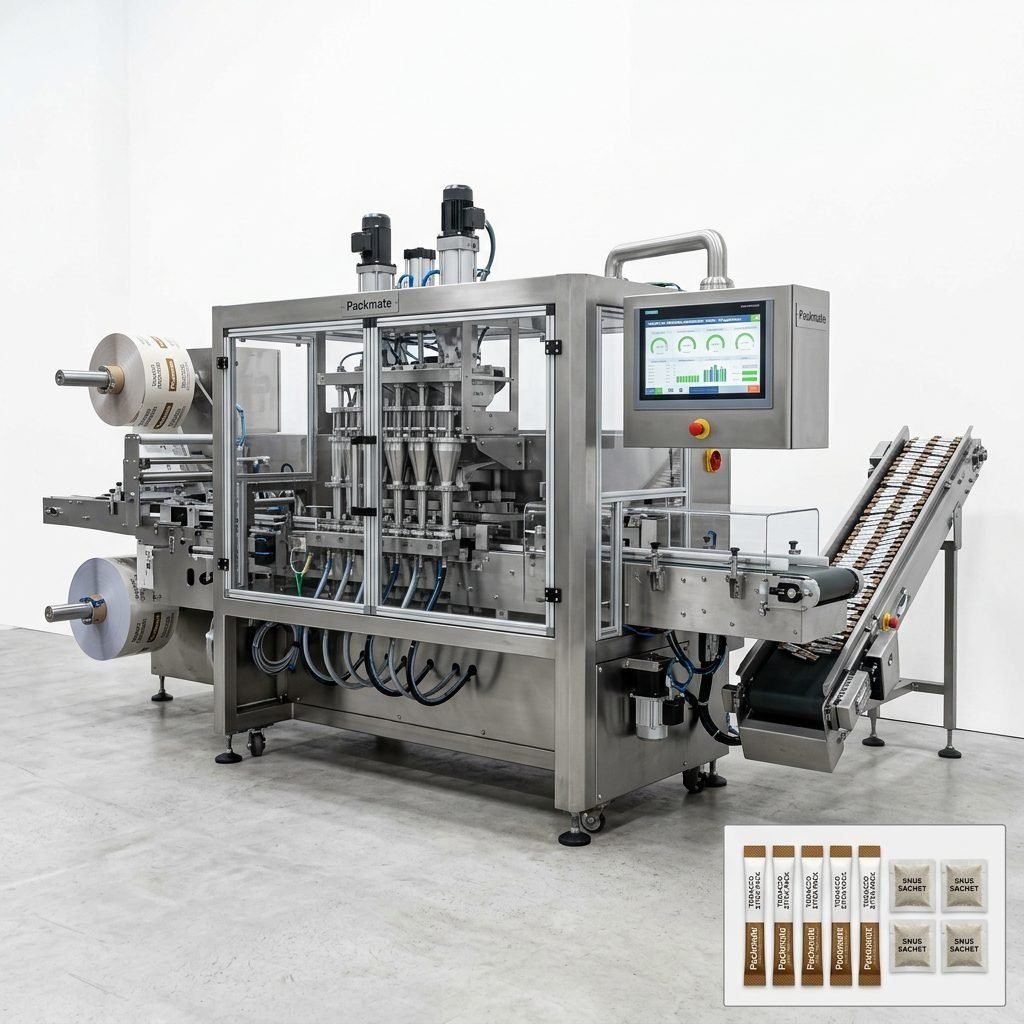
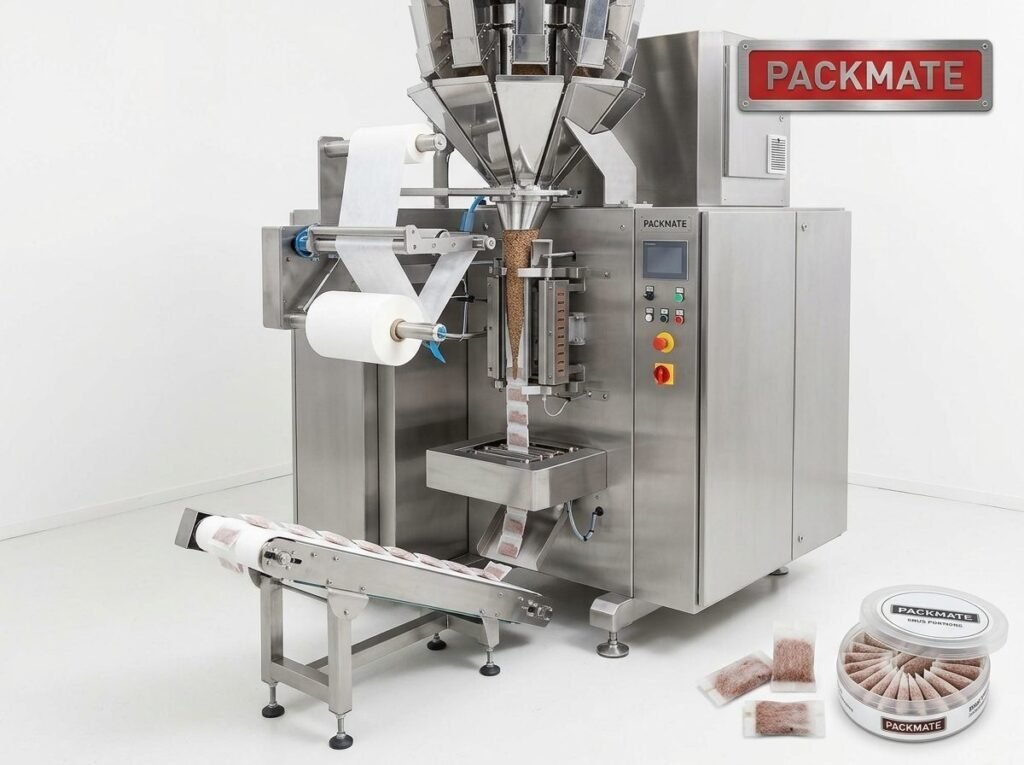
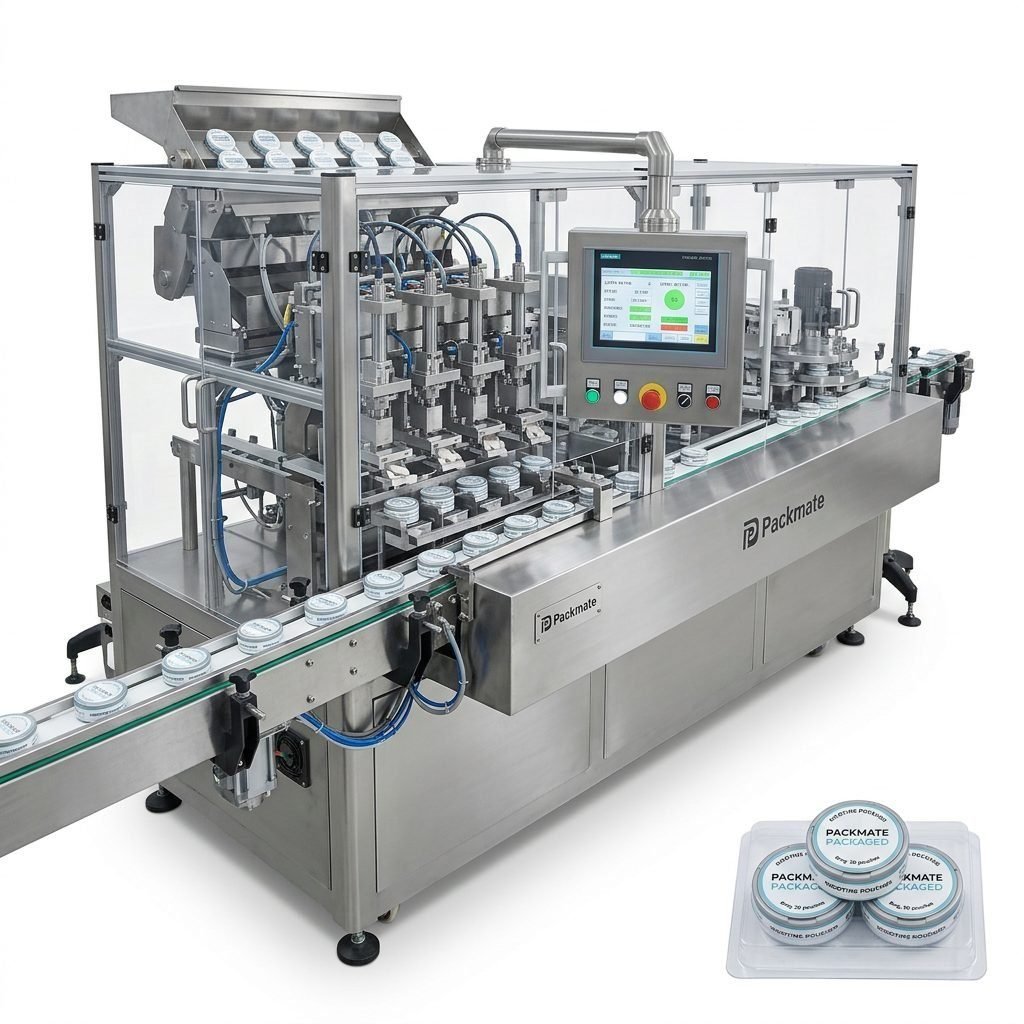
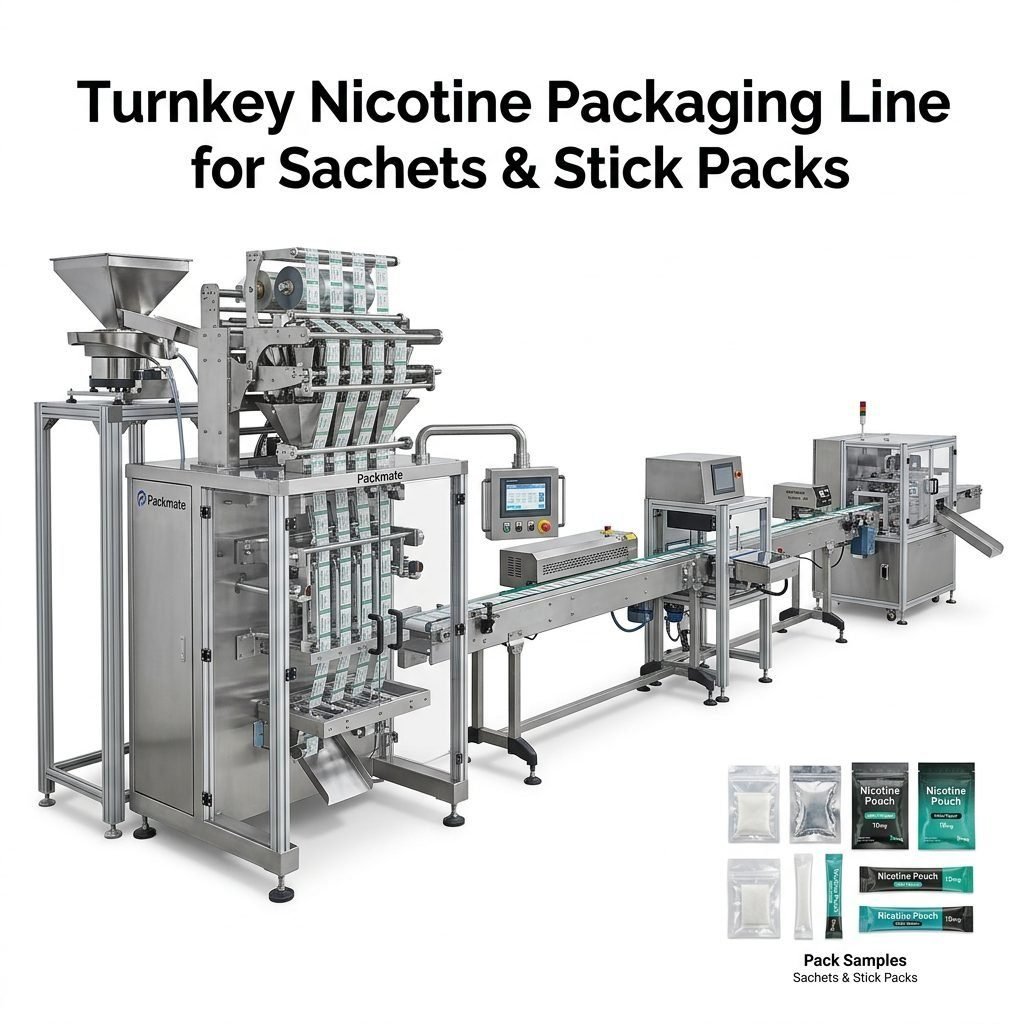
🔶 Broad product portfolio — suppliers offering different machine families (snus / nicotine pouch lines, stick pack, sachet, multi-lane systems) can tailor solutions as your product range expands. Explore specific product models and case studies on supplier pages such as Snus & Nicotine Packaging Machines and Sachet & Stick Pack Machines.
⚠️ Ask for detailed factory information: area (sqm), CNC and assembly capabilities, number of models, and certifications (CE/ISO). A strong example is a supplier with 20,000㎡ factory, 30+ years engineering background and 50+ machine models — such credentials indicate production reliability and engineering depth.
Integration & Turnkey Solutions: Avoid Silos
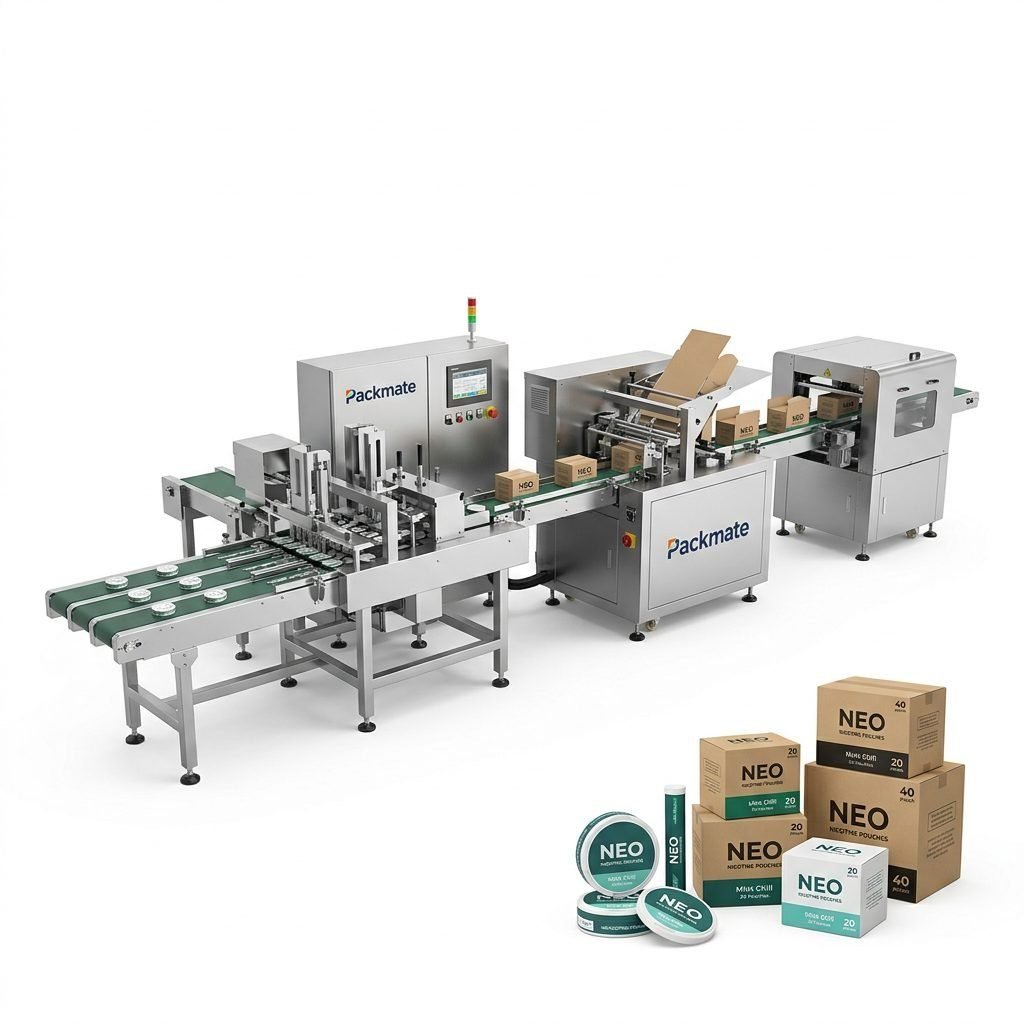
A packaging line rarely works in isolation. If you need fully automated lines that combine filling, weighing, pouch formation, and cartoning, prioritize vendors who can provide turnkey solutions and coordinate integration. This reduces compatibility risks and simplifies commissioning.
Consider reviewing suppliers’ capabilities in related areas such as weighing systems and auxiliary equipment: Weighing & Packaging Systems, Auxiliary Packaging Equipment, and complete Filling & Packaging Lines.
FAT, SAT & Commissioning
Ensure the supplier offers Factory Acceptance Testing (FAT) with your product samples before shipment and supports Site Acceptance Testing (SAT) and on-site commissioning in Liechtenstein or neighbouring Swiss/Austrian sites. Verify remote support, training plans, and spare-part lead times.
Service, Spare Parts & Long-Term Support
High uptime is non-negotiable. When assessing suppliers, emphasize:
🔶 Local or regional service partners — proximity matters for quick repairs and preventive maintenance. If the supplier doesn’t have an office in Liechtenstein, check for partners in Switzerland, Austria, or Germany.
🔶 Spare parts availability — ask for guaranteed parts stock, typical shipping times to Liechtenstein, and options for critical part kits.
Suppliers with robust after-sales programs often provide training, remote diagnostics, and modular upgrades to extend machine life and keep operations efficient.
Quality, Certifications & Factory Transparency
Request certifications and factory audit records. A reliable supplier will present:
– CE, ISO certificates and clear documentation of safety standards.
– Photos and virtual/onsite tours of machining centers, assembly lines, and testing areas.
– Case studies showing installations in Europe or similar regulatory regions — these demonstrate practical experience shipping to EEA markets. See real-world examples in supplier case pages such as Case.
Why factory size and machining capability matter
Precision parts and fast spare production require advanced CNC centers and experienced technicians. When components are made in-house, tolerances are tighter, and lead times for custom parts shrink — a strong advantage for manufacturers operating in high-quality markets such as Liechtenstein.
Commercial Terms, Financing & Total Cost of Ownership
Evaluate not only purchase price but also lifecycle costs: energy consumption, maintenance intervals, spare-part costs, and expected uptime. Discuss financing options, leasing, or phased payments — some suppliers also offer performance guarantees tied to throughput or acceptance criteria.
Negotiation tips:
✅ Ask for bundled deals if ordering multiple machines •
✅ Request extended warranty or service credits •
✅ Seek training and spare parts packages in the contract
Visit, Inspect & Validate: Practical Steps
Whenever possible, schedule a factory visit or request a virtual factory tour. During inspection, focus on:
– Machine run-offs using your product or a representative substitute.
– Demonstrations of format changeovers and cleaning procedures.
– Documentation completeness: manuals, electrical drawings, spare-part lists, and software backup procedures.
Red flags to watch for
⚠️ Lack of CE/ISO evidence, opaque spare-part policies, refusal to do FAT with customer product, or long unexplained lead times — these are warning signals that may cost you downtime later.
Why Partnering with an Experienced Snus Machine Manufacturer Matters
Working with a vendor specializing in nicotine pouch and snus equipment brings domain-specific know-how: dosing solutions for low-dose nicotine, pouch sealing quality, and dust control for powdered blends. Suppliers with decades of R&D and a history of serving export markets can accelerate your time-to-market while reducing technical risk. Consider a manufacturer with a credible history — e.g., one that began R&D early, expanded into multi-lane systems, and now offers global turnkey packaging solutions.
For more background on supplier profiles and company stories, review pages like About Packmate or their exhibitions and certificates: Our Exhibition and Certificate.
Final Selection Roadmap — How to Decide
1) Define product portfolio and scale ambitions.
2) Shortlist suppliers with proven nicotine/snús experience and relevant certifications.
3) Request technical proposals, lead times, and detailed TCO estimates.
4) Conduct FAT with your product samples; verify performance data and acceptance criteria.
5) Confirm spare-part logistics and service coverage for Liechtenstein or neighboring regions.
6) Negotiate contract terms including warranty, training, and commissioning support.
Pro tip — Choose a supplier who can scale with you: offering multi-lane upgrades, modular auxiliary equipment, and a history of export projects will reduce re-investment risk as demand grows.
Next Steps & Useful Links
If you are comparing suppliers now, gather technical datasheets, factory tour options, FAT schedules, and references from European clients. Check product categories and system pages to align models to your needs: Snus & Nicotine Packaging Machines, Bag & Pouch Packaging Machines, and full-service pages such as Service.
How Packmate-like capabilities add value
Companies with decades of engineering experience, large manufacturing facilities, and a portfolio of modular machines bring lower delivery risk and more flexible customization. If you want a partner who can deliver multi-lane snus lines, support complex dosing, and provide turnkey packaging lines, focus on suppliers with track records in snus and nicotine pouch solutions.
Common Questions (FAQs)
Q: How do I confirm a machine is compliant for sale and operation in Liechtenstein?
A: Request CE and ISO certificates, electrical and mechanical drawings, and FAT documentation. Confirm the supplier understands EEA customs documentation and has shipped machines to nearby EU/EEA countries.
Q: What lead times should I expect for custom snus packaging lines?
A: Depending on customization and current factory load, lead times vary. Typical delivery windows for proven models range from a few months to six months; highly customized turnkey projects may take longer. Always request a factory schedule and milestone plan.
Q: Can suppliers support small-batch premium packaging common in Liechtenstein?
A: Yes — choose machines with agile format changeovers, multi-lane flexibility, and precise sealing controls. Suppliers experienced in premium snus packaging will advise on materials and finishing options.
Q: How important is after-sales support and spare parts stocking?
A: Very important. Fast access to critical spare parts and reliable remote diagnostics minimize downtime. Ensure the supplier has regional partners or fast shipping procedures to Liechtenstein.
Q: Where can I get more detailed product information and contact the supplier?
A: Visit the supplier’s product pages and contact portals to request catalogs, factory tours, and quotations. Useful links include product overviews and contact pages such as Catalog and Contact Us.